Wind Turbine Permits in Texas: TCEQ, County, and HOA Layers
Navigate Texas wind turbine permitting—TCEQ exemptions, county setback rules, HOA restrictions, and FAA notification. Everything homeowners need before installing small wind.
Share this article
windturbinehome.com/s/32d3e4
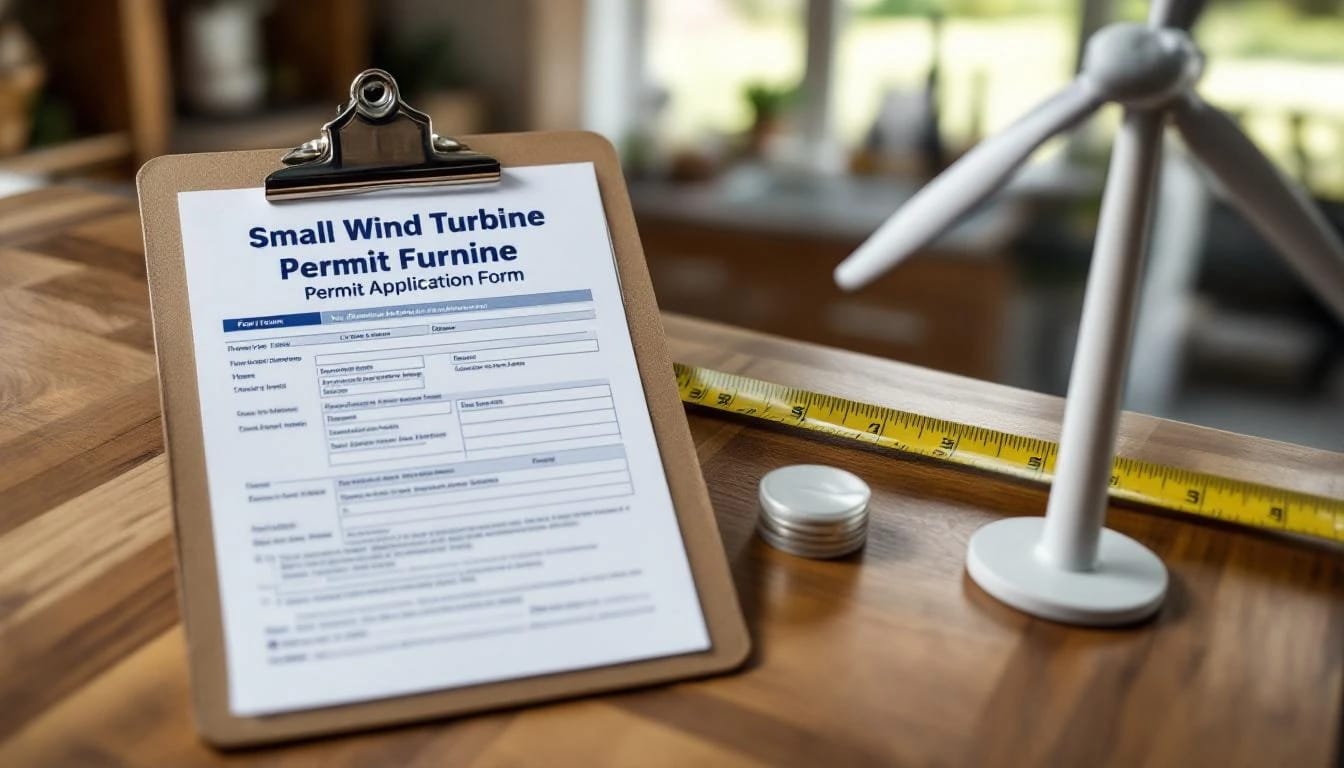
Installing a small wind turbine in Texas involves three distinct permitting layers that often confuse first-time buyers. Most residential systems under 100 kW are exempt from Texas Commission on Environmental Quality (TCEQ) air permits, but county-level zoning ordinances control setbacks, height restrictions, and noise limits. Homeowners' associations frequently impose additional design covenants that supersede local ordinances. Understanding which authority governs your specific installation—and filing the correct paperwork with the Federal Aviation Administration for turbines exceeding 200 feet—prevents costly delays and compliance violations.
TCEQ Air Quality Permits: When Residential Turbines Qualify for Exemption
The Texas Commission on Environmental Quality administers air quality permits for stationary sources of emissions throughout the state. However, wind turbines produce zero direct emissions, and small residential systems typically fall under TCEQ's Standard Exemption 106.512, which covers renewable energy devices serving a single-family dwelling or farm operation. This exemption removes the need for formal air permit applications, public notice periods, and annual reporting.
Systems up to 100 kW nameplate capacity at residential locations automatically qualify if the turbine serves on-site consumption and connects through a net-metering agreement under Texas Public Utility Commission rules. Commercial installations—even small turbines at retail shops or light industrial sites—require case-by-case review. TCEQ staff review focuses on whether the system meets the statutory definition of "distributed renewable generation" under Texas Utilities Code §39.916.
Homeowners planning turbines above 100 kW or those seeking to sell all generated electricity under a wholesale power purchase agreement should contact the TCEQ Small Business and Environmental Assistance Division at 800-447-2827 before purchasing equipment. The agency's determination letter, typically issued within 30 business days, provides written confirmation of exemption status or outlines required permit steps.
![INLINE: Texas state outline map with wind resource gradient overlay showing West Texas high-wind zones and coastal regions]
County Zoning Ordinances: Setbacks, Height Limits, and Noise Standards
Texas operates under a decentralized land-use framework in which counties have primary zoning authority outside incorporated city limits. Each of Texas's 254 counties maintains unique ordinances governing small wind installations, and many rural counties have adopted model wind energy ordinances developed by the Texas Association of Counties since 2019.
Setback requirements typically range from 1.1× to 1.5× total turbine height (tower plus rotor diameter) measured from property lines. In Gillespie County, a 60-foot tower with a 10-foot rotor diameter requires a minimum 105-foot setback (1.5× the 70-foot total height). Comal County uses a sliding scale: 1.1× for parcels over 10 acres, 1.5× for lots between 2 and 10 acres, and prohibits turbines outright on parcels under 2 acres.
Height restrictions follow one of three models. Agricultural counties (including Hale, Floyd, and Swisher) generally permit towers up to 120 feet without special-use permits. Suburban counties near major metros (Travis, Williamson, Hays) cap residential towers at 65–80 feet and require conditional-use permits for anything taller. Coastal counties (Nueces, Aransas, Cameron) apply FAA Part 77 surface rules strictly, sometimes limiting towers to 50 feet near regional airports.
Noise limits appear in roughly 40% of county ordinances. The standard follows Texas Health and Safety Code §343.002, which adopts a 55 dBA daytime / 50 dBA nighttime limit measured at the property line. Manufacturers' spec sheets for Bergey Excel 10 and Primus Air 40 models show typical operational noise between 42–48 dBA at tower base, well within compliance when proper setbacks are observed. Counties without explicit noise ordinances default to nuisance provisions under common law, making documentation of baseline ambient sound levels advisable before installation.
HOA Covenants: Design Review, Aesthetic Standards, and Override Procedures
Homeowners' associations in Texas possess broad authority to regulate structures under Chapter 209 of the Texas Property Code. HOA declarations filed with county clerks become binding contract terms on all lot owners, and these covenants frequently prohibit or severely restrict wind turbines based on aesthetic objections, perceived property-value impacts, or blanket bans on "commercial equipment."
Typical HOA restrictions include outright bans on freestanding towers, allowances only for building-integrated vertical-axis turbines, color requirements (white or off-white finishes only), and mandatory screening with vegetation or fencing. Some associations permit turbines only on rear property lines with design review board approval—a process requiring scaled site plans, photo simulations, and neighbor consent letters from all adjacent lots.
Texas Property Code §202.010(a) provides partial relief through its "renewable energy device" protection. The statute prohibits HOAs from banning solar collectors or wind turbines outright but allows "reasonable restrictions" concerning location, screening, and installation standards. Case law defines "reasonable" narrowly: the restriction must serve a legitimate aesthetic goal, apply uniformly to all owners, and not render the device ineffective. In Brock v. Cimarron Hills Homeowners Association (Tex. App.—Houston [1st Dist.] 2018), a court struck down an HOA rule requiring turbines to sit below the roofline, finding it effectively banned wind energy in a low-wind urban setting.
Homeowners in deed-restricted communities should request architectural review guidelines and a formal interpretation letter from the HOA board before signing turbine purchase contracts. If the board denies installation, §202.010(c) permits owners to petition for a variance by demonstrating the restriction imposes an unreasonable economic hardship or serves no substantial community interest. Legal challenges under this statute require consultation with a Texas-licensed real estate attorney.
FAA Notification and Determination: Part 77 Surface Rules
Federal Aviation Administration regulation 14 CFR Part 77 requires owners to file Form 7460-1 (Notice of Proposed Construction or Alteration) for any structure exceeding 200 feet above ground level, or lower heights if the site sits within 20,000 feet of a public or military airport. Most residential turbines on 80- to 120-foot towers fall below the 200-foot trigger unless the property occupies elevated terrain.
The FAA reviews submissions within 45 days and issues a Determination of No Hazard (DNH) or a Determination of Hazard (DH). Hazard determinations can require lighting (typically red obstruction lights flashing at medium intensity), paint markings, or outright relocation. Landowners near small municipal airports in rural Texas sometimes receive conditional approvals limiting tower height to maintain approach surface clearances.
Filing is free and completed online at oeaaa.faa.gov. The system auto-populates Part 77 surface analysis based on GPS coordinates and tower height. Homeowners should file at least 60 days before starting tower construction to allow time for appeals if the determination is unfavorable. Failure to file when required can trigger enforcement action and mandatory tower removal.
Building Permits and Electrical Inspections Under Texas Administrative Code
Counties and municipalities enforce the International Building Code (IBC) through local amendments, and all wind turbine towers require structural building permits under Chapter 15 of the Texas Administrative Code (TAC). The permit application typically includes:
- Manufacturer's engineering drawings stamped by a Texas-licensed Professional Engineer
- Foundation design calculations (soil bearing capacity, anchor bolt sizing, concrete mix specifications)
- Tower structural analysis (wind load, ice load, seismic considerations per ASCE 7)
- Guy-wire or monopole attachment details
Electrical interconnection to the home's service panel or utility meter falls under National Electrical Code Article 705 (Interconnected Electric Power Production Sources). Texas adopted NEC 2023 statewide as of January 2024. Key code provisions include:
- Dedicated AC disconnect rated for full turbine output (located outdoors, accessible to utility)
- Inverter UL 1741 listing (required for grid-tie inverters with anti-islanding protection)
- Grounding electrode system per NEC 250.52 (usually driven ground rods at tower base)
- Conduit sizing for feeder conductors (typically 10 AWG copper for runs under 150 feet)
Electrical work must be performed by a Texas Department of Licensing and Regulation licensed electrician (Master or Journeyman level). DIY wiring is illegal in Texas for grid-tied systems; off-grid DC systems on rural properties sometimes qualify for owner-builder exemptions, but inspectors retain final authority. Inspection fees range from $75 (foundation pour) to $150 (final electrical) depending on county.
Net Metering Agreements and Utility Interconnection Applications
Texas does not mandate statewide net metering. Instead, interconnection policies vary by utility and service territory. Investor-owned utilities (Oncor, CenterPoint, AEP Texas, TNMP) follow tariffs approved by the Public Utility Commission of Texas. Municipal utilities (Austin Energy, CPS Energy, Garland Power & Light) and cooperatives (Pedernales Electric, United Cooperative Services) set independent policies.
Most utilities cap residential distributed generation at 20 kW or 100% of annual consumption, whichever is less. Bergey Excel 10 systems (10 kW rated) and Primus Air 40 units (10 kW at 30 mph wind) fit within standard interconnection agreements. Systems above 20 kW trigger expensive engineering studies and liability insurance requirements.
Standard interconnection applications require:
- Completed utility-specific form (usually 3–5 pages)
- Turbine manufacturer's spec sheet and UL certification
- Electrical one-line diagram showing meter, disconnect, inverter, and service panel
- $100–$250 application fee (varies by utility)
- Proof of $1 million general liability insurance (required by some municipal utilities)
Oncor processes most residential applications within 15 business days. Delays occur when interconnection points are near distribution transformers requiring upgrade or when the feeder circuit operates at marginal voltage. Utility approval must precede permission-to-operate; homeowners who energize turbines before final sign-off risk disconnection and financial penalties.
For a detailed comparison of grid-tied versus off-grid system requirements, see our wind turbine electrical systems guide. Homeowners considering battery-backed systems should review selecting the right inverter for small wind turbines.
Property Tax Exemptions and Federal Tax Credits
Texas Property Tax Code §11.27 provides a 100% property tax exemption for renewable energy systems installed on residential homesteads. The exemption covers turbine, tower, inverter, battery storage, and foundation improvements. Appraisal districts cannot increase assessed value based on renewable energy equipment—a significant benefit in counties with high mill rates.
To claim the exemption, file Texas Comptroller Form 50-123 (Renewable Energy Systems and Devices Property Tax Exemption Application) with the county appraisal district before May 1 of the tax year. Supporting documentation includes purchase invoices, installer certification, and photographs of the completed system.
The federal Investment Tax Credit under Internal Revenue Code §25D allows homeowners to claim 30% of eligible installation costs (turbine, tower, electrical work, permits, but not DIY labor) when filing IRS Form 5695. The credit applies to systems placed in service through December 31, 2032, then steps down to 26% in 2033 and 22% in 2034. For a 60-foot Skystream-equivalent system costing $35,000 installed, the credit yields $10,500 in federal tax reduction. Unused credits carry forward up to five years.
Texas offers no state-level rebates or production incentives for small wind as of 2025. Historical programs under the State Energy Conservation Office (SECO) expired in 2018. Check the Database of State Incentives for Renewables & Efficiency (DSIRE) for updates on municipal utility rebates; Austin Energy and CPS Energy occasionally pilot limited distributed wind programs.
Typical Permit Timeline and Cost Breakdown
Homeowners planning a residential wind installation in Texas should budget 90–150 days from initial county contact to permission-to-operate:
| Phase | Duration | Cost |
|---|---|---|
| County zoning review and variance (if needed) | 30–60 days | $150–$500 |
| HOA design review (if applicable) | 15–45 days | $50–$250 |
| FAA Form 7460-1 determination (if triggered) | 30–45 days | Free |
| Building permit and plan review | 15–30 days | $200–$600 |
| Electrical permit | 5–10 days | $75–$150 |
| Utility interconnection agreement | 15–30 days | $100–$250 |
| Final inspections (foundation, electrical, structural) | 7–14 days | $150–$300 |
Total permit and inspection costs typically run $750–$2,050 before professional fees. Hiring a Texas-licensed PE for foundation and structural drawings adds $1,200–$2,500. Electrical contractors charge $800–$1,500 for code-compliant interconnection and panel upgrades. Including these professional services, total soft costs represent 8–12% of a turnkey small wind installation.
Delays most commonly arise from incomplete FAA filings, HOA design review appeals, and utility engineering studies for marginal grid infrastructure. Owners should initiate permitting 120 days before desired installation date to accommodate unforeseen obstacles.
For guidance on selecting qualified installers, see our finding a wind turbine installer in your state. Readers planning DIY installations should review foundation and tower installation best practices.
Insurance, Liability, and Legal Considerations
Homeowners' insurance policies typically cover wind turbines as detached structures under Coverage B, subject to the policy's all-risk perils. However, standard HO-3 policies exclude damage from wear, tear, mechanical breakdown, and wind above named-storm thresholds (usually 75 mph). Owners should request an equipment breakdown endorsement covering generator, inverter, and bearing failures.
Liability coverage becomes critical when turbine failures occur. A tower collapse or blade throw onto neighboring property can trigger premises liability claims. Texas follows comparative negligence rules, and courts assign liability based on maintenance records, code compliance, and manufacturer installation standards. Maintaining annual inspection logs by a qualified technician provides strong defense evidence.
Standalone renewable energy equipment policies from specialty carriers (GCube, Energy Insurance Solutions) offer comprehensive coverage including business interruption (lost savings from downtime), spare parts replacement, and expedited debris removal. Annual premiums run 0.5–1.2% of insured equipment value; a $30,000 turbine system would cost $150–$360/year for full protection.
Texas does not require mandatory liability insurance for residential wind systems under 20 kW, but some municipal utilities and HOAs impose $1 million minimum requirements in their interconnection or design approval documents. Umbrella policies covering $1–2 million in excess liability cost $200–$400 annually and satisfy most such requirements.
Enforcement, Violations, and Remediation Procedures
Operating a wind turbine without required county permits or in violation of setback ordinances constitutes a Class C misdemeanor under Texas Local Government Code §245.001. Counties rarely pursue criminal charges, instead issuing civil citations with fines of $500–$2,000 per day of continued violation. Unpermitted turbines also create title defects, complicating property sales and refinancing.
Nuisance complaints from neighbors over noise, flicker, or aesthetic impacts trigger county code enforcement investigations. If a turbine exceeds permitted noise levels (typically measured with calibrated sound meters at multiple property-line locations), the county can order operational restrictions (limiting runtime to daytime hours) or mandate additional setbacks through relocation.
HOA violations proceed through the association's enforcement procedures outlined in governing documents. Typical consequences include fines ($50–$500 per month), suspension of common-area privileges, and lawsuits seeking injunctive relief. Under Texas Property Code §209.006, HOAs must provide written notice and an opportunity to cure before imposing fines. Persistent violations can lead to foreclosure on the homeowner's property to satisfy accumulated fines and legal fees.
Remediation after-the-fact is expensive. Moving an installed turbine to meet setback requirements costs $4,000–$8,000 for crane rental, foundation abandonment, new pad construction, and re-inspection fees. Removing a turbine entirely (often the outcome in HOA disputes) results in near-total financial loss, as used turbines have minimal resale value once disassembled.
Regional Variations: West Texas vs. Gulf Coast vs. Hill Country
Texas's diverse geography creates distinct permitting environments. West Texas counties (Lubbock, Midland, Ector) maintain wind-friendly ordinances reflecting the region's commercial wind farm presence. Setbacks of 1.1× height are common, and agricultural exemptions sometimes permit 150-foot towers by right on parcels exceeding 20 acres. TCEQ exemptions apply broadly, and few HOAs exist outside municipal limits.
Gulf Coast counties (Galveston, Brazoria, Matagorda) impose stricter height limits due to dense air traffic around Houston's airports and coastal storm surge concerns. Turbines often require engineered foundations meeting 150 mph wind loads per ASCE 7 Section 26.5.1. Nueces County mandates hurricane-rated disconnect switches and guy-wire ground anchors certified for corrosive salt-air environments.
Hill Country counties (Gillespie, Blanco, Kendall) face aesthetic pressure from tourism and wine-country branding. Conditional-use permits require visual-impact assessments, and some jurisdictions mandate earth-tone finishes or vegetation screening. HOAs in lakefront subdivisions (Lake LBJ, Lake Travis) commonly prohibit turbines outright based on waterfront view-protection covenants.
Landowners should contact the county commissioner's court office (not the county clerk) to obtain current zoning ordinances. Many rural counties lack online permit portals; in-person visits to the county courthouse remain necessary in 40% of Texas counties.
Do I need a permit for a small vertical-axis turbine on my roof in Texas?
Yes. All grid-connected wind turbines require electrical permits regardless of size or type. Roof-mounted installations also need building permits verifying the structure can support turbine weight (typically 80–150 pounds for residential vertical-axis models like Pikasola or Aeolos units) plus wind loads. HOA design review applies equally to roof and ground-mounted systems. Code officials treat roof-mounted turbines more strictly than ground-mounted due to vibration transfer into living spaces and structural fatigue concerns on residential trusses not designed for rotating equipment.
Can my HOA prohibit wind turbines entirely under Texas law?
No. Texas Property Code §202.010(a) prevents HOAs from banning renewable energy devices outright, but associations can impose "reasonable restrictions" on placement, appearance, and screening. Courts uphold HOA rules requiring rear-yard placement, vegetative screening, and color matching when these rules apply uniformly and don't render the turbine ineffective. Complete bans or rules forcing turbines into zero-wind locations violate the statute. Owners challenging unreasonable restrictions should send certified letters citing §202.010 and request board reconsideration before filing suit. Most HOAs settle rather than litigate under this consumer-protection statute.
How close to my property line can I install a wind turbine in Texas?
Setback requirements vary by county but typically range from 1.1× to 1.5× total height (tower plus rotor diameter) from all property lines. A 60-foot tower with a 12-foot diameter rotor (72 feet total) requires 79-foot setback at 1.1× or 108-foot setback at 1.5×. Counties without specific wind ordinances default to accessory structure setbacks (usually 10–25 feet), but these rarely provide adequate safety margins. Guy-wire anchors count as part of the turbine footprint; measure setbacks from the outermost anchor point, not the tower base. Contact your county planning department for written confirmation before ordering equipment.
Does Texas require wind turbine installers to have special licenses?
Texas requires electrical contractors to hold state-issued Master or Journeyman electrician licenses for all grid-interconnection work. Tower installation falls under general contractor licensing, but many rural counties don't enforce contractor registration requirements. However, homeowners hiring unlicensed installers assume full liability for code violations and structural failures. Reputable installers carry $2 million general liability insurance and maintain manufacturer certifications from Bergey, Primus, or other major brands. Always request proof of TDLR (Texas Department of Licensing and Regulation) electrical license numbers and verify active status at www.tdlr.texas.gov before signing contracts.
Will installing a wind turbine increase my property taxes in Texas?
No. Texas Property Tax Code §11.27 exempts renewable energy systems from property tax assessment on residential homesteads. County appraisal districts cannot increase your home's taxable value based on wind turbine installation. File Texas Comptroller Form 50-123 with the county appraisal district before May 1 to claim the exemption. The exclusion applies to turbine, tower, inverter, batteries, foundation, and electrical work. This exemption saved one homeowner in Williamson County approximately $280 annually on a $35,000 system in a district with a combined tax rate of 2.4%. The exemption remains in effect as long as the equipment operates and serves the homestead.
Bottom Line
Texas residential wind turbine permitting demands attention to three authority layers: TCEQ exemptions (usually automatic under 100 kW), county setback and height ordinances (varying by jurisdiction), and HOA covenants (which may impose stricter design standards). Homeowners should initiate the process 120 days before desired installation, budget $750–$2,050 for permits and inspections, and hire Texas-licensed electricians for interconnection work under NEC Article 705. Start by requesting a zoning determination letter from your county commissioner's office and reviewing your HOA's architectural guidelines. Property tax exemptions and the 30% federal tax credit significantly improve project economics for compliant installations.
Share this article
windturbinehome.com/s/32d3e4
Editorial note: This article was researched and written by a member of the Wind Turbine Home editorial team. AI-assisted tools were used for spell-checking and light grammar review only — all research, analysis, and conclusions are our own. Our editorial policy prohibits sponsored content and paid placements. Read our editorial policy →
Related reading

permits zoning hoa
FAA Tower Marking and Lighting Requirements for Small Wind Turbines
Small wind turbines over 200 feet AGL trigger FAA Part 77 notice requirements. Most residential units stay under thresholds, but taller towers near airports need marking or lighting.

permits zoning hoa
When the HOA Blocks Your Wind Turbine: Legal Options in 2026
HOA rejection isn't always final. State solar-access laws, variance petitions, and FCC's OTARD rule offer paths forward—plus practical workarounds for wind turbines.

permits zoning hoa
Home Wind Turbine Planning Permission UK: PD Rights vs Full Application
UK homeowners can install small wind turbines under Permitted Development rights if specific conditions are met. Otherwise, full planning permission is required from your Local Planning Authority.
permits zoning hoa
Wind Turbine Permits in Iowa: State, County, and Zoning Rules
Iowa wind turbine permits stack three layers: state exemptions below 25 kW (Iowa Code 476.48), county conditional-use or special-exception tracks, and local setback ordinances that trump state law.

permits zoning hoa
HOA Rules for Wind Turbines: Laws That Override Restrictions
Homeowners associations can restrict wind turbines, but state solar/wind access laws in 20+ states limit those bans. Learn which rules override HOA covenants.

permits zoning hoa
Permit Requirements for a Home Wind Turbine in the USA
Most US homeowners need building, electrical, and possibly FAA permits before installing a residential wind turbine—here's the complete regulatory checklist.
permits zoning hoa
Wind Turbine Distance From Property Line: Setback Rules by Jurisdiction
Setback requirements for residential wind turbines range from 1.1× to 2.5× tower height depending on your jurisdiction. Learn state rules, local ordinances, and FAA limits.
permits zoning hoa
Zoning Laws for Home Wind Turbines USA: What to Check First
Before installing a home wind turbine, check local height restrictions, setback requirements, and noise ordinances. Most residential turbines need 1+ acre and zoning approval.

permits zoning hoa
Are Home Wind Turbines Legal in Residential Areas? Permits & Rules
Home wind turbines are legal in most US residential areas, but require zoning approval, building permits, height restrictions, and often HOA consent before installation.