Bergey Excel 15 Install Cost: Tower, Electrical, Permitting
The Bergey Excel 15 installed costs $75,000-$105,000 all-in, including tower, electrical work, permits, and grid connection. Site preparation and local labor rates drive 40% of the variance.
Share this article
windturbinehome.com/s/592b57
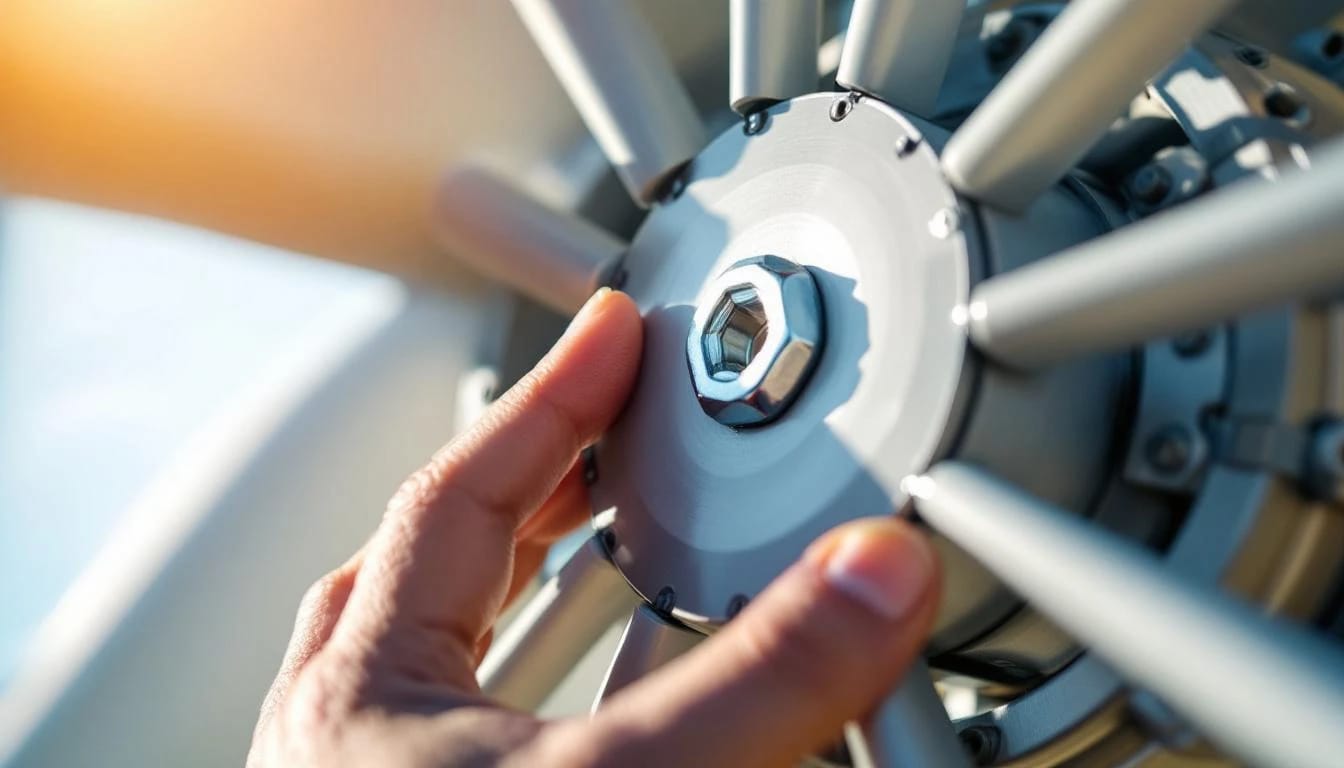
The Bergey Excel 15 installed costs between $75,000 and $105,000 for a complete residential grid-tie system in the United States. That figure includes the turbine ($28,000-$32,000), a guyed lattice or tilt-up tower ($18,000-$35,000), concrete foundation ($3,500-$8,000), electrical work to comply with NEC Article 705 ($4,000-$12,000), permits and engineering stamps ($1,500-$5,000), and professional installation labor ($8,000-$18,000). The wide range reflects tower height (80 ft vs. 120 ft), site accessibility, soil conditions, and regional labor rates. The 30% federal Residential Clean Energy Credit (IRS Form 5695, IRC §25D) reduces net out-of-pocket cost by $22,500-$31,500.
Breaking down the Bergey Excel 15 turbine cost
Bergey Windpower manufacizes the Excel 15 at its Oklahoma facility, and dealer pricing for the turbine alone sits between $28,000 and $32,000 FOB Norman, Oklahoma. That buys the nacelle, three 8.2 ft composite blades, tail assembly, and charge controller. The rotor diameter spans 15 feet, and rated power hits 10 kW at 27 mph (manufacturer-specified wind speed).
Freight to the installation site adds $800-$2,200 depending on distance and whether the shipment requires a flatbed for the tower sections. Dealers often bundle freight into the quote, but verify whether it appears as a separate line item.
The turbine warranty runs ten years on most components and three years on the inverter. Extended warranty packages add $1,200-$1,800 and cover an additional five years.
Tower cost: the single largest expense after the turbine
Tower selection drives total project cost more than any other variable. The Bergey Excel 15 operates on towers between 80 and 120 feet, and each design carries distinct cost and installation implications.
A guyed lattice tower at 100 feet costs $18,000-$25,000. The lattice design uses three steel legs, cross-bracing, and three or four guy-wire anchor points. Site preparation requires clearing a radius equal to 1.5 times the tower height—150 feet for a 100 ft tower—to accommodate guy wires. Anchor foundations consume 12-18 cubic yards of concrete across all anchor points.
A tilt-up tubular tower at the same height runs $28,000-$35,000. The monopole design eliminates guy wires, shrinks the site footprint, and allows one- or two-person raising and lowering with a gin pole and winch. The single foundation requires 8-12 cubic yards of engineered concrete with rebar cage, and the tilt mechanism adds moving parts that need periodic inspection.
Bergey dealers offer both tower types, and most recommend the tilt-up for residential sites with limited acreage or when maintenance access matters. The guyed lattice works well on open rural properties where guy-wire footprint poses no issue.
Tower height directly correlates with energy production. The DOE Small Wind Guidebook emphasizes that wind speed increases with height, and turbulence decreases above ground obstructions. A 20-foot height increase can boost annual energy capture by 15-25%, enough to justify the $6,000-$10,000 tower premium in most wind regimes above Class 3.
Foundation and site preparation expenses
The foundation for a guyed lattice tower system includes one central base pad (4 ft × 4 ft × 4 ft) and three or four guy-wire anchor pads (3 ft × 3 ft × 3 ft each). Material and labor total $3,500-$5,500 when the site offers accessible soil and level grade.
Tilt-up tower foundations require deeper embedment and heavier steel. A typical 100 ft tilt-up base measures 6 ft × 6 ft × 5 ft and contains a custom rebar cage welded to the tower's base flange bolts. Concrete volume reaches 6.7 cubic yards, and installed cost runs $5,000-$8,000.
Rocky soil, high water tables, expansive clay, or frost-depth requirements inflate foundation costs. Drilling through bedrock for guy anchors adds $800-$1,500 per anchor. Engineered fill and compaction on soft soil sites can exceed $2,000.
Site clearing and access grading add $1,200-$3,500 unless the property already has cleared land and vehicle access to within 50 feet of the tower base. Crane access for guyed towers requires a firm, level staging area, and rental rates for a 30-ton crane run $1,800-$3,200 per day in most markets.
Electrical work and NEC Article 705 compliance
Grid-tie systems must comply with NEC Article 705 interconnection requirements, and the authority having jurisdiction (AHJ)—typically the county or municipal building department—enforces local amendments. Electrical scope includes underground or overhead conductor run from the tower to the main service panel, disconnect switches, overcurrent protection, and inverter installation.
A licensed electrician charges $4,000-$8,000 for a straightforward installation with a 200-amp main panel located within 150 feet of the tower. Conductor run uses direct-burial wire (typically 4 AWG or 2 AWG copper for a 10 kW turbine) or conduit with THWN-2 wire. Trenching adds $6-$12 per linear foot when rock or roots complicate digging.
The grid-tie inverter converts the turbine's variable-frequency wild AC into synchronized 240 VAC at 60 Hz. Bergey supplies a Gridtek 10 inverter matched to the Excel 15's output characteristics. The inverter mounts indoors or in a weatherproof outdoor enclosure near the main panel. Installation requires a dedicated 50-amp breaker in the panel and compliance with the sum-of-breakers rule: the main breaker rating plus the turbine breaker rating cannot exceed the busbar rating by more than 20%.
Utility interconnection inspection fees range from $200 to $800 depending on the utility. Some investor-owned utilities require third-party commissioning tests, adding $600-$1,200. Municipal utilities and rural electric cooperatives often waive inspection fees for systems under 25 kW.
Remote or off-grid sites skip utility interconnection but add battery banks and charge controllers. A 48-volt battery system with 30 kWh of usable capacity costs $12,000-$18,000, not including the battery enclosure and monitoring equipment.
Permits, engineering, and regulatory compliance
Building permits for towers above 35 feet typically require stamped structural drawings. A licensed professional engineer (PE) charges $1,200-$2,800 to review site conditions, specify foundation details, and stamp drawings for submittal to the building department. Permit fees themselves run $300-$1,000 depending on jurisdiction and project valuation.
FAA Part 77 notification applies to any structure exceeding 200 feet AGL or located within specific distances of airports. A 120 ft tower rarely triggers FAA review in rural areas, but properties within 20,000 feet of a public airport require filing FAA Form 7460-1 at least 45 days before construction. The process costs nothing but delays the project if the FAA requires obstruction lighting (uncommon for residential towers under 200 ft).
Local zoning ordinances govern setbacks and height limits. Suburban and exurban counties often impose setback rules equal to 1.1-1.5 times the total tower height, measured from property lines and occupied structures. A 100 ft tower thus needs 110-150 feet of clearance in all directions. Variance hearings add $400-$1,200 in application fees and may require a land-use attorney if neighbors object.
Homeowners association (HOA) covenants frequently prohibit towers outright or cap heights at 35-50 feet. Legal challenges to HOA wind-turbine restrictions have succeeded in states with "solar and wind access" laws (Colorado, Utah, Wisconsin), but litigation costs dwarf project savings.
Professional installation labor and project timeline
Bergey dealers and independent installers charge $8,000-$18,000 for turnkey installation labor. The range reflects crew size, equipment rental, travel distance, and whether the dealer breaks out tower assembly as a separate line item.
A typical installation timeline spans five to eight days of on-site work:
- Days 1-2: Foundation excavation, rebar placement, concrete pour, cure time
- Day 3: Tower assembly (guyed) or base section erection (tilt-up)
- Day 4: Turbine mounting, wiring, guy-wire tensioning or tilt-up raising
- Day 5: Electrical connection, inverter commissioning, utility inspection
Weather delays extend the schedule, especially during concrete curing in temperatures below 50°F. Installers in northern climates avoid winter starts unless heated-concrete blankets are budgeted.
Crane rental for guyed lattice towers adds $1,800-$3,200 and requires the crane on-site for four to six hours. Tilt-up towers eliminate crane costs but demand a three- or four-person crew for safe raising.
Federal tax credit and state incentives
The federal Residential Clean Energy Credit (IRC §25D) covers 30% of qualified expenditures through 2032, stepping down to 26% in 2033 and 22% in 2034. Qualified costs include the turbine, tower, foundation, installation labor, electrical materials, and permit fees. Homeowners claim the credit on IRS Form 5695 and carry forward unused credit if it exceeds tax liability in the installation year.
A $90,000 all-in project yields a $27,000 credit, dropping net cost to $63,000. The credit applies only to primary or secondary residences, not rental properties or commercial installations (which qualify for the Investment Tax Credit under IRC §48).
State incentives vary. The Database of State Incentives for Renewables & Efficiency (DSIRE) tracks programs by ZIP code. As of 2024, notable state programs include:
- New York: 25% state tax credit (capped at $5,000) stacks with the federal credit
- Vermont: Performance incentive of $0.04/kWh for ten years through Renewable Energy Credits
- Montana: $500 tax credit (modest but uncapped by system size)
- Oklahoma: Sales tax exemption on equipment (saves $2,000-$2,800 on an Excel 15)
Net metering policies affect long-term savings but do not reduce upfront costs. States with retail-rate net metering (Colorado, Massachusetts, New Jersey) allow homeowners to bank excess generation as kWh credits, maximizing return on investment.
Hidden costs and budget buffers
Several expenses emerge after initial quotes:
- Soil testing: $400-$800 if the PE requires a geotechnical report for foundation design
- Utility transformer upgrade: $1,200-$4,500 if the existing pad-mount transformer cannot handle the turbine's fault current
- Guy-wire lightning protection: $600-$1,200 for grounding rods and bonding at each anchor point
- Obstruction lighting (if FAA-required): $2,000-$3,500 for dual red LED fixtures and photocell controls
- Re-seed and landscaping: $800-$1,500 to restore trenched areas and anchor pads
Budget a 10-15% contingency for these line items. A $90,000 nominal project should carry a $99,000-$103,500 worst-case estimate.
Comparing the Excel 15 to peer turbines
| Turbine Model | Rated Power | Rotor Diameter | Est. All-In Cost (100 ft tower) | $/Watt Installed |
|---|---|---|---|---|
| Bergey Excel 15 | 10 kW | 15 ft | $75,000-$105,000 | $7.50-$10.50 |
| Primus Air 40 | 10 kW | 13.1 ft | $68,000-$95,000 | $6.80-$9.50 |
| Endurance E-3120 | 50 kW | 37 ft | $220,000-$280,000 | $4.40-$5.60 |
The Bergey Excel 15 costs more per watt than larger turbines but targets residential sites where a 50 kW machine is impractical. The Primus Air 40 offers similar output at slightly lower cost, but Bergey's Oklahoma manufacturing base, established dealer network, and ten-year track record command a premium.
For more on the Excel 15's technical specifications, see our Bergey Excel 15 technical review. Buyers evaluating multiple brands should consult our 10 kW wind turbine comparison.
Maintenance and long-term ownership costs
Annual maintenance costs $400-$800 if the owner handles visual inspections and basic bolt checks. Professional service contracts run $1,200-$2,000 per year and include:
- Guy-wire tension adjustment (guyed towers only)
- Bearing inspection and lubrication
- Blade leading-edge inspection for erosion
- Inverter filter replacement
- Grounding system continuity test
Bergey recommends a major service every five years ($2,500-$4,000), which includes climbing the tower, removing the nacelle for bearing replacement, and inspecting internal wiring.
Blade replacement becomes necessary after 15-20 years in abrasive environments (coastal salt spray, desert sand). A set of three composite blades costs $3,200-$4,200, and installation requires lowering the tower or hiring a climber.
For advice on DIY versus professional maintenance, see our guide to small wind turbine maintenance schedules.
Real-world cost examples from recent installations
A North Dakota rancher installed an Excel 15 on a 100 ft guyed lattice tower in 2023. The itemized invoice showed:
- Turbine and freight: $30,400
- Tower and hardware: $19,200
- Foundation (four pads): $4,600
- Electrical and inverter: $6,800
- Permits and engineering: $1,800
- Installation labor: $10,500
- Total: $73,300 (before $21,990 federal credit)
A Vermont homeowner chose a 120 ft tilt-up tower in 2024. Rocky soil and ledge required hydraulic rock drilling for the foundation. Costs included:
- Turbine and freight: $31,200
- Tilt-up tower: $34,500
- Foundation with rock drilling: $9,800
- Electrical with 220 ft wire run: $9,200
- Permits, engineering, FAA filing: $2,400
- Installation labor: $16,800
- Total: $103,900 (before $31,170 federal credit)
These examples anchor the $75,000-$105,000 range and show how site-specific factors swing the final number.
Is the Excel 15 cost-effective for your site?
The Excel 15 pays back in 12-18 years in Class 3 wind sites (average wind speed 8-9 mph at hub height) with retail electricity rates above $0.15/kWh. States with high electricity costs—California, Massachusetts, New York, Hawaii—accelerate payback.
The DOE Small Wind Guidebook notes that wind speed increases with height, and that turbulence above ground-level obstacles significantly impacts energy production. A site evaluation by a Bergey dealer includes anemometer data logging for three to twelve months and models annual kWh output. Expect 10,000-18,000 kWh/year from a 100 ft tower in a Class 3 site.
For homeowners in marginal wind sites (Class 2, average 7 mph), rooftop solar often delivers better return on investment. Consult our wind vs. solar comparison for residential sites to weigh options.
Financing options and payment structures
Few lenders offer dedicated small-wind loans, but several paths exist:
- Home equity line of credit (HELOC): Rates average 7-9% as of 2024, and interest may be tax-deductible
- Cash-out refinance: Works if mortgage rates remain favorable and the home has sufficient equity
- Personal loan: Unsecured terms run 9-14% for $75,000-$105,000 and require strong credit
- Contractor financing: Some Bergey dealers partner with specialty lenders offering 5.99-8.99% APR for renewable-energy projects
The federal tax credit applies regardless of financing method, but the homeowner must have sufficient tax liability to claim the full credit in the year the system is placed in service.
For additional context on project financing, see our overview of small wind turbine financing options.
Can I install a Bergey Excel 15 myself to save money?
The turbine manufacturer and most jurisdictions require licensed electrician involvement for grid-tie wiring under NEC Article 705. Owner-builders can legally handle tower assembly, foundation work, and mechanical installation in some states, but few homeowners possess the rigging skills and equipment to safely raise a 100 ft tower. DIY installations save $8,000-$18,000 in labor but expose the owner to liability if the tower fails or someone is injured. Homeowner's insurance may deny claims for non-professional installations.
Does homeowner's insurance cover the turbine and tower?
Standard HO-3 policies cover permanently installed wind turbines as "other structures" subject to the policy limit (typically 10% of dwelling coverage). A $300,000 dwelling policy thus provides $30,000 coverage—insufficient for an Excel 15 system. Riders or separate equipment floaters cost $200-$600 annually and cover the full replacement value. Some insurers surcharge wind-turbine properties by 5-10% or exclude wind-related losses. Secure written confirmation before installation.
How long does permitting take?
Straightforward rural applications clear in four to eight weeks if the tower height complies with zoning and no variances are needed. Suburban jurisdictions with stricter zoning or HOA involvement stretch timelines to 12-20 weeks. FAA Part 77 review adds 45-60 days if required. Start the permitting process before ordering equipment to avoid storage fees while waiting for approval.
What happens if wind production is lower than projected?
Bergey dealers use WINDOGRAPHER or similar software to model energy production based on site anemometry, but actual output varies with microclimatic conditions and maintenance quality. Underperformance by 10-15% is common in the first year as the owner learns optimal shutdown protocols and blade-pitch adjustments. Underperformance beyond 20% suggests either poor site selection or equipment malfunction. The Bergey warranty covers defects but not site-selection errors.
Do property values increase with a wind turbine?
Appraisal studies show mixed results. Some buyers view turbines as income-generating assets that justify premium pricing, while others perceive noise, visual impact, and maintenance obligations as negatives. The California Energy Commission found that homes with small wind systems sold at a 3-6% premium in rural markets but at a 2-4% discount in suburban settings. Appraisers rarely assign specific value to renewable-energy systems unless net-metering contracts transfer to the buyer.
Bottom line
The Bergey Excel 15 installed costs $75,000-$105,000 all-in, with tower selection and site conditions driving the variance. The 30% federal tax credit reduces net cost to $52,500-$73,500, and strong wind sites in high-electricity-cost states deliver payback in 12-18 years. Contact a Bergey dealer for a site evaluation and itemized quote, verify local zoning and setback rules, and secure electrical and structural permits before committing. Professional installation and licensed electrical work are non-negotiable for safety and code compliance under NEC Article 705.
Share this article
windturbinehome.com/s/592b57
Editorial note: This article was researched and written by a member of the Wind Turbine Home editorial team. AI-assisted tools were used for spell-checking and light grammar review only — all research, analysis, and conclusions are our own. Our editorial policy prohibits sponsored content and paid placements. Read our editorial policy →
Related reading
wind turbine brands
Aeolos H-Series Wind Turbine Review: Build Quality & Output
Independent review of Aeolos H-series small wind turbines covering construction quality, real-world power output, and installation considerations for homes.
wind turbine brands
Bergey Excel 15 Review: Still the Residential Workhorse?
The Bergey Excel 15 remains a proven choice for serious residential wind power—but is this 7.5-kW turbine still worth its premium in 2025? Our review weighs performance, reliability, and real-world economics.

wind turbine brands
Best Home Wind Turbines in the UK: MCS-Certified Picks for 2026
MCS-certified small wind turbines for UK homes include Bergey Excel 1 (1kW), Evance R9000 (5kW), and SD6 (6kW). Proper site assessment and BS 7671 compliance are critical for safe, legal installation.

wind turbine brands
MCS-Certified Wind Turbines UK: MIS 3003 Standard Explained
MCS certification proves UK wind turbines meet MIS 3003 quality and safety standards. Required for Smart Export Guarantee payments and Permitted Development rights.
wind turbine brands
Cheapest 1 kW Wind Turbine: Where Budget Models Actually Work
Budget 1 kW wind turbines start at $800-1,400, but total installed cost hits $4,000-7,000. Learn which cheap models survive real-world use and where they pencil out.

wind turbine brands
Best Wind Turbines Under $1000 in 2026 | Buyer's Guide
Compare the top budget wind turbines under $1000 for homes in 2026. We tested vertical-axis and small horizontal models for real-world power output and durability.
wind turbine brands
Best Wind Turbines Under $500 in 2026: Budget Models Tested
Budget wind turbines under $500 can generate 50-400W in steady winds. We tested seven models for build quality, real-world output, and warranty support.
wind turbine brands
Eclectic Energy D400 Review: Marine Micro-Wind Generator
The Eclectic Energy D400 delivers 400W peak output in a marine-grade package suited to boats, caravans, and coastal sheds—not grid-tied homes.

wind turbine brands
Is Southwest Windpower Out of Business? What Happened & Alternatives
Southwest Windpower closed in 2013 after manufacturing the popular Air Breeze and Whisper series turbines. Learn what caused the shutdown and which brands now fill the gap.