Primus Wind Power Air 40 Review: Real-World Output & Install
The Primus Air 40 delivers 38 W at 12.5 mph and 200 W peak in 28 mph winds—efficient for marine and off-grid sites but underpowered for grid-tied residential use.
Share this article
windturbinehome.com/s/3f74e5
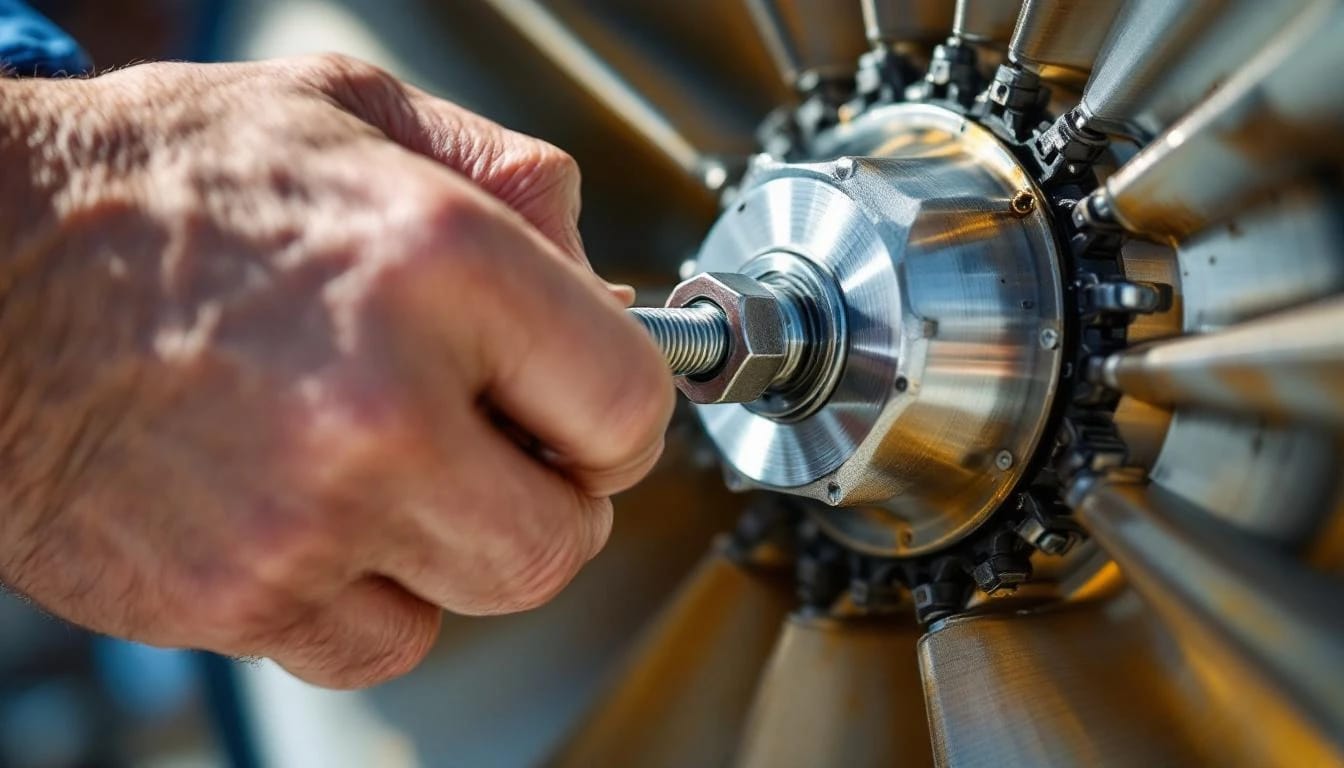
The Primus Wind Power Air 40 produces approximately 38 watts at 12.5 mph and reaches its 200-watt peak around 28 mph wind speed. Originally designed for marine battery charging and remote telecoms, this lightweight micro-turbine installs quickly on masts or sailboat arches but lacks the blade diameter and swept area to compete with larger residential machines for grid-tied production. The Air 40 suits off-grid cabins, RVs, and boat applications where silence, portability, and vibration-free operation matter more than monthly kilowatt-hour output.
Specifications and rated capacity
The Air 40 uses a three-blade, 46-inch diameter rotor made of carbon-reinforced composite. Rated output is 200 W at 28 mph (12.5 m/s), with a start-up wind speed of 7 mph (3.1 m/s). The swept area totals 1,520 square inches, substantially smaller than the 3,217 square inches swept by the Air Breeze predecessor and far below the 19.6 square feet common on 400-watt machines.
Primus ships the turbine with an internal charge controller and auto-brake feature that slows the rotor above 34 mph to protect the permanent-magnet alternator. The unit weighs 13 pounds without the tower mount, making it manageable for solo installation on 1.5-inch Schedule 40 steel pipe or pre-fabricated marine poles.
Voltage options include 12 V, 24 V, and 48 V DC configurations, selected at purchase. The alternator is a three-phase brushless design with neodymium magnets; six internal diodes rectify AC to DC before output reaches the battery terminals.
Real-world energy production
Monthly yield depends entirely on average wind speed. At a site averaging 10 mph (4.5 m/s)—the U.S. residential median—the Air 40 produces roughly 8-12 kWh per month. A cabin drawing 300 Wh per day (9 kWh monthly) can meet baseline loads if supplemented by 200-300 watts of solar panels.
In a 12 mph average wind regime, monthly output climbs to 18-22 kWh. Coastal installations with consistent 14 mph averages occasionally record 30-35 kWh in winter months, though summer calms drop production to single digits. The turbine generates negligible power below 8 mph, and the exponential power curve means 90 percent of monthly energy arrives during the windiest 20 percent of hours.
For comparison, a Bergey Excel 1 with its 2.5-meter rotor delivers 100-150 kWh per month at the same 12 mph average site. The Air 40's small swept area and 200-watt ceiling make it a charging accessory rather than a primary power source.
Installation requirements and NEC compliance
The Air 40 installs on guyed or freestanding masts between 20 and 35 feet tall. Primus recommends 1.5-inch Schedule 40 galvanized or stainless steel pipe, secured with a concrete base measuring 18 inches diameter and 36 inches deep for anchoring guy points. Three guy wires at 120-degree spacing, tensioned to 150 pounds, stabilize masts above 25 feet.
NEC Article 705 (Interconnected Electric Power Production Sources) applies even to battery-charge systems if a future inverter ties to the grid. Run three conductors—positive, negative, and ground—in UV-resistant conduit rated for outdoor exposure. Use 10 AWG copper for runs under 50 feet and 8 AWG for 50-100 feet to minimize voltage drop below 3 percent at full 200-watt output.
Ground the turbine frame and tower with a #6 bare copper wire bonded to an 8-foot copper-clad ground rod driven below the frost line. Tower height above 20 feet may trigger FAA Part 77 notification in proximity to airports; use the FAA's online obstruction tool to confirm whether filing is required.
Local building permits almost always apply. Jurisdictions classify turbines as accessory structures and enforce setbacks—commonly 1.5 times tower height from property lines. Noise ordinances rarely affect the Air 40, which produces 28-32 dBA at 12 mph, quieter than a refrigerator compressor. A licensed electrician must verify compliance with adopted NEC code and sign off on battery-bank wiring, especially when lithium-ion batteries or split-phase inverters are present.
Noise, vibration, and maintenance
The Air 40 operates at 28-32 dBA in 12 mph wind and 38-42 dBA at 20 mph. Blade-tip speed reaches 550 RPM at full power, low enough to eliminate the high-frequency whine heard from faster micro-turbines. Neighbors 100 feet away detect no sound above ambient breeze noise.
Vibration transmission depends on mounting rigidity. Guyed masts flex slightly, absorbing rotor harmonics; rigidly mounted poles on concrete footings can transmit low-frequency hum into attached structures. Marine-grade vibration isolators (rubber or neoprene pads) between the turbine yaw bearing and mast cap eliminate structure-borne noise when the tower is deck- or roof-mounted.
Primus specifies annual inspections: check guy-wire tension, bolt torque, and brush away salt or dust from the alternator cooling vents. The carbon blades resist UV degradation and require no refinishing. Bearing replacement intervals exceed 10 years in non-corrosive environments; marine installations should flush bearings with freshwater every six months to prevent salt intrusion.
The auto-brake feature engages a mechanical stop when voltage exceeds safe battery-absorption levels, stalling the rotor until load draws the battery down. No manual intervention is required; the system resets automatically. Failures are rare but usually involve stuck brushes in older pre-2015 models—a design Primus revised with sealed contactless switches.
Battery sizing and charge-controller integration
The Air 40's internal charge controller regulates output to prevent battery overcharge, but external MPPT controllers improve harvest by 8-12 percent in variable wind. Pair the turbine with a 200-400 Ah battery bank at the system's nominal voltage (12 V, 24 V, or 48 V).
For a 12 V system, four 6-volt 200 Ah AGM batteries wired in series-parallel provide 400 Ah capacity and tolerate the Air 40's intermittent charging profile. Lithium iron phosphate (LiFePO₄) banks deliver better cycle life but require a dedicated battery management system (BMS) and temperature compensation—consult the battery manufacturer's wind-charging compatibility sheet.
When combining wind and solar, isolate each source with blocking diodes or independent charge controllers. The Midnite Classic 150 and Morningstar TriStar MPPT both accept wind-turbine DC input and coordinate with solar arrays, prioritizing whichever source delivers higher voltage at any given moment.
Battery temperature affects charge acceptance. The Air 40's controller includes a temperature sensor lead that adjusts voltage setpoints ±0.03 V per degree Celsius deviation from 25 °C. In freezing climates, house batteries indoors or insulate the enclosure with foam board and a thermostatically controlled heating pad to maintain 10-20 °C.
Cost, incentives, and payback
The Air 40 retails for approximately $650-$800 depending on voltage configuration and vendor. Add $200-$400 for tower materials (pipe, guy hardware, ground rod, concrete), $100-$150 for electrical conduit and wiring, and $300-$600 for professional installation if you lack rigging experience. Total project cost runs $1,250-$1,950 for a basic off-grid setup.
The federal Residential Clean Energy Credit (IRC §25D) allows a 30 percent tax credit on equipment and installation costs through 2032, reducing net outlay by $375-$585. File IRS Form 5695 with your annual return and retain all receipts. The credit applies only to systems serving a primary or secondary residence, not rental properties or businesses.
State incentives vary. California's Self-Generation Incentive Program (SGIP) excludes turbines under 1 kW. Colorado's Renewable Energy Property Tax Exemption exempts the turbine's assessed value from property tax. Check the DSIRE database for current rebates, sales-tax exemptions, and net-metering rules in your state.
Payback depends on displaced energy cost. If the Air 40 produces 15 kWh monthly and offsets electricity billed at $0.14 per kWh, annual savings total $25.20. At a net cost of $1,500 after federal credit, simple payback extends beyond 50 years—economically unattractive unless the turbine eliminates the need for a grid extension costing thousands per pole.
Off-grid users compare the Air 40's cost to running a generator. A 2 kW inverter generator consumes 0.15 gallons per hour at half load; replacing 15 kWh monthly from the turbine saves roughly 11 gallons of gasoline annually (at $3.50 per gallon, $38.50 savings), shortening payback to 40 years. The real value lies in reduced generator runtime, noise elimination, and zero fuel logistics.
Comparison: Air 40 vs. competitors
| Model | Rotor Diameter | Rated Power | Start Speed | 12 mph Output | Weight | Approx. Price |
|---|---|---|---|---|---|---|
| Primus Air 40 | 46 in | 200 W @ 28 mph | 7 mph | ~40 W | 13 lb | $700 |
| Primus Air Breeze | 46 in | 200 W @ 28 mph | 7 mph | ~38 W | 13 lb | $650 |
| Rutland 914i | 35 in | 90 W @ 28 mph | 7 mph | ~18 W | 14 lb | $600 |
| Superwind 350 | 47 in | 350 W @ 28 mph | 7 mph | ~70 W | 18 lb | $1,850 |
| Pikasola 400 W | 3.3 ft | 400 W @ 28 mph | 6 mph | ~95 W | 22 lb | $350 |
The Air Breeze offers identical output with older aesthetics and slightly higher noise; the 914i suits ultra-lightweight applications but sacrifices power. The Superwind 350 doubles output in the same footprint, justified for marine users who prioritize reliability over cost. The Pikasola 400 W undercuts price dramatically but reports of controller failures and blade delamination make it a gamble.
For residential off-grid installations seeking 100+ kWh monthly, the Bergey Excel 1 (1 kW rated) or Aeolos-H 1 kW deliver better return on tower investment. The Air 40 excels only where portability, quick setup, and whisper-quiet operation outweigh energy yield.
Warranty and manufacturer support
Primus Wind Power, a division of Southwest Windpower's successor entity, covers the Air 40 with a three-year limited warranty against defects in materials and workmanship. The warranty excludes damage from overspeed (rotor exceeding 35 mph without proper brake function), lightning, improper wiring, or unauthorized modifications.
Replacement rotors cost $180-$220; alternator rebuilds run $250-$300 including bearings and magnets. Primus maintains a Colorado service center with seven-day turnaround on most repairs. Third-party marine electronics vendors stock common wear parts and can ship overnight to coastal regions.
Customer reviews cite responsive email support but note that phone contact is limited to business hours. The company publishes detailed PDF manuals with wiring diagrams, torque specs, and troubleshooting flowcharts—useful for remote installers without cellular service.
Extended warranties are unavailable. Users planning long-term deployments buy a spare rotor and bearing set upfront; combined cost of $400 adds 30 percent to initial investment but ensures zero downtime over a decade.
Ideal use cases and site requirements
The Air 40 fits three scenarios particularly well. First, sailboats and live-aboard cruising vessels benefit from the turbine's 13-pound weight, stainless mounting hardware, and saltwater-resistant alternator seals. A single Air 40 maintains house batteries during multi-day passages when solar panels lie in shade under sails.
Second, off-grid cabins with modest loads—LED lighting, 12 V refrigerators, phone charging—pair the Air 40 with 300-400 watts of solar and a 400 Ah battery bank. Winter wind compensates for short days when snow covers panels. Sites averaging below 10 mph wind year-round should rely on solar as the primary source and treat wind as seasonal supplement.
Third, remote telecommunications and monitoring stations use the Air 40 for trickle-charging backup batteries. Its 7 mph start speed ensures some daily production even in sheltered valleys, and the auto-brake protects unattended equipment during storms.
The Air 40 is a poor choice for grid-tied homes seeking net-metering revenue, urban lots with obstructed wind flow, or anyone expecting the turbine to cover electric heat or air conditioning. The 200-watt ceiling caps contribution to roughly 5 percent of a typical 900 kWh monthly U.S. household load, even at excellent wind sites.
Minimum recommended average wind speed is 10 mph annual mean at hub height. Below 9 mph, production falls under 8 kWh monthly—too little to justify tower construction. Request a one-year wind assessment using a data logger mounted at planned turbine height, or consult the National Renewable Energy Laboratory's wind resource maps (30-meter height) and apply a 0.7 reduction factor for residential 25-foot towers.
Common installation mistakes
Four errors account for most Air 40 underperformance. First, mounting below 20 feet places the rotor in ground turbulence and building wake, cutting output by 40-60 percent. Every foot above 25 feet adds 5-8 percent yield; prioritize height over rotor size when budget allows only one.
Second, inadequate grounding invites lightning damage. The #6 ground wire must run uninterrupted from turbine frame to ground rod with zero splices or junction boxes. Use exothermic welds or listed compression connectors; wire nuts and twist-on terminals corrode within two years.
Third, battery banks sized too small force the charge controller to brake frequently, wasting wind. A 100 Ah 12 V bank reaches absorption voltage within three hours of moderate wind; the turbine then idles while energy goes unused. Size banks to absorb at least six hours of continuous 200-watt input—minimum 200 Ah at 12 V, 100 Ah at 24 V.
Fourth, mixing wire gauges or using automotive cable creates voltage drop that tricks the charge controller into premature shutoff. Run continuous 10 AWG or 8 AWG marine-grade stranded copper from turbine to battery, with no mid-run splices. Label polarity at both ends; reversing leads destroys the rectifier diodes instantly.
Installers without electrical trade experience should hire a licensed electrician to verify NEC Article 705 compliance, bond the grounding system to the main service panel ground, and test voltage drop under load. Code violations void homeowner's insurance; a $500 professional inspection prevents a $50,000 liability claim.
Can the Primus Air 40 charge lithium batteries directly?
The Air 40's internal controller uses bulk-absorption-float voltage setpoints optimized for lead-acid chemistry. Lithium iron phosphate (LiFePO₄) requires constant-voltage charging with abrupt cutoff—a profile the turbine's controller cannot execute. Install a lithium-compatible MPPT controller (Victron SmartSolar 100/30 or Morningstar TriStar) between the turbine and battery, and bypass the internal regulator by connecting turbine leads directly to the external controller's wind-input terminals. The external controller then manages lithium-specific charge curves and cell balancing.
How loud is the Air 40 compared to a box fan?
At 12 mph wind, the Air 40 measures 28-32 dBA at the turbine and is inaudible beyond 50 feet. A typical box fan on low speed produces 38-42 dBA; on high, 55-60 dBA. The turbine's sound resembles a soft whoosh rather than mechanical hum, and blade passage frequency (9-10 Hz at 550 RPM) falls below the range where humans perceive discrete pulses. Neighbors report the turbine is quieter than wind rustling through deciduous trees.
Does the Air 40 require FAA notification or lighting?
FAA Part 77 requires notification for structures exceeding 200 feet above ground level or within defined approach slopes near airports. A 30-foot residential tower rarely triggers notification, but properties within five miles of a public airport or helipad should file the online FAA Form 7460-1 (Notice of Proposed Construction) 45 days before installation. The FAA typically issues a "no-hazard determination" within 20 days. Lighting is not required for structures under 200 feet unless specifically requested by the FAA in mountainous terrain or near military flight zones.
Can I install the Air 40 on a roof-mounted tripod?
Roof mounting is mechanically feasible using a tripod with lag-bolted legs secured to rafters, but structure-borne vibration transmits through framing into living spaces as a low hum. Even with isolation pads, occupants report annoyance once rotor speed exceeds 400 RPM. Guy wires attached to roof edges also create tripping hazards and complicate shingle replacement. Use freestanding or guyed ground-mounted masts whenever possible; if roof mounting is unavoidable, limit tower height to 10 feet, install four-inch neoprene vibration isolators, and secure guy anchors to ground-level earth screws rather than roof structure.
What happens during sustained winds above 40 mph?
The Air 40's auto-brake engages mechanically when rotor RPM generates voltage exceeding the battery's maximum safe absorption level, typically around 34-36 mph wind speed. The turbine slows to 50-100 RPM and "coasts" without producing power until wind drops. In hurricane-force winds above 50 mph, best practice is to manually furl the turbine by loosening the yaw bolt and rotating the tail boom 90 degrees, then lashing the rotor to the mast with a ratchet strap. This procedure takes under five minutes and eliminates risk of blade shedding or alternator overspeed. Primus provides a detailed storm-prep checklist in the installation manual.
Bottom line
The Primus Wind Power Air 40 excels as a portable, silent, low-maintenance battery charger for marine, RV, and small off-grid cabin applications where 10-20 kWh monthly supplements solar or reduces generator runtime. Its 200-watt peak and small swept area cannot compete with larger residential turbines for grid-tied energy production or whole-home off-grid power. If your site averages 10+ mph wind and you need a set-it-and-forget-it charging solution under $2,000 installed, the Air 40 delivers proven reliability in a whisper-quiet package. Compare your average wind speed, daily load, and battery capacity against the real-world output figures here—then decide whether this micro-turbine's niche strengths align with your energy goals. For most grid-connected homes, invest the same budget in additional solar panels; for live-aboard sailors and remote cabin owners, the Air 40 remains a solid workhorse.
Share this article
windturbinehome.com/s/3f74e5
Editorial note: This article was researched and written by a member of the Wind Turbine Home editorial team. AI-assisted tools were used for spell-checking and light grammar review only — all research, analysis, and conclusions are our own. Our editorial policy prohibits sponsored content and paid placements. Read our editorial policy →
Related reading
wind turbine brands
Aeolos H-Series Wind Turbine Review: Build Quality & Output
Independent review of Aeolos H-series small wind turbines covering construction quality, real-world power output, and installation considerations for homes.
wind turbine brands
Bergey Excel 15 Review: Still the Residential Workhorse?
The Bergey Excel 15 remains a proven choice for serious residential wind power—but is this 7.5-kW turbine still worth its premium in 2025? Our review weighs performance, reliability, and real-world economics.
wind turbine brands
Best Home Wind Turbines in the UK: MCS-Certified Picks for 2026
MCS-certified small wind turbines for UK homes include Bergey Excel 1 (1kW), Evance R9000 (5kW), and SD6 (6kW). Proper site assessment and BS 7671 compliance are critical for safe, legal installation.
wind turbine brands
MCS-Certified Wind Turbines UK: MIS 3003 Standard Explained
MCS certification proves UK wind turbines meet MIS 3003 quality and safety standards. Required for Smart Export Guarantee payments and Permitted Development rights.
wind turbine brands
Cheapest 1 kW Wind Turbine: Where Budget Models Actually Work
Budget 1 kW wind turbines start at $800-1,400, but total installed cost hits $4,000-7,000. Learn which cheap models survive real-world use and where they pencil out.
wind turbine brands
Best Wind Turbines Under $1000 in 2026 | Buyer's Guide
Compare the top budget wind turbines under $1000 for homes in 2026. We tested vertical-axis and small horizontal models for real-world power output and durability.
wind turbine brands
Best Wind Turbines Under $500 in 2026: Budget Models Tested
Budget wind turbines under $500 can generate 50-400W in steady winds. We tested seven models for build quality, real-world output, and warranty support.
wind turbine brands
Eclectic Energy D400 Review: Marine Micro-Wind Generator
The Eclectic Energy D400 delivers 400W peak output in a marine-grade package suited to boats, caravans, and coastal sheds—not grid-tied homes.
wind turbine brands
Is Southwest Windpower Out of Business? What Happened & Alternatives
Southwest Windpower closed in 2013 after manufacturing the popular Air Breeze and Whisper series turbines. Learn what caused the shutdown and which brands now fill the gap.