Do Wind Turbines Work at Night? Power Generation After Dark
Wind turbines generate electricity 24/7 whenever wind blows, including at night. Unlike solar panels, small wind systems often produce more power after sunset.
Share this article
windturbinehome.com/s/c53d7b
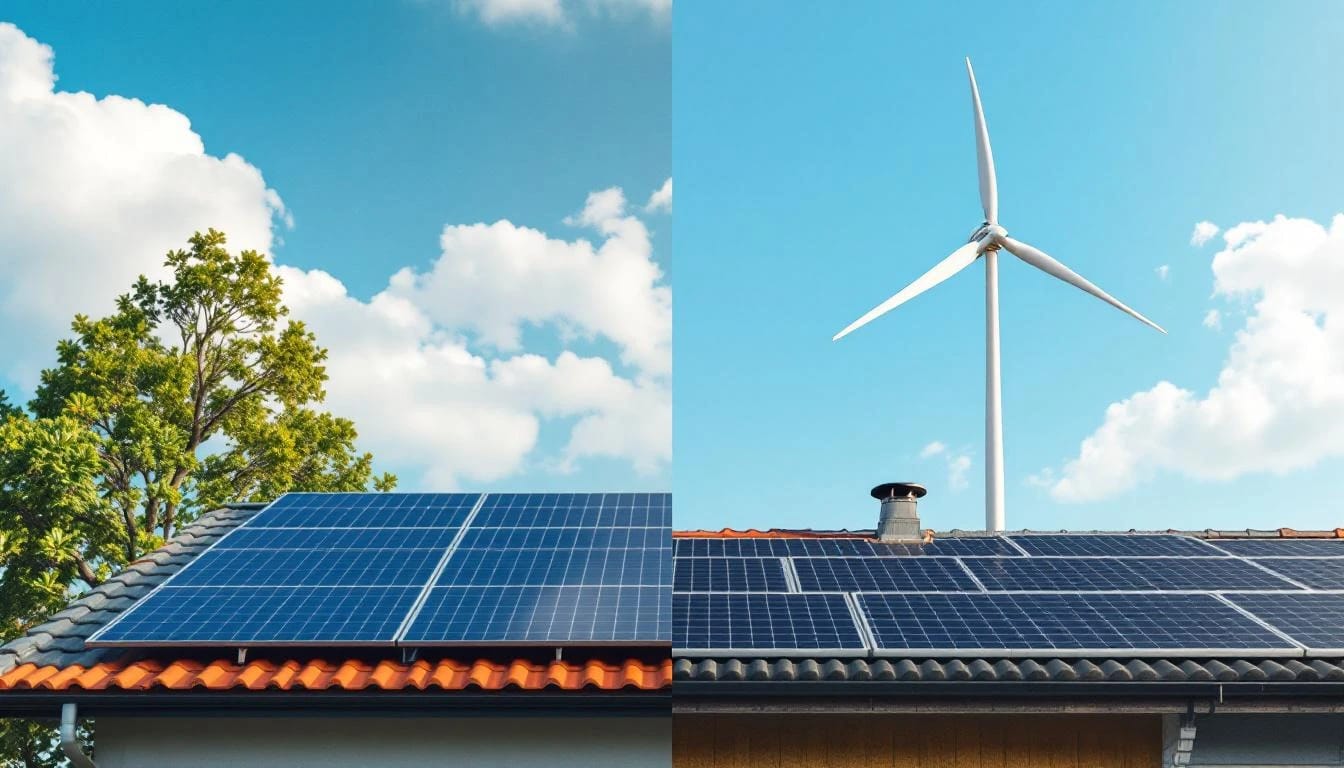
Yes, wind turbines work at night—and many residential systems generate more electricity after dark than during the day. Wind turbines convert moving air into electricity through mechanical rotation, a process completely independent of sunlight. In fact, nighttime winds often blow stronger and more consistently than daytime breezes because the sun stops heating the ground, eliminating thermal turbulence. Homeowners with small wind turbines frequently see their strongest output between 10 PM and 6 AM, making wind an excellent complement to solar in hybrid renewable systems.
Why Wind Turbines Generate Power Around the Clock
Wind turbines operate on kinetic energy—the energy of motion. When air molecules move across turbine blades, they exert force that spins the rotor. That rotor connects to a generator, which converts mechanical rotation into electrical current. No part of this process requires daylight, only moving air above the turbine's cut-in speed (typically 6–9 mph for residential models).
The Bergey Excel 10, a popular 10 kW horizontal-axis turbine, starts generating at 5.6 mph and reaches rated output at 24.6 mph. These wind speeds occur just as often—or more often—at night in many locations. The Department of Energy's Small Wind Guidebook confirms that wind turbines convert kinetic energy whenever wind blows, with no dependency on solar radiation.
Unlike photovoltaic panels, which produce zero watts in darkness, a small wind turbine with steady 12 mph winds at 2 AM delivers the same power as at 2 PM. This makes wind turbines uniquely suited for off-grid cabins, RV parks, and homes in regions where peak electricity demand occurs during evening hours.
How Nighttime Winds Often Exceed Daytime Output
Atmospheric physics favors nighttime wind generation. During daylight, the sun heats the ground unevenly, creating rising columns of warm air (thermals) and descending pockets of cool air. This thermal mixing produces gusty, turbulent winds that fluctuate rapidly—great for soaring hawks, frustrating for wind turbines trying to maintain steady rotation.
After sunset, the ground cools faster than the air above it. This temperature inversion stabilizes the atmosphere, allowing winds to blow more smoothly across the landscape. Meteorologists call this the "nocturnal low-level jet"—a ribbon of faster-moving air that forms a few hundred feet above the surface once thermal turbulence dissipates.
![INLINE: Wind speed comparison chart showing higher average speeds at night versus day across different tower heights]
Residential turbines mounted on 80–120 foot towers (the minimum recommended height for horizontal-axis systems) tap directly into these smoother nighttime winds. The Primus Air 40, a 2.2 kW turbine, typically sees a 15–25% bump in monthly kWh production from overnight generation compared to equal daylight hours, assuming similar average wind speeds.
Vertical-axis turbines like the Aeolos-V 3 kW also benefit from stable nighttime airflow, though their lower efficiency partially offsets the advantage. Still, any wind turbine producing 800 W at midnight helps offset the refrigerator, well pump, and HVAC loads that never sleep.
Wind and Solar: Different Generation Schedules
The day-night difference between wind and solar creates compelling opportunities for hybrid systems. A typical 5 kW solar array in Kansas generates 90% of its daily production between 9 AM and 4 PM, peaking at noon. A Bergey Excel 1 (1 kW wind turbine) at the same site might produce 40% of its output between 8 PM and 6 AM, depending on local wind patterns.
This complementary scheduling reduces battery bank size in off-grid applications. Instead of storing enough solar energy to power a home through 15 hours of darkness, homeowners can rely on the wind turbine to carry part of the nighttime load directly. The result: smaller, less expensive battery systems and fewer discharge cycles that degrade cell chemistry.
Grid-tied systems benefit differently. Net metering policies vary by state (check the DSIRE database for local programs), but many utilities credit nighttime wind generation at the same retail rate as daytime solar exports. In time-of-use rate structures, nighttime wind power may actually earn higher credits because it offsets expensive evening peak rates when the grid relies on natural gas peaker plants.
Seasonal and Geographic Nighttime Performance Patterns
Nighttime wind generation varies by geography and season more than most homeowners expect. Great Plains states—Montana, Wyoming, North Dakota, Kansas—experience their strongest average winds during spring nights when low-pressure systems track across the continent. A Skystream 3.7 turbine in western Kansas might generate 60% of its March production after dark, compared to only 35% during calm July nights.
Coastal regions see different patterns. Ocean thermal effects drive onshore winds that strengthen in late afternoon and persist through evening, then weaken after midnight as land and sea temperatures equalize. A small turbine in coastal Maine or Washington could produce steady power from 4 PM to 11 PM, then see output drop until morning thermals resume.
Mountain terrain introduces complexity. Valleys channel nighttime katabatic winds—cold air draining downslope after sunset—which can briefly boost turbine output. However, surrounding peaks also create wind shadows and rotors (turbulent eddies) that reduce overall nighttime generation. The Small Wind Guidebook emphasizes site-specific wind resource assessment using anemometer data collected over at least one full year.
Before purchasing any turbine, collect wind speed data at the proposed hub height using a data-logging anemometer. Inexpensive handheld devices and ground-level readings underestimate actual generation potential by 30–50%. Professional installers often mount a temporary met tower with sensors at 80–100 feet to capture nighttime wind profiles accurately.
Battery Storage and Nighttime Wind Charging
Nighttime wind generation transforms battery-based systems. Off-grid homes traditionally size battery banks to store 3–5 days of solar production, accounting for cloudy stretches. Adding wind generation—especially nighttime output—reduces required capacity because batteries recharge while the home consumes power, not just during daylight storage windows.
Lithium iron phosphate (LiFePO4) batteries handle frequent nighttime charge cycles better than flooded lead-acid. A Pikasola 2 kW vertical-axis turbine generating 10–15 kWh overnight can recharge a 20 kWh battery bank from 30% to 80% state of charge, ready for the next day's solar contribution. Lead-acid batteries degrade faster under similar daily cycling.
Charge controllers designed for wind (not solar MPPT units) handle the variable voltage and frequency from turbine generators. Brands like Xantrex, Morningstar, and Midnite Solar manufacture hybrid controllers that manage both solar and wind inputs, diverting excess nighttime generation to dump loads—electric water heaters, for example—when batteries reach full charge.
Grid-tied systems skip storage complexity entirely. A modern grid-tie inverter (installed per NEC Article 705 requirements by a licensed electrician) synchronizes turbine output with utility frequency and voltage, feeding nighttime generation directly into the home's breaker panel. Any excess flows to the grid for net metering credits.
Noise and Neighbor Considerations for 24/7 Operation
Continuous nighttime operation raises concerns about acoustic emissions. Horizontal-axis turbines generate two types of noise: mechanical (gearbox, generator bearings) and aerodynamic (blade tips slicing through air). Nighttime's quiet background amplifies both, especially in suburban neighborhoods where daytime traffic and activity mask turbine sounds.
The Bergey Excel 10 produces approximately 45–50 dB(A) at rated wind speed, measured 100 feet from the tower base. That's comparable to a quiet conversation or background music—audible but not intrusive. Vertical-axis designs like the Aeolos-V series run slightly quieter (40–45 dB(A)) because blade tip speeds remain lower, though lower efficiency means you need a larger swept area for equivalent power.
Setback regulations address noise indirectly by mandating minimum distances between turbines and property lines. Many jurisdictions require 1.5× tower height or 150–300 feet, whichever is greater. Montana's 2013 small wind legislation, for example, sets 300-foot minimums in residential zones. Check county ordinances early—some HOAs and municipalities prohibit turbines outright regardless of noise levels.
FAA Obstruction Marking and Nighttime Lighting Requirements
Turbines operating at night sometimes trigger Federal Aviation Administration (FAA) regulations under Part 77. Any structure exceeding 200 feet above ground level requires FAA notification and potential obstruction marking—usually flashing red lights.
Most residential turbines stay well below this threshold. An 80-foot tower supporting a Primus Air 40 (total height roughly 90 feet including blades) needs no marking. However, turbines in approach paths to small airports or within 20,000 feet of runway thresholds may require notification even below 200 feet. File FAA Form 7460-1 early in the planning process.
If lighting is required, LED obstruction beacons consume minimal power—typically 20–40 watts—and can run from the turbine's own generation. Some owners add photocells to activate lights only at night, though FAA regulations may mandate 24-hour operation depending on local air traffic.
Tax Credits and Incentives for 24/7 Generation Systems
The federal Residential Clean Energy Credit (IRC §25D) offers a 30% tax credit on qualifying small wind installations through 2032, stepping down to 26% in 2033 and 22% in 2034. Unlike solar credits, wind eligibility requires turbines to meet specific capacity and certification criteria, detailed on IRS Form 5695.
State-level incentives vary. California's Self-Generation Incentive Program (SGIP) primarily targets solar-plus-storage but occasionally includes wind in microgrid applications. Oklahoma offers sales tax exemptions on wind equipment purchases. Montana's Alternative Energy Investment Tax Credit provides up to $500 for residential wind systems. The DSIRE database maintains current listings for all 50 states.
Utility-sponsored programs sometimes pay higher rates for nighttime generation under time-of-use tariffs. Idaho Power's Schedule 84 net metering, for example, credits excess generation at approximately $0.08–0.11/kWh—higher during evening peak hours (5–9 PM) when wind turbines often ramp up production. These programs reward wind's complementary scheduling naturally.
Comparing Night Generation: Turbine Models and Real Output
| Model | Rated Power | Cut-In Speed | Typical Night Output (12 mph) | Est. Annual Night % |
|---|---|---|---|---|
| Bergey Excel 1 | 1 kW | 5.6 mph | 250–350 W | 35–45% |
| Primus Air 40 | 2.2 kW | 7.8 mph | 600–900 W | 40–50% |
| Skystream 3.7 | 2.4 kW | 8 mph | 700–1,100 W | 38–48% |
| Aeolos-V 3kW | 3 kW | 6.6 mph | 500–800 W | 30–40% |
| Bergey Excel 10 | 10 kW | 5.6 mph | 2,000–3,500 W | 35–45% |
Percentages represent manufacturer-estimated nighttime generation (8 PM–6 AM) as share of total annual kWh in Class 3 wind sites (8.9–10.1 mph average at 30m). Actual performance varies by site, tower height, and seasonal patterns. All installations require licensed professionals and compliance with NEC Article 705 interconnection standards.
Grid Stability and Nighttime Wind Contributions
From a utility perspective, nighttime wind generation supports grid stability when solar drops offline. The "duck curve"—a graph of net electricity demand showing a steep evening ramp when solar fades and air conditioning loads persist—challenges grid operators across the Southwest.
Distributed small wind systems producing 1–10 kW each don't individually solve duck-curve problems, but aggregated across thousands of homes, they flatten evening demand spikes. California's SGIP program recognizes this value by prioritizing storage-paired systems that discharge during peak evening hours—essentially what wind turbines do naturally without batteries.
Net metering policies must evolve to recognize generation timing. Flat-rate crediting (1:1 kWh credit regardless of when exported) subsidizes solar at the expense of wind, which produces more valuable evening and nighttime power. Time-of-use net metering better aligns credits with grid needs, benefiting wind systems that generate during high-demand, high-cost periods.
Maintenance and Monitoring for 24/7 Turbine Operation
Continuous operation increases wear on mechanical components. Gearboxes, bearings, and yaw mechanisms experience more cycles over equivalent calendar time compared to intermittent daytime-only systems. Manufacturers typically rate turbine lifespans at 20–25 years, assuming preventive maintenance every 1–3 years.
Annual inspections should check bolt torque (vibration loosens tower fasteners), blade integrity (inspect for cracks or erosion), and electrical connections (corroded terminals increase resistance). The Bergey Windpower maintenance schedule recommends gearbox oil changes every 5 years for Excel models; neglecting this shortens bearing life and increases friction losses.
Remote monitoring systems track nighttime performance without climbing towers in darkness. The Skystream 3.7 includes web-based monitoring showing real-time output, cumulative kWh, and fault codes. Third-party monitors like the Owl energy monitor or Sense home energy system measure turbine contributions alongside solar and grid usage, revealing nighttime generation patterns month by month.
Planning a System for Optimal Night Generation
Maximizing nighttime output starts with tower height. The Small Wind Guidebook recommends minimum heights of 30 feet above any obstruction within 500 feet. In practice, 80–100 foot towers for horizontal-axis turbines access smoother, faster nighttime winds above ground friction and building turbulence.
Site selection matters more than turbine brand. A cheaper turbine on a tall tower in open terrain outperforms an expensive model on a short tower near trees. Collect wind data at multiple heights to quantify the difference—wind speed typically increases 20–30% between 30 and 80 feet in moderately obstructed sites.
Hybrid systems pair wind and solar to cover 24-hour loads. Aim for wind capacity that matches nighttime baseload (refrigerators, freezers, well pumps, electronics), letting solar handle daytime discretionary loads (laundry, air conditioning, cooking). A 2 kW wind turbine paired with 5 kW solar suits many Midwestern homes; coastal regions with weaker nighttime winds might reverse the ratio.
Work with installers experienced in both residential wind and electrical code. NEC Article 705 governs interconnection requirements including disconnect switches, grounding, and overcurrent protection. Licensed electricians familiar with distributed generation prevent code violations that void utility agreements and insurance coverage.
Does wind speed increase at night?
Wind speed often increases at night due to atmospheric stabilization. When the sun sets, the ground cools faster than the air above, eliminating daytime thermal turbulence. This allows winds to blow more smoothly and often faster at turbine hub heights (80–120 feet). Meteorologists call this effect the "nocturnal low-level jet." However, actual wind speed changes vary by geography—coastal areas see different patterns than inland plains.
Can I run my house entirely on wind power at night?
Running a house entirely on nighttime wind depends on local wind resources and household load. A typical U.S. home consumes 1–2 kW continuously at night (refrigerators, HVAC, phantom loads). A 5 kW turbine in steady 12 mph winds can cover this load plus charge batteries or export to the grid. Homes in calm regions or those with high nighttime consumption (electric heat, hot tubs) need battery storage or grid backup to maintain 24/7 wind-only operation.
Do vertical-axis turbines work better at night than horizontal-axis?
Vertical-axis turbines (VAWTs) don't inherently work better at night, but their omnidirectional design captures shifting nighttime winds without yawing. However, VAWTs typically convert wind energy 20–30% less efficiently than horizontal-axis turbines (HAWTs), offsetting any directional advantage. Nighttime performance depends more on tower height and local wind patterns than turbine orientation. Both types generate power whenever wind blows, day or night.
Will nighttime turbine noise bother neighbors?
Nighttime noise depends on turbine type, tower height, and distance to neighbors. Modern small turbines produce 40–50 dB(A) at 100 feet—similar to a quiet conversation. Quiet nighttime conditions make this more noticeable than daytime, but proper setbacks (150–300 feet minimum) typically prevent complaints. Vertical-axis models run slightly quieter than horizontal-axis due to lower blade tip speeds. Check local noise ordinances and discuss plans with neighbors before installation to avoid conflicts.
Do wind turbines need special batteries for nighttime charging?
Wind turbines don't require special batteries, but lithium iron phosphate (LiFePO4) chemistry handles frequent nighttime charge-discharge cycles better than flooded lead-acid. Wind generation varies minute-to-minute as wind speed fluctuates, subjecting batteries to numerous partial cycles. LiFePO4 tolerates this without significant degradation. Grid-tied systems skip batteries entirely, feeding nighttime generation directly to the utility. Off-grid systems need properly sized battery banks and wind-specific charge controllers to manage variable turbine voltage.
Bottom Line
Wind turbines generate electricity 24 hours a day whenever wind blows, with many residential systems producing significant power after sunset due to stronger, more stable nighttime winds. For homeowners considering renewable energy options, wind complements solar by covering nighttime loads that solar cannot, reducing battery requirements in off-grid systems and earning credits during valuable evening peak hours in grid-tied installations. Start by collecting one year of wind data at proposed hub height (80–100 feet minimum), then work with experienced installers to design a system meeting NEC Article 705 requirements and local setback regulations—your nighttime wind resource might be stronger than you expect.
Share this article
windturbinehome.com/s/c53d7b
Editorial note: This article was researched and written by a member of the Wind Turbine Home editorial team. AI-assisted tools were used for spell-checking and light grammar review only — all research, analysis, and conclusions are our own. Our editorial policy prohibits sponsored content and paid placements. Read our editorial policy →
Related reading
wind vs solar
Cost per kWh: Wind vs Solar at Residential Scale in 2026
Residential wind costs $0.18–$0.42/kWh versus solar's $0.06–$0.14/kWh when averaged over 20 years. Site wind speed and roof versus tower installation drive the difference.
wind vs solar
Wind vs Solar for Residential: Which One Wins for Your Site
Wind turbines excel in open, windy sites with consistent 12+ mph winds; solar panels dominate in most suburban settings. Compare costs, energy output, and site requirements.
wind vs solar
Home Wind Turbine vs Propane Generator: Lifetime Cost Compared
A 5kW home wind turbine costs $25,000–$40,000 installed but pays back in 8–15 years. A propane standby generator costs $6,000–$12,000 but burns $1,500–$3,000 in fuel yearly.
wind vs solar
Wind Turbine vs Solar for an RV: Which Actually Wins on the Road
Solar panels dominate stationary RV camping with 400W systems under $800, but wind turbines shine during stormy weather and overnight charging in windy sites.
wind vs solar
Wind Turbine vs Generator for Backup Power: Cost & Runtime
Wind turbines deliver unlimited runtime but need wind and large upfront costs. Generators offer instant power for $500-4,000 but require fuel. Compare costs, reliability, and when each works best.
wind vs solar
Wind Turbine vs Solar for an Off-Grid Cabin: Which Powers Best?
Wind turbines excel in winter and forested sites, while solar panels dominate summer and desert cabins. Most off-grid setups combine both for year-round power.
wind vs solar
Home Wind Turbine vs Solar Panels: Which Wins for Your Site
Compare wind turbines and solar panels for residential power. Learn which renewable option delivers better ROI based on your property's wind speed, sun hours, and budget.