IEA Wind 2025 Report: 4 Takeaways for Small Wind Turbine Buyers
The IEA Wind 2025 report shows distributed wind lagging utility-scale growth. Four critical insights help residential buyers navigate cost, grid connection, and turbine selection in 2025.
Share this article
windturbinehome.com/s/73dd2a
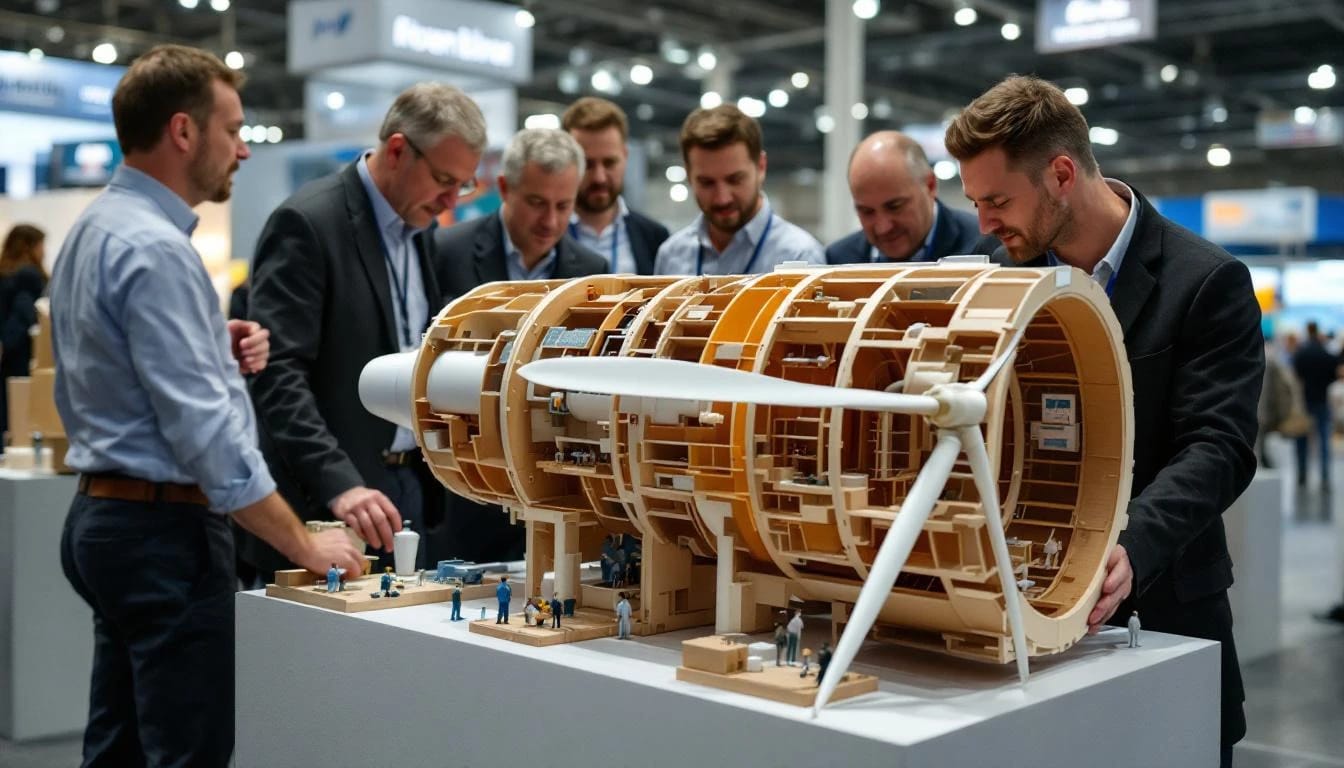
The International Energy Agency's Wind Technology Collaboration Programme released its 2025 annual report in March, and the news for distributed wind remains mixed. While utility-scale wind continues double-digit growth in installed capacity, small wind turbines under 100 kW—the segment serving homes, farms, and small commercial sites—accounted for less than 0.8% of global new wind capacity. For buyers evaluating a Bergey Excel 10 or Primus Air 40, that gap matters. It signals where manufacturing investment flows, which technologies receive R&D funding, and how aggressively local utilities resist or embrace interconnection.
Four findings in the IEA report directly affect purchasing decisions for distributed wind in the United States. Understanding these trends helps separate viable products from vaporware and identifies where regulatory headwinds create real financial risk.
Distributed Wind Growth Stalled Below Pre-2020 Levels
The IEA report documents that distributed wind installations in participating countries fell 12% year-over-year in 2024, continuing a decline that began in 2021. The United States installed approximately 3.1 MW of small wind capacity in 2024, down from a 2009 peak of 25.6 MW driven by the American Recovery and Reinvestment Act.
This contraction has practical consequences. Bergey Windpower, the longest-running small wind manufacturer in North America, reduced its product line from six models to three between 2020 and 2024. Primus Wind Power exited the residential market entirely in 2023, focusing exclusively on off-grid telecom applications. Aeolos and Pikasola, both Chinese manufacturers, now dominate the sub-5 kW segment previously held by U.S. and European brands.
Fewer manufacturers mean longer lead times, reduced parts availability, and higher per-unit costs. A Bergey Excel 10 carried a manufacturer's suggested retail price of $32,500 in 2020; the same turbine listed at $38,900 in early 2025, a 19.7% increase that outpaced inflation. Tower costs rose in parallel as steel tariffs and fabrication labor tightened.
For buyers, this consolidation creates a narrow window. Established brands retain aftermarket support and documented performance data, but their premium pricing reflects reduced competition. Budget options from newer entrants often lack independent certification or field-proven durability beyond three to five years.
The IEA attributes the slowdown to three factors: expiration of feed-in tariffs in European markets, regulatory complexity in grid interconnection, and the rapid cost decline of residential solar photovoltaics. In the U.S., the 30% federal Residential Clean Energy Credit under IRC §25D applies equally to solar and wind, yet permitting timelines for wind installations average 9.2 months compared to 2.1 months for rooftop solar, according to Department of Energy small wind program tracking data.
Vertical-Axis Turbines Remain Niche Despite Performance Claims
The IEA report dedicates a section to vertical-axis wind turbine (VAWT) development, noting that while these designs attract research funding and pilot projects, commercial deployment remains below 2% of distributed wind installations. Manufacturers tout lower noise, omnidirectional operation, and reduced wildlife impact, yet field data shows persistent efficiency and durability gaps.
Vertical-axis models like the Aeolos-V 3 kW generate power at wind speeds as low as 2.8 m/s, but their swept area efficiency—the ratio of energy captured to rotor diameter—lags horizontal-axis designs by 18-27% in the critical 5-10 m/s wind speed range where most residential sites operate. The helical Savonius and straight-bladed Darrieus configurations both suffer from torque ripple, requiring more robust inverters and creating mechanical stress that shortens bearing life.
The IEA report highlights two VAWT failure modes confirmed in independent testing: blade delamination under sustained winds above 15 m/s, and gearbox wear from fluctuating rotational speed. Both issues stem from the fundamental physics of vertical rotation. Unlike horizontal-axis turbines that yaw into the wind and maintain consistent blade angle of attack, VAWTs experience continuously changing aerodynamic forces through each rotation.
For residential buyers, this translates to higher maintenance costs and shorter service intervals. A Bergey Excel 10 typically requires inspection every 24 months and major service at 10 years. VAWT owners report annual inspections and component replacement cycles as short as five years, eroding the total cost of ownership advantage.
One legitimate VAWT application remains: urban and suburban sites with turbulent, multidirectional wind flow. A vertical-axis turbine for residential rooftops may capture energy from unpredictable wind that would stall a horizontal-axis machine. However, the same turbulence that favors VAWTs also indicates a poor overall wind resource. Most building-mounted installations produce less than 400 kWh annually, a return that rarely justifies the $8,000-$15,000 installed cost.
Grid Interconnection Policy Creates Regional Winners and Losers
The IEA report identifies interconnection policy as the primary non-technical barrier to distributed wind adoption. In the United States, this plays out at the state and utility level, creating dramatic variance in project feasibility.
NEC Article 705 sets the electrical safety standard for interconnecting distributed generation, but it does not compel utilities to accept the connection or limit the fees they charge. Utilities in twenty-three states impose standby charges, interconnection fees, or demand charges on small wind systems that make grid-tied operation economically unviable.
| Policy Metric | Favorable State (CA) | Restrictive State (FL) |
|---|---|---|
| Interconnection fee | $0-$75 | $500-$2,500 |
| Standby charge | Prohibited | $8-$15/kW/month |
| Net metering | Full retail credit | Avoided cost (~$0.03/kWh) |
| Application timeline | 30-45 days | 120-180 days |
California, New York, and Minnesota maintain streamlined interconnection processes with fee caps and net metering at full retail rates. A 10 kW Bergey turbine in Sacramento producing 15,000 kWh annually earns $2,550 in avoided electricity costs at $0.17/kWh retail rates. The same turbine in Jacksonville, Florida, where net metering credits at $0.031/kWh avoided cost and Duke Energy Florida charges a $12/kW monthly standby fee, returns only $465 annually while incurring $1,440 in fees—a net loss before accounting for maintenance or financing.
The IEA report notes that European countries with standardized national interconnection rules show 3.2 times higher distributed wind deployment than markets with fragmented regional policies. U.S. buyers should consult the DSIRE database to verify state-level incentives and net metering status before committing capital. A site with excellent wind resource can still fail financially under hostile utility policy.
Interconnection also intersects with FAA Part 77 airspace regulations. Turbines within 20,000 feet of an airport or exceeding 200 feet above ground level require FAA review. This rarely affects residential installations, which typically top out at 120 feet total height, but rural properties near small municipal airports face additional permitting complexity.
Battery Storage Integration Shifts Return Calculations
The IEA report dedicates substantial analysis to hybrid renewable systems, and the data supports what distributed wind installers have observed: pairing turbines with battery storage fundamentally changes project economics.
Wind generation peaks at night and during winter months in most U.S. regions—precisely when solar production falls. A standalone grid-tied turbine exports power during these periods, earning net metering credits. A turbine paired with lithium iron phosphate (LiFePO₄) battery storage can time-shift that energy to morning and evening demand peaks, increasing self-consumption from a typical 35-40% to 70-85%.
The math works for buyers in states with time-of-use rates or unfavorable net metering. A 5 kW Primus Air 40 producing 8,500 kWh annually in a 5.8 m/s average wind site generates $1,445 in value at $0.17/kWh flat rate. Add a 10 kWh battery bank ($5,500 installed) and the same production shifts to cover morning and evening loads valued at $0.24/kWh under time-of-use pricing, boosting annual value to $2,040. The battery adds $595 annual return, yielding payback on the storage component in 9.2 years.
Battery integration also eliminates standby charges in hostile utility territories. An off-grid or grid-optional system avoids interconnection fees entirely while maintaining backup power during outages. This configuration suits rural properties already investing in propane generators or unreliable grid service.
The IEA report cautions that battery chemistry matters. Lead-acid batteries, still common in DIY wind installations, cycle poorly with the variable charge profile of wind turbines. Depth of discharge regularly exceeds 60%, cutting service life to three to four years. LiFePO₄ cells tolerate deep cycling and partial state-of-charge operation, extending life to 12-15 years with proper thermal management.
Storage introduces complexity. Inverters must manage simultaneous charge/discharge, grid connection (if present), and load prioritization. Victron Energy, Schneider Electric, and OutBack Power manufacture hybrid inverters rated for wind input, but programming requires either professional commissioning or significant technical skill. Installer availability remains limited; fewer than 400 certified small wind installers operate in the U.S., and only a subset handle battery integration.
Turbine Certification Gaps Persist in Sub-10 kW Market
The IEA report notes that while utility-scale turbines undergo rigorous third-party certification (IEC 61400 series), distributed wind products often lack independent performance verification. This gap matters acutely in the sub-10 kW segment where residential buyers concentrate.
Small Wind Certification Council (SWCC) testing, the U.S. industry standard, closed in 2016 due to insufficient manufacturer participation. Its successor, the Distributed Wind Energy Association (DWEA) certification program, lists only seven turbines as of March 2025. Bergey Excel series and Southwest Windpower (now defunct) products earned certification; most current Chinese-manufactured models did not.
Buyers face manufacturer power curves with no third-party validation. An Aeolos-H 5 kW claims 7,200 kWh annual production at 5.5 m/s average wind speed; field reports in the Midwest show 4,800-5,400 kWh, a 25-33% shortfall. That gap extends payback from manufacturer-projected 11 years to 16-18 years.
Certification also correlates with electrical safety. UL 1741 listing (now UL 1741 SA for smart inverters) confirms that inverters meet NEC Article 705 anti-islanding and voltage/frequency ride-through requirements. Uncertified inverters may disconnect unnecessarily during minor grid disturbances or, worse, backfeed during outages and create electrocution hazards for line workers.
The IEA recommends that national governments reinstate mandatory certification for distributed wind products as a condition for incentive eligibility. In the U.S., the IRC §25D Residential Clean Energy Credit currently requires only that equipment be "new" and "installed in a dwelling unit." No performance standard applies. Buyers should independently verify certification status through DWEA or request field production data from existing installations in similar wind regimes.
Comparison: How IEA Findings Affect Popular Models
| Turbine Model | Rated Capacity | SWCC/DWEA Certified | Estimated Installed Cost (USD) | Suitable Application Given IEA Trends |
|---|---|---|---|---|
| Bergey Excel 10 | 10 kW | Yes | $48,000-$56,000 | Grid-tied in favorable net metering states; hybrid with storage in time-of-use markets |
| Aeolos-H 5 kW | 5 kW | No | $12,000-$18,000 | Off-grid or battery-backed where certification not mandated |
| Pikasola 2 kW VAWT | 2 kW | No | $3,500-$6,000 | Urban/suburban sites with turbulent wind; supplement to solar |
| Primus Air 40 | 5 kW | Yes (legacy) | $22,000-$28,000 | Rural hybrid systems; declining parts availability post-2023 |
Internal Links for Further Research
- How to calculate wind turbine ROI
- Small wind turbine costs breakdown
- Grid-tied vs off-grid wind systems
- Wind turbine tower height selection
- NEC Article 705 compliance checklist
- Best battery types for wind storage
External Resources
For state-by-state incentive details, the Database of State Incentives for Renewables & Efficiency (DSIRE) provides the most current policy tracking. The American Wind Energy Association small wind fact sheet offers independent performance data for certified models, though updates have slowed since 2022.
Does the IEA report recommend for or against residential wind turbines in 2025?
The IEA report takes no position on individual purchasing decisions. It documents market contraction and identifies policy barriers, but also confirms that distributed wind remains technically viable in high-wind sites with favorable interconnection rules. Buyers in the top quartile of U.S. wind resource (Class 3 and above, roughly 6.5+ m/s average at hub height) can achieve 8-12 year simple payback where net metering and federal tax credits apply.
How do I verify my utility allows net metering for wind turbines?
Contact your utility's interconnection department directly and request a copy of their distributed generation tariff. DSIRE provides summary information, but utilities modify policies faster than databases update. Specifically ask about standby charges, demand charges, and whether net metering credits expire annually or roll over indefinitely. Request the full interconnection application packet to assess fees and timeline before purchasing equipment.
Should I wait for VAWT technology to mature before buying?
Vertical-axis designs have existed since the 1920s; the current generation shows incremental improvement but no breakthrough that overcomes fundamental efficiency limitations. Buyers attracted to VAWTs for aesthetic or noise reasons should budget for higher maintenance costs and shorter service life. Horizontal-axis turbines deliver 20-30% more annual energy in equivalent wind conditions with longer mean time between failures. The IEA report projects VAWT market share will remain below 5% through 2030.
Can I install a small wind turbine myself to reduce costs?
NEC Article 705 requires that interconnected distributed generation be installed by or inspected by a licensed electrician, though the owner can perform mechanical tower assembly. DIY installation voids most manufacturer warranties and may disqualify the system from the IRC §25D 30% federal tax credit, which requires professional installation certification. Tower work above 30 feet introduces fall hazards that require proper training and equipment. Most jurisdictions require building permits and electrical permits regardless of who performs the work, adding $800-$2,200 in fees and inspection costs.
How does the federal tax credit work for wind turbines purchased in 2025?
IRC §25D provides a 30% tax credit for qualified small wind energy property placed in service through December 31, 2032. The credit drops to 26% in 2033 and 22% in 2034. Qualified costs include the turbine, tower, inverter, wiring, and installation labor. Battery storage qualifies for a separate 30% credit under the same section if installed with the turbine. Claim the credit on IRS Form 5695 filed with your annual return. The credit is non-refundable (cannot exceed tax liability) but carries forward up to five years. Consult a tax professional for site-specific guidance.
Bottom Line
The IEA Wind 2025 report confirms that distributed wind faces steeper headwinds than utility-scale projects, but viable opportunities remain for informed buyers. Focus on certified turbines, verify state net metering policy before committing capital, and consider battery storage in markets with time-of-use rates or hostile interconnection rules. Conduct a professional wind resource assessment before purchasing any equipment—the difference between a Class 2 and Class 3 site determines whether a turbine pays back in 10 years or never.
Share this article
windturbinehome.com/s/73dd2a
Editorial note: This article was researched and written by a member of the Wind Turbine Home editorial team. AI-assisted tools were used for spell-checking and light grammar review only — all research, analysis, and conclusions are our own. Our editorial policy prohibits sponsored content and paid placements. Read our editorial policy →