Best Wind Turbines for Oklahoma Homes: 2024 Buyer's Guide
Oklahoma's 6-8 m/s average wind speeds make residential turbines viable. Compare top horizontal and vertical-axis models, costs, and state incentives.
Share this article
windturbinehome.com/s/3e8f57
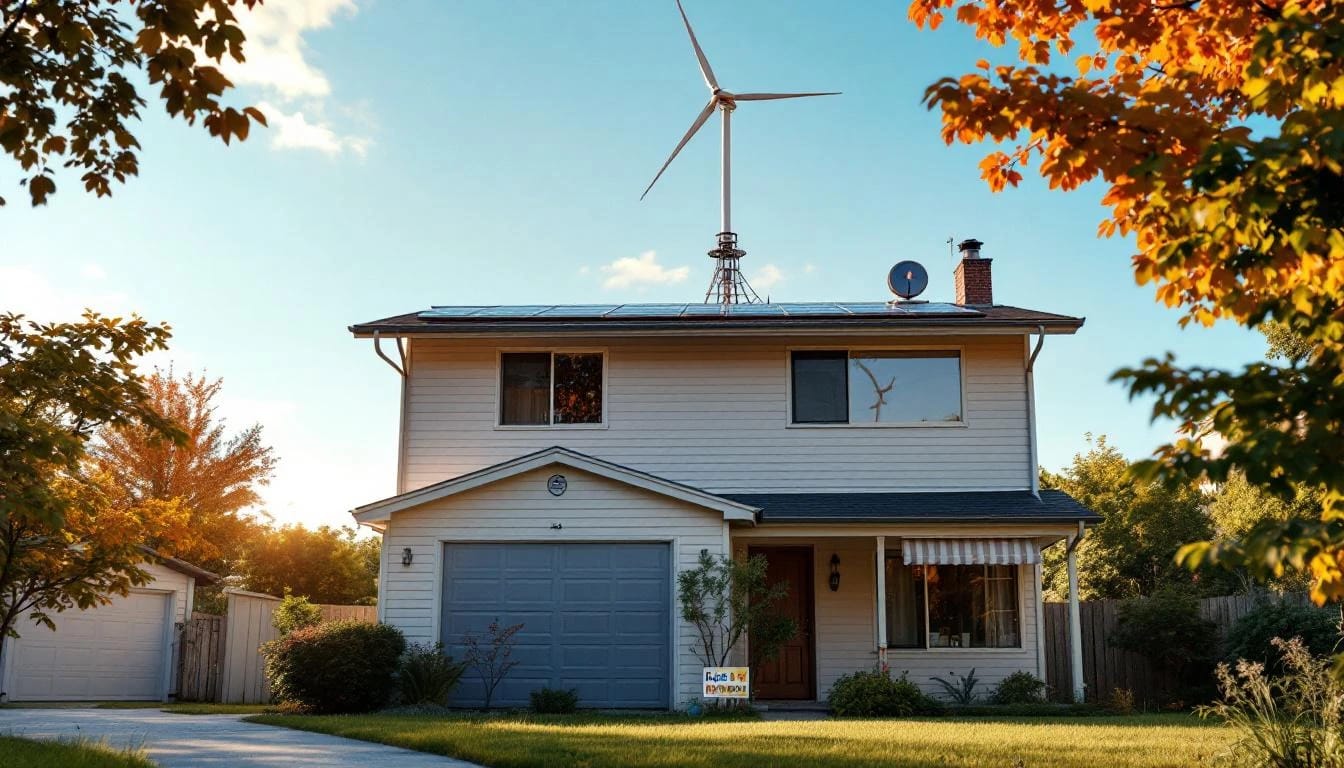
Oklahoma ranks among the best states for residential wind power, with average wind speeds between 6 and 8 meters per second at 30 meters—well above the 4 m/s threshold the Department of Energy considers suitable for home-based systems. The state's consistent Great Plains winds, combined with a 30% federal tax credit and favorable net metering laws, create ideal conditions for homeowners who want to offset electric bills with a pole-mounted turbine. The best choice depends on property size, local zoning, and whether horizontal-axis efficiency or vertical-axis storm resilience better suits the site.
Why Oklahoma excels for residential wind energy
Oklahoma's geography delivers reliable wind. The Department of Energy's WINDExchange 30-meter residential wind speed maps show most of the state—from the Panhandle through central counties down to the Red River—registers annual average wind speeds between 6.0 and 7.5 m/s. Northwestern counties near the Kansas border occasionally exceed 8 m/s. These figures place Oklahoma in the top tier nationally for small wind viability.
The state's regulatory environment supports distributed generation. Oklahoma Corporation Commission rules allow net metering for systems up to 100 kW, meaning excess generation flows back to the grid at retail rate. No statewide property tax exemption exists, but the federal Investment Tax Credit (IRS Form 5695, IRC §25D) covers 30% of equipment and installation costs through 2032. Local utilities—Oklahoma Gas & Electric, Public Service Company of Oklahoma—maintain straightforward interconnection agreements, though approval timelines vary by district.
Terrain matters more than climate zone. Open farmland in Garfield, Grant, and Kay counties offers fewer obstructions than wooded areas in the Ouachita foothills. Trees, buildings, and hills create turbulence that degrades turbine performance and shortens bearing life. Homeowners near Tulsa or Oklahoma City must account for suburban tree canopy; a 40-meter tower often clears local obstacles better than a 20-meter pole in forested neighborhoods.
Top horizontal-axis turbines for Oklahoma sites
Horizontal-axis wind turbines (HAWTs) dominate residential installations because swept-area efficiency translates directly into kilowatt-hours. Three-blade upwind designs capture maximum energy when sited correctly.
Bergey Windpower Excel 10 remains the benchmark. The 10 kW rated unit features a 7-meter rotor diameter, permanent-magnet alternator, and patented AutoFurling storm protection that pivots the turbine out of damaging winds above 15 m/s. Start-up speed is 2.5 m/s; rated output occurs at 11 m/s—common during Oklahoma spring fronts. Bergey manufactures in Norman, Oklahoma, so warranty service and replacement parts ship quickly. Expect $45,000–$52,000 installed on a 24-meter guyed lattice tower. The Excel 10 qualifies for the 30% federal credit and carries a five-year warranty. Annual energy production in a 6.5 m/s site averages 16,000–18,000 kWh, enough to offset a typical 1,800-square-foot home with electric heating.
Primus Air 40 suits smaller properties. This 2.5 kW turbine uses a 4.2-meter rotor and direct-drive generator. Cut-in speed is 2.0 m/s; rated output at 10 m/s. The Air 40 mounts on a 12- to 18-meter monopole, reducing the footprint needed for guy wires. Installed cost runs $12,000–$16,000. Output in a 6 m/s Oklahoma site: roughly 4,000–5,000 kWh per year, suitable for offsetting baseload consumption or pairing with rooftop solar. Primus Wind Turbines ships from Colorado; lead times currently average eight weeks. The compact design simplifies FAA Part 77 filings for properties near regional airports.
Aeolos-H 3kW offers an affordable entry point. This Chinese-manufactured HAWT features a 3.2-meter rotor, blade pitch control, and electromagnetic brake. Rated output at 11 m/s, cut-in at 3 m/s. Installed cost: $8,000–$11,000 on an 18-meter tilt-up tower. Annual yield in a 6 m/s site: 3,500–4,500 kWh. Aeolos ships direct; warranty support operates through email and video call. Build quality requires periodic inspection—blade bolts and yaw bearing grease need attention every six months. The lower upfront cost makes Aeolos viable for off-grid cabins or workshop power where grid-tied net metering is unavailable.
Vertical-axis options for storm-prone zones
Vertical-axis wind turbines (VAWTs) rotate around a vertical shaft and accept wind from any direction without yaw mechanisms. They produce less energy per swept area than HAWTs but tolerate turbulent conditions better—important in neighborhoods where building wakes disrupt laminar flow.
Pikasola 5kW VAWT uses helical Savonius blades that self-start in 2 m/s winds. Rated output at 12 m/s, though real-world performance in Oklahoma's 6–7 m/s range delivers 2,500–3,500 kWh annually. The turbine mounts on a 10-meter monopole with a small concrete pad; no guy wires. Installed cost: $9,000–$13,000. The low profile simplifies local zoning approval and HOA negotiations. Pikasola's three-year warranty covers the generator and charge controller. Blade durability in hail remains unproven; Oklahoma's severe-weather season may accelerate wear.
Windspire Energy 1.2kW emphasizes aesthetic integration. This slender 9-meter-tall VAWT fits residential lots where a traditional tower would violate setback codes. Cut-in speed: 3.5 m/s. Annual yield in a 6 m/s site: 1,800–2,200 kWh. Installed cost ranges $7,000–$10,000. The Windspire works best as a supplemental source paired with solar panels, not a primary generation asset. The company filed for bankruptcy in 2013; units still operate, but parts availability requires aftermarket suppliers.
Vertical-axis machines underperform horizontals in Oklahoma's open-terrain, high-wind sites. HAWTs capture 35–45% more energy in locations with consistent directional flow. VAWTs make sense in suburban Edmond or Norman where neighboring homes create swirling winds that would stall a horizontal rotor.
Installation requirements and permitting
Local code compliance starts with NEC Article 705, which governs interconnected power sources. An Oklahoma-licensed electrician must design and inspect the system. The turbine's AC or DC output feeds an inverter, then a dedicated breaker in the main service panel. A manual disconnect allows utility workers to isolate the turbine during line maintenance. Grounding and surge protection follow NEC 250 and 280 standards—lightning strikes are common on exposed towers.
Zoning rules vary by county. Oklahoma City limits turbine height to 35 feet in residential districts without a special-use permit; Tulsa allows 50 feet. Rural counties often impose no height cap but require setback equal to tower height plus 10 feet from property lines. The county planning office issues building permits; expect $150–$400 fees plus engineered foundation drawings for towers above 20 meters.
FAA Part 77 notification applies to structures exceeding 200 feet above ground level or within airport approach zones. Most residential turbines fall below this threshold, but properties near Wiley Post Airport (PWA) or Stillwater Regional (SWO) should file Form 7460-1 online. The FAA responds within 45 days. Towers determined to pose no hazard receive a "Determination of No Hazard" letter, required by some county building departments before permit issuance.
Foundation engineering depends on soil type and tower design. The red clay and silty loam common across Oklahoma provide adequate bearing capacity for concrete piers. A typical 24-meter guyed tower requires four anchor points, each with a 0.6-meter-diameter, 1.8-meter-deep pier. Monopole towers need a single reinforced pad, often 2.4 meters square and 1.5 meters deep. Hire a structural engineer familiar with Oklahoma's wind load requirements (ASCE 7-22, 115 mph basic wind speed for most counties).
Interconnection agreements go through the local utility. OG&E and PSO require an application, proof of insurance ($300,000 general liability standard), and certification that equipment meets IEEE 1547 and UL 1741 standards. Processing takes 30–90 days. The utility installs a bidirectional meter at no charge under Oklahoma's net metering rules. Excess generation during low-consumption months banks as kilowatt-hour credits, not cash payouts.
Cost breakdown and payback analysis
Upfront investment divides into equipment, tower, and labor. A Bergey Excel 10 costs approximately $32,000 for the turbine, controller, and inverter. A 24-meter guyed lattice tower adds $8,000–$10,000. Installation labor—crane rental, electrician, foundation crew—runs $5,000–$10,000 depending on site access and whether bedrock complicates excavation. Total installed: $45,000–$52,000 before incentives.
The federal 30% Residential Clean Energy Credit (IRC §25D) reduces that Bergey system to $31,500–$36,400 net cost. The credit applies in the tax year the system goes into service; homeowners must have sufficient tax liability to claim the full amount, though unused credit rolls forward. Form 5695 accompanies the annual return. Oklahoma offers no state-level rebate, but checking the DSIRE database (Database of State Incentives for Renewables & Efficiency) reveals occasional municipal programs—Enid and Lawton have piloted utility rebates in past years.
Payback period depends on electricity rate and wind resource. At Oklahoma's average residential rate of $0.12 per kWh, a Bergey Excel 10 producing 17,000 kWh annually saves $2,040 per year. Net cost of $34,000 divided by $2,040 yields a 16.7-year simple payback. Rate escalation—if electricity climbs 3% annually—shortens payback to 13–14 years. Homes with electric resistance heat or large workshop loads see faster returns. Lower-output turbines like the Primus Air 40 may never break even if financed; they make sense primarily for off-grid applications where avoided diesel generator costs justify the expense.
| Turbine Model | Rated Power | Rotor Diameter | Installed Cost | Annual kWh (6.5 m/s) | Simple Payback |
|---|---|---|---|---|---|
| Bergey Excel 10 | 10 kW | 7.0 m | $45,000–$52,000 | 16,000–18,000 | 14–17 years |
| Primus Air 40 | 2.5 kW | 4.2 m | $12,000–$16,000 | 4,000–5,000 | 20–26 years |
| Aeolos-H 3kW | 3 kW | 3.2 m | $8,000–$11,000 | 3,500–4,500 | 15–21 years |
| Pikasola 5kW VAWT | 5 kW | 1.8 m (height) | $9,000–$13,000 | 2,500–3,500 | 21–31 years |
Simple payback assumes $0.12/kWh rate, 30% federal credit applied, no financing costs.
Maintenance and longevity expectations
Turbines require annual inspections. Check guy-wire tension with a Loos tension gauge—loose cables allow tower sway that fatigues turbine mounts. Inspect blade leading edges for erosion; Oklahoma's red dirt becomes airborne during drought, sandblasting composite surfaces. Touch up nicks with epoxy filler before moisture infiltrates the laminate. Verify all fasteners torque to specification; vibration loosens bolts over time.
Bearing repacks occur every three to five years depending on model. Bergey uses sealed cartridge bearings that last longer but cost more to replace. Aeolos turbines use serviceable tapered-roller bearings that need annual grease. Budget $400–$800 for a technician visit if attempting DIY bearing service feels risky—dropping a turbine from a tower has happened.
Inverter replacement is inevitable. Most residential grid-tie inverters last 10–12 years. A replacement unit for a 10 kW system costs $2,500–$4,000 installed. The inverter is the system's electronic weak point; lightning-induced surges shorten lifespan even with surge protection. Keep a maintenance reserve fund—$300 annually covers routine service and eventual inverter swap.
Tower corrosion depends on finish. Galvanized steel lattice towers last 30+ years in Oklahoma's moderate-humidity climate. Inspect galvanizing for zinc loss at weld points; cold-galvanizing paint slows rust. Monopole towers made from schedule-40 steel pipe may need repainting every 15 years if the factory powder coat deteriorates. Coastal or industrial areas accelerate corrosion, but most Oklahoma residential sites see minimal degradation.
Expected turbine lifespan: 20–25 years for quality HAWTs like Bergey; 15–20 years for budget imports; 10–15 years for most VAWTs. Generator magnets demagnetize slightly over time, reducing output by 5–10% after two decades. Blade fatigue eventually necessitates replacement. A well-maintained system in a clean wind site reaches end-of-life when repair costs exceed replacement value, not from catastrophic failure.
Comparing wind power to rooftop solar in Oklahoma
Solar panels benefit from federal and state incentives identical to wind—30% federal credit, net metering—but installation costs less. A 10 kW rooftop solar array runs $22,000–$28,000 installed ($15,400–$19,600 after credit). Annual production in Oklahoma City's 5.0 peak sun hours: roughly 13,000–14,500 kWh. Simple payback: 10–13 years.
Wind offers two advantages. Generation occurs day and night, matching evening loads better than solar. Oklahoma's winter winds peak when heating demand is highest, whereas solar output drops in short December days. Combining 5 kW solar with a 5 kW turbine smooths seasonal variation more effectively than a single 10 kW system.
Solar's disadvantages: hail damage, though rare, totals a roof-mounted array. Turbines weather storms better—blades feather or furl automatically. Solar also requires unshaded south-facing roof, limiting installation to ideal-orientation homes. A turbine needs only cleared ground and setback compliance.
Most Oklahoma homeowners choose solar first because lower cost and faster payback reduce financial risk. Wind becomes attractive on large rural properties (5+ acres) where tower setbacks pose no issue and annual wind speeds exceed 6.5 m/s. Hybrid solar-wind systems eliminate seasonal troughs but double installation complexity and permit headaches.
Read more about residential solar vs. wind comparisons
Real-world Oklahoma installations
A Bergey Excel 10 near Enid, installed in 2019, produces 18,200 kWh annually at an 80-meter hub height in a 7.2 m/s site. The homeowner reported $52,000 total cost, $36,400 after federal credit. Monthly electric bills dropped from $180 to $45. Payback calculation: 14.3 years. The system has required one guy-wire retensioning ($350) and annual blade inspections the owner performs personally.
A Primus Air 40 installation outside Stillwater highlights smaller-system economics. The 2.5 kW turbine on an 18-meter monopole cost $14,500 installed in 2021. Annual output: 4,100 kWh in a 6.4 m/s site. Net cost after federal credit: $10,150. At $0.11/kWh, annual savings reach $451, yielding a 22.5-year payback. The owner values energy independence over ROI and pairs the turbine with 3 kW of rooftop solar for near-net-zero operation.
An Aeolos-H 3kW system near the Kansas border (8.1 m/s average) produces 5,800 kWh annually, outperforming manufacturer estimates. Installed cost: $9,200 in 2020; net $6,440 after credit. The homeowner, a retired electrician, handled all wiring and tower erection personally, saving $3,000 in labor. Payback at $0.13/kWh: 8.5 years. The turbine required blade bolt retorquing at six months and a new charge controller at 30 months ($420). The owner considers the system a success but cautions that DIY installation demands electrical and rigging skills most homeowners lack.
Local contractors and installation resources
Finding qualified installers challenges Oklahoma wind buyers. Bergey maintains a dealer network; authorized installers include Renewable Energy Systems (Stillwater) and Great Plains Wind (Woodward). These firms handle permitting, foundation engineering, tower erection, and electrical interconnection. Expect 10–16 weeks from contract signing to commissioning.
Primus and Aeolos purchasers often rely on general renewable-energy contractors who lack wind-specific experience. Verify the contractor has erected at least three towers—crane operation and guy-wire tensioning require skill. Request references and photos of completed Oklahoma installations. The Oklahoma Wind Power Initiative (inactive since 2018 but archived materials available) published best-practice guides for residential installations; these PDFs remain useful for homeowners evaluating contractor proposals.
Licensed electricians must stamp off interconnection. The Oklahoma Construction Industries Board licenses electrical contractors; verify the installer holds an active license. NEC Article 705 requires specific training, but enforcement varies by county. Hiring a contractor unfamiliar with distributed generation often results in failed inspections and delayed interconnection.
Some Oklahoma homeowners source turbines direct from manufacturers and hire separate crane, foundation, and electrical contractors. This approach saves 10–15% but demands project-management skill. Coordinating four subcontractors—concrete, crane, electrical, utility—while navigating permitting introduces complexity. First-time buyers benefit from a turnkey installer despite higher cost.
Explore our guide to hiring wind turbine installers
How much wind does a property need for a residential turbine in Oklahoma?
The Department of Energy recommends annual average wind speeds of at least 4 meters per second at 30 meters for small wind systems to be economically viable. Most of Oklahoma exceeds 6 m/s, making the state well-suited for residential turbines. Use the DOE WINDExchange 30-meter residential wind speed maps to check a specific address. Properties in the Panhandle and northwestern counties often see 7–8 m/s, while southeastern forested areas may drop below 5.5 m/s. Actual production depends on tower height and local obstructions; taller towers access faster, less turbulent wind.
What size turbine makes sense for an average Oklahoma home?
A typical Oklahoma household consumes 1,100–1,300 kWh per month (13,200–15,600 kWh annually). A 10 kW turbine in a 6.5 m/s site produces 16,000–18,000 kWh per year, covering total consumption. Homes without electric heat or large workshops may find a 3–5 kW turbine adequate to offset 30–50% of usage. Oversizing is acceptable under Oklahoma's net metering rules—excess generation banks as credits—but the financial return diminishes because the turbine cost rises faster than output. Right-sizing balances system cost against consumption patterns and available wind resource.
Do Oklahoma HOAs and zoning codes restrict residential wind turbines?
City and county zoning ordinances govern turbine installations; HOA covenants may add restrictions. Oklahoma City limits residential turbine height to 35 feet without a variance; rural counties often allow 100+ feet with setback requirements (typically tower height plus 10 feet from property lines). HOAs in newer subdivisions frequently prohibit freestanding towers or require architectural review board approval. Review covenants before purchasing equipment. Some homeowners petition HOAs for exemptions, citing Oklahoma's renewable-energy statutes, but success varies. Properties outside HOA jurisdiction and city limits face the fewest restrictions.
How does Oklahoma net metering work for wind turbines?
Oklahoma Corporation Commission rules allow net metering for customer-owned generation systems up to 100 kW. When turbine output exceeds consumption, excess electricity flows to the grid and the meter runs backward, crediting the account at retail rate. Credits carry forward month-to-month indefinitely. At year-end, any remaining credit balance typically expires with no cash payout, though some utilities negotiate annual true-ups. OG&E and PSO apply net metering to residential wind; municipal utilities (like Edmond Electric) set individual policies. Contact the local utility for specific interconnection agreements and metering details before installation.
What happens to a wind turbine during Oklahoma's severe weather?
Modern residential turbines include storm-protection features. Bergey turbines use AutoFurling, which pivots the rotor out of high winds above 15 m/s, preventing overspeed damage. Primus and Aeolos models employ electromagnetic or mechanical brakes that stop rotation in winds exceeding rated limits. Hail poses minimal risk to fiberglass or carbon-fiber blades—they're more durable than car windshields—but severe events can chip leading edges. Tornadoes or straight-line winds above 70 mph may topple towers, though properly engineered foundations and guy wires resist most storms. Insurance riders covering wind turbines cost $150–$300 annually and cover catastrophic loss. Disconnect turbines during ice storms; frozen blades create imbalance that destroys bearings.
Bottom line
Oklahoma's consistent winds and supportive net metering policies position the state among the best for residential wind power. Homeowners with 3+ acres, annual average wind speeds above 6 m/s, and long-term ownership plans should consider a horizontal-axis turbine like the Bergey Excel 10 or Primus Air 40. Smaller properties or storm-prone neighborhoods may prefer vertical-axis alternatives despite lower output. Start by checking the DOE WINDExchange maps, then request quotes from local Bergey dealers to compare installed costs against current electric bills.
Explore Oklahoma wind resource maps on WINDExchange
Learn about the federal 30% Residential Clean Energy Credit
Compare top small wind turbine brands
Read our guide to DIY wind turbine installation
Share this article
windturbinehome.com/s/3e8f57
Editorial note: This article was researched and written by a member of the Wind Turbine Home editorial team. AI-assisted tools were used for spell-checking and light grammar review only — all research, analysis, and conclusions are our own. Our editorial policy prohibits sponsored content and paid placements. Read our editorial policy →
Related reading
residential wind power
Home Wind Turbine: A Comprehensive US Buyer's Guide 2024
Explore the realities of owning a home wind turbine in the US, covering costs, energy output, installation requirements, and available federal and state incentives for homeowners considering small-scale wind power.
residential wind power
Home Wind Turbine Systems: A Complete 2024 Buyer's Guide
Explore the realities of a home wind turbine system for residential power, covering installation, costs, grid-tie considerations, and US federal incentives.
residential wind power
First-Year Mistakes New Home Wind Turbine Owners Regret Most
New home wind turbine owners make costly first-year errors—from poor site assessment to skipping permits. Learn the eleven most common mistakes and how to avoid them.

residential wind power
Grid-Tied vs Battery-Backed Wind Turbine Systems for Homes
Grid-tied systems feed excess wind power directly to the utility for credits, while battery-backed configurations store energy for outages and off-grid use.
residential wind power
How to Right-Size a Wind Turbine for Your House in 2026
Match your home wind turbine to your actual energy use and site conditions. Learn the sizing formula, power curves, and common mistakes to avoid before you buy.
residential wind power
Best Wind Turbines for Australian Homes: STCs & 2026 Picks
Small wind turbines can earn STCs under the SRES, but few models sold in Australia meet AS 4509.1. Compare Bergey, Primus and proven vertical-axis picks.
residential wind power
Best Wind Turbines Under $5000 for Home Use (2026 Guide)
Compare the top small wind turbines under $5000 for residential use in 2026. Real performance data, installation costs, and ROI analysis for US homeowners.
residential wind power
Best Wind Turbines for Iowa Homes: Bergey vs Primus (2026)
Iowa averages 5.5-7.5 m/s wind at 30m, enough for a home turbine. Compare the Bergey Excel 10, Primus AIR 40 and VAWT options for grid-tied or off-grid use.
residential wind power
Best Wind Turbines for Texas Homes: 1-10 kW Picks (2026)
Compare 1-10 kW small wind turbines for Texas homes, including which models suit your local wind zone, what they cost, and which incentives you can claim.