How Long Does a Home Wind Turbine Last? (Lifespan + Costs)
Most home wind turbines last 20-25 years with proper maintenance. Small horizontal-axis models typically outlive vertical-axis designs by 3-5 years due to simpler mechanical loads and proven bearing systems.
Share this article
windturbinehome.com/s/2832cb

A well-maintained residential wind turbine typically delivers 20 to 25 years of service before requiring major refurbishment or replacement. Small horizontal-axis turbines (HAWT) from established manufacturers like Bergey Windpower and Primus Wind Power consistently reach the upper end of that range, while many vertical-axis turbines (VAWT) average 15 to 20 years due to higher mechanical stress on rotating components. The actual lifespan hinges on build quality, local wind conditions, installation rigor, and whether the owner follows the manufacturer's maintenance schedule—miss annual inspections and expect accelerated wear on blades, bearings, and inverters.
Core components and their design life
Every home turbine comprises a rotor assembly, generator, nacelle or housing, controller electronics, and inverter. Each part ages at a different rate.
Rotor blades and hub endure constant flexing from gusty wind. Fiberglass-reinforced composite blades on HAWTs last 20+ years if UV-stabilized resins are used; cheaper blades fade and microcrack by year 12. Aluminum blades on some VAWTs corrode faster in coastal salt spray, shortening life to 15 years without protective coatings. The hub—whether fixed-pitch or furling—sees cyclic loading; manufacturers specify inspection intervals of 12 months and bolt-torque checks every 24 months.
Bearings and yaw mechanisms are the Achilles heel. Sealed cartridge bearings in a HAWT's main shaft typically need replacement at 10 to 15 years. VAWTs carry side-loaded bearings that wear quicker under the same wind speeds, often requiring mid-life replacement around year 8 to 12. Yaw bearings on HAWTs accumulate 20 million rotation cycles over two decades; grease service every two years extends life.
Generators in permanent-magnet designs run cooler and last longer than wound-field alternators. Expect 20+ years from a PM generator if the controller prevents over-speed runaway. Brushed alternators need brush replacement every five years, lowering overall reliability.
Electronics and inverters have the shortest lifespan. Grid-tie inverters average 10 to 15 years; capacitors dry out, MOSFETs degrade under thermal cycling. Budget for one inverter replacement over the turbine's life. Controllers with conformal-coated boards survive 15+ years in a sealed enclosure; non-sealed units corrode in humid climates by year 10.
Horizontal-axis vs. vertical-axis durability
Small HAWTs dominate the residential market because the design is mechanically simpler and proven at scale. A three-blade upwind rotor places most stress along the main shaft's axis, which bearings handle efficiently. Tail-vane furling passively protects against over-speed. Bergey's Excel series has documented installations exceeding 25 years with bearing and blade replacements but original generators and towers still in service.
VAWTs—Savonius, Darrieus, and H-rotor configurations—impose radial and tangential loads that fatigue bearings and flex the support arms. The symmetrical design eliminates yaw mechanisms, a reliability gain, but the constant bending of blades through 360° of rotation accelerates material fatigue. Manufacturers like Aeolos and Pikasola rate their VAWTs for 15 to 20 years, acknowledging earlier bearing service. In practice, small VAWTs under 1 kW placed in turbulent urban wind profiles often need blade reinforcement by year 10.
How wind conditions shorten or extend lifespan
Turbines live longest in steady Class 2 or Class 3 wind sites (average 5.6–7.5 m/s at hub height). Turbulent air from nearby buildings or tree lines multiplies fatigue cycles. A HAWT rated for 20 years in smooth flow might need blade replacement at 15 years in a gusty suburban backyard. VAWTs handle turbulence slightly better but still pay a durability penalty.
Extreme weather accelerates wear. Lightning strikes destroy controllers and generators instantly—install a grounded lightning rod on the tower and use surge arresters per NEC Article 705. Ice loading bends blades and over-stresses guy wires; northern-climate owners should budget for heated blade tape or accept seasonal shutdown. Hurricane-force winds can fold blades back unless the turbine's over-speed protection activates correctly, which depends on annual controller testing.
Maintenance intervals and their impact
Manufacturers publish service schedules; following them triples component life. Annual tasks include:
- Visual blade inspection for cracks, erosion, and delamination
- Bolt-torque verification on rotor hub and tower flanges
- Guy-wire tension check (if applicable)
- Bearing grease replenishment via Zerk fittings
- Controller firmware updates and error-log review
- Inverter fan cleaning and capacitor inspection
Biennial tasks add slip-ring cleaning (if present), yaw-bearing grease, and cable inspection for UV damage. Owners who skip these steps see failures cluster around year 10 instead of year 20.
DIY maintenance is possible for small systems under 5 kW. Tilt-up towers simplify rotor access; freestanding monopoles require a bucket truck or climbing gear, adding $400–$800 per service visit if contracted. Bergey offers owner-serviceable designs; Primus markets its Air series for low-touch operation but still requires annual blade checks.
Real-world lifespan data by turbine size
Micro turbines (400 W–1 kW) aimed at off-grid cabins or sailboats average 12 to 18 years. Lower material standards and exposed coastal installations take a toll. Primus Air 40 and Pikasola 400 W models commonly reach 15 years before generator bearing failure.
Small residential turbines (1–10 kW) form the core home market. Bergey Excel 10 and Endurance E-3120 installations frequently exceed 20 years with one mid-life inverter swap. Southwest Windpower's (now defunct) Skystream units show blade cracking at 12–15 years due to UV degradation, a cautionary tale about resin quality.
Mid-range turbines (10–20 kW) for farms or small businesses reach 25+ years. Bergey Excel 15 has the longest documented service life in North America, with multiple units surpassing 30 years when towers and foundations are maintained.
VAWTs across all sizes trend 3–5 years shorter than equivalently rated HAWTs, based on field reports from state energy offices and independent testing labs.
Comparing lifespan to cost per year
Upfront cost for a turnkey 5 kW HAWT system ranges $18,000–$35,000 installed (tower, turbine, inverter, permits). Spread over 20 years, that's $900–$1,750 annually before maintenance. Annual service runs $150–$300 DIY or $400–$800 contracted. A mid-life inverter replacement adds $1,500–$3,000.
Total levelized cost over 20 years: $25,000–$50,000, or $1,250–$2,500 per year. Compare that to the annual energy production—5 kW in a Class 3 site generates roughly 8,000 kWh/year at $0.14/kWh = $1,120 value. Lifespan directly determines whether the system breaks even. A turbine dying at year 12 kills the payback; one running 25 years with a single inverter swap delivers positive return.
The federal 30% Residential Clean Energy Credit (IRC §25D, claim via IRS Form 5695) improves economics by trimming $5,400–$10,500 off the initial outlay, shortening payback by 3–5 years. State incentives via DSIRE can add rebates or performance payments. Minnesota, for instance, offers a production incentive of $0.012/kWh for small wind, materially improving lifetime value if the turbine hits its 20-year design life.
| Turbine model | Rated power | Typical lifespan | Mid-life costs | Total ownership cost (20 yr) |
|---|---|---|---|---|
| Primus Air 40 | 400 W | 12–15 yr | $200 (bearings) | $2,800–$3,500 |
| Pikasola 1 kW VAWT | 1 kW | 15–18 yr | $600 (inverter + bearings) | $6,500–$8,200 |
| Bergey Excel 10 | 10 kW | 20–25 yr | $2,500 (inverter) | $38,000–$48,000 |
| Endurance E-3120 | 3.1 kW | 20–22 yr | $1,800 (inverter) | $22,000–$28,000 |
Tower and foundation longevity
The turbine itself is only half the system. Guyed lattice towers and monopole structures should last 30+ years if hot-dip galvanized. Anchor bolts and guy-wire turnbuckles rust at the soil line; inspect annually and replace corroded hardware immediately. Foundation concrete cures to full strength over 28 days but remains stable for decades—undersize the footing, however, and settling or tipping shortens turbine life by inducing misalignment.
Tilt-up towers simplify maintenance and extend turbine lifespan because owners actually perform the service instead of deferring it. A $2,000 tilt-up mechanism saves $6,000 in crane fees over 20 years and prevents the "out of sight, out of mind" neglect that kills turbines early.
Electrical runs from tower base to service panel degrade, too. Aluminum conductors corrode at crimp connections; copper lasts longer but costs more. Bury conduit below frost line per NEC Article 300, and size wire for voltage drop under 3% to avoid resistive heating. UV-rated wire jackets prevent insulation failure; cheap direct-burial cable cracks by year 15.
When to repair vs. replace
A turbine showing blade erosion but a healthy generator justifies blade replacement ($800–$2,500 for a small HAWT). Bearing noise warrants a $400–$1,200 cartridge swap. Controller failure runs $600–$1,500 for a new unit.
Replace the entire turbine when:
- Generator windings burn out (repair cost equals 60%+ of a new turbine)
- Tower corrosion compromises structural integrity
- Blade spar cracking appears (catastrophic failure risk)
- Accumulated deferred maintenance exceeds half the cost of a new system
Manufacturers discontinue models every 8–12 years, making parts scarce. Southwest Windpower's exit left Skystream owners hunting for salvage parts; buying from an active manufacturer with a parts-supply commitment matters.
Grid-tie inverters older than 15 years should be replaced preemptively. A $2,000 inverter replacement beats a sudden failure that idles the turbine for weeks while sourcing an obsolete model.
Extending lifespan through upgrades
Retrofitting modern controllers and inverters to an older turbine can add 5–10 years. A 1990s-era Bergey Excel fitted with a new Xantrex or SMA inverter and digital controller gains over-speed protection and remote monitoring. Blade refurbishment—gel-coat repair, leading-edge tape, UV-resistant topcoat—costs $600–$1,200 and postpones replacement by 3–5 years.
Lightning protection upgrades are inexpensive insurance. A $150 grounding rod and $300 surge arrester panel prevent $8,000 generator replacements. Corrosion-resistant hardware—stainless-steel bolts, marine-grade grease—adds $200 upfront but eliminates mid-life fastener failures.
Remote monitoring via cellular or Wi-Fi modules ($300–$600) catches performance drops early, when a $150 fix prevents a $2,000 breakdown. Bergey's GTVIEW and similar systems log voltage, current, and RPM; abnormal trends flag failing bearings or generator magnets before catastrophic failure.
Regulatory and safety considerations
Every grid-tied wind installation must comply with NEC Article 705 (Interconnected Electric Power Production Sources). Licensed electricians handle the service-panel connection and utility interconnection agreement. DIY turbine installation is legal in most states, but the electrical tie-in requires a permit and inspection—skipping this step voids warranties and insurance, and accelerates failure due to improper grounding or conductor sizing.
FAA Part 77 requires notice for structures taller than 200 feet near airports, rarely an issue for home turbines under 120 feet total height (tower + rotor diameter). Local zoning often caps height at 35–65 feet without a variance, which limits turbine size and thus lifespan value. Check county ordinances before purchasing.
Liability insurance riders for wind turbines cost $75–$150 annually and protect against blade-throw or tower-collapse claims. Some insurers require annual professional inspections, adding $300–$600 but catching issues that extend turbine life.
Can a wind turbine last 30 years?
Yes, but only the top-tier HAWTs like Bergey Excel series have documented cases exceeding 30 years. Owners replaced bearings, inverters, and blades on schedule, and the towers were galvanized and properly maintained. The original generators and controllers often remain in service. Reaching 30 years requires favorable wind conditions, meticulous maintenance, and a bit of luck avoiding lightning strikes or severe storms.
Do vertical-axis turbines last as long as horizontal-axis?
No. VAWTs average 15–20 years compared to 20–25 for HAWTs of similar rated power. The constant bending loads on VAWT blades and side-loaded bearings accelerate fatigue. Some modern H-rotor designs with reinforced carbon-fiber blades approach HAWT longevity, but field data remains limited. If lifespan is the priority, choose a proven small HAWT from Bergey, Primus, or Endurance.
What fails first on a home wind turbine?
Grid-tie inverters fail first, typically at 10–15 years due to capacitor aging and thermal stress. Bearings follow at 10–18 years depending on maintenance and turbine type. Blades crack or delaminate at 15–20 years from UV exposure and flexing fatigue. Generators and controllers usually outlast these components if protected from over-speed and lightning.
How much does maintenance cost over the turbine's life?
DIY annual maintenance runs $150–$300 per year (grease, bolts, cleaning supplies). Contracted service adds $400–$800 annually. Budget $1,500–$3,000 for a mid-life inverter replacement, $400–$1,200 for bearing swaps, and $800–$2,500 for blade replacement. Total maintenance over 20 years: $8,000–$20,000 depending on turbine size and whether you hire professionals or self-perform.
Does warranty length predict actual lifespan?
Partially. A five-year warranty signals the manufacturer expects components to survive that period, but it's no guarantee of 20-year life. Bergey's industry-leading warranty reflects confidence in design durability and correlates with real-world longevity. Bargain-brand two-year warranties often precede early failures. Use warranty as one data point alongside third-party testing certifications (AWEA, IEC 61400-2) and owner testimonials from state energy forums.
Bottom line
Home wind turbines deliver 20 to 25 years of electricity generation when owners pair quality equipment with disciplined maintenance. Small HAWTs outlast VAWTs by 3–5 years due to simpler mechanical loads, and Bergey Windpower units set the durability benchmark. Factor $8,000–$20,000 in lifetime maintenance costs and one inverter replacement into financial modeling. For specific turbine selection and sizing for your site's wind resource, review independent lab testing data and verify the manufacturer offers a parts-supply commitment—then schedule the first annual inspection before the turbine even spins.
Share this article
windturbinehome.com/s/2832cb
Editorial note: This article was researched and written by a member of the Wind Turbine Home editorial team. AI-assisted tools were used for spell-checking and light grammar review only — all research, analysis, and conclusions are our own. Our editorial policy prohibits sponsored content and paid placements. Read our editorial policy →
Related reading
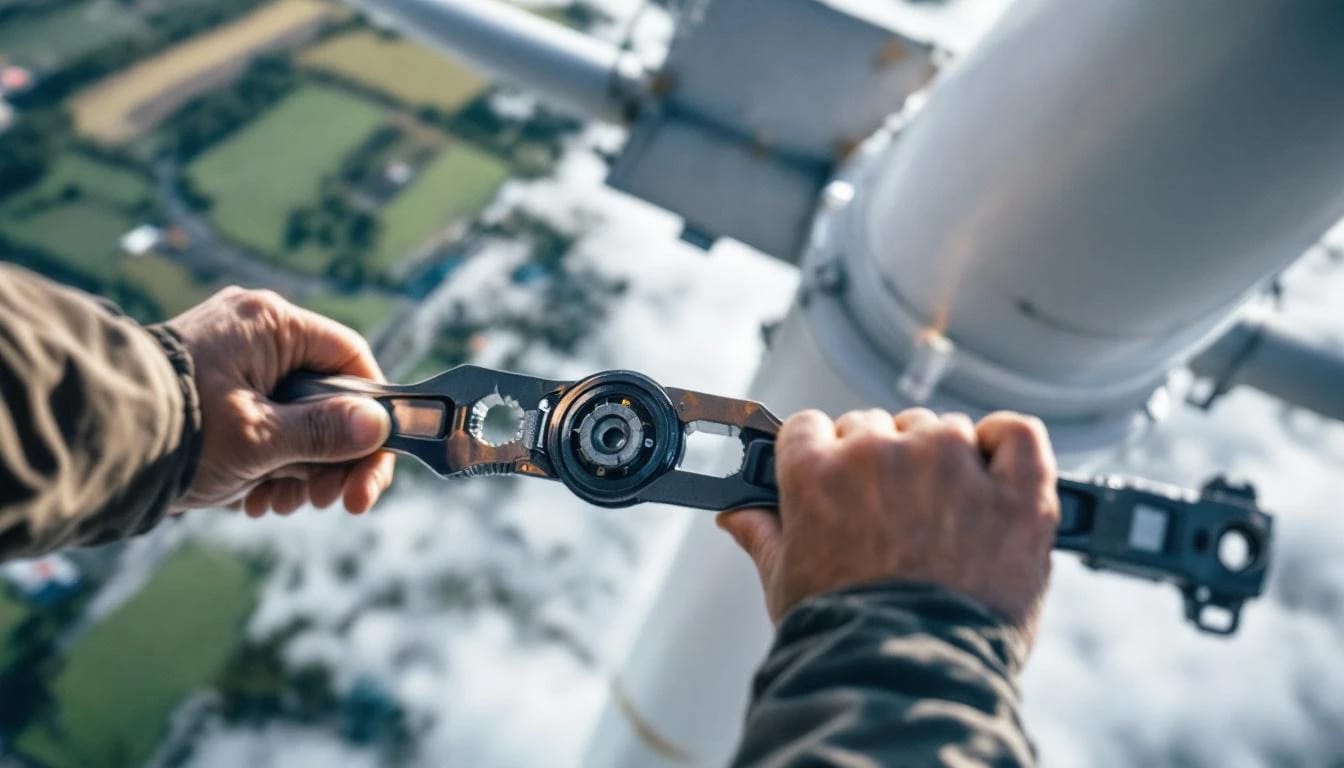
maintenance troubleshooting
Winterizing Your Home Wind Turbine: Pre-Winter Checklist
Prepare your residential wind turbine for winter with this comprehensive maintenance checklist covering blade inspection, electrical systems, and tower safety.

maintenance troubleshooting
How to Balance Homemade Wind Turbine Blades Without Lab Equipment
Balance DIY wind turbine blades using household items: paint stirrers, fishing line, and sandpaper. Static and dynamic methods reduce vibration by 70-90%.
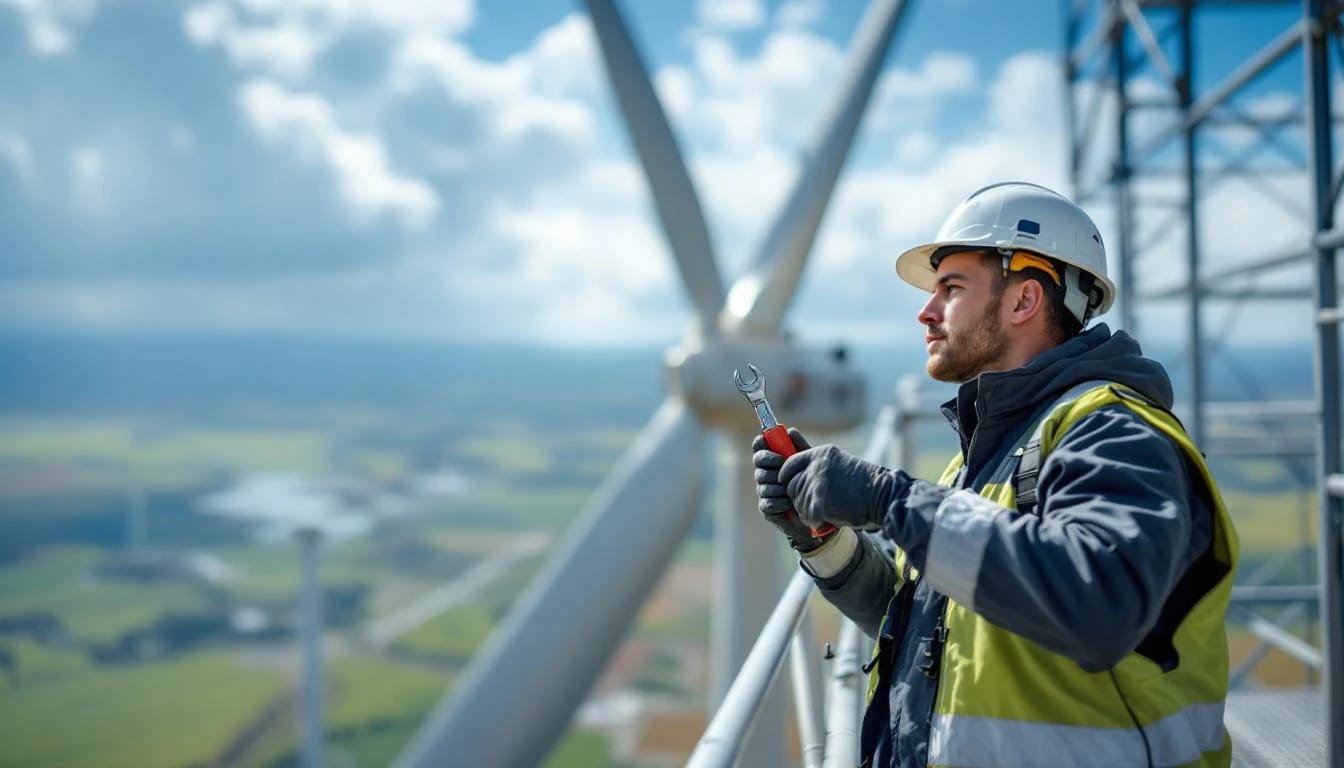
maintenance troubleshooting
Charge Controller Fault Codes: What They Actually Mean
Decode your wind turbine charge controller fault codes with this practical guide covering overcurrent, overvoltage, temperature errors, and sensor failures.

maintenance troubleshooting
A Realistic Annual Maintenance Schedule for Small Wind Turbines
Monthly visual checks, quarterly bolt torque, semi-annual blade inspections, and annual electrical testing keep small wind turbines safe and productive for 20+ years.

maintenance troubleshooting
Wind Turbine Ice on Blades: Detection, Mitigation & Shutdown
Ice buildup on wind turbine blades reduces efficiency by 20-80% and increases structural stress. Learn detection methods, heating systems, and safe shutdown protocols.

maintenance troubleshooting
Wind Turbine Slip Ring Replacement: Signs, Steps, Cost
How to tell when a residential wind turbine slip ring needs replacing, plus the tools, safety steps, and typical cost for both HAWT and VAWT setups.

maintenance troubleshooting
How to Lubricate Wind Turbine Bearings: Schedule & Grease Guide
Learn proper bearing lubrication schedules, NLGI grade selection, and access methods for residential wind turbines to prevent costly failures and extend service life.

maintenance troubleshooting
Wind Turbine Yaw Motor Not Working: Diagnosing and Fixing
Yaw motor failures lock turbines facing the wrong direction, costing 30-70% of power. Learn to diagnose controller faults, seized bearings, and wiring issues.

maintenance troubleshooting
How to Brake a Runaway Wind Turbine Safely | Emergency Stop
Learn three proven methods to stop a runaway residential wind turbine: dynamic braking, manual furling, and emergency disconnect. Quick action prevents damage.