Lightning Protection for Small Wind Turbines: Grounding Systems
Small wind turbines need proper lightning grounding to prevent equipment damage and fire. Learn about grounding electrodes, surge protection, and NEC requirements.
Share this article
windturbinehome.com/s/d63fea
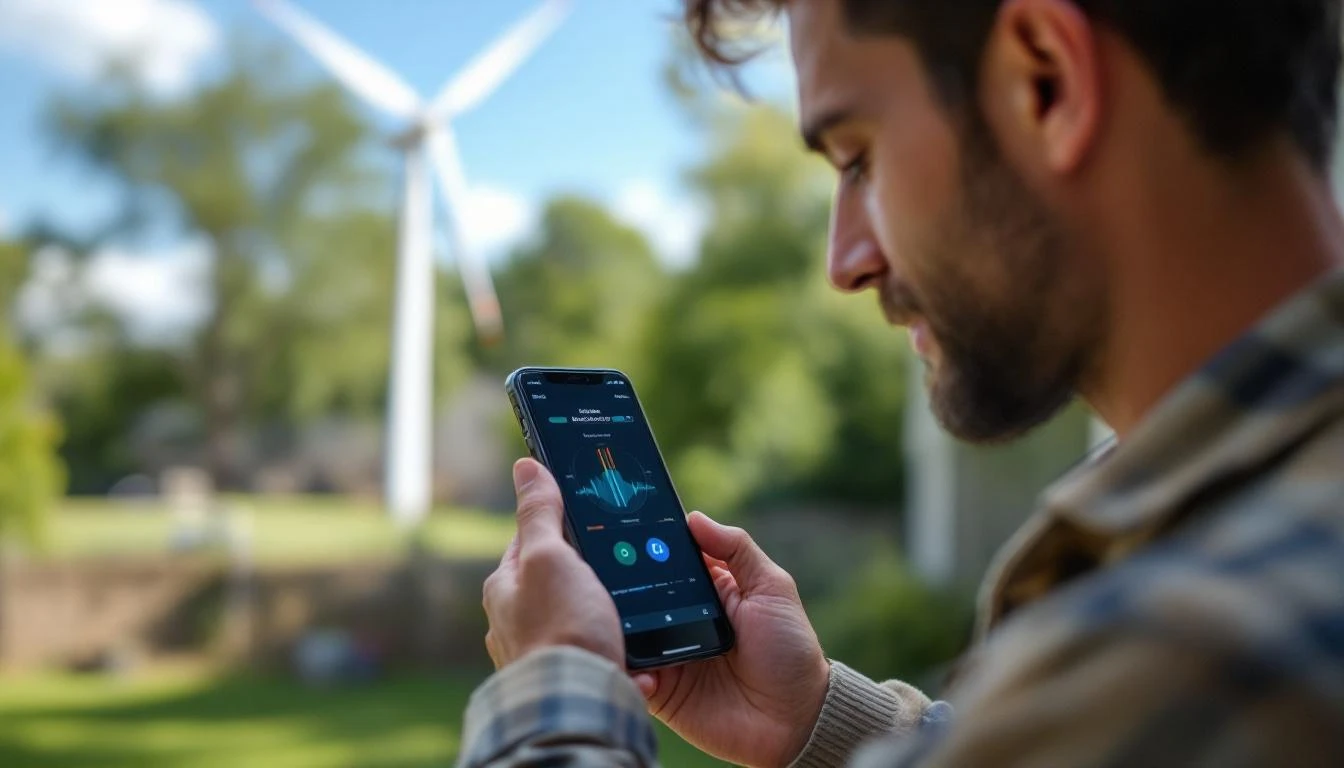
Small wind turbines attract lightning strikes because they're the tallest metal structure on most properties. A direct strike or nearby discharge can destroy a $4,000-$12,000 turbine in milliseconds, send thousands of volts through household wiring, and ignite roof fires. Effective lightning protection combines a low-resistance grounding system, properly bonded components, and surge-protective devices that divert electrical energy safely into the earth before it reaches your inverter or main panel.
Why small wind turbines need dedicated lightning protection
A 30-foot Bergey Excel 1 or 40-foot Primus Air 40 tower creates a preferred path for electrical discharge during thunderstorms. Lightning follows the route of least resistance to ground, and a tall metal pole topped with conductive blades is exactly what a stepped leader seeks. The tower's height advantage over surrounding structures makes strikes more likely than random chance would predict.
Wind turbines experience two types of lightning events. Direct strikes deliver 20,000 to 200,000 amperes through the nacelle and tower in under 100 microseconds. Nearby strikes—within 1,500 feet—induce voltage surges through electromagnetic coupling that travel along power cables and communication lines. Both scenarios destroy charge controllers, inverters, and connected appliances if the system lacks proper protection.
The National Electrical Code (NEC) Article 705 requires all interconnected power production sources to include ground-fault protection and a grounding electrode system. While the code doesn't specify lightning-specific equipment, it mandates that all metal components of an electrical system be bonded to earth ground. A wind turbine owner who skips grounding risks equipment loss, invalidates equipment warranties, and may violate local electrical inspection requirements.
Essential components of a wind turbine grounding system
The foundation of lightning protection is a low-impedance path to earth that dissipates electrical energy faster than it can build up. This path begins at the turbine nacelle and extends through the tower, underground conductors, and grounding electrodes driven deep into the soil.
Grounding electrodes must meet NEC 250.52 requirements. Copper-clad steel rods measuring 5/8-inch diameter and 8-10 feet long are standard for residential installations. Sites with sandy or rocky soil need multiple rods spaced at least twice the rod length apart, connected by bare copper conductors. A single rod in dry soil might show 100+ ohms of resistance; three properly spaced rods typically achieve 10-25 ohms, which provides adequate discharge capacity for small turbines under 10 kW.
Grounding conductors connect the tower base to the electrode array. NEC 250.166 requires conductors sized according to the largest service entrance conductor, but lightning protection demands heavier wire. A #6 AWG solid copper conductor (0.162-inch diameter) handles the mechanical stress and current density of a typical strike on a residential turbine. Stranded wire is prohibited—lightning's high-frequency energy creates skin effect that jumps between strands and vaporizes thin contact points.
Bonding jumpers tie every metal component together electrically. The tower sections, nacelle housing, blade attachment points, conduit runs, and inverter chassis all need direct metallic connections to the main grounding conductor. Painted surfaces must be scraped clean, and stainless steel hardware with star washers ensures long-term contact. A loose connection at any point creates a spark gap where lightning voltage arcs, welding or burning the metal.
Surge protective devices for wind turbine systems
Grounding electrodes divert the bulk of a lightning strike, but thousands of volts still propagate through power cables as transient surges. Type 1 and Type 2 surge protective devices (SPDs) clamp these voltage spikes before they reach sensitive electronics.
Type 1 SPDs install at the service entrance where the turbine interconnects with the main panel. These devices use metal oxide varistors (MOVs) rated for 20 kA or more to shunt surges between hot conductors and ground. A quality Type 1 device for a 240 VAC wind system costs $180-$350 and mounts in a NEMA 4X enclosure near the meter. The response time matters—look for devices rated under 1 nanosecond to catch the fast rise time of lightning-induced transients.
Type 2 SPDs mount at individual equipment locations: the charge controller, inverter input, and grid-tie disconnect. These secondary devices handle residual surges that bypass the primary SPD and everyday switching transients from motors or appliances. Expect to spend $75-$150 per device for units with 10 kA ratings and LED failure indicators.
A proper SPD installation includes short, direct connections to ground. Every additional foot of wire adds inductive impedance that slows the device response and allows higher voltage to pass. The grounding conductor from an SPD should follow the straightest possible path to the main grounding electrode conductor, with no loops, coils, or sharp bends.
Communication and data lines need protection too. A Bergey Excel 10 with remote monitoring or a Primus Wind Power Air Breeze with charge controller communication sends DC voltage or serial data through cables that act as lightning antennas. Isolated SPDs for low-voltage DC lines (often gas discharge tubes paired with transorbs) cost $40-$90 and prevent ground loops while clamping surges.
Measuring and testing ground resistance
The grounding system's effectiveness depends on soil resistance, moisture content, and electrode depth. A ground resistance tester—available for rental at equipment supply houses for $50-$75 per day—measures the actual impedance between your electrode array and earth.
Three-point fall-of-potential testing is the accepted field method. Drive two temporary stakes 40 and 80 feet from the grounding electrode in a straight line. The tester injects a known current between the electrode and far stake, then measures voltage drop at the intermediate stake. Resistance calculates from Ohm's law. Readings under 25 ohms are acceptable for small residential turbines; 10 ohms or less provides excellent protection.
Soil conditions change seasonally. Clay soils dry out in summer, increasing resistance by 200-400%. Sandy soils drain quickly after rain but stabilize at higher baseline resistance. Schedule ground tests in late summer when soil is driest to confirm your system meets spec at the worst-case condition. If resistance climbs above 30 ohms, add more grounding rods or consider chemical ground enhancement rods that release conductive salts over time.
Tower bolt torque and bonding connections need annual inspection. Thermal cycling and vibration loosen hardware, creating high-resistance joints where electrical arcing occurs during a strike. A thermal imaging camera (or smartphone with IR adapter) reveals hot spots at corroded connections under load. Check all bonding points before thunderstorm season begins.
Comparing lightning protection methods for small turbines
| Method | Protection Level | Cost Range | Best For |
|---|---|---|---|
| Basic NEC grounding (single 8' rod) | Minimal | $75-$150 | Low-storm-frequency areas, bare-minimum compliance |
| Multi-rod array (3+ electrodes) | Good | $250-$450 | Most residential sites, standard installation |
| Multi-rod + Type 1 & 2 SPDs | Excellent | $600-$950 | High-value equipment, frequent thunderstorms |
| Ufer ground + SPDs + isolation transformers | Maximum | $1,200-$2,000 | Commercial sites, critical loads, insurance requirements |
The Ufer ground method embeds bare copper conductor in the concrete tower foundation during pour. Twenty feet of #4 AWG copper encased in 2 inches of concrete creates a large-surface-area electrode with resistance often below 5 ohms in any soil. This approach costs $300-$500 in materials but requires planning before tower installation. Retrofitting an existing tower to Ufer specifications means breaking out and re-pouring the foundation pad—rarely cost-effective for residential turbines.
Proper installation of tower grounding connections
The junction between above-ground tower and below-ground grounding system is the most critical splice in lightning protection. Water infiltration, dissimilar metal corrosion, and mechanical stress all degrade connections at this point. Use listed grounding clamps rated for direct burial, not hardware-store hose clamps or wire nuts.
Exothermic welding (Cadweld or equivalent) creates molecular bonds between copper conductors and tower steel that never loosen. The process melts copper-oxide powder in a graphite mold, flowing molten copper around the connection. A starter kit costs $250-$400 and includes enough material for 15-20 welds. Professional tower installers often include exothermic grounding connections as a $150-$200 line item.
Mechanical clamps are acceptable if properly specified. A listed ground rod clamp must match the rod diameter (5/8" or 3/4") and conductor size (#6 to #2 AWG). Acorn-style clamps bite into both surfaces when tightened to the manufacturer's torque specification (typically 50-70 lb-ft). Bronze or stainless steel clamps avoid galvanic corrosion between copper and steel.
Coat all connections with anti-oxidant compound after assembly. The petroleum-based paste prevents oxygen and moisture from forming non-conductive oxide layers on copper surfaces. A 4-ounce tube costs $12-$18 and lasts for multiple installations. Reapply during annual inspections if you find green corrosion (verdigris) on exposed copper.
The grounding conductor must avoid sharp bends. Lightning current prefers straight paths—a 90-degree bend creates inductive impedance that forces arcing at the inside corner. Use sweeping curves with bend radius of at least 8 inches when routing around obstacles. Mount conductors away from combustible materials with standoffs every 4 feet.
Lightning protection for off-grid vs grid-tied systems
Off-grid wind systems face unique grounding challenges because the entire electrical system floats relative to earth until you create an intentional reference point. A battery bank on a wooden shed floor has no inherent ground connection, but lightning doesn't care—the energy will find earth through your charge controller, inverter, or physical structure.
The grounding electrode system must bond to the DC negative bus in a negative-grounded system or to the system grounding conductor in an ungrounded battery bank with a neutral-forming inverter. This connection gives lightning a designed path to earth that bypasses electronics. NEC 250.166 requires the grounding electrode conductor to be #6 AWG or larger for systems under 100 amps.
Battery cables need individual SPD protection. Lightning surges flowing backward through the charge controller can spark inside flooded lead-acid batteries, igniting hydrogen gas. DC-rated SPDs (often called transorb clamps) install directly on the battery terminals with the shortest possible leads. A 48 VDC system needs devices rated for at least 75 volts and 10 kA surge current.
Grid-tied systems share the utility's multi-grounded neutral, which provides thousands of parallel paths to earth through transformers and service grounds throughout the neighborhood. This distributed grounding offers inherent lightning protection, but the interconnection agreement requires isolation. A separately derived system per NEC 705.12 uses a transformer or inverter with galvanic isolation to prevent ground loops while maintaining safety grounding.
Common lightning protection mistakes that void warranties
Turbine manufacturers specify grounding requirements in installation manuals, and deviating from those specs can void the equipment warranty. Bergey Windpower requires a maximum 10-ohm ground resistance measured at the tower base. Primus Wind Power specifies exothermic welding or listed mechanical connectors—no improvised clamps. Aeolos wind turbines ship with grounding lugs pre-welded to the tower base, assuming the installer will connect them properly.
Using aluminum conductors for grounding is a frequent mistake. Aluminum has 61% of copper's conductivity and oxidizes rapidly in soil contact, increasing resistance over time. NEC 250.64 allows aluminum for grounding electrode conductors only above ground and only when protected from corrosion. The $30 savings on 50 feet of wire isn't worth the performance loss.
Sharing a ground rod with other systems creates potential differences during strikes. If your well pump, electric fence, and wind turbine all connect to one 8-foot rod, lightning current through the high-impedance connection raises the "ground" voltage hundreds or thousands of volts above true earth. Current then flows backward through equipment grounds, seeking parallel paths to lower resistance. Each major system needs its own electrode array, with all arrays bonded together through a common grounding conductor to prevent ground loops.
Undersized conductors are a false economy. A #10 AWG copper wire costs $0.55 per foot versus $0.90 for #6 AWG, but the smaller wire has 2.5 times the resistance and half the current capacity. Lightning can vaporize thin conductors, creating open circuits exactly when the protection is needed. Size grounding conductors for the worst-case fault current, not the steady-state load.
Lightning risk by geographic region
The National Lightning Detection Network maps average annual flash density across the United States. Central Florida experiences 25-30 flashes per square kilometer per year—the highest rate in the country. The Rocky Mountain Front Range, Gulf Coast, and southern Great Plains see 10-20 flashes per km² annually. The Pacific Northwest and northern New England average under 5 flashes per km² per year.
A small wind turbine in Tampa needs maximum lightning protection: multiple grounding rods, whole-system SPDs, and annual testing. The same turbine in western Oregon operates in a low-risk environment where basic NEC compliance suffices. Check the National Weather Service's lightning climatology data for your county to assess risk levels.
Local terrain affects strike probability independent of regional averages. A turbine on an isolated hill receives more strikes than one in a valley surrounded by taller structures. Trees within 50 feet provide some shielding by offering alternative strike paths, but don't rely on them—lightning often jumps from tree to nearby metal objects in a side flash. The safest assumption is that your turbine is the highest point within 500 feet and plan protection accordingly.
Insurance and code compliance for lightning protection
Homeowners insurance policies sometimes exclude lightning damage to renewable energy equipment unless the system is inspected and meets NEC standards. State Farm and Allstate typically extend dwelling coverage to attached renewable systems but require a licensed electrician's certification for the grounding installation. Standalone policies for wind turbines (available through specialized carriers like GCube or RenewableEnergyInsurance.com) always require proof of proper lightning protection.
The 30% federal Residential Clean Energy Credit (IRS Form 5695, IRC §25D) applies to lightning protection equipment installed as part of a wind energy system. Grounding electrodes, conductors, SPDs, and installation labor all qualify for the credit if they're part of the original installation or a substantial upgrade. Save receipts and include the expense in your total system cost when filing.
Local electrical inspectors enforce NEC grounding requirements during final inspection. A failed inspection delays interconnection approval and can require expensive rework if the tower is already installed. Some jurisdictions interpret NEC Article 250 conservatively and require lightning protection systems meeting NFPA 780 (Standard for Lightning Protection Systems), which specifies air terminals, down conductors, and more extensive grounding than wind turbine manufacturers recommend. Check with your Authority Having Jurisdiction before installation.
When to call a professional vs DIY grounding
Installing grounding electrodes and running conductors is straightforward work for homeowners with basic electrical knowledge. Driving 8-foot ground rods requires a rotary hammer drill or manual post driver and takes 20-30 minutes per rod in typical soil. Connecting conductors with mechanical clamps needs only a wrench and wire strippers.
Licensed electrician work is required for SPD installation at the main panel, per NEC 705 interconnection rules. Tapping into the service entrance conductors or main bus bars involves working on energized equipment with lethal voltage. Most jurisdictions won't issue permits for owner-installed service entrance modifications. Expect to pay an electrician $300-$600 for SPD installation and interconnection wiring.
Professional lightning protection contractors provide complete turnkey systems including ground resistance testing, exothermic welding, and documentation for insurance and inspection. A full system for a typical residential turbine costs $800-$1,500 installed. This makes sense for high-value turbines (Excel 10, Skystream 3.7) or when local codes require NFPA 780 compliance.
DIY hybrid approaches work well: install the ground rods and run conductors yourself, then hire an electrician for panel work and final inspection. This splits costs while ensuring code compliance where it matters most. Just don't energize the system until the inspection passes—some utilities disconnect meters for unpermitted work.
Do small wind turbines get struck by lightning more often than buildings?
Yes, by a factor of 3-5 times. A 40-foot turbine tower is often the tallest structure on residential properties, making it the preferred strike point within a 200-300 foot radius. The rotating blades also create localized electric fields that attract stepped leaders. Proper grounding doesn't prevent strikes, but it channels the energy safely to earth instead of through your electrical system.
Can I connect my wind turbine ground to my house ground rod?
NEC 250.58 requires all grounding electrodes on the same property to be bonded together, so yes—they must connect. However, each system should have its own electrode array first, then bond those arrays together with a copper conductor. This prevents high resistance at a single shared rod from compromising both systems. Run a #6 AWG copper conductor from the turbine ground array to the house ground array, clamped at both ends.
How much does lightning protection add to wind turbine installation cost?
Basic NEC-compliant grounding (three 8-foot rods, conductors, clamps) costs $200-$350 in materials plus 3-4 hours of labor. Adding Type 1 and Type 2 SPDs increases cost to $600-$850. Professional installation of a complete NFPA 780 system runs $800-$1,500. These costs qualify for the 30% federal residential clean energy credit, reducing net expense to $140-$1,050 depending on approach.
Will a whole-house surge protector protect my wind turbine?
Only partially. Whole-house SPDs at the service entrance protect downstream equipment in your home, but they don't protect the turbine itself from direct strikes or the cables between turbine and house from induced surges. You need dedicated SPDs at the turbine base (before the charge controller or inverter) plus proper grounding at the tower. Think of whole-house protection as the second layer after turbine-specific devices.
What happens if lightning strikes an ungrounded wind turbine?
The electrical energy seeks earth through any available conductor: the power cables, control wiring, or the mounting structure. This typically destroys the charge controller and inverter instantly (replacements cost $800-$3,000), may arc-weld tower bolts or ignite composite blades, and can send surges into household wiring that damage electronics on the same circuit. Fires are possible if arcing occurs near combustible materials. Insurance may deny claims for ungrounded systems that don't meet NEC requirements.
Bottom line
Lightning protection for a small wind turbine isn't optional—it's required by NEC Article 705 and essential to protect a $4,000-$15,000 equipment investment. A proper system combines multiple 8-foot grounding rods bonded to the tower, #6 AWG or larger copper conductors, and Type 1 and Type 2 surge protective devices at the service entrance and equipment locations. Budget $600-$950 for materials and professional electrical work, reduced to $420-$665 after the 30% federal tax credit. Test your ground resistance annually and inspect bonding connections before storm season. Schedule a consultation with a licensed electrician to plan your specific installation based on soil conditions and local code requirements.
Share this article
windturbinehome.com/s/d63fea
Editorial note: This article was researched and written by a member of the Wind Turbine Home editorial team. AI-assisted tools were used for spell-checking and light grammar review only — all research, analysis, and conclusions are our own. Our editorial policy prohibits sponsored content and paid placements. Read our editorial policy →
Related reading

noise vibration safety
Hurricane-Rated Wind Turbines: What the Spec Sheets Really Mean
Hurricane ratings on small wind turbines measure survival wind speed, not power generation. Learn what IEC Class I–III, survival speed, and furling really mean for your investment.
noise vibration safety
Wind Turbines for Hurricane-Prone Areas: Survival Speeds
Not every home turbine survives a hurricane. Compare survival wind speeds, automatic storm shutdown, and tilt-down towers to see which models stay standing.

noise vibration safety
Wind Turbine Struck by Lightning: What to Do and Replace
Lightning strikes can destroy wind turbine electronics and blades within milliseconds. Immediate shutdown, damage inspection, and grounding upgrades prevent cascading failures and costly replacements.
noise vibration safety
Wind Turbine Vibration Coming Through House: Isolation Fixes
Low-frequency vibration from residential wind turbines transfers through towers and mounts into homes. Fix it with proper isolation mounts, guy-wire tensioning, and reinforced foundation pads before it damages your structure.

noise vibration safety
Wind Turbine for Hurricane Backup Power: Storm-Survivable Picks
Hurricane-rated wind turbines survive 120+ mph winds through furling, brake systems, and ASCE 7-16 engineering. Vertical-axis models handle gusts better than traditional HAWTs.

noise vibration safety
Residential Wind Turbine Noise Regulations: dB Limits & Setbacks
Local zoning sets residential wind turbine noise at 45-60 dBA. Setback rules require 1.1x to 2x tower height from property lines. Enforcement varies widely.

noise vibration safety
What Happens to a Wind Turbine in a Storm? Safety & Survival
Small wind turbines use automatic braking, furling, and shutdown systems to survive storms. Most residential units ride out 70+ mph winds safely when properly installed.

noise vibration safety
Do Small Wind Turbines Kill Birds? Safety Data & Solutions
Small residential wind turbines cause minimal bird strikes—far fewer than windows or cats—but proper placement, visibility enhancements, and slow blade speeds reduce risk further.

noise vibration safety
How Loud Is a 5 kW Wind Turbine? Real Noise Levels Explained
A 5 kW wind turbine generates 45-60 dB at 10 meters—comparable to a refrigerator or moderate rainfall. Noise varies by turbine type, location, and wind speed.