Wind Turbine Struck by Lightning: What to Do and Replace
Lightning strikes can destroy wind turbine electronics and blades within milliseconds. Immediate shutdown, damage inspection, and grounding upgrades prevent cascading failures and costly replacements.
Share this article
windturbinehome.com/s/0bf36e

A direct lightning strike delivers 30,000 amperes through your wind turbine in under one millisecond—enough current to vaporize blade tips, melt inverter circuits, and arc through wiring back into your home. The turbine often keeps spinning afterward, masking internal damage until the charge controller catches fire three days later. Residential turbines face roughly one strike per year per 100 installations in high-activity zones like the Great Plains, yet most owners discover their lightning protection failed only after smoke appears. Knowing which components to inspect first, which to replace immediately, and how to prevent the next strike saves thousands in avoidable damage and downtime.
Immediate actions within the first hour
Kill all power to the turbine system before approaching the tower. Open the DC disconnect at the tower base, then the AC breaker inside your main panel. Lightning can leave energized paths through damaged insulation that won't trip breakers until you touch the wrong wire. Tag both disconnects with "DO NOT OPERATE—LIGHTNING DAMAGE" notes, and treat every conductor as live.
Photograph the turbine from four angles before climbing or moving anything. Insurance adjusters and manufacturers need visual evidence of blade cracks, scorch marks on the nacelle, and ground-level equipment damage. Capture close-ups of any melted components, burned insulation, or charred wood near the base. These images prove the strike's path and help differentiate lightning damage from mechanical wear that predated the event.
Check for injured people or animals within 50 feet of the tower. Ground current spreads radially from the strike point; anyone standing near wet soil when lightning hit may have burns on their feet or temporary paralysis. Secondary arcs sometimes jump to metal fences, tool sheds, or livestock feeders bonded to the turbine's ground rod. Clear the area and call emergency services if anyone reports chest pain, confusion, or numbness.
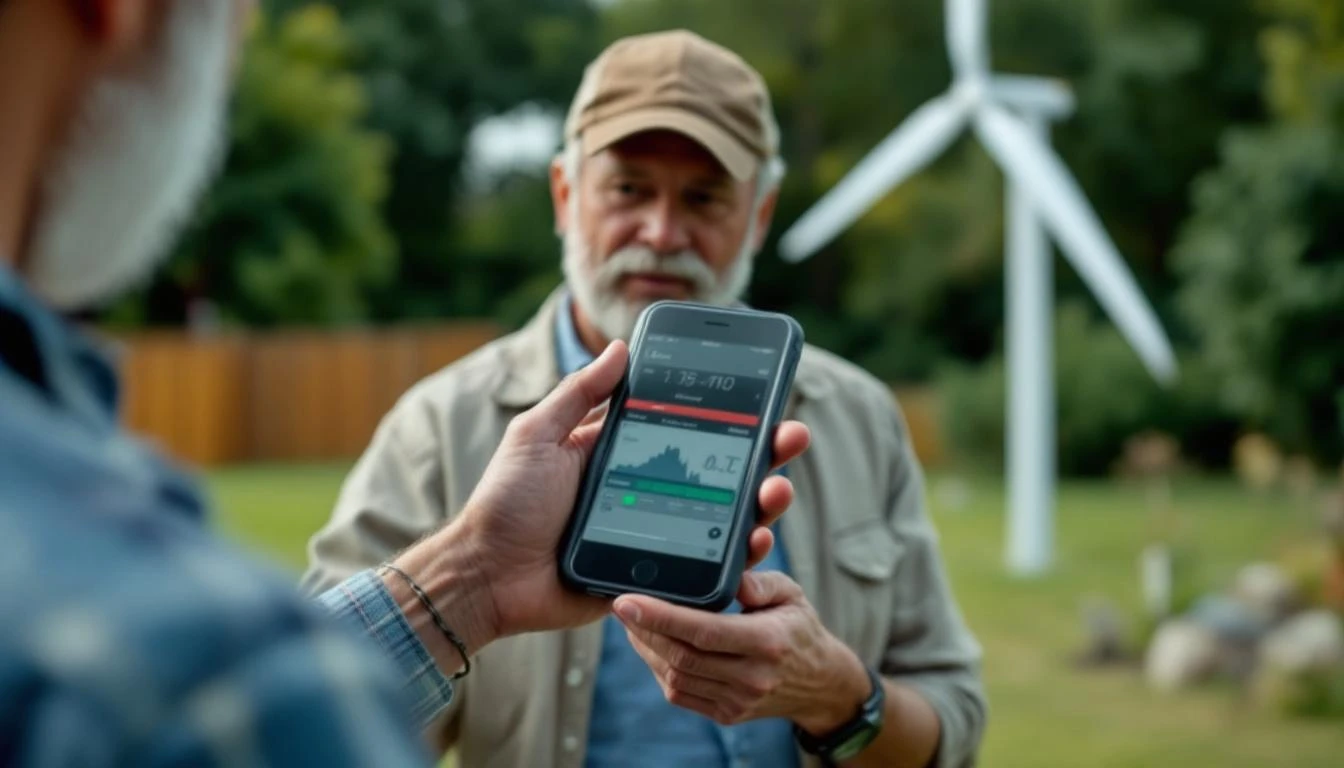
![INLINE: Homeowner inspecting base-mounted disconnect switch with voltage tester after turbine lightning strike]
Which turbine components fail first
Charge controllers and inverters absorb the strike's leading edge because they sit electrically closest to the spinning generator. A 20-kiloamp surge entering through the DC cables exceeds the metal-oxide varistor rating by 100× or more, turning the MOV into a short circuit that either blows the internal fuse or welds the semiconductor switches closed. Bergey controllers use a sacrificial MOV board that costs $280 to replace; generic Chinese controllers typically suffer mainboard destruction requiring full unit replacement at $600-$1,200.
Blades develop internal delamination or tip burn-through when lightning exits through the extremities. Carbon fiber blades conduct the current and often survive with cosmetic pitting, but fiberglass-composite blades hide cracks between plies that won't show until the blade flexes under load and splits apart mid-rotation. Primus Air 40 blades frequently exhibit 2-4 inch burn holes at the tip after strikes, with spiderweb fractures extending 8-12 inches inward. Any visible char or blackened resin means immediate blade retirement—partial failures launch debris 200+ feet.
Generator windings short phase-to-phase when insulation varnish flash-boils from induced current. A 5-kilowatt permanent-magnet alternator contains roughly 400 feet of magnet wire per phase; lightning injects enough energy to melt wire at the coil ends where voltage concentrates. The turbine may still produce power at reduced output, but resistance testing between phases drops from 0.8-1.2 ohms to 0.1-0.3 ohms, indicating compromised insulation. Running a damaged generator risks complete phase short and bearing seizure within weeks.
Tower cabling shows the most erratic damage patterns. The strike can punch through cable jackets at any point, arc across cable trays, or follow the ground wire back to your service panel. THHN building wire rated for 600 volts cannot handle the several-million-volt potential difference during a strike; NEC Article 705 requires grounded metal conduit for exactly this scenario, yet many DIY installations use direct-bury UF cable with no lightning path except through the copper conductors themselves. Expect to replace the entire cable run from turbine to disconnect if you find any jacket damage.
Inspection sequence for hidden damage
Start with a megohm insulation test on all three generator phases before reconnecting anything. Set your insulation resistance tester to 500 VDC and measure each phase wire to the turbine frame ground. Readings below 2 megohms indicate compromised winding insulation; below 0.5 megohms means the generator needs rewind or replacement. Acceptable insulation resistance runs 10-50 megohms on an undamaged alternator. Document these numbers for the manufacturer's warranty claim—most cover lightning only if you can prove the strike was the sole cause of failure.
Examine blade bolt holes and root attachment points with a borescope or dental mirror. Lightning current concentrates at mechanical joints where dissimilar metals meet; aluminum blade roots bolted to steel hubs create galvanic cells that accelerate corrosion after a strike. Look for white powder (aluminum oxide) or orange staining (rust) around bolt threads. Torque-test each blade bolt to the manufacturer's spec—a Bergey Excel requires 45 ft-lb, while smaller Aeolos-H turbines call for 25 ft-lb. Bolts that spin freely or crack during retorque must be replaced with new Grade 8 hardware.
Open the nacelle and photograph the slip-ring assembly or cable twist. Many vertical-axis and small horizontal-axis turbines route power through copper slip rings that brush against stationary contacts; lightning arcs between these surfaces and pits the copper. Measure brush resistance—it should read under 0.05 ohms. Above 0.2 ohms causes voltage drop and heat buildup. If the turbine uses a twisted cable drop instead of slip rings, untwist the cable and inspect for pinched insulation or strand breakage. Replace any cable section showing conductor discoloration or flattened strands.
Replacement parts and realistic costs
| Component | Typical Cost (USD) | Lead Time | DIY Feasible? |
|---|---|---|---|
| Charge controller (generic 3kW) | $650-$1,100 | 1-3 weeks | Yes, DC-safe |
| OEM controller (Bergey, Primus) | $1,200-$2,400 | 4-8 weeks | Yes |
| Fiberglass blade (single) | $380-$750 | 6-12 weeks | No (balance req.) |
| Carbon-fiber blade (single) | $850-$1,600 | 8-16 weeks | No |
| Generator rewind (5kW) | $1,400-$2,800 | 4-6 weeks | No |
| Complete generator replacement | $2,200-$4,500 | 6-10 weeks | Maybe (electrical) |
| Tower cable run (150 ft, conduit) | $420-$680 | 1 week | Yes (permit req.) |
| Inverter (grid-tie, 5kW) | $1,800-$3,200 | 2-4 weeks | Licensed only |
| Lightning arrestor (tower-mount) | $180-$340 | Stock item | Yes |
Blades must be replaced as a matched set. Installing one new blade alongside two aged blades creates mass imbalance that vibrates bearings and cracks the nacelle frame within months. Manufacturers track blade serial numbers and weight; a replacement set for a Pikasola 5kW costs $2,100 plus $350 shipping. Aftermarket blades void most warranties and rarely match the original aerodynamic profile.
Budget $600-$1,200 for a licensed electrician to pull new cable and upgrade grounding. NEC Article 250 requires a driven ground rod at the tower base bonded to your main service ground through #6 AWG bare copper minimum; many residential installs used #10 or smaller. The electrician should verify less than 25 ohms resistance to earth at the tower ground rod—sandy or rocky soil often needs multiple rods or a ground ring. This work requires an electrical permit in all jurisdictions, and inspectors will check for compliant bonding to metal guy anchors and conduit fittings.
Lightning protection upgrades that actually work
Install a tower-mounted surge arrestor rated for 40 kiloamps minimum within 10 feet of the turbine. Midnite Solar's MNSPD-300 handles 40kA per phase and costs $290; cheaper 20kA units saturate during strong strikes and pass the remaining surge downstream. Mount the arrestor in a weatherproof NEMA 3R enclosure at the top of the tower or inside the nacelle, with the shortest possible leads (#6 AWG) to both the DC conductors and the grounding system. Long leads add inductance that defeats the arrestor's clamping speed.
Bond all metal tower sections and guy cables directly to the ground rod network. A non-conductive fiberglass tower offers no lightning path, forcing the strike through your wiring; a properly grounded steel tower becomes the primary path and diverts 60-80% of the current away from electronics. Use bronze or copper cable clamps rated for outdoor exposure—aluminum clamps corrode where they contact steel. Torque each clamp to 15-20 ft-lb and apply anti-oxidant paste to the mating surfaces.
Add a second ground rod 20 feet from the first, connected by buried #6 bare copper. This creates a ground grid that lowers system impedance below 10 ohms even in poor soil. Drive each 8-foot copper-clad rod until 6 inches remain above grade, then test resistance with a fall-of-potential tester or clamp-on ground meter. Rocky terrain may require chemical ground rods filled with sodium-bentonite mixture that dissolves into the soil; these cost $160 each but achieve 5-8 ohm readings where standard rods fail.
Consider an external lightning rod extending 24 inches above the turbine's highest point. This draws strikes away from blades and nacelle, directing current through a dedicated down-conductor to the ground grid. UL 96A-compliant air terminals cost $120-$180 and use 3/8-inch copper rod with a pointed tip. Mount the terminal on a non-conductive fiberglass pole to avoid creating a new current path through the turbine structure. Bergey and Primus offer factory options for integrated lightning terminals, though field retrofits work equally well.
Insurance claims and manufacturer warranty
Document every failed component with part numbers, photos, and the date/time of the strike if known. Most homeowner policies cover lightning damage under "sudden and accidental" peril, but adjusters routinely deny claims for wear items like blade erosion or corroded wiring that predated the strike. Separate the obvious strike damage (melted circuits, burned insulation) from gradual degradation (faded blade gelcoat, rust on bolts). Submit the insulation-resistance test results and a written estimate from the turbine manufacturer or certified installer.
Check your turbine's warranty exclusions before filing. Bergey covers lightning damage only if you installed their factory arrestor at time of commissioning; aftermarket arrestors void electrical coverage. Primus Wind 400 warranties specifically exclude "acts of God" including lightning, while Aeolos offers partial coverage if you can prove proper grounding per their installation manual. Many warranties lapse if you modified the wiring or used non-OEM controllers—even a different charge-controller brand can disqualify your claim.
Submit claims within 30 days of discovery. Delays let manufacturers argue that you caused additional damage by operating a compromised system. Include your original purchase receipt, installation photos showing factory-spec grounding, and maintenance logs proving regular inspection. If the manufacturer denies coverage, appeal with NEC code citations and ASTM F2951 small wind installation standards—proving you met industry guidelines often reverses the denial.
When to call professionals versus DIY
Any work on grid-tied inverters or utility-side wiring requires a licensed electrician per NEC Article 705.12. This includes replacing the inverter, upgrading the AC disconnect, or modifying the interconnection agreement equipment. Most utilities place a tamper-evident seal on the production meter; breaking that seal without utility authorization terminates your net-metering agreement and may trigger disconnection. Budget $800-$1,400 for professional inverter replacement including permit and inspection.
Generator removal and blade replacement demand mechanical skills and proper rigging. A 5-kilowatt turbine weighs 180-250 pounds complete; lowering the head safely requires a gin pole, winch, and tag lines. Blade installation needs precision balancing—mismatched blades cause vibration that destroys bearings within 200 operating hours. Unless you own blade-balancing equipment (static or dynamic) and have climbed turbine towers before, pay the $1,200-$2,000 for a professional service call. Falling components or improper balance shortens turbine life more than the service fee.
You can replace charge controllers, arrestors, and low-voltage DC cabling yourself if you follow lockout-tagout procedure. Open both the DC disconnect at the tower and AC breaker at the main panel, then verify zero voltage with a multimeter at the controller terminals. Photograph the existing wiring before disconnecting anything; charge controllers have a dozen or more terminals, and misconnection can backfeed the battery or short phases. Use heat-shrink tubing on all splices and seal outdoor connections with dielectric grease. Testing the new controller before reconnecting to the grid prevents cascading failures.
Long-term monitoring after a strike
Measure turbine output weekly for the first month. Lightning-damaged generators often degrade gradually as internal shorts carbonize and spread through adjacent windings. Log daily kilowatt-hour production and compare to pre-strike averages—a 15% drop in the same wind conditions indicates failing insulation. Bergey's XLPD display shows phase voltage and current; unbalanced phases (more than 10% difference) confirm partial winding damage.
Inspect blade surfaces monthly with binoculars. Micro-cracks spread from the strike point as blades flex under load; what appears as cosmetic damage at week one may propagate into a 6-inch split by month three. Pay attention to the blade root area where lightning current concentrated—discoloration, warping, or new gaps around bolt holes all signal replacement urgency. Schedule an annual climbing inspection where you probe suspect areas with a fiberglass awl to detect subsurface delamination.
Re-test insulation resistance every six months. Generator windings absorb moisture through microscopic cracks; an alternator that tested 5 megohms immediately after the strike may drop to 1 megohm by the following spring. Below 2 megohms triggers mandatory generator service. Keep a log of these readings—trending data catches slow degradation that intermittent testing misses. A $180 insulation tester pays for itself by predicting failures before they destroy other components.
Preventing secondary damage to home electrical
Surge protectors on your main panel cannot stop lightning that enters through the turbine's DC side. The strike's electromagnetic pulse induces voltage in every conductor within 50 feet of the tower, including your home's branch circuits. Inspect all GFCI outlets and AFCI breakers—arc-fault breakers contain sensitive electronics that fail after nearby lightning and start nuisance-tripping or refusing to reset. Replacing a $45 AFCI breaker costs far less than the house fire caused by a breaker that won't trip during a real arc fault.
Check your home's grounding electrode system for new corrosion or loose bonds. Lightning current flowing through the turbine ground rod travels through the #6 bonding wire back to your main panel's ground bus, then out through the utility's multi-grounded neutral. This return path can loosen ground clamps and accelerate galvanic corrosion where copper meets steel or aluminum. Re-torque the turbine ground bond and main service ground bonds to 15 ft-lb, and verify continuity below 1 ohm between the turbine's ground rod and the panel's ground bus.
Install a whole-house surge protector if you don't already have one. These mount inside your main panel and cost $150-$300 plus electrician labor. They won't stop a direct strike, but they clamp surges from nearby strikes and backfeed from damaged utility lines. Look for Type 2 SPDs rated for 50kA or higher with low voltage protection rating (MCOV) just above your system voltage—a 150V MCOV unit for 120V service, 300V for 240V. Replace the module every 8-10 years or after a major strike.
Real-world strike scenarios and outcomes
A Montana rancher's Bergey Excel 10 took a direct strike during a spring thunderstorm. The charge controller exploded, the inverter lost all three phases, and one blade showed a 3-inch burn hole. Total repair: $4,800 including a new controller, inverter, and blade set. His homeowner's insurance covered $3,200 after the $500 deductible, but the claim raised his annual premium by $180. Had he installed Bergey's $340 lightning arrestor initially, damage would have been limited to the sacrificial arrestor module and possibly the charge controller—a $900 repair.
A Texas homeowner installed an Aeolos-H 5kW with aftermarket components to save money. The system included no surge arrestor and used #10 direct-bury cable instead of conduit. Lightning struck the tower and backfed through the inverter into his home's electrical panel, destroying the main breaker, three GFCI outlets, a refrigerator, and the HVAC thermostat. His DIY installation voided Aeolos's warranty, and his insurance denied the claim citing improper electrical work. Out-of-pocket cost exceeded $8,000 when the utility required a certified electrician to rebuild the service entrance.
An Iowa farmer installed comprehensive lightning protection on his Primus Air 40: tower-mount arrestor, ground grid with four rods, and all metal bonded per code. A close strike hit 40 feet from the tower, induced a surge through the soil, and destroyed the arrestor module. The turbine itself suffered zero damage. He replaced the $95 arrestor module in 20 minutes and had the turbine back online that afternoon. Annual production remained within 2% of pre-strike levels three years later.
Can I repair a lightning-damaged charge controller myself?
Most modern charge controllers use surface-mount components and multilayer circuit boards that are not field-repairable. The MOV and input fuses are accessible, but internal damage often extends to the microcontroller and MOSFET drivers. Attempting repair without oscilloscope and hot-air rework station typically causes more damage. Replace the entire unit and send the damaged controller to the manufacturer for credit or core exchange if offered.
How long do wind turbine blades last after partial lightning damage?
Blades with visible burn marks or delamination fail within 200-800 operating hours depending on wind conditions. High-speed rotation generates centrifugal loads exceeding 4,000 pounds at the blade root; cracks propagate rapidly under this stress. Cosmetic surface pitting without subsurface damage may reduce blade life by 20-30%, but any structural compromise demands immediate replacement. The risk of mid-flight blade separation far outweighs the blade's $600-$1,200 replacement cost.
Will a lightning strike void my turbine's warranty?
Warranty coverage depends on whether you installed manufacturer-specified lightning protection at commissioning. Bergey requires their arrestor module and proper grounding to maintain electrical warranty coverage; lightning voids warranty only if protection was absent. Primus and most Chinese brands exclude lightning as an "act of God" regardless of protection installed. Review your warranty document's exclusions section and installation manual for required lightning components before purchasing—some manufacturers offer lightning coverage as a paid add-on.
Should I install a lightning rod above my wind turbine?
External lightning rods work if installed correctly: 24 inches above the turbine's highest point, connected to the ground grid through a dedicated #6 AWG down-conductor, and mounted on non-conductive pole to avoid creating current paths through turbine structure. Franklin-style air terminals cost $120-$180 and draw strikes away from expensive turbine components. However, a properly grounded metal tower with tower-mount surge arrestor provides similar protection for less money and complexity. Consult a lightning protection specialist certified under NFPA 780 or UL 96A for site-specific recommendations.
Can I claim residential clean energy tax credit for lightning repairs?
IRS Form 5695 and IRC §25D cover original equipment costs but explicitly exclude repair and maintenance expenses. Replacing damaged components restores the system to its original state and does not qualify. However, if you upgrade to a larger turbine or add capacity after the strike, the incremental cost of new equipment qualifies for the 30% credit through 2032. Installing proper lightning protection during initial installation counts toward eligible costs, so the arrestor, grounding grid, and compliant wiring all qualify—but only during new construction, not as after-the-fact repairs.
Bottom line
Lightning damage follows predictable patterns: electronics fail first, blades show visible damage, and generators degrade slowly over weeks. Inspect charge controller, inverter, and blade integrity within 24 hours of any strike, then test generator insulation before reconnecting. Proper grounding and a 40kA surge arrestor prevent 70-80% of component damage and cost $500-$800 installed—far less than the $3,000-$8,000 average strike repair bill. Residential turbine owners in moderate-to-high lightning zones should budget for arrestor module replacement every 3-5 years and expect one major strike per decade.
Related topics
- residential wind turbine grounding requirements
- charge controller failure symptoms and troubleshooting
- when to replace wind turbine blades
- homeowner insurance coverage for renewable energy systems
- annual wind turbine maintenance checklist
- NEC Article 705 compliance for small wind installations
External resources
Share this article
windturbinehome.com/s/0bf36e
Editorial note: This article was researched and written by a member of the Wind Turbine Home editorial team. AI-assisted tools were used for spell-checking and light grammar review only — all research, analysis, and conclusions are our own. Our editorial policy prohibits sponsored content and paid placements. Read our editorial policy →
Related reading

noise vibration safety
Hurricane-Rated Wind Turbines: What the Spec Sheets Really Mean
Hurricane ratings on small wind turbines measure survival wind speed, not power generation. Learn what IEC Class I–III, survival speed, and furling really mean for your investment.

noise vibration safety
Lightning Protection for Small Wind Turbines: Grounding Systems
Small wind turbines need proper lightning grounding to prevent equipment damage and fire. Learn about grounding electrodes, surge protection, and NEC requirements.
noise vibration safety
Wind Turbines for Hurricane-Prone Areas: Survival Speeds
Not every home turbine survives a hurricane. Compare survival wind speeds, automatic storm shutdown, and tilt-down towers to see which models stay standing.
noise vibration safety
Wind Turbine Vibration Coming Through House: Isolation Fixes
Low-frequency vibration from residential wind turbines transfers through towers and mounts into homes. Fix it with proper isolation mounts, guy-wire tensioning, and reinforced foundation pads before it damages your structure.

noise vibration safety
Wind Turbine for Hurricane Backup Power: Storm-Survivable Picks
Hurricane-rated wind turbines survive 120+ mph winds through furling, brake systems, and ASCE 7-16 engineering. Vertical-axis models handle gusts better than traditional HAWTs.

noise vibration safety
Residential Wind Turbine Noise Regulations: dB Limits & Setbacks
Local zoning sets residential wind turbine noise at 45-60 dBA. Setback rules require 1.1x to 2x tower height from property lines. Enforcement varies widely.

noise vibration safety
What Happens to a Wind Turbine in a Storm? Safety & Survival
Small wind turbines use automatic braking, furling, and shutdown systems to survive storms. Most residential units ride out 70+ mph winds safely when properly installed.

noise vibration safety
Do Small Wind Turbines Kill Birds? Safety Data & Solutions
Small residential wind turbines cause minimal bird strikes—far fewer than windows or cats—but proper placement, visibility enhancements, and slow blade speeds reduce risk further.

noise vibration safety
How Loud Is a 5 kW Wind Turbine? Real Noise Levels Explained
A 5 kW wind turbine generates 45-60 dB at 10 meters—comparable to a refrigerator or moderate rainfall. Noise varies by turbine type, location, and wind speed.