Wind Turbines for Hurricane-Prone Areas: Survival Speeds
Not every home turbine survives a hurricane. Compare survival wind speeds, automatic storm shutdown, and tilt-down towers to see which models stay standing.
Share this article
windturbinehome.com/s/0312e5
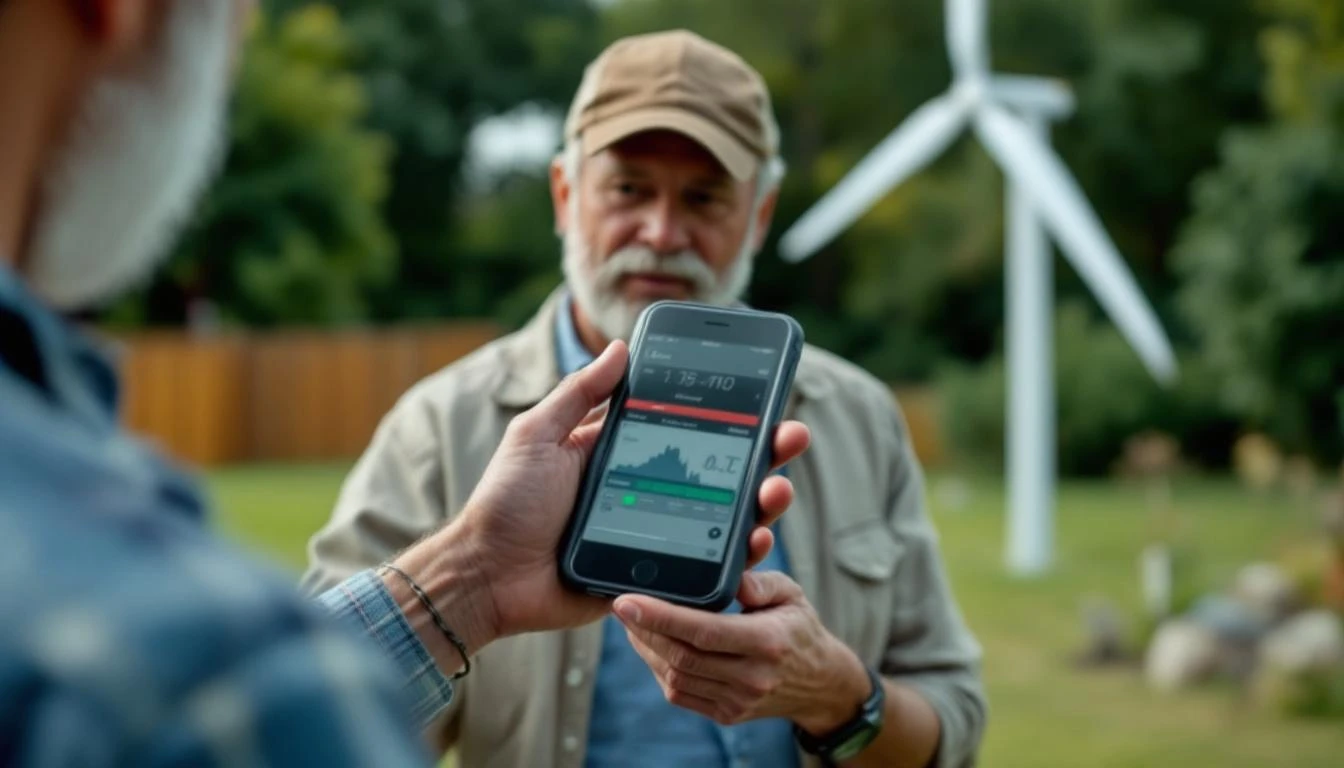
Homeowners in hurricane corridors need wind turbines that can survive sustained winds exceeding 100 mph without catastrophic failure. Storm-rated turbines incorporate automatic furling, reinforced blade materials, and mechanical braking systems designed to protect the investment when extreme weather strikes. The best choices blend survival engineering with post-storm restart capability, so the turbine generates power again once conditions normalize. Vertical-axis designs offer inherent advantages in turbulent, multi-directional gusts, while certain horizontal-axis models feature patented folding mechanisms that reduce windload by 90 percent during peak storm conditions.
Engineering priorities for hurricane-zone turbines
Wind turbines in coastal Florida, Louisiana, Texas, and the Carolinas face sustained winds well beyond typical design parameters. Standard residential turbines survive 110-120 mph gusts; storm-rated models must tolerate 140-160 mph or higher. Three design elements dominate survival: passive overspeed protection that sheds excess wind without electrical input, blade materials that flex rather than snap, and tower systems that lower the rotor to the ground on short notice.
Passive furling works by rotating the rotor out of the wind when rotational speed exceeds a threshold. Horizontal-axis turbines often use a tail boom on a hinged vertical pivot; aerodynamic forces push the tail sideways, yawing the rotor away from the wind. Vertical-axis models rely on blade pitch or drag-inducing spoilers. Both approaches must function during grid outages when electronic brakes lose power. Mechanical disc brakes serve as backup, clamping the shaft once rotation drops below safe operating speed.
Blade material determines whether the rotor bends or breaks. Fiberglass-reinforced composites flex under load; cast aluminum alloys shatter. Bergey Windpower uses pultruded fiberglass with unidirectional glass fiber for tensile strength. Primus Wind Power employs injection-molded nylon-reinforced blades on smaller models, accepting lower efficiency in exchange for impact tolerance. Carbon fiber offers the best strength-to-weight ratio but costs three to five times more than fiberglass for equivalent swept area.
Tower selection separates cautious operators from the reckless. Tilt-down towers—using a hinged base plate and gin pole—allow an owner to lower a 10-kW turbine in under two hours with two people. Guyed lattice towers reduce material cost but require advance tensioning checks; loose guy wires whip in hurricane winds and destabilize the structure. Fixed monopole towers demand the smallest footprint yet offer no storm-mitigation option short of climbing to manually engage the brake. NEC Article 705 requires accessible disconnects; a ground-level switch becomes critical when a storm approaches and climbing is unsafe.
![INLINE: Diagram showing passive furling mechanism with tail boom pivoting rotor away from wind direction]
Top horizontal-axis models for storm resilience
Bergey Excel 10 with Advanced GridTek controller
Rated at 10 kW in 24.6 mph winds, the Excel 10 incorporates a patented Autofurling system that turns the rotor 90 degrees out of the wind at sustained speeds above 35 mph. The tail boom pivots on a vertical axis; as aerodynamic lift on the tail increases, the rotor yaws away from the wind, reducing swept area and limiting rotational speed. Survival wind speed reaches 140 mph with the rotor in the furled position. Blades measure 8.2 feet and use pultruded fiberglass; the hub mounts on a direct-drive permanent-magnet alternator, eliminating gearbox failure points.
Bergey recommends a tilt-down tower for hurricane zones. The factory-supplied gin pole and cable system works with tower heights between 80 and 120 feet. Two adults can lower the turbine in 90 minutes. The Advanced GridTek inverter meets IEEE 1547 interconnection standards and includes anti-islanding protection. Price for the complete system starts at $52,000 plus installation. Bergey warranty covers 10 years on the turbine and 5 years on electronics. The Excel 10 qualifies for the 30 percent federal Residential Clean Energy Credit under IRC §25D, reducing effective cost to $36,400 before state incentives.
Skystream 3.7 (legacy model, used market)
The Skystream 3.7—no longer in production but widely available on the secondary market—remains a common choice for homeowners seeking a smaller footprint. Rated 2.4 kW at 30 mph, the turbine uses a downwind rotor configuration: blades trail the tower, allowing the rotor to weathervane naturally. Survival wind speed is 140 mph. A centrifugal flap brake activates above 40 mph, reducing rotor speed from 400 rpm to 80 rpm. The three-blade rotor spans 12 feet; blades are fiberglass-reinforced composite.
The Skystream 3.7 mounts on a 35-45 foot monopole tower. Xcel Energy (formerly Southwest Windpower) offered a tilt-up tower option, but most installations used fixed steel poles. Without a tilt-down mechanism, storm preparation requires a technician to climb and manually engage the brake—a dangerous task in deteriorating conditions. Used Skystream systems sell for $3,000-$6,000; buyers must verify blade condition and inverter firmware. Installation costs $5,000-$8,000 for a monopole tower. These units shipped between 2006 and 2013; replacement parts come from third-party suppliers.
Primus Air 40 with manual tilt tower
Primus Wind Power builds the Air 40 for off-grid applications; the turbine generates 400 watts at 28 mph and survives 110 mph winds. A marine-grade manual brake lever mounted at the tower base engages a caliper on the rotor shaft. The three-blade rotor spans 46 inches; blades use carbon-fiber-reinforced nylon. A spring-loaded furling tail rotates the rotor parallel to the wind above 38 mph. The Air 40 weighs 13 pounds, making it compatible with marine A-frame masts and roof-mounted poles that tilt manually.
The Air 40 suits 12-volt or 24-volt battery systems. Output voltage depends on the selected model; a built-in rectifier converts three-phase AC to DC. Price is $1,295 for the turbine, $450 for a 30-foot tilt tower kit. Installation requires two people and basic hand tools. Primus offers a 2-year warranty. The Air 40 does not connect to the grid without an additional inverter; Primus sells a 600-watt modified sine wave unit for $595. For hurricane zones, the manual brake and tilt tower provide straightforward storm prep, but the 110 mph survival rating falls short of Category 3+ conditions.
Vertical-axis turbines: inherent omnidirectional advantages
Vertical-axis wind turbines (VAWTs) rotate around a vertical shaft; blades move in a circular path perpendicular to the wind. This configuration eliminates yaw mechanisms and allows the turbine to accept wind from any direction simultaneously. In hurricane conditions, multi-directional gusts and rapid wind-direction shifts favor VAWTs over horizontal designs that must reorient.
Aeolos-V 3kW Darrieus-Savonius hybrid
The Aeolos-V 3kW combines a Darrieus eggbeater rotor with a Savonius scoop for low-speed starting torque. The rotor stands 11.5 feet tall with a 9-foot diameter; three curved aluminum blades attach to a central shaft. Rated output is 3 kW at 22 mph; survival wind speed is 134 mph. An electromagnetic brake clamps the shaft when grid voltage drops or rotational speed exceeds 150 rpm. The turbine mounts on a 30-50 foot monopole tower or a guyed pole.
Aeolos specifies a ground-level manual brake switch; the operator pushes a lever that cuts DC power to the brake coil, allowing a spring to engage friction pads. The rotor stops within 10 seconds. Price for the turbine is $8,900; a 40-foot monopole tower costs $3,200. Installation requires a crane or gin pole; total installed cost ranges from $18,000 to $24,000. Aeolos ships from China; lead time is 8-12 weeks. The unit qualifies for the federal 30 percent tax credit if installed on residential property. Warranty covers 5 years on the alternator and 3 years on structural components.
Pikasola 5kW helical VAWT
Pikasola manufactures a 5 kW helical VAWT with twisted blades that reduce vibration and noise. The rotor measures 13.5 feet tall and 7.5 feet in diameter; five blades twist 120 degrees along the vertical axis. Rated output is 5 kW at 28 mph; survival wind speed is 112 mph. A mechanical disc brake activates automatically when the charge controller detects battery voltage above a threshold or when the operator presses a wall-mounted emergency stop button.
The Pikasola VAWT suits off-grid or grid-tied systems. A built-in three-phase rectifier outputs 96-120 VDC; a separate inverter converts DC to 240 VAC for grid connection. Price is $6,300 for the turbine, $2,800 for a 40-foot guyed tower kit. The manufacturer recommends a concrete foundation 6 feet in diameter and 4 feet deep. Installation typically costs $8,000-$12,000. Warranty is 3 years on electrical components, 10 years on the rotor. The 112 mph survival rating handles Category 2 hurricanes; higher categories require the owner to unbolt the rotor and lower it—a task that takes four people and half a day.
Storm-preparedness features that matter
Automatic vs. manual shutdown systems
Automatic shutdown systems engage without human intervention. A charge controller monitors rotor speed and grid voltage; when either parameter exceeds safe limits, the controller cuts power to a brake solenoid or signals a furling actuator. Manual systems require the owner to flip a switch or pull a lever. Automatic systems protect the turbine during surprise windstorms or when the owner evacuates. Manual systems offer redundancy; a stuck solenoid or failed controller leaves the turbine spinning, but a mechanical lever always works.
Best practice for hurricane zones: install both. Use an automatic system for day-to-day protection and a manual ground-level switch for pre-storm shutdown. Bergey and Aeolos models include this dual-brake approach. Primus and Pikasola turbines rely primarily on manual controls; adding an automatic speed-sensing brake requires aftermarket components and NEC-compliant wiring.
Tilt-down vs. fixed tower trade-offs
Tilt-down towers cost 20-30 percent more than fixed monopoles but eliminate the need for a crane during installation or maintenance. A hinged base plate and a gin-pole mast allow two adults to lower a 10-foot rotor. Storm preparation involves disconnecting the turbine, releasing guy-wire tension on one side, and using a hand winch to tilt the tower. The rotor rests on padded supports 3 feet above the ground, minimizing windload. After the storm, the process reverses.
Fixed towers reduce upfront cost and simplify permitting; many jurisdictions treat tilt-down towers as temporary structures, requiring annual inspections. Fixed monopoles rated for 140 mph winds use thicker steel and deeper foundations, adding $3,000-$5,000 to material cost. Homeowners who cannot lower the turbine before a storm must rely entirely on passive furling and braking. If the furling mechanism fails, the rotor overspeeds, and blades fracture. Insurance typically excludes wind-turbine damage unless the policy includes a named rider; replacement cost for a 10 kW rotor assembly is $15,000-$20,000.
Foundation and anchoring for extreme loads
Hurricane winds exert forces far beyond operational design. A 10 kW turbine with an 8-foot rotor in 140 mph winds experiences 2,500 pounds of lateral thrust. Tower foundations must resist both overturning moment and uplift. The American Concrete Institute (ACI 318) specifies minimum embedment depth and rebar layout; residential foundations for 80-foot towers typically require 4 feet of depth, 6 feet of diameter, and #5 rebar on 12-inch centers.
Guy wires introduce separate failure modes. Each guy wire develops 1,000-3,000 pounds of tension under load; anchor points must embed in undisturbed soil or solid rock. Screw anchors—helical steel shafts twisted into the ground—suit sandy coastal soils. Concrete deadmen—buried blocks tied to the guy cable—work in clay. Loose or corroded turnbuckles allow the tower to sway; the turbine rotor wobbles, bending the shaft. Pre-storm inspections should check every turnbuckle, shackle, and thimble for rust or deformation. Replace any component showing wear.
FAA Part 77 requires notice for structures exceeding 200 feet above ground level or within certain proximity to airports. Most residential turbine towers fall below this threshold, but coastal installations near regional airports may require FAA review. The process adds 45-90 days to permitting. Local building departments enforce NEC Article 705 for electrical interconnection; the installer must provide a disconnecting means accessible without climbing the tower. A lockable AC disconnect mounted on a weatherproof enclosure at the tower base meets code.
Comparing survival wind speeds and braking systems
| Model | Type | Rated Power | Rotor Diameter | Survival Wind Speed | Braking System | Tower Compatibility | Approx. Price (Turbine Only) |
|---|---|---|---|---|---|---|---|
| Bergey Excel 10 | HAWT | 10 kW | 8.2 ft | 140 mph | Automatic furling + mechanical disc | Tilt-down guyed lattice | $52,000 |
| Skystream 3.7 (used) | HAWT | 2.4 kW | 12 ft | 140 mph | Centrifugal flap brake | Fixed monopole (some tilt-up) | $3,000-$6,000 |
| Primus Air 40 | HAWT | 400 W | 46 in | 110 mph | Manual caliper + spring furling | Tilt-down pole or marine mast | $1,295 |
| Aeolos-V 3kW | VAWT | 3 kW | 9 ft dia. | 134 mph | Electromagnetic brake + manual | Fixed monopole or guyed | $8,900 |
| Pikasola 5kW | VAWT | 5 kW | 7.5 ft dia. | 112 mph | Mechanical disc + manual e-stop | Guyed tower (rotor removable) | $6,300 |
The table illustrates a direct relationship between survival wind speed and system cost. Turbines rated for 140 mph command premium prices; manufacturers reinforce rotor hubs, use thicker blade laminates, and test furling mechanisms in wind tunnels. Models rated for 110-112 mph sacrifice storm resilience for lower upfront cost. Homeowners must weigh the risk of rotor replacement against the cost of a more robust initial system.
Installation and permitting considerations in coastal zones
Hurricane-prone counties often impose stricter building codes than inland jurisdictions. Florida Building Code (FBC) High Velocity Hurricane Zone (HVHZ) requirements apply to coastal areas within one mile of the shoreline; wind loads increase by 20-30 percent compared to inland zones. Texas windstorm regions follow similar protocols. The installer must submit sealed structural drawings from a licensed professional engineer (PE). Stamped drawings cost $2,000-$4,000 and add four to eight weeks to the permitting timeline.
Utility interconnection follows NEC Article 705 and IEEE 1547. The installer files an interconnection application with the local electric cooperative or investor-owned utility. The utility reviews the proposed turbine capacity, inverter specifications, and disconnect location. Small systems under 10 kW qualify for expedited review; approval takes 15-45 days. Systems above 10 kW require distribution-impact studies, adding $1,500-$3,000 in fees and extending review to 90 days.
Homeowners associations (HOAs) in coastal subdivisions frequently restrict turbine installations. Deed restrictions supersede local building codes; even a permitted turbine may violate HOA covenants. Review covenants before purchasing equipment. If the HOA denies the request, the homeowner can seek a variance or propose a community-scale turbine on common property. Some state legislatures have passed renewable-energy protection laws that limit HOA authority, but enforcement varies.
Insurance, maintenance, and post-storm inspection
Standard homeowners insurance excludes wind-turbine damage; insurers classify turbines as commercial equipment. Specialty renewable-energy policies cover theft, fire, and storm damage. Premiums for a 10 kW system in a Category 3+ zone range from $600 to $1,200 annually, with deductibles of 5-10 percent of insured value. Policies require annual inspections by a certified technician; skipping an inspection voids coverage. Inspection costs $300-$600 and includes visual checks of blades, tower welds, guy-wire tension, and brake function.
Post-storm inspections follow a checklist: blades for cracks or delamination, tower for bends or loose bolts, guy wires for slack or kinks, inverter for fault codes, and foundation for erosion or settling. A cracked blade develops a whistling sound and vibrates at specific rotor speeds; replace it immediately. A bent tower shows visible deflection; even a one-degree lean indicates structural damage. Guy wires with more than 10 percent slack require re-tensioning; loose wires allow the tower to sway, fatiguing welds.
Minor repairs—tightening bolts, replacing a guy wire, cleaning inverter vents—cost $200-$400 per visit. Major repairs—replacing a blade, rewiring the alternator, straightening a tower section—run $2,000-$8,000 depending on crane access. Budget $500-$1,000 annually for routine maintenance plus a reserve fund for storm damage. Turbines in salt-air environments corrode faster; galvanized towers last 15-20 years before needing re-coating or replacement.
Federal and state incentives for storm-rated turbines
The federal Residential Clean Energy Credit (IRC §25D) offers a 30 percent tax credit on the purchase and installation cost of a qualified small wind turbine. The system must generate electricity for a dwelling located in the United States; off-grid and grid-tied configurations both qualify. The credit applies to turbines installed between January 1, 2022, and December 31, 2032. Homeowners claim the credit on IRS Form 5695; the credit carries forward if it exceeds tax liability in the installation year.
Qualifying costs include the turbine, tower, inverter, wiring, and labor. Engineering fees, permits, and foundation work also count. Insurance premiums and maintenance contracts do not. For a $60,000 installed system, the credit reduces federal tax liability by $18,000. State incentives vary. North Carolina offers a state income-tax credit of 25 percent (capped at $10,500) for renewable-energy systems; combining federal and state credits lowers effective cost by 55 percent. Texas provides property-tax exemptions for renewable-energy equipment; the turbine's assessed value does not increase property taxes. Louisiana suspended its renewable-energy tax credit in 2017 but reinstated a sales-tax exemption for turbine purchases.
The Database of State Incentives for Renewables & Efficiency (DSIRE) maintains current listings. Check DSIRE before finalizing a purchase; incentive programs change annually. Some utilities offer production-based incentives: a payment of $0.02-$0.05 per kilowatt-hour generated over five to ten years. These programs favor grid-tied systems with net metering. Off-grid systems accrue savings by displacing diesel-generator runtime but do not receive production incentives.
Real-world performance in recent hurricane seasons
Hurricane Ian (2022) crossed Florida's southwest coast with sustained winds of 150 mph. Residential turbines in the storm path experienced mixed outcomes. A Bergey Excel 10 on a tilt-down tower in Fort Myers survived after the owner lowered the rotor 36 hours before landfall; the tower remained standing, and the turbine resumed generation three days post-storm. A Skystream 3.7 on a fixed monopole in Cape Coral lost two blades; the owner had left the turbine connected to the grid, and the automatic brake failed to engage when utility voltage dropped. Repair cost exceeded $8,000.
Hurricane Laura (2020) struck Lake Charles, Louisiana, with 150 mph winds. An Aeolos-V 3kW turbine on a 40-foot monopole bent 15 degrees off vertical; the foundation held, but the tower required replacement. The owner had not engaged the manual brake before evacuating. A Primus Air 40 mounted on a tilt-down mast near Sulphur, Louisiana, survived unscathed; the homeowner lowered the turbine and secured it to ground stakes. Post-storm inspection revealed no damage. These anecdotes underscore the importance of advance preparation and redundant braking systems.
Can a wind turbine survive a Category 5 hurricane?
Most residential turbines rated for 140 mph survive Category 3 and some Category 4 conditions. Category 5 hurricanes produce sustained winds above 157 mph, exceeding the design limits of commercially available small turbines. The best strategy for a Category 5 forecast involves lowering the turbine on a tilt-down tower or removing the rotor from a fixed tower. Leaving the turbine upright in 160+ mph winds risks catastrophic failure regardless of passive furling or braking systems. Professional installers recommend monitoring forecasts 72 hours in advance and acting when the cone of uncertainty includes the installation site.
Do vertical-axis turbines perform better in hurricanes than horizontal-axis models?
Vertical-axis turbines eliminate yaw mechanisms, removing one potential failure point. They accept wind from any direction, which helps in rapidly shifting gusts. However, survival wind speed depends more on blade material and braking systems than rotor orientation. A well-designed horizontal-axis turbine with passive furling and a tilt-down tower often outperforms a VAWT on a fixed monopole. The key advantage of VAWTs is lower tower height for equivalent power output, reducing foundation loads and making crane-free installation feasible. Choose a VAWT if the site has space constraints or local codes restrict tower height; otherwise, horizontal-axis models from Bergey offer higher proven survival rates.
What happens to my grid-tied turbine when the power goes out during a storm?
Grid-tied inverters shut down when utility voltage drops, a safety feature called anti-islanding that prevents the turbine from energizing downed power lines. During an outage, the turbine stops generating even if the wind blows. The rotor continues spinning unless a brake engages; most turbines include a mechanical brake that activates automatically when the inverter detects loss of grid voltage. This prevents overspeed damage. If the homeowner wants backup power during outages, the system requires a battery bank and a hybrid inverter that can island from the grid. Adding battery storage costs $8,000-$15,000 for 10-20 kWh of capacity. NEC Article 705 mandates a clearly marked disconnect switch accessible without climbing the tower; flip that switch before a storm to manually isolate the turbine.
How much does it cost to repair a turbine after hurricane damage?
Repair costs depend on which components fail. Replacing a single fiberglass blade costs $1,500-$3,000; replacing all blades on a 10 kW turbine runs $8,000-$12,000. Straightening a bent tower section costs $3,000-$5,000 if the damage is minor; severe bends require replacing the entire section at $6,000-$10,000 plus crane rental. If the foundation shifts, excavation and re-pouring add $4,000-$8,000. Total replacement of a destroyed 10 kW system costs $50,000-$70,000. Insurance policies with a 5 percent deductible on a $60,000 insured value mean the homeowner pays the first $3,000. Uninsured losses can exceed the original turbine cost when accounting for crane work and engineering reviews required to re-permit a damaged installation.
Are there any wind turbines specifically rated for Category 4+ hurricanes?
No residential wind turbine currently on the market carries a manufacturer rating above 145 mph sustained winds. Category 4 hurricanes produce 130-156 mph sustained winds; Category 5 exceeds 157 mph. Turbines rated for 140-145 mph occupy the top tier of available products, and manufacturers achieve those ratings by adding safety margins to standard 110-120 mph designs. Commercial utility-scale turbines in offshore applications use blade-feathering systems and lattice towers rated for 175 mph, but those systems cost millions and do not scale to residential power levels. Homeowners in Category 4+ zones should plan to lower tilt-down turbines or remove rotors from fixed towers when a major storm approaches. A turbine rated for 140 mph may survive the fringe of a Category 4 storm but not a direct hit from the eyewall.
Bottom line
Homeowners in hurricane-prone regions need wind turbines engineered for survival winds of at least 140 mph, passive furling or automatic braking that functions during power outages, and tilt-down towers for rapid storm preparation. Bergey Excel 10 leads the category with proven survival in multiple hurricane seasons, but the $52,000 upfront cost limits adoption. Aeolos-V 3kW offers a lower-cost VAWT alternative for modest power needs; the 134 mph rating handles most Category 2 and 3 storms. Budget-conscious buyers should consider used Skystream 3.7 units paired with aftermarket tilt towers, accepting the risk of limited parts availability. Every installation must comply with NEC Article 705, and all owners should carry specialty renewable-energy insurance with annual inspections. Start by contacting a certified installer familiar with local wind loads and hurricane building codes; request sealed structural drawings and a written storm-preparation protocol before signing a contract.
Share this article
windturbinehome.com/s/0312e5
Editorial note: This article was researched and written by a member of the Wind Turbine Home editorial team. AI-assisted tools were used for spell-checking and light grammar review only — all research, analysis, and conclusions are our own. Our editorial policy prohibits sponsored content and paid placements. Read our editorial policy →
Related reading

noise vibration safety
Hurricane-Rated Wind Turbines: What the Spec Sheets Really Mean
Hurricane ratings on small wind turbines measure survival wind speed, not power generation. Learn what IEC Class I–III, survival speed, and furling really mean for your investment.
noise vibration safety
Lightning Protection for Small Wind Turbines: Grounding Systems
Small wind turbines need proper lightning grounding to prevent equipment damage and fire. Learn about grounding electrodes, surge protection, and NEC requirements.
noise vibration safety
Wind Turbine Struck by Lightning: What to Do and Replace
Lightning strikes can destroy wind turbine electronics and blades within milliseconds. Immediate shutdown, damage inspection, and grounding upgrades prevent cascading failures and costly replacements.
noise vibration safety
Wind Turbine Vibration Coming Through House: Isolation Fixes
Low-frequency vibration from residential wind turbines transfers through towers and mounts into homes. Fix it with proper isolation mounts, guy-wire tensioning, and reinforced foundation pads before it damages your structure.

noise vibration safety
Wind Turbine for Hurricane Backup Power: Storm-Survivable Picks
Hurricane-rated wind turbines survive 120+ mph winds through furling, brake systems, and ASCE 7-16 engineering. Vertical-axis models handle gusts better than traditional HAWTs.
noise vibration safety
Residential Wind Turbine Noise Regulations: dB Limits & Setbacks
Local zoning sets residential wind turbine noise at 45-60 dBA. Setback rules require 1.1x to 2x tower height from property lines. Enforcement varies widely.

noise vibration safety
What Happens to a Wind Turbine in a Storm? Safety & Survival
Small wind turbines use automatic braking, furling, and shutdown systems to survive storms. Most residential units ride out 70+ mph winds safely when properly installed.

noise vibration safety
Do Small Wind Turbines Kill Birds? Safety Data & Solutions
Small residential wind turbines cause minimal bird strikes—far fewer than windows or cats—but proper placement, visibility enhancements, and slow blade speeds reduce risk further.

noise vibration safety
How Loud Is a 5 kW Wind Turbine? Real Noise Levels Explained
A 5 kW wind turbine generates 45-60 dB at 10 meters—comparable to a refrigerator or moderate rainfall. Noise varies by turbine type, location, and wind speed.