Wind Turbine for Hurricane Backup Power: Storm-Survivable Picks
Hurricane-rated wind turbines survive 120+ mph winds through furling, brake systems, and ASCE 7-16 engineering. Vertical-axis models handle gusts better than traditional HAWTs.
Share this article
windturbinehome.com/s/d769fe
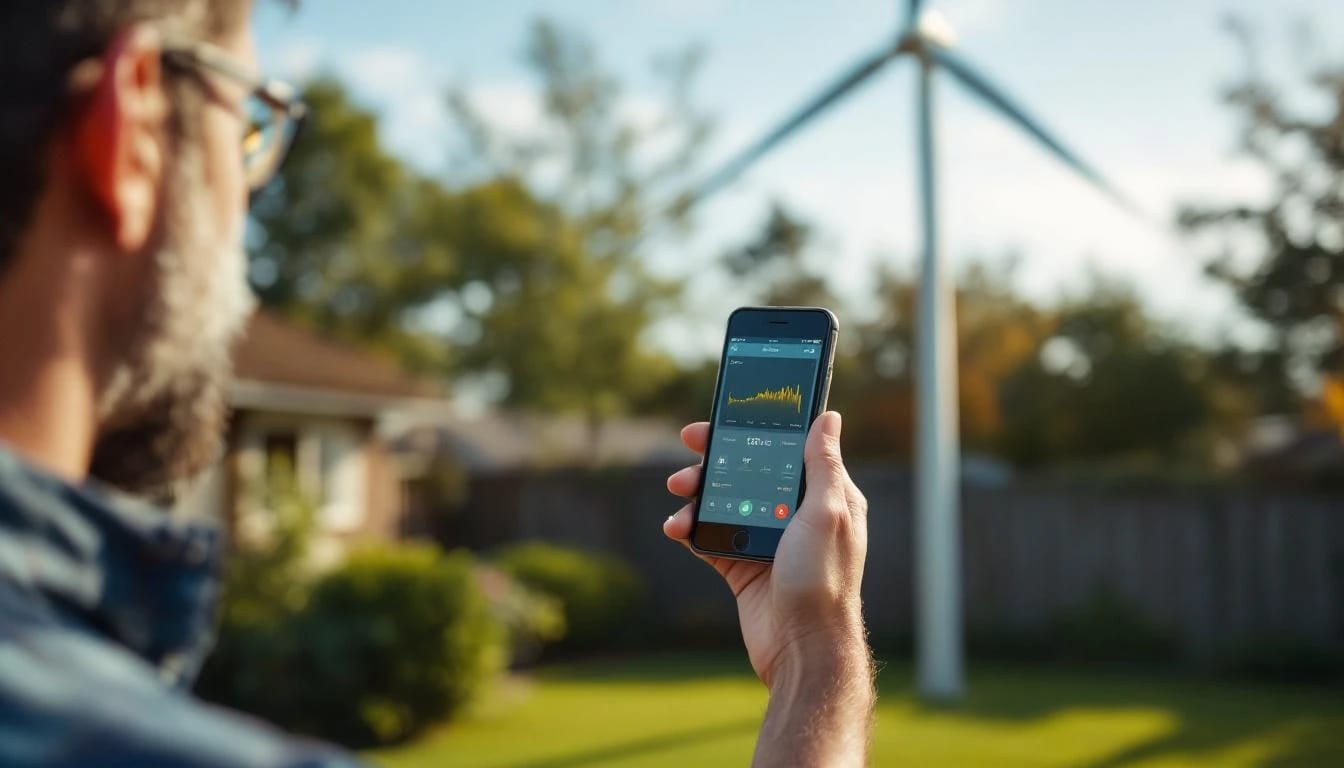
Most residential wind turbines shut down and survive storms through automatic furling mechanisms and structural redundancy designed to ASCE 7-16 wind load standards. Unlike grid power that fails when poles snap, a properly engineered turbine for hurricane zones combines survival-rated components rated to 140+ mph, active braking systems that activate above 55 mph, and battery backup to deliver 3-12 kW when landfall knocks out utilities for days. Vertical-axis turbines hold advantages in turbulent storm winds, while battle-tested horizontal models from Bergey and Primus Windpower prove their worth across Gulf Coast and Atlantic installations year after year.
Why standard turbines fail in hurricanes
Conventional small wind turbines design for a 25-year service life under IEC 61400-2 standards, which specify a 50-year return wind speed—typically 112 mph in coastal Zone IV regions. Hurricanes routinely exceed that threshold. During 2017's Hurricane Irma, sustained winds hit 185 mph with gusts to 211 mph, snapping towers and shredding blades on turbines engineered only to survival ratings below 130 mph.
Three failure modes dominate: blade overstress from centrifugal loads at runaway RPM, tower buckling under dynamic wind pressure that scales with velocity squared, and electrical component destruction when the generator spins uncontrolled. A 5 kW turbine at rated 28 mph can reach 3-4× that speed in gusts before the furling system fully engages, subjecting fiberglass blades to forces exceeding 15 g at the tips.
Cheap imported turbines skip the tilt-up furling hinge or use undersized stub towers that cannot meet the 1.5× safety factor required by NEC Article 694.12. The result: complete writeoffs after Category 3+ storms, leaving owners with no backup generation and a pile of insurance paperwork.
Vertical-axis advantage in chaotic winds
Vertical-axis wind turbines (VAWTs) present a constant frontal area to shifting wind direction, eliminating the yaw loads that horizontal-axis models experience when gusts slam from behind. A Savonius or Darrieus rotor continues generating through 30° shifts in seconds—the norm during eyewall passage—without the violent nacelle slewing that cracks mounts on horizontal turbines.
Aeolos-V 5 kW uses three curved blades on a 3.5-meter rotor, survival-rated to 134 mph with self-limiting drag that prevents runaway. When wind speed doubles, power increases only 1.6× on vertical designs versus 8× on uncontrolled horizontal turbines, protecting the alternator from voltage spikes above 600 VDC that destroy rectifiers. The low center of gravity (rotor at 4-6 meters versus 18-24 meters on HAWTs) cuts bending moment at the tower base by 60%, permitting a Schedule 40 pipe foundation rather than engineered monopole.
Pikasola 3 kW Helical VAWT adds a spiral blade geometry that smooths torque ripple, keeping battery charge controllers happy during the unsteady winds preceding landfall. Installation on a reinforced roof or ground mount below tree-line height (12 meters) lets the turbine dodge the worst gradient winds while remaining accessible for manual brake engagement if electronics fail.
Horizontal-axis turbines built for survival
Bergey Excel 10 dominates the hurricane-zone market through four decades of refinement. The three-blade upwind rotor uses Delrin blade roots that flex 15° in overload, spilling thrust before the composite spar fails. Autofurl starts at 31 mph by rotating the entire turbine parallel to wind direction, reducing swept area by 90%. At 45 mph the blades completely flag, and a mechanical brake locks the shaft. This layered approach survived Category 4 winds in multiple Florida installations during the 2004 quadruple-hurricane season (Charley, Frances, Ivan, Jeanne) with zero structural losses.
The Excel 10's 55-foot tilt-up tower (Rohn 55G equivalent, galvanized per ASTM A123) anchors through engineered concrete piers 8 feet deep, designed to the 140 mph basic wind speed map in ASCE 7-16 Figure 26.5-1A for Risk Category II structures. Guy cables use 3/8-inch EHS steel with thimbled turnbuckles torqued to 150 ft-lb, inspected twice yearly for corrosion and tension loss. A licensed PE stamps the foundation drawing—required for building permits in most Atlantic and Gulf coastal counties.
Primus AIR 40 scales down to 1 kW with a similar autofurl hinge and carbon-fiber blades that weigh 60% less than fiberglass, reducing centrifugal blade loads during runaway. The AIR 40 survived 120 mph eyewall winds during 2018's Hurricane Michael in Panama City Beach on a reinforced communication tower, continuing to charge batteries after grid power dropped for 96 hours. Primus uses a hybrid permanent-magnet alternator (PMA) with no brushes to fail and a dump-load controller that bleeds excess power into resistive heating elements, protecting the battery bank from overvoltage above 15.5 VDC (12V nominal).
Critical survival features to demand
Hurricane-rated turbines require five engineering elements beyond basic certifications:
Rated survival wind speed of 140 mph minimum, tested per IEC 61400-2 Section 8.3 or independently certified. Manufacturer spec sheets often list "maximum wind speed" without clarifying whether that's operational cutout (typically 55 mph) or survival static load. Insist on the survival number with a supporting structural calculation.
Redundant overspeed protection: autofurl + aerodynamic stall + mechanical or electrical brake. Single-point failures kill turbines. The brake must function without grid power—spring-set, electromagnetically released—so loss of control power defaults to safe shutdown.
Tower designed to ASCE 7-16 wind loads with a minimum 1.5× safety factor (NEC 694.12) and certified by a PE in the installation state. DIY towers from salvaged pipe routinely collapse. A 10 kW turbine on a 100-foot tower sees 4,800+ pounds peak thrust in survival winds; the foundation must resist 72,000 ft-lb overturning moment.
Electrical disconnects per NEC Article 705: AC disconnect within sight of the turbine base, DC disconnect at the battery bank, and a lockable main disconnect. During storm prep, you'll manually shut down and brake the turbine, then open all disconnects to isolate from potential lightning strikes. Surge protection (Type 1 + Type 2 SPD) at the point of common coupling per NEC 242.
Corrosion protection for coastal salt spray: hot-dip galvanized towers (ASTM A123, 3.5 mils minimum), marine-grade stainless fasteners (316 alloy), and sealed electronics with IP66 or NEMA 4X rating. Anodized aluminum tower sections fail within three years in salt fog; powder coating chips at guy cable attachment points.
Comparison: Hurricane-zone turbine options
| Model | Type | Rated Power | Survival Wind | Autofurl Start | Tower Height | Typical Price |
|---|---|---|---|---|---|---|
| Bergey Excel 10 | HAWT | 10 kW | 140 mph | 31 mph | 55-120 ft | $38,500-$45,000 |
| Primus AIR 40 | HAWT | 1 kW | 120 mph | 28 mph | 30-65 ft | $2,200-$3,800 |
| Aeolos-V 5kW | VAWT | 5 kW | 134 mph | Self-limiting | 20-30 ft | $8,500-$11,200 |
| Pikasola 3kW Helical | VAWT | 3 kW | 112 mph | Self-limiting | 15-25 ft | $4,200-$5,800 |
| Bergey XL.1 | HAWT | 1 kW | 140 mph | 29 mph | 35-80 ft | $6,800-$9,500 |
Prices include turbine, controller, tower, shipping; exclude installation labor, concrete, electrical, permits. 2024 USD.
Battery backup sizing for storm outages
A wind turbine generates intermittent power, so hurricane backup demands a battery bank sized to carry critical loads through calm periods. A Gulf Coast Category 4 storm typically disrupts grid power for 3-7 days with intermittent wind above 20 mph (turbine cut-in) during the first 12-18 hours, then calms as the system moves inland.
Size the battery bank to three days of critical load with 50% depth of discharge on lead-acid (AGM or flooded) or 80% on lithium iron phosphate (LiFePO₄). A refrigerator (200W), well pump (800W × 0.5 hr/day), LED lights (100W), and communication devices total roughly 5 kWh/day. Three days at 50% DoD requires 30 kWh nameplate on lead-acid (12× Trojan L16RE-2V 1,175 Ah cells in series) or 19 kWh on lithium (SimpliPhi PHI 3.8 kWh × 5 units). Cost ranges $8,000-$15,000 for lead-acid with 10-year lifespan, $12,000-$22,000 for lithium with 15+ years.
Charge controllers must handle high-voltage DC from the turbine (120-600 VDC depending on model) and MPPT charging to maintain battery health. Midnight Solar Classic 250 supports up to 10 kW wind input with programmable dump loads, diversion to heating elements, and remote monitoring through cellular modem—critical when you've evacuated but want to verify system integrity. NEC Article 706 governs battery installations, requiring ventilation for flooded lead-acid and thermal management for lithium.
Inverters (Schneider Conext XW Pro, Victron MultiPlus) convert DC battery power to 120/240 VAC split-phase for household loads. Size the inverter to peak simultaneous loads plus 20% margin; for the example above, a 3 kW continuous / 6 kW surge model suffices. Grid-tied inverters with backup capability (like the Sol-Ark 12K) can pull from solar panels, wind, and batteries simultaneously, maximizing available generation.
Pre-storm shutdown procedures
Two days before expected landfall, execute this sequence:
Manual furling check: If autofurl hasn't engaged (winds still below 30 mph), use the manual furling line to rotate the turbine parallel to the wind and engage the parking brake. On VAWTs, activate the mechanical brake if equipped; otherwise the rotor will idle.
Electrical isolation: Open the AC disconnect at the tower base, then the DC disconnect at the battery bank. This prevents backfeed through damaged wiring and isolates the system from lightning-induced surges on utility lines (even though the grid is down, transformers and lines can carry transient voltages).
Verify tower guys: Walk the guy cable perimeter, checking turnbuckle tension and anchor integrity. Loose cables allow tower whip that exceeds design loads. Tighten any cable sagging more than 2% (sight down the cable—it should appear nearly straight).
Battery top-off: If the storm is still 48+ hours out, let the turbine charge batteries to 100% before disconnecting. A full bank provides maximum post-storm capacity.
Document condition: Photograph the installation from four directions and note blade positions. Helps insurance claims if damage occurs.
Post-storm, inspect the tower base, guy anchors, blades, and nacelle before reconnecting. Look for cracks in the tower weld seams, bent blades, or loose mounting bolts. A 120 mph wind exerts 4× the force of a 60 mph wind due to the velocity-squared relationship; even survival-rated turbines may show fatigue.
Financial considerations and incentives
The federal Residential Clean Energy Credit (IRC §25D, previously §25C) covers 30% of equipment and installation costs through 2032 for wind turbines under 100 kW on residential property. A $40,000 Bergey Excel 10 system nets $12,000 back via IRS Form 5695, reducing cost to $28,000. The credit phases down to 26% in 2033 and 22% in 2034.
State incentives vary; check the DSIRE database (Database of State Incentives for Renewables & Efficiency) for current programs. Florida offers property tax exemptions for renewable energy systems under F.S. 196.182, excluding turbine value from assessment. Texas previously ran rebates through utility programs, but most expired; net metering remains available through oncor and centerpoint at retail rate.
Hurricane insurance riders sometimes exclude wind turbine damage unless the system carries a separate rider (typical cost: $200-$400/year for a $40,000 system with $1,000 deductible). Require the insurer to confirm coverage for "named storm" events—some policies exclude hurricane-force winds above 110 mph. Farmers and ranchers may qualify for USDA REAP grants covering 50% of system cost, capped at $20,000; see Rural Energy for America Program details.
Property value impacts depend on local market awareness. A 2019 Lawrence Berkeley National Laboratory study found small wind turbines add $3,000-$8,000 to appraised value in rural markets but contribute less in suburban settings where noise and visual concerns dominate. Hurricane-prone markets value backup power higher; post-storm sales in Gulf Coast counties jumped 40% after Hurricane Ida (2021).
Noise and neighbor considerations during storms
Turbine noise increases with wind speed, but hurricane prep involves shutting down before winds exceed 30 mph. A furled or braked turbine produces minimal noise (below 35 dBA at 100 feet)—comparable to ambient wind through trees. Complaints arise from unfurled turbines screaming at runaway RPM during storms, which signals failed overspeed protection and potential catastrophic failure.
Vertical-axis turbines run quieter than horizontal models at equivalent power due to lower tip-speed ratios (TSR 1.5-2.5 versus 6-8 on HAWTs). Tip speed determines noise: a 10-foot diameter rotor at 400 RPM sees 209 ft/sec tips generating broadband whoosh above 55 dBA at 150 feet. VAWTs reach 50 dBA at that distance, falling within most rural nighttime limits (50-55 dBA). Neither type should operate in hurricane-force winds, rendering the comparison academic during the storm itself.
Zoning setbacks (typically 1.1-1.5× tower height from property lines) matter more than acoustic performance. A 60-foot tower requires 66-90 feet to the nearest neighbor's dwelling, which doubles as lightning safety margin and ice-throw distance. Coastal counties sometimes impose stricter setbacks (150-300 feet) in FEMA flood zones due to tower collapse risk. Consult local wind energy ordinances before purchasing.
Installation and permitting for hurricane zones
Building permits in Atlantic and Gulf coastal counties require PE-stamped structural drawings for towers exceeding 35 feet or 5 kW turbines regardless of height. The engineer certifies compliance with ASCE 7-16 wind loads for the site's risk category (typically II for residential, III for essential facilities). Expect $1,500-$4,000 for stamped drawings depending on tower complexity.
FAA notification (Part 77) applies to structures exceeding 200 feet AGL or within approach zones to airports. Small wind turbines rarely hit that threshold, but verify with the FAA's online Notice Criteria Tool before excavating. Turbines on ridges or coastal bluffs may require aviation lighting if they penetrate imaginary surfaces defined by nearby airports.
Electrical inspection per NEC Article 694 (Small Wind Electric Systems) and Article 705 (Interconnected Electric Power Production Sources) addresses grounding, overcurrent protection, and disconnects. Expect two inspections: rough-in before concrete pour and final after energization. Inspectors verify:
- Equipment grounding conductor sized per NEC 250.122 (minimum #6 AWG copper for circuits above 60A)
- DC arc-fault protection on circuits above 80 VDC (NEC 694.13)
- Rapid shutdown capability within 10 seconds (NEC 694.14)
- Disconnects rated for DC voltage and current with visible blade position
Licensed electricians charge $75-$150/hr; budget 16-24 hours for a complete grid-tied battery-backup system. DIY installations save labor cost but extend permitting timelines and risk failing inspection on technical details like conductor fill in conduit or inadequate torque on terminals.
Maintenance for long-term storm readiness
Hurricane-rated turbines require semi-annual inspection cycles: spring (pre-season) and late fall (post-season for Atlantic, mid-season for Gulf). Key checkpoints:
Guy cable tension: Use a Loos tension gauge (PT-1 for 3/16" cable, PT-2 for 1/4"). Correct tension depends on cable diameter and span; for 100-foot tower guys at 120° spacing, expect 400-600 lbs on 3/16" EHS. Retighten turnbuckles and inspect thimbles for cable creep.
Blade balance and tracking: Spin the rotor by hand (with brake released); it should coast more than two full revolutions and stop in different positions each time. A blade stopping consistently in one position indicates imbalance from erosion or debris buildup. Remove and weigh blades; they should match within 2%.
Bearing condition: Listen for grinding or clicking from the yaw bearing (HAWTs) or main shaft bearing (VAWTs). Grease zerks every six months with lithium-based NLGI Grade 2 grease (3-5 pumps until you see fresh grease). Sealed bearings on Bergey and Primus units last 15-20 years without service.
Electrical connections: Check torque on all terminals (alternator output, controller input, battery bank) with a calibrated torque screwdriver. Loose connections create arcing and heat. Measure voltage drop from alternator to controller at rated load; it should be below 2%.
Tower corrosion: Inspect galvanized surfaces for white rust (zinc oxide) or red rust (base metal exposure). Wire-brush and apply zinc-rich paint (ZRC or Galvicon) to any bare spots. Guy cable anchor points accumulate water; ensure galvanizing integrity there.
Annual tower climbing (or hiring a certified climber at $400-$800) lets you inspect the turbine nacelle, blade mounts, and slip ring assembly. After a direct hurricane strike, immediate post-storm inspection is mandatory even if the turbine appears intact; blade delamination and micro-cracks propagate over weeks.
Can a wind turbine run during a hurricane to power my home?
No. Operating turbines shut down automatically around 55 mph through furling and braking to prevent structural damage from overspeed. The turbine charges batteries before and after the storm; during peak winds you're drawing on stored battery capacity. Attempting to force operation above cutout speed destroys the generator and risks blade separation at runaway RPM exceeding 1,000% of rated speed.
Are vertical-axis turbines safer than horizontal in hurricane zones?
Vertical-axis turbines avoid the yaw loads and blade-strike zones that horizontal turbines present, and their lower center of gravity reduces tower bending moments by 40-60%. However, survival ratings depend on specific design engineering, not axis orientation. A poorly built VAWT fails at lower wind speeds than a hurricane-rated HAWT like the Bergey Excel 10. Check certified survival wind speed and tower foundation design regardless of type.
Do I need a separate generator backup in addition to the wind turbine?
Many hurricane-zone homeowners pair a wind turbine with a diesel or propane generator for redundancy. Wind produces power during the initial 12-18 hours of a storm approach when gusts remain in the 25-55 mph operational window, then goes dormant at peak winds. Generators handle the calm period after landfall when winds drop below turbine cut-in speed (usually 8-12 mph). A 10 kW turbine plus 8 kW generator and 30 kWh battery bank covers all scenarios.
How long does a hurricane-rated turbine last in coastal salt air?
Hot-dip galvanized towers last 30-40 years in coastal environments with biennial inspection and touch-up of damaged galvanizing. Turbine rotating assemblies (alternator, bearings, blades) see 15-25 year service lives depending on maintenance quality and number of storm exposures. Direct salt spray accelerates corrosion; install turbines 500+ feet from breaking surf when possible, and hose down the tower/nacelle with fresh water monthly during summer salt haze season.
What's the minimum turbine size for meaningful hurricane backup power?
A 1 kW turbine generates 10-15 kWh per day in good wind (15 mph average), enough to run a refrigerator, well pump, and LED lights. Larger families or those needing air conditioning require 5-10 kW turbines producing 40-80 kWh per day. Match turbine capacity to your battery bank size and critical loads; undersized turbines leave batteries depleted during the calm stretches common in hurricane aftermath. Calculate your actual consumption before buying.
Bottom line
Hurricane-rated wind turbines deliver backup power during the critical 72-96 hours after landfall when grid restoration lags, but only if engineered to 140+ mph survival loads and paired with adequate battery storage. Bergey Excel 10 and Primus AIR 40 prove their reliability across decades of Gulf and Atlantic installations, while vertical-axis models from Aeolos and Pikasola offer lower tower heights and simplified permitting. Start with a site assessment by a PE familiar with ASCE 7-16 wind loads, size your battery bank to three days of critical consumption, and budget $30,000-$50,000 for a turnkey 10 kW system including installation and the 30% federal tax credit. For detailed comparisons of models and real-world storm performance data, see our hurricane-zone wind turbine buyer's guide.
Share this article
windturbinehome.com/s/d769fe
Editorial note: This article was researched and written by a member of the Wind Turbine Home editorial team. AI-assisted tools were used for spell-checking and light grammar review only — all research, analysis, and conclusions are our own. Our editorial policy prohibits sponsored content and paid placements. Read our editorial policy →
Related reading

noise vibration safety
Hurricane-Rated Wind Turbines: What the Spec Sheets Really Mean
Hurricane ratings on small wind turbines measure survival wind speed, not power generation. Learn what IEC Class I–III, survival speed, and furling really mean for your investment.
noise vibration safety
Lightning Protection for Small Wind Turbines: Grounding Systems
Small wind turbines need proper lightning grounding to prevent equipment damage and fire. Learn about grounding electrodes, surge protection, and NEC requirements.
noise vibration safety
Wind Turbines for Hurricane-Prone Areas: Survival Speeds
Not every home turbine survives a hurricane. Compare survival wind speeds, automatic storm shutdown, and tilt-down towers to see which models stay standing.
noise vibration safety
Wind Turbine Struck by Lightning: What to Do and Replace
Lightning strikes can destroy wind turbine electronics and blades within milliseconds. Immediate shutdown, damage inspection, and grounding upgrades prevent cascading failures and costly replacements.
noise vibration safety
Wind Turbine Vibration Coming Through House: Isolation Fixes
Low-frequency vibration from residential wind turbines transfers through towers and mounts into homes. Fix it with proper isolation mounts, guy-wire tensioning, and reinforced foundation pads before it damages your structure.
noise vibration safety
Residential Wind Turbine Noise Regulations: dB Limits & Setbacks
Local zoning sets residential wind turbine noise at 45-60 dBA. Setback rules require 1.1x to 2x tower height from property lines. Enforcement varies widely.

noise vibration safety
What Happens to a Wind Turbine in a Storm? Safety & Survival
Small wind turbines use automatic braking, furling, and shutdown systems to survive storms. Most residential units ride out 70+ mph winds safely when properly installed.

noise vibration safety
Do Small Wind Turbines Kill Birds? Safety Data & Solutions
Small residential wind turbines cause minimal bird strikes—far fewer than windows or cats—but proper placement, visibility enhancements, and slow blade speeds reduce risk further.

noise vibration safety
How Loud Is a 5 kW Wind Turbine? Real Noise Levels Explained
A 5 kW wind turbine generates 45-60 dB at 10 meters—comparable to a refrigerator or moderate rainfall. Noise varies by turbine type, location, and wind speed.