Wind Turbine for Water Pumping: Modern Takes on a Century-Old Idea
Modern wind-powered water pumping marries century-old mechanical principles with solar-hybrid systems, battery banks, and smart controllers for off-grid livestock, irrigation, and rural domestic supply.
Share this article
windturbinehome.com/s/fc5d7d
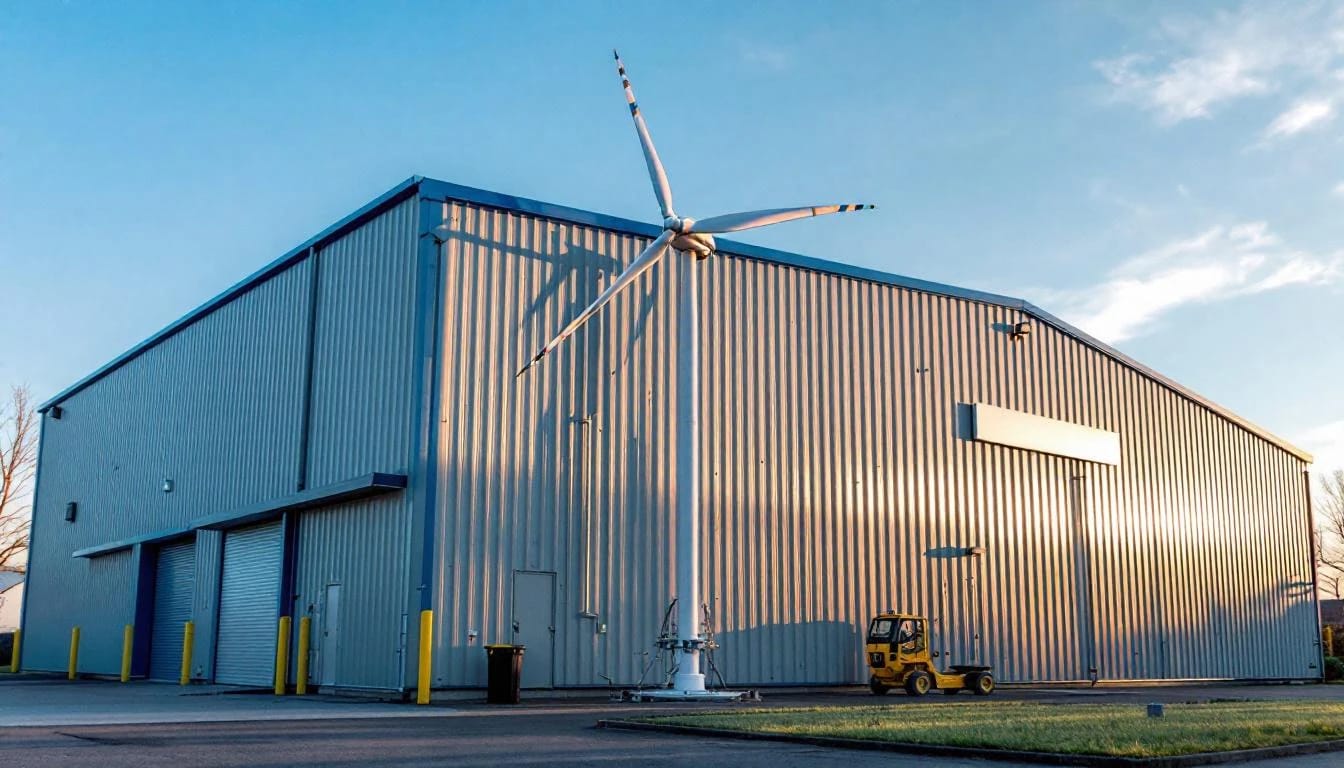
Wind-powered water pumping is no relic. Ranchers across the Great Plains, off-grid homesteaders in the Southwest, and vineyard operators in California still rely on wind to fill stock tanks, pressurize cisterns, and irrigate crops—often with zero fuel cost and minimal moving parts. The difference between a 1920s farm windmill and a 2025 system lies in the electronics: battery buffers, hybrid solar integration, and programmable controllers that match turbine output to variable demand without burning out a submersible pump.
Why wind beats diesel for remote water systems
Diesel pumps cost sixty to eighty cents per hour in fuel at current prices, require regular maintenance trips, and store volatile liquid in hot sheds. A wind-electric or mechanical wind pump incurs a steeper up-front cost—$4,000 to $18,000 depending on head and flow—but runs whenever wind blows, often twenty years with bearing grease and brake-pad replacement as the only recurring expense. Wind resource of 4 m/s annual average yields enough lift to serve twenty head of cattle or a half-acre garden in most climates; sites above 5 m/s can handle deeper wells and higher daily volumes.
Electric utilities rarely justify line extension beyond two miles for a single customer. Wind fills that gap, particularly where solar alone would demand excessive battery capacity to smooth multi-day cloudy spells. Pairing a small turbine with a solar array spreads generation across morning, midday, and evening wind peaks, reducing battery size by thirty to forty percent compared to solar-only designs.
Mechanical direct-drive systems: simplicity at a cost
Traditional farm windmills—still manufactured by Aermotor, Dempster, and Koenders—convert rotor torque into vertical reciprocating motion through a crankshaft and sucker rod. The pump cylinder sits fifty to three hundred feet below grade, lifting water in discrete strokes. Peak efficiency occurs between 8 and 14 mph; below that threshold the rotor turns but stroke force drops below the standing column weight, halting flow.
![INLINE: Multi-blade mechanical windmill with steel tower pumping into elevated stock tank at ranch site]
Advantages include zero electronics and tolerance for dirty water—sand particles pass through leather cup seals without catastrophic damage. Drawbacks center on low volume: a ten-foot rotor delivers two to four gallons per minute in 12 mph wind, adequate for livestock but marginal for drip irrigation. Stroke rods fatigue after fifteen to twenty years, and rebuilding a downhole cylinder requires pulling the entire rod string—a day's labor or a service call costing $800 to $1,200.
Expect to pay $3,500 to $6,500 for a complete mechanical package rated to 150 feet of lift, excluding tower anchors and well casing. Aermotor's 702 series and Koenders' KW-series represent the dominant US offerings; both use galvanized steel towers and sealed ball bearings in the gearbox.
Wind-electric submersible pumps: matching turbine curves to hydraulic demand
Submersible pumps demand steady voltage and current within a narrow band. A Grundfos SQFlex or Lorentz PS-series pump designed for renewable energy tolerates eighteen to forty-eight volts DC and modulates speed via an internal controller, but voltage sag below the lower threshold stalls the motor and risks thermal damage if restart cycles happen too frequently.
Battery banks solve the mismatch. A 400 Ah lithium-iron-phosphate bank at 24 V stores 9.6 kWh, enough to run a 150-watt pump for sixty-four hours or absorb surplus wind energy during gusts and release it steadily during lulls. The turbine charges the bank; the pump draws from the bank through a pressure switch or programmable relay that starts the motor when a float sensor indicates the cistern has dropped below eighty-percent capacity.
Bergey's Excel 1 (1 kW rated, 24 V DC) paired with a SQFlex 1.2-2 pump covers heads up to 230 feet and delivers 800 gallons per day in a 5 m/s average wind regime. Total installed cost runs $9,000 to $12,000: $6,500 for the turbine and tower, $1,800 for the pump, $1,200 for batteries, $800 for control panel and wiring. NEC Article 705 interconnection rules apply if you later grid-tie; stand-alone systems still require compliant DC-rated breakers and grounding per NEC 250.
A licensed electrician familiar with renewable systems should design the DC layout and verify wire gauge—undersized conductors between turbine and battery invite resistive losses exceeding ten percent over runs longer than 150 feet, eroding already marginal economics.
Hybrid wind-solar pumping: spreading risk across resources
Wind and solar generation curves anti-correlate in many climates. High-pressure systems deliver strong sun but weak wind; frontal passages bring cloud and gusty flow. Installing both reduces the chance of a three-day energy drought that empties the cistern mid-summer.
A typical hybrid pairs a 400 W turbine (Primus Air 40 or similar) with 600 W of solar panels, feeding a common 24 V battery bank. Combined nameplate capacity exceeds pump demand by a factor of four to six, ensuring the battery stays above fifty-percent state-of-charge except during rare extended calms. The incremental cost—$1,400 for panels, $300 for a solar charge controller—buys insurance against wind-only or solar-only shortfalls.
Aeolos-V 300W vertical-axis models suit sites with turbulent flow around barn roofs or tree lines, though annual energy yield trails a comparable horizontal-axis machine by fifteen to twenty-five percent. Vertical-axis simplicity—no yaw bearing, lower noise—appeals to operators prioritizing low maintenance over maximum kilowatt-hours.
| System Architecture | Turbine | Solar | Battery | Est. Daily Yield (5 m/s + 5 kWh/m²) | Installed Cost |
|---|---|---|---|---|---|
| Mechanical direct | 10 ft rotor | — | — | 1,200 gal (150 ft head) | $4,500–$6,500 |
| Wind-electric only | 1 kW HAWT | — | 400 Ah LFP | 800 gal (200 ft head) | $9,000–$12,000 |
| Hybrid wind-solar | 400 W VAWT | 600 W | 400 Ah LFP | 950 gal (180 ft head) | $11,000–$14,500 |
| Solar-only (reference) | — | 1,200 W | 800 Ah LFP | 900 gal (180 ft head) | $8,500–$11,000 |
Yields assume twenty-percent combined derating for wire loss, battery round-trip efficiency, and pump curve mismatch. Actual performance varies with seasonal wind speed, solar insolation, and static head.
Sizing the system: head, flow, and duty cycle
Start with three numbers: static head (vertical distance from water surface to discharge point), desired daily volume, and peak instantaneous flow. A rancher supplying fifteen cattle needs roughly 450 gallons per day; pasture irrigation for two acres of alfalfa in an arid zone demands 2,000 gallons per day during peak season.
Pump manufacturers publish performance curves relating head, flow, voltage, and current. The SQFlex configurator tool, for instance, maps a given turbine and solar array to expected daily volume at specified head. Undersizing the pump relative to turbine capacity wastes energy; oversizing risks chronic low-voltage stalls.
Static head plus friction loss (typically five to ten percent in PVC Schedule 40 over runs under 500 feet) determines total dynamic head. A 180-foot well with surface discharge incurs roughly 190 feet TDH; the same well feeding an elevated 3,000-gallon tank another forty feet up climbs to 230 feet TDH, requiring a higher-pressure pump stage.
Wind resource assessment remains critical. A desktop estimate using NREL's Wind Prospector provides annual average speed at hub height; multiply by 1.15 for conservative turbine selection if no on-site anemometer data exists. Sites below 4 m/s annual average struggle to justify wind investment unless hybrid solar compensates.
Controllers, pressure switches, and fail-safes
Programmable pump controllers—such as the Lorentz PSk2 or Grundfos CU200—monitor battery voltage, pump current, and optional float sensors to prevent dry running and over-pumping. Dry-run protection cuts power if the well drawdown exceeds recharge, saving the motor from burnout. Tank-full cutoff halts the pump when the cistern float closes, avoiding overflow waste.
A manual bypass switch allows testing the pump on battery power independent of the turbine. Fused disconnects at the battery, turbine output, and pump input comply with NEC 690 (solar) and 705 (interconnected generators), even though wind-specific code language remains sparse. Local inspectors often default to solar PV requirements by analogy; verify jurisdiction interpretation before finalizing the design.
Lightning protection—grounding electrode system, surge arrestors on DC lines—matters in open ranchland. A direct strike likely destroys electronics regardless, but arrestors shunt induced surges from nearby strikes, a common failure mode in the Great Plains and Southwest.
Permits, incentives, and airspace
FAA Part 77 notification applies to structures exceeding 200 feet above ground level or within certain distances of airports. Most residential and ranch wind-pumping towers stay below eighty feet, skirting federal review, but state or county height ordinances may impose lower limits. Check zoning before ordering a tilt-up tower.
The federal Investment Tax Credit (ITC)—currently thirty percent under IRC §25D for residential renewable energy—covers wind turbines, batteries, and installation labor through 2032, stepping down to twenty-six percent in 2033 and twenty-two percent in 2034. File IRS Form 5695 with your tax return; the credit applies against tax liability, reducing cash outlay by several thousand dollars on a typical system. Commercial and agricultural operators instead claim the Section 48 ITC or Production Tax Credit (PTC), structured differently but often yielding comparable savings. Consult a tax professional to navigate depreciation and basis reduction rules.
State incentives vary. The DSIRE database tracks rebates, property-tax exemptions, and sales-tax carve-outs; Oklahoma exempts wind equipment from sales tax, saving five percent up front, while Montana offers a renewable-energy property-tax abatement. Some rural electric cooperatives provide additional rebates for distributed generation, though policies shift annually.
Setback requirements—minimum distance from property lines—range from 1.1 times tower height in permissive counties to three times height in restrictive zones. Noise ordinances rarely affect wind-pumping systems, which run continuously at low speed rather than ramping to rated power, but verify local sound limits if neighbors reside within 500 feet.
Maintenance realities: grease guns and bearing swaps
Mechanical windmills need annual greasing of the gearbox and inspection of the brake mechanism—a two-hour task for an experienced hand. Sucker-rod leathers wear every five to ten years depending on stroke frequency and sediment load; replacement requires pulling the rod, a job best left to a well-service contractor unless you own a portable gin pole.
Electric systems demand less climbing but more diagnostics. Battery banks warrant quarterly voltage checks and annual capacity tests; lithium-iron-phosphate cells tolerate deeper discharge than flooded lead-acid but cost twice as much per kilowatt-hour. Turbine bearings—typically sealed cartridge units in the yaw head and main shaft—last ten to fifteen years; Bergey publishes replacement intervals and part numbers in the owner's manual.
Pump rebuilds on submersible units occur every seven to twelve years, driven by bearing wear and seal degradation. Lorentz advertises fifteen-year service intervals under ideal conditions—clean water, minimal cycling—but gritty wells halve that span. Budget $600 to $1,000 for a pump exchange, plus pulling costs if you hire a driller.
Wind-solar hybrids double the component count, raising the odds that something fails, but redundancy means partial failure rarely halts water delivery. A dead charge controller on the solar side leaves the wind turbine charging the battery; a stuck brake on the turbine still permits solar harvest. This graceful degradation justifies the extra upfront cost in mission-critical applications.
Can I use a standard AC submersible pump with an inverter?
Yes, but efficiency drops. Converting DC wind/battery power to AC through an inverter, then running an AC pump, incurs ten to fifteen percent loss compared to a native DC pump. AC pumps also lack the soft-start and variable-speed features of SQFlex or Lorentz models, causing voltage sag on battery systems. Inverter-based designs make sense only when reusing an existing AC pump or grid-tying the turbine for net metering.
How deep a well can wind realistically handle?
Mechanical windmills max out around 300 feet of lift due to sucker-rod weight and stroke limitations. Electric pumps paired with a 1 kW turbine manage 400 feet if daily volume stays modest—300 to 500 gallons. Beyond 400 feet, either upsize the turbine to 3 kW (Bergey Excel 6 territory, $15,000-plus installed) or accept reduced flow and longer fill times. Very deep wells favor solar-electric or grid power unless exceptional wind resources exist.
What about freezing climates?
Mechanical pumps require draining the drop pipe or installing a pitless adapter below frost line to prevent ice damage. Electric systems benefit from burying the pressure tank in a heated well house or insulated vault. Some operators run a trickle flow during cold snaps to prevent freeze-up, wasting water but avoiding repair costs. Heat tape on exposed piping draws power—negate that with a small auxiliary solar panel dedicated to the tape circuit.
Do vertical-axis turbines work better for pumping applications?
Vertical-axis machines (Aeolos, Pikasola) tolerate gusty, turbulent wind and eliminate yaw mechanisms, but lower efficiency—often sixty to seventy percent of a comparable horizontal-axis model—means you need a larger rotor or accept less water per day. They shine in constrained sites (rooftops, urban lots) where a horizontal-axis tail would catch cross-gusts. For open ranch land, horizontal-axis designs deliver more gallons per dollar.
How long until the system pays back compared to hauling water?
Hauling 500 gallons per day in a truck costs roughly $25 in fuel and time at $4/gallon diesel and fifteen miles round-trip, or $9,000 annually. A $12,000 wind-electric system breaks even in sixteen months under that scenario. Comparing against diesel genset pumping—forty cents per hour runtime, six hours daily—yields a three-year payback. Grid extension at $30,000 per mile makes wind attractive beyond half a mile, assuming no utility subsidy. Pure economic return varies wildly with site-specific costs; energy independence and resilience often drive the decision as much as dollars.
Bottom line
Wind-powered water pumping merges proven mechanical engineering with modern electronics, delivering reliable off-grid supply for livestock, gardens, and domestic use where grid power costs prohibit connection. Hybrid wind-solar configurations reduce risk, batteries smooth intermittency, and federal tax credits lower upfront cash by thirty percent through 2032. Match turbine capacity to well depth and daily demand, hire a licensed electrician for DC wiring, and budget for bearing grease and occasional pump rebuilds. The next step: measure your site's wind resource with a temporary anemometer or consult NREL maps, then request quotes from regional installers who understand NEC Article 705 and can navigate local permitting.
Share this article
windturbinehome.com/s/fc5d7d
Editorial note: This article was researched and written by a member of the Wind Turbine Home editorial team. AI-assisted tools were used for spell-checking and light grammar review only — all research, analysis, and conclusions are our own. Our editorial policy prohibits sponsored content and paid placements. Read our editorial policy →
Related reading
small industrial wind
Farm-Scale Wind Turbines 10kW-50kW: Which Size Fits Your Operation
Choosing between 10kW, 25kW, or 50kW farm wind turbines depends on daily electrical demand, available land, and whether you net-meter or store power.
small industrial wind
Wind Energy for Warehouses and Light Industrial Sites
Commercial wind turbines for warehouses and light industrial facilities can offset 15-60% of electric costs. Site selection, zoning, and grid-tie economics determine ROI.
small industrial wind
Wind Turbine for a Greenhouse: Powering Fans, Vents, and Lights
Wind turbines rated 1-5 kW can power greenhouse ventilation, lighting, and controls. Grid-tie or battery systems store excess energy while direct DC connections minimize conversion losses.
small industrial wind
10 kW Wind Turbine Cost for Home 2026: Complete Price Guide
A 10 kW home wind turbine costs $40,000–$65,000 installed in 2026, with final price driven by tower height, site prep, and permit fees—plus 30% federal tax credit.