Rooftop installation
Mounting a turbine on a roof is appealing — no separate tower, easy to reach the wiring — but it is the hardest place to make wind power work. Roofs sit in the turbulent, slowed wind that buildings create, and they transmit vibration and noise into the living space below.
Where rooftop mounting is used, it favours small vertical-axis machines, careful structural engineering for static and dynamic loads, and vibration isolation. For most homes, a short freestanding tower set away from the house outperforms any rooftop mount.
Guides & reviews
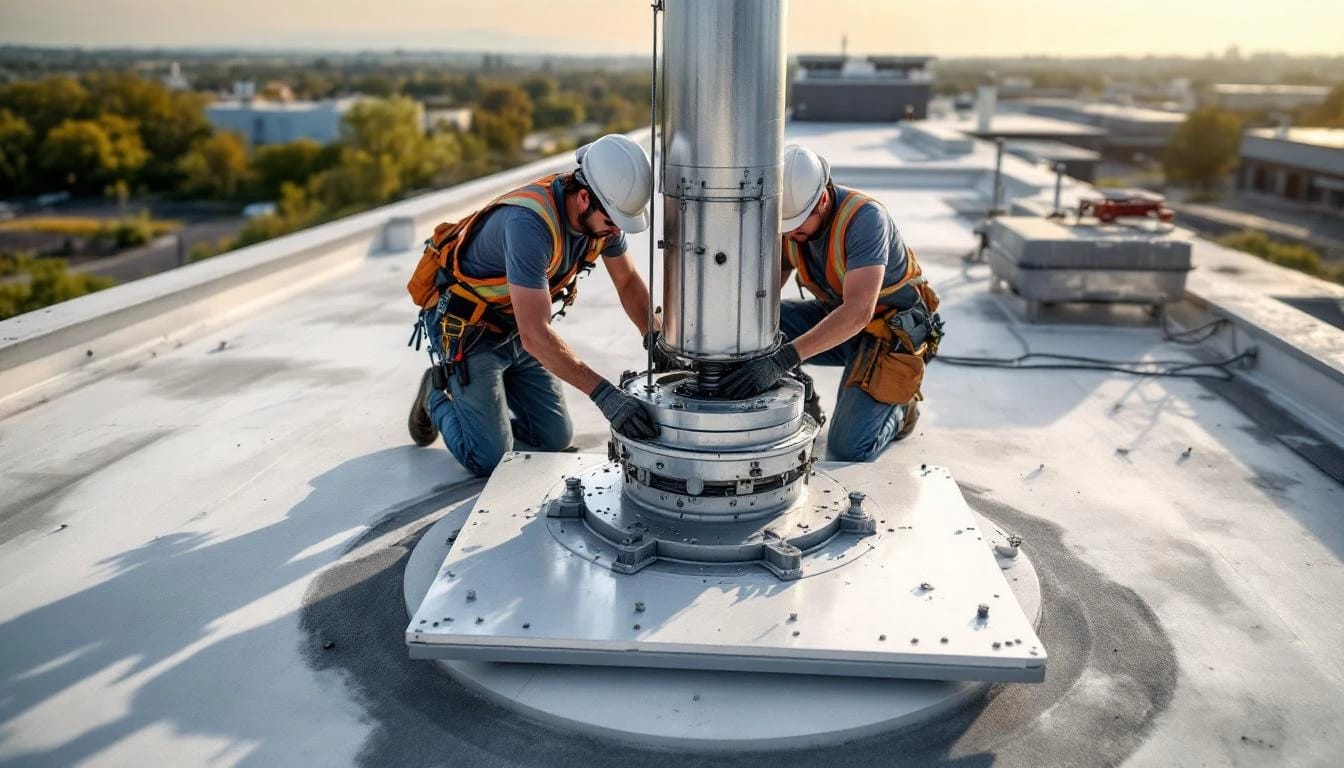
rooftop installation
Pitched-Roof Turbine Mounting: Structural Load & Rafter Sizing
Learn how to calculate wind loads, dead loads, and rafter span requirements for mounting small wind turbines on residential pitched roofs safely and to code.
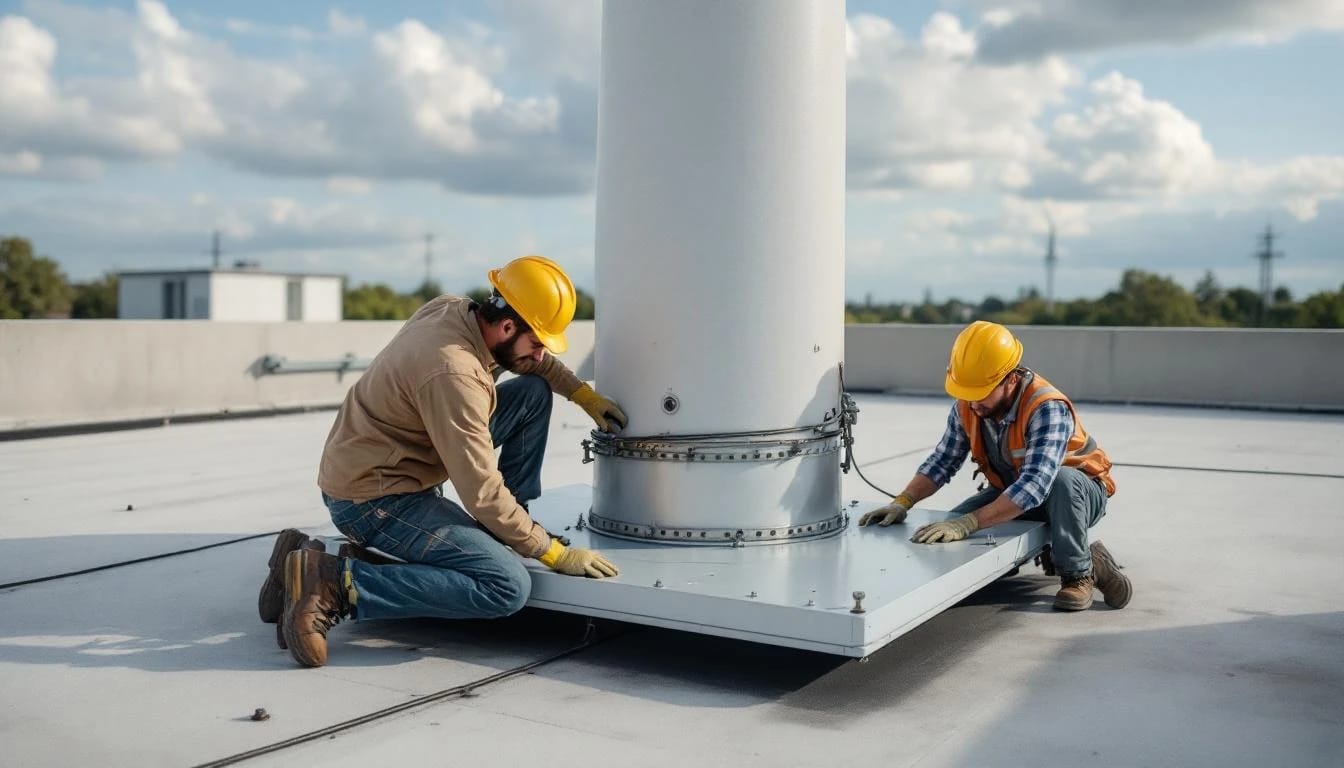
rooftop installation
Ballasted Flat-Roof Mounts for Vertical-Axis Turbines Guide
Ballasted flat-roof mounts secure vertical-axis wind turbines without roof penetration using concrete blocks or water ballast, ideal for commercial buildings with membrane roofs.
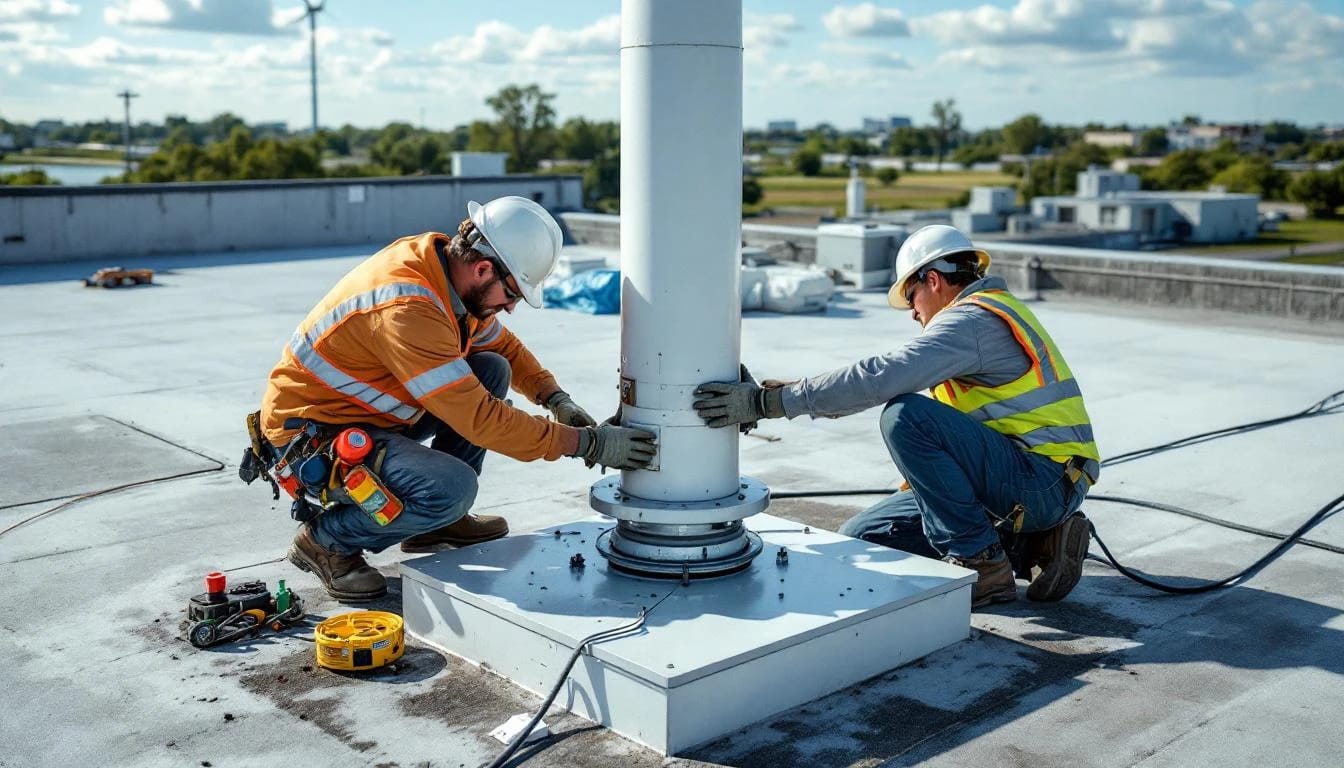
rooftop installation
Can You Put a Wind Turbine on a Roof? Engineering Reality
Rooftop wind turbines face structural, vibration, and wind-quality challenges that make them impractical for most homes. Tower-mounted systems deliver better performance.

rooftop installation
Roof-Mounted Wind Turbines for Homes: The Honest Verdict (2026)
Roof-mounted wind turbines rarely work for homes. Turbulence, noise, vibration, and structural limits undermine performance. Here's what the data shows.
Frequently asked questions
- Can I put a wind turbine on my roof?
- Physically yes, but it is usually the worst-performing option. Buildings create turbulence and slow the wind, so rooftop turbines under-produce, and they can transmit vibration and low-frequency noise into the structure. A tower clear of the roofline is almost always better.
- Will a rooftop turbine damage my roof?
- It can if not engineered properly. The mount must handle the turbine's thrust and dynamic loads, tie into structural members (not just sheathing), and isolate vibration. Have a structural engineer assess rafter sizing and fixing before installing anything.
- What turbine type works best on a roof?
- Small vertical-axis turbines are the usual rooftop choice because they tolerate turbulent, shifting wind and sit lower. Even so, set realistic output expectations and prioritise vibration isolation and a solid structural mount.