Best Charge Controllers for Small Wind Turbines in 2026
Compare the top wind turbine charge controllers for off-grid and hybrid systems in 2026, from budget PWM units to advanced MPPT models with dump-load protection.
Share this article
windturbinehome.com/s/f317f1
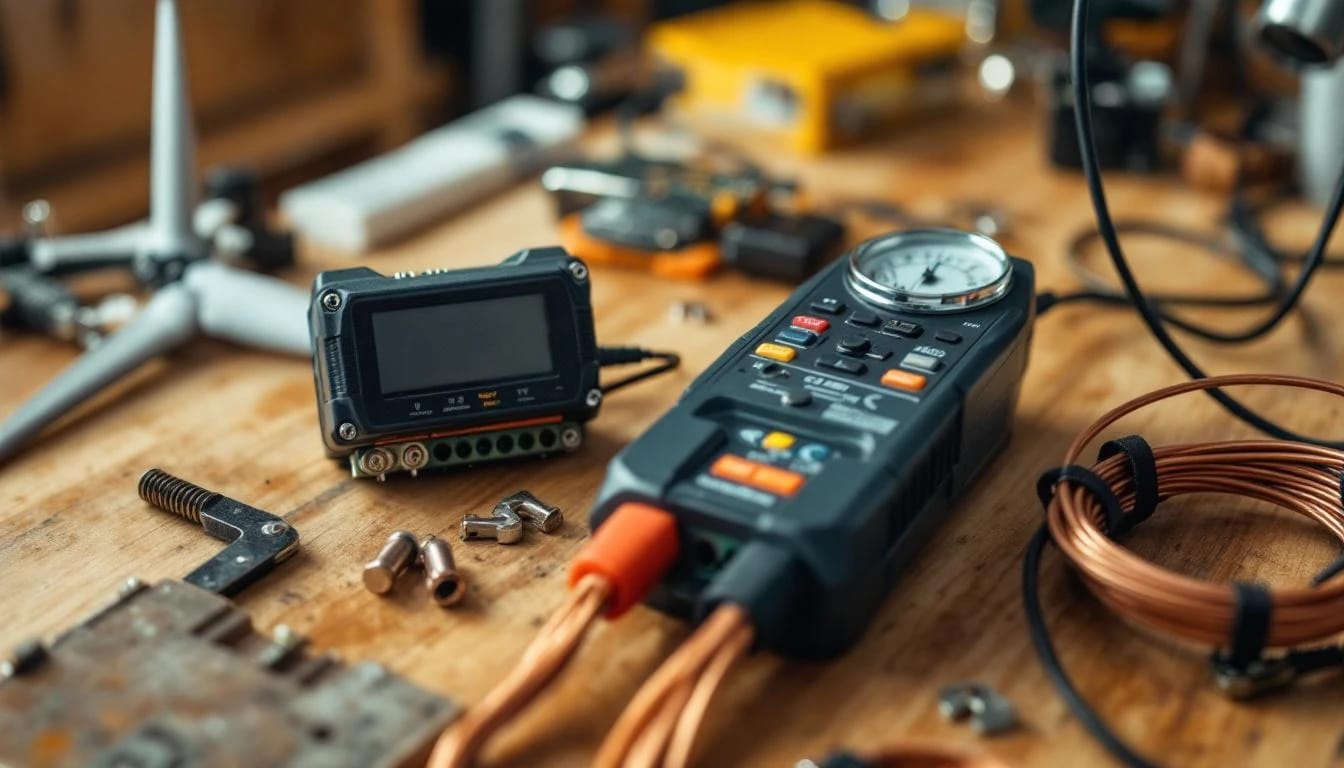
The right charge controller prevents battery overcharge, dumps excess energy safely, and maximizes harvest from your turbine. In 2026, small wind owners choose between pulse-width modulation (PWM) and maximum power point tracking (MPPT) designs, with prices spanning $180 to $1,400. The Morningstar TriStar TS-MPPT-600V-48 dominates premium installations for its 600 V input and sophisticated algorithm, while the Pikasola 1000 W hybrid controller delivers proven performance for most 400-1,000 W residential turbines at a fraction of the cost.
Why small wind turbines need specialized charge controllers
A photovoltaic controller will not work. Wind turbines generate three-phase wild AC with voltage and frequency that swing wildly as blade speed changes. A wind-specific controller must rectify that AC to DC, regulate battery voltage, and dump or divert surplus power when the battery bank is full—otherwise the turbine will spin uncontrolled and self-destruct or the batteries will outgas and fail.
NEC Article 705 requires listed equipment and proper overcurrent protection. Wind charge controllers marketed in the United States should carry UL 1741 or equivalent third-party certification, though enforcement varies by jurisdiction. Always confirm with your local authority having jurisdiction (AHJ) and use a licensed electrician for final interconnection.
The federal 30 % Residential Clean Energy Credit (IRC §25D, claimed on IRS Form 5695) applies to the full installed cost of a qualifying renewable system, including the charge controller, batteries, and balance-of-system hardware. State incentives vary—check the DSIRE database for rebates, sales-tax exemptions, and property-tax abatements in your area.
PWM vs. MPPT: which topology fits your turbine
Pulse-width modulation controllers switch the turbine connection on and off rapidly to hold battery voltage at setpoint. They are simple, reliable, and inexpensive ($180–$380 for 12/24 V, 400–800 W). PWM works well when turbine nominal voltage closely matches battery voltage; efficiency typically stays above 85 % under those conditions. Budget builds with a single 12 V turbine and modest storage benefit most.
Maximum power point tracking controllers use a DC-DC converter to continuously adjust load impedance and extract maximum power across a wide voltage range. MPPT units accept higher input voltages—often 150–600 V—so you can wire multiple turbines in series or pair a 48 V turbine with a 24 V battery bank. Efficiency reaches 94–98 % when the algorithm is well-tuned. Expect to pay $580–$1,400 for MPPT models rated 1,000 W and above.
The efficiency gain matters most in climates with variable wind. An MPPT controller harvests 15–25 % more energy annually when wind speed fluctuates frequently around cut-in, because it tracks the turbine's power curve instead of forcing a fixed voltage.
Top charge controllers for off-grid wind systems in 2026
Morningstar TriStar TS-MPPT-600V-48
- Rating: 600 V / 48 A MPPT
- Power: Up to 3,000 W continuous (48 V system)
- Price range: $1,280–$1,420
- Best for: Professional off-grid installations, series-wired turbine arrays
The TriStar has been the workhorse of remote telecom and research sites since 2018. Input voltage to 600 V lets you stack up to eight 75 V turbines in series, reducing wire gauge and voltage drop over long runs. The TrakStar MPPT algorithm updates every two seconds, fast enough to follow gusts without hunting. Built-in data logging, Modbus RTU, and Ethernet connectivity make remote monitoring simple.
Field reports confirm five-year lifespans in harsh environments—salt fog, desert heat, and alpine cold—with minimal drift in calibration. The metal enclosure is NEMA 3R rated. One downside: the cooling fan can fail in dusty sites; plan for annual cleaning or a filtered enclosure.
Morningstar offers a five-year warranty. The company has been in business since 1993 and maintains North American parts inventory.
Pikasola 1000 W Wind-Solar Hybrid Charge Controller
- Rating: 12/24 V auto-detect, 50 A
- Power: 1,000 W wind + 400 W solar
- Price range: $210–$260
- Best for: Hybrid systems combining one small wind turbine with 2–4 solar panels
This controller pairs a three-phase bridge rectifier for wind with a separate PWM stage for photovoltaic input. Auto-detection switches between 12 V and 24 V battery banks at startup. The integrated dump load (resistive, air-cooled, rated 1,000 W) activates when battery voltage exceeds the float setpoint, protecting both the turbine and the battery.
Build quality is adequate rather than exceptional—the case is plastic, terminals are brass-plated steel, and the display is a basic LCD—but two-year field data from owner forums shows 92–94 % uptime in residential installations. The unit handles 400–1,000 W turbines (Windtura 500, Pikasola 600 W vertical-axis, Nature Power 2000 W) without issue. For the price, it delivers solid value on straightforward off-grid systems where data logging and remote access are not priorities.
The manufacturer's warranty is one year; extended coverage to three years costs an additional $35–$45 through some retailers.
Midnite Solar Classic 150
- Rating: 150 V / 96 A MPPT
- Power: Up to 4,600 W (48 V system)
- Price range: $680–$740
- Best for: DIY builders who want flexible programming and local support
The Classic 150 originated as a photovoltaic controller but supports wind turbines via custom firmware profiles. Users report excellent results with Bergey Excel and Primus Air turbines when the sweep-rate and voltage-window parameters are tuned correctly. The web-based interface (via built-in Ethernet or optional WiFi) exposes every algorithm variable, which is either a pro or a con depending on your comfort with embedded systems.
Midnite Solar publishes detailed application notes and maintains an active user forum. The unit is assembled in Washington state, and the company stocks spare circuit boards. The aluminum enclosure dissipates heat passively, eliminating fan noise and failure risk.
One caution: wind configuration requires manual entry of turbine power curves. Midnite provides templates for common models, but owners of obscure or imported turbines may need to generate their own lookup tables from manufacturer data.
Xantrex C-Series C40 PWM
- Rating: 40 A PWM, 12/24/48 V
- Power: 480 W (12 V), 960 W (24 V), 1,920 W (48 V)
- Price range: $180–$220
- Best for: Budget installations with a single turbine under 1,000 W
The C40 has been in production since 2004, virtually unchanged. It is reliable, simple to wire, and widely stocked by RV and marine suppliers. Three-stage charging (bulk, absorption, float) is adjustable via DIP switches. The built-in shunt measures current to ±2 %, and the LED bar-graph provides at-a-glance battery state-of-charge.
Because it is a PWM design, efficiency drops when turbine voltage differs significantly from battery voltage. Pair it with turbines that produce 14–16 V (for 12 V banks) or 28–32 V (for 24 V banks) at typical wind speeds. Do not expect the C40 to harvest well from high-voltage turbines or during light-wind conditions.
The product carries UL 1741 listing and a two-year warranty. Xantrex (now part of Schneider Electric) provides North American service centers.
Critical features every wind charge controller must have
Three-phase rectifier or AC input
Wind turbines generate three-phase AC; the controller must convert it to DC before regulation. Cheaper units use a simple diode bridge; better designs employ active rectification with MOSFETs for lower losses.
Dump-load control or diversion
When the battery is full, surplus energy must go somewhere. A dump load—typically a bank of resistors rated 500–3,000 W—absorbs excess power and dissipates it as heat. Without diversion, the turbine will overspeed in strong wind and destroy bearings or blades. Mount the dump load in a ventilated space and route wiring per NEC 310.15(B)(16) ampacity tables.
Battery temperature compensation
Lead-acid and lithium batteries require different charge voltages at different temperatures. Controllers with a remote temperature sensor adjust setpoints automatically; manual models need seasonal recalibration. Ignore temperature and you will sulfate lead-acid cells in winter or overcharge lithium in summer.
Overvoltage and overcurrent protection
Turbines can produce voltage spikes during gusts or sudden load changes. Metal-oxide varistors (MOVs) or transient voltage suppressors (TVS diodes) clamp spikes; fast-acting fuses or circuit breakers interrupt fault currents. Check that the controller's maximum input voltage exceeds your turbine's open-circuit rating by at least 20 %.
Data logging and monitoring
MPPT controllers typically log voltage, current, power, and energy yield. Budget PWM units may offer only a blinking LED. Remote monitoring via Ethernet, WiFi, or cellular modem lets you catch problems—shorted dump load, failing battery, loose wire—before they cascade.
Sizing: matching controller capacity to turbine output
Calculate maximum turbine power. Use the manufacturer's rated output at maximum design wind speed (usually 25–35 mph). Do not rely on the nameplate "peak" number; that often represents an unrealistic wind speed.
Add 25 % safety margin. Wind gusts can push power briefly above steady-state ratings. A 1,000 W turbine should pair with a controller rated for at least 1,250 W.
Check voltage compatibility. If your turbine produces 90 V peak and your controller accepts only 60 V maximum, you need a different controller or must rewire the turbine for lower voltage output.
Verify dump-load capacity. The dump load must dissipate the turbine's full rated power. A 1,500 W turbine requires a 1,500 W (or greater) dump load. Some controllers have integrated resistors; others require an external bank.
Match battery voltage. Controllers are available in 12 V, 24 V, and 48 V versions. Higher battery voltages reduce current, allowing smaller wire and lower resistive losses over distance. A 2,000 W system at 12 V draws 167 A; the same system at 48 V draws 42 A.
Most residential systems use 24 V or 48 V. Choose 12 V only for small portable setups under 600 W or when interfacing with existing RV/marine equipment.
| Controller | Topology | Max Input V | Current | Dump Load | Price |
|---|---|---|---|---|---|
| Morningstar TriStar 600V | MPPT | 600 V | 48 A | External req. | $1,280–$1,420 |
| Pikasola 1000 W Hybrid | PWM | 150 V | 50 A | 1,000 W built-in | $210–$260 |
| Midnite Classic 150 | MPPT | 150 V | 96 A | External req. | $680–$740 |
| Xantrex C40 | PWM | 80 V | 40 A | External req. | $180–$220 |
Installation considerations and NEC compliance
Small wind systems fall under NEC Article 694 (Small Wind Electric Systems) and Article 705 (Interconnected Electric Power Production Sources). Key requirements include:
- Disconnecting means: A clearly labeled, lockable disconnect within sight of the controller (NEC 694.22).
- Overcurrent protection: Fuses or breakers on both the turbine and battery sides, sized per 694.16.
- Grounding: Equipment grounding conductor and system grounding per 694.40–694.44. Wind tower and controller chassis must bond to the grounding electrode system.
- Wire sizing: Conductors must meet ampacity requirements in 310.15 with correction factors for temperature and bundling. Voltage drop should stay below 3 % for branch circuits.
Hire a licensed electrician for final hookup and inspection. Incorrect grounding or undersized wire creates fire and shock hazards that void insurance and violate code.
Mount the controller in a dry, ventilated location away from corrosive fumes. If using an external dump load, keep resistive elements at least 18 inches from combustibles and provide airflow.
Hybrid wind-solar systems: one controller or two?
Some controllers—like the Pikasola hybrid unit—accept both wind and photovoltaic inputs. This simplifies wiring and reduces cost, but it also creates a single point of failure. If the controller dies, you lose both generation sources until a replacement arrives.
The alternative is separate controllers for wind and solar, connected in parallel to the battery bank. This approach offers redundancy and allows independent optimization of each algorithm. It costs $150–$300 more upfront but pays off in reliability for critical off-grid loads.
When running parallel controllers, ensure each has its own fuse or breaker on the positive battery lead and that charge setpoints are identical. Mismatched setpoints cause the controllers to fight each other—one absorbing while the other floats—reducing battery life.
For systems over 2,000 W combined, parallel dedicated controllers are standard practice. Below that threshold, a quality hybrid unit works well if you stock a spare.
Troubleshooting common charge-controller problems
Turbine spins but no charge current
Check wiring polarity and continuity. Confirm the controller rectifier is intact (measure AC at the controller terminals while the turbine spins). Verify battery voltage is not already at float setpoint.
Dump load activates constantly
Either the battery is fully charged and wind is abundant (normal), or the charge setpoints are too low (reset absorption voltage per battery manufacturer specs), or the temperature sensor has failed (replace sensor).
Controller resets or reboots during gusts
Input voltage spike exceeds the controller's transient rating. Install a higher-voltage controller or add external MOVs rated 1.4× the turbine's open-circuit voltage.
Battery overcharges despite correct setpoints
Temperature compensation is misconfigured or the sensor is mounted incorrectly. The sensor must attach directly to a battery terminal or the battery case, not to the controller enclosure.
Low harvest compared to expectations
Check for loose connections (high resistance reduces power transfer), incorrect MPPT tuning (sweep rate too slow or voltage window too narrow), or a failing turbine bearing (increased mechanical resistance).
Many controllers include diagnostic codes or event logs. Consult the manual and record error messages before calling technical support.
Can I use a solar charge controller for my wind turbine?
No. Solar controllers expect DC input with stable polarity; wind turbines produce three-phase AC with voltage and frequency that vary with blade speed. Connecting a wind turbine to a photovoltaic controller will damage the controller, fail to regulate the battery, and likely destroy the turbine through overspeed.
How much does a good wind charge controller cost?
Budget PWM controllers start around $180 for 400–800 W systems. Mid-range MPPT units rated 1,000–1,500 W run $580–$740. Premium MPPT controllers with high input voltage and data logging cost $1,280–$1,420. Add $80–$250 for an external dump load if not included.
What size dump load do I need?
The dump load must dissipate at least 100 % of your turbine's rated power. A 1,200 W turbine requires a 1,200 W or larger dump load. Resistive elements should be air-cooled or liquid-cooled and mounted in a ventilated space away from combustibles. Some controllers include built-in resistors rated 500–1,000 W; larger systems need external banks.
Do I need MPPT or is PWM enough?
PWM works when turbine voltage closely matches battery voltage and your site has steady wind. MPPT delivers 15–25 % more annual energy in variable wind, accepts higher input voltages, and allows series wiring of multiple turbines. For turbines over 1,000 W or off-grid systems where every watt counts, MPPT is worth the cost.
Can I install the charge controller myself?
You can mount the controller and run low-voltage DC wiring as a homeowner in most jurisdictions. Final connection to the battery bank, AC grid-tie (if applicable), and electrical inspection must be performed by a licensed electrician per NEC Article 694 and local code. Incorrect installation voids warranties and creates fire and shock hazards.
Bottom line
The Morningstar TriStar TS-MPPT-600V-48 remains the top choice for professional installations, multi-turbine arrays, and harsh environments where reliability justifies the premium. The Pikasola 1000 W hybrid controller delivers proven performance for most residential 400–1,000 W turbines at a price that makes sense for DIY off-grid builds. Select based on your turbine's voltage and power output, confirm NEC compliance with your local AHJ, and budget for a licensed electrician to complete the final hookup. Check DSIRE for state incentives and claim the 30 % federal tax credit on IRS Form 5695 to recover a significant portion of system cost.
For more on pairing your charge controller with the right battery bank, see our guide to deep-cycle batteries for off-grid wind systems. To explore wind-solar hybrids in depth, read sizing a combined wind and solar installation. If you are planning a tower, review grounding and lightning protection for small wind turbines before you dig the foundation.
Share this article
windturbinehome.com/s/f317f1
Editorial note: This article was researched and written by a member of the Wind Turbine Home editorial team. AI-assisted tools were used for spell-checking and light grammar review only — all research, analysis, and conclusions are our own. Our editorial policy prohibits sponsored content and paid placements. Read our editorial policy →
Related reading
accessories towers
Cable Sizing from Tower to Charge Controller: Voltage Drop Math
Calculate wire gauge for wind turbine tower-to-controller runs using voltage drop formulas. Step-by-step math prevents energy loss and meets NEC 705.
accessories towers
Guyed vs Freestanding Towers: Pick by Site, Not by Price
Guyed towers cost less but need 50–75% more land. Freestanding monopoles fit tight lots. Choose by space, soil, and local zoning—not sticker price alone.
accessories towers
Guyed Tower vs Monopole Tower: Cost and Footprint Compared
Guyed towers cost $3,000–$8,000 less than monopole towers but need 4× the land. Compare installation, maintenance, and long-term economics for home turbines.
accessories towers
Wind Turbine for a Chicken Coop: Tiny Systems for Small Loads
A 100-400W micro wind turbine can power chicken coop lights, fans, and heaters, typically costing $150-$800 installed. Learn how to size, mount, and wire small systems for off-grid poultry operations.
accessories towers
Wind Turbine for a Shed: What Fits and What Makes Sense
Shed wind turbines need 400W–1kW capacity, 10–20 ft poles, and off-grid controllers. Learn sizing rules, installation costs, and whether grid-tie beats battery.