Wind Turbine for a Shed: What Fits and What Makes Sense
Shed wind turbines need 400W–1kW capacity, 10–20 ft poles, and off-grid controllers. Learn sizing rules, installation costs, and whether grid-tie beats battery.
Share this article
windturbinehome.com/s/fb6e6b
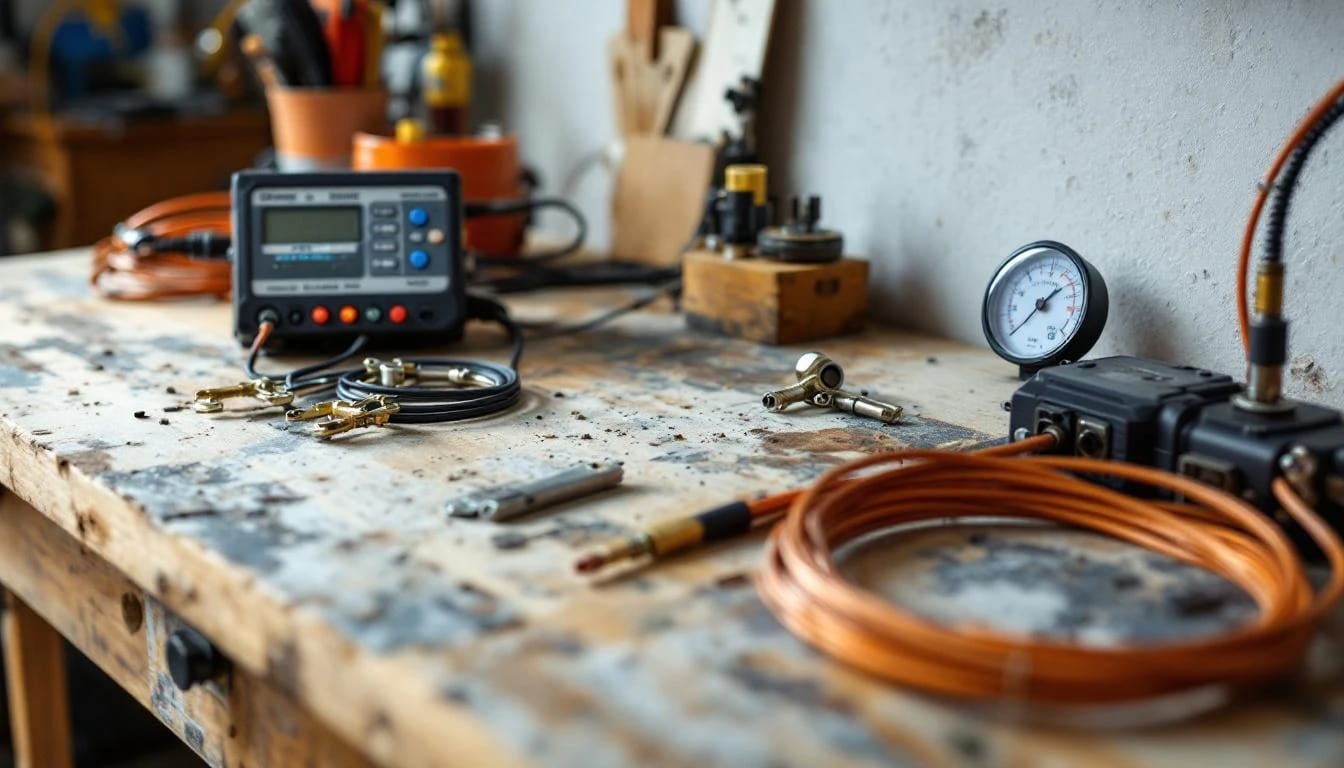
A shed-mounted wind turbine makes sense when you need 50–300 kWh per month for lights, tools, or climate control but lack grid access or want backup power. Most shed applications pair a 400W–1kW horizontal-axis turbine on a 10–20 ft tilt-up pole with a charge controller and AGM or lithium battery bank. Expect $1,200–$3,500 installed for a DIY-friendly system, or $4,000–$7,000 for a professional NEC-compliant grid-tied installation. The key constraint is roof load—the turbine lives on a pole, not the roof itself, and proper guy-wire or monopole engineering determines whether the structure survives a storm.
Why sheds suit small wind better than roofs
Sheds sit away from the main house, so setback and noise complaints drop. A detached structure also simplifies permitting: many jurisdictions treat accessory buildings under lighter codes than primary dwellings, and you avoid the bedroom-window noise headaches that kill residential rooftop turbines. The real advantage is electrical isolation. An off-grid shed runs DC lighting, 12V refrigeration, or inverter-fed tools without touching the house panel, which means you skip utility interconnection paperwork and net-metering disputes. You size the system to match actual load, not feed surplus back at retail rates you'll never capture.
Roof mounting the turbine itself remains a bad idea. Vibration fatigues rafters, invalidates homeowner's insurance, and the structure rarely offers the 15–20 mph clean airflow needed for rated output. Instead, install a ground-mount or tilt-up pole 15–30 ft from the shed and trench 10–12 AWG direct-burial cable (UF-B or USE-2) to a charge controller inside. The National Electrical Code Article 705 requires overcurrent protection on both the turbine and battery side, a manual disconnect, and grounding to an 8 ft copper-clad rod driven into earth with less than 25 Ω resistance.
![INLINE: Small horizontal-axis wind turbine on telescoping pole beside workshop shed with conduit running underground]
Sizing the turbine to shed loads
Start with a month-long audit. Multiply each device's wattage by hours-per-day runtime, sum to daily watt-hours, then multiply by 30. A typical hobby workshop—four LED tubes (40W × 6h), a bench grinder (750W × 0.5h), a radio (15W × 6h), and a space heater (1500W × 2h)—consumes roughly 4,300 Wh daily or 129 kWh monthly. Add 20 percent for inverter losses and battery inefficiency; the system must generate 155 kWh per month.
Wind capacity factor in the lower 48 states averages 15–25 percent for small turbines at 30 ft hub height. A 1,000W turbine running at 20 percent capacity delivers 1,000W × 0.20 × 24h × 30d = 144 kWh per month—barely enough. The Bergey Excel 1 (1kW rated) or Primus Air 40 (1kW) fit this profile and cost $2,200–$2,800 before tower and electrical. For lighter loads—security lighting, a trail camera, or a 12V fridge drawing 600 Wh daily—a 400W unit like the Pikasola 400W HAWT ($350–$500) or Aeolos-H 300W ($420) suffices when paired with 200–400 Ah of battery storage.
Vertical-axis turbines appeal because they self-orient and tolerate turbulent wind, but power curves sag below horizontal-axis rivals. The Helix Wind Savonius-style units and similar Chinese imports rarely exceed 10 percent capacity factor in real installations, making them viable only for trickle-charging applications under 50W continuous.
| Turbine model | Rated power | Rotor diameter | Cut-in wind | Survival wind | Typical retail |
|---|---|---|---|---|---|
| Pikasola 400W HAWT | 400W | 1.2m | 2.5m/s | 40m/s | $450 |
| Aeolos-H 500W | 500W | 1.3m | 3.0m/s | 50m/s | $680 |
| Primus Air 40 | 1,000W | 1.8m | 2.5m/s | 60m/s | $2,400 |
| Bergey Excel 1 | 1,000W | 2.5m | 3.6m/s | 54m/s | $2,800 |
Pole height and zoning realities
FAA Part 77 requires filing when any structure exceeds 200 ft above ground level near airports; for shed turbines this rarely applies. Local zoning typically caps accessory structures at 15–35 ft depending on lot size and setback. Agricultural zones and counties with Right to Farm statutes often permit 50 ft without variance. Call the planning department before purchasing—some municipalities ban wind outright through "aesthetic" clauses, and fighting a variance costs more than the turbine.
A tilt-up pole lets you hinge the mast to horizontal for maintenance without a crane. Champion Power Equipment, Rohn, and U.S. Tower sell 20–30 ft tilt-up kits ($600–$1,400) with gin-pole winch systems. Guy wires anchor every 120° to screw anchors rated for three times the static pole load, installed below frost line depth (12–36 inches depending on state). A 20 ft mast with a 1kW turbine in 50 mph wind exerts roughly 800–1,200 lb of lateral force; anchors must hold 2,400–3,600 lb each. Sandy or clay soils need helical piers; consult a structural engineer or use manufacturer load tables.
Monopole towers simplify aesthetics and eliminate guy wires but require deeper footings. A 4,000-psi concrete pier, 24 inches diameter, extending 48 inches below frost line, handles a 25 ft monopole with a 1kW turbine in ASCE 7-16 wind zone II (110 mph design wind). Budget $800–$1,500 for excavation, rebar cage, and concrete pour. Expect another $300–$600 for a licensed electrician to stub conduit through the base and bond the tower to the grounding electrode system.
Battery bank or grid-tie controller
Off-grid sheds need a battery bank sized for three days of autonomy. Using the 4,300 Wh daily example, multiply by three: 12,900 Wh. At 48V system voltage, that's 268 Ah of usable capacity. Lithium iron phosphate (LiFePO₄) batteries deliver 80–90 percent depth-of-discharge, so a 300 Ah 48V bank ($1,800–$2,400) suffices. Sealed AGM lead-acid is cheaper—$900–$1,400 for four 6V 400 Ah golf-cart batteries in series-parallel—but weighs three times as much and lasts 500–800 cycles versus lithium's 3,000–5,000.
The charge controller prevents overcharge and dumps excess power once batteries hit float voltage (54.4V for 48V lithium). The Morningstar TriStar TS-MPPT-60 ($680) or Victron SmartSolar MPPT 150/70 ($720) handle wind and solar inputs simultaneously, display real-time voltage via Bluetooth, and include temperature-compensated charging. Cheaper PWM controllers ($120–$180) waste 15–25 percent of turbine output by clamping voltage early; avoid them for systems above 200W.
Grid-tied sheds feeding the utility need a grid-tie inverter certified to UL 1741 and a bidirectional meter. The Fronius Primo 3.0-1 ($1,300) or SMA Sunny Boy 3.0-US ($1,200) accept DC wind input, synchronize to 60 Hz, and disconnect during grid outages per NEC 705.40 anti-islanding rules. Utility interconnection agreements require an electrician's stamp, a separate production meter, and liability insurance—add $800–$1,500 to project cost. Net metering rules vary by state; check DSIRE.org for your utility's buy-back rate. Many rural co-ops pay wholesale (3–5¢/kWh) rather than retail, making batteries a better investment.
Installation costs and code compliance
DIY labor cuts costs by half. A mechanically inclined owner can assemble a 400W turbine kit, pour a monopole footing, and wire a charge controller in two weekends. Parts breakdown for a basic off-grid system:
- Turbine: $400–$700
- 20 ft monopole or tilt-up pole: $600–$900
- Concrete/rebar: $150–$250
- Charge controller: $150–$680
- Battery bank: $900–$2,400
- Inverter (if AC loads): $200–$600
- Wire, conduit, breakers, disconnect: $180–$350
Total DIY: $2,580–$5,880
Professional installation triples labor. A licensed electrician charges $80–$140/hour; expect 12–20 hours for trenching, pole erection, panel integration, and inspection scheduling. Concrete contractors bill $400–$800 for a monopole pier. Total contractor-installed cost runs $4,000–$10,000 depending on turbine size and complexity.
NEC Article 705.12 governs supply-side connections. The turbine must connect to the load side of the main breaker through a dedicated 15A–30A breaker sized to conductor ampacity. Buried cable needs 18-inch minimum depth (24 inches without conduit) per NEC 300.5(A). String inverters require rapid-shutdown labels per NEC 690.12, even though wind systems lack PV-style module-level electronics. Ground-fault protection is not mandatory for wind under NEC 705.32, but it prevents nuisance trips in wet conditions.
Permits, inspections, and insurance
Building permits cost $50–$350 depending on jurisdiction and declared value. Submit a site plan showing setbacks, pole height, and electrical single-line diagram. Some counties demand engineered drawings for towers above 15 ft; a PE stamp runs $400–$900. Electrical permits add $75–$200 and trigger an inspection after rough-in and final connection. The inspector verifies grounding continuity, proper breaker sizing, and labeling. Budget a half-day for the inspector's visit; failures for missing labels or undersized wire require re-inspection fees ($50–$100).
Homeowner's insurance may exclude wind turbines unless you add a rider. State Farm, Nationwide, and USAA offer wind coverage for $80–$200 annually; they require professional installation and a structural engineer's letter for poles above 25 ft. Liability limits should cover injury from blade failure—$300,000 minimum. Some insurers cap coverage at $10,000 for equipment, making a separate inland marine policy necessary for turbines above $5,000 replacement cost.
The 30 percent federal Residential Clean Energy Credit (IRC §25D) applies to wind systems serving a dwelling. A shed qualifies if it contains a "habitable space"—defined loosely as conditioned area with outlets. File IRS Form 5695 with your tax return; the credit covers turbine, tower, wiring, and batteries but not general shed construction. State incentives vary: California's SGIP rebates $200/kWh of battery storage; New York's NY-Sun applies only to solar; Texas offers property-tax exemptions but no direct rebates. Confirm eligibility at dsireusa.org before purchasing.
Noise and neighbor considerations
Small wind turbines generate 35–55 dB at 30 ft distance—comparable to a quiet conversation or a household refrigerator. Bergey and Primus models use upwind rotors with blade pitch to limit tip speed under 150 mph, keeping noise below nuisance thresholds. Chinese imports often lack governing; rotor overspeed in 25+ mph gusts produces a distinct whooshing or whistling that carries 200–300 ft and annoys neighbors. Mount the turbine at least 150 ft from property lines where covenants allow, or petition for a variance citing state Right to Farm protections if the shed supports agricultural activity.
Vibration transmits through poorly guyed poles. Loose hardware hums at 20–50 Hz, felt more than heard. Check guy-wire tension monthly with a Loos tension gauge (PT-1 model, $45); correct tension for 3/16-inch cable is 150–200 lb. Nylock nuts on turbine yaw bearings should be snug but not crushing the bearing race. Use Loctite 242 threadlocker on all tower fasteners; re-torque every six months for the first two years.
Wind resource and realistic output
The formula P = ½ρAV³ governs wind power. Doubling wind speed increases power eightfold. A site averaging 8 mph (3.6 m/s) at hub height yields one eighth the power of a 16 mph location. NREL wind maps show annual average speeds at 30 meters; divide by 1.4–1.6 for 20 ft residential heights over wooded terrain. Coastal plains, ridge tops, and Great Plains sites hit 11–15 mph annual averages; Appalachian valleys and heavily wooded suburbs drop to 6–9 mph. Below 9 mph annual average, wind rarely competes with solar on cost per kWh.
Install a data logger for three months before committing. The Inspeed Vortex anemometer ($180) with HOBO data logger ($220) records 10-minute averages; upload to WindFinder or Windographer to calculate Weibull distribution and capacity factor. If measured capacity factor falls below 12 percent, solar panels deliver better return on a dollar-per-kWh basis.
Seasonal variation swings wildly. Winter months in the northern tier see 150–250 percent of annual-average wind speeds; summer months drop to 50–75 percent. Sheds used heavily in warm months (garden tool charging, misting fans) may need hybrid solar-wind arrays to flatten seasonal dips.
Maintenance and component lifespan
Expect annual bearing replacement in turbines under $1,000. The Pikasola and Aeolos units use 6204 deep-groove ball bearings ($8–$15 each); replace every 12–18 months or when you hear grinding. Premium turbines (Bergey, Primus) use sealed cartridge bearings rated for five years. Apply marine-grade lithium grease (Valvoline Multi-Purpose or equivalent) to yaw pivot points every six months.
Blades last 8–15 years if UV inhibitors were added during molding. Check for leading-edge erosion, spider cracks, and delamination twice yearly. Composite repair epoxy (West System 105/206) fixes minor damage; replace blades when crack length exceeds 10 percent of chord or balancing becomes impossible. Balancing requires a blade scale ($35) and stick-on wheel weights; imbalance above 2 grams at the tip causes vibration and shortens bearing life.
Charge controllers fail from lightning or voltage spikes. Install a Type 2 surge protector (Eaton CHSPT2SURGE, $140) at the shed subpanel and a DC surge arrestor (Morningstar TriStar TS-LA-2, $95) between turbine and controller. Replace arrestors after any direct strike or nearby hit.
Battery banks need equalization quarterly if using flooded lead-acid. Bring cell voltage to 15.5V for two hours, then verify specific gravity with a hydrometer (1.265 for fully charged cells). Lithium banks require only cell-balancing every 20–30 cycles; quality BMS modules handle this automatically.
Hybrid systems and backup generators
Wind output drops to zero during calm periods. Pair a solar array with the turbine for continuous charging. A 400W turbine plus four 100W solar panels ($400–$600) diversifies generation. Wind peaks in winter and at night; solar peaks in summer and midday. The charge controller must accept both inputs—Midnite Solar Classic 150 ($680) or Outback FlexMax 80 ($750) handle wind, solar, and generator simultaneously.
A backup generator completes the system. A 2,000W inverter generator (Honda EU2200i, $1,200; Westinghouse iGen2500, $650) runs four hours on a gallon of gasoline and tops off batteries faster than any turbine during multi-day calms. Wire the generator through a manual transfer switch (Reliance Controls 31406CRK, $180) to prevent backfeeding the turbine or solar array.
Can I mount a wind turbine directly on my shed roof?
No. Vibration from even a small turbine fatigues roof trusses, cracks shingles, and invalidates insurance. The turbine belongs on a standalone pole 15–30 ft from the structure with underground cable running to interior equipment. Roof mounting also places the rotor in turbulent air near the eave line, cutting output by 40–60 percent.
How do I calculate guy-wire anchor loads for a tilt-up pole?
Multiply the pole height in feet by the rated turbine thrust (check manufacturer spec sheet, typically 80–150 lb for 1kW units in 50 mph wind) to get overturning moment in foot-pounds. Divide by the number of guy anchors (usually three) and triple the result for safety factor. A 20 ft pole with 120 lb thrust and three guys needs anchors rated for (20 × 120 ÷ 3) × 3 = 2,400 lb each. Use screw anchors or helical piers rated for soil type.
Does the federal tax credit apply to shed wind turbines?
Yes, if the shed serves a dwelling. IRC §25D covers "qualified small wind energy property" with capacity under 100kW installed at a residence. The structure must have electricity used for residential purposes—a workshop with lighting and outlets qualifies, but a bare storage shed does not. The 30 percent credit covers turbine, tower, wiring, batteries, and inverter but not general shed construction. File IRS Form 5695 with Schedule 3 of Form 1040.
What wind speed justifies wind over solar in a shed application?
Annual average wind speed above 11 mph at hub height (typically 9–10 mph at anemometer height after site calibration) makes wind competitive with solar on a dollar-per-kWh basis. Below 9 mph annual average, solar panels deliver better return because capacity factor for small turbines drops below 10 percent. Install a data logger for three months; if the 50th-percentile speed exceeds 9 mph, wind works. Otherwise, allocate the budget to solar panels and racking.
How far from the property line should I place the turbine?
Follow local setback ordinances—typically one to three times tower height. In the absence of specific wind rules, default to accessory-structure setbacks (5–15 ft side yard, 10–25 ft rear yard). Place the turbine at least 150 ft from neighboring houses to avoid noise complaints even if zoning allows closer placement. Guy-wire anchors count as part of the structure footprint; include them in setback measurements.
Bottom line
A 400W–1kW wind turbine on a 15–25 ft pole supplies enough power for off-grid shed lighting, tools, and climate control when site wind averages 9+ mph annually. Budget $2,500–$6,000 for a DIY installation or $4,000–$10,000 with professional labor, plus $50–$350 in permits. The system pays for itself in 6–12 years where grid extension costs exceed $5,000 or utility buy-back rates stay above 8¢/kWh. Verify zoning allows the tower height, log wind data for three months to confirm capacity factor above 12 percent, and pair the turbine with battery storage sized for three days of autonomy. Schedule a pre-purchase consultation with a licensed electrician to confirm NEC Article 705 compliance and avoid permit rejections.
Share this article
windturbinehome.com/s/fb6e6b
Editorial note: This article was researched and written by a member of the Wind Turbine Home editorial team. AI-assisted tools were used for spell-checking and light grammar review only — all research, analysis, and conclusions are our own. Our editorial policy prohibits sponsored content and paid placements. Read our editorial policy →
Related reading
accessories towers
Cable Sizing from Tower to Charge Controller: Voltage Drop Math
Calculate wire gauge for wind turbine tower-to-controller runs using voltage drop formulas. Step-by-step math prevents energy loss and meets NEC 705.
accessories towers
Best Charge Controllers for Small Wind Turbines in 2026
Compare the top wind turbine charge controllers for off-grid and hybrid systems in 2026, from budget PWM units to advanced MPPT models with dump-load protection.
accessories towers
Guyed vs Freestanding Towers: Pick by Site, Not by Price
Guyed towers cost less but need 50–75% more land. Freestanding monopoles fit tight lots. Choose by space, soil, and local zoning—not sticker price alone.
accessories towers
Guyed Tower vs Monopole Tower: Cost and Footprint Compared
Guyed towers cost $3,000–$8,000 less than monopole towers but need 4× the land. Compare installation, maintenance, and long-term economics for home turbines.
accessories towers
Wind Turbine for a Chicken Coop: Tiny Systems for Small Loads
A 100-400W micro wind turbine can power chicken coop lights, fans, and heaters, typically costing $150-$800 installed. Learn how to size, mount, and wire small systems for off-grid poultry operations.