Wind Turbine for a Chicken Coop: Tiny Systems for Small Loads
A 100-400W micro wind turbine can power chicken coop lights, fans, and heaters, typically costing $150-$800 installed. Learn how to size, mount, and wire small systems for off-grid poultry operations.
Share this article
windturbinehome.com/s/c8656f
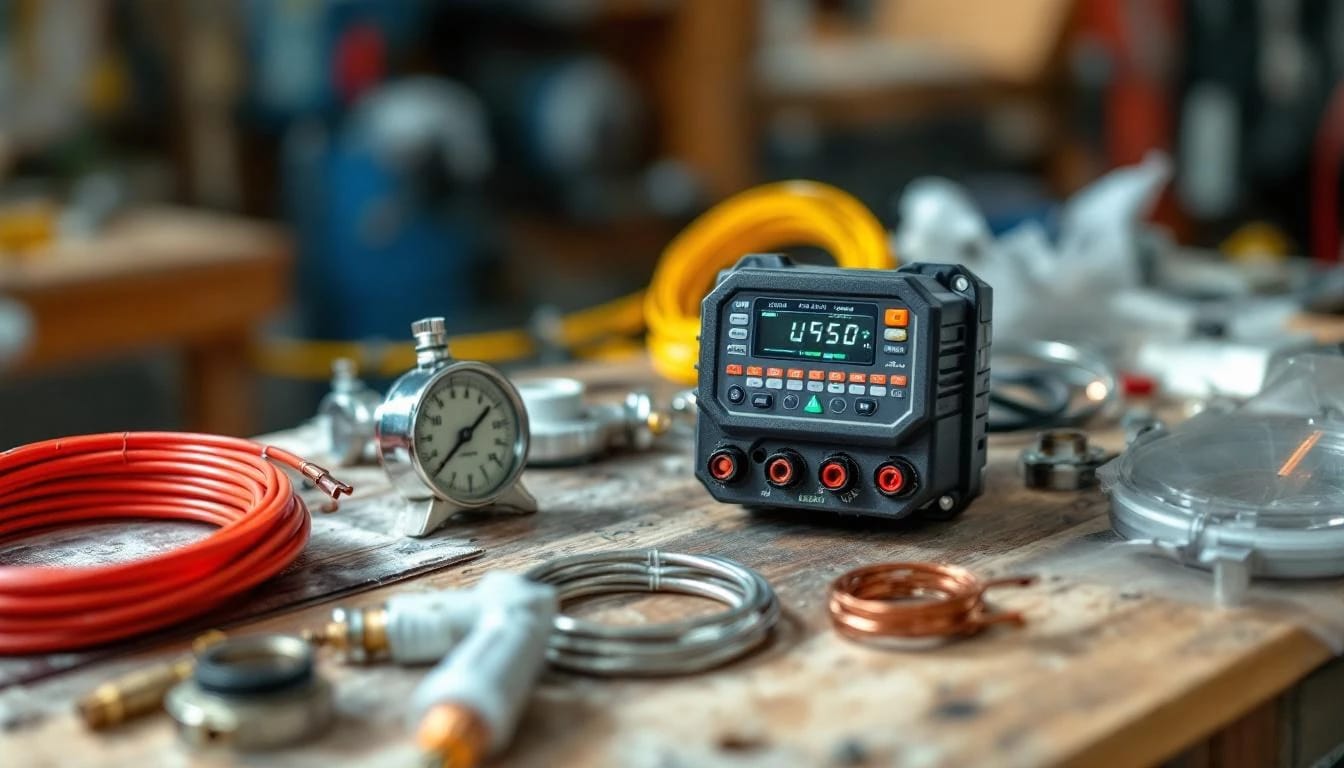
A 100-400 watt micro wind turbine mounted on a 15-20 foot pole can reliably power LED lighting, ventilation fans, and supplemental heat in a standard backyard chicken coop, drawing from the same breeze that ruffles feathers. These tiny systems cost $150-$800 including tower hardware and basic wiring, making them attractive for off-grid setups or farms aiming to reduce grid dependence. The key is matching turbine output to actual load—most coops need 50-200 watts continuous during the coldest months, well within reach of vertical-axis and small horizontal-axis machines designed for 10-15 mph average wind speeds.
Why wind works for chicken coops
Chicken coops sit in rural or suburban yards where obstructions are low and wind access is often better than rooftop mounting allows. A 16-foot tower clears backyard fences and sheds, capturing laminar flow that a roof-mounted turbine would miss. Poultry operations demand power year-round but peak in winter when short days require artificial lighting to maintain egg production and heat lamps prevent frostbite on combs. Wind speeds typically rise during cold months, aligning generation with demand in a way that solar panels for chicken coops cannot match after 4 p.m.
Load profiles are forgiving. Hens tolerate minor voltage swings better than electronics do, and battery-buffered systems smooth out gusts. A 12V deep-cycle battery bank absorbs surplus generation during windy afternoons and supplies steady power overnight. This forgiving tolerance means you can use simpler charge controllers and skip the grid-tie inverter entirely if the coop stands alone.
Sizing the turbine to the load
Start by adding up actual draw. A modern 20-bird coop typically uses:
- LED lighting: 10-20W for 12-16 hours daily (winter)
- Ventilation fan: 15-30W running continuously or intermittently
- Heated waterer: 50-100W when active (thermostat-controlled)
- Brooder heat lamp (seasonal): 125-250W for chicks
Total continuous draw rarely exceeds 100W; peak draw with all devices running hits 200-400W. Multiply continuous watts by 24 hours to get daily watt-hours—100W × 24h = 2,400 Wh/day. A 200W turbine producing at 30% capacity factor in an average 12 mph site delivers 200W × 0.30 × 24h = 1,440 Wh/day, covering baseline lighting and fans. Add a second turbine or a hybrid solar-wind system to meet peak heating loads.
Manufacturers rate output at specific wind speeds—often 11 m/s (24.6 mph)—but real-world production in 10-12 mph averages drops to 20-40% of nameplate. Use the lower estimate when sizing. A Pikasola 400W vertical-axis turbine will produce closer to 80-160W average in a moderately windy site, enough for lights and a fan but not a 250W brooder lamp running full-time.
Vertical-axis versus horizontal-axis micro turbines
Vertical-axis turbines (VAWTs) dominate the under-500W market because they accept wind from any direction, tolerate turbulence behind barns and tree lines, and mount easily on simple poles without guy wires. Savonius and Darrieus designs start generating at 6-8 mph and reach rated output by 20-25 mph. The Aeolos-V 200W and Pikasola 300W models are common choices, priced $180-$350 for the turbine alone. Vibration and bearing wear are the main failure modes; expect to replace bearings every 3-5 years in continuous-duty installations.
Horizontal-axis turbines (HAWTs) in the 100-400W range—like the Primus Air 30 or Bergey BWC Excel-S downrated configurations—deliver 15-25% more energy per swept area than VAWTs but require yaw mechanisms and taller towers to clear turbulence. They work best in open fields where the coop sits away from structures. Installation costs run higher because guy wires and concrete pad foundations add $100-$300 to the project. For a single backyard coop, the VAWT's simplicity usually wins.
Tower height and placement
Mount the turbine at least 15 feet above ground and 10 feet above any obstruction within 300 feet. A 20-foot freestanding pole suits most residential lots; taller than that and you trigger FAA Part 77 notification requirements in some jurisdictions (structures over 200 feet always require filing; shorter structures near airports may also fall under scrutiny). Check local zoning for small wind turbines before buying materials.
Concrete footings should extend below frost line—48 inches in northern states, 12-24 inches in the South. A 12-inch diameter sonotube filled with 2-3 cubic feet of 3,000 psi concrete and four ½-inch anchor bolts holds a 20-foot schedule-40 steel pipe in winds up to 90 mph. Galvanized pipe costs $80-$120; aluminum poles run $150-$250 but weigh less and resist corrosion.
Position the turbine upwind of the coop, 30-50 feet away if space allows. This minimizes noise (blade swoosh at 40-50 dB is audible inside a coop at 15 feet) and keeps the tower out of the flock's daily path. Guy wires, if used, must be tensioned to prevent oscillation but not so tight that they bend the pole.
Electrical wiring and charge control
Micro turbines produce three-phase AC rectified to DC at the nacelle or in a separate controller. Output voltage varies by model—12V, 24V, or 48V nominal—and must match your battery bank. Wire sizing follows NEC Article 705 for interconnected sources; for a 200W 12V turbine delivering 17 amps maximum, use 10 AWG copper for runs under 50 feet to limit voltage drop below 3%. Bury direct-burial-rated cable 18 inches deep or run through schedule-40 PVC conduit.
A pulse-width modulation (PWM) or maximum-power-point-tracking (MPPT) charge controller sits between turbine and battery, preventing overcharge and managing dump-load diversion when batteries reach float voltage. The Morningstar TriStar PWM and EPSolar Tracer MPPT models handle 12/24V systems and cost $120-$280. Include a manual disconnect switch and overcurrent protection (breaker or fuse) rated 125% of turbine maximum output per NEC 705.30.
Batteries store energy for overnight and calm periods. Four 100Ah AGM or lithium iron phosphate (LiFePO₄) 12V batteries in parallel give 4,800 Wh usable capacity (assuming 80% depth of discharge), enough for two days of 100W continuous draw. AGM batteries cost $180-$250 each; LiFePO₄ run $300-$450 each but last 3-5 times longer. Place the battery bank inside the coop or in an insulated box to prevent freezing; lead-acid capacity drops 40% at 0°F.
All wiring, disconnects, and overcurrent devices must comply with NEC Article 705. Hire a licensed electrician for the final connection if you lack experience with DC systems or local code requires inspection. Insurance and permitting hinge on compliant installation.
Hybrid systems and backup options
Pairing a 200W wind turbine with a 100W solar panel creates a hybrid system that generates year-round. Wind picks up winter and overnight slack; solar covers summer peaks and calm days. A dual-input charge controller like the EPSolar DuoRacer manages both sources, prioritizing whichever produces more at any moment. Total cost for a 200W wind + 100W solar setup with 400Ah battery storage and mounting hardware runs $900-$1,500 installed.
Grid-tied micro wind is rare for coops because the expense of a grid-interactive inverter ($400-$800) and utility interconnection paperwork outweighs the benefit of selling surplus power. Off-grid battery systems or grid-tied solar with battery backup make more economic sense for small loads.
Real-world performance and maintenance
A 300W VAWT in a 12 mph average site produces 1,500-2,000 kWh per year, worth $180-$240 at $0.12/kWh residential rates. Payback takes 3-5 years if you avoid hired installation labor and count the value of grid independence. Wind generators require annual inspections: tighten bolts, check bearings for play, verify charge-controller settings, clean debris from blades. Bearing replacement every 3-5 years costs $30-$80 in parts; neglect leads to catastrophic rotor failure.
Micro turbines rarely fail outright but fade as bearings wear and magnets weaken. Expect 80% output at year five and 60% by year ten. Budget for a generator swap or complete turbine replacement after 12-15 years.
Cost breakdown
| Item | Low | High |
|---|---|---|
| 200-400W turbine | $150 | $450 |
| 15-20 ft pole + hardware | $80 | $250 |
| Concrete footing | $20 | $50 |
| Charge controller | $120 | $280 |
| Battery bank (400Ah) | $720 | $1,800 |
| Wire, conduit, fittings | $60 | $150 |
| Total (DIY) | $1,150 | $2,980 |
| Professional install | +$500 | +$1,200 |
Prices reflect 2025 USD for quality components. Budget another $100-$300 for hybrid solar additions.
Incentives and tax credits
The federal Residential Clean Energy Credit (IRC §25D, IRS Form 5695) offers a 30% tax credit on qualified small wind installations, including equipment and labor, through 2032. A $1,500 DIY system yields $450 back at tax time. The credit applies to primary or secondary residences; commercial coops (egg sales exceeding hobby thresholds) may qualify for the Investment Tax Credit (ITC) instead, also 30%. Check DSIRE for state-level rebates and property tax exemptions—some states exclude renewable energy equipment from assessed value.
Comparing popular micro turbines for coops
| Model | Type | Rated Output | Start Speed | Cost | Notes |
|---|---|---|---|---|---|
| Pikasola 300W | VAWT | 300W @ 12.5 m/s | 2 m/s | $220 | Quiet, low maintenance |
| Aeolos-V 200W | VAWT | 200W @ 11 m/s | 2.5 m/s | $350 | Heavy-duty bearings |
| Primus Air 30 | HAWT | 30W @ 12.5 m/s | 3 m/s | $180 | Requires tail vane |
| Windmax HY-400 | HAWT | 400W @ 12.5 m/s | 2.5 m/s | $290 | Blade noise 48 dB |
All prices approximate; actual output in 10-12 mph sites runs 25-35% of rated.
Common mistakes to avoid
Underestimating load. Heat lamps draw 250W; a single 200W turbine cannot power one continuously. Size for peak simultaneous draw, not nameplate per-device ratings.
Ignoring local wind data. A site averaging 8 mph delivers half the energy of a 12 mph site. Use anemometer data or NREL wind maps before purchasing.
Skipping battery capacity. Two calm days in a row will drain a 200Ah bank supporting 100W continuous. Double the capacity you think you need.
Poor tower placement. Mounting 10 feet from a barn roof creates turbulence that cuts output 40%. Move upwind and higher.
Overlooking code. Unpermitted electrical work voids homeowner insurance. Pull permits and hire an electrician for final connections if required.
Case study: 12-hen urban coop
A Seattle-area keeper installed a Pikasola 400W VAWT on a 16-foot pole 40 feet from a 12-hen coop. The site averages 10.5 mph annual wind speed. The system includes:
- 400W VAWT
- EPSolar 20A MPPT controller
- Two 200Ah AGM batteries (12V)
- 20W LED strip (16 hours winter)
- 25W exhaust fan (continuous)
- 75W heated waterer (thermostat)
Measured production: 1,200 Wh/day average, covering 90% of winter load. Grid backup powers the waterer during week-long calm spells. Total installed cost (DIY): $1,380. Federal credit: $414. Net cost: $966. Estimated payback: 4.2 years.
Wind versus solar for poultry
Wind delivers consistent power overnight and in winter when solar drops. Coops locked at dusk need lights for evening checks and predator deterrence; wind keeps them lit without draining batteries. Solar panels cost less per watt ($0.60-$1.00/W versus $0.75-$1.50/W for micro wind) and require zero maintenance but produce nothing after sunset. The ideal system combines both, using solar to charge batteries during calm days and wind to top off storage overnight.
Can a 100W turbine power a chicken coop?
A 100W turbine producing at 30% capacity factor delivers 720 Wh/day, enough for LED lighting (15-20W) and a small fan (10W) but insufficient for heated waterers or brooder lamps. It works for summer-only or minimal-draw coops in windy sites; most keepers need 200-400W systems to cover winter heating.
How tall should the tower be for a backyard coop turbine?
Mount the turbine at least 15 feet above ground and 10 feet above nearby structures within 300 feet. A 20-foot freestanding pole suits most residential lots and avoids FAA notification in non-airport areas. Taller installations capture stronger wind but increase cost and permitting complexity.
Do micro wind turbines require permits?
Building permits are jurisdiction-specific; many localities treat towers under 35 feet as accessory structures exempt from permitting, but electrical work nearly always requires inspection under NEC Article 705. Check with your local building department and hire a licensed electrician for final connections to ensure code compliance and protect insurance coverage.
What battery size do I need for a wind-powered coop?
Size the battery bank to store two days of consumption at 80% depth of discharge. For a 100W continuous load (2,400 Wh/day), you need 6,000 Wh usable capacity, or five 100Ah 12V batteries. AGM and lithium iron phosphate (LiFePO₄) batteries tolerate deep cycling; flooded lead-acid batteries are cheaper but require monthly maintenance.
How long do micro wind turbines last?
Expect 10-15 years of useful life with annual maintenance. Bearings wear every 3-5 years and cost $30-$80 to replace. Output degrades to 60-70% of original by year ten as magnets weaken. Severe weather events (ice loading, lightning, tornado-force winds) can cause sudden failure; mount turbines away from structures to limit damage risk.
Bottom line
A 200-400W micro wind turbine mounted on a 15-20 foot pole delivers enough energy to light, ventilate, and heat a standard backyard chicken coop year-round, with total DIY installation costs under $1,500 after federal tax credits. Match turbine output to measured load, size the battery bank for two calm days, and follow NEC Article 705 wiring standards. The next step: measure your site's wind speed with a handheld anemometer for two weeks, calculate daily watt-hours, and choose a turbine rated 150-200% of your continuous draw.
Share this article
windturbinehome.com/s/c8656f
Editorial note: This article was researched and written by a member of the Wind Turbine Home editorial team. AI-assisted tools were used for spell-checking and light grammar review only — all research, analysis, and conclusions are our own. Our editorial policy prohibits sponsored content and paid placements. Read our editorial policy →
Related reading
accessories towers
Cable Sizing from Tower to Charge Controller: Voltage Drop Math
Calculate wire gauge for wind turbine tower-to-controller runs using voltage drop formulas. Step-by-step math prevents energy loss and meets NEC 705.
accessories towers
Best Charge Controllers for Small Wind Turbines in 2026
Compare the top wind turbine charge controllers for off-grid and hybrid systems in 2026, from budget PWM units to advanced MPPT models with dump-load protection.
accessories towers
Guyed vs Freestanding Towers: Pick by Site, Not by Price
Guyed towers cost less but need 50–75% more land. Freestanding monopoles fit tight lots. Choose by space, soil, and local zoning—not sticker price alone.
accessories towers
Guyed Tower vs Monopole Tower: Cost and Footprint Compared
Guyed towers cost $3,000–$8,000 less than monopole towers but need 4× the land. Compare installation, maintenance, and long-term economics for home turbines.
accessories towers
Wind Turbine for a Shed: What Fits and What Makes Sense
Shed wind turbines need 400W–1kW capacity, 10–20 ft poles, and off-grid controllers. Learn sizing rules, installation costs, and whether grid-tie beats battery.