Connecting a Wind Turbine to the Grid: NEC 705 & Utility Paperwork
Grid-tied small wind turbines require NEC Article 705 compliance, utility interconnection agreements, and net-metering approval before energizing.
Share this article
windturbinehome.com/s/513663
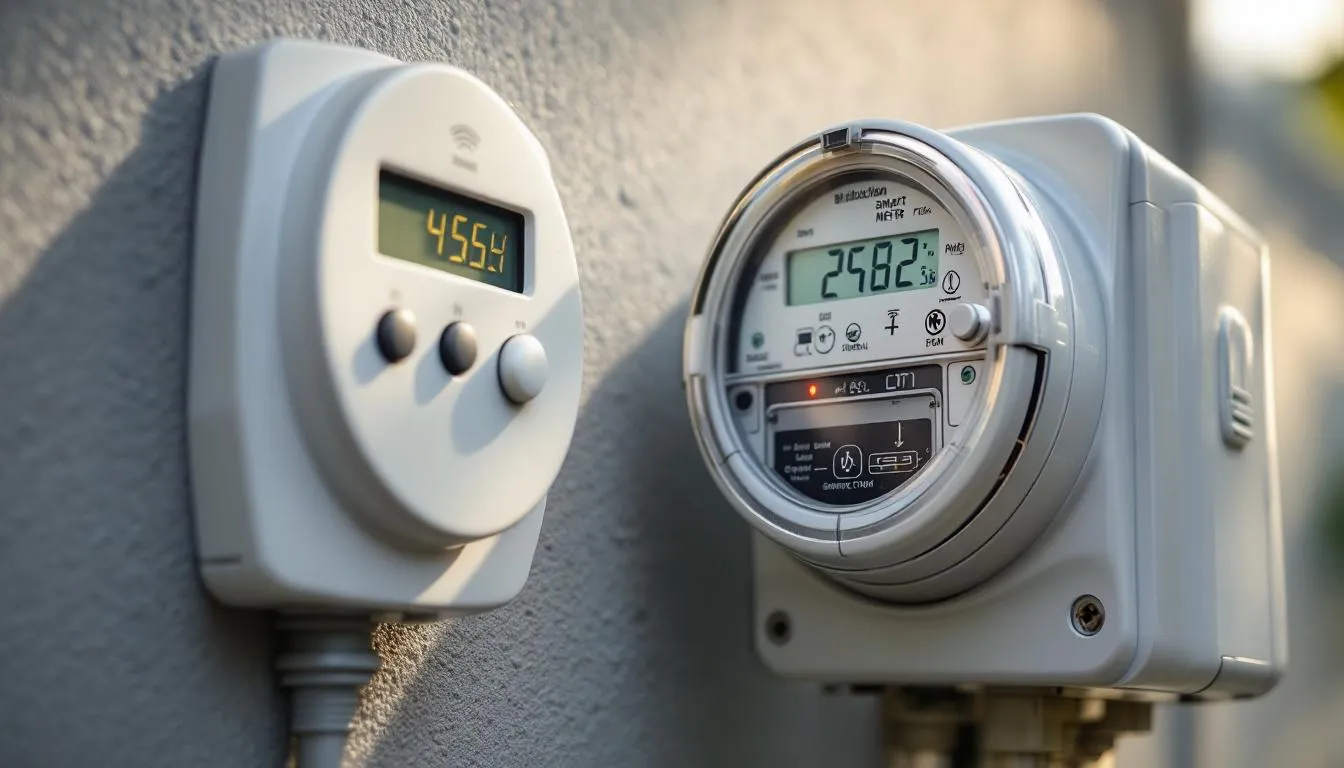
Grid-tied wind turbines must comply with NEC Article 705, which governs interconnected electric power production sources. The code mandates dedicated disconnects, anti-islanding protection, and proper grounding. Beyond electrical compliance, homeowners need a signed utility interconnection agreement, liability insurance verification, and net-metering enrollment before the first kilowatt-hour flows backward through the meter. In most states, the entire approval cycle takes six to twelve weeks; delays center on utility engineering reviews and local building-department permit queues.
NEC Article 705 Scope and Application
Article 705 covers any on-site generator feeding the utility grid, including wind turbines from 400 W micro-models to 20 kW residential towers. The code addresses two hazards: backfeed into a de-energized utility line during maintenance and equipment damage from out-of-phase voltage. Section 705.12 lists five interconnection methods; load-side connection via a breaker in the main service panel is typical for turbines under 10 kW. Line-side taps—ahead of the main breaker—suit larger installations but require utility sign-off and a second meter socket in many jurisdictions.
Anti-islanding protection is non-negotiable. Grid-tied inverters manufactured after 2000 incorporate IEEE 1547 anti-islanding, which monitors voltage and frequency; if the grid drops, the inverter opens its internal contactor within two seconds. Older or non-compliant inverters require an external transfer relay. Section 705.40 also mandates a lockable AC disconnect within sight of the turbine tower, labeled "RENEWABLE ENERGY DISCONNECT" in permanent lettering at least ⅜ inch tall.
![INLINE: Red-handled AC disconnect switch mounted on pole beside small wind turbine]
Utility Interconnection Agreement
Every investor-owned and municipal utility enforces an interconnection application, though the name varies: some call it Form INS-1, others an ICA or Small Generator Interconnection Agreement (SGIA). The application collects turbine nameplate capacity, inverter make and model, engineering drawings showing single-line diagrams, and proof of liability insurance—typically $1 million general liability with the utility named as an additional insured. Utilities process applications under state public-utility-commission timelines; in California, Rule 21 gives the utility fifteen business days for initial review and thirty days for a simple interconnection approval once the application is complete.
Three approval tiers exist. Level 1 applies to inverter-based systems under 10 kW with no export limitation; approval is often administrative. Level 2 covers 10–25 kW systems and may require a simplified impact study if the feeder circuit already hosts multiple generators. Level 3 triggers a full interconnection study with hosting-capacity analysis, line upgrades, and cost-sharing—rare for residential turbines but common when a 50 kW farm-scale unit joins a lightly loaded rural line.
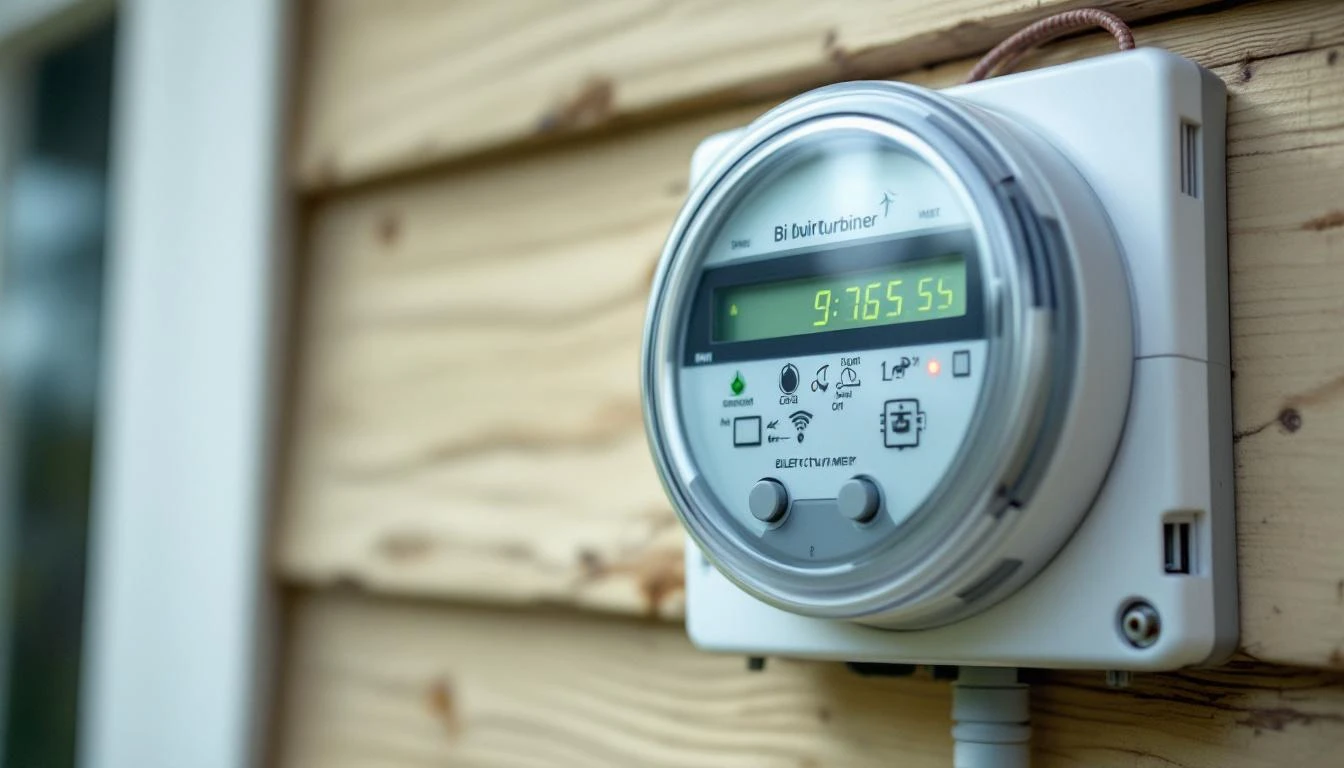
Net metering is a separate enrollment step. After interconnection approval, the homeowner submits a net-metering application referencing the approved interconnection case number. The utility then swaps the existing meter for a bidirectional model or reprograms the AMI meter firmware. Monthly bills credit excess generation at the retail rate in states with one-to-one net metering (New Jersey, Maryland, Massachusetts). In states with lower compensation rates, such as Arizona's 10.45 ¢/kWh export credit versus 12.5 ¢/kWh consumption rate, the economics shift; storage or time-of-use load shifting becomes attractive.
Electrical-Code Compliance Checklist
A licensed electrician must design and install the grid-tie system to meet NEC Article 705 and local amendments. Ten critical compliance points recur in inspector checklists:
| Requirement | NEC Section | Typical Hardware |
|---|---|---|
| AC disconnect within sight of turbine | 705.22 | 60 A non-fused, NEMA 3R enclosure |
| Inverter anti-islanding certification | 705.40 | UL 1741 SA or SunSpec Modbus |
| Service-panel busbar rating check | 705.12(D)(2) | 120 % rule calculation |
| Grounding electrode at tower base | 250.52(A)(3) | 8 ft ground rod, #6 AWG copper |
| Dedicated breaker in service panel | 705.12(D)(1) | Backfed 30 A, secured with lockscrew |
| Overcurrent protection sizing | 705.30 | 125 % of inverter max output current |
| Warning labels on panel and disconnect | 705.10 | "DUAL POWER SOURCE" in red |
| Arc-fault circuit interrupter (DC side if applicable) | 690.11 | Built into most modern inverters |
| Rapid-shutdown capability | 690.12 | Auto-shutoff within 30 seconds |
| Conductor ampacity derating for bundling | 310.15(C)(1) | Upsized wire in shared conduit |
The 120-percent rule in 705.12(D)(2) trips up many DIY installers. The sum of all breakers feeding a busbar—main breaker plus renewable breaker—cannot exceed 120 percent of the busbar rating. A 200 A panel with a 200 A main breaker can accept a 40 A wind-turbine breaker (200 + 40 = 240; 240 ÷ 200 = 120 %). A 30 A solar breaker already present consumes part of that headroom, leaving only 10 A for the turbine unless the main breaker is derated.
Inspectors also verify the AC disconnect is operable under load. Spring-loaded toggle switches fail this test; a three-position (on-off-on) rotary switch with a visible blade position passes. The disconnect must be positioned so a utility lineman accessing the meter can walk directly to it without climbing or moving obstacles.
FAA Notification and Local Permits
FAA Part 77 requires notification—not approval—for any structure exceeding 200 feet above ground level or penetrating imaginary surfaces around airports. Most residential turbines on 30–80 ft towers fall below the threshold, but properties within five statute miles of a runway trigger Form 7460-1 filing. The FAA issues a Determination of No Hazard (DNH) or a Determination of Hazard; a hazard finding mandates aviation-red obstruction lighting but rarely prohibits installation. Processing takes forty-five to sixty days, so file early.
Building permits cover foundation design, tower structural adequacy, and setback compliance. Permit fees range from $150 in rural Wyoming counties to $800 in suburban New Jersey townships. Plans must include a stamped engineer's drawing for towers over 35 feet in most jurisdictions; the engineer verifies the turbine's survival wind speed (often 120–140 mph per ASCE 7) and foundation bearing capacity. Inspectors conduct a footing inspection before concrete pour and a final inspection after commissioning.
Zoning variances become necessary when tower height exceeds the accessory-structure limit—commonly 35 or 45 feet in residential zones. Variance hearings add eight to sixteen weeks. Neighbors receive notice; vocal opposition centers on noise, shadow flicker, and aesthetic impact. Applicants who quantify setback (1.5× tower height is a defensible minimum) and provide manufacturer noise data (35–45 dBA at 100 feet for a Bergey Excel 10) strengthen approval odds.
Federal Tax Credit and State Incentives
The federal Residential Clean Energy Credit under IRC §25D offers a 30-percent tax credit for equipment and installation costs through 2032. The credit steps down to 26 percent in 2033 and 22 percent in 2034. Eligible costs include turbine, tower, inverter, wiring, foundation, engineering, permits, and labor. Energy storage paired with the turbine qualifies if it draws 100 percent of its charge from the turbine. Homeowners claim the credit on IRS Form 5695; unused credit carries forward indefinitely.
State incentives vary widely. Check the Database of State Incentives for Renewables & Efficiency (DSIRE) for current programs. Montana offers a $500 Alternative Energy Systems Tax Credit per installation, capped at $50,000 lifetime. New York's Renewable Heat and Power Incentive reimburses $1.20 per watt for turbines over 3 kW, capped at $100,000 per site. California repealed its small-wind rebate in 2016. Most property-tax exemptions remain intact: thirty-nine states exclude the added home value from property-tax assessment.
Insurance and Liability Considerations
Homeowners insurance typically excludes wind turbines taller than ten feet unless an endorsement is added. The endorsement costs $75–$300 annually and covers tower collapse, blade detachment, and fire originating in the nacelle. Liability limits of $300,000 are standard; the utility interconnection agreement may require $1 million, necessitating an umbrella policy. Specialized renewable-energy insurers such as Energysure and GCube offer stand-alone policies when conventional carriers decline coverage in high-wind coastal zones.
Utilities demand proof of insurance before energizing the interconnection. The certificate of insurance must name the utility as an additional insured and include thirty days' written notice of cancellation. Some utilities accept a $1 million bond in lieu of insurance, but bond premiums often exceed insurance costs.
Net-Metering Credits and Monthly Billing
Net metering operates as a virtual battery. The meter spins backward when turbine output exceeds home consumption, banking kilowatt-hours as credits. At month-end, the utility nets consumption against credits. In one-to-one states, excess generation offsets the energy charge; distribution and fixed charges remain due. Arizona and similar "net billing" states pay wholesale rates—5 to 7 ¢/kWh—for exports, making self-consumption strategies critical.
Annual true-ups settle the credit balance. A homeowner who generates 12,000 kWh and consumes 10,000 kWh banks 2,000 kWh. If the utility offers rollover credits, the surplus carries into the next twelve months. If not, the utility forfeits the excess or compensates at a wholesale avoided-cost rate—often 2–4 ¢/kWh. Fifteen states require utilities to carry over credits indefinitely; the rest impose annual expiration.
Virtual net metering extends the concept to multiple meters on contiguous or non-contiguous parcels under one owner. A 10 kW turbine at a farm can offset electricity at the owner's off-site residence in New York, Massachusetts, and nine other states. Community solar programs apply similar mechanics, but few accommodate wind due to siting constraints.
Interconnection Testing and Commissioning
Before utility permission-to-operate (PTO) is granted, the installer performs three tests: anti-islanding function, ground-fault detection, and inverter frequency/voltage trip points. The electrician simulates a grid outage by opening the main breaker; the inverter must cease export within two seconds. Ground-fault testing injects a controlled fault; the inverter should trip at 5 mA leakage for systems 50 kW and below per UL 1741. Frequency and voltage tests confirm the inverter disconnects if grid frequency drifts below 59.3 Hz or above 60.5 Hz, or if voltage deviates beyond +10 % / −12 % of nominal.
The utility may dispatch an inspector to witness commissioning or accept a signed installer affidavit. Investor-owned utilities in PJM and MISO territories often require field verification for systems above 5 kW; municipal utilities lean toward affidavits. Once the utility sets the meter to net mode and updates billing software, the homeowner receives PTO via email or postal letter. Energizing before PTO violates the interconnection agreement and can trigger fines or disconnection.
Common Delays and How to Avoid Them
Application incompleteness accounts for 40 percent of delays. Missing items include single-line diagram, site plan showing tower setback, manufacturer's spec sheet, and proof of insurance. Submit a complete package with all attachments in the initial filing. Engineering-review queues stretch longest in California, New York, and Massachusetts; apply ninety days before the planned installation date.
Utilities sometimes request supplemental studies for circuits with low daytime load. A rural feeder serving grain elevators that run at night may have hosting capacity during the day but trip the overvoltage relay when a 10 kW turbine exports into minimal load. An inverter with programmable export limits—capped at 80 or 90 percent of nameplate—often satisfies the utility without line upgrades.
Building-department backlogs vary by season. Permit applications filed in March or April compete with summer construction projects; November filings clear faster. Pay express-review fees—$100–$200—where offered.
Can I connect a wind turbine to my existing solar net-metering account?
Most utilities allow multiple renewable sources under one interconnection agreement, provided the combined capacity stays within the approved limit. File an amendment to the existing interconnection agreement, including the wind turbine's specs and a revised single-line diagram. The utility recalculates the 120-percent busbar rule and may require panel upgrades. Both systems share the net-metering credit pool; generation from either source offsets consumption identically.
What happens if my turbine generates more power than the utility allows me to export?
Inverters include a power-curtailment setting. Program the inverter to limit export to the utility-approved level—say, 8 kW continuous even if the turbine peaks at 10 kW. Excess energy above the export cap either charges a battery, heats a resistive load (water heater, space heater), or is dumped via a shunt regulator. Curtailment reduces annual yield by 5–12 percent in high-wind sites but avoids expensive utility line upgrades.
Do I need separate disconnects for the turbine and the inverter?
NEC 705.22 requires an AC disconnect at the turbine tower. If the inverter is located more than 50 feet from the tower, a second AC disconnect at the inverter is advisable for maintenance safety. The DC side—if the turbine uses a separate rectifier—needs a DC disconnect per 690.13. Modern grid-tie inverters integrate the rectifier, eliminating the DC disconnect requirement; confirm with the manufacturer's installation manual.
How long does the utility take to approve a grid-tied wind turbine?
Fifteen to forty-five business days for systems under 10 kW in states with streamlined interconnection rules. Add two to four weeks if the utility requests a supplemental review or if the circuit hosts multiple generators. Municipal utilities in small towns may approve in ten days; investor-owned utilities in congested metros may take ninety days. Submit a complete application package and respond to utility questions within 48 hours to avoid resetting the clock.
Can I install a grid-tied turbine without net metering?
Yes, but economics suffer. Without net metering, the turbine must consume every watt on-site; exporting to the grid earns zero compensation or a wholesale rate too low to justify the investment. Size the turbine to match average daytime load—about 30–40 percent of total home consumption for most households—and pair it with a battery to shift surplus generation to evening hours. Grid-tie remains valuable for backup during battery depletion.
Bottom Line
Grid-tied wind turbines deliver the best return in states with one-to-one net metering and strong wind resources. NEC Article 705 compliance, utility interconnection agreements, and building permits form the regulatory path; homeowners who submit complete applications and hire licensed electricians clear the approval process in six to twelve weeks. The federal 30-percent tax credit and state incentives lower upfront costs, making a $20,000 Bergey Excel 10 installation a $14,000 net investment. Start with a wind-resource assessment to confirm your site averages at least 12 mph, then work backward from interconnection approval to installation scheduling.
Share this article
windturbinehome.com/s/513663
Editorial note: This article was researched and written by a member of the Wind Turbine Home editorial team. AI-assisted tools were used for spell-checking and light grammar review only — all research, analysis, and conclusions are our own. Our editorial policy prohibits sponsored content and paid placements. Read our editorial policy →
Related reading
grid tie net metering
Wind Turbines in a Power Outage: Why Most Shut Down
Grid-tied wind turbines shut down the instant the power fails, by design. Learn what anti-islanding protection does and how battery backup changes that.
grid tie net metering
How to File a Utility Interconnection Application for Small Wind
Filing a utility interconnection application requires an IEEE 1547-compliant inverter, site plans, electrical diagrams, and proof of insurance—often taking 30-90 days for approval.
grid tie net metering
Net Metering for Residential Wind Turbines: State-by-State Guide
Net metering policies for residential wind turbines vary dramatically by state. Learn which states offer full retail credit, what caps apply, and how to maximize your grid-tie system's ROI.
grid tie net metering
Smart Export Guarantee for Wind in the UK: How SEG Payments Work
The Smart Export Guarantee pays UK households for surplus electricity from small wind turbines. Compare tariffs, understand eligibility, and maximise export revenue.