Net Metering for Residential Wind Turbines: State-by-State Guide
Net metering policies for residential wind turbines vary dramatically by state. Learn which states offer full retail credit, what caps apply, and how to maximize your grid-tie system's ROI.
Share this article
windturbinehome.com/s/8607e6
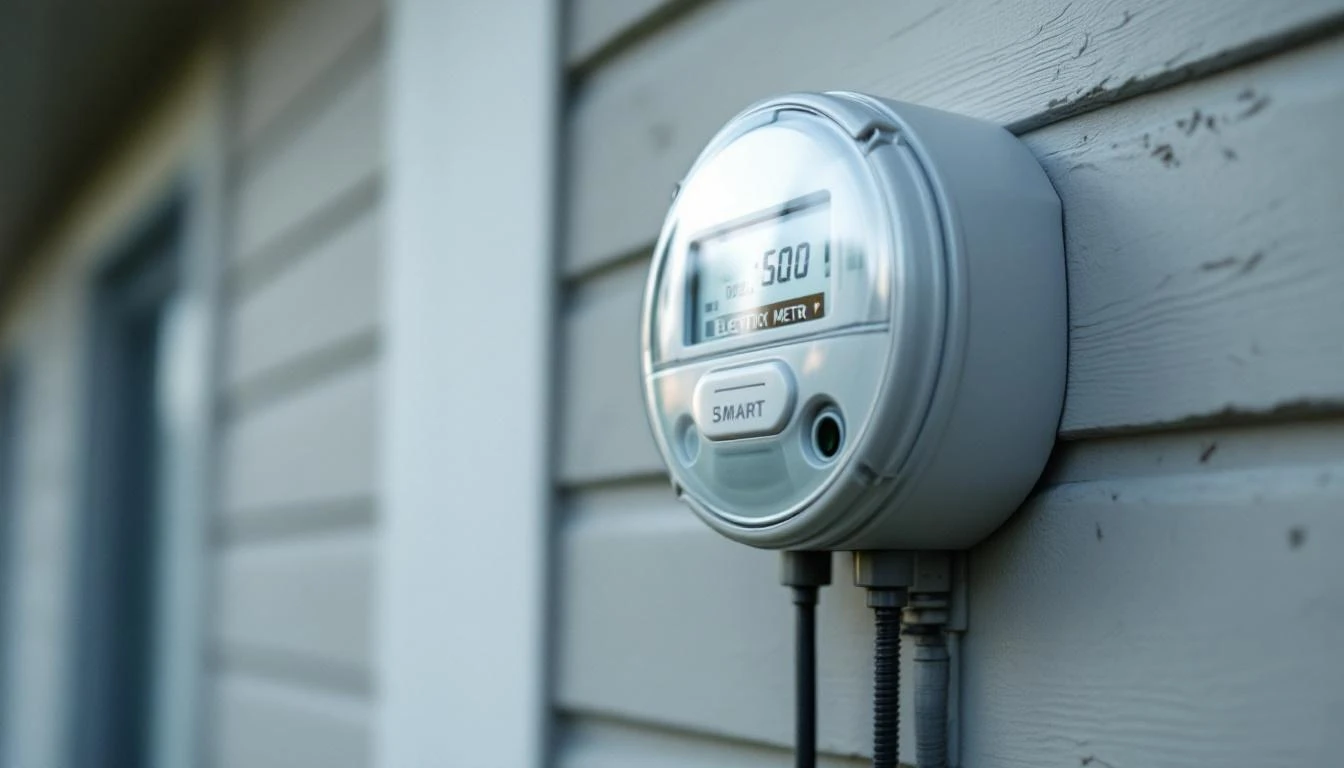
Net metering allows residential wind turbine owners to send excess electricity back to the grid in exchange for credits that offset future consumption. The economic viability of a grid-tie wind system hinges on your state's net metering policy—some states credit surplus generation at full retail rates, while others pay wholesale or nothing at all. Understanding your state's rules, capacity limits, and interconnection standards determines whether a $15,000 Bergey Excel 10 or $8,500 Primus Air 40 makes financial sense or becomes a subsidized gift to your utility.
How net metering works for residential wind systems
When a home wind turbine generates more electricity than the property consumes, the surplus flows into the utility grid through a bidirectional meter. The meter spins backward (or digitally credits the account), storing that production as a kilowatt-hour credit. During low-wind periods or nighttime, the home draws from the grid and consumes those banked credits before paying for additional electricity.
The credit rate matters enormously. Full retail net metering credits surplus generation at the same price the homeowner pays—typically $0.12 to $0.30 per kWh depending on location. Wholesale or "avoided cost" rates pay only what the utility would spend generating that power itself, often $0.02 to $0.05 per kWh. A 10 kW turbine producing 1,200 kWh monthly surplus earns $144 to $360 per month under retail net metering but only $24 to $60 under wholesale rates.
NEC Article 705 governs the interconnection hardware—transfer switches, disconnect boxes, and inverter specifications—but does not mandate that utilities accept surplus power or how they must compensate it. State public utility commissions write those rules.
States with mandatory retail-rate net metering
Thirty-eight states plus Washington DC and four territories maintain net metering policies, but only a subset applies full retail credit to residential wind. California, Massachusetts, New York, and Vermont lead with uncapped or high-capacity retail programs.
California offers net metering 3.0 for systems installed after April 2023. Wind turbines under 1 MW qualify, though the state rolled back some retail export rates for solar (wind retains better treatment since generation peaks differ from solar). Systems banking credits under NEM 3.0 true-up annually, with unused credits expiring or paid at a lower net surplus compensation rate around $0.03 per kWh. Property owners installing before the deadline received grandfathered NEM 2.0 terms—20 years of full retail credit with annual true-up.
Massachusetts caps residential net metering at 60 kW for Class I systems. Wind qualifies as Class I renewable. Credits roll month-to-month indefinitely at retail rates, with annual reconciliation in March. Unused credits convert to monetary payment at 60% of the retail rate. Massachusetts also offers Solar Renewable Energy Credits (SRECs)—wind is excluded from SRECs but can stack net metering with the 30% federal tax credit.
New York allows net metering up to 25 kW for residential wind under its Remote Net Metering and Community Distributed Generation programs. Credits bank indefinitely at retail rates. Consolidated Edison and National Grid territories impose modest interconnection fees ($150–$300 one-time), but monthly charges for grid access do not apply to residential accounts under 25 kW. The Value Stack tariff replaced net metering for large solar in some zones, but small wind remains under traditional NEM.
Vermont extends net metering to systems up to 500 kW, though residential turbines seldom exceed 50 kW. Green Mountain Power and other utilities credit at full retail rate with indefinite monthly rollover. Unused credits at fiscal year-end transfer to the following year. Vermont also maintains a feed-in tariff for systems over 15 kW, offering a fixed $0.125 per kWh for 10 years—a homeowner can elect FIT instead of NEM but cannot combine both.
States with capacity caps and restrictions
Many states nominally support net metering but impose caps that effectively exclude most residential wind turbines.
Texas deregulated electricity markets create patchwork policies. Retail electric providers (REPs) in ERCOT territory are not required to offer net metering. Some REPs, like Green Mountain Energy and Reliant, purchase surplus at wholesale rates ($0.02–$0.04 per kWh), while others refuse interconnection entirely. Municipal utilities outside ERCOT—Austin Energy, CPS Energy in San Antonio—maintain robust net metering up to 20 kW at retail rates. Texas property owners must verify their specific REP's distributed generation policy before investing in a grid-tie wind system.
Florida limits net metering to 2 MW but applies a punitive "grid connection charge" ranging from $30 to $50 monthly for systems over 10 kW. Credits expire annually with no monetary payout for surplus. Florida's investor-owned utilities—Duke, Florida Power & Light, Tampa Electric—have lobbied to further restrict crediting, making the state less attractive for wind despite strong Gulf Coast and panhandle wind resources.
Arizona caps net metering at 125% of historical peak demand. A home with 30 kW peak load can install up to 37.5 kW. Arizona Public Service (APS) moved new installations to an "export rate" plan crediting surplus at $0.10–$0.12 per kWh versus $0.13–$0.16 retail, eroding payback timelines by three to five years. Tucson Electric Power retains full retail NEM for systems installed before 2023.
Nevada revised NEM in 2017 after a controversial 2015 decision slashed credits to $0.02 per kWh. Current policy (NEM 2.0) credits surplus at 75% of retail rate for systems under 25 kW. Credits roll monthly; annual true-up converts excess to a check at 75% retail. The compromise improved economics but still penalizes wind compared to states offering 100% retail credit.
Virtual net metering and community wind
Virtual net metering (VNM) allows property owners to share credits from a single turbine across multiple meters on separate parcels, provided all accounts belong to the same utility. This structure benefits farms with multiple buildings or property owners with detached workshops.
Colorado pioneered community solar gardens and extends VNM to wind. Systems up to 120% of subscribed load qualify. Xcel Energy manages the largest VNM program, crediting participants at retail rate minus a $3 per kW monthly administrative fee. A 10 kW Bergey Excel serving three buildings would incur $30 monthly in fees but allows optimal turbine placement on the windiest part of the property.
Maryland permits VNM for systems up to 2 MW. Credits allocate proportionally among subscribers. A homeowner installing a 20 kW Aeolos-H 20kW can designate 70% of production to the main residence and 30% to a rental unit on the same parcel but separately metered. Maryland maintains full retail credit, making VNM an effective strategy for maximizing turbine utilization.
Oregon allows VNM for community renewable projects up to 25 kW. Portland General Electric and Pacific Power administer programs with minimal fees. Credits allocated to multiple accounts must total no more than 120% of the system's nameplate capacity.
States with limited or no net metering
Fourteen states lack mandatory net metering or restrict it to solar only.
Alabama, Mississippi, South Dakota, and Tennessee have no statewide net metering requirement. Municipal utilities occasionally offer voluntary programs. Huntsville Utilities in Alabama provides retail-rate net metering up to 20 kW; Memphis Light, Gas and Water in Tennessee caps at 50 kW. Homeowners in these states must negotiate directly with their utility or settle for off-grid systems with battery storage.
Idaho enacted net metering in 2023 after years without a mandate. Idaho Power now credits at retail rate for systems under 100 kW, but only 0.1% of the utility's peak demand can come from distributed generation—a cap that effectively rations access. Property owners should apply early; once the cap fills, the utility can refuse new interconnections.
Oklahoma allows net metering only through 2030, after which the policy sunsets unless renewed. Oklahoma Gas & Electric credits at retail rate but charges a monthly "distributed generation rider" of $4.89 per kW, adding $48.90 monthly for a 10 kW turbine. This fee often negates economic benefits unless average wind speeds exceed 13 mph.
Interconnection standards and utility requirements
Even in net metering-friendly states, interconnection red tape can delay or prevent grid-tie wind installations.
IEEE 1547-2018 provides the technical standard for interconnecting distributed energy resources to the grid. All grid-tie inverters must be UL 1741-listed and feature anti-islanding protection—automatically disconnecting when grid voltage or frequency drifts outside tolerance. Bergey, Primus, and Endurance turbines ship with IEEE 1547-compliant inverters; imported brands like Pikasola or generic Chinese turbines often lack UL listing, forcing expensive retrofits or outright rejection by the utility.
Most states adopt a tiered review process. Systems under 10 kW typically qualify for expedited "Level 1" interconnection with minimal engineering review—submit an application, wait 15 to 30 business days, install approved equipment, pass inspection. Systems 10 kW to 50 kW trigger "Level 2" review, requiring fault-current calculations, one-line diagrams, and possible transformer upgrades at the homeowner's expense. Upgrades can cost $2,000 to $8,000, eroding return on investment.
External disconnect switches visible and accessible to utility workers are mandatory in all jurisdictions. NEC 705.22 requires a lockable AC disconnect within 10 feet of the meter, clearly labeled "SOLAR/WIND INTERCONNECTION." Some utilities demand a second disconnect at the turbine base. Non-compliant installations face disconnection and fines up to $500 per day in states like New Jersey.
Liability insurance requirements vary. California, Massachusetts, and New York exempt residential systems under 50 kW. Texas REPs often demand $1 million liability coverage naming the utility as additional insured—adding $300 to $600 annually in premiums. Oklahoma and Arkansas utilities request proof of homeowner's insurance covering wind turbine property damage; standard policies exclude wind turbines, requiring a $200–$400 annual rider.
Financial impact of net metering policies
A 10 kW Bergey Excel 10 costs approximately $48,000 installed (turbine, tower, inverter, trenching, interconnection). At full retail net metering crediting $0.15 per kWh and 30% capacity factor (10 kW × 8,760 hours × 0.30 = 26,280 kWh annual), the turbine generates $3,942 yearly in offset or exported electricity.
After applying the 30% federal Residential Clean Energy Credit (IRC §25D, reducing net cost to $33,600), the simple payback is 8.5 years in a full retail net metering state. In a wholesale-only state crediting $0.03 per kWh, annual benefit drops to $788, extending payback to 42.6 years—well beyond typical turbine lifespan.
| State Scenario | Annual kWh | Credit Rate | Annual Value | Net Cost After 30% Credit | Payback (Years) |
|---|---|---|---|---|---|
| California (NEM 2.0) | 26,280 | $0.16 | $4,205 | $33,600 | 8.0 |
| Massachusetts | 26,280 | $0.22 | $5,782 | $33,600 | 5.8 |
| Texas (wholesale REP) | 26,280 | $0.03 | $788 | $33,600 | 42.6 |
| Oklahoma (retail minus $4.89/kW fee) | 26,280 | $0.11 effective | $2,303 | $33,600 | 14.6 |
| Alabama (no NEM) | 26,280 | $0.00 | $0 | $33,600 | N/A |
Property owners should model payback using their actual utility rate, local average wind speed from wind resource maps, and confirmed net metering policy. The Database of State Incentives for Renewables & Efficiency (DSIRE) maintains current state policies.
State incentive programs stacking with net metering
Net metering is only one revenue stream. Several states offer additional incentives that dramatically improve economics.
New York provides the Megawatt Block Incentive—upfront rebates of $0.50 to $1.50 per watt for residential wind, depending on block and utility zone. A 10 kW system qualifies for $5,000 to $15,000, stacking with the 30% federal credit and net metering.
Massachusetts runs the Alternative Energy Property Tax Exemption, exempting 100% of wind system value from property tax for 20 years. In towns with $15 per $1,000 assessed value rates, a $48,000 turbine avoids $720 annual property tax.
Oregon offers the Residential Energy Tax Credit (RETC) for up to 50% of system cost, capped at $6,000. Combined with federal credit and full retail net metering through Portland General Electric, Oregon ranks among the top ROI states despite moderate wind resources.
Iowa allows systems under 500 kW to claim retail net metering and offers property tax exemption on added home value from wind installations. MidAmerican Energy also purchases Renewable Energy Certificates (RECs) from small wind at $0.01 to $0.015 per kWh—minor additional income but enough to trim payback by a year.
FAA Part 77 and net metering eligibility
Federal Aviation Administration Part 77 regulations require notice for structures exceeding 200 feet above ground level near airports or heliports. Most residential wind towers stay below 120 feet, avoiding FAA review. Turbines sited within five miles of public airports may require notice even under 200 feet if they penetrate imaginary surfaces extending from runways.
Utilities occasionally cite FAA concerns to deny interconnection, though FAA approval is separate from net metering eligibility. A "Determination of No Hazard" from the FAA does not compel a utility to offer net metering, but lack of FAA notice can void homeowner's insurance and municipal permits, indirectly killing grid-tie economics.
Property owners should file FAA Form 7460-1 at least 45 days before construction. The review takes 30 to 60 days. Approvals are free; denials are rare for residential-scale turbines outside approach zones.
Month-to-month credit rollover vs annual true-up
Net metering policies handle surplus credits in two ways: indefinite month-to-month rollover or annual true-up with expiration.
Indefinite rollover (Massachusetts, New York, Vermont) allows credits to accumulate without expiration. A homeowner generating 2,000 kWh surplus in March can consume those credits in June or December. This structure maximizes value in seasonal wind regimes—Great Plains states see strongest winds November through April, while household electricity peaks in summer air conditioning. Banking winter surplus for summer use captures full retail value.
Annual true-up (California NEM 3.0, Nevada, Oregon) reconciles accounts once yearly. Unused credits beyond consumption are paid out at a reduced rate or forfeited. A system generating 30,000 kWh annually in a home consuming 25,000 kWh banks 5,000 kWh of surplus. Under California NEM 3.0, that surplus pays at $0.03 per kWh instead of $0.20 retail—losing $850 in value. Proper system sizing matters; oversizing a turbine relative to load guarantees value loss.
Municipal utilities vs investor-owned utilities
Municipal utilities and rural electric cooperatives often provide more favorable net metering than investor-owned utilities (IOUs). Municipalities answer to local voters rather than shareholders, reducing adversarial rate structures.
Austin Energy (Texas municipal) offers full retail net metering up to 20 kW with indefinite rollover. CPS Energy (San Antonio municipal) mirrors that policy. Both contrast sharply with Texas IOUs that refuse interconnection or pay wholesale.
Lafayette Utilities System (Louisiana municipal) provides retail net metering up to 25 kW, while Entergy Louisiana (IOU covering most of the state) caps at 10 kW and credits at avoided cost ($0.025 per kWh).
Holy Cross Energy (Colorado cooperative) offers simplified interconnection for systems under 25 kW with retail credit and no monthly fees. Xcel Energy (Colorado IOU) charges $4 per month grid access fees for systems over 10 kW.
Homeowners served by municipal or cooperative utilities should verify local policy before assuming statewide IOU rules apply. The American Public Power Association maintains a directory of municipal utilities.
Impact of time-of-use rates on wind net metering
Time-of-use (TOU) rates charge higher prices during peak demand hours—typically 4 PM to 9 PM. Wind generation that aligns with evening peaks earns premium credits; generation during low-value midday or overnight hours earns less.
Great Plains wind regimes favor evening and nighttime generation, particularly in spring. A 10 kW Primus Air 40 in Kansas producing 60% of monthly output between 5 PM and midnight captures $0.18 to $0.26 per kWh TOU credits versus $0.09 off-peak. Annual value increases 40% to 60% compared to flat-rate net metering.
Conversely, coastal wind regimes peaking midday during sea breezes suffer under TOU rates. California NEM 3.0 pairs with TOU by default; coastal homeowners exporting 70% of generation during $0.08 midday rates see diminished ROI.
Property owners considering net metering should review whether their utility mandates TOU for distributed generation accounts and model turbine generation timing against rate schedules. Time-stamped generation data from installed turbines in similar locations (available from manufacturers or user forums) informs accurate projections.
Requesting net metering after system installation
Most states require net metering applications before or concurrent with interconnection. Retrofitting a battery-only off-grid system for grid-tie and requesting net metering post-installation triggers re-inspection, new interconnection fees, and occasionally disqualification from legacy rate structures.
California grandfathered NEM 2.0 systems must have applied before April 14, 2023. Systems interconnected after that date fall under NEM 3.0 regardless of when turbines were purchased or installed. Homeowners who erected turbines in 2022 but delayed interconnection until 2024 forfeit 20 years of full retail credit—a $40,000 to $60,000 mistake on a 10 kW system.
New Jersey allows net metering applications up to 90 days post-installation but voids qualification for Transition Renewable Energy Certificates (TRECs) if paperwork lags. TRECs pay $90 to $150 per MWh for small wind; missing the filing window costs $2,000 to $4,000 annually on a 10 kW turbine.
Property owners should submit interconnection and net metering applications simultaneously, even if construction is months away. Approvals take 60 to 180 days depending on utility backlog. Delaying paperwork risks rule changes, rate downgrades, or outright denial.
How neighbor disputes affect net metering eligibility
Wind turbines trigger more neighbor complaints than rooftop solar—height, noise, shadow flicker, and visual impact fuel opposition. Some utilities cite neighbor objections to deny interconnection, though no state formally grants neighbors veto power over net metering.
Wisconsin allows utilities to consider "community impact" in interconnection reviews. Objections from adjacent property owners can delay approval while the utility requests noise studies or turbulence modeling. Legal challenges by neighbors occasionally force turbine removal before net metering activates.
Ohio utilities must approve interconnection for compliant systems but can impose setback conditions that de facto prevent installation. American Electric Power requires turbines to sit 10 times their total height from all property lines; a 100-foot tower needs 1,000 feet of setback, impossible on standard residential lots.
Property owners should document noise levels with manufacturer spec sheets (Bergey Excel 10: 35 dBA at 50 feet), comply with local zoning setbacks, and secure written easements from immediately adjacent neighbors before applying for net metering. Litigation costs exceed turbine costs; proactive neighbor relations prevent utility denial on "public interest" grounds.
Does the 30% federal tax credit apply if my state lacks net metering?
Yes. The IRC §25D Residential Clean Energy Credit applies to qualifying wind turbines regardless of state net metering policy. A homeowner in Alabama installing a $48,000 Bergey Excel claims $14,400 federal credit on IRS Form 5695 even though Alabama offers no net metering. The credit reduces net cost to $33,600, though lack of NEM means the turbine offsets only direct consumption, not exported generation. Off-grid systems with battery storage also qualify for the credit.
Can I net meter if my turbine is on a tower over 100 feet and FAA denies the application?
No. A FAA Determination of Hazard prevents legal construction and operation. Utilities will not interconnect a turbine violating federal aviation regulations. Even if built before denial, the utility can force disconnection to avoid liability. Property owners who proceed anyway face FAA fines up to $27,000 per violation, voided homeowner's insurance, and municipal cease-and-desist orders. File FAA Form 7460-1 early; if denied, redesign the installation with a shorter tower or relocate the turbine farther from the airport approach zone.
Do unused net metering credits transfer if I sell the house?
State policies vary. California, Massachusetts, and New York credits remain with the property; the new owner inherits banked credits at closing. Oregon and Colorado credits belong to the account holder; sellers must true-up and forfeit or monetize unused credits before transferring title. Nevada and Arizona credits zero out at ownership change. Buyers should verify net metering account status during due diligence and negotiate credit value in the purchase agreement. Transferring grandfathered net metering rates (California NEM 2.0, Arizona legacy NEM) dramatically increases property value—$10,000 to $30,000 depending on banked credits and remaining rate guarantee years.
Can I use net metering with a hybrid wind-solar system?
Yes. All state net metering policies accommodate multiple generation sources on a single meter. The utility tracks total surplus production, not individual source contributions. A property installing a 10 kW Bergey Excel and 8 kW rooftop solar array combines both outputs; surplus from either or both feeds the grid and earns credits at the same rate. System sizing must respect aggregate capacity caps—if state policy caps net metering at 25 kW, the combined system must stay below that threshold. Interconnection applications require separate one-line diagrams for each source but process as a single review. Hybrid systems smooth seasonal generation, pairing winter wind with summer solar.
What happens if my utility cancels net metering after I install the turbine?
Most states grandfather existing systems under legacy rates for 10 to 20 years. California NEM 2.0 systems receive 20-year rate protection regardless of future policy changes. New York and Massachusetts offer indefinite grandfathering until the customer disconnects the system or moves. Utilities can modify terms for new applicants but rarely revoke active accounts. Nevada's 2015 retroactive NEM cancellation triggered lawsuits and legislative reversal; no state has successfully retroactively eliminated net metering since. Property owners in states with strong consumer protection laws (Massachusetts, New York, Oregon) face minimal risk. Buyers in states with shifting political landscapes (Arizona, Nevada, Florida) should purchase systems with standalone economic viability even without net metering—optimizing self-consumption reduces reliance on uncertain utility crediting.
Bottom line
Net metering determines whether residential wind turbines are financial winners or expensive hobbies. Property owners in Massachusetts, Vermont, California (NEM 2.0 grandfathered), and New York enjoy full retail crediting, indefinite rollover, and payback timelines under 10 years. Those in Alabama, Texas deregulated zones, or states with wholesale crediting face 40-year paybacks or negative returns. Verify your utility's specific net metering policy, capacity caps, interconnection fees, and credit rollover rules before purchasing a turbine—state mandates mean nothing if your local utility exempts itself through loopholes. Use DSIRE to confirm current incentives, consult a licensed electrician familiar with NEC Article 705 and IEEE 1547-2018 requirements, and model payback with accurate local wind data. The right combination of wind resource, net metering structure, and federal tax credit makes residential wind competitive with grid electricity; the wrong combination produces a $50,000 lawn ornament.
Share this article
windturbinehome.com/s/8607e6
Editorial note: This article was researched and written by a member of the Wind Turbine Home editorial team. AI-assisted tools were used for spell-checking and light grammar review only — all research, analysis, and conclusions are our own. Our editorial policy prohibits sponsored content and paid placements. Read our editorial policy →
Related reading
grid tie net metering
Wind Turbines in a Power Outage: Why Most Shut Down
Grid-tied wind turbines shut down the instant the power fails, by design. Learn what anti-islanding protection does and how battery backup changes that.
grid tie net metering
How to File a Utility Interconnection Application for Small Wind
Filing a utility interconnection application requires an IEEE 1547-compliant inverter, site plans, electrical diagrams, and proof of insurance—often taking 30-90 days for approval.
grid tie net metering
Smart Export Guarantee for Wind in the UK: How SEG Payments Work
The Smart Export Guarantee pays UK households for surplus electricity from small wind turbines. Compare tariffs, understand eligibility, and maximise export revenue.
grid tie net metering
Connecting a Wind Turbine to the Grid: NEC 705 & Utility Paperwork
Grid-tied small wind turbines require NEC Article 705 compliance, utility interconnection agreements, and net-metering approval before energizing.