How to File a Utility Interconnection Application for Small Wind
Filing a utility interconnection application requires an IEEE 1547-compliant inverter, site plans, electrical diagrams, and proof of insurance—often taking 30-90 days for approval.
Share this article
windturbinehome.com/s/fc7d4b
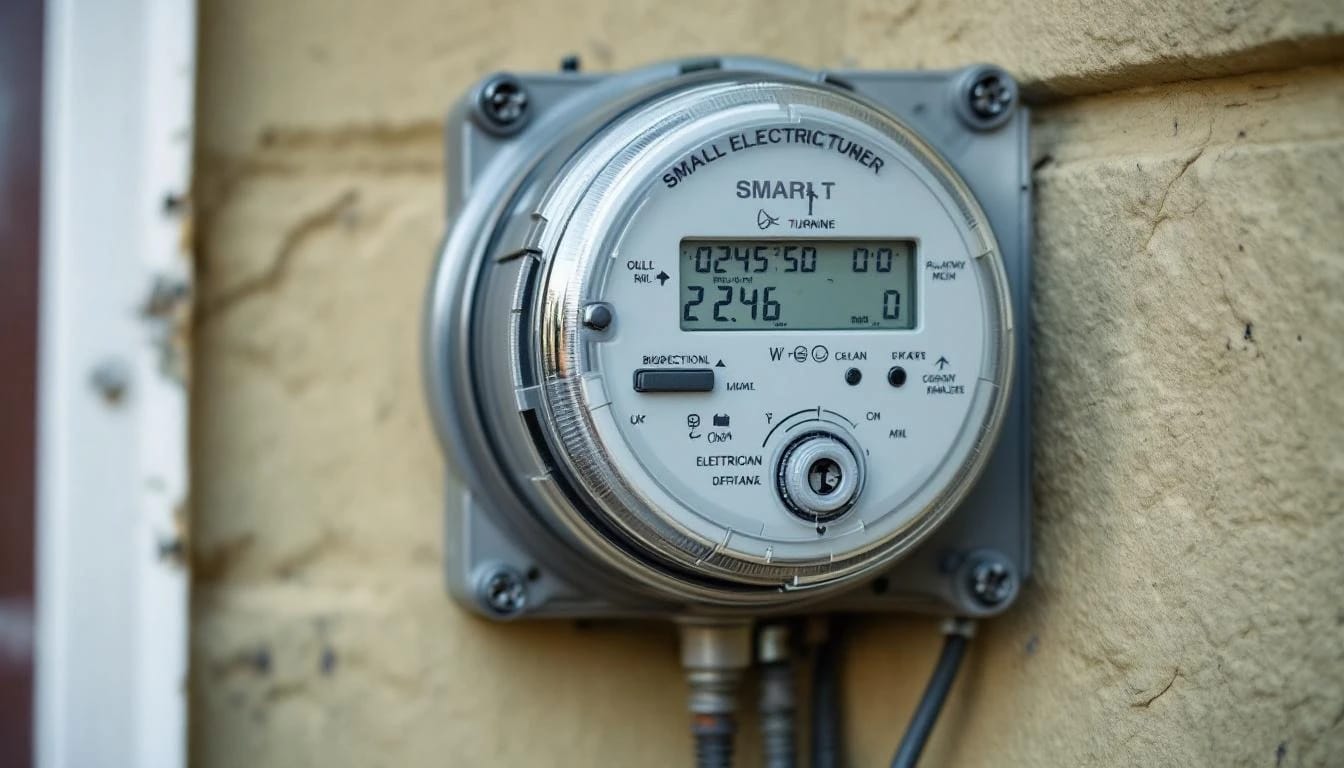
Filing a utility interconnection application connects your small wind turbine to the electric grid, enabling net metering and backup power draws. Most utilities require an IEEE 1547-compliant inverter, a single-line electrical diagram, site plans showing turbine location and setbacks, proof of liability insurance, and confirmation that your system meets NEC Article 705 standards. The review process typically spans 30 to 90 days, depending on system size and local utility protocols. Smaller systems under 10 kW often qualify for expedited "fast-track" approval, while larger installations trigger detailed engineering studies that can extend timelines and add fees.
Understanding interconnection tiers and eligibility
Electric utilities classify grid-tied wind systems into tiered approval tracks based on capacity. Systems below 10 kW usually enter Level 1 or "simplified" interconnection, which demands minimal documentation and waives impact studies. Between 10 kW and 25 kW, Level 2 applications require supplemental technical data—inverter spec sheets, anti-islanding certificates, and sometimes witness testing. Above 25 kW, Level 3 or "standard" review initiates power-quality modeling, transformer-capacity assessments, and coordination with the local distribution engineer.
Most residential vertical-axis turbines (Pikasola 5 kW, Aeolos-V 3 kW) and small horizontal-axis models (Primus Air 40, Bergey Excel 10) fall into the first two tiers. Confirm your nameplate rating before submitting paperwork; inverter output, not rotor rating, determines tier assignment. If you plan to add battery storage later, note that capacity in the initial application—some utilities treat AC-coupled batteries as separate interconnection requests.
State public-utility commissions publish standard interconnection agreements. Check the Database of State Incentives for Renewables & Efficiency to locate your utility's tariff and template forms. Many investor-owned utilities also post application portals online, while municipal co-ops may require mailed paper packets.
![INLINE: Homeowner reviewing utility interconnection checklist at desk with turbine diagrams and laptop]
Gathering mandatory technical documentation
Every interconnection application demands an equipment list and electrical schematic. The single-line diagram must show the turbine, inverter, AC disconnect, production meter, net meter, main service panel, and grounding electrode system. Label wire gauges, conduit types, overcurrent-protection ratings, and the point of common coupling. Utilities reject hand-drawn sketches; use software such as AutoCAD Electrical, SolidWorks Electrical, or the free Sweet Home 3D with electrical plugins.
Include manufacturer cut-sheets for the inverter and turbine. The inverter datasheet must confirm IEEE 1547-2018 compliance, display UL 1741 SA certification (if in California or Hawaii), and list anti-islanding response times under 2 seconds. For the turbine, attach the nameplate power curve, hub-height specification, rotor diameter, and rated wind speed. If you installed a surge-protection device per NEC Article 705.20, append its spec sheet and installation photo.
Site plans require a to-scale plot showing property boundaries, the turbine foundation, guy-anchor locations (if guyed), existing structures, setback distances to lot lines, overhead utility lines, and underground service laterals. Many utilities request a stamped survey from a licensed land surveyor—budget $400 to $800 for this document. Mark prevailing wind direction with an arrow and note terrain features that affect wake turbulence.
Proof of liability insurance protects the utility against third-party claims. Most utilities demand $300,000 to $1,000,000 aggregate coverage naming them as additional insured. Homeowner policies rarely include turbine coverage by default; contact your agent to add an endorsement or purchase standalone renewable-energy liability insurance. Expect annual premiums between $200 and $600 for a residential system.
Completing the application form step-by-step
Standard interconnection forms request applicant contact details, system capacity, inverter make and model, expected commissioning date, and electrician-of-record information. Fill fields exactly as they appear on permits and deeds—mismatched names delay processing. For "estimated annual production," multiply your turbine's nameplate kW by site capacity factor (typically 15–30 % for residential installations) and 8,760 hours. A Bergey Excel 10 at 20 % capacity factor yields roughly 17,520 kWh per year.
The "interconnection voltage" field should read "120/240 V single-phase" for most homes or "120/208 V three-phase" for commercial sites. Check your main breaker panel label if unsure. Under "proposed operation mode," select "net metering" to export surplus generation or "self-consumption only" if local regulations prohibit exports. Net metering enables credit banking; self-consumption mode requires battery storage or load-following logic.
Signature blocks often include an electrician's seal and date. NEC Article 705.12(D)(7) mandates that all utility-interactive inverters and associated disconnects be installed by a licensed electrician or under direct supervision. Attach the electrician's state license number and expiration date. Some utilities accept trainee signatures if a supervising master electrician co-signs.
Navigating utility review and supplemental requests
Once submitted, the utility assigns a case number and forwards your packet to an interconnection coordinator. Level 1 applications receive initial review within 10 business days; Level 2 and 3 tracks allow up to 20 business days. The coordinator verifies that your inverter appears on the pre-approved equipment list, checks transformer capacity on your feeder circuit, and confirms compliance with state interconnection standards.
Expect at least one round of supplemental requests. Common asks include updated site photos showing guy-wire anchors, a grounding-electrode resistance test report (NEC Article 705.50 requires ≤25 ohms for most systems), or clarification on islanding-detection settings. Respond within the stated deadline—typically 15 calendar days—or the application resets to the back of the queue. If you lack technical expertise, hire the turbine installer or a consulting engineer to draft responses; fees range from $150 to $500 per revision cycle.
Utilities may order a distribution-impact study if your system approaches feeder-capacity limits or if neighboring generators create cumulative export concerns. Studies cost $1,000 to $5,000 and examine voltage rise, fault-current contributions, and harmonic distortion. Results sometimes mandate upgraded transformers or line regulators—expenses the applicant must cover. To avoid studies, keep system size below 50 % of the minimum daytime load on your service lateral.
Installing required metering and disconnect hardware
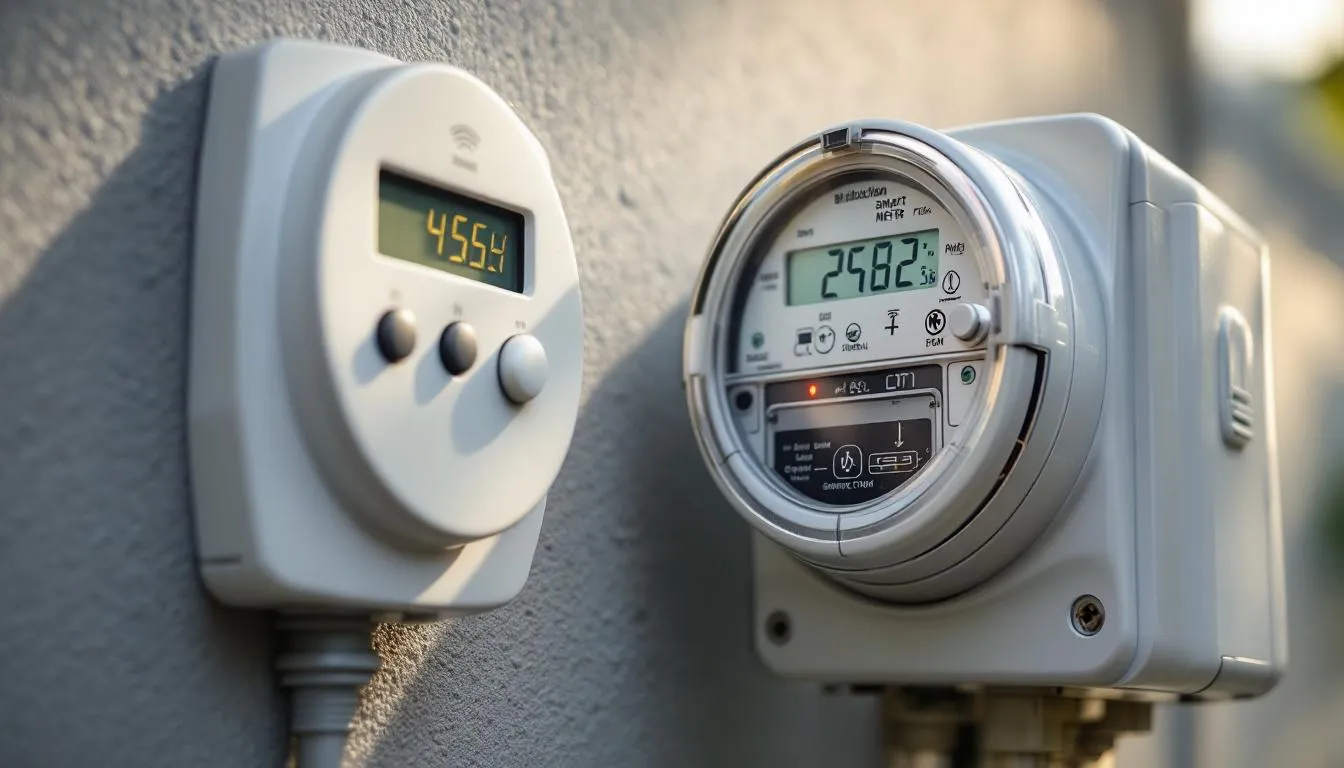
Approval letters specify metering arrangements. Net-metered systems require bidirectional meters that record imports and exports separately; the utility typically swaps your existing meter at no charge. Production-only metering—common in feed-in-tariff jurisdictions—needs a second revenue-grade meter on the inverter AC output. Confirm pulse-output compatibility if you want real-time monitoring; Modbus RTU or RS-485 protocols integrate with home-automation platforms.
NEC Article 705.12 mandates a readily accessible AC disconnect within sight of the utility meter. Mount a lockable, weather-rated, non-fused safety switch (NEMA 3R enclosure minimum) with a "Solar/Wind Disconnect" or "Generator Disconnect" label per NEC 705.10. Some utilities furnish custom padlocks; others accept utility-grade hasps. Place the disconnect on an exterior wall within 10 feet of the meter socket to satisfy line-of-sight requirements.
Grounding and bonding follow NEC Article 250. Drive an 8-foot copper-clad ground rod within 6 feet of the inverter, bond the turbine tower and inverter chassis to this electrode with #6 AWG bare copper, and run an equipment-grounding conductor back to the main service panel. If soil resistivity exceeds code limits, install supplemental rods or a ground ring. Document resistance with a fall-of-potential test and submit results before final inspection.
| Interconnection Tier | Capacity Range | Typical Timeline | Study Required? | Average Cost (Fees + Hardware) |
|---|---|---|---|---|
| Level 1 (Simplified) | ≤10 kW | 15–30 days | No | $100–$500 |
| Level 2 (Fast-Track) | 10–25 kW | 30–60 days | Screens only | $500–$1,500 |
| Level 3 (Standard) | >25 kW | 60–120 days | Yes | $2,000–$8,000 |
Coordinating final inspections and commissioning
Before energizing the system, schedule inspections with the local authority having jurisdiction and the utility. The AHJ inspector verifies NEC compliance: wire sizing, conduit fill, overcurrent protection, labeling, and grounding. Common defects include missing equipment-bonding jumpers, incorrect breaker ratings in the main panel, and absent arc-fault or ground-fault labels. Corrections cost $100 to $300 in parts plus re-inspection fees of $50 to $150.
Utility commissioning visits confirm meter installation, disconnect operation, and anti-islanding function. The field technician may ask you to simulate a grid outage by opening the main breaker while the turbine runs; the inverter should cease output within 2 seconds. Bring your inverter manual and IEEE 1547 certificate to the appointment. Some utilities waive witness testing for pre-certified inverters, granting permission to operate (PTO) immediately after AHJ sign-off.
Obtain PTO in writing—email or a stamped letter—before exporting power. Operating without PTO violates interconnection agreements and may trigger disconnection or financial penalties. Once authorized, activate net metering by submitting IRS Form 5695 with your federal tax return to claim the 30 % Residential Clean Energy Credit under IRC §25D. This credit covers equipment, installation labor, permitting fees, and interconnection costs through 2032, stepping down to 26 % in 2033 and 22 % in 2034.
Avoiding common application pitfalls
Missing or expired electrician licenses account for one-third of initial rejections. Verify that your contractor holds an active state electrical license and that the license number matches state-board records. If the installer is out-of-state, confirm reciprocity agreements or hire a local electrician to supervise final connections and co-sign the application.
Inverter non-compliance is the second leading cause of delays. Not all grid-tie inverters meet current IEEE 1547-2018 voltage-ride-through and frequency-ride-through requirements. Older models certified under IEEE 1547-2003 may require firmware updates or replacement. Cross-reference your inverter serial number with the manufacturer's compliance matrix before purchase. Primus WindPower, Bergey Windpower, and Midnite Solar publish updated compatibility lists on their support pages.
Underestimating timelines strains budgets. Factor in 60 to 90 days from application submission to PTO for Level 1 systems, and 120 to 180 days for Level 2 or 3. Delays compound if your utility operates a first-come, first-served queue saturated with solar applications. Submit paperwork in autumn or winter when application volumes dip and engineering staff bandwidth improves.
Ignoring FAA notification requirements creates legal exposure. NEC does not govern tower height, but FAA Part 77 requires notification for structures exceeding 200 feet above ground level or within airport approach zones. File FAA Form 7460-1 at least 45 days before construction if your tower might exceed thresholds. Turbines on rooftops or short towers (under 35 feet) typically fall below Part 77 triggers.
Can I submit the interconnection application before installing the turbine?
Yes. Utilities accept pre-construction applications to reserve queue position and lock in net-metering rates. Include a purchase order or signed contract as proof of intent. Final approval requires witness testing, so leave a 30-day buffer between PTO and your planned energization date.
What happens if my utility denies the application?
Denial letters must cite specific technical or safety deficiencies. Common reasons include transformer-capacity constraints, voltage-regulation conflicts, or non-compliant equipment. Request a written explanation referencing utility tariff sections, then engage a professional engineer to propose mitigation—such as inverter power-factor settings or upgraded service-entrance conductors. State PUCs often provide dispute-resolution services if denials appear arbitrary.
Do I need separate interconnection agreements for battery storage?
It depends on system architecture. DC-coupled batteries behind the inverter count as part of the original interconnection capacity. AC-coupled batteries with separate inverters may trigger a new application if total export capacity exceeds the approved limit. Disclose storage plans upfront to avoid later amendments and fees.
How long does net-metering credit last?
Policies vary by state. Many jurisdictions offer 12-month rolling credit banks, expiring unused kWh annually. Others provide indefinite credit or cash-out options at wholesale rates. California's NEM 3.0, for example, resets credits monthly and compensates exports at avoided-cost rates rather than retail. Review your utility's net-metering rider or consult DSIRE for jurisdiction-specific rules.
Can homeowners submit interconnection applications without an electrician?
Most utilities require a licensed electrician signature for systems over 1 kW. Owner-builder exemptions exist in some states for off-grid systems, but grid-tied installations fall under stricter oversight due to public-safety implications. Attempting a DIY submission without proper credentials risks rejection and forfeits any liability protection the utility might extend to professionally installed systems.
Bottom line
Filing a utility interconnection application demands IEEE 1547-compliant equipment, accurate electrical diagrams, site documentation, and liability insurance—but the payoff is decades of net-metered generation and federal tax credits. Start the process 90 days before your target commissioning date to absorb review cycles and inspection scheduling. Work with a licensed electrician familiar with NEC Article 705, and confirm that your turbine and inverter appear on your utility's pre-approved equipment list. Once you receive written permission to operate, activate net metering through your utility account portal and claim the 30 % Residential Clean Energy Credit on IRS Form 5695. For state-specific incentive programs and interconnection templates, explore the Database of State Incentives for Renewables & Efficiency and your utility's renewable-energy page.
Share this article
windturbinehome.com/s/fc7d4b
Editorial note: This article was researched and written by a member of the Wind Turbine Home editorial team. AI-assisted tools were used for spell-checking and light grammar review only — all research, analysis, and conclusions are our own. Our editorial policy prohibits sponsored content and paid placements. Read our editorial policy →
Related reading
grid tie net metering
Wind Turbines in a Power Outage: Why Most Shut Down
Grid-tied wind turbines shut down the instant the power fails, by design. Learn what anti-islanding protection does and how battery backup changes that.
grid tie net metering
Net Metering for Residential Wind Turbines: State-by-State Guide
Net metering policies for residential wind turbines vary dramatically by state. Learn which states offer full retail credit, what caps apply, and how to maximize your grid-tie system's ROI.
grid tie net metering
Smart Export Guarantee for Wind in the UK: How SEG Payments Work
The Smart Export Guarantee pays UK households for surplus electricity from small wind turbines. Compare tariffs, understand eligibility, and maximise export revenue.
grid tie net metering
Connecting a Wind Turbine to the Grid: NEC 705 & Utility Paperwork
Grid-tied small wind turbines require NEC Article 705 compliance, utility interconnection agreements, and net-metering approval before energizing.