Wind Turbines in a Power Outage: Why Most Shut Down
Grid-tied wind turbines shut down the instant the power fails, by design. Learn what anti-islanding protection does and how battery backup changes that.
Share this article
windturbinehome.com/s/181682
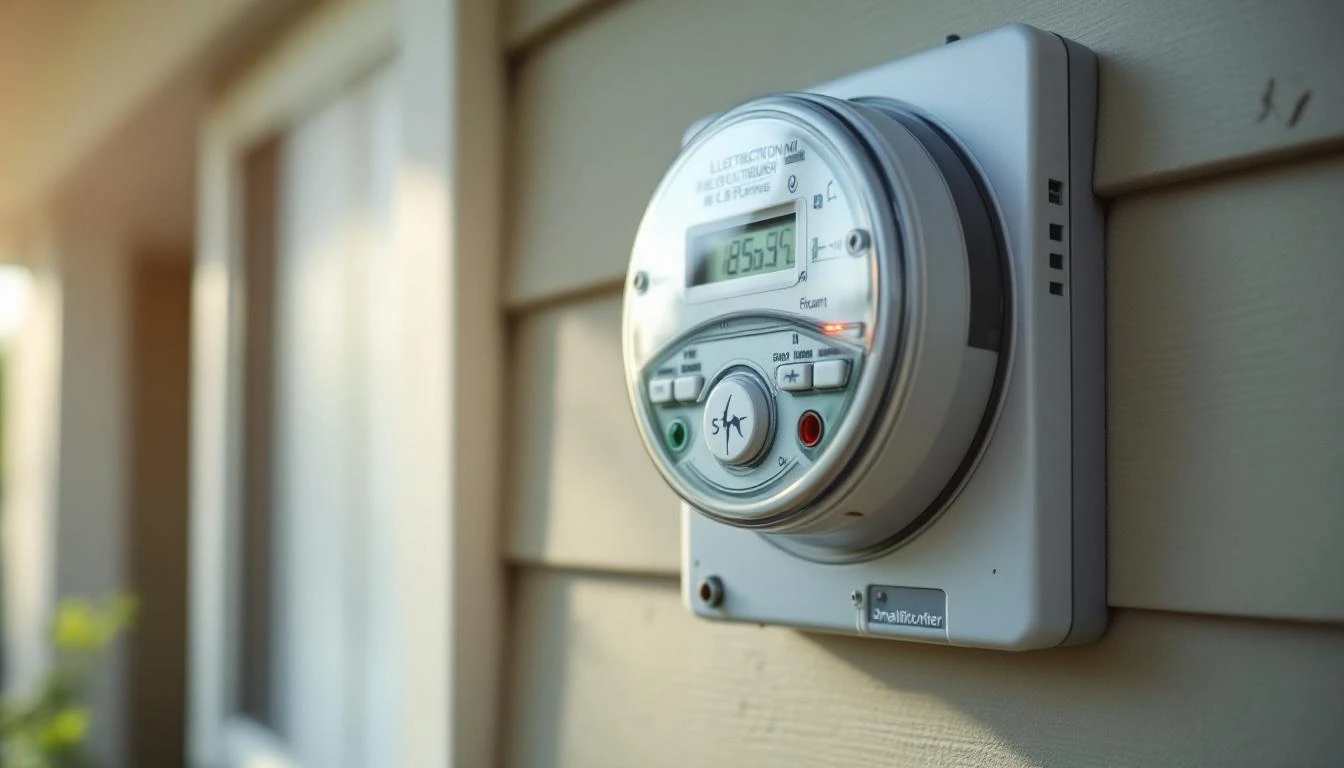
When the grid goes down, most grid-tied residential wind turbines go silent—even on a windy day. This counterintuitive reality confuses new turbine owners who assume their micro-grid will keep the lights on. The culprit is anti-islanding protection, an NEC-mandated safety feature that disconnects your turbine from your home circuits the moment utility power fails. Grid-tied inverters for wind systems—including models from Bergey, Primus, and Aeolos—comply with IEEE 1547 and UL 1741, both of which require immediate shutdown when line voltage or frequency drifts outside narrow tolerances. Battery-based hybrid systems and permitted islanding configurations can restore backup power, but only with specific hardware, permits, and electrical design.
What islanding means in a residential wind system
Islanding occurs when a distributed generator continues to supply power to a section of the utility grid after that section has been isolated from the main supply. In a home context, your turbine becomes an "island" of generation feeding not only your house but also the transformer and service lines shared with neighbors. Utility crews working to restore power expect de-energized wires; an islanded turbine can backfeed lethal voltage onto those lines, creating an electrocution hazard. Beyond worker safety, islanding risks equipment damage. Without grid voltage and frequency as a reference, inverters can produce poor-quality power—voltage sags, frequency wander, harmonic distortion—that damages sensitive electronics and motors.
NEC Article 705.40 requires all interconnected power sources to cease exporting energy when the utility supply is interrupted. IEEE 1547-2018 sets the technical standard: anti-islanding protection must detect loss of utility within two seconds and open the disconnect. Modern grid-tie inverters for wind meet this by continuously monitoring AC voltage magnitude, frequency, and phase angle. If any parameter drifts beyond preset thresholds (typically ±10% voltage, ±0.5 Hz frequency), the inverter trips offline and opens internal contactors. The turbine itself keeps spinning and generating DC power, but that energy is either dumped into a resistive load bank or the turbine shifts to a passive furling mode, depending on the controller design.
![INLINE: Grid-tied wind turbine inverter with anti-islanding protection circuit board closeup]
Why anti-islanding is non-negotiable under NEC and IEEE 1547
Utility interconnection agreements uniformly require UL 1741-listed inverters, which embed anti-islanding functions in firmware. The 2020 NEC strengthened requirements in 705.12 for supply-side and load-side connections, mandating visible, lockable disconnects and labeling that identifies all power sources. Inspectors check for compliant inverters during the interconnection inspection; non-compliant equipment fails the permit. State Public Utility Commissions enforce these rules through their interconnection tariffs.
The physics behind anti-islanding detection relies on active and passive methods. Passive detection monitors voltage and frequency continuously; active detection injects small disturbances—brief reactive power pulses or frequency shifts—and measures the grid's response. A stiff, healthy grid absorbs these perturbations without noticeable change. An islanded section, with only your turbine as a source, reacts sharply, triggering the inverter's disconnect relay. Manufacturers tune these algorithms to balance speed (fast trip) against nuisance trips (wind gusts causing voltage flicker). Primus Wind Power's grid-tie controllers, for example, use a dual-layer scheme that combines under/over-voltage, under/over-frequency, and rate-of-change-of-frequency (ROCOF) thresholds.
Grid-tied wind turbines go dark during blackouts
A standard grid-tied system—turbine, charge controller or rectifier, grid-tie inverter, breaker panel—delivers zero backup power when the utility fails. The inverter detects the outage within one to two seconds, isolates itself, and your home goes dark. The turbine continues to spin, but its energy has nowhere to go. Some controllers divert excess power into a dump load—a bank of resistors that dissipate kilowatts as heat—to prevent overspeed. Others rely on the turbine's internal braking: aerodynamic stall, electromagnetic braking coils, or mechanical blade-pitching. The Bergey Excel 10 uses electromagnetic dynamic braking, which creates drag on the alternator rotor, slowing the blades during grid loss. Without this protection, an unloaded turbine in strong wind can overspeed and suffer mechanical failure.
Homeowners often discover this limitation after their first blackout. The turbine is spinning, the blades are generating power, but the fridge and well pump are off. No amount of manual switching or breaker-flipping will restore power unless you reconfigure the system with island-capable hardware.
Battery-based hybrid systems enable true backup power
Adding a battery bank between the turbine and the inverter transforms a grid-tied system into a hybrid that can island legally and safely. The battery acts as an energy buffer and voltage reference, allowing a hybrid inverter—also called a multimode or battery-based inverter—to form a stable AC output independent of the grid. Popular hybrid inverters include the OutBack Radian, Schneider Electric Conext XW+, and SMA Sunny Island. These units comply with UL 1741 SA (the supplement that permits advanced inverter functions) and support configurable islanding modes.
In a hybrid setup, the turbine charges the battery bank via a charge controller or rectifier. The hybrid inverter draws from the battery to supply household loads, simultaneously managing grid connection when utility power is present. When the grid fails, the inverter detects the loss, opens the utility disconnect, and continues to synthesize AC power from the battery. Critical loads—refrigerator, internet router, well pump, lights—remain energized as long as the battery has capacity and the turbine (or solar array) can recharge it. The inverter never backfeeds the grid during islanding because a mechanical or solid-state transfer switch physically isolates the home from utility wiring.
NEC 705.12(D) and 705.40 still apply: the system must include a rapid shutdown mechanism, proper labeling, and a manual disconnect accessible to utility workers. A licensed electrician designs the load panel to separate critical and non-critical circuits. During a blackout, the inverter powers only the critical subpanel, reducing draw and extending battery runtime. Installation costs rise due to the battery bank—lithium iron phosphate (LiFePO₄) packs range from $6,000 to $15,000 for 10-20 kWh—and additional hardware: charge controllers, battery enclosures, DC combiner boxes, and monitoring systems.
How much backup runtime a wind-plus-battery system provides
Runtime depends on four variables: battery capacity (kWh), turbine output (kW at current wind speed), load demand (kW), and wind availability during the outage. A 10 kWh LiFePO₄ bank paired with a Bergey Excel 10 (rated 10 kW at 13 m/s) under continuous 8 m/s wind (~3.5 kW production) can power a 1.5 kW critical load indefinitely, with surplus recharging the battery. If wind drops to zero, that same 10 kWh bank delivers 6.7 hours at 1.5 kW draw before depletion.
Real-world conditions complicate the math. Wind speeds fluctuate minute-to-minute. Nighttime outages offer no solar contribution if the system includes PV. Cold weather reduces battery capacity—LiFePO₄ cells lose 10-20% capacity below freezing—and increases heating loads. Hybrid inverters incorporate battery management algorithms that prevent deep discharge (cutoff at 10-20% state of charge) to preserve cycle life. Owners should model worst-case scenarios: winter blackout, low wind, high heating demand. Oversizing the battery bank by 30-50% provides margin.
Wind resource consistency matters more than peak turbine rating. A site with steady 6-8 m/s winds delivers more reliable blackout power than a site with occasional 12 m/s gusts and long calms. Reviewing wind data from on-site anemometer logs or NREL wind resource maps informs realistic expectations.
Comparing grid-tied versus hybrid system costs and complexity
| System Type | Initial Cost Range | Backup Power | Annual Maintenance | Permit Complexity |
|---|---|---|---|---|
| Grid-tied only | $15,000–$35,000 | None | $200–$400 | Moderate |
| Hybrid (battery) | $28,000–$55,000 | Yes, critical loads | $400–$700 | High |
| Off-grid | $35,000–$70,000 | Yes, all loads | $600–$1,200 | Very high |
Grid-tied systems minimize cost and complexity but sacrifice resilience. Hybrid systems double as grid-interactive and backup sources, qualifying for the federal 30% Residential Clean Energy Credit (IRC §25D, claimed on IRS Form 5695) when batteries have ≥3 kWh capacity. Battery costs have declined—LiFePO₄ cells dropped from $800/kWh in 2018 to $300/kWh in 2024—but installation labor, electrical panel upgrades, and hybrid inverters add $8,000–$12,000 to a retrofit. New construction integrates hybrid infrastructure more affordably.
Off-grid systems eliminate utility bills and grid dependency but require oversized turbine capacity, larger battery banks (20-40 kWh), backup generators for extended low-wind periods, and aggressive load management. Maintenance burden increases: annual battery checks, generator servicing, turbine inspections. Permitting varies; some jurisdictions require additional engineering stamps for off-grid AC systems.
Load management strategies during islanded operation
Hybrid inverters offer programmable load-shedding: non-critical circuits drop offline when battery state of charge falls below a threshold, preserving capacity for essentials. Smart load controllers—such as Schneider's Power Management Module—automate this, but manual planning suffices for most homes. Prioritize circuits by criticality: well pump, refrigerator, and medical devices top the list; electric dryer, HVAC, and EV chargers are shed first.
Starting surge currents challenge inverters. A ¾ HP well pump draws 12 amps running but 50+ amps for two seconds at startup. Hybrid inverters specify continuous and surge ratings—the OutBack Radian GS8048A supplies 8 kW continuous, 12 kW surge for 30 seconds. Undersized inverters trip offline during motor starts. Pre-purchase load analysis prevents this: list all critical appliances, note running and starting watts, sum them, and select an inverter with 30% margin above the peak surge total.
Energy-efficient appliances reduce battery demand. LED lighting, ENERGY STAR refrigerators, and DC well pumps (eliminating inverter conversion losses) stretch runtime. Some owners install a manual transfer switch to disconnect the inverter and run critical circuits directly from a portable generator during multi-day blackouts, preserving battery cycles.
Regulatory pathways for permitted islanding systems
NEC 705.40(A) prohibits unintentional islanding, but 705.40(B) permits intentional islanding with specific safeguards. Utility interconnection agreements distinguish between "non-export" systems (which island but never backfeed) and "export" systems (which sell surplus to the grid). A hybrid system configured for non-export uses a zero-export relay or inverter setting to block reverse power flow. Some utilities, particularly rural co-ops, allow export during normal operation but require anti-islanding during outages.
The interconnection application—submitted to your investor-owned utility, municipal utility, or co-op—must disclose islanding capability. Expect additional review time and engineering fees. UL 1741 SA-certified inverters simplify approval because they include grid-support functions (volt-var, frequency-watt) mandated by California Rule 21 and increasingly adopted nationwide. Installers provide single-line diagrams showing transfer switches, battery disconnects, and inverter modes. Inspection covers proper labeling ("BACKUP POWER—MULTIPLE SOURCES") and accessible manual disconnects for first responders.
State incentive programs vary. DSIRE lists state-by-state rebates; some states offer battery-specific incentives (California's SGIP, New York's NY-Sun) that stack with the federal credit. Financing options include home equity loans (interest may be deductible) and specialized renewable-energy loans (Dividend Solar, Mosaic) with terms to 20 years.
Alternatives to battery storage for outage power
Portable generators remain the fallback for budget-conscious homeowners. A 7-8 kW gasoline generator ($800–$1,500) powers critical circuits via a manual transfer switch ($300–$600 installed). Fuel storage (20-gallon stabilized gasoline provides ~40 hours runtime at half-load) and maintenance (oil changes, carburetor cleaning, seasonal run-ups) are ongoing tasks. Generators cannot integrate with grid-tie wind; they serve as independent backup.
Some experimental systems use hydrogen fuel cells or flow batteries for long-duration storage, but residential products remain scarce and expensive. Flywheel and compressed-air energy storage exist in industrial contexts, not home scale. For now, lithium-based batteries dominate the hybrid wind market due to falling costs, 10-15 year lifespans, and modular scalability.
Why turbine sizing and wind resource determine backup viability
A Primus Air 40 (1.6 kW at 11 m/s) will not sustain a typical home during a blackout unless paired with an oversized battery bank or supplemental solar. Turbines rated 5-10 kW—the Bergey Excel 10, Aeolos-V 10kW, or Xzeres Skystream (discontinued but still in use)—offer better odds, yet they produce rated power only at manufacturer-specified wind speeds. At half that speed, output drops to roughly 12-15% of rated power due to the cubic relationship between wind speed and power (P ∝ v³).
Site assessment before purchase prevents disappointment. A professional installer measures wind speed with a calibrated anemometer at hub height for 6-12 months. Average wind speeds below 4 m/s (9 mph) rarely justify a wind turbine for any purpose, let alone backup power. Sites with 5-6 m/s averages can support small turbines for grid offset but need substantial battery and solar capacity for reliable backup. Sites above 6 m/s open more options.
Wind shear and turbulence also affect performance. Towers must clear obstacles (trees, buildings) by 30 feet vertically and 300 feet horizontally to access smooth laminar flow. FAA Part 77 notification applies to structures exceeding 200 feet AGL or near airports; turbine+tower combos rarely approach that threshold, but local zoning may impose stricter height limits (often 35-65 feet in residential zones). Tower height directly influences output: raising hub height from 60 to 80 feet can increase annual production by 15-25% in forested or suburban terrain.
Common misconceptions about wind turbines and blackout power
Misconception 1: "A grid-tied turbine automatically provides backup power."
Reality: Anti-islanding protection shuts it down within seconds of grid loss unless a battery-based hybrid inverter and transfer switch are present.
Misconception 2: "I can flip a breaker and run my house from the turbine during an outage."
Reality: Manual bypass violates NEC 705.40, creates backfeeding risk, and voids interconnection agreements and insurance. Legal islanding requires a listed transfer switch and compliant inverter.
Misconception 3: "Bigger turbines always provide more backup."
Reality: Turbine output varies with instantaneous wind speed. A 10 kW turbine in 4 m/s wind produces less power than a 2 kW turbine in 10 m/s wind. Battery capacity and hybrid inverter sizing determine backup capability more than turbine nameplate rating.
Misconception 4: "Off-grid systems are easier because there's no utility to deal with."
Reality: Off-grid systems require more equipment, larger batteries, backup generators, and aggressive load discipline. Permitting and financing can be more difficult without utility interconnection paperwork.
Can I add a battery to an existing grid-tied wind system?
Yes, but it requires replacing the grid-tie inverter with a hybrid inverter and installing a transfer switch to isolate the home from the grid during islanded operation. The turbine and tower remain unchanged. A licensed electrician must redesign the load panel to separate critical circuits. Total retrofit cost typically runs $8,000–$15,000 depending on battery capacity and panel complexity. The system will then provide backup power during outages while continuing to export surplus to the grid during normal operation.
How long do lithium batteries last in a wind-battery hybrid system?
Lithium iron phosphate (LiFePO₄) batteries used in residential energy storage deliver 4,000–6,000 cycles at 80% depth of discharge before capacity drops to 80% of original. In a well-sized system cycling once daily, that translates to 10-15 years of service life. Calendar aging also matters; even lightly used batteries degrade at roughly 2-3% per year. Manufacturers warrant LiFePO₄ packs for 10 years or a specific throughput (e.g., 37.8 MWh). Proper installation—temperature-controlled enclosure, correct charge voltages, avoiding deep discharge—maximizes longevity. Lead-acid batteries are cheaper upfront but last only 3-7 years and require more maintenance.
Do I need solar panels if I have a wind turbine for backup power?
Solar panels are not required but improve backup reliability by diversifying generation. Wind and solar production patterns complement each other: wind often peaks at night and in winter, while solar peaks midday in summer. During a multi-day blackout with low wind, solar can sustain battery charge. Hybrid systems combining 5-10 kW of wind with 3-5 kW of solar and 15-20 kWh of battery storage achieve the highest resilience. The federal 30% tax credit applies to the combined system cost, including installation labor, if placed in service by December 31, 2032.
Can a portable generator charge the battery bank if wind drops during a blackout?
Yes, hybrid inverters accept AC input from generators to charge batteries. The inverter synchronizes with the generator's voltage and frequency, rectifies AC to DC, and manages battery charging. This feature—called "AC coupling"—requires generator sizing to match inverter input specifications (voltage, frequency stability). A quality inverter-duty generator (Honda EU7000iS, Yamaha EF6300iSDE) with low total harmonic distortion works best. The generator runs a few hours daily to top off batteries, then shuts down, allowing the turbine to cover lighter loads. This hybrid approach (wind + battery + generator) provides the most robust backup but adds equipment cost and maintenance.
What happens to the turbine when the anti-islanding protection trips?
When the hybrid or grid-tie inverter detects grid loss and trips offline, the turbine loses its electrical load. The charge controller or rectifier typically diverts the turbine's output to a dump load—a resistive heater or resistor bank—that dissipates energy as waste heat. This prevents the turbine from overspeeding in high wind. Some turbines use electromagnetic braking: short-circuiting the alternator coils creates magnetic drag that slows the rotor. Mechanical brakes, blade-pitching, or passive stall mechanisms also protect the turbine. In a battery-hybrid system, if the battery is full and inverter demand is zero, the same dump-load or braking strategy activates. The turbine continues spinning but under controlled load or braking until wind drops or the grid restores and the inverter reconnects.
Bottom line
Grid-tied residential wind turbines shut down during blackouts unless paired with a battery-based hybrid inverter and transfer switch. Anti-islanding protection, mandated by NEC Article 705 and IEEE 1547, safeguards utility workers and prevents equipment damage. Hybrid systems add $10,000–$20,000 to project cost but deliver true backup power, qualify for federal tax credits, and transform a grid-dependent turbine into a resilient energy asset. If blackout resilience matters to your household—rural location, frequent storms, medical needs—investing in a properly designed hybrid system with adequate battery capacity and professional installation is the only legal, safe path forward. Contact a NABCEP-certified installer familiar with NEC 705 interconnection and battery system design to evaluate your site and load requirements.
Share this article
windturbinehome.com/s/181682
Editorial note: This article was researched and written by a member of the Wind Turbine Home editorial team. AI-assisted tools were used for spell-checking and light grammar review only — all research, analysis, and conclusions are our own. Our editorial policy prohibits sponsored content and paid placements. Read our editorial policy →
Related reading
grid tie net metering
How to File a Utility Interconnection Application for Small Wind
Filing a utility interconnection application requires an IEEE 1547-compliant inverter, site plans, electrical diagrams, and proof of insurance—often taking 30-90 days for approval.
grid tie net metering
Net Metering for Residential Wind Turbines: State-by-State Guide
Net metering policies for residential wind turbines vary dramatically by state. Learn which states offer full retail credit, what caps apply, and how to maximize your grid-tie system's ROI.
grid tie net metering
Smart Export Guarantee for Wind in the UK: How SEG Payments Work
The Smart Export Guarantee pays UK households for surplus electricity from small wind turbines. Compare tariffs, understand eligibility, and maximise export revenue.
grid tie net metering
Connecting a Wind Turbine to the Grid: NEC 705 & Utility Paperwork
Grid-tied small wind turbines require NEC Article 705 compliance, utility interconnection agreements, and net-metering approval before energizing.