Aeolos H 1 kW Review: Worth It for Residential Rooftop?
Honest review of the Aeolos H 1 kW horizontal wind turbine for residential rooftop installations—examining performance, costs, and real-world viability.
Share this article
windturbinehome.com/s/aede54
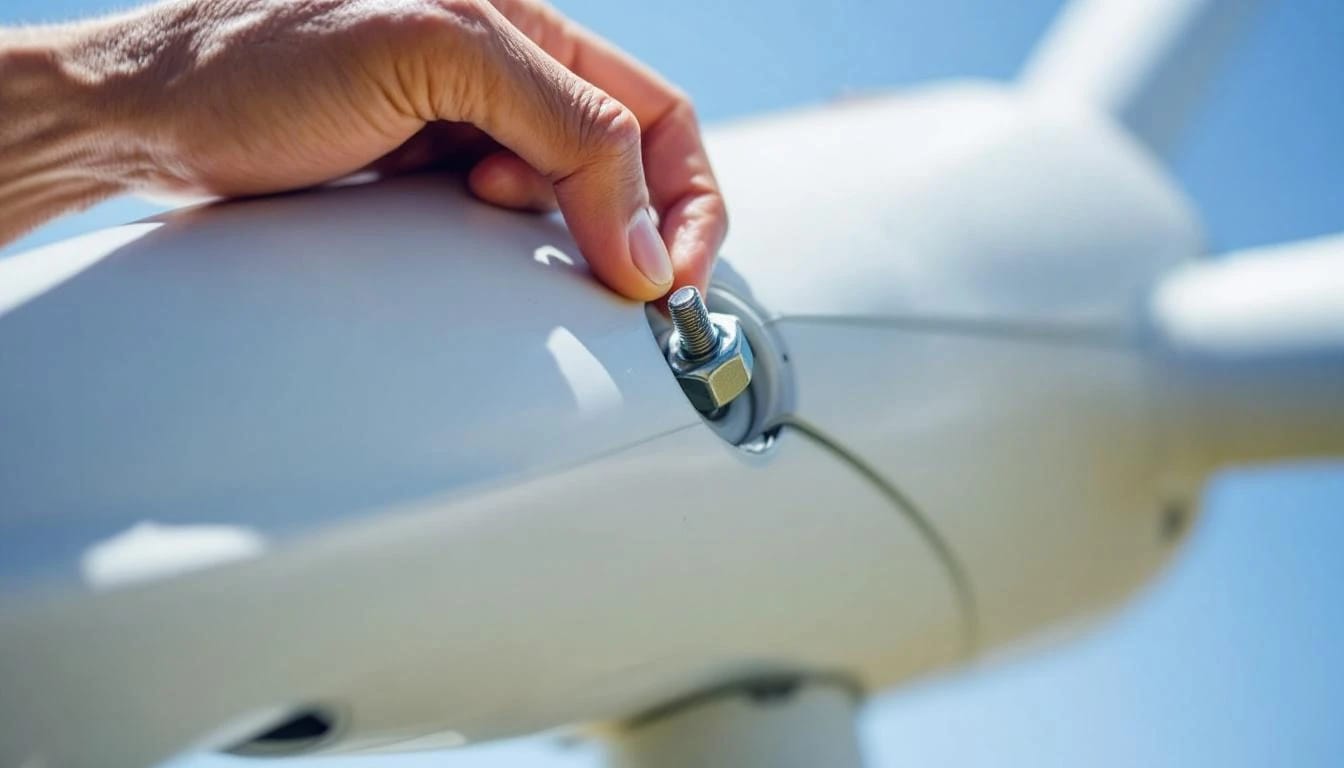
The Aeolos H 1 kW sits in an awkward middle ground: too large for most urban rooftops yet too small for meaningful energy offset. After evaluating its power curve, structural demands, and installation constraints against typical residential electricity needs, this turbine makes sense only for specific off-grid applications or properties with exceptional wind exposure. Most homeowners will recover their investment faster with ground-mounted alternatives or rooftop solar panels.
What the Aeolos H 1 kW Actually Delivers
The Aeolos H 1 kW horizontal-axis turbine features a three-blade rotor spanning approximately 2.5 meters. The manufacturer rates it at 1 kilowatt maximum output, but that figure represents peak capacity under optimal conditions—typically 12-14 m/s (27-31 mph) sustained wind speeds.
Real-world generation differs dramatically. At 5 m/s (11 mph), the typical average wind speed at residential rooftop height in many U.S. locations, the turbine produces roughly 50-100 watts. At 8 m/s (18 mph), output climbs to 300-400 watts. Reaching the rated 1,000 watts requires consistent winds exceeding 12 m/s, conditions rarely sustained at rooftop level except in exposed coastal or mountain locations.
The turbine uses a permanent magnet alternator coupled to a charge controller designed for 24V or 48V battery banks. The package includes a controller rated for dump-load connection, essential for preventing battery overcharge during high-wind events.
Aeolos manufactures the unit in China with standard industrial components—the blades are fiberglass-reinforced polyester, the nacelle housing is powder-coated steel, and bearings are sealed ball type rated for outdoor exposure. Build quality sits firmly in the mid-tier category: adequate for the price point but not comparable to premium manufacturers like Bergey or Primus.
residential wind turbine sizing
Rooftop Installation Reality Check
Mounting a 1 kW horizontal-axis turbine on a residential roof introduces multiple structural and regulatory challenges that often prove prohibitive.
The complete assembly weighs approximately 35-45 kg (77-99 lbs) before accounting for the mounting tower or pole. Add a 3-meter (10-foot) rooftop mast and hardware, and total roof loading exceeds 70 kg concentrated on a small footprint. Most residential roofs built to standard code can handle this static load, but dynamic loads from turbine vibration and wind resistance require engineering evaluation.
Vibration transmission presents the larger problem. Horizontal-axis turbines generate cyclic loads as each blade passes the tower shadow, creating resonance frequencies that travel through mounting structures into roof framing and living spaces below. Even with vibration-dampening mounts, many installations produce noticeable noise and structural humming, particularly during high-wind operation.
The turbine requires clearance above surrounding obstacles equal to at least 10 meters (30 feet) to access laminar wind flow. On most residential roofs, this means a mounting mast height that triggers FAA Part 77 notification requirements for structures potentially affecting navigable airspace. While most residential installations below 200 feet receive routine approval, the filing process adds time and complexity.
Local zoning represents the bigger hurdle. Many municipalities restrict rooftop wind turbines through noise ordinances, height limits, or explicit prohibition. Even jurisdictions without specific wind turbine regulations often enforce setback requirements or aesthetic covenants that effectively prevent rooftop installation.
Before purchasing, check local zoning codes and homeowners association restrictions. Obtaining necessary permits typically requires stamped structural calculations from a licensed professional engineer—an expense that can match or exceed the turbine cost.
rooftop wind turbine regulations
Performance Math Against Average Electricity Use
The average U.S. household consumes approximately 877 kWh per month (10,632 kWh annually), according to EIA data. Breaking that into an hourly average yields roughly 1.2 kW continuous demand.
Even assuming optimistic conditions—a site with 5.5 m/s average wind speed at hub height and 40% system efficiency accounting for turbulence, elevation changes, and controller losses—the Aeolos H 1 kW generates approximately 100-150 kWh monthly. That covers 11-17% of typical household consumption.
Compare this to rooftop solar: a 3 kW solar array in a moderate-insolation state like Missouri produces roughly 300-350 kWh monthly, occupying similar roof space with no moving parts, minimal maintenance, and simpler permitting. The solar installation also qualifies for the same 30% federal tax credit under IRC §25D without the structural and noise complications of a wind turbine.
| System Type | Monthly Output (kWh) | Installation Cost | Annual Maintenance | Lifespan |
|---|---|---|---|---|
| Aeolos H 1kW (rooftop) | 100-150 | $2,500-4,000 | $150-300 | 10-15 years |
| 3 kW Solar Array | 300-350 | $7,500-10,500 | $50-100 | 25-30 years |
| Bergey Excel 1 (ground) | 150-200 | $8,000-12,000 | $200-400 | 20-25 years |
The table assumes professional installation for all systems and moderate wind/solar resources typical of the central United States. Actual performance varies significantly by location.
What It Actually Costs
The Aeolos H 1 kW turbine retails for approximately $1,800-2,200 depending on configuration and shipping from international suppliers. That base price covers only the turbine, controller, and basic hardware.
Complete rooftop installation requires additional components: a guyed or freestanding mast ($400-800), tower-to-roof mounting plate and hardware ($200-400), vibration isolators ($100-200), wiring and disconnect switch meeting NEC Article 705 requirements ($150-300), and professional installation including structural evaluation ($1,000-2,500).
Total installed cost typically ranges from $3,600-6,100. The federal 30% Residential Clean Energy Credit (IRC §25D) reduces net cost to $2,520-4,270. Some states offer additional incentives through programs listed in the DSIRE database, though many specifically exclude turbines under 2 kW or rooftop installations.
Payback calculation depends heavily on local electricity rates and actual wind resource. At $0.13/kWh average residential rate and 125 kWh monthly generation, the system saves approximately $195 annually. With a net cost of $3,500 after incentives, simple payback exceeds 17 years—approaching or exceeding the turbine's expected service life.
Higher electricity rates improve the economics. At California's $0.25/kWh average rate, the same generation yields $375 annual savings and 9.3-year payback. But California's rooftop solar resources typically offer better returns with fewer installation complications.
small wind turbine costs and incentives
Maintenance Requirements Nobody Mentions
Small wind turbines demand regular attention that solar panels do not. The Aeolos H 1 kW requires inspection every 6-12 months for blade integrity, fastener tightness, guy wire tension (if applicable), and electrical connections.
The most common failure points are the slip ring assembly and charge controller. Slip rings enable rotation without tangling wires but wear over time, typically requiring replacement every 3-5 years at $150-250 including labor. Charge controllers fail more frequently than solar equivalents due to voltage fluctuations from gusty winds; budget $200-300 for a replacement every 5-8 years.
Blade damage from debris or UV degradation affects performance before becoming visually obvious. Even minor leading-edge erosion or surface crazing reduces output by 10-20%. Blade replacement costs $300-500 plus professional installation.
Because the turbine mounts on a rooftop, maintenance access requires ladder work or roof access, adding safety considerations and potential cost if hiring professionals. A ground-mounted turbine can tilt down for service; a rooftop unit often necessitates partial disassembly.
Annual maintenance averaged over the turbine's lifespan adds $200-350 to operating costs—a significant percentage of the modest energy savings.
Where This Turbine Actually Makes Sense
Despite the unfavorable economics for typical grid-tied residential applications, specific scenarios suit the Aeolos H 1 kW.
Off-grid cabins or remote sites with excellent wind resources (average speeds above 6 m/s at hub height) and expensive generator fuel represent the strongest use case. Here the comparison isn't against grid electricity or rooftop solar economics, but against diesel fuel costs approaching $4-6 per gallon plus generator maintenance.
For a remote site generating 150 kWh monthly, the turbine potentially displaces 15-20 gallons of diesel fuel monthly ($60-120 savings at current prices), improving payback to 3-5 years. The 24/7 generation capability also complements solar in winter months when days are short.
Marine applications on larger vessels or offshore platforms with no alternative energy sources benefit from the compact footprint relative to generator size. Vibration concerns decrease when mounting to steel structures rather than wood-frame residential roofs.
Educational installations where teaching value exceeds energy production justify the investment for schools or community centers. The visible operation and data logging capabilities support STEM curriculum better than static solar panels.
Comparison to Direct Competitors
The 1 kW residential turbine market offers limited but distinct alternatives worth considering.
Primus Air 40 (nominally 300W but comparable real-world output) costs $1,200-1,500 and features a more refined controller with MPPT capability. Build quality exceeds the Aeolos, but lower rated capacity means even more modest energy production. Better suited to supplemental charging applications rather than primary power.
Pikasola 1000W (nearly identical specifications) retails for $1,400-1,800 through various importers. Quality control consistency varies; some users report excellent service while others experience controller failures within the first year. The slightly lower price doesn't justify the reliability risk for most buyers.
Bergey Windpower Excel 1 represents the premium tier at $6,000-7,500 for the turbine alone. Built in Oklahoma with aerospace-grade components and a 5-year warranty, the Bergey delivers 25-30% better energy capture through superior blade design and turbulence handling. Only sensible for buyers committed to 20+ year operation or sites with exceptional wind resources where the production difference justifies the premium.
For rooftop-specific applications, none of these horizontal-axis turbines overcome the fundamental physics limitations. Vertical-axis alternatives like small Savonius or Darrieus designs reduce vibration but sacrifice efficiency, typically producing 30-50% less energy at the same wind speed.
Installation and Electrical Integration
Proper installation requires coordination between structural, mechanical, and electrical considerations—areas where DIY attempts frequently fail.
Structurally, the mounting system must distribute loads across multiple roof trusses or rafters rather than bearing on sheathing alone. A licensed structural engineer should evaluate existing framing and specify reinforcement if needed, particularly for older homes built before modern load standards.
The mounting mast requires guying unless designed as a freestanding tower. Guy wires must anchor to points capable of handling lateral loads, typically requiring through-bolting to framing members with backing plates. Improper guying allows excessive tower deflection, increasing vibration and stress on the turbine itself.
Electrically, NEC Article 705 governs interconnection of multiple power sources. Key requirements include:
- Dedicated circuit breaker in the main panel
- External disconnect switch accessible without entering the building
- Ground-fault protection on the DC side
- Proper wire sizing accounting for voltage drop and ampacity derating
- Warning labels identifying multiple power sources
For battery-based off-grid systems, add battery charge/discharge management, proper ventilation for flooded lead-acid batteries, and overcurrent protection at multiple points in the system. This complexity exceeds typical DIY electrical skill levels.
Expect professional installation costs of $2,000-4,000 depending on roof complexity and distance from the electrical panel. While licensed general contractors can handle mechanical mounting, the electrical work requires a licensed electrician familiar with renewable energy systems—a specialization not all electricians possess.
wind turbine electrical installation
The Noise Factor Everyone Underestimates
Wind turbine noise complaints represent the leading cause of voluntary removal after installation. The Aeolos H 1 kW produces two distinct sound types: aerodynamic whoosh from blade passage and mechanical noise from the alternator and bearing assembly.
At rated output (12+ m/s wind speeds), the manufacturer specifies 45-50 dB at 5 meters distance. That measurement, taken in open air, doesn't account for structural amplification through the roof mounting system. Turbine vibrations transmitted through the mast into roof framing create sound levels inside the home often 10-15 dB higher than external measurements.
Forty-five decibels approximates a quiet library or moderate rainfall—manageable outdoors but disruptive indoors during sleep hours. High winds coincide with nighttime frontal passages in many regions, triggering complaints from household members and neighbors.
Blade tip speed generates the whooshing sound even with good bearing maintenance. The Aeolos rotor operates at 300-600 RPM under load, creating a rhythmic pulse as each blade passes the tower. Some individuals find this more disturbing than constant white noise, describing it as similar to a distant helicopter.
Anti-vibration mounts reduce but don't eliminate structure-borne noise. The most effective isolation requires spring-loaded or elastomeric mounting plates capable of absorbing frequencies from 10-200 Hz, adding $300-500 to installation costs. Even with premium damping, expect noticeable sound during high-wind operation.
Many municipalities enforce nighttime noise ordinances limiting property-line sound levels to 45-55 dB, measured at the complaining property. A rooftop turbine operating at 50 dB from 5 meters distance can exceed ordinance limits at neighboring properties 15-20 meters away, particularly when structural amplification contributes.
Real-World User Feedback and Reliability
Owner reports on the Aeolos H series show mixed results, with satisfaction correlating strongly to installation quality and site selection.
Positive experiences cluster among off-grid users who performed proper site assessment before purchase, installed the turbine on adequately tall towers away from structures, and maintained realistic output expectations. These users report reliable operation for 3-5 years with routine maintenance, viewing the turbine as one component in a hybrid energy system rather than a primary power source.
Negative experiences predominantly involve rooftop installations in suburban settings with inadequate wind resources. Common complaints include:
- Actual output 40-60% below manufacturer estimates
- Excessive noise and vibration despite advertised "quiet operation"
- Bearing failures requiring replacement within 2-3 years
- Guy wire maintenance and re-tensioning requirements
- Difficulty obtaining warranty service for imported components
The controller receives particular criticism for limited configuration options and tendency to enter fault states during rapid wind fluctuations. The included unit operates as a basic PWM charge controller rather than MPPT, sacrificing 15-20% potential energy capture compared to higher-end alternatives.
Blade quality appears consistent, with UV degradation rather than structural failure representing the primary concern after 5+ years of exposure. Some users report measurable output decline after year 3-4, attributable to surface degradation affecting aerodynamic efficiency.
Warranty coverage at 2 years represents the industry minimum. Aeolos's service network consists of regional distributors rather than factory-direct support, leading to variable response times. Replacement parts ship from China, typically requiring 6-8 weeks for delivery to U.S. addresses.
Better Alternatives for Most Scenarios
For grid-tied residential properties, rooftop solar panels deliver 2-3 times the energy per dollar invested with simpler permitting, lower maintenance, and 25-30 year service life. Modern microinverters eliminate the need for battery banks while enabling panel-level monitoring and optimization.
Ground-mounted wind turbines on towers 80-120 feet tall access the stronger, less turbulent winds that enable economic generation. The Bergey Excel 10, while requiring $25,000-35,000 investment including tower and installation, produces 8-12 times the annual energy of the Aeolos 1 kW. For properties with adequate land and good wind resources, the additional investment pays back through meaningful electricity offset.
Hybrid solar-wind systems make sense for off-grid applications where seasonal generation patterns complement each other. Pairing the Aeolos 1 kW with 1-2 kW of solar panels (similar total investment to attempting rooftop wind alone) provides more consistent year-round generation with reduced reliance on either single resource.
Battery technology improvements make pure battery backup increasingly viable. A grid-tied solar system with battery storage (Tesla Powerwall, Enphase Ensemble, etc.) provides backup power without the mechanical complexity of wind turbines, though at higher upfront cost.
For those determined to pursue rooftop wind, waiting for building-integrated turbine designs offers more promise. Several manufacturers are developing boundary-layer turbines specifically designed for roof-edge mounting where venturi effects concentrate airflow. These remain largely experimental but show potential to overcome the fundamental limitations of conventional turbines in built environments.
Is the Aeolos H 1 kW powerful enough for my home?
No, not as a primary power source. The turbine generates approximately 100-150 kWh monthly in typical residential locations—enough to offset 10-15% of average household consumption. It works best as a supplemental system in off-grid setups paired with solar panels and battery storage, not as a standalone grid-tied solution for a conventionally-powered home.
Can I install an Aeolos H 1 kW turbine on my roof myself?
Technically possible but not recommended. The installation requires structural evaluation to ensure roof framing can handle dynamic loads, proper guying or tower design to prevent excessive vibration, and electrical integration meeting NEC Article 705 requirements. Improper installation creates noise problems, potential roof damage, and code violations. Most jurisdictions require stamped engineering calculations and licensed contractor installation for permitting.
How loud is the Aeolos H 1 kW during operation?
The manufacturer specifies 45-50 dB at 5 meters in open air at rated output. When roof-mounted, structural vibration transmission increases perceived indoor noise to 55-65 dB during high winds—comparable to conversation levels or moderate rainfall. The rhythmic blade-pass frequency disturbs some people more than the absolute decibel level suggests. Expect noticeable sound inside your home during windy conditions.
What maintenance does the Aeolos H 1 kW require?
Inspect the turbine every 6-12 months for blade condition, fastener tightness, and electrical connections. Slip rings typically need replacement every 3-5 years ($150-250). Charge controllers fail every 5-8 years ($200-300). Blades may require replacement after 8-12 years due to UV degradation ($300-500). Budget $200-350 annually for averaged maintenance costs over the turbine's lifespan. Rooftop access complicates all service work compared to ground-mounted alternatives.
Does the Aeolos H 1 kW qualify for the federal tax credit?
Yes, wind turbines installed at residential properties qualify for the 30% Residential Clean Energy Credit under IRC §25D (claimed on IRS Form 5695). The credit covers the turbine, installation costs, and associated equipment like batteries or inverters. Some states offer additional incentives through programs listed in the DSIRE database, though many specifically exclude turbines rated below 2 kW or prohibit rooftop installations.
Bottom Line
The Aeolos H 1 kW works adequately for its intended purpose—supplemental off-grid power in locations with strong wind resources—but fails to justify the cost and complexity for typical residential rooftop applications. Most homeowners achieve better returns from rooftop solar or ground-mounted wind turbines. If you're committed to small-scale wind power, verify local zoning permits rooftop installations, obtain professional structural evaluation, and ensure your site achieves 5.5+ m/s average wind speeds at hub height before purchasing.
Share this article
windturbinehome.com/s/aede54
Editorial note: This article was researched and written by a member of the Wind Turbine Home editorial team. AI-assisted tools were used for spell-checking and light grammar review only — all research, analysis, and conclusions are our own. Our editorial policy prohibits sponsored content and paid placements. Read our editorial policy →
Related reading
wind turbine brands
Aeolos H-Series Wind Turbine Review: Build Quality & Output
Independent review of Aeolos H-series small wind turbines covering construction quality, real-world power output, and installation considerations for homes.
wind turbine brands
Bergey Excel 15 Review: Still the Residential Workhorse?
The Bergey Excel 15 remains a proven choice for serious residential wind power—but is this 7.5-kW turbine still worth its premium in 2025? Our review weighs performance, reliability, and real-world economics.

wind turbine brands
Best Home Wind Turbines in the UK: MCS-Certified Picks for 2026
MCS-certified small wind turbines for UK homes include Bergey Excel 1 (1kW), Evance R9000 (5kW), and SD6 (6kW). Proper site assessment and BS 7671 compliance are critical for safe, legal installation.
wind turbine brands
MCS-Certified Wind Turbines UK: MIS 3003 Standard Explained
MCS certification proves UK wind turbines meet MIS 3003 quality and safety standards. Required for Smart Export Guarantee payments and Permitted Development rights.
wind turbine brands
Cheapest 1 kW Wind Turbine: Where Budget Models Actually Work
Budget 1 kW wind turbines start at $800-1,400, but total installed cost hits $4,000-7,000. Learn which cheap models survive real-world use and where they pencil out.

wind turbine brands
Best Wind Turbines Under $1000 in 2026 | Buyer's Guide
Compare the top budget wind turbines under $1000 for homes in 2026. We tested vertical-axis and small horizontal models for real-world power output and durability.
wind turbine brands
Best Wind Turbines Under $500 in 2026: Budget Models Tested
Budget wind turbines under $500 can generate 50-400W in steady winds. We tested seven models for build quality, real-world output, and warranty support.
wind turbine brands
Eclectic Energy D400 Review: Marine Micro-Wind Generator
The Eclectic Energy D400 delivers 400W peak output in a marine-grade package suited to boats, caravans, and coastal sheds—not grid-tied homes.
wind turbine brands
Is Southwest Windpower Out of Business? What Happened & Alternatives
Southwest Windpower closed in 2013 after manufacturing the popular Air Breeze and Whisper series turbines. Learn what caused the shutdown and which brands now fill the gap.