MCS-Certified Wind Turbines UK: MIS 3003 Standard Explained
MCS certification proves UK wind turbines meet MIS 3003 quality and safety standards. Required for Smart Export Guarantee payments and Permitted Development rights.
Share this article
windturbinehome.com/s/de1dbf
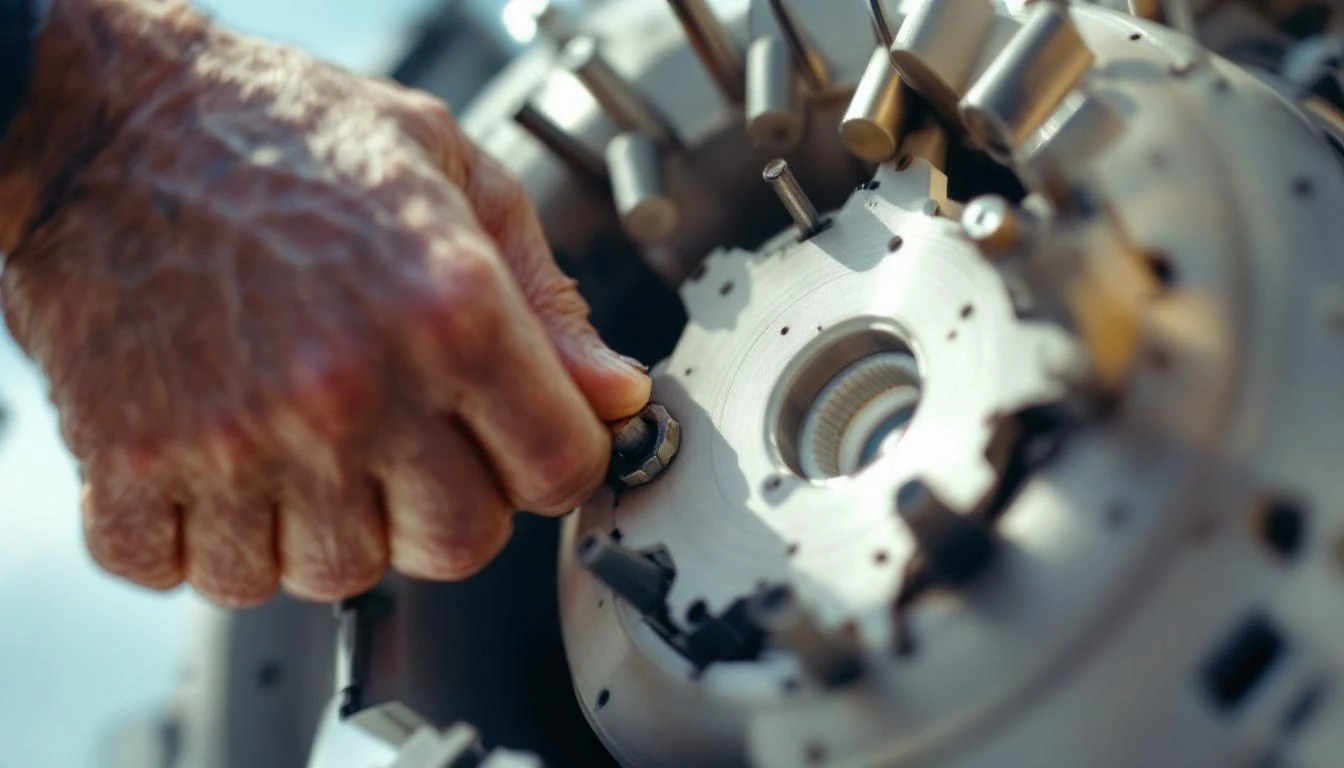
MCS certification is the UK's quality mark for small wind turbines, verifying that equipment and installation meet the MIS 3003 standard for microgeneration. An MCS-certified wind turbine installation guarantees compliance with design, performance, and safety requirements whilst unlocking eligibility for Smart Export Guarantee payments. Without this certification, homeowners forfeit export tariff income and may face complications with building control approval. The MCS scheme applies to both horizontal-axis and vertical-axis turbines under 50kW capacity, with certification covering the product, installer, and completed installation.
What MCS certification actually covers
The Microgeneration Certification Scheme operates as an independent quality framework administered by MCS Service Company Ltd. For wind turbines specifically, MCS encompasses three distinct elements: product certification (the turbine itself), installer certification (the company performing the work), and installation certification (the completed system).
Product certification under MIS 3003 requires manufacturers to demonstrate that their wind turbine models meet specific performance, durability, and safety criteria. This includes third-party testing for power curve accuracy, noise emissions, structural integrity, and electrical safety. Certified products appear on the official MCS Product Directory, which installers and homeowners can search before committing to a purchase.
Installer certification demands that companies employ technicians with recognised competencies in small wind turbine installation, electrical work compliant with BS 7671 (18th Edition Wiring Regulations), and structural mounting. MCS-certified installers must hold appropriate insurance, demonstrate financial stability, and maintain a complaints resolution process. They're audited annually to retain their status.
Installation certification—the final certificate issued after a project completes—confirms that the specific turbine at a specific address was installed according to MIS 3003 requirements. This document is essential for claiming Smart Export Guarantee payments and serves as evidence for building control sign-off.
![INLINE: MCS certification badge displayed on a product label affixed to a small wind turbine nacelle]
The MIS 3003 standard requirements breakdown
MIS 3003 defines technical and administrative requirements for small wind energy systems in the UK. The standard addresses site assessment, system design, installation practice, commissioning, and handover documentation.
Site assessment provisions require installers to conduct wind speed monitoring or credible wind resource estimation before recommending a turbine. The standard prohibits installations in locations with inadequate wind resource (typically below 5m/s annual average at hub height), excessive turbulence (such as dense urban areas with tall buildings), or obstructions that create chaotic airflow. This protects consumers from wasting money on turbines that will never generate meaningful electricity.
System design requirements mandate appropriate foundation engineering, tower/mounting structure calculations accounting for wind loading, and electrical integration compliant with BS 7671. The installer must specify cable sizing, earthing arrangements, overcurrent protection, and AC disconnect means. For grid-connected systems, G98 or G99 approval (depending on capacity) is compulsory before energisation.
Installation practice clauses cover safe working at height, proper torque specifications for tower bolts, correct orientation (for horizontal-axis machines), vibration isolation, and clearance from property boundaries. MIS 3003 stipulates minimum distances from buildings, public rights of way, and overhead lines. These provisions align with Permitted Development rules where applicable, though larger turbines always require planning permission.
Commissioning steps include functional testing of shut-down systems, verification of brake operation, checking electrical connections under load, and confirming that the turbine generates within 10% of the manufacturer's power curve at recorded wind speeds. The installer must provide the homeowner with a commissioning report, warranty documentation, operation and maintenance guidance, and the MCS installation certificate.
Why MCS matters for Smart Export Guarantee eligibility
The Smart Export Guarantee replaced the Feed-in Tariff scheme in 2020, requiring electricity suppliers above a certain size to offer payment for exported renewable generation. SEG tariffs vary by supplier—current rates range from 1p/kWh to 15p/kWh depending on whether the tariff is fixed, variable, or tied to wholesale prices.
MCS certification is the only qualification route for wind turbines seeking SEG payments. Without an MCS installation certificate, no energy supplier will register the system for export payments, regardless of actual generation. This restriction exists because MCS provides independent verification that the meter readings correspond to genuine renewable generation rather than grid electricity.
For a 5kW wind turbine in a good coastal location generating 8,000kWh annually, with 50% exported at a mid-range 7p/kWh SEG tariff, the annual export income reaches £280. Over a 20-year turbine lifespan, that's £5,600 in revenue directly contingent on MCS certification. This figure doesn't account for self-consumption savings, which can exceed export income depending on household electricity usage patterns.
Some SEG tariffs offer higher rates for suppliers seeking to differentiate themselves, or for systems paired with battery storage that can export strategically during peak demand periods. Maximising returns from a grid-tied wind turbine requires both MCS certification to access these tariffs and careful monitoring of wholesale price fluctuations.
MCS-certified turbine brands available in the UK
The MCS Product Directory lists certified small wind turbine models eligible for compliant installations. As of early 2025, the directory includes fewer wind turbine manufacturers than solar panel brands, reflecting the smaller UK market for domestic wind energy.
Evance (now part of Senergy Innovations) manufactures the Evance R9000, a 5kW horizontal-axis turbine with MCS certification. This three-bladed downwind machine operates at 25-50 rpm with a 5.5m rotor diameter, designed for building-mounted or freestanding tower applications. The R9000 gained traction in exposed rural and coastal sites where wind resource justifies the investment.
SD Wind Energy produces several MCS-certified vertical-axis turbines including the SD3 and SD6 models (3kW and 6kW rated capacity respectively). Vertical-axis designs suit turbulent urban environments better than horizontal-axis machines, though they remain controversial due to lower efficiency and durability concerns. SD Wind Energy's products carry full MCS Product Certification, making them compliant for SEG applications despite the VAWT skepticism prevalent in the industry.
Kingspan (formerly Proven Energy) offered the Proven 6 and Proven 11 models, both MCS-certified, though the company exited the small wind market after Kingspan's restructuring. Existing installations retain their MCS status, and parts remain available through specialist suppliers. The Proven 6 (6kW) became one of the UK's most-deployed residential turbines before production ceased.
Imported brands like Bergey (USA) and Aeolos (China) lack MCS certification for most models, rendering them ineligible for SEG payments despite their technical merits. Some installers attempt to certify these turbines under the MCS Equivalent Products route, though this process involves considerable testing expense and uncertain outcomes. Buyers seeking SEG income must verify Product Directory inclusion before purchasing any turbine.
Permitted Development and MCS interaction
Permitted Development rights allow certain wind turbine installations without full planning permission, subject to strict criteria. MCS certification doesn't grant automatic Permitted Development status, but the standards partially align.
For a domestic wind turbine to qualify as Permitted Development in England, it must be the first turbine on the property, mounted on a pole rather than a building (in most cases), limited to 11.1kW swept area for standalone systems, positioned away from boundaries, and sited to minimise visual and noise impact. Planning permission requirements for residential wind turbines vary between England, Scotland, Wales, and Northern Ireland, with Scotland historically more favourable to small wind installations.
MCS installers complete Permitted Development notifications as part of their service, liaising with local planning authorities to confirm eligibility. However, many MCS installations exceed Permitted Development thresholds—larger turbines, building-mounted systems in conservation areas, or second turbines all trigger full planning applications regardless of MCS status.
Building control approval remains mandatory even for Permitted Development wind turbines. The MCS installation certificate satisfies building control requirements for electrical and structural work, streamlining the approval process. Non-MCS installations face additional scrutiny, with building control officers often requiring independent structural engineer reports and electrical inspection certificates.
MCS installer costs versus non-certified alternatives
MCS-certified installers charge premium rates reflecting their certification costs, insurance requirements, and compliance obligations. For a complete small wind turbine installation, MCS-certified installers typically quote £25,000-£45,000 for a 5-6kW system including turbine, tower, groundwork, electrical integration, and commissioning. This compares to £18,000-£30,000 for non-certified installers offering similar turbines.
The price difference stems from several factors. MCS installers pay annual certification fees (£600-£1,200 depending on turnover), maintain higher insurance cover (minimum £2 million public liability plus professional indemnity), and invest in ongoing training to satisfy competency requirements. They also spend more time on site assessments, documentation, and post-installation reporting to meet MIS 3003 standards.
For homeowners prioritising SEG payments, the MCS premium remains worthwhile. A non-MCS installation saves £5,000-£10,000 upfront but forfeits £200-£400 annually in export income over the turbine's lifespan. The breakeven period typically arrives within 12-20 years, well within a quality turbine's operational life.
Off-grid installations where grid export doesn't apply present a different calculation. Without SEG eligibility at stake, the MCS certification offers limited financial benefit beyond quality assurance and building control acceptance. Some remote properties choose non-MCS installers for off-grid turbines, accepting the risk of variable workmanship in exchange for lower capital costs. This strategy works only when building control explicitly accepts non-MCS evidence of compliance.
Finding and vetting MCS-certified wind turbine installers
The MCS website hosts a searchable installer database organised by technology type and postcode. Filtering for "Small wind" and entering a location returns certified installers serving that area, complete with contact details, certification number, and coverage radius.
Vetting an MCS installer begins with verification. Check the installer's MCS certification number against the official database to confirm current status—certifications lapse if companies fail audits or let insurance expire. Request evidence of public liability insurance and, for larger installations, professional indemnity cover.
Ask for references from previous wind turbine installations, not just solar PV projects. Small wind installation demands different skills than solar panel mounting, particularly regarding tower erection, vibration isolation, and wind resource assessment. An installer with 500 solar installations but only two wind turbines may lack the specialised experience that difficult wind projects demand.
Request a detailed written proposal including specific turbine model (verified in MCS Product Directory), proposed tower height, foundation specifications, estimated annual generation based on site wind speed, itemised costs, and expected timelines for planning (if required), installation, and commissioning. MCS installers must provide this information under MIS 3003; vague or incomplete proposals signal problems.
Choosing between horizontal and vertical-axis wind turbines for homes affects installer selection, as fewer MCS companies specialise in VAWT installations. Some installers explicitly avoid vertical-axis turbines due to reliability concerns, limiting options for customers in turbulent urban sites where VAWTs theoretically offer advantages.
MCS certification process timeline and costs
Achieving MCS certification as an installer requires meeting competency requirements, assembling required documentation, and passing an audit. The process typically spans 3-6 months from application to certification, with costs ranging from £3,000-£7,000 for wind turbine certification (separate from solar PV or other technology certifications).
Competency requirements demand evidence that key personnel hold recognised qualifications. For wind turbines, this includes City & Guilds 2382-22 (BS 7671 18th Edition), IOSH Managing Safely or equivalent, and completion of an MCS-approved small wind installation training course. Several training providers offer 3-5 day courses covering MIS 3003 requirements, site assessment, tower installation, and electrical integration, costing £800-£1,500 per person.
The application process requires submitting company details, personnel CVs and certificates, insurance documentation, examples of installation methodology, and quality management procedures. MCS assigns an auditor who reviews the application, checks site documentation from recent installations, and may conduct witness assessments at live projects.
Annual surveillance maintains certification status. MCS conducts desk-based audits of installation records, customer satisfaction surveys, and updated insurance certificates each year. Every three years, a full re-certification audit repeats the initial assessment process. Companies failing to maintain standards face suspension or revocation, which immediately invalidates all pending and future installation certificates.
Installers pass certification costs to customers through project pricing. The per-installation burden varies with company volume—a firm completing 50 MCS wind turbine installations annually amortises certification costs more effectively than a company installing five turbines per year.
Common MCS installation failures and non-compliances
MCS audits identify recurring non-compliances that result in rejected installation certificates or installer suspensions. Understanding these failure modes helps customers spot substandard work before signing off on a project.
Inadequate site assessment ranks as the most frequent MCS deficiency. Installers who skip proper wind resource evaluation or rely on generic wind maps rather than site-specific data violate MIS 3003. The standard requires either a minimum 3-month wind monitoring campaign using a calibrated anemometer at hub height, or use of accepted wind resource databases (like NOABL) with local terrain adjustment. Installations in provably poor wind sites fail certification and deny customers SEG eligibility.
Foundation under-specification creates safety hazards and MCS failures. Small wind turbines exert substantial overturning moments, especially during high-wind shut-down events. MCS requires foundation designs stamped by a structural engineer, with calculations accounting for soil type, turbine weight, rotor diameter, and maximum design wind speed. Installers who eyeball foundation sizes or copy designs from different soil conditions risk structural failure and certification rejection.
Electrical non-compliances include undersized cables, missing surge protection, inadequate earthing, incorrect isolator positioning, or failure to obtain G98/G99 approval before grid connection. BS 7671 compliance is non-negotiable for MCS certification, and electrical defects discovered during commissioning delay certificate issuance until rectified at the installer's expense.
Documentation deficiencies—missing O&M manuals, incomplete commissioning reports, or absent warranty information—also trigger MCS failures. The installer must provide a comprehensive handover pack including the turbine manufacturer's documentation, structural calculations, electrical schematics, as-built drawings, and contact details for ongoing support. Customers should refuse final payment until receiving this complete documentation package.
MCS versus non-MCS turbines: performance and quality differences
MCS Product Certification requires third-party testing of power curves, noise emissions, and safety systems. This testing ensures that certified turbines perform as advertised, contrasting with uncertified imports where manufacturer claims lack independent verification.
Power curve testing under MCS involves measuring electrical output at multiple wind speeds in controlled conditions, verifying that actual generation matches published specifications within acceptable tolerances. This prevents the optimistic rating inflation common in uncertified turbines, where a "5kW" turbine might deliver only 3kW at rated wind speed. Understanding wind turbine power curves and capacity factors explains how certified data informs realistic generation expectations.
Noise testing ensures compliance with UK planning guidance, typically requiring that turbines don't exceed 35-40dB(A) at nearby residential properties. MCS-certified turbines include noise emissions data at various wind speeds, helping installers predict whether a proposed installation will meet planning conditions. Uncertified turbines lack this data, creating planning permission risks if the turbine proves noisier than expected.
Safety system verification tests brake operation, overspeed protection, vibration shut-downs, and electrical isolation under fault conditions. These tests confirm that the turbine protects itself and nearby persons during failures or extreme weather. Several catastrophic failures involving non-certified turbines—including blade separations and tower collapses—would likely have been prevented by MCS-equivalent safety testing.
The quality gap between MCS and non-MCS turbines varies by manufacturer. Some uncertified turbines from established makers like Bergey or Southwest Windpower (now defunct) match or exceed MCS quality despite lacking UK certification. Other uncertified imports—particularly direct-from-China purchases—exhibit poor manufacturing quality, inflated ratings, and minimal support. MCS certification doesn't guarantee perfection, but it establishes a quality floor that uncertified products often fall below.
MCS scheme evolution and recent changes
MCS underwent substantial redevelopment during 2023-2024, modernising standards and improving consumer protection. For wind turbines, key changes affect installer auditing frequency, competency requirements, and complaints processes.
The revised installer scheme introduced risk-based auditing, where companies with clean compliance records face less frequent inspections than those with customer complaints or technical deficiencies. This change reduces administrative burden on consistently high-quality installers whilst increasing scrutiny on problematic operators. Wind turbine installers benefit particularly, as the smaller market previously suffered from one-size-fits-all audit schedules designed for the larger solar PV sector.
Enhanced competency requirements now mandate that at least one key person per MCS installer holds technology-specific qualifications verified through approved training courses. For small wind, this means completing courses explicitly covering MIS 3003 rather than relying on transferable skills from solar installations. The change addresses industry concerns about solar installers branching into wind work without adequate specialist knowledge.
Consumer protection improvements include clearer complaints procedures, mandatory installation deposits protection (via insurance or bonding), and standardised contract templates. These measures respond to historical problems where customers lost deposits when wind turbine installers ceased trading, or faced unclear recourse routes when installations underperformed.
MCS also strengthened product certification testing requirements, adding long-term durability assessments for wind turbines. Manufacturers must now demonstrate that turbines withstand extended operation without excessive wear, addressing the historical problem of products achieving short-term test certifications but failing within 5-10 years of field deployment.
International certification equivalence and imports
UK customers occasionally encounter wind turbines certified under international schemes like IEC 61400-2 (small wind turbine safety standard) or various national programmes. These certifications don't substitute for MCS in the UK—SEG eligibility and full planning compliance require MCS Product Certification specifically.
IEC 61400-2 certification indicates that a turbine meets international safety and performance standards through testing by accredited bodies. This certification carries technical credibility and signals that a manufacturer invests in quality assurance. However, IEC 61400-2 alone doesn't grant MCS status. A manufacturer can use IEC test results to accelerate MCS Product Certification, but must still complete UK-specific testing and documentation.
US-certified turbines under the Small Wind Certification Council (SWCC) programme face similar limitations. SWCC certification involved testing and auditing analogous to MCS, but the programme closed in 2016. Existing SWCC-certified turbines like certain Bergey models hold no automatic UK recognition, though their technical documentation can support MCS Equivalent Product applications.
Some customers attempt direct imports of wind turbines certified in other countries, seeking cost savings versus UK-supplied MCS products. This strategy encounters multiple obstacles: shipping and import duty costs, absence of UK warranty support, incompatibility with local grid requirements (voltage, frequency, G98/G99 compliance), and inability to obtain MCS installation certificates. The imagined savings vanish once customers factor in adaptation costs and forfeited SEG income.
For determined importers, the MCS Equivalent Product route theoretically allows certification of non-directory turbines through UK testing. The process requires submitting the turbine to a UKAS-accredited test facility, providing full technical documentation, and paying testing fees typically exceeding £5,000-£10,000. Few individual buyers pursue this path given the costs and uncertainty.
Can I claim Smart Export Guarantee payments without MCS certification?
No. All UK energy suppliers require MCS installation certificates before registering wind turbines for SEG payments. This requirement is absolute—regardless of the turbine's actual quality or generation capacity, non-MCS systems are ineligible for export tariffs. The restriction exists because MCS provides the only recognised verification that the meter readings correspond to genuine renewable generation. Without MCS, suppliers have no independent confirmation of system legitimacy.
Does MCS certification affect turbine performance or just paperwork?
MCS certification substantially affects turbine selection and installation quality. Product certification involves third-party testing of power curves, noise emissions, and safety systems, ensuring turbines perform as claimed. Installer certification requires technical competencies, appropriate insurance, and compliance with MIS 3003 installation standards. These requirements translate directly to better wind resource assessment, proper foundation engineering, safe electrical work, and functional safety systems. Non-MCS installations frequently skip site assessment or cut corners on foundations and wiring.
How do I verify an installer's MCS status before signing a contract?
Visit the MCS website (mcscertified.com) and use the "Find an Installer" search tool. Enter the company name or certification number they've provided, and verify that their certification is current and specifically includes "Small wind" under certified technologies. Check the listed address matches their business location, and note any suspension or reinstatement records. Request a copy of their current MCS certificate and public liability insurance schedule, then confirm these documents with the issuing organisations before paying any deposit.
What happens if my MCS installer goes out of business?
MCS installation certificates remain valid permanently, so existing SEG registrations continue even if the installer ceases trading. However, warranty claims and ongoing support become problematic. For equipment warranties, contact the turbine manufacturer directly—product warranties exist independently of installer status. For installation workmanship warranties, check whether the installer carried warranty insurance or participated in a deposit protection scheme. The MCS Consumer Code previously provided limited protection, though coverage varies by when the installation occurred and the specific insolvency circumstances.
Are vertical-axis wind turbines eligible for MCS certification?
Yes, vertical-axis wind turbines can obtain MCS Product Certification if they meet MIS 3003 requirements through independent testing. Several VAWT manufacturers including SD Wind Energy have achieved MCS certification for specific models. The certification process is identical for VAWTs and HAWTs—the turbine must demonstrate power curve accuracy, acceptable noise levels, and safe operation through third-party testing. However, fewer VAWT models appear in the MCS Product Directory compared to horizontal-axis designs, reflecting both smaller manufacturer investment in UK certification and ongoing industry debate about VAWT reliability and efficiency.
Bottom line
MCS certification determines whether a UK wind turbine qualifies for Smart Export Guarantee payments and streamlined planning compliance. The MIS 3003 standard requires independent product testing, installer competencies, and installation practices that deliver measurably better outcomes than non-certified alternatives. Check the MCS Product Directory before purchasing any turbine, verify your installer's current certification status, and refuse to accept a completed installation without receiving the full MCS installation certificate and supporting documentation.
Share this article
windturbinehome.com/s/de1dbf
Editorial note: This article was researched and written by a member of the Wind Turbine Home editorial team. AI-assisted tools were used for spell-checking and light grammar review only — all research, analysis, and conclusions are our own. Our editorial policy prohibits sponsored content and paid placements. Read our editorial policy →
Related reading
wind turbine brands
Aeolos H-Series Wind Turbine Review: Build Quality & Output
Independent review of Aeolos H-series small wind turbines covering construction quality, real-world power output, and installation considerations for homes.
wind turbine brands
Bergey Excel 15 Review: Still the Residential Workhorse?
The Bergey Excel 15 remains a proven choice for serious residential wind power—but is this 7.5-kW turbine still worth its premium in 2025? Our review weighs performance, reliability, and real-world economics.

wind turbine brands
Best Home Wind Turbines in the UK: MCS-Certified Picks for 2026
MCS-certified small wind turbines for UK homes include Bergey Excel 1 (1kW), Evance R9000 (5kW), and SD6 (6kW). Proper site assessment and BS 7671 compliance are critical for safe, legal installation.
wind turbine brands
Cheapest 1 kW Wind Turbine: Where Budget Models Actually Work
Budget 1 kW wind turbines start at $800-1,400, but total installed cost hits $4,000-7,000. Learn which cheap models survive real-world use and where they pencil out.

wind turbine brands
Best Wind Turbines Under $1000 in 2026 | Buyer's Guide
Compare the top budget wind turbines under $1000 for homes in 2026. We tested vertical-axis and small horizontal models for real-world power output and durability.

wind turbine brands
Best Wind Turbines Under $500 in 2026: Budget Models Tested
Budget wind turbines under $500 can generate 50-400W in steady winds. We tested seven models for build quality, real-world output, and warranty support.
wind turbine brands
Eclectic Energy D400 Review: Marine Micro-Wind Generator
The Eclectic Energy D400 delivers 400W peak output in a marine-grade package suited to boats, caravans, and coastal sheds—not grid-tied homes.

wind turbine brands
Is Southwest Windpower Out of Business? What Happened & Alternatives
Southwest Windpower closed in 2013 after manufacturing the popular Air Breeze and Whisper series turbines. Learn what caused the shutdown and which brands now fill the gap.
wind turbine brands
Rutland 914i Review: 90W Wind Turbine for Boats, Cabins
The Marlec Rutland 914i puts out 90W continuous in 12.5 m/s wind, which suits boat, cabin and off-grid battery charging where reliability beats peak output.