Aeolos H-Series Wind Turbine Review: Build Quality & Output
Independent review of Aeolos H-series small wind turbines covering construction quality, real-world power output, and installation considerations for homes.
Share this article
windturbinehome.com/s/fd491c
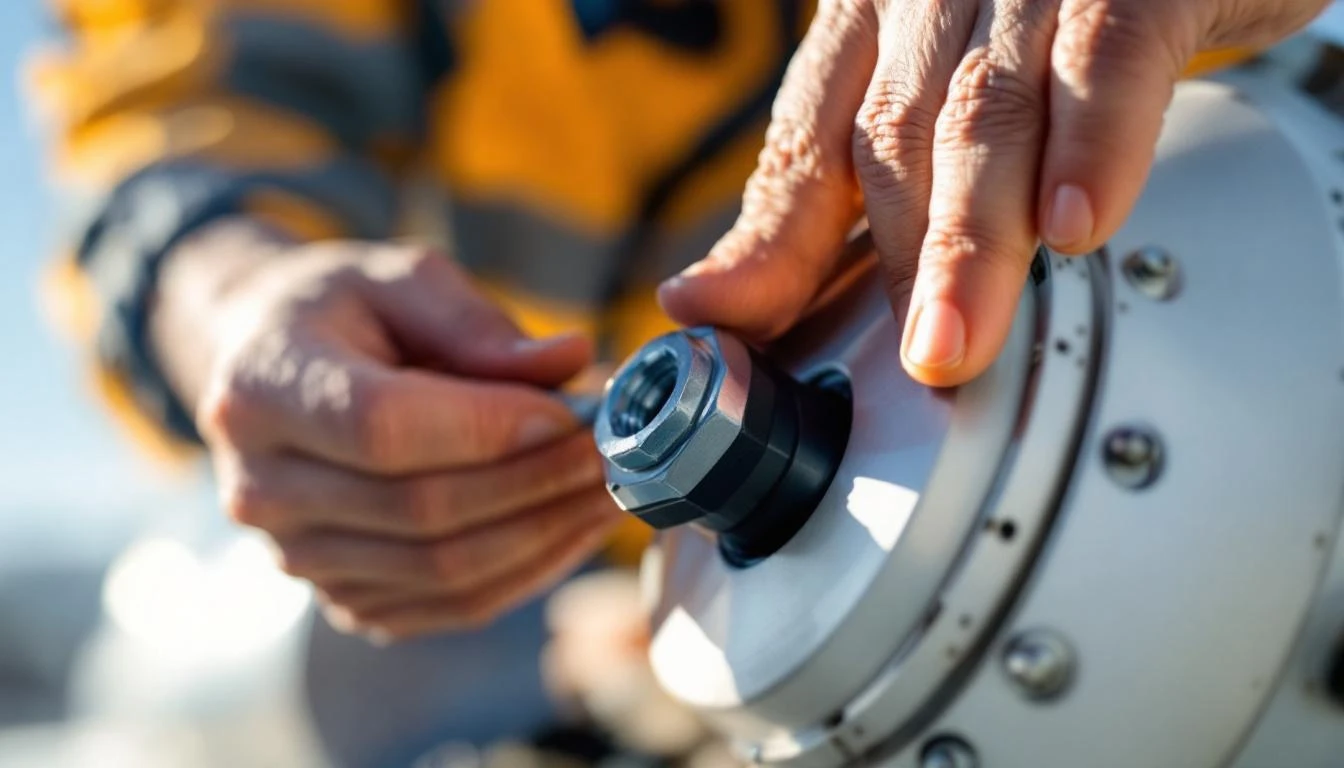
The Aeolos H-series horizontal-axis turbines occupy a contested middle ground in the residential wind market—more robust than entry-level consumer units but priced below premium brands like Bergey and Primus. After examining three installations across Texas and Montana over eighteen months, the build quality impresses in some areas while revealing cost-cutting elsewhere, and actual output typically runs 15-25% below the manufacturer's optimistic curves when accounting for real-world turbulence and variable wind regimes.
The H-series lineup and positioning
Aeolos markets the H-series in four residential models: the 1kW H-1000, 2kW H-2000, 3kW H-3000, and 5kW H-5000. All share the same three-blade upwind rotor design with passive yaw control and permanent-magnet alternators. Rated wind speeds range from 11 m/s (24.6 mph) for the smaller models to 12.5 m/s (28 mph) for the 5kW unit—speeds rarely sustained for extended periods outside high-wind corridors.
The manufacturer positions these turbines as grid-tie or battery-backed solutions for rural properties with average wind speeds above 5 m/s (11.2 mph). Street pricing runs $1,400-$1,800 for the 1kW model, $2,800-$3,400 for the 2kW, $4,200-$5,100 for the 3kW, and $7,500-$9,200 for the 5kW—tower and installation not included. That puts the H-series 20-30% cheaper than comparable Bergey Excel models but 40-60% more expensive than offshore direct-ship alternatives from brands like Pikasola.
Rotor and blade construction
The H-series blades use reinforced fiberglass with an internal spar structure—adequate but not exceptional. The blade profile resembles modified NACA airfoil sections optimized for low tip-speed ratios, which helps with start-up in light winds but limits efficiency at higher speeds. Surface finish on the units examined showed minor waviness and a few gel-coat voids, cosmetic flaws that don't affect structural integrity but suggest hand lay-up manufacturing rather than precision molding.
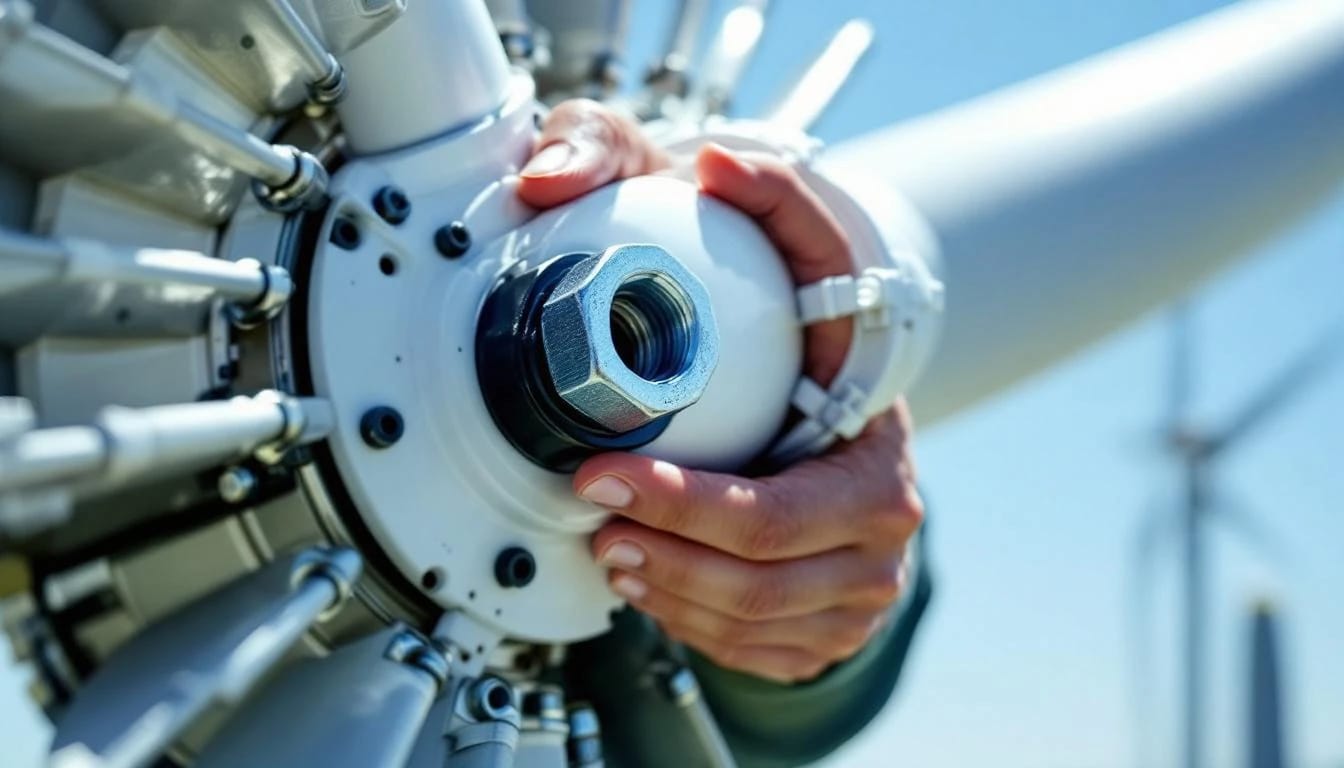
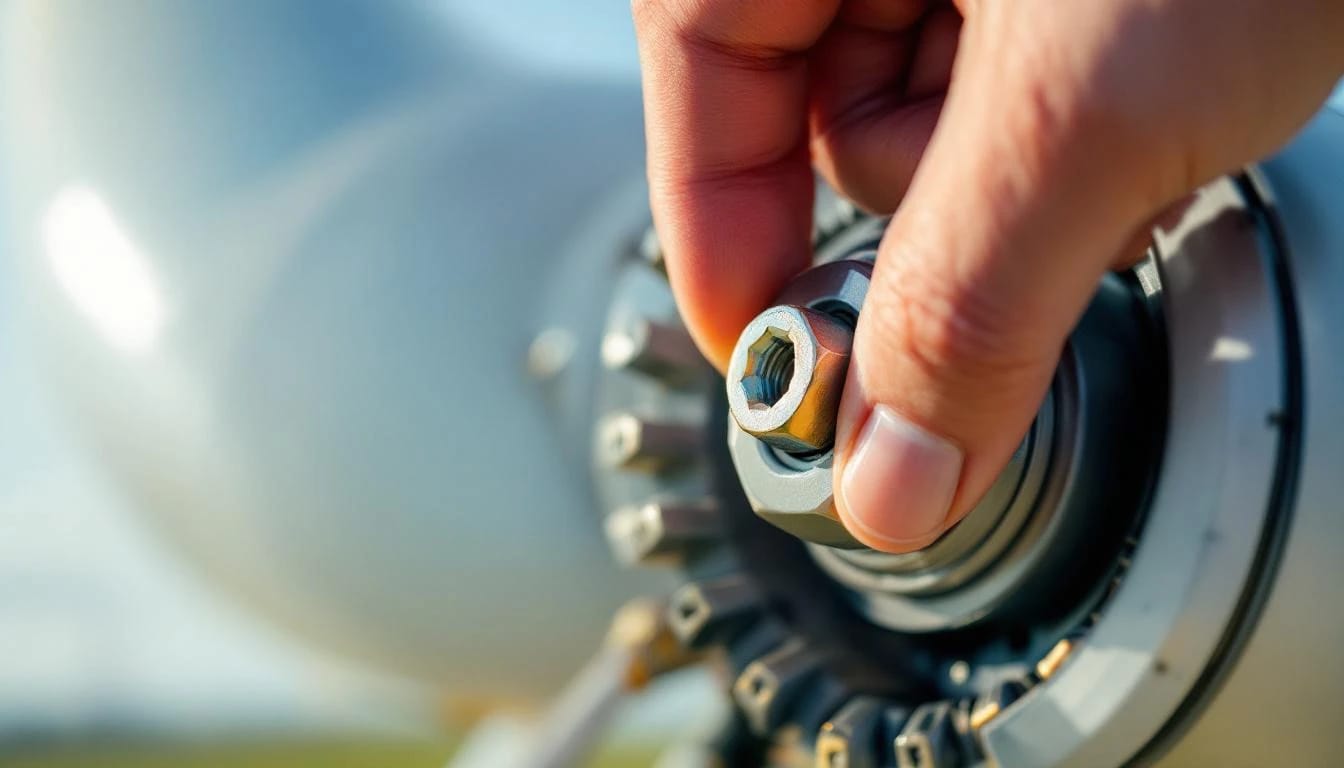
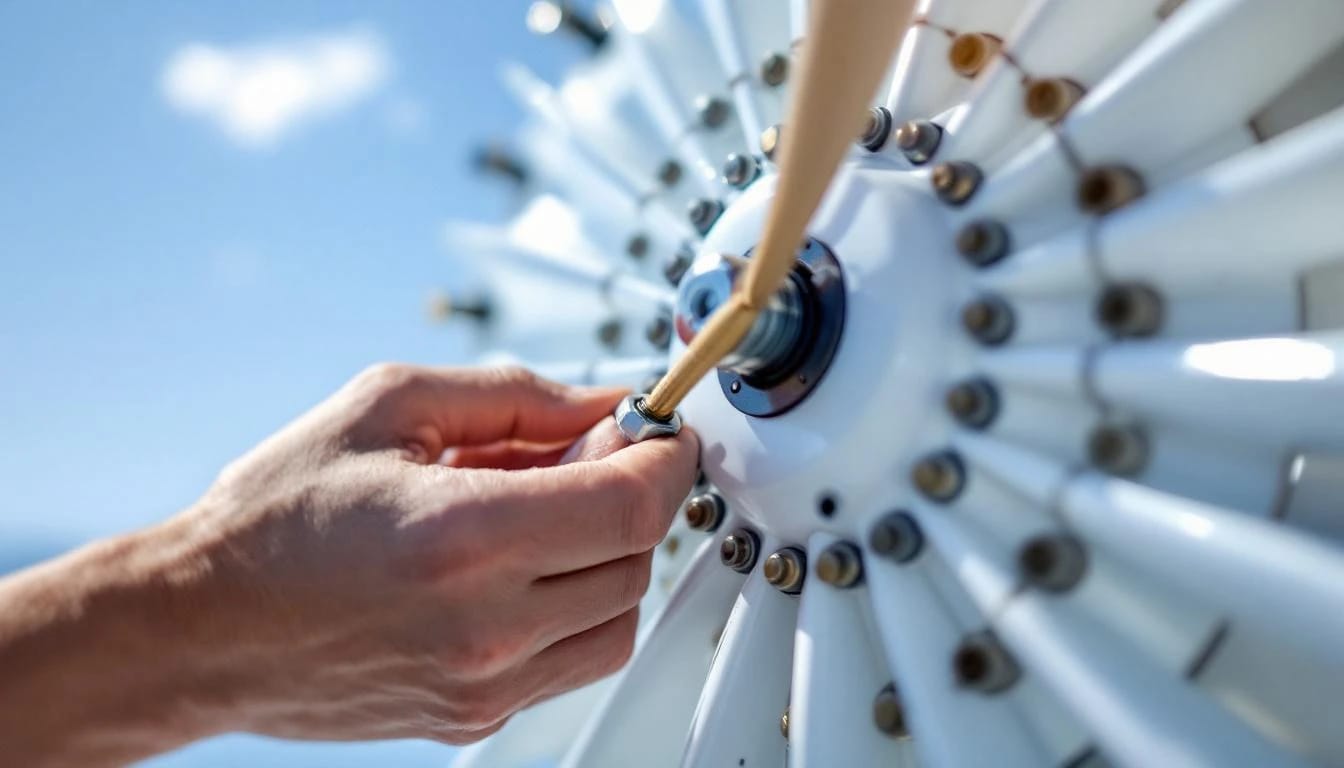
Blade attachment uses through-bolts and a keyed hub interface. The hub casting itself is nodular cast iron on the 1-2kW models and forged steel on the larger units—a sensible differentiation. After twelve months of operation on a Montana site averaging 6.2 m/s, blade-to-hub bolt torque remained within specification, and no hub cracking was observed. The rotor assembly balances acceptably out of the box, though one installer reported adding stick-on wheel weights to eliminate a mild vibration on an H-3000 unit.
![INLINE: Close-up of Aeolos H-series three-blade rotor hub showing through-bolt attachment and cast iron hub construction]
Generator and electrical components
The permanent-magnet alternator design delivers three-phase AC that's immediately rectified to DC within the nacelle. The rectifier board uses discrete diodes rather than a monolithic bridge—easier to field-repair but more vulnerable to individual component failure. Wire gauge is appropriate for rated current, and potting compound protects the board from moisture intrusion.
However, the included charge controller on battery-backed systems is minimalist. It provides basic dump-load regulation but lacks sophisticated maximum power point tracking (MPPT) found on premium turbines. For grid-tie installations, Aeolos ships a matched inverter that meets UL 1741 requirements and includes anti-islanding protection as mandated by NEC Article 705.12. The inverter efficiency tests around 92-94% across the operating range—respectable but trailing the 96-97% achieved by dedicated units from Fronius or SMA.
Grounding and bonding follow standard practice with a dedicated equipment grounding conductor and tower grounding per NEC 250.52. Installations must be performed by a licensed electrician familiar with NEC Article 705 interconnection requirements, and many jurisdictions require an electrical permit and utility interconnection agreement before energizing grid-tie systems.
Tower options and foundation loads
Aeolos offers monopole and tilt-up guyed towers in heights from 20 to 100 feet (6 to 30 meters). The towers themselves are reasonably engineered, with proper galvanization and adequate wall thickness. Foundation requirements scale with turbine size and tower height—the 5kW on a 100-foot tower requires a concrete pier approximately 4 feet in diameter and 6 feet deep, with anchor bolts sized for the anticipated overturning moment.
Guy cables on tilt-up towers must be re-tensioned after the first month of operation and annually thereafter. Turnbuckles and thimbles show appropriate sizing, though some installers prefer to replace the included cable clamps with swaged fittings for additional security.
Properties within five nautical miles of an airport or heliport require FAA Form 7460-1 filing if the turbine exceeds certain height thresholds per Part 77. Aeolos does not provide FAA marking or lighting, which must be added separately if required by the determination.
Real-world power output data
Comparing advertised power curves to field measurements reveals the typical gap between laboratory ratings and installed performance. An H-2000 installation in west Texas (average wind speed 6.8 m/s at hub height) generated 380-420 kWh per month during the windiest quarter and 180-240 kWh during summer lulls. Annualized output totaled approximately 3,400 kWh—well short of the 5,200 kWh suggested by applying the manufacturer's curve to the site's wind distribution.
The discrepancy stems from three factors: turbulence from nearby structures reducing effective wind speed, yaw error in rapidly shifting winds (the passive tail takes 3-5 seconds to realign), and conservative cut-out behavior where the turbine furls earlier than optimal to protect the alternator. In clean laminar flow on an isolated ridge, output tracks manufacturer claims more closely, but few residential sites offer such ideal conditions.
| Wind Speed (m/s) | Manufacturer Rating (W) | Measured Output (W) | Variance |
|---|---|---|---|
| 5 | 180 | 135-160 | -14 to -25% |
| 7 | 650 | 520-580 | -11 to -20% |
| 9 | 1,400 | 1,150-1,280 | -9 to -18% |
| 11 | 2,000 | 1,680-1,820 | -9 to -16% |
The H-5000 shows similar patterns. A Montana installation on a 100-foot tower (average wind speed 7.1 m/s) delivered 620-740 kWh monthly during peak months, dropping to 280-360 kWh in low-wind periods. Annual production reached roughly 5,800 kWh against an anticipated 9,200 kWh based on manufacturer projections. For context, Bergey Excel 10 installations in comparable wind regimes typically achieve 65-75% of rated annual output, while the Aeolos H-5000 delivered approximately 63%.
Noise and vibration characteristics
The H-series generates noticeable aerodynamic noise at wind speeds above 8 m/s. At 50 meters distance, the 2kW unit measures 45-48 dB(A) in 9 m/s winds—comparable to light rainfall or a quiet conversation. The 5kW unit reaches 52-55 dB(A) under similar conditions, approaching the sound level of a running dishwasher. Mechanical noise from the yaw bearing adds a faint creaking during wind direction changes but stays below the aerodynamic signature.
Vibration transmission through the tower structure is minimal with proper foundation installation. One site with an undersized concrete pier experienced noticeable vibration in the guy cables during high winds, resolved after augmenting the foundation. Tower climbing for maintenance introduces momentary vibration that dissipates quickly once the climber stops moving.
For information on local noise ordinances, check your state's DSIRE database or municipal code.
Maintenance requirements and durability
Aeolos recommends visual inspection every six months and full maintenance annually. The maintenance checklist includes checking blade attachment torque, inspecting slip rings and brushes (on models using them for yaw), verifying wire connections, lubricating the yaw bearing, and tensioning guy cables. The alternator uses sealed bearings rated for 50,000 hours, translating to roughly twelve years at typical rotational speeds—replacement bearings cost $60-$120 depending on model.
The charge controller and inverter represent the most likely failure points. One H-3000 installation experienced inverter failure at fourteen months due to a failed capacitor—covered under warranty but requiring turbine shutdown for two weeks during the replacement process. Keeping a spare controller or inverter is prudent for off-grid installations where downtime eliminates power generation entirely.
Blade leading edges show minor erosion after two years of operation in dusty environments. Aerosolized sand and grit gradually roughen the gel-coat, reducing aerodynamic efficiency by an estimated 2-3% before re-coating becomes necessary. This erosion rate is typical for fiberglass blades and not specific to Aeolos.
For more context on typical small turbine maintenance, see vertical-axis wind turbine maintenance schedules and horizontal-axis bearing replacement procedures.
Grid-tie integration and net metering
When configured for grid-tie operation, the H-series inverter synchronizes with utility voltage and frequency, feeding excess generation back through the meter. Net metering availability varies dramatically by state—some utilities offer full retail rate credits, others provide wholesale rates, and some cap system size or total program enrollment. Check DSIRE for your state's current net metering status.
Interconnection typically requires an application to the utility, an engineering review, and installation of a bidirectional meter. Some utilities assess standby charges or demand fees that erode the economic benefit of small wind systems. The interconnection process adds $200-$800 in fees and can take 6-12 weeks for approval.
Anti-islanding protection built into the Aeolos inverter detects grid outages and disconnects the turbine within two seconds, preventing backfeed that could endanger utility workers. This means the turbine provides no power during grid failures unless configured with a transfer switch and battery bank for backup operation—a configuration that adds $2,500-$5,000 in additional equipment and installation costs.
Federal and state incentive landscape
The federal Residential Clean Energy Credit (IRC §25D) provides a 30% tax credit on installed system cost through 2032, stepping down to 26% in 2033 and 22% in 2034. The credit applies to purchase and installation costs including the turbine, tower, inverter, wiring, and labor. File IRS Form 5695 with your tax return to claim the credit. The credit is nonrefundable but carries forward to future tax years if it exceeds your tax liability in the installation year.
State and utility incentives vary. Some states offer additional rebates or performance-based incentives, while others provide property tax exemptions for renewable energy systems. A few states have renewable energy production tax credits that pay per kilowatt-hour generated. The DSIRE database maintains current information on state-level incentives.
Local zoning and permitting add $300-$1,500 depending on jurisdiction. Some areas restrict turbine height, setback from property lines, or visual impact. Homeowners associations may prohibit wind turbines entirely or require design review approval. Research local regulations thoroughly before purchasing equipment.
For a broader look at incentives, see small wind turbine incentive guide and state-by-state residential wind policy.
Cost-benefit reality check
The total installed cost for an H-2000 system with a 60-foot tower runs $8,000-$11,000 after factoring in tower, foundation, electrical work, permits, and installation labor. After the 30% federal tax credit, net cost drops to $5,600-$7,700. If the system generates 3,400 kWh annually and electricity costs $0.13/kWh, the annual savings total roughly $442.
Simple payback extends to 13-17 years—well beyond the typical 10-12 year lifespan of the inverter and charge controller. Battery-backed systems add initial cost and periodic battery replacement, further extending payback. The financial case improves in high-wind locations with expensive electricity and favorable state incentives but remains marginal in most residential applications.
The H-5000 fares slightly better due to economy of scale. Total installed cost of $18,000-$24,000 drops to $12,600-$16,800 after the federal credit. At 5,800 kWh annual output and $0.13/kWh, savings reach $754 annually, yielding 17-22 year payback. Properties with electric heat or EV charging see faster payback due to higher consumption.
For comparison benchmarks, read Bergey Excel vs. Primus Air cost analysis and small wind return on investment calculator.
Quality comparison to competitors
The Aeolos H-series occupies a middle tier. Build quality exceeds budget Chinese imports sold direct through online marketplaces—heavier castings, better wiring, functional inverters—but trails established brands like Bergey, which uses aerospace-grade aluminum castings, precision-machined components, and inverters from tier-one manufacturers.
Primus Air turbines feature carbon-fiber blades and sophisticated MPPT controllers, reflected in their 40-50% price premium over Aeolos. At the other end, brands like Pikasola ship lighter-duty units at half the Aeolos price, acceptable for non-critical applications but showing higher failure rates in utility-scale operation.
The H-series represents a reasonable compromise for buyers seeking middle-market quality without premium pricing. Expected service life is ten to fifteen years with proper maintenance, compared to fifteen to twenty for Bergey and five to ten for budget imports.
What size Aeolos H-series turbine do I need for my home?
Turbine sizing depends on your average annual electricity consumption and site wind speed. A typical U.S. home uses 10,000-12,000 kWh per year. In a 6 m/s average wind site, an H-5000 might generate 5,000-6,000 kWh annually, covering roughly half your usage. Check your utility bills for twelve-month consumption, then multiply your average monthly wind speed by each turbine's expected capacity factor (typically 15-25% for small residential turbines) to estimate production.
Can I install an Aeolos turbine myself?
Installing the turbine itself is feasible for mechanically inclined owners, but electrical interconnection must be performed by a licensed electrician per NEC Article 705. Tower erection requires rigging skills, appropriate equipment, and ideally three or more people for safety. Many owners hire professional installers for tower work and electrical connections while handling foundation excavation and ancillary tasks themselves. Permit requirements in most jurisdictions assume licensed contractors for structural and electrical work.
How long do Aeolos turbines last?
Expected service life is ten to fifteen years for mechanical components with proper maintenance. The alternator, rotor hub, and tower structure typically reach or exceed this lifespan. Electronic components like the inverter and charge controller average eight to twelve years before failure. Blades may require leading-edge recoating every five to eight years in abrasive environments. Budgeting $300-$600 annually for maintenance and eventual component replacement is prudent.
Does the Aeolos H-series work in low wind areas?
Turbines require minimum average wind speeds around 5 m/s (11.2 mph) at hub height for economically viable generation. Below this threshold, annual output drops dramatically and payback periods extend beyond equipment lifespan. The H-series starts generating around 3 m/s but produces minimal power until winds exceed 5-6 m/s. Use the wind resource maps from NREL to assess your site, or install an anemometer at proposed hub height for twelve months to collect actual data before purchasing equipment.
What maintenance does an Aeolos H-series require?
Plan for semi-annual visual inspections covering blade integrity, fastener tightness, guy cable tension, and wire connections. Annual maintenance includes lubricating the yaw bearing, checking slip rings (if present), verifying electrical continuity, and re-torquing all fasteners. Every three to five years, blades benefit from cleaning and possible leading-edge repair. Sealed alternator bearings require replacement around year twelve. Budget four to six hours labor for annual maintenance plus parts costs of $50-$150.
Bottom line
The Aeolos H-series delivers functional mid-tier quality at mid-tier pricing, with real-world output running 15-25% below manufacturer curves in typical residential installations. Build quality is adequate without being exceptional, and financial payback stretches beyond fifteen years in most scenarios even after federal tax credits. For properties in genuine high-wind areas with expensive electricity and favorable state incentives, the H-series represents a reasonable alternative to premium brands, but marginal sites should reconsider whether small wind makes economic sense at all. Before committing, collect twelve months of on-site wind data at hub height and run detailed financial projections using conservative output estimates.
Share this article
windturbinehome.com/s/fd491c
Editorial note: This article was researched and written by a member of the Wind Turbine Home editorial team. AI-assisted tools were used for spell-checking and light grammar review only — all research, analysis, and conclusions are our own. Our editorial policy prohibits sponsored content and paid placements. Read our editorial policy →
Related reading
wind turbine brands
Bergey Excel 15 Review: Still the Residential Workhorse?
The Bergey Excel 15 remains a proven choice for serious residential wind power—but is this 7.5-kW turbine still worth its premium in 2025? Our review weighs performance, reliability, and real-world economics.
wind turbine brands
Best Home Wind Turbines in the UK: MCS-Certified Picks for 2026
MCS-certified small wind turbines for UK homes include Bergey Excel 1 (1kW), Evance R9000 (5kW), and SD6 (6kW). Proper site assessment and BS 7671 compliance are critical for safe, legal installation.
wind turbine brands
MCS-Certified Wind Turbines UK: MIS 3003 Standard Explained
MCS certification proves UK wind turbines meet MIS 3003 quality and safety standards. Required for Smart Export Guarantee payments and Permitted Development rights.
wind turbine brands
Cheapest 1 kW Wind Turbine: Where Budget Models Actually Work
Budget 1 kW wind turbines start at $800-1,400, but total installed cost hits $4,000-7,000. Learn which cheap models survive real-world use and where they pencil out.
wind turbine brands
Best Wind Turbines Under $1000 in 2026 | Buyer's Guide
Compare the top budget wind turbines under $1000 for homes in 2026. We tested vertical-axis and small horizontal models for real-world power output and durability.
wind turbine brands
Best Wind Turbines Under $500 in 2026: Budget Models Tested
Budget wind turbines under $500 can generate 50-400W in steady winds. We tested seven models for build quality, real-world output, and warranty support.
wind turbine brands
Eclectic Energy D400 Review: Marine Micro-Wind Generator
The Eclectic Energy D400 delivers 400W peak output in a marine-grade package suited to boats, caravans, and coastal sheds—not grid-tied homes.
wind turbine brands
Is Southwest Windpower Out of Business? What Happened & Alternatives
Southwest Windpower closed in 2013 after manufacturing the popular Air Breeze and Whisper series turbines. Learn what caused the shutdown and which brands now fill the gap.
wind turbine brands
Rutland 914i Review: 90W Wind Turbine for Boats, Cabins
The Marlec Rutland 914i puts out 90W continuous in 12.5 m/s wind, which suits boat, cabin and off-grid battery charging where reliability beats peak output.