Bergey Excel 15 Review: Still the Residential Workhorse?
The Bergey Excel 15 remains a proven choice for serious residential wind power—but is this 7.5-kW turbine still worth its premium in 2025? Our review weighs performance, reliability, and real-world economics.
Share this article
windturbinehome.com/s/338dac
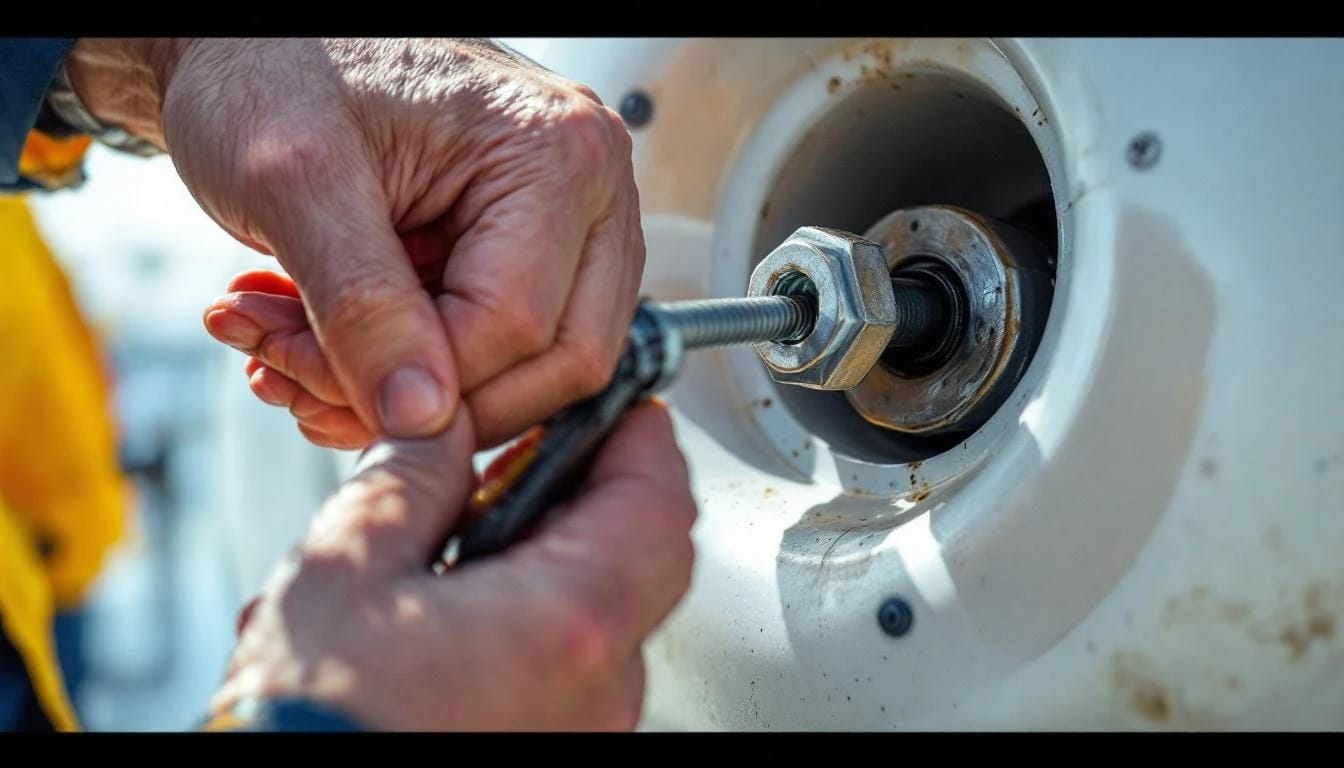
The Bergey Excel 15 delivers 7.5 kW rated capacity on a 35–140 ft tower, making it one of the most installed residential turbines in North America. After 30+ years of production, the Excel 15 still commands respect for its rugged direct-drive design and field-proven reliability. Yet with upfront costs around $45,000–$65,000 installed, buyers naturally ask whether newer competitors from Primus, Aeolos, or even Bergey's own Excel 10 offer better value in 2025.
What makes the Bergey Excel 15 different
Unlike gearbox turbines that wear faster, the Excel 15 uses a permanent-magnet alternator directly coupled to the rotor. That means fewer moving parts, less maintenance, and a design life approaching 30 years. Bergey WindPower introduced the model in 1983—the current iteration is the Excel 15-R, which adds a redesigned inverter and meets UL 1741 SA grid-support requirements under NEC Article 705.
The three-blade downwind rotor spans 15 feet (4.6 meters). Cut-in speed is 7 mph; rated output arrives at 31 mph; passive furling protects the machine in storms above 50 mph. Peak output is 7.5 kW; annual energy production on a 100 ft tower in a 12-mph average wind site typically ranges 13,000–18,000 kWh, enough to offset 85–120% of a typical U.S. home's consumption.
All Bergey residential turbines ship from Norman, Oklahoma, carry a five-year warranty on parts, and include a 120/240 VAC grid-tie inverter. The Excel 15 is type-certified under AWEA 9.1-2009, which remains the recognized standard for small wind in the United States despite being superseded by IEC 61400-2 internationally.
Performance in real-world installations
The Department of Energy Small Wind Guidebook notes that "wind energy systems can be one of the most cost-effective home-based renewable energy systems" if three conditions align: sufficient wind resource, adequate space for safe tower setups, and favorable local zoning. The Excel 15 shines in those scenarios—but struggles when compromised on height or siting.
Field data from DSIRE-listed projects in Wyoming, Montana, and the Texas Panhandle show annual capacity factors between 18% and 28% on 100 ft or taller guyed lattice towers. Owners who installed 80 ft monopoles in wooded Michigan or Ohio report disappointing 10–14% capacity factors, confirming the old rule: tower height matters more than any other variable.
One rancher near Lusk, Wyoming, logged 16,200 kWh over 12 months with his Excel 15 on a 120 ft Rohn 25G tower—enough to zero out his electric bill and bank 3,400 kWh of net-metering credits. Another system in Vermont, hampered by a 60 ft tilt-up and nearby hardwoods, delivered just 4,800 kWh. Both owners paid comparable installed prices; the Vermont example illustrates how under-towering erases return on investment.
Installation requirements and NEC compliance
NEC Article 705 governs interconnection of on-site generation, requiring rapid shutdown, ground-fault protection, and arc-fault detection when applicable. The Bergey GridTek 10 inverter (included with the Excel 15-R) meets UL 1741 SA, which adds ride-through and frequency-watt response for grid stability. Your utility's interconnection agreement will reference IEEE 1547-2018; most investor-owned utilities in the U.S. now follow a streamlined process for systems under 25 kW AC.
Zoning hurdles vary wildly. FAA Form 7460-1 notification is mandatory if total structure height exceeds 200 ft above ground level, though most Excel 15 installations stay well below that threshold. Local ordinances may impose setback rules—commonly 1.5× total height from property lines—and some municipalities cap tower height at 80 or 100 ft. Always verify before committing to purchase.
Foundation work depends on tower choice. A guyed lattice (Rohn 25G or equivalent) needs a 4 ft × 4 ft × 4 ft concrete pad plus three or four guy-anchor points, each requiring 3 ft × 3 ft × 3 ft piers. A freestanding monopole demands a deeper engineered foundation, often 6 ft × 6 ft × 6 ft, and costs $8,000–$12,000 more than guyed setups. All electrical work must be performed or inspected by a licensed electrician familiar with Article 705 and local amendments.
Comparing the Excel 15 to modern rivals
| Model | Rated kW | Rotor Ø (ft) | Cut-in (mph) | Price range (installed) | Warranty |
|---|---|---|---|---|---|
| Bergey Excel 15 | 7.5 | 15.0 | 7 | $45,000–$65,000 | 5 yr parts |
| Bergey Excel 10 | 10.0 | 14.0 | 7 | $50,000–$70,000 | 5 yr parts |
| Primus Windpower AIR X Marine | 0.4 | 3.8 | 7 | $1,800–$3,000 | 3 yr |
| Aeolos-H 10kW | 10.0 | 19.7 | 6 | $28,000–$42,000 | 2 yr |
| Pikasola 5kW HAWT | 5.0 | 16.4 | 6 | $15,000–$25,000 | 1 yr |
The Excel 10 offers higher rated output and slightly better swept area efficiency, though real-world energy yield differences are minor unless wind speeds consistently exceed 28 mph. The Excel 10 costs $5,000–$10,000 more installed, making it the choice only when marginal energy gains justify the premium.
Aeolos turbines ship from China at half the landed cost, but warranty service is limited and quality control varies between batches. Owners report mixed experiences: some systems run flawlessly for years; others face blade-balancing issues or inverter failures within 18 months. Pikasola occupies a similar niche—attractive pricing undermined by sparse dealer networks and unproven longevity.
The Excel 15's value proposition rests on service continuity. Bergey maintains parts inventory for turbines installed in the 1980s, and independent wind-tech contractors across the Great Plains stock common wear items. That institutional support reduces lifetime cost of ownership even when upfront price is higher.
Federal and state incentives in 2025
The IRS Form 5695 Residential Clean Energy Credit (IRC §25D) covers 30% of total installed cost—including turbine, tower, foundation, wiring, and labor—through December 31, 2032. For a $55,000 Excel 15 project, that yields $16,500 in federal tax credit, assuming sufficient tax liability. The credit is non-refundable but can carry forward to future tax years.
DSIRE catalogs state and utility incentives. Montana's Alternative Energy Loan Program offers 3.25% financing for residential renewables. Oklahoma exempts wind systems from sales tax. Many rural electric cooperatives still honor net metering at retail rates; others have shifted to wholesale buyback or time-of-use billing that penalizes daytime wind generation. Confirm your utility's current tariff before modeling payback.
Accelerated depreciation (MACRS) applies only to business or farm installations, not pure residential. A ranch that allocates 50% of turbine output to irrigation pumps or workshop loads may qualify for partial Section 179 expensing; consult a CPA familiar with energy credits.
Maintenance, reliability, and total cost of ownership
Bergey recommends annual visual inspections, guy-wire tension checks every three years, and a full service call every five years. Budget $500–$800 for a professional climb inspection. The only routine replacement item is the slip-ring assembly, typically swapped around year 15 at $1,200 parts and labor.
Bearing life exceeds 100,000 hours in most installations. Inverter MTBF is manufacturer-specified at 15 years; Bergey sells replacement GridTek units for $3,200. Lightning is the leading cause of premature failure—proper grounding per NEC Article 250 and tower-mounted surge arresters reduce risk but cannot eliminate it entirely in high-strike zones.
Compared to geared turbines, the Excel 15 logs fewer catastrophic failures. Southwest Windpower's former Skystream line, for example, suffered widespread gearbox and yaw-bearing issues before the company ceased operations in 2013. Direct-drive designs avoid that failure mode, though they trade off slightly lower efficiency at partial loads.
Over 25 years, total cost of ownership for a well-sited Excel 15 includes:
- Initial installed cost: $55,000
- Federal tax credit: –$16,500
- Net upfront: $38,500
- Maintenance (years 1–25): $6,000
- Inverter replacement (year 15): $3,200
- Slip-ring replacement (year 15): $1,200
- Lifetime net cost: $48,900
A system producing 15,000 kWh/year at $0.13/kWh retail electricity saves $1,950 annually, or $48,750 over 25 years—roughly break-even before accounting for avoided rate escalation. Sites with 14-mph average wind or better push ROI into the black; sites below 11 mph rarely pencil without additional subsidies.
Who should buy the Excel 15 in 2025
This turbine makes sense when all four conditions hold:
- Class-3 or better wind resource (annual average 12+ mph at hub height), confirmed by on-site anemometry or NREL wind-resource maps.
- Tower clearance of 100+ feet, whether guyed lattice or engineered monopole, with minimal turbulence from trees or structures within 500 ft.
- Long-term ownership horizon—at least 15 years—to amortize the fixed costs and justify the premium over cheaper imports.
- Access to net metering or favorable buyback that credits excess generation near retail rates.
The Excel 15 is not ideal for:
- Urban or suburban lots under two acres
- Sites where zoning caps towers at 65 ft or imposes punitive setbacks
- Buyers chasing fast payback; rooftop solar almost always wins on IRR for the same capital
- Off-grid cabins with modest loads (a 1–3 kW turbine plus battery bank is more cost-effective)
For the right application—remote ranch, telecom site, irrigation pump, workshop—the Excel 15 remains unmatched in proven durability. For marginal sites or budget-conscious projects, newer entrants offer acceptable performance at lower risk.
How long does a Bergey Excel 15 last?
Manufacturer design life is 30 years. Many early-production Excel 1 (10 kW) units from the 1980s remain operational, though most have undergone bearing and inverter replacements. Real-world service life hinges on installation quality, maintenance rigor, and lightning exposure.
Can I install the Excel 15 myself?
Tower erection and rotor installation demand rigging expertise, fall-protection equipment, and often a gin pole or crane. Most jurisdictions require a licensed electrician for grid interconnection under NEC Article 705. DIY work is legal on private agricultural land in some states but voids warranty and complicates permitting. Budget for professional installation.
What happens during a power outage?
Standard grid-tie inverters shut down when the utility loses voltage, per IEEE 1547 anti-islanding rules. The turbine freewheels safely but produces no power. Adding a battery backup system with an islanding-capable inverter allows off-grid operation during outages, but raises installed cost by $15,000–$25,000.
How does the Excel 15 compare to solar for the same budget?
A $55,000 solar array (before incentives) in a good solar state yields 12–15 kW DC or roughly 15,000–20,000 kWh/year—similar to a well-sited Excel 15. Solar wins on simplicity, modularity, and lower maintenance. Wind wins on winter production, nighttime generation, and smaller land footprint. Hybrid systems capture both resources but require careful inverter sizing and dual permitting.
Will the turbine harm birds or create noise?
Slow blade-tip speeds (60–80 mph) result in far fewer avian collisions than utility-scale wind farms. Anecdotal evidence suggests residential turbines cause fewer bird deaths per year than domestic cats or picture windows. Noise at 100 ft distance measures 40–45 dBA, comparable to light traffic. Neighbors within 300 ft may notice a rhythmic whoosh during high winds; setback rules exist for this reason.
Bottom line
The Bergey Excel 15 is a workhorse—not a racehorse. Buyers pay a premium for three decades of field-proven design, North American parts support, and direct-drive reliability that cheaper imports struggle to match. If wind resource, zoning, and net metering align, the Excel 15 delivers steady energy yield and reasonable long-term ROI. If any pillar is shaky—marginal wind, restrictive height limits, unfavorable utility tariffs—redirect your capital to rooftop solar or wait for next-generation turbine designs that lower the cost floor.
For ranchers, remote homesteads, and serious off-grid builders who've done the homework, the Excel 15 remains a sensible, if unexciting, choice in 2025. Run the numbers with local wind data, request quotes from certified Bergey dealers, and compare levelized cost of energy before signing a purchase order.
Next step: Download NREL's System Advisor Model to model site-specific performance, or consult the DOE Small Wind Guidebook for worksheet-based sizing. Request an interconnection application from your utility early—approval timelines range from two weeks to six months depending on queue backlog.
Share this article
windturbinehome.com/s/338dac
Editorial note: This article was researched and written by a member of the Wind Turbine Home editorial team. AI-assisted tools were used for spell-checking and light grammar review only — all research, analysis, and conclusions are our own. Our editorial policy prohibits sponsored content and paid placements. Read our editorial policy →
Related reading

wind turbine brands
Aeolos H-Series Wind Turbine Review: Build Quality & Output
Independent review of Aeolos H-series small wind turbines covering construction quality, real-world power output, and installation considerations for homes.

wind turbine brands
Best Home Wind Turbines in the UK: MCS-Certified Picks for 2026
MCS-certified small wind turbines for UK homes include Bergey Excel 1 (1kW), Evance R9000 (5kW), and SD6 (6kW). Proper site assessment and BS 7671 compliance are critical for safe, legal installation.

wind turbine brands
MCS-Certified Wind Turbines UK: MIS 3003 Standard Explained
MCS certification proves UK wind turbines meet MIS 3003 quality and safety standards. Required for Smart Export Guarantee payments and Permitted Development rights.

wind turbine brands
Cheapest 1 kW Wind Turbine: Where Budget Models Actually Work
Budget 1 kW wind turbines start at $800-1,400, but total installed cost hits $4,000-7,000. Learn which cheap models survive real-world use and where they pencil out.

wind turbine brands
Best Wind Turbines Under $1000 in 2026 | Buyer's Guide
Compare the top budget wind turbines under $1000 for homes in 2026. We tested vertical-axis and small horizontal models for real-world power output and durability.

wind turbine brands
Best Wind Turbines Under $500 in 2026: Budget Models Tested
Budget wind turbines under $500 can generate 50-400W in steady winds. We tested seven models for build quality, real-world output, and warranty support.
wind turbine brands
Eclectic Energy D400 Review: Marine Micro-Wind Generator
The Eclectic Energy D400 delivers 400W peak output in a marine-grade package suited to boats, caravans, and coastal sheds—not grid-tied homes.

wind turbine brands
Is Southwest Windpower Out of Business? What Happened & Alternatives
Southwest Windpower closed in 2013 after manufacturing the popular Air Breeze and Whisper series turbines. Learn what caused the shutdown and which brands now fill the gap.
wind turbine brands
Rutland 914i Review: 90W Wind Turbine for Boats, Cabins
The Marlec Rutland 914i puts out 90W continuous in 12.5 m/s wind, which suits boat, cabin and off-grid battery charging where reliability beats peak output.