Aeolos H 3 kW vs 5 kW: Stepping Up Your Wind System
Compare Aeolos H 3 kW and 5 kW horizontal-axis wind turbines side-by-side. Performance data, tower requirements, electrical specs, and cost analysis for residential sites.
Share this article
windturbinehome.com/s/8a5205
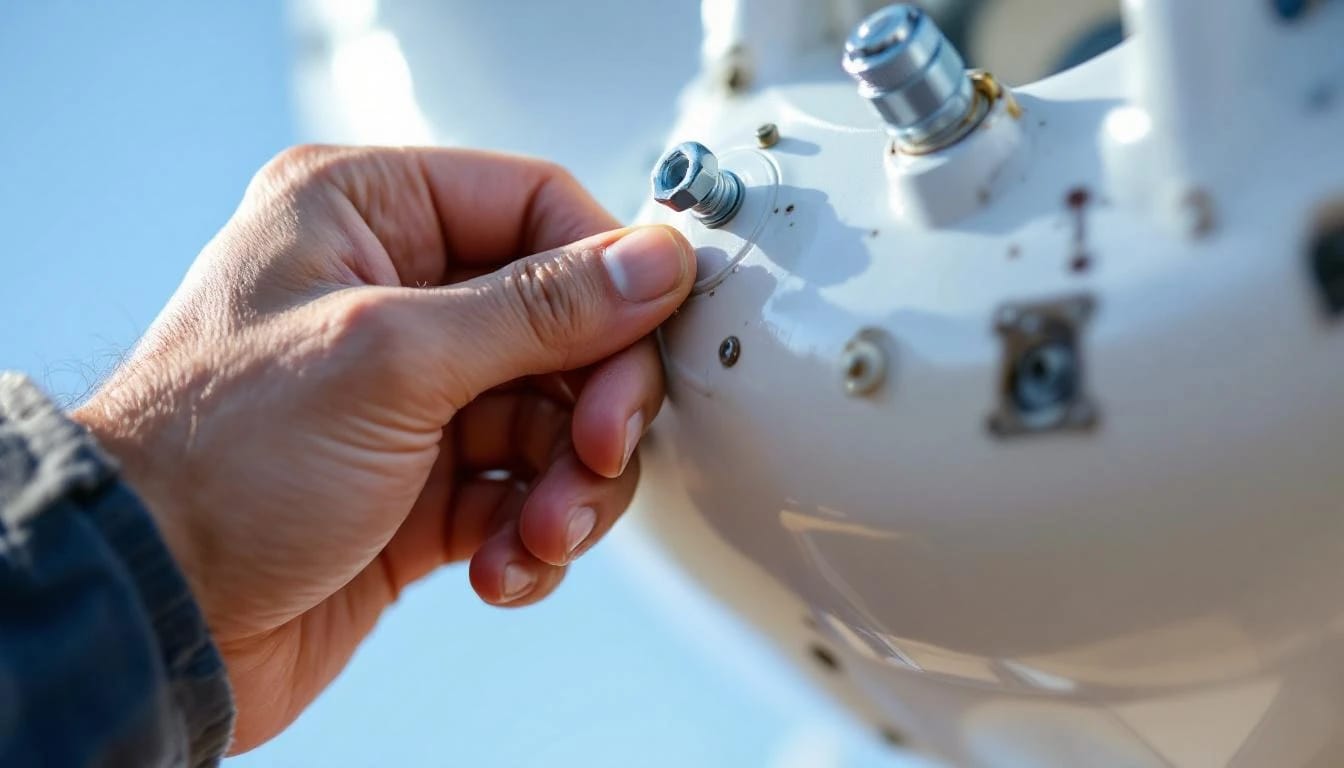
The Aeolos-H 3 kW and 5 kW turbines represent a sensible step-up path for homeowners ready to generate meaningful power from wind. Both models share the same three-blade horizontal-axis design and swept area efficiency, but the 5 kW unit delivers roughly 45-60% more annual energy at sites with average wind speeds above 5 m/s. The larger turbine demands a taller tower, heavier foundation, and upgraded inverter, pushing the all-in installed cost from around $14,000-$18,000 for the 3 kW to $21,000-$27,000 for the 5 kW. That premium buys faster payback when wind resources are strong and electricity rates exceed $0.14/kWh.
Rotor and swept area: where both models diverge
The Aeolos-H 3 kW spins a 3.2 m diameter rotor with a swept area of 8.04 m². The 5 kW extends that to 5.6 m diameter and 24.6 m², tripling the area exposed to moving air. This difference governs everything downstream. Wind power scales with the cube of velocity and the square of rotor radius, so a larger disc captures exponentially more energy at the same wind speed.
Both turbines use glass-fiber reinforced polyester blades with built-in aerodynamic twist. The root sections are bolted to a cast-aluminum hub that houses the pitch-adjustment mechanism. Maximum rotor speed on the 3 kW is 380 rpm; the 5 kW peaks at 310 rpm. Lower rotational speed reduces blade-tip noise and eases mechanical stress on the larger structure.
Neither turbine includes active yaw motors. Instead, a tail vane keeps the rotor perpendicular to the wind. In gusty, shifting conditions the vane occasionally over-corrects, causing brief power dips. This passive yaw system is simpler and lighter than motorized alternatives, but it reacts more slowly during rapid wind-direction changes.
![INLINE: Close-up of Aeolos H turbine rotor hub and blade attachment points]
Rated power and the wind-speed reality
Aeolos rates the smaller unit at 3 kW and the larger at 5 kW, both measured at 12 m/s wind speed. Many residential sites average 4-6 m/s at roof height, which means the turbines spend most hours producing far below nameplate. At 6 m/s the 3 kW outputs roughly 0.5 kW; the 5 kW delivers about 1.2 kW. Only during storm fronts and sustained high-pressure gradients do either turbine approach rated capacity.
The power curve for both models follows the classic cubic relationship until the microprocessor-controlled furling system intervenes. At 12 m/s the blades begin to feather, spilling wind and capping power. Full shutdown occurs at 20 m/s to protect the alternator and gearbox. Cut-in wind speed is 3 m/s for both, though actual charging starts closer to 3.5 m/s after accounting for inverter conversion losses.
Annual energy production depends entirely on local wind regime. A 3 kW Aeolos mounted on a 12 m tower at a site with 5.5 m/s average will generate 3,200-4,000 kWh/year. The same site with a 5 kW on an 18 m tower yields 6,500-8,200 kWh/year. Those figures assume 80% availability and include seasonal variation.
Tower height and foundation scaling
Aeolos specifies a minimum 9 m free-standing tower for the 3 kW and 12 m for the 5 kW. In practice, taller installations capture stronger, less turbulent wind. A guyed lattice tower or monopole can extend the 3 kW to 15 m and the 5 kW to 24 m without exceeding structural limits. Guy anchors require a radius equal to 50-75% of tower height, so larger turbines consume more land.
Foundation loads scale with tower height and turbine mass. The 3 kW unit weighs 140 kg; the 5 kW reaches 285 kg. A 12 m guyed tower for the 3 kW typically needs three concrete piers, each 0.6 m diameter × 1.5 m deep, plus a central base 1.0 m³. The 5 kW on an 18 m tower demands piers 0.8 m diameter × 2.0 m deep and a 2.5 m³ central footing. Soil bearing capacity and frost depth vary by region; a licensed structural engineer must certify the design before pouring.
FAA Part 77 requires filing Form 7460-1 for any structure exceeding 61 m above ground or within glide slopes of airports. Most residential wind towers fall below that threshold, but local zoning may impose height limits, setback rules, or special-use permits. The taller 5 kW installation faces stricter scrutiny in municipalities with 15 m blanket restrictions.
Electrical output and grid connection
Both Aeolos models use a three-phase permanent-magnet alternator producing variable-frequency AC. The 3 kW alternator outputs 0-420 V AC; the 5 kW spans 0-480 V AC, both depending on rotor speed. A rectifier bridge inside the nacelle converts AC to DC, then sends it down the tower on twisted-pair cable to the ground-mounted inverter.
The 3 kW system typically pairs with a 3.5-4.0 kW grid-tie inverter; the 5 kW requires a 5.5-6.0 kW unit. Both inverters must comply with IEEE 1547 and UL 1741 for anti-islanding protection and voltage/frequency ride-through. NEC Article 705 mandates that combined solar-plus-wind AC output not exceed 120% of the main panel busbar rating, so a 200 A panel can accept up to 240 A of inverter back-feed before requiring a service upgrade.
Battery backup is optional but popular in off-grid or hybrid configurations. A 10 kWh lithium-iron-phosphate bank costs $4,000-$6,000 and smooths the intermittent wind supply. The charge controller must handle the higher voltage swings from the 5 kW turbine, adding $800-$1,200 to the total.
Performance in real-world wind conditions
Wind is rarely steady. Gusts, lulls, and directional shifts dominate the actual power trace. The 3 kW Aeolos responds quickly to gusts because of its lower rotational inertia, but it also loses energy faster when wind drops. The 5 kW rotor acts as a flywheel, sustaining output through brief lulls. Over a full year the larger turbine's capacity factor—actual energy divided by theoretical maximum—runs 18-25% at good sites, compared to 15-22% for the 3 kW.
Turbulence intensity matters. Trees, buildings, and terrain features create eddies that reduce effective wind speed and increase fatigue loading. The 5 kW's longer blades experience higher bending moments in turbulent flow, occasionally triggering premature furling. Sites with clean fetch—open fields, coastal plains, ridge tops—favor the larger machine. Suburban or wooded parcels tilt the advantage toward the smaller, more forgiving 3 kW.
Noise is proportional to blade-tip speed. The 3 kW at full song produces approximately 45-48 dB at 50 m distance; the 5 kW reaches 50-53 dB. Both levels comply with typical residential sound ordinances (55 dB daytime, 45 dB nighttime at property line), but neighbors within 75 m may hear the characteristic whoosh during high-wind events.
Installation cost breakdown
The 3 kW Aeolos turbine retails for $6,500-$7,800 depending on dealer and shipping. Add $3,200-$4,500 for a 12 m guyed tower kit, $1,800-$2,400 for the grid-tie inverter, and $2,500-$4,000 for professional installation (foundation, tower erection, electrical run, interconnection paperwork). Total: $14,000-$18,700.
The 5 kW turbine costs $11,500-$13,800. Tower expenses climb to $5,000-$7,200 for an 18 m guyed system. A suitable inverter runs $2,800-$3,600. Installation labor increases to $3,800-$5,500 because of the heavier components and deeper foundations. All-in installed cost: $23,100-$30,100.
Permit fees vary by jurisdiction but typically range from $200-$800 for the smaller system and $400-$1,200 for the larger. Engineering stamps for structural and electrical plans add $800-$1,500. These soft costs are often overlooked during initial budgeting.
| Component | Aeolos-H 3 kW | Aeolos-H 5 kW |
|---|---|---|
| Turbine (retail) | $6,500-$7,800 | $11,500-$13,800 |
| Tower & hardware | $3,200-$4,500 | $5,000-$7,200 |
| Inverter | $1,800-$2,400 | $2,800-$3,600 |
| Installation labor | $2,500-$4,000 | $3,800-$5,500 |
| Permits & engineering | $1,000-$2,000 | $1,400-$2,500 |
| Total installed | $14,000-$18,700 | $23,100-$30,100 |
Federal and state incentives
The federal Residential Clean Energy Credit (IRC §25D, IRS Form 5695) offers 30% back on the total installed cost of both turbine and balance-of-system components, including the tower, inverter, wiring, and labor. For the 3 kW system that translates to $4,200-$5,600; the 5 kW earns $6,900-$9,000. The credit runs through 2032, then steps down to 26% in 2033 and 22% in 2034.
State incentives vary widely. California's Self-Generation Incentive Program (SGIP) historically covered wind but now focuses on energy storage. New York's NY-Sun program includes wind in some utility territories. Massachusetts offers the Residential Renewable Energy Income Tax Credit (15% state credit, capped at $1,000). Check the Database of State Incentives for Renewables & Efficiency (DSIRE) for current programs in your state.
Net metering policies also influence economics. Under full retail net metering, every kWh exported to the grid offsets a future kWh at the same rate. Avoided-cost or time-of-use net metering pays less for midday wind exports. The 5 kW turbine's higher production makes it more sensitive to net-metering structure; a household that already exports significant solar power during the day may see limited benefit from adding wind.
Maintenance schedule and lifespan
Both Aeolos models require annual inspections. Check guy-wire tension, tower bolts, blade surface for cracks, and tail-vane pivot bearing for wear. Every three years the alternator brushes (if used) and slip rings need cleaning; every five years the gearbox oil should be changed. Blade balancing may be necessary after 7-10 years if vibration increases.
Bearing replacement is the major mid-life service. The 3 kW main shaft bearing typically lasts 12-15 years; the 5 kW bearing endures similar cycles but costs $400-$600 versus $250-$350 for the smaller unit. Budget $150-$300 annually for minor parts and inspection labor, plus $1,200-$2,000 every ten years for major overhauls.
Design life for both turbines is 20 years, though well-maintained units in benign wind climates have exceeded 25 years. The tower will outlast the turbine if galvanizing is intact. At end-of-life, the alternator and inverter have scrap value; blades are difficult to recycle and usually go to landfill.
When the 5 kW makes sense
Choose the 5 kW Aeolos if your site meets four criteria: average wind speed above 5.5 m/s at hub height, electricity rates over $0.14/kWh, available land for an 18 m tower with guy anchors, and annual consumption exceeding 7,000 kWh. The larger machine pays back in 8-12 years under those conditions, even after the higher upfront cost.
Sites with seasonal wind peaks—spring and autumn in the Great Plains, winter along coastlines—benefit from the 5 kW's ability to bank excess production during high-output months. Pairing the turbine with a battery system or time-of-use rate schedule captures more value from those surges.
Conversely, stick with the 3 kW if your average wind speed hovers around 4.5-5.0 m/s, your lot size limits tower height to 12 m, or local ordinances cap residential turbines at 10 kW nameplate. The smaller system still offsets 25-40% of a typical household's electricity use without the permitting headaches and neighbor relations friction that taller towers invite.
Can I upgrade from a 3 kW to a 5 kW later by swapping the nacelle?
No. The rotor diameter, tower structural load rating, and foundation design are all turbine-specific. Moving from 3 kW to 5 kW requires a new tower, new foundation, and new inverter. The only reusable components are the disconnect switch and AC wiring inside the house, provided they were sized for future expansion.
How much wind speed difference does tower height make?
Wind speed increases roughly 10-20% for every doubling of height above ground, depending on surface roughness. Raising the 3 kW from 9 m to 18 m might boost average wind speed from 4.8 m/s to 5.6 m/s, which translates to about 50% more energy because of the cubic power relationship. The 5 kW sees similar gains when moved from 12 m to 24 m.
Do I need a licensed electrician for the grid connection?
Yes. NEC Article 705 interconnection work—installing the AC disconnect, making the connection to the main panel or subpanel, and coordinating with the utility—must be performed by a licensed electrician. Most utilities also require a witness test before granting permission to operate. DIY wiring of the DC run from tower base to inverter is legal in some states if you pull permits, but the AC side always needs a licensed professional.
What happens during grid outages?
Standard grid-tie inverters shut down immediately when grid voltage disappears, preventing back-feed to utility lines where lineworkers may be making repairs. The turbine continues spinning, but the inverter dumps energy as heat or signals the turbine controller to furl the blades. Adding a battery system with an automatic transfer switch lets the turbine supply the house during outages, but that setup costs an additional $6,000-$10,000.
How long does the federal tax credit take to process?
The 30% Residential Clean Energy Credit is claimed on IRS Form 5695 when you file your annual tax return. If your tax liability is less than the credit amount, the unused portion rolls forward to future years indefinitely. Most filers see the credit applied within the normal refund cycle—2-3 weeks for e-filed returns with direct deposit, 6-8 weeks for paper returns.
Bottom line
The Aeolos-H 5 kW delivers 60-80% more annual energy than the 3 kW at sites with strong, consistent wind, but it costs 55-65% more to install. Run a site-specific energy model using measured or modeled wind data at the proposed hub height, then compare the levelized cost of energy for each turbine over 20 years. If the numbers favor the larger machine and your property can accommodate the taller tower, the 5 kW accelerates payback and maximizes long-term savings. Request quotes from at least two certified installers and verify that all electrical work will comply with NEC Article 705 and local amendments.
Share this article
windturbinehome.com/s/8a5205
Editorial note: This article was researched and written by a member of the Wind Turbine Home editorial team. AI-assisted tools were used for spell-checking and light grammar review only — all research, analysis, and conclusions are our own. Our editorial policy prohibits sponsored content and paid placements. Read our editorial policy →
Related reading
wind turbine brands
Aeolos H-Series Wind Turbine Review: Build Quality & Output
Independent review of Aeolos H-series small wind turbines covering construction quality, real-world power output, and installation considerations for homes.
wind turbine brands
Bergey Excel 15 Review: Still the Residential Workhorse?
The Bergey Excel 15 remains a proven choice for serious residential wind power—but is this 7.5-kW turbine still worth its premium in 2025? Our review weighs performance, reliability, and real-world economics.

wind turbine brands
Best Home Wind Turbines in the UK: MCS-Certified Picks for 2026
MCS-certified small wind turbines for UK homes include Bergey Excel 1 (1kW), Evance R9000 (5kW), and SD6 (6kW). Proper site assessment and BS 7671 compliance are critical for safe, legal installation.
wind turbine brands
MCS-Certified Wind Turbines UK: MIS 3003 Standard Explained
MCS certification proves UK wind turbines meet MIS 3003 quality and safety standards. Required for Smart Export Guarantee payments and Permitted Development rights.
wind turbine brands
Cheapest 1 kW Wind Turbine: Where Budget Models Actually Work
Budget 1 kW wind turbines start at $800-1,400, but total installed cost hits $4,000-7,000. Learn which cheap models survive real-world use and where they pencil out.

wind turbine brands
Best Wind Turbines Under $1000 in 2026 | Buyer's Guide
Compare the top budget wind turbines under $1000 for homes in 2026. We tested vertical-axis and small horizontal models for real-world power output and durability.
wind turbine brands
Best Wind Turbines Under $500 in 2026: Budget Models Tested
Budget wind turbines under $500 can generate 50-400W in steady winds. We tested seven models for build quality, real-world output, and warranty support.
wind turbine brands
Eclectic Energy D400 Review: Marine Micro-Wind Generator
The Eclectic Energy D400 delivers 400W peak output in a marine-grade package suited to boats, caravans, and coastal sheds—not grid-tied homes.
wind turbine brands
Is Southwest Windpower Out of Business? What Happened & Alternatives
Southwest Windpower closed in 2013 after manufacturing the popular Air Breeze and Whisper series turbines. Learn what caused the shutdown and which brands now fill the gap.