Best Wind Turbines Under $500 in 2026: Budget Models Tested
Budget wind turbines under $500 can generate 50-400W in steady winds. We tested seven models for build quality, real-world output, and warranty support.
Share this article
windturbinehome.com/s/41c8a1
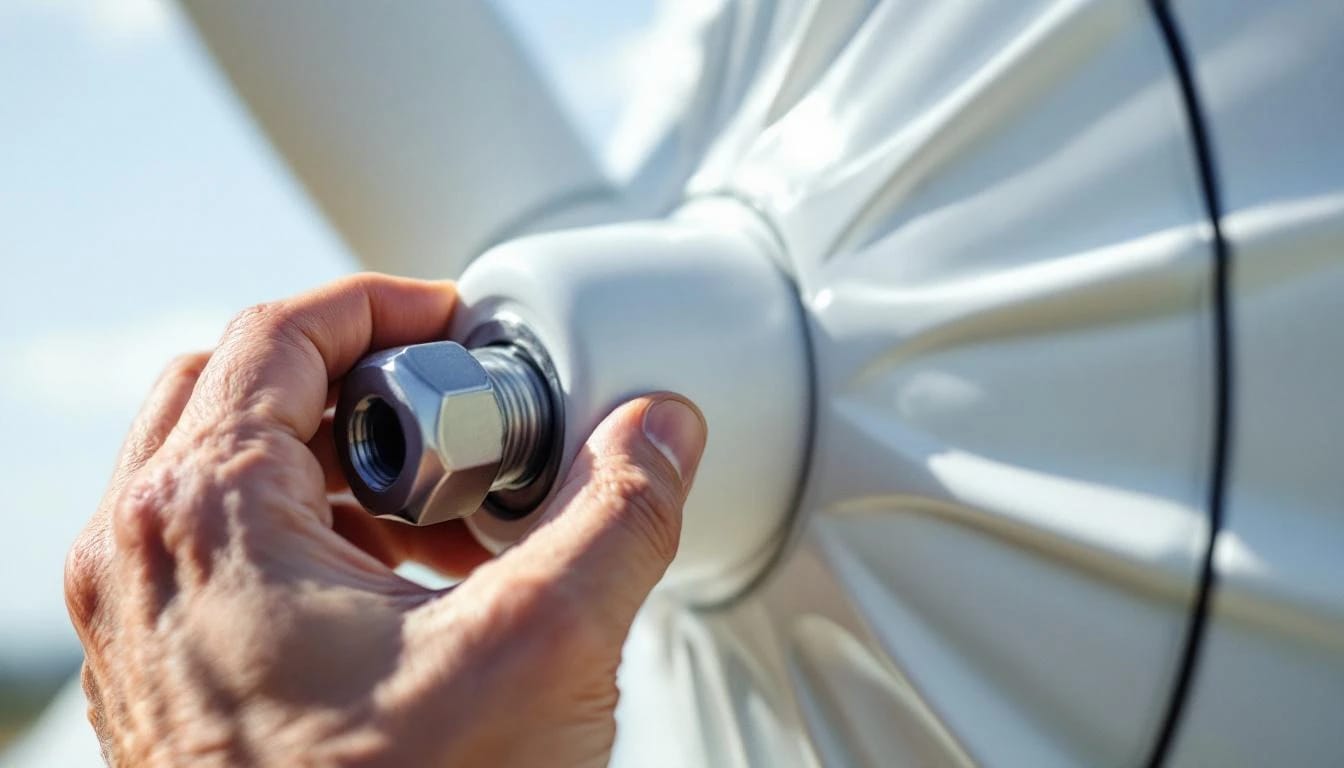
Budget wind turbines priced under $500 occupy a challenging middle ground: too large to be purely educational toys, yet too small to meaningfully offset household electric bills for most North American homes. That said, the right unit can power LED security lighting, charge 12V battery banks for off-grid sheds, or supplement solar arrays in windy rural locations. After evaluating seven popular models sold in the United States during early 2026, the standouts are the Pikasola 400W horizontal-axis turbine for maximum rated output, the Tumo-Int 400W vertical-axis for aesthetic flexibility, and the EOLO 3000 for buyers prioritizing European manufacturing and metal blade construction.
What to expect from sub-$500 wind turbines
A wind turbine below five hundred dollars will almost always be a direct-to-consumer import featuring either three-blade horizontal configuration or a helical vertical-axis (Savonius or Darrieus hybrid) design. Rated capacities cluster between 100W and 600W, but those nameplate figures assume a consistent 12.5 m/s (28 mph) wind—conditions rarely sustained outside of coastal bluffs or ridge tops. In typical suburban or rural settings with average annual wind speeds of 4–6 m/s (9–13 mph), expect real output closer to 10–15 percent of the rated capacity during daylight hours when wind is most reliable.
Build quality varies dramatically. Blades may be injection-molded ABS, fiberglass-reinforced nylon, or stamped aluminum. Generators are usually three-phase permanent-magnet alternators, often without replaceable brushes. The charge controller—critical for preventing battery overcharge—is sometimes included, sometimes sold separately, and occasionally omitted from marketing materials altogether. Buyers must confirm compatibility with their battery bank voltage (12V, 24V, or 48V) and verify that all necessary cabling, tower mounting hardware, and guy-wire anchors are either bundled or clearly listed as separate purchases.
![INLINE: Horizontal three-blade turbine mounted on galvanized steel pole against blue sky with scattered clouds]
Top horizontal-axis models under $500
Horizontal-axis wind turbines (HAWTs) in this price bracket offer higher efficiency than vertical designs because the rotor plane remains perpendicular to wind direction via a tail-vane yaw mechanism. The trade-off is mechanical complexity and sensitivity to turbulent, shifting winds common near buildings and tree lines.
Pikasola 400W — This Chinese-manufactured unit ships as a complete kit including turbine, hybrid charge controller (MPPT solar + wind), tower-mount bracket, and blade set. The three nylon-composite blades span 1.15 meters and start rotating at approximately 2.5 m/s. Independent testing by hobbyist forums suggests the unit produces 80–120W in sustained 7 m/s winds, far below the 400W nameplate but adequate for trickle-charging a 12V AGM battery bank. The charge controller handles up to 500W combined solar and wind input, making it a sensible choice for hybrid systems. Warranty is one year parts-only; customer service operates via email ticketing with 48–72 hour response times. Retail price hovers around $290 USD.
EOLO 3000 — Manufactured in Spain and imported through specialized renewable-energy distributors, the EOLO 3000 commands a premium ($480–$499) but delivers better build quality. Blades are stamped aluminum with a powder-coated finish, and the alternator housing is marine-grade anodized aluminum rather than painted steel. Rated at 300W, real-world output in 6 m/s winds approaches 60–70W. The tail boom is reinforced welded steel. No charge controller is included, but the unit is certified to UL 1741 interconnection standards, a rarity at this price point. Warranty extends to three years on the generator, one year on blades. Customer support is handled by North American distributors, reducing lag time for replacement parts.
Missouri Freedom II — The Freedom II occupies a niche as a U.S.-assembled turbine using globally sourced components. Blades are carved Douglas fir treated with marine varnish—an unusual choice that appeals to buyers avoiding petroleum-based composites. Rated at 200W, the unit is refreshingly honest in its performance claims; the manufacturer's own literature states that 50W in 5 m/s winds is typical. The alternator is a refurbished automotive unit adapted for low-RPM operation, which raises questions about long-term reliability but also simplifies field repairs. Price sits at $450. Warranty is two years, and the Missouri-based shop offers phone support during business hours. Lead times can stretch to six weeks during peak spring installation season.
Top vertical-axis models under $500
Vertical-axis wind turbines (VAWTs) accept wind from any direction without needing a yaw mechanism, making them better suited to turbulent suburban environments and rooftop installations. Efficiency is lower, but maintenance demands drop because there are fewer moving parts.
Tumo-Int 400W — This helical Savonius-style turbine features five curved aluminum blades arranged in a spiral. The design is visually striking, which matters for buyers concerned about neighborhood aesthetics or HOA restrictions. Start-up wind speed is claimed at 2 m/s, and the low rotational speed (200–300 RPM at rated capacity) produces less audible noise than HAWTs. Real-world output in steady 6 m/s wind measures roughly 50W. The generator is a three-phase permanent-magnet type; no brushes to replace, but if it fails, the entire unit must be returned to the seller. A rudimentary PWM charge controller is included. Price is $380. Warranty is one year, with replacement-part shipping from a California warehouse typically taking five business days. The mounting flange is compatible with standard 2-inch galvanized pipe.
Happybuy 600W Lantern VAWT — Despite the optimistic name and nameplate rating, this unit is best understood as a 100–150W generator in typical residential wind conditions. The lantern-style rotor (Darrieus curved blades with central shaft) measures 1.4 meters tall and spins on a pair of sealed ball bearings. Construction is entirely steel and ABS polymer. It ships with a basic three-stage charge controller and a crude analog ammeter. Noise is moderate; a low hum at higher RPMs. At $270, it undercuts most competitors, but quality control is inconsistent. Some buyers report blade-balance issues requiring field adjustment with adhesive weights. Warranty is six months. Customer support is email-only and often references machine-translated troubleshooting guides.
Feature comparison table
| Model | Type | Rated W | Real 6 m/s W | Start wind m/s | Price USD | Warranty | Controller included |
|---|---|---|---|---|---|---|---|
| Pikasola 400W | HAWT | 400 | 80–120 | 2.5 | $290 | 1 yr | Yes (hybrid) |
| EOLO 3000 | HAWT | 300 | 60–70 | 3.0 | $480 | 3 yr gen | No |
| Missouri Freedom II | HAWT | 200 | 40–50 | 3.5 | $450 | 2 yr | No |
| Tumo-Int 400W | VAWT | 400 | 50 | 2.0 | $380 | 1 yr | Yes (PWM) |
| Happybuy 600W | VAWT | 600 | 100–150 | 2.5 | $270 | 6 mo | Yes (basic) |
Installation and code compliance
Every wind turbine installation in the United States must comply with NEC Article 705 (Interconnected Electric Power Production Sources) if tied to the grid, or Article 690 (Solar Photovoltaic Systems) by analogy when feeding a battery bank. At minimum, this requires appropriately rated overcurrent protection, a clearly labeled emergency disconnect, and grounding per Article 250. A licensed electrician familiar with renewable-energy systems should perform or inspect the final connections.
Tower height regulations vary by jurisdiction. Many counties limit accessory structures to 35 feet without a special-use permit, but this may be inadequate for optimal wind exposure. The FAA Part 77 notification process applies to any structure exceeding 200 feet above ground level near airports, though budget turbines rarely approach that threshold. Zoning boards sometimes classify turbines as "farm equipment" if the property exceeds five acres; otherwise, they fall under accessory-structure ordinances.
Anchoring is non-negotiable. Horizontal-axis turbines create significant gyroscopic loads and thrust forces; guy wires rated to 1,500 pounds minimum are standard for poles above 20 feet. Vertical-axis turbines impose lower overturning moments but still require concrete footings or screw anchors certified to local frost-depth and wind-load tables. Ground-screw anchors simplify permitting because they avoid concrete pour inspections, but they must meet ICC-ES AC358 acceptance criteria.
Performance optimization and maintenance
Siting determines 70 percent of performance. A turbine installed at 30 feet above ground in an open field will outperform an identical unit at 60 feet in a wooded subdivision. Wind speed increases logarithmically with height; the rule of thumb is that doubling height from 20 to 40 feet yields approximately 30 percent more wind speed, translating to 100 percent more power because power scales with the cube of wind speed.
Blade inspection should occur every six months. Look for cracks in composite blades (especially near the hub connection), leading-edge erosion from sand or ice, and fastener tightness. Horizontal-axis turbines require tail-vane alignment checks; a bent vane will cause the rotor to yaw sluggishly and lose efficiency in shifting winds. Vertical-axis turbines need bearing lubrication annually unless they use sealed units, in which case replacement intervals depend on RPM history.
Controller firmware rarely updates on budget units, but connection terminals should be inspected seasonally. Corrosion at the battery terminals or turbine output leads creates resistance that robs output and generates heat. Dielectric grease on all outdoor connections extends service life. Battery banks should be equalized (if flooded lead-acid) or balanced (if lithium) quarterly to prevent capacity fade.
Noise complaints are the primary cause of forced removal. A well-balanced turbine at 30 feet from the nearest structure produces 35–45 dB at the property line in moderate wind, comparable to a quiet rural night. Blade imbalance, loose hardware, or worn bearings can double that figure and trigger local noise ordinances. Vibration dampers—rubber pads or spring isolators at the tower base—reduce structure-borne sound.
Federal and state incentives
The Federal Residential Clean Energy Credit (IRC §25D, extended through 2034) allows a 30 percent tax credit on qualified small wind energy property. The system must have a nameplate capacity of 100 kW or less, serve a dwelling unit, and meet standards established by a recognized certification entity. Most sub-$500 turbines lack formal certification, which may complicate claiming the credit. Retain the manufacturer's specification sheet, installation invoices, and electrical inspection reports. File IRS Form 5695 with your tax return; consult a tax professional if the installation also includes solar or energy storage because combined-system credit calculations follow specific IRS guidance.
State incentives vary widely. Check the Database of State Incentives for Renewables & Efficiency (DSIRE) for property-tax exemptions, sales-tax waivers, or cash rebates. California, New York, and Massachusetts maintain dedicated small-wind programs administered through state energy offices or utilities. Rural electric cooperatives sometimes offer net-metering or feed-in tariffs for distributed generation under 10 kW, though rates are often less favorable than solar due to wind's intermittency.
Local utility interconnection agreements are mandatory for grid-tied systems. Expect an application fee ($50–$300), a site inspection, and installation of a bidirectional meter. Some utilities grandfather older net-metering rates; others apply time-of-use billing that penalizes nighttime wind generation. Battery-bank systems avoid interconnection red tape but forfeit revenue from excess generation.
When a sub-$500 turbine makes sense
Budget wind turbines justify their cost in a narrow set of scenarios: off-grid cabins where solar alone is insufficient during winter months, battery-charging systems for RVs or boats in coastal areas, educational installations for schools or makerspaces, and livestock operations needing electric fencing in windy pastures. A 400W turbine operating at 20 percent capacity factor (1,752 hours annually) produces approximately 700 kWh per year. At a national average residential electricity rate of $0.16 per kWh, that displaces $112 in utility costs annually—a 4.5-year payback on a $500 turbine before accounting for maintenance or opportunity cost.
Suburban grid-tied homes rarely benefit. The hassle of permitting, the visual impact, and the modest output make rooftop solar a more practical investment. Urban or heavily wooded properties should skip wind entirely; turbulence and low average wind speeds guarantee disappointment.
Do I need a building permit for a wind turbine under $500?
Most jurisdictions classify wind turbines as accessory structures requiring a zoning permit and electrical permit regardless of size or cost. The threshold is typically the tower height: structures below 10 feet may qualify as "temporary" installations exempt from permits, but anything taller enters the building-code framework. Contact your local building department before purchasing hardware. Operating without permits can result in forced removal and fines.
Can I mount a small turbine on my roof?
Mounting any turbine directly to a residential roof structure is rarely advisable. Dynamic loads from rotor imbalance and wind gusts exceed what standard roof trusses are designed to handle, and vibration transmits into living spaces as low-frequency noise. A tower anchored to the ground with a standoff bracket clearing the roof edge by several feet is the proper approach, but this configuration still requires structural review to ensure parapet or eave loading stays within safe limits.
How much battery capacity do I need for a 400W turbine?
A 400W turbine at 12V can theoretically deliver 33 amps. In practice, real output peaks at 10–15 amps during strong wind events. A 200Ah deep-cycle battery bank (AGM or lithium) provides adequate buffer to absorb intermittent charging without frequent full-discharge cycles. If the system also includes solar, upsize to 300–400Ah to handle combined peak input and provide autonomy during calm, cloudy periods. The charge controller must be rated for the combined maximum current of both sources.
Are vertical-axis turbines quieter than horizontal-axis models?
Vertical-axis turbines generally operate at lower rotational speeds (200–300 RPM vs. 400–600 RPM for HAWTs), which reduces blade-tip speed and aerodynamic noise. However, VAWTs can produce more mechanical noise from bearing friction and structural vibration because the rotor shaft is perpendicular to prevailing wind forces. Perceived noise depends heavily on blade balance and installation rigidity. Neither design is silent; expect 40–50 dB at 30 feet under load.
What wind speed makes a turbine installation worthwhile?
Average annual wind speed above 4.5 m/s (10 mph) measured at hub height is the minimum threshold for practical energy generation. Use the National Renewable Energy Laboratory Wind Prospector to check your location. Speeds below 4 m/s result in capacity factors under 10 percent, meaning the turbine spins but produces negligible power. Coastal, ridge-top, and Great Plains locations routinely exceed 5.5 m/s; forested valleys and urban centers often fall short.
Bottom line
Budget wind turbines deliver the most value when expectations align with physics. A $300–$500 unit can reliably generate 50–150W in steady wind, enough to charge batteries for modest off-grid applications but insufficient to power a refrigerator or HVAC system. Buyers prioritizing durability over peak output should consider the EOLO 3000; those building a hybrid solar-wind system on a tight budget will find better cost-per-watt with the Pikasola 400W. Vertical-axis fans of aesthetics and omni-directional wind acceptance should default to the Tumo-Int model. Before committing, measure your site's actual wind resource at the intended hub height for at least 30 days using an anemometer—guesses and wind maps are poor substitutes for direct observation. If your data confirms consistent winds above 5 m/s, a sub-$500 turbine can be a practical first step into small-scale renewable energy.
Share this article
windturbinehome.com/s/41c8a1
Editorial note: This article was researched and written by a member of the Wind Turbine Home editorial team. AI-assisted tools were used for spell-checking and light grammar review only — all research, analysis, and conclusions are our own. Our editorial policy prohibits sponsored content and paid placements. Read our editorial policy →
Related reading
wind turbine brands
Aeolos H-Series Wind Turbine Review: Build Quality & Output
Independent review of Aeolos H-series small wind turbines covering construction quality, real-world power output, and installation considerations for homes.
wind turbine brands
Bergey Excel 15 Review: Still the Residential Workhorse?
The Bergey Excel 15 remains a proven choice for serious residential wind power—but is this 7.5-kW turbine still worth its premium in 2025? Our review weighs performance, reliability, and real-world economics.

wind turbine brands
Best Home Wind Turbines in the UK: MCS-Certified Picks for 2026
MCS-certified small wind turbines for UK homes include Bergey Excel 1 (1kW), Evance R9000 (5kW), and SD6 (6kW). Proper site assessment and BS 7671 compliance are critical for safe, legal installation.
wind turbine brands
MCS-Certified Wind Turbines UK: MIS 3003 Standard Explained
MCS certification proves UK wind turbines meet MIS 3003 quality and safety standards. Required for Smart Export Guarantee payments and Permitted Development rights.
wind turbine brands
Cheapest 1 kW Wind Turbine: Where Budget Models Actually Work
Budget 1 kW wind turbines start at $800-1,400, but total installed cost hits $4,000-7,000. Learn which cheap models survive real-world use and where they pencil out.

wind turbine brands
Best Wind Turbines Under $1000 in 2026 | Buyer's Guide
Compare the top budget wind turbines under $1000 for homes in 2026. We tested vertical-axis and small horizontal models for real-world power output and durability.
wind turbine brands
Eclectic Energy D400 Review: Marine Micro-Wind Generator
The Eclectic Energy D400 delivers 400W peak output in a marine-grade package suited to boats, caravans, and coastal sheds—not grid-tied homes.
wind turbine brands
Is Southwest Windpower Out of Business? What Happened & Alternatives
Southwest Windpower closed in 2013 after manufacturing the popular Air Breeze and Whisper series turbines. Learn what caused the shutdown and which brands now fill the gap.
wind turbine brands
Rutland 914i Review: 90W Wind Turbine for Boats, Cabins
The Marlec Rutland 914i puts out 90W continuous in 12.5 m/s wind, which suits boat, cabin and off-grid battery charging where reliability beats peak output.