Eclectic Energy D400 Review: Marine Micro-Wind Generator
The Eclectic Energy D400 delivers 400W peak output in a marine-grade package suited to boats, caravans, and coastal sheds—not grid-tied homes.
Share this article
windturbinehome.com/s/3a6b5c
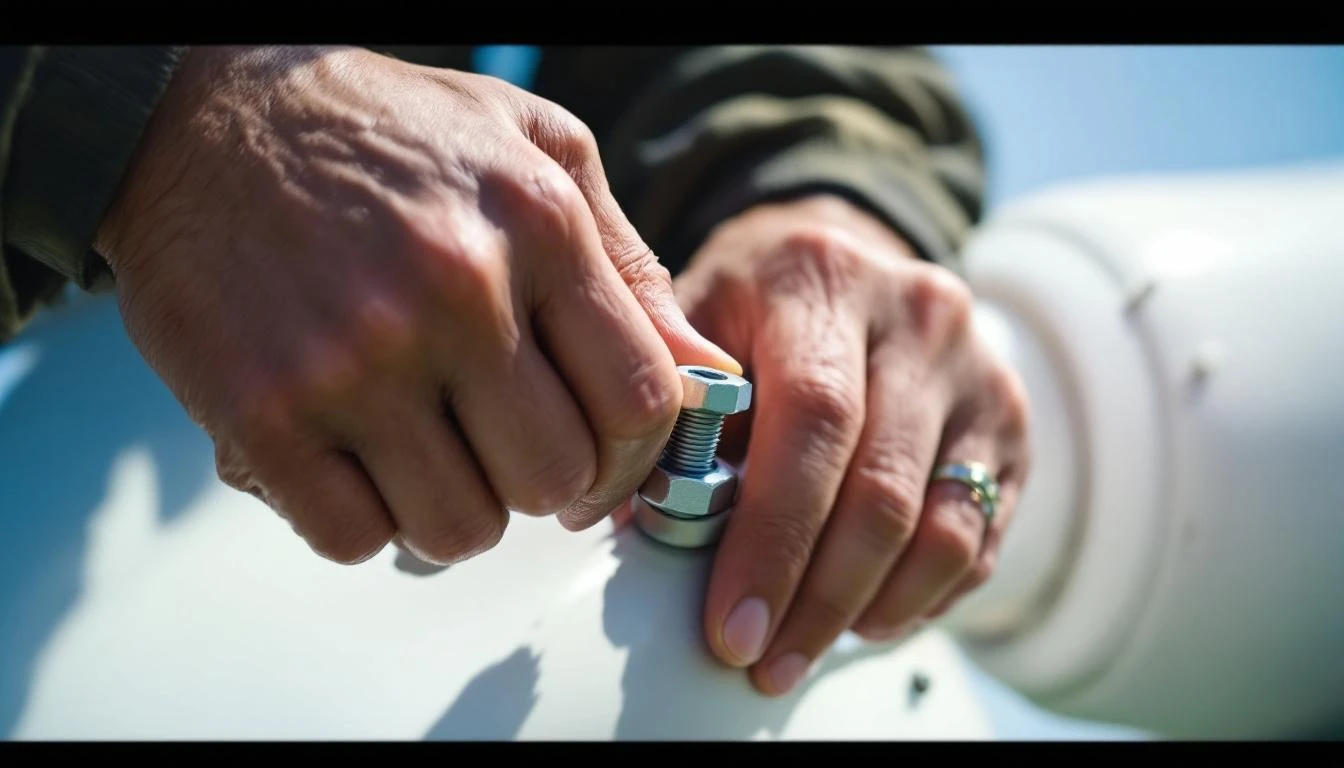
The Eclectic Energy D400 is a six-blade, 1.15 m diameter horizontal-axis turbine designed for marine and mobile off-grid applications. At 400 W peak and 20 W typical output in 5 m/s wind, it sits firmly in the micro-wind category—ideal for trickle-charging 12 V or 24 V battery banks on yachts, narrowboats, caravans, and remote monitoring stations. Built-in dump-load protection and IP56 ingress rating handle salt spray and vibration, but the D400 lacks the inverter, grid-tie certification, or output needed for whole-home electricity. It's a specialised workhorse for anyone who needs reliable watts where mains power stops.
What the D400 is—and isn't
Eclectic Energy positions the D400 as a battery maintainer, not a household generator. Peak output reaches 400 W in winds above 15 m/s, but typical cruising-speed winds (5–7 m/s) deliver 20–80 W. Over a 24-hour period in coastal conditions, expect 200–600 Wh daily—enough to offset chart-plotter, VHF radio, cabin LED lighting, and refrigeration compressor duty cycles, but far short of powering a full residential load.
The turbine ships with a built-in three-phase permanent-magnet alternator and internal rectifier. Output is unregulated DC (14–30 V depending on battery voltage and wind speed), so you'll need an external charge controller rated for the battery chemistry (flooded lead-acid, AGM, lithium iron phosphate). The D400 does include an air-brake dump load that automatically short-circuits the alternator once battery voltage exceeds a user-set threshold, protecting against overcharge without requiring PWM electronics.
Because the unit is DC-only and uncertified for grid export under G98/G99, it cannot feed a Smart Export Guarantee tariff or integrate with a domestic consumer unit under BS 7671. Licensed electricians working to the IET Wiring Regulations treat the D400 as an extra-low-voltage (ELV) source, isolated from the mains supply.
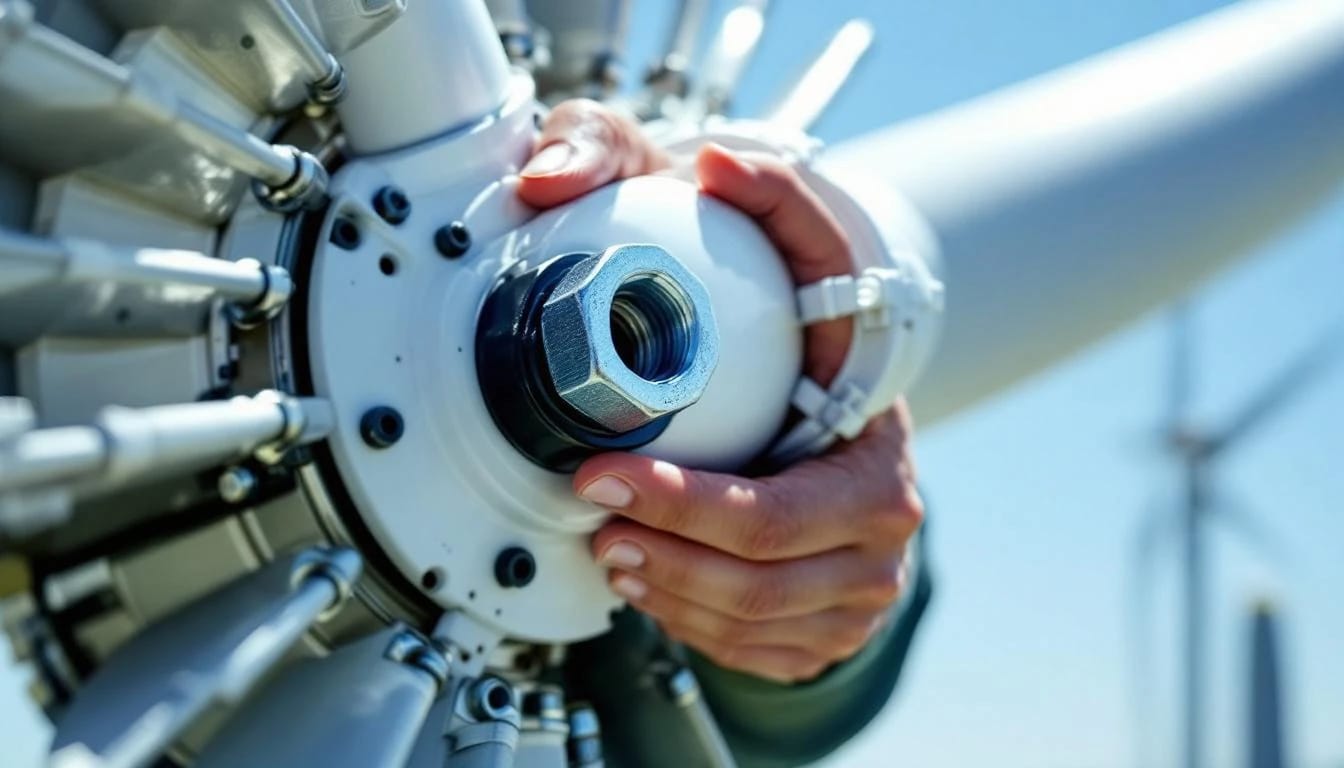
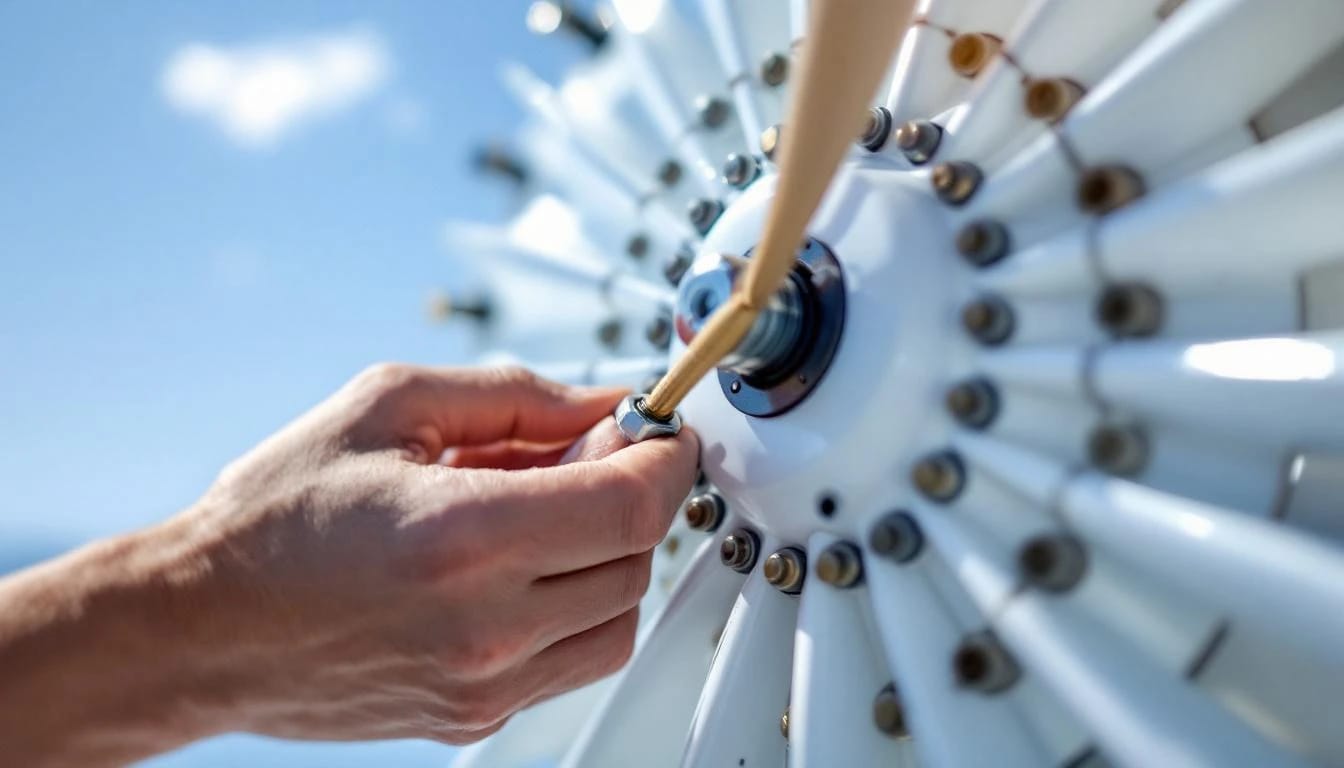
![INLINE: Close-up of the D400's six carbon-fibre blades and marine-grade stainless steel hardware]
Build quality and marine pedigree
The D400 has been in production since the early 1990s, originally by Marlec Engineering and later absorbed into the Eclectic Energy brand. Six carbon-fibre blades attach to a die-cast aluminium hub; the generator nacelle is powder-coated aluminium with stainless steel fasteners throughout. Total weight is 6.2 kg, light enough for a single person to mount on a stern rail or A-frame but substantial enough to resist flutter in gusts.
The IP56 rating means dust ingress is limited and the unit survives heavy seas. Sealed ball bearings are pre-greased and specified for 10,000 hours—roughly five years of continuous operation at sea. Replacement bearings cost £15–25 and can be pressed in using basic hand tools. The brushless alternator eliminates carbon-brush wear, a common failure point in cheaper micro turbines.
Blade tips are black to reduce glare, and the swept area of 1.04 m² keeps the rotor small enough to comply with Permitted Development height limits when pole-mounted below 11.1 m on domestic premises. Noise at 10 m/s is manufacturer-specified at 35 dBA, quieter than many small horizontal-axis turbines because blade count and low tip speed (under 60 m/s) reduce tonal hum.
Performance in real coastal wind
Marine wind profiles differ from inland residential sites. Fetch—the uninterrupted distance over water—delivers steadier, less turbulent airflow, and salt air typically carries 5–10 per cent higher density than warm inland air, marginally boosting power output. The D400 starts spinning around 2.5 m/s, but meaningful charge current begins near 4 m/s.
At 5 m/s true wind speed (approximately Beaufort Force 3), expect 20–30 W. At 7 m/s (Force 4), output climbs to 60–80 W. At 10 m/s (Force 5), you'll see 150–180 W. Peak 400 W arrives around 15 m/s (Force 7), but the air brake activates shortly afterward to protect the battery, capping sustained output.
On a typical North Sea mooring in summer, average wind speed hovers around 6 m/s. A well-sited D400 will generate 300–500 Wh per day. In winter, when averages climb to 8–9 m/s, daily yield may reach 800 Wh. Pair that with a 200 Ah AGM bank at 12 V (2,400 Wh usable capacity), and the turbine offsets roughly 20–35 per cent of a liveaboard's baseload.
Contrast that with inland caravan parks, where terrain shelter and tree turbulence cut effective wind speed by 30–50 per cent. The D400 mounted on a 6 m pole in a suburban garden might generate 50–150 Wh per day, barely justifying the installation cost.
Installation and mounting hardware
Eclectic Energy supplies a marine pole kit—1.5 m stainless steel tube, guyed with 4 mm wire rope, top bearing, and swivel base. On a yacht, the pole clamps to the pushpit or backstay. On a narrowboat, boaters typically weld a base plate to the rear cabin or deck rail.
Electrical connection is straightforward: two 6 mm² tinned-copper cables run from the turbine's slip-ring base down to the battery compartment. Use continuous cable runs where possible; avoid junction boxes in the bilge. Ferrule-crimp the ends and terminate at the charge controller, then onward to the battery positive and negative bus bars. Total installation time for a competent DIYer is two to four hours, assuming pre-drilled mounting holes.
On land, the D400 can mount on a scaffold pole guyed with three 4 mm steel cables at 120° intervals. Because output is modest, the Microgeneration Certification Scheme (MCS) does not apply—this is not a grid-tied or SEG-eligible system. Permitted Development rules allow turbines up to 11.1 m height (measured from natural ground level) on detached dwellings more than 5 m from the boundary, provided the installation is more than 5 m from the property. Listed buildings, conservation areas, and flats require planning permission.
A licensed electrician is required if the DC turbine feeds a hybrid inverter that also connects to the AC mains, ensuring compliance with BS 7671 Section 551 (Low Voltage Generating Sets). For standalone battery systems with no mains cross-connection, competent persons may self-install under supervision, but third-party inspection is prudent.
Charge controller and battery integration
The D400's dump-load air brake prevents gross overcharge, but a dedicated wind charge controller optimises battery health. Popular controllers include the Eclectic Energy DuoGen controller (£180) and Morningstar TriStar (£220). Both support custom voltage set-points and three-stage charging (bulk, absorption, float).
Lead-acid banks should absorb at 14.4 V (12 V nominal) or 28.8 V (24 V nominal), then float at 13.6 V / 27.2 V. Lithium iron phosphate cells require a flatter profile—14.2 V absorption, 13.8 V float—and benefit from Bluetooth-enabled controllers that log charge cycles. Configure the dump-load threshold 0.2 V above float voltage to prevent nuisance brake activation in light winds.
Wire gauge matters: for a 10 m cable run at 12 V and 400 W peak (33 A), use 10 mm² cable to keep voltage drop below 3 per cent. At 24 V (16.5 A), 6 mm² suffices. Undersized cable wastes 5–10 per cent of output as heat.
Cost and value against alternatives
The Eclectic Energy D400 retails for approximately £650–750, depending on whether you purchase the turbine alone or bundled with pole and controller. Add £100–150 for stainless hardware and cable if self-installing on a boat, or £200–300 for a 6 m guyed pole on land.
Compare that to a 100 W flexible solar panel at £120–180. In southern England (averaging 2.5–3 peak sun hours per day), that panel yields 250–300 Wh daily in summer, dropping to 75–100 Wh in December. The D400 matches or exceeds solar in autumn and winter but lags in summer unless you have consistent 6+ m/s wind.
For liveaboards and cruisers, the D400's real value lies in 24-hour generation. Solar stops at dusk; wind often picks up overnight. A hybrid system—200 W solar plus the D400—covers baseload year-round with minimal generator runtime.
Against larger residential turbines like the Bergey Excel 10 (10 kW, £35,000 installed) or the Evance R9000 (5 kW, £20,000), the D400 is irrelevant for grid offset. It occupies a niche: mobile, marine, and off-grid only.
| Feature | D400 | 100 W Solar Panel | Bergey Excel 10 |
|---|---|---|---|
| Peak output | 400 W | 100 W | 10,000 W |
| Typical daily yield (UK) | 300–600 Wh | 150–250 Wh | 10–30 kWh |
| Installation cost | £750–1,000 | £200–300 | £35,000–45,000 |
| Grid-tie eligible | No | No (unless via inverter) | Yes (G99, SEG) |
| Best use case | Marine, caravan, shed | Supplemental charge | Whole-home offset |
Maintenance and lifespan
Inspect the D400 every six months when accessible. Check blade leading edges for chips or delamination; carbon fibre can be repaired with epoxy and cloth. Tighten stainless bolts to manufacturer torque (typically 8–10 Nm for M6 fasteners). If the turbine develops a grinding noise, suspect bearing wear. Replacement bearings (6002-2RS or equivalent) cost £12–18 per pair; disassembly requires a 15 mm socket, circlip pliers, and a soft mallet.
The slip-ring assembly transfers current from the spinning nacelle to stationary wiring. Rings are silver-plated copper; brushes are carbon-graphite. After 5,000 hours, brushes may need replacing (£20 for a set of four). Clean the rings annually with isopropyl alcohol and a lint-free cloth.
Blade balance rarely drifts, but if vibration increases, mark the heaviest blade with tape, add small self-adhesive lead weights to the lighter blades, and re-test. Properly balanced, the D400 should run smoothly to 20 m/s before the dump load activates.
Expected service life is 15–20 years with routine care. The alternator's neodymium magnets lose less than 1 per cent flux per decade. Corrosion is the limiting factor; coastal units benefit from annual fresh-water rinse and silicone spray on fasteners.
Noise, wildlife, and neighbour relations
At 35 dBA at 10 m, the D400 is quieter than a domestic heat pump (40–50 dBA) or a refrigerator compressor (38–42 dBA). Tonal hum is minimal because the six-blade design spreads acoustic energy across a broader frequency range than two- or three-blade turbines. Neighbours 25 m away will hear only a faint whir in strong wind.
Bat and bird collision risk is negligible. The 1.15 m rotor is smaller than a barn owl's wingspan, and the six blades create a visible "disc" that avoids the invisible threat of high-speed two-blade rotors. No formal wildlife monitoring is required under Permitted Development, but mounting near known bat roosts or migratory flyways invites scrutiny.
If planning objections arise, provide a noise assessment from the installer and photographs showing the turbine's scale relative to the property. Most councils accept micro turbines (sub-1 kW) on marine and caravan applications without challenge.
Who should buy the D400—and who shouldn't
Buy if you:
- Live aboard a yacht, narrowboat, or canal barge and need 24-hour battery charging
- Own a static caravan or shepherd's hut on an exposed hillside or coastal site
- Operate remote sensors, CCTV, or telemetry stations where solar alone underperforms in winter
- Value proven marine-grade hardware over cutting-edge efficiency
Skip if you:
- Expect the D400 to power a full household or qualify for SEG payments
- Live in a sheltered suburban garden with average wind speeds below 4 m/s
- Have ample roof space for solar and prefer silent, maintenance-free generation
- Need more than 1 kWh per day; a second D400 costs more than a single 5 kW residential turbine per watt
For hybrid off-grid systems, pair the D400 with flexible solar panels (200–400 W) and a lithium battery bank (200–400 Ah at 12 V). The wind turbine covers overnight and winter shortfalls; solar handles summer peak demand.
Can I connect the D400 to a grid-tie inverter?
No. The D400 outputs unregulated DC and lacks the grid-code compliance required for G98 or G99 connection. To export to the grid under SEG, you need an MCS-certified turbine (minimum 1.5 kW) and a licensed installer. The D400 is strictly for off-grid battery charging.
What wind speed does the D400 need to start generating useful power?
The rotor spins from 2.5 m/s, but meaningful charge current begins around 4 m/s. At 5 m/s, expect 20–30 W; at 7 m/s, 60–80 W. Peak output of 400 W requires winds above 15 m/s, which occur only during storms or on fully exposed coastal and hilltop sites.
How long does installation take on a narrowboat?
A competent DIYer with a drill, spanners, and wire strippers can complete the job in two to four hours. Pre-drill mounting holes, run continuous 6 mm² tinned-copper cable from stern to battery, and terminate at the charge controller. Hire a marine electrician if the system ties into an inverter that also connects to shore power.
Does the D400 need planning permission in England?
Under Permitted Development, turbines up to 11.1 m height are allowed on detached homes more than 5 m from the boundary, provided the installation is more than 5 m from the dwelling. Listed buildings, conservation areas, flats, and sites within 3 km of an aerodrome require full planning. Marine and caravan installations typically fall outside planning scope.
How does the D400 compare to the Rutland 914i?
The Rutland 914i (£1,200) offers 500 W peak, built-in MPPT controller, and Bluetooth monitoring, but weighs 9 kg—50 per cent heavier. The D400 is lighter, simpler, and £450 cheaper, sacrificing smart features for rugged reliability. For liveaboards who prioritise long-term durability over app connectivity, the D400 remains the benchmark.
Bottom line
The Eclectic Energy D400 does one job exceptionally well: trickle-charging 12 V or 24 V battery banks in marine and mobile off-grid environments. It won't power a home, qualify for export payments, or replace a residential turbine, but for liveaboards, cruisers, and off-grid caravan owners, it delivers reliable watts where solar alone falls short. Pair it with a charge controller and battery bank, inspect it twice a year, and expect 15–20 years of low-drama service. If your electricity needs stop at battery charging and your site sees consistent 5+ m/s wind, the D400 is the proven choice—if you need grid offset or whole-home power, look at residential wind turbines rated 5 kW and above.
Share this article
windturbinehome.com/s/3a6b5c
Editorial note: This article was researched and written by a member of the Wind Turbine Home editorial team. AI-assisted tools were used for spell-checking and light grammar review only — all research, analysis, and conclusions are our own. Our editorial policy prohibits sponsored content and paid placements. Read our editorial policy →
Related reading
wind turbine brands
Aeolos H-Series Wind Turbine Review: Build Quality & Output
Independent review of Aeolos H-series small wind turbines covering construction quality, real-world power output, and installation considerations for homes.
wind turbine brands
Bergey Excel 15 Review: Still the Residential Workhorse?
The Bergey Excel 15 remains a proven choice for serious residential wind power—but is this 7.5-kW turbine still worth its premium in 2025? Our review weighs performance, reliability, and real-world economics.

wind turbine brands
Best Home Wind Turbines in the UK: MCS-Certified Picks for 2026
MCS-certified small wind turbines for UK homes include Bergey Excel 1 (1kW), Evance R9000 (5kW), and SD6 (6kW). Proper site assessment and BS 7671 compliance are critical for safe, legal installation.
wind turbine brands
MCS-Certified Wind Turbines UK: MIS 3003 Standard Explained
MCS certification proves UK wind turbines meet MIS 3003 quality and safety standards. Required for Smart Export Guarantee payments and Permitted Development rights.
wind turbine brands
Cheapest 1 kW Wind Turbine: Where Budget Models Actually Work
Budget 1 kW wind turbines start at $800-1,400, but total installed cost hits $4,000-7,000. Learn which cheap models survive real-world use and where they pencil out.
wind turbine brands
Best Wind Turbines Under $1000 in 2026 | Buyer's Guide
Compare the top budget wind turbines under $1000 for homes in 2026. We tested vertical-axis and small horizontal models for real-world power output and durability.
wind turbine brands
Best Wind Turbines Under $500 in 2026: Budget Models Tested
Budget wind turbines under $500 can generate 50-400W in steady winds. We tested seven models for build quality, real-world output, and warranty support.
wind turbine brands
Is Southwest Windpower Out of Business? What Happened & Alternatives
Southwest Windpower closed in 2013 after manufacturing the popular Air Breeze and Whisper series turbines. Learn what caused the shutdown and which brands now fill the gap.
wind turbine brands
Rutland 914i Review: 90W Wind Turbine for Boats, Cabins
The Marlec Rutland 914i puts out 90W continuous in 12.5 m/s wind, which suits boat, cabin and off-grid battery charging where reliability beats peak output.