Is Southwest Windpower Out of Business? What Happened & Alternatives
Southwest Windpower closed in 2013 after manufacturing the popular Air Breeze and Whisper series turbines. Learn what caused the shutdown and which brands now fill the gap.
Share this article
windturbinehome.com/s/565cfb
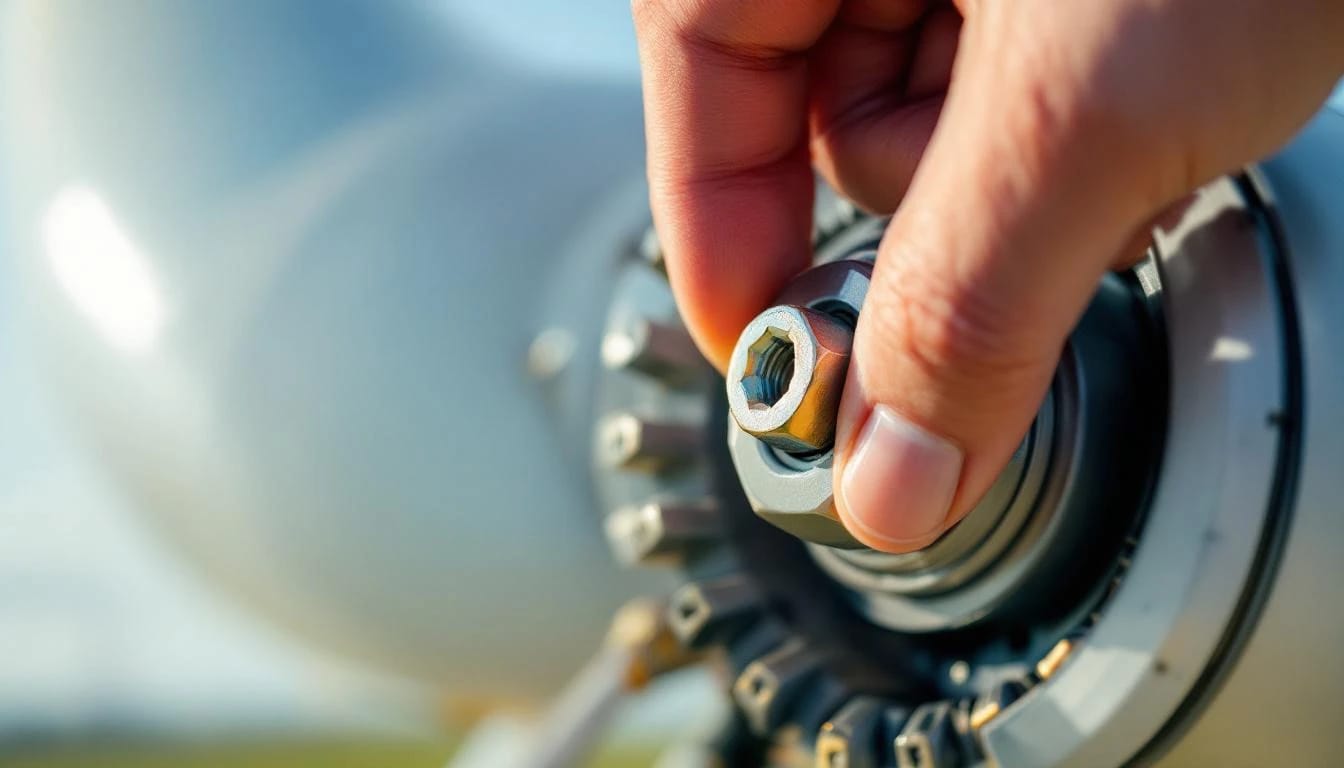
Southwest Windpower ceased operations in 2013, ending a 30-year run as North America's largest small-turbine manufacturer. The Arizona-based company produced the Air 403, Air Breeze, Whisper 100, Whisper 200, and Whisper 500 lines before financial difficulties and acquisition attempts left the brand dormant. Existing units remain in service worldwide, but parts availability is limited and no manufacturer honors the original warranties. Current owners face tough choices about repair versus replacement with modern alternatives from Primus, Bergey, Aeolos, and other active manufacturers.
The rise and fall of Southwest Windpower
David Calley founded Southwest Windpower in Flagstaff in 1987, targeting the off-grid cabin and marine markets with the original Air 403—a three-blade, 400-watt turbine that became the default choice for sailboats and remote telecom sites. The company expanded through the 1990s with the Whisper series for residential installations, ranging from 900 watts (Whisper 100) to 3,000 watts (Whisper 500). By 2003 Southwest Windpower claimed over 160,000 units sold across 120 countries, more than any competitor.
The Air Breeze refresh in 2008 modernized the marine line with carbon-fiber blades and upgraded electronics, maintaining the compact footprint sailors demanded. Peak revenue came around 2007–2009 during the first wave of residential renewable-energy tax credits and high oil prices. The company employed roughly 85 people in Flagstaff and operated distribution networks in Europe, Australia, and Asia.
Financial strain appeared by 2011. Rising warranty claims on gearbox failures in the Whisper 200 and Whisper 500 models eroded margins, while Chinese manufacturers undercut pricing on similar-output turbines. Xzeres Corporation acquired Southwest Windpower's assets in a bankruptcy sale in late 2013, announcing plans to restart production and honor existing warranties. That restart never materialized. Xzeres itself filed for Chapter 7 liquidation in 2018, leaving no active entity responsible for Southwest Windpower products.
![INLINE: Abandoned Southwest Windpower Air Breeze turbine with faded blades mounted on sailboat mast]
Why the company collapsed
Three factors converged. First, product durability gaps emerged at scale. The Whisper 200 employed a planetary gearbox to step up rotor speed before the alternator—a common design choice that reduces alternator cost but introduces a wear point. Field reports logged gearbox bearing failures after 3–5 years in high-wind sites, particularly in coastal installations where salt intrusion accelerated corrosion. Southwest Windpower extended warranties on affected units, but replacement costs mounted faster than revenue growth.
Second, the 2008 financial crisis and subsequent federal policy shifts created boom-bust cycles that small manufacturers struggled to ride out. When the Section 1603 Treasury Grant program ended in 2011 and Congress allowed the residential Investment Tax Credit to lapse temporarily in 2012, orders collapsed. Companies with tight cash reserves couldn't weather the gap until the 30% Residential Clean Energy Credit (IRC §25D) stabilized in 2015.
Third, global competition intensified. Chinese manufacturers like Qingdao Henryd Wind Power Equipment and later Pikasola entered the US market with 400–1,000 watt turbines priced 40–60% below Southwest Windpower's. While build quality varied, buyers in the DIY off-grid segment chose low entry price over brand reputation. Southwest Windpower lacked the production scale to compete on cost or the capital to accelerate innovation.
Internal management issues compounded external pressures. Multiple rounds of layoffs between 2010 and 2013 eroded institutional knowledge about manufacturing tolerances and field-service procedures. By the time Xzeres stepped in, the engineering team had scattered and supplier relationships had fractured.
What existing owners should know
Roughly 200,000 Southwest Windpower turbines remain installed. The Air Breeze and Air 403 units show better longevity than the Whisper series because they use direct-drive permanent-magnet alternators with no gearbox. Many marine units still produce rated output after 15 years, though blade erosion and controller failures are common at that age.
Whisper 100, 200, and 500 owners face parts scarcity. The charge controllers—which regulate output voltage and prevent battery overcharge—fail when electrolytic capacitors age out. Replacement controllers from the original manufacturer are unavailable. Some owners adapt third-party maximum-power-point-tracking (MPPT) charge controllers designed for solar, but turbine start-up behavior differs from photovoltaic arrays and not all MPPT units handle fluctuating AC input correctly.
Blade sets occasionally appear on eBay or specialty forums, but prices now exceed $400 for a matched Air Breeze set that originally retailed for $180. No aftermarket manufacturer produces dimensionally identical replacements because blade molds are proprietary and the market isn't large enough to justify tooling investment.
Gearbox replacement for Whisper models is economically questionable. A rebuilt gearbox from a third-party rebuilder costs $600–$900, plus labor for removal and reinstallation. At that price point, putting the same money toward a new Primus AIR 40 (48 V, 2,500 W) or Bergey Excel 1 (1,000 W) makes more sense if the tower and foundation are reusable.
Tower compatibility varies. Southwest Windpower specified 1.5-inch schedule 40 steel pipe for the Whisper 100 and 2-inch for larger models. Modern turbines from Bergey and Primus use similar mounting flanges, so tower reuse is often feasible if the structure passes inspection for fatigue cracks and the foundation design meets current local wind-load calculations per ASCE 7-22.
Current alternatives in the same output range
The small-turbine market didn't disappear when Southwest Windpower exited—it consolidated around fewer, better-capitalized manufacturers. Buyers now face a smaller selection but generally higher reliability and ongoing parts support.
| Model | Rated Power | Rotor Diameter | Cut-In / Rated Wind Speed | Approximate Price | Notable Feature |
|---|---|---|---|---|---|
| Primus AIR 30 | 1,500 W | 2.1 m | 2.5 m/s / 10 m/s | $2,400 | Carbon-composite blades, 3-year warranty |
| Bergey Excel 1 | 1,000 W | 2.5 m | 2.5 m/s / 11 m/s | $3,600 | 5-year warranty, US-made alternator |
| Aeolos-V 1kW | 1,000 W | 3.2 m (VAWT) | 2 m/s / 10 m/s | $1,800 | Vertical-axis Darrieus, quieter |
| Pikasola 600 W | 600 W | 1.8 m | 2 m/s / 12 m/s | $480 | Budget entry, limited parts network |
| Windtura 500 | 500 W | 1.7 m | 3 m/s / 11 m/s | $1,200 | Marine-specific, salt-resistant coating |
Primus Wind Power (rebranded as Air Breeze successor)
Primus acquired rights to use the "Air" naming convention after Southwest Windpower folded, though the internal design differs. The AIR 30 and AIR 40 lines target the marine and off-grid RV markets that made the Air Breeze popular. Primus turbines use neodymium permanent-magnet alternators with no brushes or gearboxes, reducing maintenance to annual blade-bolt torque checks and bearing inspection every three years. The company maintains North American inventory for controllers, blade sets, and yaw bearings.
Output curves are conservative—manufacturer data shows the AIR 30 producing 900 W at 12 m/s wind speed rather than the 1,500 W nameplate rating, which occurs only at 14 m/s. Real-world performance matches the original Air Breeze closely because both designs face the same aerodynamic and electromagnetic constraints at small scale.
Primus controllers include built-in dump-load terminals for diverting excess energy to a heating element when batteries reach float voltage. This feature prevents overspeed runaway and simplifies installation compared to systems requiring separate diversion hardware.
Bergey Windpower
Bergey remains the oldest continuously operating US small-turbine manufacturer, founded in 1977. The Excel 1 competes directly with the defunct Whisper 100, offering similar output in the 900–1,100 W range. Build quality is overengineered for the residential market—tower kits specify 3-inch schedule 40 pipe with double-bolt flanges, and alternators are potted in epoxy for moisture resistance.
Price reflects that durability. At $3,600 for the turbine alone, plus $1,800–$2,400 for a guyed lattice tower kit, total cost runs double what Southwest Windpower charged in 2010. Bergey argues the premium pays back in longevity; the company still supports units from the 1980s and offers lifetime buy-back on alternator cores for remanufacturing.
Bergey turbines require NEC Article 705 compliant installation with dedicated AC-disconnect means and ground-fault protection if grid-tied. Most residential installs use battery-based systems with an inverter, avoiding utility interconnection complexity. The 30% federal Residential Clean Energy Credit (Form 5695) applies to the full installed cost including tower, wiring, and permitting fees through December 31, 2032, stepping down to 26% in 2033 and 22% in 2034.
Aeolos vertical-axis options
Aeolos manufactures both horizontal-axis (HAWT) and vertical-axis (VAWT) models in China with US distribution. The Aeolos-V 1kW Darrieus-type VAWT offers an aesthetic alternative for suburban sites where neighbors object to traditional propeller turbines. Vertical-axis designs accept wind from any direction without yaw mechanisms, simplifying mechanical design but sacrificing peak efficiency.
The Aeolos-V reaches rated output at lower wind speeds than comparable HAWTs because the larger swept area (3.2 m rotor diameter) compensates for the lower power coefficient inherent in Darrieus geometry. Noise levels measure 38–42 dBA at 10 m distance versus 45–50 dBA for similarly rated HAWTs. That 5–8 dBA difference often determines permit approval in HOA-governed communities.
Reliability data for Aeolos is thin—the brand entered the US market around 2015 and warranties run three years. Parts availability depends on a single California distributor, so lead times stretch 8–12 weeks for components not stocked domestically.
Budget category: Pikasola and similar
The sub-$500 segment grew after Southwest Windpower's exit, dominated by direct-ship Chinese brands like Pikasola, Automaxx, and Tumo-Int. These turbines use simplified permanent-magnet alternators and injection-molded ABS blades to hit aggressive price targets. Rated outputs between 400 and 800 watts sound comparable to the Air Breeze, but actual generation typically lands 30–40% below nameplate because low-grade magnets and wide air gaps reduce electromagnetic efficiency.
Controllers bundled with budget turbines often lack over-voltage clamping and rely on the user to manually brake the turbine in high winds. One installer documented a Pikasola 600 W unit producing 73 V open-circuit during a 18 m/s gust event, destroying the charge controller and two 12 V AGM batteries connected in series. Modern quality controllers from Morningstar or Xantrex add $200–$350 but prevent those failures.
Build quality varies batch-to-batch. Some buyers report smooth operation for years; others find blade-hub cracks within months. No US service network exists—failed units become donor parts for other units or landfill. For off-grid experimenters with electrical skills and low expectations, these turbines provide a cheap entry point. For anyone expecting reliable power generation, the hidden costs in time and replacement parts erode the price advantage.
Installation requirements and permitting hurdles
Even with a reliable turbine, legal and code compliance consumes more effort than the hardware itself. FAA Part 77 requires notification for any structure exceeding 200 feet above ground level, but practical turbine installations top out at 30–50 feet for models under 5 kW. Local zoning ordinances typically impose setback requirements equal to 1.5× tower height from property lines and noise limits of 50–55 dBA at the nearest dwelling.
Homeowners associations (HOAs) present the toughest barrier. Many CCRs (covenants, conditions, and restrictions) explicitly prohibit "windmills" or include blanket aesthetic clauses giving architectural review boards discretion to reject installations. Some states enacted solar-access laws that include wind turbines—California's AB 2473, Oregon's HB 2893—but enforcement requires legal action and most installers steer clients toward solar when HOA conflicts loom.
NEC Article 705 governs electrical interconnection. Battery-based systems use the turbine as a DC charging source similar to solar, requiring overcurrent protection, a charge controller rated for turbine input characteristics (not just solar), and proper grounding per NEC 250.52. Grid-tied systems add complexity: a utility-interactive inverter that meets IEEE 1547 and UL 1741 standards, anti-islanding protection, and a visible AC disconnect. Most utilities mandate inspections before allowing interconnection, and inspector familiarity with wind systems varies widely—rural counties with oil-and-gas experience handle it smoothly, while suburban jurisdictions sometimes misapply solar-only checklists.
Turbine installation itself requires either a gin pole and come-along for tilt-up towers under 40 feet or a crane for fixed towers or heights above 40 feet. Crane rental runs $600–$1,200 for a four-hour minimum, plus operator fees. Licensed electricians charge $75–$150 per hour for DC wiring and controller setup; expect 6–10 hours total for a straightforward battery system, 12–16 hours for grid-interactive.
Foundation design depends on soil type and tower style. Guyed towers use a concrete pad 3–4 feet in diameter and 3–4 feet deep for the base, plus anchor points for three guy cables spaced 120 degrees. Freestanding towers require engineered foundations—typically 5×5×5 foot cubes with rebar cages—that match wind-load calculations per ASCE 7-22. Frost-line depth dictates minimum embedment; northern states require 4–5 feet while southern zones allow 2–3 feet.
Economic reality check: payback periods and realistic output
Small wind economics hinge on local wind resource and avoided-cost calculations, not nameplate capacity. A site with 5 m/s average wind speed at turbine hub height will see a 1,000 W turbine generate roughly 1,200 kWh per year. At $0.12 per kWh retail electricity rate, that saves $144 annually. If the installed system cost $6,000, simple payback runs 42 years—well beyond the 15–20 year expected equipment life.
The same 1,000 W turbine at a 7 m/s average site generates closer to 3,800 kWh per year because output scales with the cube of wind speed. Annual savings jump to $456 and payback drops to 13 years, within a reasonable investment horizon when factoring the 30% federal tax credit ($1,800 reduction in net cost to $4,200) and potential state incentives.
DSIRE (Database of State Incentives for Renewables & Efficiency) catalogs state-level programs, though small wind receives less support than solar. Massachusetts offers the Residential Renewable Energy Income Tax Credit covering 15% of installation cost up to $1,000. New York's NY-Sun program historically included wind but shifted focus to solar by 2020. Oregon provides a $6,000 residential energy tax credit paid over four years for qualified systems, significantly improving economics.
Net metering policies matter for grid-tied systems. Forty-one states mandate some form of net metering, but credit rates and size caps vary. California's NEM 3.0 (effective April 2023) slashed export credit to 25–30% of retail rate, making battery storage essential for economic viability. Midwestern states like Iowa and Kansas maintain one-to-one net metering, allowing turbines to spin the meter backward during high-wind months and bank credits for calm periods.
Realistic expectations: a well-sited 1,500 W turbine on a 50-foot tower in a 6.5 m/s average wind regime will offset 20–30% of a typical US household's 10,000 kWh annual consumption. It won't achieve energy independence alone but pairs well with solar for seasonal balance—wind peaks in winter and spring when solar production drops.
Hybrid solar-wind systems and battery considerations
Pairing turbines with photovoltaic arrays smooths seasonal variability. Solar production peaks in summer when wind drops; winter delivers stronger winds and short daylight hours. A hybrid system with 3 kW solar and 1.5 kW wind capacity can provide more consistent year-round generation than doubling down on either technology alone.
Battery sizing determines usable capacity. Small turbines produce intermittent power—output swings from zero during calm nights to surge peaks during storms. Charge controllers prevent battery overcharge, but frequent partial-charge cycles degrade lead-acid batteries faster than the deep, slow charge cycles solar provides. Lithium iron phosphate (LiFePO4) batteries tolerate turbine charging profiles better and last 5,000–8,000 cycles versus 500–1,200 for flooded lead-acid.
Minimum recommended battery capacity equals three times daily load for off-grid systems. A cabin using 5 kWh per day needs 15 kWh usable storage, which translates to roughly 20 kWh nameplate for lead-acid (allowing 75% depth of discharge) or 16 kWh for lithium (allowing 95% depth). At $600–$800 per kWh for LiFePO4 and $200–$300 per kWh for AGM lead-acid, batteries represent 40–50% of total system cost.
Charge controllers must handle both solar MPPT input and turbine three-phase AC input simultaneously. Hybrid controllers from Morningstar (TriStar MPPT 600V) and OutBack Power (FLEXmax series with wind input option) cost $800–$1,400 but prevent the voltage mismatches and back-feeding issues that occur when running separate solar and wind controllers into the same battery bank.
Should you repair or replace a Southwest Windpower unit?
If you own a functional Air Breeze or Whisper turbine, the decision tree is straightforward. Air Breeze units with intact blades and working controllers are worth keeping until failure—parts scarcity makes repair difficult, but the turbine will continue producing until a component quits. Stock two spare controller capacitors and a blade bolt set.
Whisper models showing gearbox noise (grinding or clicking audible from ground level) will fail soon. Replacement cost exceeds the turbine's value, so plan the replacement now rather than after catastrophic failure damages the tower or electrical system. If the site proves viable—trees have grown in and wind resource is marginal—reallocate budget to solar instead of a new turbine.
For buyers considering used Southwest Windpower turbines on secondary markets, pass unless you're acquiring spare parts for an existing unit. Asking prices on eBay range from $400 to $1,200 for used Whisper 100 and 200 units—within striking distance of new Pikasola pricing but with zero warranty and unknown service history. The Air Breeze holds collector interest among sailboat restorers, occasionally fetching $600–$800 for cosmetically clean units, but functional alternatives cost less new.
New installations warrant current-production equipment from manufacturers with active support channels. Primus AIR 40 and Bergey Excel 1 are the natural successors to Southwest Windpower's product lines for serious off-grid users. Aeolos provides aesthetic alternatives where VAWT designs clear permitting better. Budget buyers willing to tinker can experiment with sub-$500 turbines but should budget for controller upgrades and plan for replacement within 5 years.
Can I still get parts for my Southwest Windpower turbine?
Aftermarket parts availability is limited to common wear items like blade bolts and bearings that match standard industrial sizes. Proprietary components—charge controllers, yaw assemblies, blade sets—occasionally appear on forums and auction sites but pricing is unpredictable and rising. No manufacturer produces new replacement parts. For Air Breeze marine units, some marine-supply distributors held inventory past 2013 and still have controllers or blade sets in old stock.
Did Xzeres honor Southwest Windpower warranties?
No. Xzeres announced intentions to honor existing warranties when it acquired assets in 2013 but never processed claims or shipped parts. Customers who filed warranty claims between 2013 and Xzeres's 2018 bankruptcy received no resolution. The bankruptcy liquidation left no responsible party, and warranty obligations terminated.
Which modern turbine is most similar to the Whisper 200?
The Bergey Excel 1 and Primus AIR 40 (48 V version) target the same 900–1,200 W output class. Bergey builds heavier with more conservative ratings; Primus uses lighter construction closer to the original Southwest Windpower approach. For existing Whisper 200 towers, the Primus AIR 40 often mounts with minimal adapter-flange modifications, while Bergey's larger hub may require tower-top reinforcement.
Are vertical-axis turbines quieter than horizontal-axis models?
Yes, typically by 5–10 dBA at equivalent power output. VAWTs like the Aeolos-V series rotate more slowly (100–200 RPM) than HAWTs (300–600 RPM), generating less blade-tip noise. The downside: VAWTs sacrifice 10–20% peak efficiency and cost more per rated watt. In noise-sensitive suburban sites, the acoustic benefit justifies the efficiency trade-off. For remote off-grid sites where noise doesn't matter, HAWTs deliver better value.
Do I need FAA approval for a 40-foot wind turbine tower?
Structures under 200 feet above ground level generally don't require FAA notification unless located near an airport or heliport. Check the FAA's online obstruction tool at oeaaa.faa.gov—enter your coordinates and proposed height. If the site falls within an airport approach corridor or restricted airspace, notification may be required even below 200 feet. Local zoning almost always imposes separate height limits, typically 35–60 feet for residential parcels, and requires building permits regardless of FAA status.
Bottom line
Southwest Windpower's closure ended an era but didn't eliminate the small-turbine market. Existing units still function, though parts scarcity and lack of manufacturer support push most owners toward replacement when failures occur. Current buyers benefit from better turbine designs, stronger warranties, and federal tax credits that offset high upfront costs. Site assessment remains critical—poor wind resource makes even the best turbine a bad investment, while a windy site with clear airflow can pay back a quality system within the equipment's service life. Start with professional wind-speed monitoring for 6–12 months before committing to any installation, and budget for licensed electrical work to meet NEC Article 705 requirements.
Share this article
windturbinehome.com/s/565cfb
Editorial note: This article was researched and written by a member of the Wind Turbine Home editorial team. AI-assisted tools were used for spell-checking and light grammar review only — all research, analysis, and conclusions are our own. Our editorial policy prohibits sponsored content and paid placements. Read our editorial policy →
Related reading
wind turbine brands
Aeolos H-Series Wind Turbine Review: Build Quality & Output
Independent review of Aeolos H-series small wind turbines covering construction quality, real-world power output, and installation considerations for homes.
wind turbine brands
Bergey Excel 15 Review: Still the Residential Workhorse?
The Bergey Excel 15 remains a proven choice for serious residential wind power—but is this 7.5-kW turbine still worth its premium in 2025? Our review weighs performance, reliability, and real-world economics.
wind turbine brands
Best Home Wind Turbines in the UK: MCS-Certified Picks for 2026
MCS-certified small wind turbines for UK homes include Bergey Excel 1 (1kW), Evance R9000 (5kW), and SD6 (6kW). Proper site assessment and BS 7671 compliance are critical for safe, legal installation.
wind turbine brands
MCS-Certified Wind Turbines UK: MIS 3003 Standard Explained
MCS certification proves UK wind turbines meet MIS 3003 quality and safety standards. Required for Smart Export Guarantee payments and Permitted Development rights.
wind turbine brands
Cheapest 1 kW Wind Turbine: Where Budget Models Actually Work
Budget 1 kW wind turbines start at $800-1,400, but total installed cost hits $4,000-7,000. Learn which cheap models survive real-world use and where they pencil out.
wind turbine brands
Best Wind Turbines Under $1000 in 2026 | Buyer's Guide
Compare the top budget wind turbines under $1000 for homes in 2026. We tested vertical-axis and small horizontal models for real-world power output and durability.
wind turbine brands
Best Wind Turbines Under $500 in 2026: Budget Models Tested
Budget wind turbines under $500 can generate 50-400W in steady winds. We tested seven models for build quality, real-world output, and warranty support.
wind turbine brands
Eclectic Energy D400 Review: Marine Micro-Wind Generator
The Eclectic Energy D400 delivers 400W peak output in a marine-grade package suited to boats, caravans, and coastal sheds—not grid-tied homes.
wind turbine brands
Rutland 914i Review: 90W Wind Turbine for Boats, Cabins
The Marlec Rutland 914i puts out 90W continuous in 12.5 m/s wind, which suits boat, cabin and off-grid battery charging where reliability beats peak output.