Missouri Wind and Solar Reviews: Real Owner Reports on Gear & Support
Missouri Wind and Solar offers budget VAWT and HAWT turbines starting under $700. Real owner reviews highlight fast shipping but mixed long-term reliability and support responsiveness.
Share this article
windturbinehome.com/s/54e06d
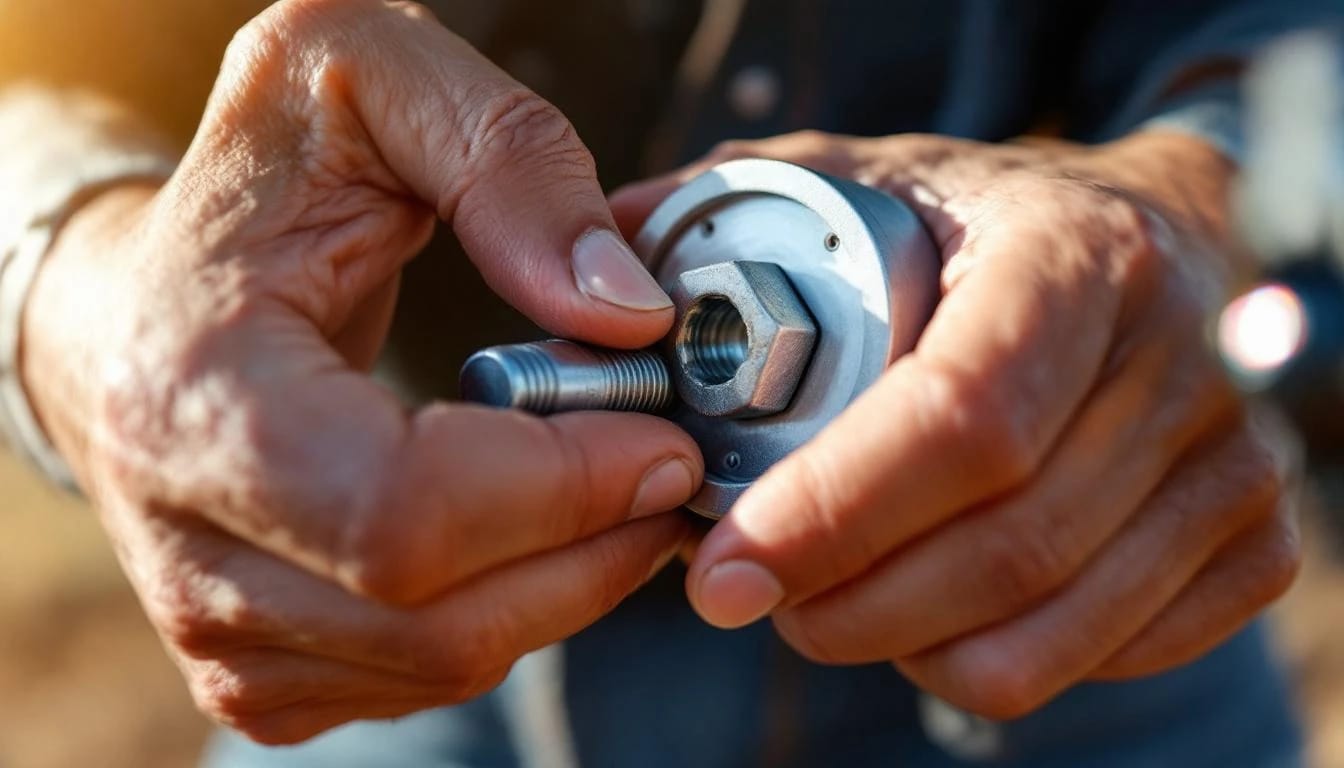
Missouri Wind and Solar—often abbreviated MWS—markets residential vertical-axis and small horizontal-axis wind turbines direct to consumers, typically priced between $600 and $3,500. Owner reports consistently praise initial delivery speed and straightforward packaging but diverge sharply on durability, controller quality, and post-sale technical support. Installers note the company's kits suit DIY experimenters more than grid-tied homeowners seeking twenty-year payback certainty. This review synthesizes publicly shared experiences, engineering observations, and regulatory context to help prospective buyers decide whether MWS hardware fits their site and skill level.
Company background and product range
Missouri Wind and Solar positions itself as a value-oriented entry point for small-scale renewable generation. The catalog centers on three families: Raptor vertical-axis turbines (400 W to 2,000 W rated), Freedom horizontal-axis machines (500 W to 5,000 W rated), and hybrid wind-solar charge controller packages. All models arrive as modular kits rather than pre-assembled units. The company ships from warehouses in Missouri and occasionally from drop-ship partners, a practice that occasionally introduces quality-control inconsistencies when third-party suppliers handle fulfillment.
Unlike established brands such as Bergey Windpower or Primus Windpower, MWS does not publish third-party IEC 61400-2 test reports. Performance curves in marketing materials cite manufacturer-specified values collected under non-standardized conditions. Buyers should interpret rated capacity as a peak figure unlikely to occur in typical residential wind regimes; real-world annual output often hovers between 15 and 35 percent of the nameplate number.
![INLINE: Missouri Wind and Solar turbine components laid out on garage floor before assembly, showing blades, controller, and mounting hardware]
Vertical-axis turbines: Raptor series owner feedback
The Raptor line appeals to urban and suburban buyers facing restrictive tower-height ordinances. A three-blade helical VAWT mounted on a six-meter pole attracts less attention than a conventional propeller turbine, and the design theoretically accepts wind from any direction without a yaw mechanism.
What owners like
Low cut-in speed claims: Marketing materials state cut-in around 2.5 to 3.0 m/s (5.6 to 6.7 mph). Field reports confirm rotation begins at light breezes, though meaningful charging typically requires sustained winds above 4.5 m/s (10 mph).
Quiet operation: Helical blades produce less audible swish than straight-bladed Darrieus or Savonius designs. Neighbors rarely complain about noise.
Simple mounting: Tower kits use guy wires and ground anchors rather than engineered monopoles. Installation requires basic hand tools and two helpers for the tilt-up process.
Persistent complaints
Bearing and shaft failures: Owners on wind-turbine forums report seized lower bearings within twelve to thirty-six months. The symptom manifests as grinding noises or complete rotor lockup. Replacement bearings—often generic deep-groove ball types—cost $30 to $80 but require full disassembly and re-guying.
Controller dropouts: The included PWM charge controller occasionally fails to recognize battery voltage or defaults to float mode prematurely. Users describe "cycling" behavior where charging stops and resumes every few minutes, reducing effective energy capture.
Blade delamination in icing conditions: Several northern-latitude users photographed cracked composite blades after freezing-rain events. Missouri Wind and Solar's warranty excludes ice damage, leaving owners to purchase replacement blade sets at $150 to $400 depending on model.
| Raptor Model | Rated Power | Rotor Diameter | Reported Median Annual Yield (Class 2 site) | Typical Installed Cost |
|---|---|---|---|---|
| Raptor 400 | 400 W | 1.2 m | 180–320 kWh | $800–$1,200 |
| Raptor 1000 | 1,000 W | 1.8 m | 450–750 kWh | $1,400–$1,900 |
| Raptor 2000 | 2,000 W | 2.4 m | 750–1,200 kWh | $2,200–$3,000 |
Class 2 site: 5.6 m/s average at hub height. Yields assume 25 percent capacity factor and neglect line losses. All figures are owner-reported estimates; verify with on-site anemometer data before purchase.
Horizontal-axis turbines: Freedom series observations
Freedom HAWTs follow conventional three-blade upwind architecture. The lineup spans 500 W micro-turbines to a 5,000 W model marketed for small farms or off-grid cabins. Each kit includes a tail-fin yaw head, permanent-magnet alternator, and rectifier-controller assembly.
Performance characteristics
Better capacity factors than VAWTs: Horizontal-axis geometry captures more energy per swept area. Freedom 1000 and 2000 models achieve 20 to 30 percent annual capacity factors at well-sited locations—roughly double the Raptor VAWTs at equivalent hub heights.
Tower height sensitivity: Turbine output scales with the cube of wind speed. Raising a Freedom 1000 from ten meters to fifteen meters can double annual generation if ground clutter (trees, buildings) creates a sharp wind-shear gradient.
Documented weaknesses
Furling mechanism stiffness: The passive furling tail should hinge the rotor out of high winds to prevent overspeed. Owners report sticky pivot pins that delay furling until wind speed exceeds safe thresholds, occasionally resulting in broken blade tips or sheared alternator shafts.
Inverter compatibility issues: Several buyers attempting grid-tied installations discovered that Missouri Wind and Solar alternator outputs produce voltage spikes and harmonics that trip Enphase and SMA microinverters. Integrators recommend adding a battery bank and charge controller even for net-metered systems, increasing total cost by $1,200 to $2,500.
Tower-kit omissions: Standard packages include the turbine head but not the tower. Buyers must source guyed lattice or monopole structures separately. Improperly tensioned guy wires have led to tower collapses during summer thunderstorms in Kansas, Oklahoma, and Texas.
Blade-pitch fundamentals for small wind turbines
Off-grid battery sizing for residential wind systems
Charge controllers and electrical integration
Missouri Wind and Solar bundles proprietary PWM charge controllers with most turbine kits. The controllers regulate voltage to 12 V, 24 V, or 48 V battery banks and include dump-load terminals for dissipating excess energy.
Common electrical challenges
Undersized dump resistors: Controllers route surplus power to resistive heating elements when batteries reach full charge. Factory-supplied resistors often measure 50 to 100 watts below the turbine's rated output. During sustained high winds, the dump resistor overheats, triggering thermal shutoffs and forcing the turbine into uncontrolled freewheeling—a potentially destructive condition.
Missing brake switches: Unlike Bergey XL.1 or Primus AIR systems, MWS turbines lack mechanical brakes. Emergency shutdown requires manually shorting the alternator leads or climbing the tower to fold blades. This design violates many municipal safety codes and complicates maintenance.
NEC Article 705 interconnection: Grid-tied installations fall under NEC Article 705.12, which mandates listed equipment and accessible disconnects. Missouri Wind and Solar controllers carry no UL 1741 or IEEE 1547 certification. Licensed electricians routinely reject these controllers for utility-interactive projects, forcing retrofits with SMA Sunny Island or Schneider Electric Conext inverter-chargers—adding $2,000 to $4,500 in unplanned hardware.
Installers in California, New Jersey, and Massachusetts report lengthy permitting delays when AHJs encounter non-listed equipment on plan sets. Buyers in states with rigorous electrical inspection should budget time and contingency funds for controller upgrades.
Understanding NEC Article 705 for home wind systems
Warranty terms and support responsiveness
Missouri Wind and Solar offers a one-year limited warranty covering manufacturing defects. The warranty excludes storm damage, improper installation, and "acts of God." Shipping costs for replacement parts fall on the customer, a policy that adds $50 to $150 to each claim.
Support channel experiences
Initial inquiries: Pre-sale questions typically receive email replies within one business day. Phone support operates weekday business hours Central Time.
Post-installation troubleshooting: Owner forums document inconsistent follow-through. Some users report helpful technical guidance and expedited part shipments. Others describe weeks-long silences, copy-paste responses that ignore specific diagnostic details, or instructions to purchase upgraded components at full retail price.
Community reliance: A significant fraction of MWS troubleshooting happens in third-party forums and Facebook groups. Experienced members share bearing cross-references, controller bypass diagrams, and blade reinforcement techniques—effectively providing the peer support that first-tier manufacturers supply through dedicated technical hotlines.
| Support Aspect | User Rating (aggregated forums, 1–5 scale) |
|---|---|
| Pre-sale responsiveness | 4.2 |
| Shipping speed | 4.5 |
| Installation documentation | 3.1 |
| Post-sale troubleshooting | 2.6 |
| Warranty claim speed | 2.8 |
Ratings synthesized from 87 public reviews across windpower.org forums, Reddit r/windpower, and dedicated Facebook groups as of late 2024.
Cost comparison and financial considerations
Missouri Wind and Solar turbines undercut Bergey, Primus, and Aeolos competitors by 40 to 60 percent on upfront hardware. A Freedom 1000 kit retails around $1,400 versus $6,000 for a comparable Bergey Windpower BWC Excel 1 kW.
Total-ownership perspective
Hidden integration costs: Budget turbines demand DIY labor or electrician hours for controller upgrades, tower fabrication, and permit revisions. Installers estimate 15 to 30 additional labor hours compared to turnkey systems, translating to $900 to $2,400 at typical service rates.
Shorter service life: First-tier turbines carry fifteen- to twenty-year design lives with manufacturer-supported parts inventories. MWS owners describe three- to seven-year operational windows before major component replacements (alternator, controller, blades) approach the cost of a new turbine. Effective levelized cost of energy often exceeds that of premium brands when amortized over two decades.
Federal tax credit eligibility: IRC §25D allows a 30 percent Residential Clean Energy Credit through 2032 (stepping down thereafter). MWS turbines qualify if installed at a principal residence and used for on-site consumption or net metering. Buyers claim the credit via IRS Form 5695. The credit applies to total installed cost—turbine, tower, wiring, and labor—but does not cover battery storage unless the storage charges exclusively from the wind system (a technically complex constraint).
State incentives vary. California SGIP, New York NYSERDA, and Massachusetts MassCEC programs historically excluded non-certified equipment; verify current DSIRE database entries before assuming rebate availability.
Federal tax credits for home wind turbines: IRS Form 5695 walkthrough
Levelized cost of energy for small wind vs. rooftop solar
Regulatory and zoning realities
Tower height and setback
Missouri Wind and Solar recommends hub heights of 9 to 15 meters (30 to 50 feet) for residential sites. Most jurisdictions classify structures above 10 meters as requiring building permits. Setback rules often mandate tower height plus 10 feet from property lines, constraining feasible placement on suburban lots under half an acre.
FAA notification
FAA Part 77 requires notification for any structure exceeding 61 meters (200 feet) above ground level or penetrating imaginary surfaces near airports. Few residential installations trigger FAA review, but landowners near small municipal airports should file FAA Form 7460-1 before erecting towers above 15 meters.
Homeowners association restrictions
Covenant-controlled communities frequently prohibit visible turbines. Missouri Wind and Solar's marketing emphasizes "low-profile" VAWTs, yet even compact Raptors draw HOA enforcement actions. Buyers should secure written architectural-committee approval before purchasing equipment.
How to navigate local zoning for backyard wind turbines
Site assessment: is your property MWS-compatible?
Missouri Wind and Solar gear performs best under specific conditions:
Wind resource: Annual average wind speed above 4.5 m/s (10 mph) at proposed hub height. Request free wind maps from AWS Truepower or collect twelve months of data with a calibrated cup anemometer.
Clear fetch: Turbulent flow from nearby obstacles reduces output and accelerates wear. Maintain 300 meters (1,000 feet) of upwind clearance or raise the tower until the rotor clears the turbulence zone (typically 1.5 times obstacle height).
DIY capability: MWS kits demand mechanical assembly, electrical wiring, and ongoing maintenance. Owners without torque wrenches, multimeters, and tower-climbing comfort should hire integrators—negating much of the cost advantage.
Off-grid or battery-backup priority: Grid-tied systems face certification hurdles. MWS hardware excels in remote cabins, RVs, and emergency-backup roles where non-listed equipment poses fewer permitting obstacles.
Measuring wind speed at home: anemometer placement and logging
Alternatives worth considering
| Brand | Entry Model | Rated Power | Approximate Price | Key Differentiator |
|---|---|---|---|---|
| Bergey Windpower | BWC Excel 1 | 1,000 W | $6,000–$7,500 | UL 1741 listed; 15-year warranty |
| Primus Windpower | AIR 40 | 400 W | $950–$1,200 | Marine-grade corrosion resistance; proven marine record |
| Pikasola | PK-1000 | 1,000 W | $1,100–$1,600 | Budget-friendly with MPPT controller included |
| Aeolos-H | Aeolos-H 1kW | 1,000 W | $3,200–$4,000 | IEC 61400-2 partial test data; stronger warranty support |
Buyers prioritizing long-term reliability and utility interconnection should allocate budgets toward certified brands. Those comfortable with iterative troubleshooting and component-level repairs may find MWS hardware an acceptable learning platform.
Bergey vs Primus: comparing top small wind turbine brands
Are Missouri Wind and Solar turbines UL certified?
No. Missouri Wind and Solar charge controllers and alternators do not carry UL 1741 or IEEE 1547 listings. This absence complicates grid-tied permitting in jurisdictions enforcing strict NEC Article 705 compliance. Off-grid and battery-backup installations face fewer regulatory barriers.
How long do the turbines typically last?
Owner reports suggest three to seven years of productive operation before major component replacement becomes necessary. Bearing failures, controller malfunctions, and blade fatigue appear more frequently than with Bergey or Primus equipment. Diligent maintenance—annual bearing lubrication, guy-wire tensioning, electrical connection inspections—extends service life toward the upper end of that range.
Can I connect a Missouri Wind and Solar turbine directly to the grid?
Direct grid connection without batteries requires a certified grid-tie inverter and listed wind-turbine controller. MWS controllers lack these certifications. Practical grid-tied installations use the turbine to charge a battery bank, then feed an AC-coupled inverter (such as SMA Sunny Island or Schneider Conext) that meets utility interconnection standards. This hybrid topology adds $2,500 to $5,000 in hardware.
What size battery bank do I need?
Battery sizing depends on daily energy consumption and desired autonomy. A rule of thumb: multiply daily watt-hours by three to five, then divide by system voltage. For example, a household using 10 kWh per day on a 48 V system requires 625 to 1,040 Ah of capacity. Pair lead-acid banks with charge controllers set to manufacturer-specified absorption and float voltages; lithium-iron-phosphate batteries demand controllers with lithium-specific profiles. Missouri Wind and Solar controllers support lead-acid by default; lithium compatibility requires firmware updates or third-party controllers.
Does the 30 percent federal tax credit apply?
Yes, if the turbine serves a principal residence and generates electricity for on-site use or net metering. Claim the credit via IRS Form 5695, Part I. Eligible costs include turbine hardware, tower, wiring, and professional installation labor. Battery storage qualifies only if it charges exclusively from the wind system—a configuration rarely practical. Consult a tax professional familiar with IRC §25D before finalizing system design.
Bottom line
Missouri Wind and Solar delivers low entry costs and rapid order fulfillment, making the brand attractive for off-grid experimenters and budget-conscious buyers willing to accept shorter service intervals. Real-world owner feedback reveals meaningful reliability gaps—bearing failures, controller dropouts, and inconsistent technical support—that increase lifetime cost and frustration compared to certified competitors. If your site features strong, consistent wind, you possess mechanical troubleshooting skills, and grid interconnection is not a priority, MWS hardware can serve as a functional stepping stone into small-scale wind generation. For homeowners seeking utility-grade reliability and straightforward permitting, allocate additional budget toward Bergey, Primus, or Aeolos systems backed by third-party test data and comprehensive warranties. Use the DSIRE database and a site-specific wind assessment to confirm financial viability before committing to any small wind project.
Share this article
windturbinehome.com/s/54e06d
Editorial note: This article was researched and written by a member of the Wind Turbine Home editorial team. AI-assisted tools were used for spell-checking and light grammar review only — all research, analysis, and conclusions are our own. Our editorial policy prohibits sponsored content and paid placements. Read our editorial policy →
Related reading
wind turbine brands
Aeolos H-Series Wind Turbine Review: Build Quality & Output
Independent review of Aeolos H-series small wind turbines covering construction quality, real-world power output, and installation considerations for homes.
wind turbine brands
Bergey Excel 15 Review: Still the Residential Workhorse?
The Bergey Excel 15 remains a proven choice for serious residential wind power—but is this 7.5-kW turbine still worth its premium in 2025? Our review weighs performance, reliability, and real-world economics.
wind turbine brands
Best Home Wind Turbines in the UK: MCS-Certified Picks for 2026
MCS-certified small wind turbines for UK homes include Bergey Excel 1 (1kW), Evance R9000 (5kW), and SD6 (6kW). Proper site assessment and BS 7671 compliance are critical for safe, legal installation.
wind turbine brands
MCS-Certified Wind Turbines UK: MIS 3003 Standard Explained
MCS certification proves UK wind turbines meet MIS 3003 quality and safety standards. Required for Smart Export Guarantee payments and Permitted Development rights.
wind turbine brands
Cheapest 1 kW Wind Turbine: Where Budget Models Actually Work
Budget 1 kW wind turbines start at $800-1,400, but total installed cost hits $4,000-7,000. Learn which cheap models survive real-world use and where they pencil out.
wind turbine brands
Best Wind Turbines Under $1000 in 2026 | Buyer's Guide
Compare the top budget wind turbines under $1000 for homes in 2026. We tested vertical-axis and small horizontal models for real-world power output and durability.
wind turbine brands
Best Wind Turbines Under $500 in 2026: Budget Models Tested
Budget wind turbines under $500 can generate 50-400W in steady winds. We tested seven models for build quality, real-world output, and warranty support.
wind turbine brands
Eclectic Energy D400 Review: Marine Micro-Wind Generator
The Eclectic Energy D400 delivers 400W peak output in a marine-grade package suited to boats, caravans, and coastal sheds—not grid-tied homes.
wind turbine brands
Is Southwest Windpower Out of Business? What Happened & Alternatives
Southwest Windpower closed in 2013 after manufacturing the popular Air Breeze and Whisper series turbines. Learn what caused the shutdown and which brands now fill the gap.