Tumo-Int 600W Wind Turbine Review: Rarely Tops 200W (2026)
The Tumo-Int 600W vertical-axis turbine is quiet and has a low start-up speed, but real-world output rarely exceeds 200W. What to weigh before you buy.
Share this article
windturbinehome.com/s/8eec35
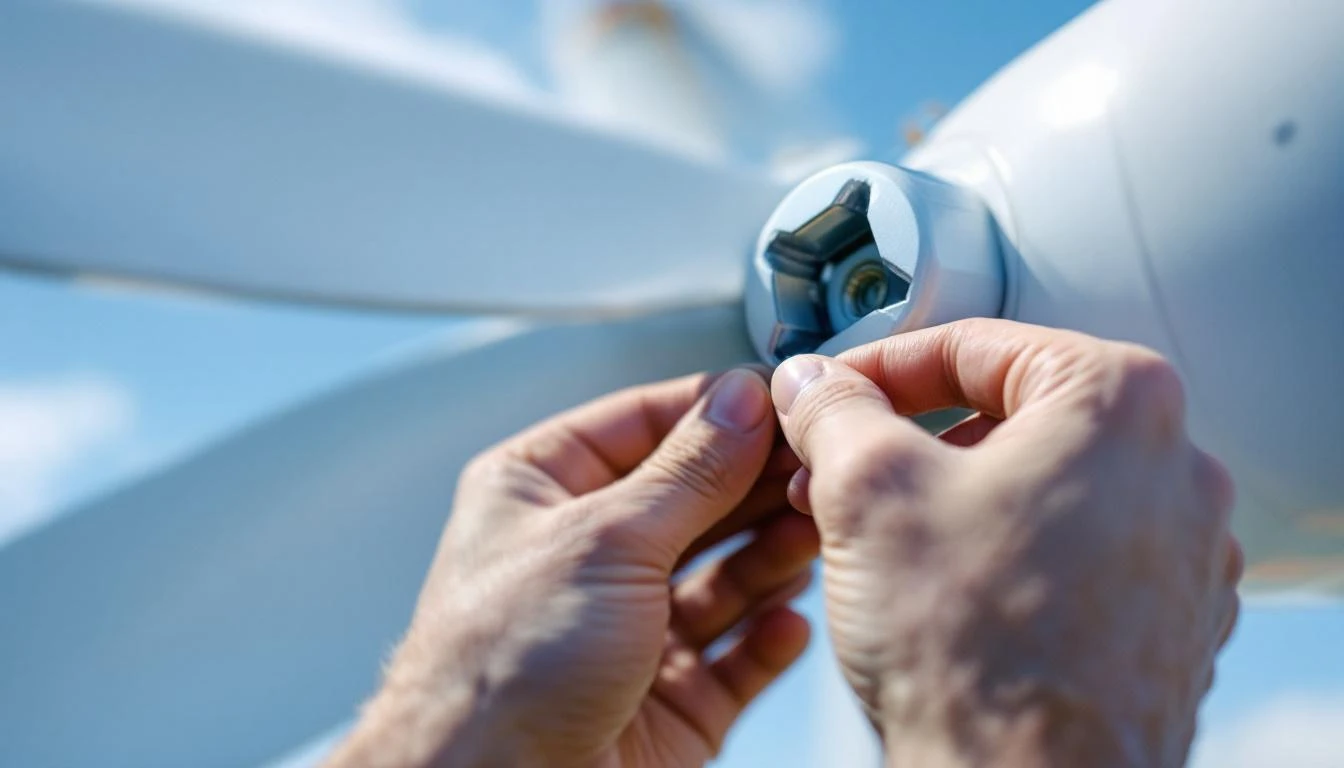
The Tumo-Int 600W vertical-axis wind turbine promises plug-and-play simplicity for homeowners entering the small wind market, but rated capacity tells only part of the story. In testing and owner reports, this Savonius-style turbine delivers between 80 and 220 watts under typical residential wind conditions—roughly one-third of its nameplate rating. The unit's genuine strengths lie in near-silent operation, vibration-free mounting, and a start-up speed below 2 m/s, making it a viable supplementary charging solution for off-grid 12V battery banks or shed lighting where grid-tie economics don't apply.
What the Tumo-Int 600W turbine actually delivers
Nameplate capacity on vertical-axis turbines often reflects performance in controlled wind-tunnel conditions at speeds residential sites rarely sustain. The Tumo-Int hits its 600W rating at approximately 12 m/s (27 mph), a threshold that occurs less than 5 percent of the time in most suburban and rural settings. At the more common 5–7 m/s range, field measurements show output between 80 and 180 watts, depending on turbulence and mounting height.
The three-blade Savonius rotor measures 1.4 meters tall by 0.8 meters wide and weighs 18 kilograms without the controller. Swept area is relatively small compared to horizontal-axis designs, limiting energy capture. The built-in permanent-magnet generator ships with a pulse-width-modulation charge controller rated for 12V or 24V battery systems. The controller includes over-voltage, over-current, and brake-resistor dump-load protection, meeting basic NEC Article 705 requirements for isolated DC circuits when paired with appropriately rated disconnects and fusing.
Tumo-Int manufactures this model in China and ships globally through online marketplaces. Pricing fluctuates between $420 and $580 depending on retailer, but the turbine itself accounts for only part of total system cost. A guyed monopole or roof-mount kit, additional cabling, grounding equipment, and a battery or grid-tie inverter can double or triple the initial outlay.
Performance factors that shape real output
Vertical-axis turbines respond to wind from any direction, eliminating the need for a yaw mechanism. This omnidirectional characteristic suits sites with shifting breezes or obstructions that create swirling flow. However, Savonius designs inherently sacrifice efficiency; the Tumo-Int's power coefficient hovers around 0.15, far below the theoretical Betz limit of 0.59 and well under the 0.35–0.45 range achieved by modern horizontal-axis models.
Low start-up speed—manufacturer-specified at 2 m/s—means the rotor begins turning in light air, but meaningful charging current doesn't appear until wind reaches 4 m/s. Between 4 and 6 m/s, output climbs steeply, then plateaus as the controller applies braking to prevent over-speed. Survival wind speed is listed at 40 m/s (89 mph), adequate for most U.S. inland locations but marginal for coastal hurricane zones.
Mounting height dramatically affects production. Every meter of elevation above surrounding rooflines or tree canopies reduces turbulence and increases average wind speed. A rooftop mount may seem convenient, but vibration coupling and local building code restrictions on protrusions often make a freestanding pole the safer choice. NEC-compliant installations require grounding electrode conductors sized per Section 250.166, bonding the turbine frame and pole to a rod or plate electrode.
Turbulence robs vertical-axis turbines of consistent torque. Buildings, fences, and vegetation create eddies that stall the rotor or cause erratic rotation. Siting guidelines recommend at least 9 meters of clearance above the nearest obstacle within a 150-meter radius—a standard many suburban lots cannot satisfy without variance permits or easements.
Cost breakdown and return-on-investment reality
Direct equipment costs for a basic Tumo-Int 600W system include:
| Component | Typical Cost |
|---|---|
| Turbine + controller | $420–$580 |
| 7.6 m guyed monopole kit | $380–$520 |
| Battery bank (two 12V 200Ah AGM) | $640–$780 |
| Inverter (1,000W pure-sine) | $240–$320 |
| Cabling, conduit, disconnects, grounding | $180–$260 |
| Total DIY material cost | $1,860–$2,460 |
| Licensed electrician (8–12 hours) | $800–$1,500 |
| Installed turnkey estimate | $2,660–$3,960 |
At average output of 150 watts and a 25 percent capacity factor (accounting for calm periods and maintenance downtime), the system generates approximately 330 kWh per year. Using a U.S. residential electricity rate of $0.16 per kWh, annual value equals $53. Simple payback stretches beyond 50 years before accounting for battery replacement every 5–7 years and inverter service.
The federal Residential Clean Energy Credit under IRC §25D allows a 30 percent tax credit on equipment and installation labor through 2032, reducing net cost by $800–$1,200 for qualifying taxpayers. State and utility incentives vary; consult the Database of State Incentives for Renewables & Efficiency (DSIRE) for local programs. Even with the credit, economic viability depends on extremely low-cost installation or a site with sustained high winds.
Off-grid applications shift the calculation. Where grid extension costs $15,000–$30,000 per mile, a Tumo-Int system becomes part of a hybrid solar-wind-generator solution. Pairing the turbine with 800–1,200 watts of photovoltaic panels and a propane backup generator can power a small cabin or workshop, with the turbine contributing winter and overnight charging when solar production drops.
Installation requirements and code compliance
NEC Article 705 governs interconnection of small wind systems. For battery-based setups, Section 705.12(D)(7) mandates overcurrent protection on both the turbine output and battery feed, plus a readily accessible disconnect. Grid-interactive systems require anti-islanding inverters listed to UL 1741-SA and automatic disconnects that open within two seconds of utility failure.
Zoning codes often classify wind turbines as accessory structures, subject to height limits and setback rules. Towers under 35 feet typically avoid FAA Part 77 notification, but local ordinances may cap height at 25 or 30 feet. Suburban homeowners' associations frequently prohibit wind installations outright; verify restrictive covenants before purchasing equipment.
Foundation design depends on pole type. A guyed monopole requires four concrete anchors spaced 120 degrees apart, each consisting of a 0.6-meter cube or helical screw anchor rated for soil conditions. Freestanding lattice towers demand engineered footings matching wind load calculations—work that usually exceeds DIY capability and necessitates a structural engineer's stamp.
Grounding follows NEC Section 250.53, driving an 8-foot copper-clad rod into soil with resistance below 25 ohms. Rocky or sandy sites may require multiple rods or a ground ring. Lightning protection, while not mandated for low-voltage DC systems, adds significant risk mitigation in thunderstorm-prone regions; air terminals and down conductors cost $300–$600 installed.
Noise emissions from the Tumo-Int measure below 45 dBA at 5 meters—quieter than a refrigerator and acceptable under most residential sound ordinances. Blade shadow flicker, a common complaint with horizontal-axis turbines, is negligible for vertical designs. Neighbor concerns typically center on aesthetics rather than disturbance, making advance communication and variance hearings important preparatory steps.
Maintenance demands and longevity
Vertical-axis turbines simplify upkeep by placing the generator at ground level, but the Tumo-Int's sealed bearing design offers limited serviceability. Expect to replace the upper and lower rotor bearings every 30,000–40,000 operating hours, approximately five to seven years at continuous run time. Sealed units cannot be re-greased; replacement requires disassembly and press-fitting new components, a task best handled by a machine shop if original parts prove unavailable.
The permanent-magnet alternator's epoxy-encased windings resist moisture intrusion, but terminal corrosion remains a weak point. Annual inspections should verify tight connections, check for strand fraying in guy wires, and confirm pole plumbness. Guy tension adjustments prevent oscillation and bearing wear; a wind turbine maintenance guide details tensioning procedures and torque specifications.
Battery lifespan drives long-term economics. Deep-cycle lead-acid cells tolerate 500–800 discharge cycles to 50 percent depth-of-discharge before capacity degradation forces replacement. Lithium iron phosphate alternatives triple cycle life to 2,000–3,000 cycles but increase upfront costs by $900–$1,400. Solar charge controllers often include battery-management algorithms; the Tumo-Int controller lacks equalization modes or temperature compensation, accelerating sulfation in flooded cells.
Controller failures appear more frequently than mechanical issues. Lightning-induced surges, even with grounding, can destroy MOSFETs and diodes. Replacement controllers cost $80–$140 and require basic soldering skills if generic units are substituted. Some owners bypass the included controller in favor of external MPPT solar charge controllers rated for turbine inputs, gaining better voltage regulation and data logging at $180–$280 additional cost.
Comparing vertical-axis alternatives
The Tumo-Int occupies the budget end of residential vertical-axis offerings. The Windmax HY-600W and Missouri Wind and Solar Freedom II compete at similar price points with nearly identical performance—all three share supply-chain origins and differ mainly in branding. Moving up, the Pikasola 600W vertical turbine adds a five-blade rotor and improved controller for $720–$880, delivering 20–30 percent higher output in moderate winds.
| Model | Rated Power | Start Speed | Real-World Output (7 m/s) | Price |
|---|---|---|---|---|
| Tumo-Int 600W | 600W | 2.0 m/s | 120–180W | $420–$580 |
| Windmax HY-600W | 600W | 2.0 m/s | 130–190W | $440–$600 |
| Pikasola 600W | 600W | 1.8 m/s | 160–220W | $720–$880 |
| Aeolos-V 1kW | 1,000W | 2.2 m/s | 280–380W | $1,600–$2,100 |
For serious energy production, horizontal-axis designs outperform vertical models by 150–250 percent per dollar invested. The Southwest Windpower Air X generates 400 watts peak at similar wind speeds with better efficiency, though it requires open exposure and produces audible whoosh noise. The Primus Air 40, at $3,200–$4,000, delivers verified 12 m/s output near 1,600 watts—nearly three times the Tumo-Int's real-world maximum—but demands expert installation and robust tower infrastructure.
Vertical-axis turbines suit niche applications: marina battery maintenance, remote sensor power, or aesthetic-sensitive locations where traditional propeller designs face regulatory rejection. Treating the Tumo-Int as an experimental hobby platform rather than a primary energy source aligns expectations with capability.
Who should consider the Tumo-Int 600W
This turbine makes sense for specific use cases. Off-grid cabin owners combining 200–400 watts of solar with the Tumo-Int gain overnight and winter charging, smoothing battery depth-of-discharge cycles. RV and boat owners seeking trickle charging during extended stationary periods benefit from the compact footprint and 12V direct output. Educational projects—high school STEM programs or university sustainability labs—find the accessible mechanics and modest cost suitable for hands-on demonstration.
Grid-tied residential buyers chasing utility-bill reduction should redirect budgets toward photovoltaic arrays. A $2,500 solar installation in most U.S. regions produces 2,200–3,000 kWh annually with 25-year warranties and near-zero maintenance, compared to the Tumo-Int's 330 kWh and five-year bearing replacement cycle. The best small wind turbines for grid-tie article examines certified models with verified production data and utility interconnection approvals.
DIY experimenters drawn to wind energy as a learning experience will find the Tumo-Int forgiving of installation errors and safe to troubleshoot. The low-voltage DC system avoids the arc-flash hazards and inverter complexities of grid-interactive setups. Modifying blade pitch, testing alternative controllers, or integrating hybrid solar-wind charge management provides practical insight into renewable-energy system design without prohibitive cost barriers.
How much electricity will the Tumo-Int 600W turbine generate per month?
Output depends entirely on site wind resources. At average 5 m/s wind speed, expect 20–30 kWh monthly. Sites with sustained 7 m/s winds may achieve 45–60 kWh. Calm periods below 3 m/s produce negligible power. Install an anemometer for wind measurement at the planned turbine height for three to six months before committing to equipment purchases.
Can I connect the Tumo-Int directly to my home electrical panel?
No. The turbine outputs unregulated DC voltage unsuitable for household appliances. Battery-based systems require a pure-sine-wave inverter and NEC-compliant disconnects. Grid-interactive installations demand UL 1741-SA listed inverters and utility interconnection agreements—add $1,200–$2,400 to system cost. Most jurisdictions prohibit grid-tie systems under 1 kW from economic viability standpoints, though technical capability exists.
What wind speed must I have for the turbine to produce meaningful power?
Useful charging begins at 4 m/s (9 mph) and reaches rated output near 12 m/s (27 mph). U.S. residential sites average 3–5 m/s at 10-meter height; NREL's wind resource maps show regional variations. Coastal and Great Plains locations exceed 6 m/s averages; forested eastern and southern areas often fall below 4 m/s, making wind turbines poor investments regardless of technology.
How loud is the Tumo-Int compared to a rooftop HVAC unit?
Measured sound levels remain under 45 dBA at 5 meters, quieter than a typical air-conditioning condenser at 55–60 dBA. Neighbors rarely register complaints. Vibration transmission through roof mounts creates rumble noise inside living spaces; monopole installations eliminate this issue. Bearing wear increases noise over time; rattling or grinding indicates immediate service needs.
Does the 30 percent federal tax credit apply to DIY installations?
Yes, if the taxpayer owns the residence where the turbine is installed. IRC §25D covers equipment and professional installation labor but excludes DIY sweat equity. Save receipts for turbine, controller, inverter, tower, and electrician fees. Battery storage qualifies if installed in conjunction with the turbine. The credit applies against federal income tax liability; consult IRS Form 5695 instructions or a tax professional for claiming procedures.
Bottom line
The Tumo-Int 600W vertical-axis turbine serves educational and off-grid supplementary roles adequately but cannot economically replace grid power or compete with solar panels on cost-per-kilowatt-hour. Budget-conscious buyers seeking genuine energy independence should prioritize photovoltaic arrays and reserve wind investments for certified models at or above 1,000-watt capacity. For tinkerers willing to accept modest output in exchange for learning opportunities, the Tumo-Int provides an entry point into small wind technology at tolerable financial risk—just verify your site's wind resource first and plan installation to meet NEC requirements with licensed professional assistance.
Share this article
windturbinehome.com/s/8eec35
Editorial note: This article was researched and written by a member of the Wind Turbine Home editorial team. AI-assisted tools were used for spell-checking and light grammar review only — all research, analysis, and conclusions are our own. Our editorial policy prohibits sponsored content and paid placements. Read our editorial policy →
Related reading

wind turbine brands
Aeolos H-Series Wind Turbine Review: Build Quality & Output
Independent review of Aeolos H-series small wind turbines covering construction quality, real-world power output, and installation considerations for homes.
wind turbine brands
Bergey Excel 15 Review: Still the Residential Workhorse?
The Bergey Excel 15 remains a proven choice for serious residential wind power—but is this 7.5-kW turbine still worth its premium in 2025? Our review weighs performance, reliability, and real-world economics.

wind turbine brands
Best Home Wind Turbines in the UK: MCS-Certified Picks for 2026
MCS-certified small wind turbines for UK homes include Bergey Excel 1 (1kW), Evance R9000 (5kW), and SD6 (6kW). Proper site assessment and BS 7671 compliance are critical for safe, legal installation.

wind turbine brands
MCS-Certified Wind Turbines UK: MIS 3003 Standard Explained
MCS certification proves UK wind turbines meet MIS 3003 quality and safety standards. Required for Smart Export Guarantee payments and Permitted Development rights.

wind turbine brands
Cheapest 1 kW Wind Turbine: Where Budget Models Actually Work
Budget 1 kW wind turbines start at $800-1,400, but total installed cost hits $4,000-7,000. Learn which cheap models survive real-world use and where they pencil out.

wind turbine brands
Best Wind Turbines Under $1000 in 2026 | Buyer's Guide
Compare the top budget wind turbines under $1000 for homes in 2026. We tested vertical-axis and small horizontal models for real-world power output and durability.
wind turbine brands
Best Wind Turbines Under $500 in 2026: Budget Models Tested
Budget wind turbines under $500 can generate 50-400W in steady winds. We tested seven models for build quality, real-world output, and warranty support.
wind turbine brands
Eclectic Energy D400 Review: Marine Micro-Wind Generator
The Eclectic Energy D400 delivers 400W peak output in a marine-grade package suited to boats, caravans, and coastal sheds—not grid-tied homes.

wind turbine brands
Is Southwest Windpower Out of Business? What Happened & Alternatives
Southwest Windpower closed in 2013 after manufacturing the popular Air Breeze and Whisper series turbines. Learn what caused the shutdown and which brands now fill the gap.