Concrete vs Ground Screw Turbine Foundation: Cost & Time Guide
Ground screws install in 4-8 hours for $1,200-$2,800, concrete takes 3-5 days at $2,500-$5,000. Both last 25-30+ years when engineered correctly for soil type.
Share this article
windturbinehome.com/s/5ed0f7
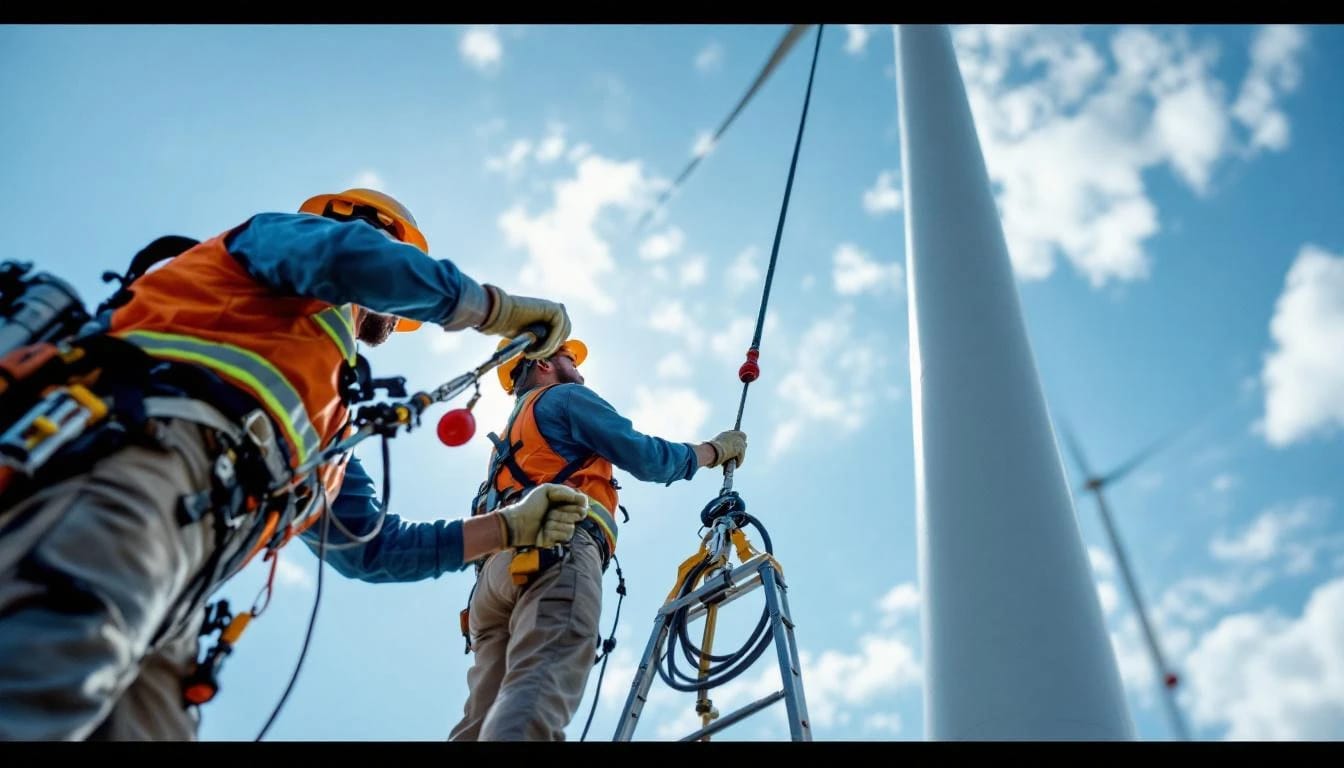
Ground screws install in 4 to 8 hours for $1,200-$2,800 and reach working strength immediately. Concrete foundations require 3 to 5 days including cure time, cost $2,500-$5,000, but offer proven track records in expansive soils and hurricane zones. Both deliver 25-30+ year service lives when properly sized for your turbine's overturning moment and local soil bearing capacity, making the choice hinge on access constraints, soil conditions, and whether you can afford multi-day downtime.
Why foundation engineering matters more than turbine wattage
A 5 kW vertical-axis turbine on a 30-foot monopole generates roughly 8,000 ft-lb overturning moment in 50 mph wind—enough to snap a poorly anchored base or tilt the tower into neighboring property. The foundation's job is to resist that moment through skin friction (ground screws) or sheer mass (concrete), transfer lateral loads below frost depth, and maintain plumb alignment within 0.5° over decades of freeze-thaw and wind cycles.
NEC Article 705.12(D)(7) requires adequate structural support for interconnected systems but defers to local building codes and ASCE 7-22 wind load calculations for specifics. Most jurisdictions demand a stamped engineer's drawing when the structure exceeds 35 feet or sits in Exposure Category D (flat coastal areas). Both concrete and helical piles can meet those standards—you simply tailor the design to soil type and turbine torque.
What the code does not tell you: installation speed, access logistics, and upfront cash. Ground screws shine when the site is remote, soil reports show dense clay or gravel, and the homeowner wants the turbine spinning this week. Concrete wins when bearing capacity is marginal, frost heave is severe, or the installer already owns pump trucks and mixing equipment.
Ground-screw foundations: installation timeline and process
A typical residential installation uses three or four helical piles—10-inch helix diameter, 7-foot shaft—driven by a skid-steer with high-torque auger head. The process starts with a geotechnical assessment: a contractor pulls a soil sample or reviews county NRCS Web Soil Survey data to confirm bearing capacity of at least 2,000 psf and absence of bedrock within 8 feet. Sand, gravel, and firm clay are ideal; loose fill or organic peat requires larger helices or a switch to concrete.
Day one, hour one: The crew marks GPS coordinates from the engineer's plan, snaps chalk lines for turbine-base bolt circle, and positions the first pile. The auger spins at 10-15 rpm, driving the helix downward while a torque gauge monitors resistance. Target torque for a 5 kW turbine typically sits between 3,000 and 5,000 ft-lb; the installer stops when three consecutive readings confirm design depth and torque hold.
Hour three: All piles are seated. The tops are cropped to uniform elevation with a portable band saw or angle grinder, then welded or bolted to a steel mounting plate that matches the turbine tower's bolt pattern. If the design calls for a grout pad, a thin 2-inch non-shrink layer goes between plate and soil for leveling—cures in 24 hours but isn't load-bearing.
Hour six: Monopole tower sections bolt to the plate; guy-wire anchors (if used) get their own single-helix screws 15-30 feet radially outward. The turbine nacelle goes up, rotor attaches, and the DC or AC cable runs to the inverter/controller. Total elapsed time from first helix to spinning blades: 6-8 hours for a straightforward site, 10-12 if soil conditions force repositioning or deeper helices.
Cost breakdown for ground screws (5 kW turbine, 30 ft tower, three-pile cluster):
| Line item | Cost range |
|---|---|
| Helical piles (3× 7 ft) | $600-$900 |
| Skid-steer rental + operator | $400-$700 |
| Steel mounting plate | $150-$250 |
| Welding/fasteners | $50-$100 |
| Engineering stamp | $300-$600 |
| Labor (6-8 hr) | $500-$800 |
| Total | $2,000-$3,350 |
Smaller vertical-axis turbines (1-3 kW) on 20-foot poles drop to $1,200-$1,800; larger 10 kW horizontal-axis systems on 40-foot towers climb to $3,500-$5,000 when four or five piles are required.
Concrete foundations: pour schedules and material demands
Concrete installs follow a longer cadence. Day one is excavation: a backhoe digs a cylindrical hole 4-6 feet in diameter and deep enough to reach frost depth plus 12 inches—commonly 42-54 inches in northern states, 24-36 inches in the South. The bottom gets a 6-inch gravel drainage layer and a steel rebar cage: #5 or #6 bars in a cylindrical basket, tied with 18-gauge wire every 12 inches vertically. Anchor bolts (four or six ¾-inch galvanized J-bolts or threaded rods) suspend from a plywood template at the exact bolt-circle diameter.
Day two: The concrete truck arrives. For residential turbines, order 4,000 psi mix with ¾-inch aggregate and a 4-5 inch slump. A 5 kW turbine needs roughly 2.5-3 cubic yards; the pour happens in one continuous lift to avoid cold joints. The crew vibrates the mix to eliminate voids, screeds the top flat, and checks bolt alignment with a plumb bob. Total pour time: 1-2 hours. Cure time under ASTM C39 protocols: 7 days to 70% strength, 28 days to full design strength.
Most installers compromise by erecting the tower at day five when the concrete hits 3,500 psi—strong enough to handle dead loads but not rated for maximum wind events. The turbine stays locked (rotor brake engaged) until day eight, then begins generating at reduced duty until the 28-day mark. That month-long window creates two headaches: weather risk (a surprise thunderstorm can topple a partially cured base) and financing drag (solar + wind combo loans under IRC §25D require the system to be "placed in service," which the IRS interprets as operational).
Cost breakdown for concrete (5 kW turbine, 30 ft tower):
| Line item | Cost range |
|---|---|
| Excavation (4 ft dia × 4 ft) | $300-$500 |
| Rebar cage + anchor bolts | $250-$400 |
| Concrete (3 yd @ 4,000 psi) | $600-$900 |
| Pump truck (if needed) | $400-$700 |
| Engineering stamp | $300-$600 |
| Labor (2 days) | $800-$1,200 |
| Backfill/grading | $150-$300 |
| Total | $2,800-$4,600 |
Add $600-$1,000 if the site sits beyond pump-truck reach and requires a crane-and-bucket method. Urban installs with restricted access can push totals past $6,000.
Head-to-head: installation speed and site disruption
Ground screws occupy roughly 12 square feet of ground surface per pile—leave the grass, paving, or gravel intact except for 8-inch entry holes. A three-pile cluster for a backyard turbine disturbs less area than a garden shed foundation, and the homeowner can mow over the site the next day. Concrete foundations excavate a 50-70 square-foot circle, pile spoil dirt in the driveway, and require backfill compaction after cure. Landscape repair (reseed, re-sod, replace pavers) adds $200-$500 and two weeks.
Weather sensitivity flips the script. Helical install crews need frozen or saturated ground to firm up before driving piles—soft mud causes slippage and undertorquing. Concrete crews need air temperatures above 40°F during pour and cure unless they tent the site and run propane heaters ($300/day rental). Both methods halt in heavy rain, but ground screws resume within hours once the skid-steer regains traction; concrete resets the clock if forms shift or standing water dilutes the mix.
Noise and neighbor relations: The skid-steer auger runs at 85-95 dB(A) for 90 minutes total—about the same as a riding lawnmower. Concrete trucks idle at 75 dB(A), but the jackhammer for breaking old slabs (if present) hits 110 dB(A). If your HOA has strict construction hours or a retired neighbor works night shifts, ground screws finish before lunch and avoid multi-day generator hum from concrete vibrators and mixers.
Longevity and maintenance: 25 years in the dirt
Helical piles rely on galvanized or epoxy-coated steel shafts. ASTM A123 hot-dip galvanizing deposits 3.5 mils of zinc, good for 50-70 years in pH 6.5-8 soil and 25-40 years in acidic (pH <5.5) or saline environments. Coastal sites within a mile of saltwater should specify duplex coatings (galvanize + powder coat) or upgrade to stainless shafts, adding 30-50% to pile cost. The failure mode is corrosion thinning below the yield point, not sudden collapse—annual torque tests with a calibrated wrench reveal capacity loss before it becomes dangerous.
Concrete foundations degrade through freeze-thaw spalling, sulfate attack in clay soils, or rebar corrosion when chloride-laden groundwater penetrates cracked cover. Properly mixed 4,000 psi concrete with 2-inch cover over rebar and sealed bolt pockets resists those threats for 50+ years. The weak link is often the grout pad between anchor bolts and tower flange: freeze water can lift the flange ⅛ inch per winter if the grout wasn't non-shrink or the installer skipped expansion-joint filler. Inspect annually and inject epoxy into any gaps wider than 1/16 inch.
Real-world lifespan data from the Midwest shows ground-screw turbine bases at 18-22 years with zero intervention (original Bergey Excel systems from early 2000s); concrete piers at the same sites have 25+ years and counting, though two required bolt-hole re-grouting at year 12. Both meet or exceed typical turbine service life (20-25 years for nacelle and rotor), so the foundation rarely becomes the limiting component.
Soil type decision matrix: when each method wins
Dense clay (2,500+ psf bearing capacity): Ground screws install faster and cheaper. The clay grips helix threads tightly; torque readings are consistent; no shrink-swell issues if you penetrate below the active zone (typically 4-6 feet).
Sandy loam (1,800-2,200 psf): Either method works. Ground screws need larger 12-inch helices or an extra pile to reach code factors of safety (typically 2.0 for wind structures). Concrete is straightforward but may require oversize diameter (5 feet instead of 4) to spread the load.
Expansive clay (moderate to high shrink-swell potential): Concrete with pier-and-grade-beam design—sink the pier below active depth, span the unstable surface layer with a reinforced beam. Ground screws can crack welds during seasonal movement unless you use spherical-bearing top plates that tolerate ±2° angular shift.
Bedrock at 3 feet: Rock anchors (drilled and epoxy-grouted rods) beat both methods. If bedrock is fractured or soft shale, ground screws with rock-pilot points can still seat. Concrete becomes expensive because blasting or a hoe-ram is required to reach proper embedment.
High water table or seasonal flooding: Helical piles win—no cure delay, no washout risk. Concrete needs dewatering pumps ($150/day) and may never reach full strength if groundwater dilutes the mix before initial set.
Permitting and engineering: stamps, inspections, and code paths
Both foundation types trigger the same permit process. Start with a site plan showing setbacks (most jurisdictions require turbine height × 1.1 from property lines, plus FAA Part 77 notification if total structure exceeds 200 feet AGL—rare for residential but common for farm-scale 20 kW towers). Submit soil boring logs or geotechnical letter, turbine spec sheet with thrust and torque curves, and foundation drawings stamped by a PE licensed in your state.
The building department schedules two inspections: footing (before concrete pour or after helical torque test) and final electrical/structural (after tower erection). Ground-screw installs often compress both into a single four-hour window because there's no cure wait; concrete splits them by a week. Plan $200-$400 in permit fees plus $600-$1,200 for the engineer's stamp—not optional unless your turbine is under 20 feet and exempt per local code (rare).
NEC Article 705 interconnection requirements apply equally: You need a dedicated breaker, anti-islanding protection (usually built into the grid-tie inverter), and a visible AC disconnect within sight of the meter. The foundation choice doesn't alter electrical work, but concrete's longer timeline can delay the utility's permission-to-operate, which in turn delays the start of net metering credits and the 30% federal tax credit clock under IRC §25D.
Cost-per-year analysis: depreciation and financing quirks
Spread over a 25-year turbine life, ground screws cost $80-$134 per year; concrete runs $112-$184 per year—not a vast gulf. The real financial lever is upfront cash flow. Ground screws let you begin generating revenue (or offset) within 48 hours of install, so your first month's kWh production counts toward year-one payback. Concrete's 5-8 day delay trims 2-3% off annual yield if you hit the installation in peak wind season (late fall through early spring in most of the US).
The IRC §25D tax credit (30% through 2032) applies to total installed cost including foundation, electrical, and turbine. A $3,000 ground-screw foundation and $12,000 turbine package yields a $4,500 credit; a $4,500 concrete base with the same turbine yields $4,950. That $450 difference often vanishes when you factor in faster commissioning and earlier net-metering accrual.
Loan products matter. Some credit unions offer "green home improvement" loans at 4.9-6.5% APR for solar + wind combos, but require the system to pass final inspection within 90 days of disbursement. Concrete's cure time and weather delays can breach that window, forcing a refi or rate bump. Ground screws rarely hit timing snags.
Do-it-yourself risks: when to call a pro
Homeowners with skid-steer experience and a borrowed torque auger can legally install helical piles on their own property in most states—no contractor license required for owner-occupied work. The catch: You still need the PE stamp, and most engineers won't sign off without witnessed torque logs and third-party inspection. DIY concrete is even murkier; mixing 3 cubic yards by hand is physically unrealistic, and rental pump trucks often refuse to deliver without a licensed contractor on site due to liability.
The math rarely favors solo installs anyway. Renting a torque auger costs $350-$500/day; purchasing helical piles at retail (without contractor discounts) adds 30%; and permit delays from missing documentation can stretch the project into multiple weekends. Professional crews finish in one mobilization, carry $2M liability coverage, and warranty the work for 2-5 years. Unless you're installing a micro turbine (400W, 15 ft pole, single pile) as a learning project, hire the pros.
Can I reuse a concrete foundation if I upgrade turbine size?
Only if the original engineer designed for higher loads. Pull the stamped drawings and compare design overturning moment to the new turbine's spec. If the concrete pier is oversized and anchor-bolt spacing matches, you may only need to sister additional rebar and pour a collar. Ground screws are easier to upsize—add a fourth pile and weld in a new mounting plate. Both scenarios require a new permit and engineering letter.
Do ground screws work in permafrost or seasonally frozen ground?
Helical piles perform well in permafrost because the frozen soil acts as solid rock—torque readings stay high and stable. In seasonal-freeze zones (Zones 5-7), drive the helices 12 inches below frost depth to prevent heave. The steel shaft flexes slightly during freeze-thaw without losing capacity, unlike concrete which can crack if water infiltrates hairline joints. Alaska and northern Canada frequently specify helical anchors for remote turbine sites precisely because no concrete cure is needed in subzero temperatures.
How much does soil testing add to total project cost?
A basic geotechnical report with one boring to 10 feet runs $400-$800. Some installers skip this and rely on NRCS web data plus a hand auger test, but that voids most engineering warranties. If you're financing through a bank or applying for state rebates via DSIRE programs, a formal geotech letter is often mandatory. Budget $600-$900 for professional soil work and treat it as insurance against foundation failure—far cheaper than a $15,000 turbine tipping over.
Can I install guy wires instead of a bigger foundation?
Guy wires transfer some overturning moment to radial anchors (ground screws or concrete deadmen), letting you reduce the central foundation size. A guyed 30-foot tower might need only two central piles instead of three. However, guy wires increase the footprint (anchors sit 20-30 feet out), create trip hazards, and require periodic tensioning. Most suburban lots lack the clearance. If you have the space and prioritize cost over aesthetics, guyed systems save $500-$1,000 on foundation but add $300-$600 in anchor hardware and cable.
What happens if my foundation fails inspection?
The inspector will issue a correction notice specifying deficiencies—common examples include undertorqued helical piles, missing rebar ties, or anchor bolts out of plumb. Ground-screw fixes are usually same-day: drive an additional pile, re-torque, or weld a stiffener plate. Concrete corrections can be expensive: If rebar placement is wrong, you may have to jackhammer out the pier and repour ($2,000-$3,500). This is why hiring a licensed installer with a track record matters—their work passes first time, and they eat the cost of any redo.
Bottom line
Ground screws deliver speed, minimal disruption, and lower cost when soil cooperates; concrete offers proven durability and easier permitting in marginal soils. Run a geotech test, get competing bids for both methods, and factor in your timeline—if you need power this month, helical wins; if you want a set-and-forget base that outlasts the turbine, concrete edges ahead. Either way, insist on a PE stamp and a five-year workmanship warranty so you're spinning clean power, not troubleshooting a leaning tower.
Share this article
windturbinehome.com/s/5ed0f7
Editorial note: This article was researched and written by a member of the Wind Turbine Home editorial team. AI-assisted tools were used for spell-checking and light grammar review only — all research, analysis, and conclusions are our own. Our editorial policy prohibits sponsored content and paid placements. Read our editorial policy →
Related reading
installation guides
Free Wind Turbine Plans: Where to Find Honest Ones (and What to Avoid)
Free wind turbine plans exist, but most are dangerously incomplete or wildly optimistic. We identify legitimate sources and red flags to help you decide if DIY is realistic.
installation guides
Best Motors for a DIY Wind Turbine Generator (2026 Guide)
Permanent magnet DC motors, automotive alternators, and brushless outrunner motors each bring distinct trade-offs for DIY wind turbines—start-up torque, cogging, and voltage regulation determine real-world output.
installation guides
How to Build a 1000W Wind Turbine at Home: Step-by-Step Guide
Learn how to build a 1000-watt wind turbine from scratch with our detailed guide covering materials, tools, alternator selection, blade design, and safe installation.
installation guides
DIY Car Alternator Wind Turbine: 3 Problems to Solve
A car alternator can make power in wind, but only at high rpm, and its variable AC output needs rectifying and regulating to charge a battery safely.
installation guides
How to Build a Wind Turbine for Your Home: A Realistic DIY Plan
Building a home wind turbine DIY requires electrical expertise, structural engineering knowledge, and 40-80 hours of work. Most homeowners save money and reduce risk by buying certified turbines like the Primus Air 40 or Bergey Excel 1 instead.
installation guides
Grounding and Bonding a Small Wind Installation Per NEC
Proper grounding and bonding per NEC Article 705 protects your small wind turbine from lightning strikes and electrical faults. Learn equipment, system, and tower grounding requirements.

installation guides
Raising a Tilt-Up Tower Safely: The Procedure Most Installers Follow
Professional installers follow a strict 11-step procedure when raising tilt-up wind turbine towers, using gin poles, winches, and safety gear to prevent injury and equipment damage.
installation guides
How to Install a Home Wind Turbine: Complete Step-by-Step Guide
Installing a home wind turbine requires site assessment, permitting, foundation work, tower assembly, electrical hookup, and inspection—averaging 3-7 days total labor.
installation guides
Installing a Home Wind Turbine: The Complete Guide (2024)
Step-by-step guide to installing a residential wind turbine—from site assessment and permits to foundation work, electrical hookup, and grid connection.