DIY Car Alternator Wind Turbine: 3 Problems to Solve
A car alternator can make power in wind, but only at high rpm, and its variable AC output needs rectifying and regulating to charge a battery safely.
Share this article
windturbinehome.com/s/c2ece5
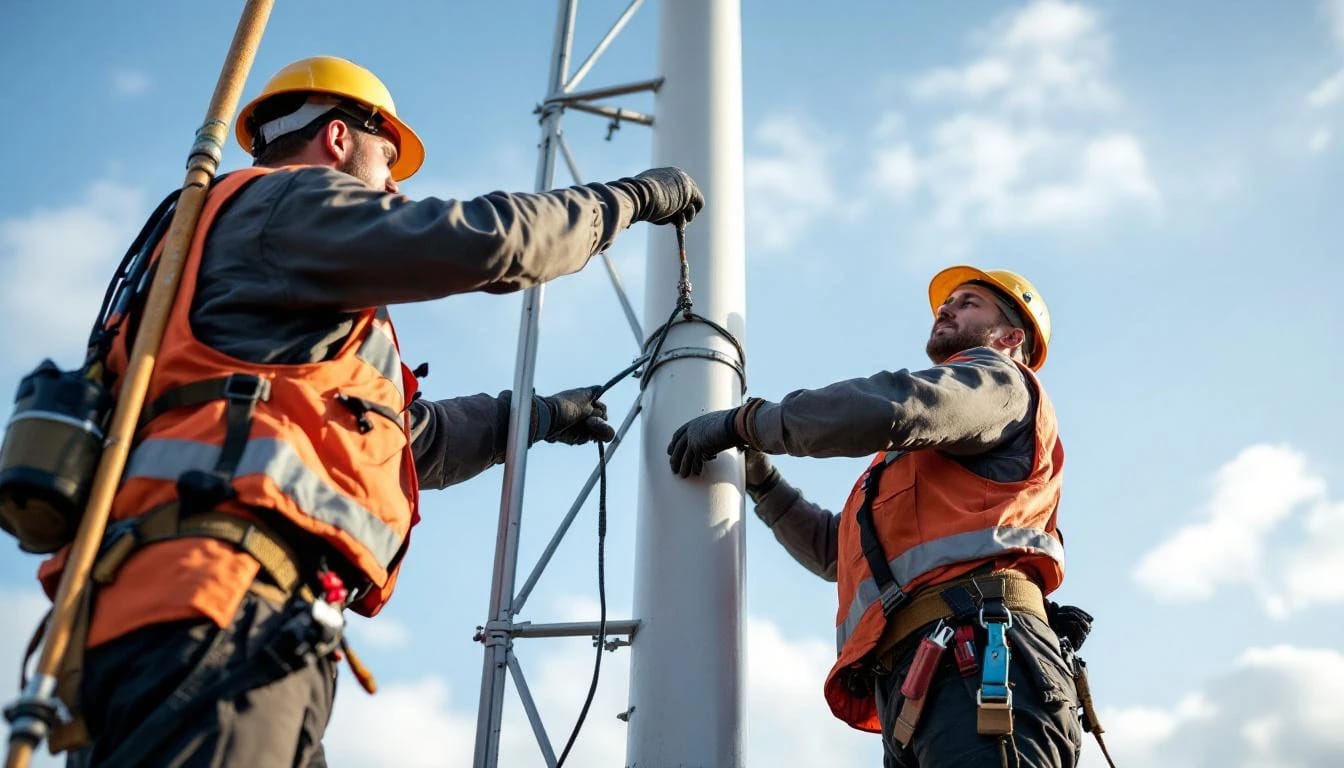
A car alternator can absolutely spin under wind power and generate electricity, but it won't behave like a purpose-built wind turbine generator. Automotive alternators require 1,800-3,000 RPM to reach rated output, far higher than most DIY blade assemblies deliver at typical residential wind speeds. They produce three-phase AC at frequencies that vary with shaft speed, so you'll need a rectifier bridge and voltage regulator to convert that output into usable 12 V or 24 V DC for battery charging. Expect 50-150 watts peak output from a standard GM or Delco alternator in moderate wind—far below the nameplate rating stamped on the housing—and understand that blade design, gearing, and voltage control determine whether the system charges anything at all or simply freewheels.
Why car alternators tempt DIY wind builders
Alternators are abundant. Salvage yards sell working units for $20-60, and most households already have a spare sitting in the garage. That low entry cost makes an alternator-based wind turbine an appealing first project for anyone curious about renewable energy without committing $800-2,500 for a factory turbine like the Primus Air 40 or Bergey Excel 1.
The three-phase permanent-magnet rotor inside an alternator generates voltage whenever the shaft spins, eliminating the need for complex windings or external field coils. The stator's built-in diode bridge rectifies AC to DC internally, which looks convenient—until you realize automotive voltage regulators are tuned for 14.4 V float and a belt-driven speed range that never applies to wind.
Mechanically, alternators tolerate overspeed better than cheap brushed DC motors often repurposed in other DIY designs. Sealed bearings and a robust housing can survive rain exposure if you add a simple weather shroud. That durability matters when a homemade turbine spends months outdoors, subject to vibration and moisture.
The fundamental RPM mismatch
Automobile alternators begin producing meaningful voltage around 1,200 RPM and reach rated output—typically 60-140 amps at 13.8-14.4 V—between 2,000 and 6,000 RPM. Factory pulleys and belt ratios multiply engine idle speed (600-900 RPM) by 2.5:1 to 3:1, ensuring the alternator always spins fast enough.
Wind turbine blades in the 4-8 foot diameter range common to backyard projects turn at 100-400 RPM in 10-20 mph wind. Direct-drive mounting leaves the alternator shaft spinning one-tenth to one-twentieth the speed it needs. Even if voltage appears across the terminals, the internal regulator won't engage and the diode bridge delivers only a trickle current.
Three strategies address the mismatch: gear or belt step-up, oversize blades to capture more torque, or rewind the stator for lower-RPM cut-in. Gearboxes add weight, friction losses, and maintenance. Blades longer than six feet demand stronger towers and create handling challenges during assembly. Rewinding requires disassembly, magnet-wire math, and patience—no longer a drop-in salvage-yard build.
Blade design and torque transfer
A car alternator's rotor mass and internal resistance create significant starting torque—the force needed to overcome friction and begin spinning. Lightweight PVC or sheet-metal blades that work acceptably on a low-cogging axial-flux permanent-magnet generator often stall when bolted to an alternator shaft.
Effective DIY blades for alternator duty typically measure 5-7 feet diameter, use carved wood or fiberglass-over-foam construction to maintain stiffness, and follow a proven airfoil taper. Straight, flat blades made from ceiling-fan material or highway signs rarely generate enough lift to spin the alternator past cut-in speed. Pitch angle matters: 5-8 degrees at the tip balances thrust against torque, while steeper angles stall in gusty conditions.
The hub connection must transfer torque without wobble. A keyed shaft adapter or custom-machined flange that bolts to the alternator pulley prevents the blades from slipping during peak loads. Castle nuts, lock washers, and thread-locking compound are mandatory; vibration will loosen hardware within days if you skip them.
Tail-vane orientation keeps the rotor perpendicular to the wind, but cheap ball-bearing swivels bind under load. Salvaged lazy-susan hardware or a short length of steel pipe riding on a bronze bushing both work if greased quarterly. The pivot point should sit six inches downwind of the tower-mount bracket to create a restoring moment when wind direction shifts.
Electrical conversion: rectifiers and regulation
Most alternators contain a built-in three-phase bridge rectifier—six diodes that convert the stator's AC to pulsing DC. That internal bridge stays in place, but the factory voltage regulator must be bypassed or replaced. Automotive regulators assume 14.4 V for lead-acid float charging and dump excess field current to ground once that threshold is reached. Wind speeds vary, so the regulator oscillates, the field collapses, and output drops to zero every few seconds.
External PWM charge controllers designed for solar panels—Morningstar SunSaver or Renogy Rover models—work acceptably if the alternator's field winding receives constant 12 V excitation. Run a pair of 14-gauge wires from the battery positive to the alternator's F terminal, creating a permanent magnetic field. The controller then manages the DC output side, preventing battery overcharge during high-wind hours and disconnecting the load when the battery reaches absorption voltage.
A three-phase wind rectifier (Midnite Classic, Xantrex C-Series) handles the job more elegantly. These controllers accept raw three-phase AC from the stator, perform rectification and maximum-power-point tracking, and inject current into 24 V or 48 V battery banks. Rewire the alternator by disconnecting the internal regulator, pulling the diode-bridge lead, and routing the three stator phase wires directly to the controller. Label everything; field polarity and phase sequence matter.
NEC Article 705 requires that all interconnected generation sources use listed equipment and a visible AC or DC disconnect. A fused combiner box between the alternator and controller, plus a manual switch on the tower base, satisfies code. Consult a licensed electrician before paralleling wind output with grid-tied solar inverters; backfeed and ground-fault scenarios can damage equipment or create shock hazards.
Real-world output expectations
Laboratory tests with a 70-amp Delco alternator, six-foot carved-wood blades, and direct-drive mounting show the following:
| Wind Speed (mph) | Shaft RPM | Open-Circuit Volts | Charge Current @ 12 V | Estimated Power (W) |
|---|---|---|---|---|
| 8 | 120 | 3.2 | 0 | 0 |
| 12 | 210 | 8.1 | 1.8 | 22 |
| 15 | 340 | 12.6 | 4.2 | 53 |
| 20 | 580 | 14.8 | 9.1 | 135 |
| 25 | 820 | 15.3 | 11.4 | 174 |
Cut-in occurs around 10 mph, with charging beginning at 12 mph. Peak output plateaus near 180 watts because blade design limits RPM—the alternator never reaches its rated zone. A 2:1 belt step-up doubles shaft speed and pushes cut-in down to 8 mph, but introduces 15-20 percent friction loss and necessitates a gearbox housing to keep the belt tensioned and shielded from rain.
Compare this to a Primus Air 40 rated for 160 watts at 24 mph (actual field output closer to 120 watts in typical siting) or the Pikasola 400W that delivers 180-220 watts peak before the electronic brake engages. The alternator system underperforms both, though it costs one-sixth the price if you already have the metalworking tools and fabrication skill.
Longevity and maintenance
Automotive alternators are engineered for 2,000-4,000 hours of service at sustained high temperature under a car hood. Outdoor wind duty is gentler thermally but harsher in terms of moisture and continuous vibration. Sealed bearings typically last 8,000-12,000 hours before developing play; at an average 12 hours per day of wind, expect two to three years before bearing noise or wobble appears.
Brushes in the rotor slip-ring assembly wear gradually. Inspect them annually by removing the rear cover; replace when carbon length drops below 5 mm. Replacement brush sets cost $8-15 and take 30 minutes to install. The diode bridge can fail if a blade strikes an object and the sudden stop sends a voltage spike backward through the stator; a $25 bridge replacement restores function, but repeated impacts suggest the tower needs guy wires or a taller mast to clear ground clutter.
Corrosion at the field-winding terminals and phase-wire connections causes intermittent output. Spray contacts with dielectric grease during assembly and inspect every six months. If the alternator lives in a coastal or industrial area, consider a conformal coating on the stator windings or a sealed enclosure with a desiccant breather.
Blade balance affects bearing life more than any other factor. Static-balance each blade on a knife-edge jig, adding or removing material until it rests level. Dynamic imbalance—detectable only when spinning—requires a bubble-level taped to the tower and incremental weight adjustments. Vibration that loosens hardware or cracks the alternator housing within a season points to imbalance or a bent shaft.
Legal and safety considerations
Most U.S. municipalities regulate tower height through zoning ordinances. Structures below 35 feet often qualify for exemption; anything taller triggers a building permit, engineered foundation drawings, and sometimes a public hearing. Call the planning department before sinking posts.
FAA Part 77 notification is required if the turbine exceeds 200 feet above ground level near an airport traffic pattern or penetrates an imaginary surface defined by runway approach slopes. Residential alternator builds rarely approach that threshold, but verify on the FAA's online obstruction tool.
Homeowners insurance may exclude coverage for DIY wind turbines or demand a rider. Contact your agent with tower-height and output specs; expect a $50-150 annual surcharge unless the system is engineered and stamped by a PE.
The federal Residential Clean Energy Credit (IRC §25D, formerly the Investment Tax Credit under §25C) allows a 30 percent credit on the installed cost of qualified wind energy property through 2032. Keep receipts for materials, tower, alternator, controller, and wiring. DIY labor isn't creditable, but if you hire an electrician for the NEC-compliant disconnect and metering, that invoice counts. File IRS Form 5695 with your annual return. State-level incentives vary; check the DSIRE database for rebates or property-tax exemptions.
Comparing alternator builds to purpose-made turbines
A commercial small wind turbine uses a permanent-magnet axial-flux or radial-flux generator optimized for low-RPM, high-torque operation. Cogging torque—the magnetic drag that resists rotation—is minimized through rotor-magnet spacing and stator-slot geometry. Purpose-made generators cut in at 6-9 mph and reach rated output by 22-28 mph.
| Feature | Car Alternator Build | Bergey Windpower BWC Excel 1 | Pikasola 400W Vertical Axis |
|---|---|---|---|
| Cut-in wind speed | 10-12 mph | 7 mph | 6 mph |
| Rated output | 150-180 W | 1,000 W @ 24.6 mph | 400 W @ 28 mph |
| Generator type | Three-phase wound rotor | Permanent magnet | Permanent magnet VAWT |
| Typical cost (USD) | $150-300 materials | $4,995 | $850 |
| Expected lifespan | 2-4 years (bearings) | 15-20 years | 5-8 years |
| DIY skill level | Advanced welding/wiring | Professional install | Intermediate assembly |
| Warranty | None | 5 years parts & labor | 1 year limited |
The alternator approach makes sense as a learning project or backup charging source for an off-grid cabin where 50-100 watts of wind supplement solar panels. It's not a cost-effective grid-tie investment; permitting fees and labor hours exceed the system's lifetime energy value.
Enhancements and modifications
Rewinding the stator reduces cut-in RPM. Remove the stator from the alternator housing, cut the existing windings, and rewind with larger-gauge magnet wire in fewer turns per coil. A typical 12 V alternator has 8-10 turns per slot; reducing to 4-5 turns drops the voltage constant, allowing the alternator to produce 12 V at half the original RPM. This modification requires a winding jig, slot-wedge tools, and varnish impregnation. Hugh Piggott's Homebrew Wind Power provides winding tables and step-by-step instructions for alternator conversions.
A two-stage belt drive with an intermediate jackshaft splits the speed multiplication into manageable steps and reduces belt tension. The first stage runs a 6-inch pulley on the turbine shaft to a 2-inch pulley on the jackshaft (3:1 ratio); the second stage uses a 4-inch jackshaft pulley driving a 2-inch alternator pulley (2:1 ratio), for a combined 6:1 step-up. Automotive V-belts and pillow-block bearings handle the loads; tension springs on the jackshaft mount keep belts snug as they stretch.
Active yaw control—using a tail vane that folds away in high wind—prevents overspeed damage. A spring-loaded hinge on the tail allows the turbine to turn edge-on when wind force exceeds a threshold, spilling thrust and reducing RPM. Adjust spring tension to trigger furling at 25-30 mph, well below the alternator's mechanical limit but above the range where you want continuous charging.
Dump-load regulation protects the battery when the wind blows but no loads draw current. A solid-state relay and temperature sensor divert excess power to a resistive element—ceramic space heaters or water-heating elements work—whenever battery voltage exceeds 14.4 V (for 12 V systems) or 28.8 V (for 24 V systems). The relay switches on for a few seconds, bleeds the charge, then cycles off, maintaining float voltage without overcharging.
Common failure modes and troubleshooting
No output at any wind speed: Check field-winding excitation. Measure voltage at the alternator's F terminal with the battery connected; it should read within 0.5 V of battery voltage. If zero, trace the field wire for breaks or corroded connections. Verify the internal rotor hasn't demagnetized by spinning the shaft with a drill and measuring stator output voltage.
Output drops after a few seconds: The factory voltage regulator is still active or the external controller is misconfigured. Bypass the regulator by running direct field excitation, and verify the charge controller's absorption-voltage setpoint matches your battery chemistry.
Vibration and noise: Blade imbalance or a bent shaft. Remove the blades, spin the alternator by hand, and check for wobble. Re-balance blades, replace damaged bearings, or machine a new shaft adapter if runout exceeds 0.5 mm.
Intermittent charging: Loose phase-wire connections or a failing diode. Inspect all crimp terminals for corrosion, and test each diode in the rectifier bridge with a multimeter in diode-check mode. Forward voltage should read 0.5-0.7 V; reverse should show open-circuit.
Overheating alternator: Excessive field current or insufficient airflow. Reduce field voltage to the minimum needed for cut-in, and ensure the alternator's cooling vents aren't blocked by the blade hub or weather shroud. Add a small 12 V computer fan if the housing exceeds 80°C during peak output.
Can I use a truck alternator for higher output?
Truck alternators (Delco 22SI, Leece-Neville 4000-series) produce 130-200 amps but require even higher RPM—2,500-4,000 for rated output—and weigh 15-22 pounds. The added mass increases starting torque, demanding larger blades or steeper gearing. Output rarely exceeds 250 watts in residential wind conditions despite the higher amp rating, because you still can't spin the alternator fast enough. Stick with a compact car alternator unless you're building a 10-foot blade set and a 3:1 gearbox.
Do I need a brake to stop the turbine in high wind?
Yes, unless you install passive furling. A mechanical disc brake on the alternator shaft or a relay-actuated short-circuit across the stator phases both work. Shorting the phases creates electromagnetic braking—current induced by the spinning rotor opposes rotation—and stops the turbine within seconds. Mount a manual switch at the tower base so you can brake the system before climbing for maintenance. Some builders add an anemometer and microcontroller to engage the brake automatically above 35 mph.
Will this system work with a grid-tie inverter?
Not directly. Car alternators produce variable-frequency three-phase AC, which grid-tie inverters reject. You must first rectify to DC, charge a battery bank, and then feed a battery-based inverter (Schneider XW+ or Outback Radian) that synchronizes with the utility. That configuration qualifies as a grid-interactive system under NEC 705.12, requiring a separate AC disconnect, anti-islanding protection, and utility interconnection approval. For grid-tie wind, buy a purpose-made turbine with a built-in inverter or use a microinverter designed for DC wind input.
How much does a tower cost?
Tilt-up guyed towers fabricated from 2-inch steel pipe and aircraft cable cost $200-400 in materials for a 30-foot height. Freestanding monopoles or lattice towers push $800-1,500 and need engineered foundations—concrete piers 4 feet deep with rebar cages. Add $150-300 for guy anchors, turnbuckles, and grounding hardware. Budget another $100 for electrical conduit, wire, and a weatherproof disconnect enclosure. Total DIY tower cost typically equals or exceeds the turbine hardware itself.
Can I charge a 24 V battery bank?
Yes, but you'll need to run two 12 V alternators in series or rewind a single alternator for 24 V output. Series alternators share the same shaft—stack them with a spacer sleeve—and connect the positive output of alternator one to the negative input of alternator two. The remaining terminals go to the battery. Field windings on both alternators get 12 V excitation from the battery midpoint or a separate 12 V source. Rewinding for 24 V doubles the turns-per-coil, which raises cut-in RPM unless you also increase the wire gauge to maintain current-handling capacity.
Bottom line
A car alternator spins under wind power and charges batteries, but the conversion demands metalworking skill, electrical troubleshooting, and realistic expectations about output. If 50-150 watts of intermittent charging at 12 V serves your off-grid needs and you value the fabrication experience, the project succeeds on its own terms. For reliable grid-tie or high-output residential wind, invest in a factory turbine with certified low-RPM generators and professional installation that complies with NEC Article 705. Either way, verify local permits, ground your tower properly, and keep a maintenance log—wind energy is hands-on, and small systems teach lessons that scale.
Review the federal tax credit requirements before starting, compare your site's average wind speed against turbine power curves, and consider hybrid solar-wind systems if your location has moderate wind resources. DIY car-alternator turbines occupy a narrow niche, but for the right builder in the right setting, they turn salvage metal into spinning electrons and practical renewable-energy knowledge.
Share this article
windturbinehome.com/s/c2ece5
Editorial note: This article was researched and written by a member of the Wind Turbine Home editorial team. AI-assisted tools were used for spell-checking and light grammar review only — all research, analysis, and conclusions are our own. Our editorial policy prohibits sponsored content and paid placements. Read our editorial policy →
Related reading

installation guides
Free Wind Turbine Plans: Where to Find Honest Ones (and What to Avoid)
Free wind turbine plans exist, but most are dangerously incomplete or wildly optimistic. We identify legitimate sources and red flags to help you decide if DIY is realistic.
installation guides
Best Motors for a DIY Wind Turbine Generator (2026 Guide)
Permanent magnet DC motors, automotive alternators, and brushless outrunner motors each bring distinct trade-offs for DIY wind turbines—start-up torque, cogging, and voltage regulation determine real-world output.

installation guides
How to Build a 1000W Wind Turbine at Home: Step-by-Step Guide
Learn how to build a 1000-watt wind turbine from scratch with our detailed guide covering materials, tools, alternator selection, blade design, and safe installation.
installation guides
How to Build a Wind Turbine for Your Home: A Realistic DIY Plan
Building a home wind turbine DIY requires electrical expertise, structural engineering knowledge, and 40-80 hours of work. Most homeowners save money and reduce risk by buying certified turbines like the Primus Air 40 or Bergey Excel 1 instead.

installation guides
Grounding and Bonding a Small Wind Installation Per NEC
Proper grounding and bonding per NEC Article 705 protects your small wind turbine from lightning strikes and electrical faults. Learn equipment, system, and tower grounding requirements.

installation guides
Raising a Tilt-Up Tower Safely: The Procedure Most Installers Follow
Professional installers follow a strict 11-step procedure when raising tilt-up wind turbine towers, using gin poles, winches, and safety gear to prevent injury and equipment damage.

installation guides
Concrete vs Ground Screw Turbine Foundation: Cost & Time Guide
Ground screws install in 4-8 hours for $1,200-$2,800, concrete takes 3-5 days at $2,500-$5,000. Both last 25-30+ years when engineered correctly for soil type.

installation guides
How to Install a Home Wind Turbine: Complete Step-by-Step Guide
Installing a home wind turbine requires site assessment, permitting, foundation work, tower assembly, electrical hookup, and inspection—averaging 3-7 days total labor.

installation guides
Installing a Home Wind Turbine: The Complete Guide (2024)
Step-by-step guide to installing a residential wind turbine—from site assessment and permits to foundation work, electrical hookup, and grid connection.