DIY Savonius Wind Turbine From PVC: Weekend Build Guide
Build a functional Savonius vertical-axis wind turbine from PVC pipe in two days. Step-by-step instructions, materials list, and performance expectations included.
Share this article
windturbinehome.com/s/7e096d
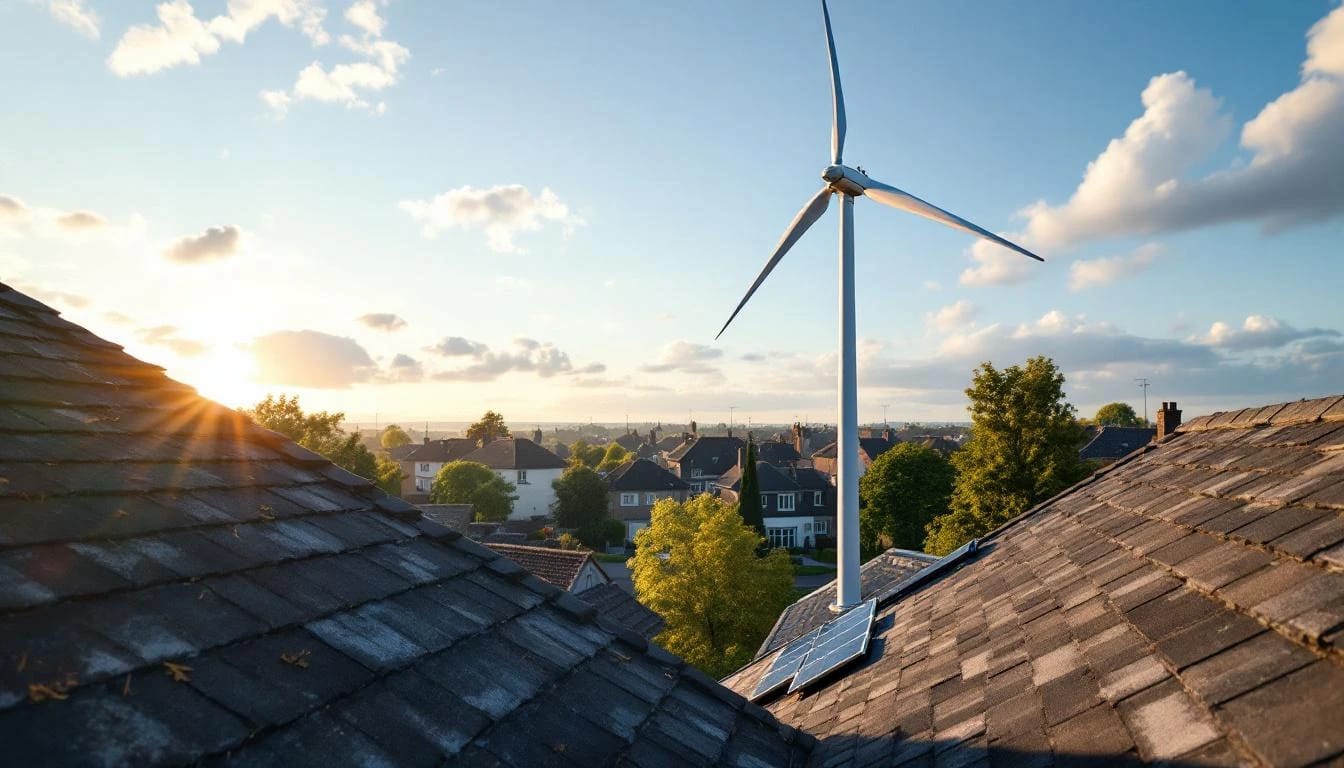
A PVC Savonius turbine delivers 10-50 watts in steady 12 mph winds—enough to trickle-charge a marine battery or run LED security lights. This weekend project uses common hardware-store materials and requires only basic hand tools. The finished turbine stands roughly four feet tall, spins in winds as low as 6 mph, and costs $60-120 depending on generator choice. While it won't power a refrigerator, it offers hands-on proof of vertical-axis wind concepts and practical utility for off-grid garden sensors or dock lighting.
What makes the Savonius design backyard-friendly
The Savonius rotor is a drag-type vertical-axis turbine invented by Finnish engineer Sigurd Savonius in 1922. Two or three semi-cylindrical blades overlap around a central shaft, creating concave "scoops" that catch wind from any direction. The design self-starts at low wind speeds, produces high starting torque at low RPM, and tolerates turbulent airflow better than lift-type vertical turbines like Darrieus models.
For DIY builders, the Savonius offers five advantages. First, PVC pipe naturally forms the semi-circular blade profile with no cutting beyond straight crosscuts. Second, the slow rotational speed (60-200 RPM in residential wind) matches small permanent-magnet DC motors used as generators without gearing. Third, vertical mounting eliminates yaw mechanisms entirely. Fourth, the enclosed rotor poses minimal bird-strike risk compared to swept horizontal blades. Fifth, the design accepts sloppy tolerances—a half-inch misalignment or unbalanced blade reduces efficiency by 5-8% but doesn't stop the turbine from spinning.
The physics ceiling is real: Savonius rotors achieve 15-20% efficiency under laboratory conditions, far below the 35-45% typical of small horizontal-axis turbines. Blade tip speed never exceeds wind speed, limiting power extraction. A three-foot-diameter PVC Savonius in 15 mph wind produces roughly 30-40 watts; the same wind through a 48-inch horizontal rotor yields 150-200 watts. The trade-off pays dividends when simplicity, omnidirectional operation, and low cut-in speed matter more than peak wattage.
Materials and tools for a three-foot rotor
Core turbine components
- Two 36-inch lengths of 10-inch Schedule 40 PVC pipe (the rotor blades)
- One 48-inch length of 1-inch Schedule 40 PVC pipe (central shaft)
- Two 12 × 12-inch squares of ½-inch marine-grade plywood (top and bottom endplates)
- Four 3-inch stainless steel corner braces with mounting screws
- Outdoor construction adhesive (PL Premium or equivalent)
- Four stainless steel hose clamps (10-12 inch diameter)
Generator and electrical
- 12V permanent-magnet DC motor rated 100W or higher (surplus treadmill motors work well)
- Aluminum motor mount bracket or fabricated steel plate
- 12V 35 Ah deep-cycle AGM battery
- 10A PWM solar charge controller (protects battery from overcharge)
- 14 AWG stranded copper wire, outdoor-rated
- Waterproof junction box
- Inline 15A blade fuse holder
Mounting hardware
- 10-foot section of 2-inch galvanized steel pipe (mast)
- Drive-in ground sleeve or concrete footing
- Two pillow-block bearings, 1-inch bore
- Stainless steel set screws and lock washers
- Guy wire kit (optional for installations above 12 feet)
Tools required
- Circular saw or hand saw
- Drill with ½-inch bit
- Tape measure and carpenter's square
- Screwdriver set (Phillips and flat)
- Adjustable wrench
- Wire strippers and crimpers
- Spirit level
Step-by-step rotor construction
Cutting and shaping the blades
Mark each 36-inch section of 10-inch PVC pipe at the 18-inch midpoint. Use a circular saw to rip each pipe lengthwise, creating four half-cylinder sections. Clean burrs with a file or sandpaper. The sawn edges will overlap at the rotor center.
Lay out the 12-inch plywood squares and mark the exact center. Draw a 1-inch diameter circle for the shaft hole. Using a ½-inch bit, drill overlapping holes around the circle perimeter, then smooth with a rasp or rotary tool until the 1-inch PVC shaft slides through with light friction.
Position the four blade sections on one endplate in an S-curve pattern when viewed from above. Each blade's concave side should face the direction it will push during rotation. The blade edges overlap roughly 2 inches at the center. Mark blade positions, remove the blades, apply construction adhesive to both the blade edge and endplate surface, then clamp or weight the assembly. Repeat for the second endplate at the opposite end. Allow 24 hours for adhesive cure before handling.
Shaft and bearing integration
Slide the 48-inch PVC shaft through the center holes of both endplates. The shaft should extend 6 inches above the top plate and 12 inches below the bottom plate. Secure each endplate with four equally-spaced stainless hose clamps wrapped around the PVC shaft and through-bolted to the plywood. This creates a rigid connection that resists twisting forces.
At the bottom shaft extension, attach the generator coupling. Most small DC motors use a keyed shaft or set-screw hub. If the PVC shaft is too large, wrap it with self-amalgamating tape until the coupling fits snugly, then secure with a set screw and thread-locker compound. The motor shaft and turbine shaft must align within 1-2 degrees to prevent vibration and bearing wear.
Mount the two pillow-block bearings on a vertical section of 2-inch galvanized pipe using U-bolts or fabricated steel straps. Space the bearings 18-24 inches apart. The turbine's lower PVC shaft extension passes through both bearings. Pack each bearing with marine-grade grease and install rubber seals to exclude water.
Generator selection and electrical integration
A 100-150W permanent-magnet DC motor salvaged from a treadmill typically costs $15-30 on surplus markets. These motors generate 12-15V DC at 100-200 RPM, matching Savonius rotor speeds. Verify the motor's no-load voltage at expected RPM using a drill or corded driver—spin the motor shaft at 150 RPM and measure output with a multimeter. Target 12-14V; higher voltage requires a buck converter to protect 12V batteries.
Wire the motor output to a 10A PWM solar charge controller. Connect the controller's load terminals to the battery. Install a 15A inline fuse on the positive wire between motor and controller, positioned within 12 inches of the motor terminals. Mount all electrical components in a weatherproof NEMA 3R or better junction box at the mast base.
The charge controller prevents battery overcharge when the turbine spins faster than expected and provides dump-load protection. Many PWM controllers include low-voltage disconnect, protecting the battery from over-discharge if powering nighttime loads. For installations more than 50 feet from the battery, upsize wire to 12 AWG to minimize voltage drop—Savonius turbines produce low voltage at high current, making resistance losses significant.
Grounding and lightning protection
NEC Article 705.50 requires ground-fault protection for interconnected power sources. For standalone battery systems, drive an 8-foot copper-clad ground rod within 10 feet of the turbine mast. Run 6 AWG bare copper wire from the motor frame to the ground rod using acorn clamps. If the turbine mast is metal, bond it to the ground rod as well.
A Savonius rotor under 12 feet tall and more than 50 feet from structures rarely attracts lightning, but grounding provides a safe path for static buildup. Taller installations warrant a Franklin rod mounted 18-24 inches above the rotor with a direct #4 AWG copper conductor to the ground rod. Consult a licensed electrician familiar with NEC Article 250 for any installation exceeding 20 feet or located within 25 feet of occupied buildings.
Installation site selection and mast mounting
Savonius turbines tolerate turbulent wind but still perform best with unobstructed airflow. Mount the rotor at least 10 feet above the nearest obstacle (roof peak, tree canopy, fence line) within a 50-foot radius. A 12-foot mast height suits most suburban lots; 16-20 feet works better on wooded properties.
Drive-in ground sleeves simplify temporary installations. Pound a 30-inch sleeve into firm soil using a sledgehammer and driving cap, leaving 4 inches exposed. Slide the 2-inch mast pipe into the sleeve—the fit should be snug enough to resist twisting but loose enough to lift the mast out for maintenance. For permanent mounts, dig a 36-inch hole, set the mast in 12 inches of gravel for drainage, then pour an 18-inch concrete collar around the pipe. Embed J-bolts in the concrete if using a hinged base for tilt-down access.
Installations exceeding 15 feet benefit from guy wires. Attach three 1/8-inch galvanized aircraft cables at 120-degree spacing around the mast, positioned 6-12 inches below the turbine's bottom bearing. Anchor each cable to a ground screw or concrete deadman 10-15 feet from the mast base. Adjust tension until the mast stands plumb—use a spirit level on two perpendicular faces.
Performance expectations and load matching
A three-foot-diameter PVC Savonius rotor generating 30-40 watts in 12 mph wind delivers roughly 240-320 watt-hours over an 8-hour windy day. That energy runs a 10W LED floodlight for 24-32 hours or recharges a 10,000 mAh USB power bank three times. It won't boil water or power a laptop directly, but it suits niche loads well.
Best-matched applications include:
- 12V marine bilge pumps for rainwater collection (18W intermittent draw)
- Electric fence chargers for small pastures (3-5W continuous)
- Weather station wireless repeaters (2-8W with sleep mode)
- LED pathway lighting with dusk-to-dawn controllers
- Trickle charging for seasonal-use vehicle batteries
The charge controller's load terminals support 10A continuous draw (120W at 12V). Pair the turbine with a 100W solar panel to cover calm days and overnight loads. The battery buffers supply—size it for 2-3 days of backup at your average daily consumption.
For detailed guidance on hybrid wind-solar systems for off-grid applications, see our wind-solar hybrid system sizing guide. Strategies for extending battery life in low-wind climates appear in optimizing charge controllers for small wind turbines.
Common failure modes and fixes
PVC blades crack at through-bolt stress points after 6-18 months outdoors. UV exposure degrades PVC's impact strength. Paint blades with outdoor latex paint containing UV inhibitors, or wrap them in vinyl adhesive film. When cracks appear, drill stop-holes at each crack terminus to prevent propagation, then apply two-part epoxy and fiberglass tape over the damaged area.
Bearing noise develops when water intrusion washes out grease. Repack bearings annually—remove the turbine from the mast, pop the bearing seals with a flathead screwdriver, flush with mineral spirits, and refill with lithium-complex marine grease. Replace seals if torn or deformed.
Low output despite visible blade rotation usually indicates generator misalignment or electrical resistance. Measure open-circuit voltage at the motor terminals while the rotor spins—compare to voltage at the charge controller input. A drop exceeding 0.5V signals corroded connections or undersized wire. Disconnect power, remove corrosion with a wire brush, apply dielectric grease, and reconnect.
Blade imbalance causes oscillating vibration. Mark the heavy side by spinning the rotor gently and noting which blade settles at the bottom. Drill 1/4-inch relief holes through the heavy blade's outer edge, adding 2-4 holes until the rotor balances. Each hole removes roughly 0.3 ounces.
For more troubleshooting techniques, consult our guide on diagnosing low output in vertical-axis turbines.
Code compliance and permitting considerations
Most jurisdictions classify structures under 15 feet as accessory installations exempt from building permits, but verify local ordinances before construction. HOA covenants often restrict visible turbines regardless of height—review CC&Rs and request variance approval in writing.
The IRS Form 5695 Residential Clean Energy Credit (IRC §25D) offers a 30% tax credit on qualifying small wind installations through 2032, stepping down to 26% in 2033-2034. DIY turbines qualify if components meet the "all events test"—parts purchased and installation completed within the same tax year. Save receipts for PVC, generator, controller, battery, and mast materials. Professional electrical inspection isn't required for the credit but strengthens documentation if audited.
FAA Part 77.9 notification applies to structures exceeding 200 feet above ground level or within 20,000 feet of an airport's runway. A backyard Savonius on a 16-foot mast sits far below notification thresholds unless located on elevated terrain near an airport. Check the FAA's online notice tool at oeaaa.faa.gov if installing on a hilltop property.
State-level programs vary—California's DAC-SASH offered rebates for low-income solar and wind through 2022 but has since closed. Vermont's Small-Scale Renewable Energy Incentive Program (SSREIP) provides $0.12-0.25 per watt for turbines under 15 kW. Search the DSIRE database (dsireusa.org) for current state incentives by entering your ZIP code and filtering for "small wind."
Scaling considerations and multi-rotor arrays
A single three-foot PVC Savonius suits experimental and ultra-low-power applications. Doubling rotor diameter to six feet quadruples swept area and theoretically delivers four times the power—but PVC structural limits appear around 48-inch diameters. Ten-inch pipe walls flex excessively at five-foot blade lengths, causing parasitic drag and harmonic vibration.
Builders seeking more output should consider multiple three-foot rotors in series along a shared mast or parallel on separate masts spaced 20+ feet apart. Three turbines at different heights (8 feet, 12 feet, 16 feet) capture varying wind layers and distribute mechanical load. Wire generators in parallel to a common charge controller—match generator polarities carefully to avoid backfeed conflicts.
For serious power needs, transitioning to a manufactured small horizontal-axis turbine delivers better cost-per-watt. The Primus Air 30 produces 100W at the same 12 mph wind that yields 30W from a PVC Savonius, despite costing only $300-400 more than the DIY build once battery and controller are included. See our comparison of entry-level horizontal-axis turbines under $500 for detailed analysis.
Maintenance schedule and service life
Monthly during wind season:
- Visual inspection for blade cracks or loose fasteners
- Verify charge controller displays charging current during windy periods
- Check battery voltage—should read 12.6-12.8V at rest when fully charged
Every six months:
- Tighten all bolts and hose clamps to manufacturer torque specs
- Inspect wiring for rodent damage or UV degradation
- Test ground continuity with a multimeter (should read <1 ohm)
Annually:
- Repack pillow-block bearings with marine grease
- Clean UV-protection coating from blades and recoat if chalking observed
- Measure generator open-circuit voltage at known RPM; replace motor if output drops >20%
PVC rotors typically last 3-5 years before UV damage necessitates blade replacement. The mast, bearings, and electrical components often outlive the rotor by a decade if maintained. Budget $40-60 for replacement blades—manufacturing a second rotor goes faster with experience gained on the first.
For long-term performance tracking methods, see our article on monitoring small wind turbine output over time.
How much wind speed do I need for continuous operation?
The turbine self-starts at 6-7 mph and produces measurable power above 8 mph. Steady 10-12 mph winds deliver useful charging current. Sites averaging under 9 mph according to the windspeed resource maps make poor candidates for any small wind turbine, PVC or commercial. Install an anemometer 10 feet above ground and log data for 30 days before committing to construction.
Can I connect multiple PVC turbines to one battery?
Yes, wire generators in parallel with blocking diodes on each positive lead to prevent backfeed between turbines. Use Schottky diodes rated for 15A continuous current—their 0.3V forward drop minimizes power loss. Mount diodes in the junction box near the charge controller input. The controller must handle combined amperage; a 20A PWM model suits three turbines comfortably.
Will this turbine power my home during an outage?
No. A PVC Savonius generating 30-40W cannot run refrigerators, well pumps, or HVAC systems. It suits specific low-power loads only. A true backup power system requires 3,000-8,000W capacity—either a roof-mount solar array with grid-tie battery inverter or a Bergey Excel 10 turbine on a 100-foot tower. For realistic expectations on small wind for home backup, read our guide to emergency power from small turbines.
How loud is the rotor at full speed?
At 150 RPM in 15 mph wind, blade swish measures 40-45 dBA from 30 feet—comparable to moderate rainfall. The generator contributes an additional 35-40 dBA hum. Total noise sits well below most municipal daytime limits (55-60 dBA) and nighttime limits (45-50 dBA). Rubber isolation bushings between the motor mount and mast reduce vibration transmission.
Do I need insurance for a DIY wind turbine?
Homeowners insurance typically covers property damage from accessory structures under 15 feet, but notify your carrier before installation—failure to disclose modifications can void claims. Request a rider explicitly covering wind turbines if the structure exceeds $500 in materials cost. Liability coverage applies if a blade failure damages a neighbor's property; maintain photographic documentation of annual maintenance to demonstrate reasonable care.
Bottom line
A PVC Savonius turbine transforms $60-120 in hardware-store materials into a functional vertical-axis generator delivering 10-50 watts in moderate wind. The weekend build teaches wind-energy fundamentals while providing practical power for LED lights, sensors, or battery maintenance. Expect 3-5 year service life with annual bearing maintenance and UV-protection touch-ups. For builders ready to commit, start by logging 30 days of wind data with a handheld anemometer—if your site averages 9+ mph at mast height, order materials and block out a Saturday.
Share this article
windturbinehome.com/s/7e096d
Editorial note: This article was researched and written by a member of the Wind Turbine Home editorial team. AI-assisted tools were used for spell-checking and light grammar review only — all research, analysis, and conclusions are our own. Our editorial policy prohibits sponsored content and paid placements. Read our editorial policy →
Related reading
vertical axis turbines
How Vertical-Axis Turbines Actually Perform in Low Wind
Vertical-axis wind turbines start generating power at lower wind speeds than horizontal models but deliver 15-40% less annual energy in typical residential sites.
vertical axis turbines
Vertical-Axis Wind Turbines: Honest Pros and Cons for Homes
Vertical-axis wind turbines look sleek but face real performance trade-offs. We examine VAWT efficiency, noise, durability, and cost versus horizontal designs.
vertical axis turbines
Budget Vertical-Axis Wind Turbines: Entry-Level VAWT Tradeoffs
Budget vertical-axis wind turbines ($200–$1,200) sacrifice efficiency and durability for lower upfront cost. Expect 15–25% capacity factors and frequent maintenance.
vertical axis turbines
Savonius vs Darrieus Wind Turbine: The 9 mph Rule
Savonius rotors self-start in light, turbulent breezes, while Darrieus rotors get more efficient once steady wind tops 9 mph. Match the rotor to your site.

vertical axis turbines
Residential Vertical Wind Turbines in 2026: Category Overview
Vertical-axis wind turbines (VAWTs) offer quieter operation and omnidirectional wind capture for residential sites. This 2026 overview covers proven models, costs, and performance trade-offs.
vertical axis turbines
Best Vertical-Axis Wind Turbines for Homes in 2026
Compare proven vertical-axis wind turbines for residential power. Real-world performance, installation costs, and maintenance data for seven VAWT models tested in US homes.