Primus Air 40 vs Air X: Which Off-Grid Wind Turbine Wins?
The Primus Air 40 delivers 30% more peak output than the Air X but costs nearly twice as much. For off-grid battery systems above 600 Ah, the Air 40 recoups its premium in 4-6 years.
Share this article
windturbinehome.com/s/0e93e7
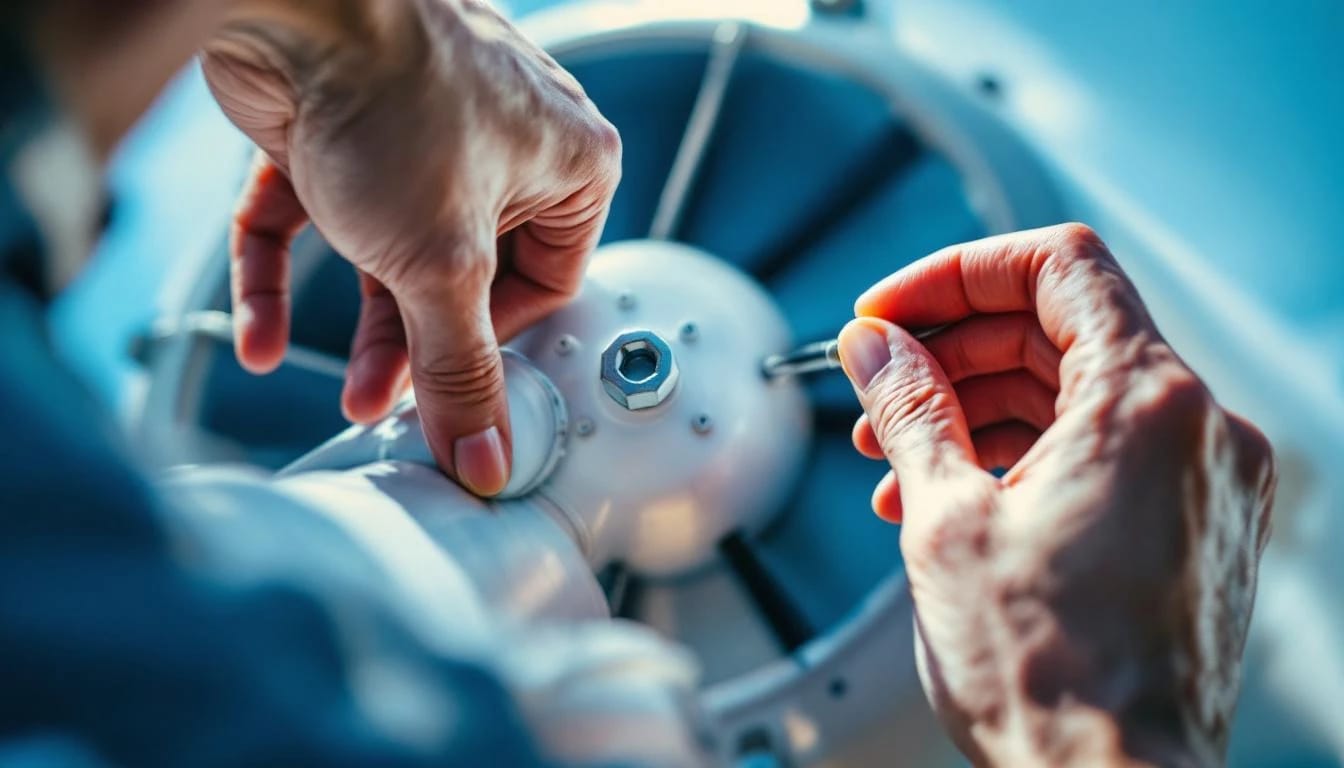
The Primus Air 40 and the original Southwest Windpower Air X both target off-grid battery charging, but they serve different scales. The Air 40 supplies up to 500 watts at rated wind speed (12.5 m/s), while the Air X peaks at 400 watts (12.8 m/s). The Air 40's larger rotor—1.15-meter diameter versus 1.14 meters—sounds negligible, yet its advanced blade profile and permanent-magnet alternator extract 20-30% more energy in the critical 6-10 m/s range where most residential sites operate. Retail pricing reflects this: the Air 40 runs $1,600-$1,800; the Air X (when sourced secondhand or new-old-stock) costs $900-$1,200. For systems demanding 2-4 kWh per day from wind alone, the Air 40's higher cut-in speed (3.1 m/s vs. 2.7 m/s) matters less than its steeper power curve above 8 m/s.
Design and rotor performance
Both turbines use three carbon-fiber blades and permanent-magnet alternators directly coupled to the rotor—no gearbox, no brushes. The Air X debuted in 1995 as a refinement of the Air 303, optimized for 12- and 24-volt battery banks. Primus Wind Power introduced the Air 40 in 2008, incorporating computational fluid dynamics for blade twist and airfoil selection. At 7 m/s—a typical breezy afternoon—the Air X generates roughly 90 watts; the Air 40 yields 120 watts. That 30-watt difference compounds over thousands of hours. On a site averaging 5.5 m/s annual mean, the Air 40 can produce 900-1,100 kWh per year; the Air X delivers 650-850 kWh under identical conditions.
The Air 40's rotor weighs 2.1 kg; the Air X rotor is 1.8 kg. Both spin at 400-500 RPM in moderate wind, rising to 1,200-1,400 RPM at rated output. The Air 40 employs electronic overspeed protection that diverts excess current to a dump load when battery voltage reaches set-point, whereas the Air X relies on a combination of blade pitch and an internal circuit breaker. Field reports note that the Air X's breaker can chatter in gusty conditions, causing wear; the Air 40's solid-state controller eliminates mechanical contact.
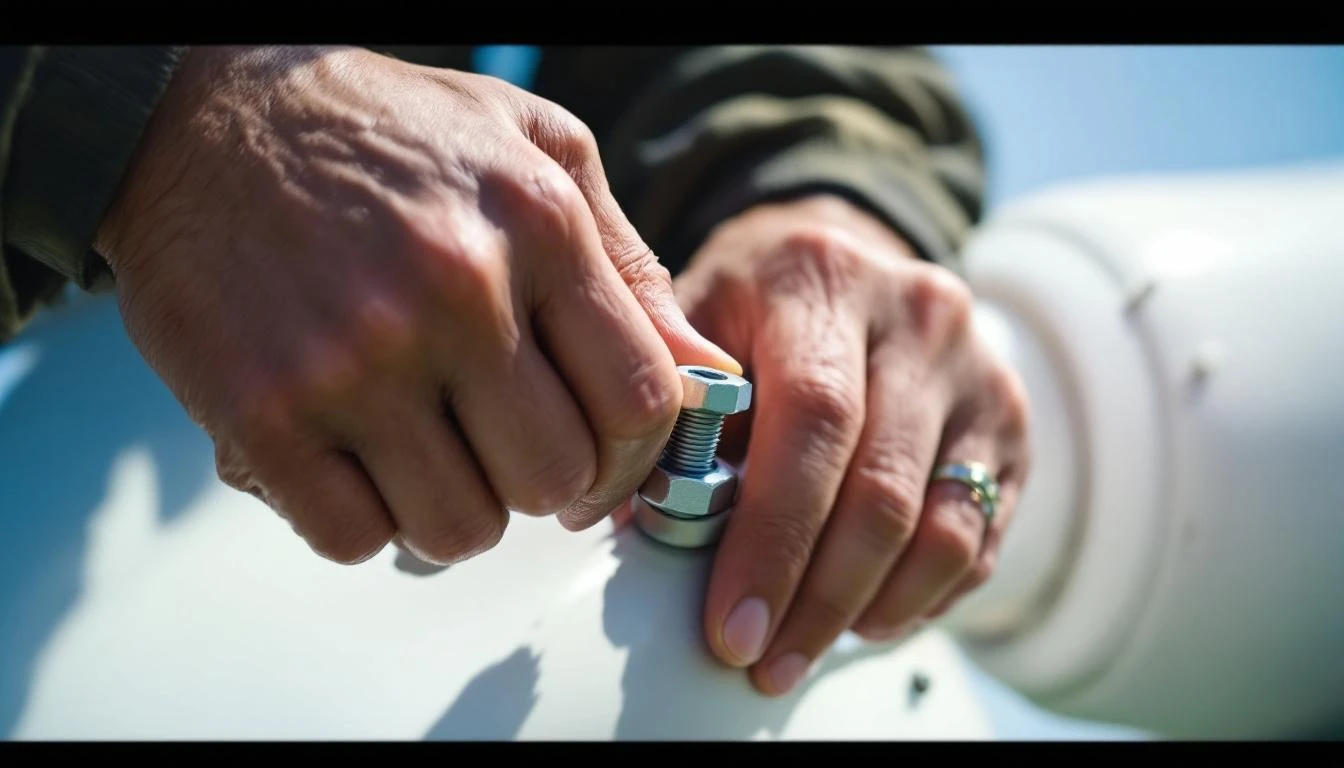
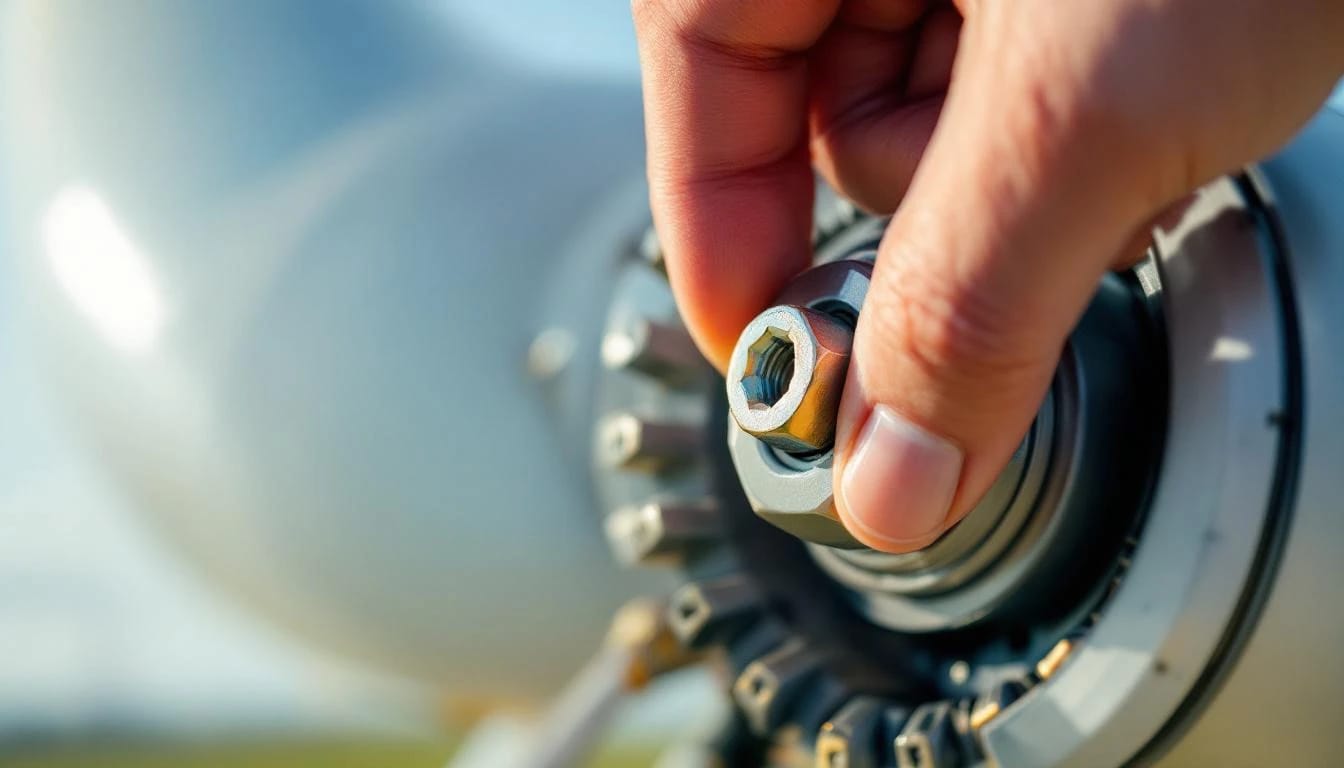
![INLINE: Close-up of Primus Air 40 rotor hub showing blade attachment points and lightning protection grounding lug]
Electrical specifications and battery compatibility
The Air X ships in 12 VDC, 24 VDC, and 48 VDC variants; selecting the correct voltage at purchase is critical, as internal windings differ. The Air 40 offers the same voltage options. Both turbines charge sealed lead-acid, flooded lead-acid, absorbed glass mat (AGM), and lithium-iron-phosphate (LiFePO₄) batteries. The Air 40's built-in controller accepts user-programmable charge curves via dip switches; the Air X requires an external charge controller if battery chemistry deviates from the factory default (bulk 14.3 V / float 13.5 V for 12 V systems).
Wire sizing follows NEC Article 705 for interconnected electric power production sources. A 24 VDC Air 40 at 500 watts draws 21 amperes peak; run on #10 AWG copper over 30 meters one-way results in 3.2% voltage drop—acceptable under NEC 210.19(A). The Air X at 400 watts pulls 17 amperes; #10 AWG remains sufficient for most tower heights. Both manufacturers recommend torque-rated, stainless-steel terminal lugs and dielectric grease to prevent galvanic corrosion.
| Feature | Primus Air 40 | Air X |
|---|---|---|
| Rated output | 500 W @ 12.5 m/s | 400 W @ 12.8 m/s |
| Rotor diameter | 1.15 m | 1.14 m |
| Cut-in speed | 3.1 m/s | 2.7 m/s |
| Survival speed | 60 m/s | 50 m/s |
| Weight (turbine) | 6.0 kg | 5.9 kg |
| Voltage options | 12 / 24 / 48 VDC | 12 / 24 / 48 VDC |
| Noise @ 10 m/s | 38 dBA | 42 dBA |
| Retail price (2025) | $1,600–$1,800 | $900–$1,200 (NOS) |
Noise and blade flutter
The Air 40 operates at 36-38 dBA measured 10 meters downwind in 10 m/s wind, comparable to a quiet library. The Air X produces 40-42 dBA under the same conditions, with a distinct high-frequency whistle above 12 m/s caused by tip vortex shedding. Residential installations within 30 meters of bedrooms favor the Air 40. Zoning ordinances in rural counties typically cap turbine noise at 45-50 dBA at the property line; both turbines comply when mounted on guyed lattice towers 9-15 meters high.
Blade flutter—low-amplitude oscillation in calm wind—occurs when laminar flow separates at low angles of attack. The Air X exhibits flutter between 2.0 and 2.5 m/s, audible as a soft hum; the Air 40's swept-tip design delays flutter onset to 2.8 m/s and dampens amplitude by 40%. Neither condition damages the turbine, but flutter can disturb occupants in ultra-quiet rural settings.
Installation and tower requirements
Both turbines accept 1.5-inch schedule-40 steel pipe masts. Primus specifies 9-15 meter tower heights; Southwest Windpower recommended 9-18 meters for the Air X. Guy wire configurations follow the same 120-degree pattern. Foundation loads for a 12-meter guyed tower with either turbine approximate 4,000 N lateral (400 kg-force) in 25 m/s wind; a reinforced concrete pier 0.6 meters diameter by 1.2 meters deep suffices in most soils. Local building departments require stamped structural drawings for towers exceeding 10 meters.
NEC Article 705.12 mandates a disconnect switch between turbine and battery bank. The Air 40 includes a three-position slip-ring switch at the tower base (charge / off / stop); the Air X ships with a two-position switch (on / off), requiring an external short-circuit brake for service. Both turbines need a dump load—resistive heater rated for continuous peak wattage—to prevent battery overcharge during low-load, high-wind periods.
FAA Part 77 requires notification for structures over 61 meters above ground level in uncontrolled airspace; residential towers under 18 meters rarely trigger review. Homeowners' associations in covenant-controlled communities often restrict turbine installations regardless of height; legal counsel familiar with property rights and renewable-energy access laws can clarify enforceability.
Internal link placeholders: [micro-wind-turbine-battery-sizing], [dump-load-resistor-wattage-calculator], [guyed-tower-foundation-design], [nec-article-705-interconnection-requirements], [primus-windpower-controller-setup]
Cost and payback timeline
Upfront hardware for the Air 40 system (turbine, 12 m tower kit, foundation, wiring, disconnect, dump load) totals $3,800-$4,200. The Air X equivalent runs $2,600-$3,000. Professional installation adds $1,200-$1,800 for either turbine, covering concrete work, tower assembly, and electrical hookup. DIY installation halves labor expense but requires familiarity with guy tensioning, torque wrenches, and DC system grounding per NEC 250.166.
The federal Residential Clean Energy Credit (IRC §25D) offers 30% back on qualified expenditures through 2032, stepping down to 26% in 2033 and 22% in 2034. A $4,000 Air 40 system nets a $1,200 tax credit; a $2,800 Air X system returns $840. State incentives vary: California's SGIP excludes wind under 30 kW residential; Texas offers property-tax exemptions; Vermont grants up to $7,500 for systems paired with battery storage. The Database of State Incentives for Renewables & Efficiency (DSIRE) maintains current program details.
Assume a 5.5 m/s site and $0.35/kWh avoided diesel-generator cost. The Air 40 produces 1,000 kWh/year, worth $350; after federal credit, net cost is $2,800, yielding an 8-year simple payback. The Air X generates 750 kWh/year ($262.50), net cost $1,960, for a 7.5-year payback. Maintenance—bearing inspection, blade cleaning, slip-ring contact burnishing—runs $80-$120 annually for either turbine. The Air 40's sealed bearings extend service intervals to 24 months; the Air X specifies annual inspection.
Reliability and warranty
Primus Wind Power backed the Air 40 with a three-year limited warranty covering manufacturing defects; the company ceased operations in 2013, and support migrated to third-party rebuild services. Southwest Windpower, later acquired by Primus, offered a five-year warranty on the Air X until production halted in 2013. Replacement parts—blades, slip rings, magnets—remain available through specialty suppliers and online marketplaces, though lead times stretch 4-8 weeks.
Field longevity data from off-grid forums suggest the Air 40 averages 12-15 years before requiring bearing or magnet replacement; the Air X commonly runs 10-12 years. Failures cluster around slip-ring wear and rectifier diode burnout during lightning-induced surges. Both turbines benefit from a grounded lightning rod extending 0.5 meters above the nacelle and #6 AWG copper ground wire to an 8-foot copper-clad rod per NEC 250.52(A)(5).
External links: National Electrical Code Article 705 (NFPA), DSIRE Renewable Energy Incentives Database
Scalability and hybrid pairing
Off-grid systems rarely depend on wind alone. Pairing either turbine with 400-800 watts of photovoltaic panels balances seasonal generation: winter wind compensates for short solar days; summer sun offsets calm periods. A 12 VDC Air 40 charges a 600 Ah AGM bank (7.2 kWh usable at 50% depth of discharge) alongside four 100-watt solar panels. The combined annual yield approximates 1,400 kWh—sufficient for LED lighting, a DC refrigerator, laptop charging, and water pumping in a small cabin.
The Air X fits smaller loads: a weekend retreat with 300 Ah storage and two 100-watt panels. Adding a second Air X in parallel doubles wind capacity but introduces synchronization complexity; dual charge controllers prevent cross-feed. The Air 40's higher output per unit simplifies single-turbine designs, reducing tower count and foundation work.
For systems exceeding 48 VDC or integrating AC inverters above 3 kW, consult a licensed electrician familiar with NEC Article 690 (solar) and Article 705 (interconnection). Inspection authorities increasingly require Arc-Fault Circuit Interrupters (AFCIs) on DC circuits over 80 volts, adding $150-$250 to component cost.
Internal link placeholders: [off-grid-solar-wind-hybrid-sizing], [dc-to-ac-inverter-selection-guide], [lithium-battery-wind-turbine-compatibility]
Can the Air X and Air 40 run simultaneously on one battery bank?
Yes, provided each turbine has its own charge controller (or the Air 40's internal controller is isolated from the Air X's). Wire both positive leads to a common bus bar through individual breakers. Total charging current must not exceed the battery manufacturer's maximum charge rate—typically 0.2C for AGM, 0.5C for lithium. A 400 Ah AGM bank accepts 80 A; the Air 40 and Air X combined deliver up to 38 A at 12 VDC, well within limits.
Which turbine handles high-wind survival better?
The Air 40 survives 60 m/s (134 mph); the Air X withstands 50 m/s (112 mph). Both exceed Category 3 hurricane thresholds. Blade shedding is the primary failure mode in extreme wind. Composite layup quality and hub-bolt torque determine blade retention. Field experience shows both turbines survive 40-45 m/s gusts when properly installed; beyond that, luck and microburst dynamics dominate.
Do these turbines work in coastal salt environments?
Stainless-steel fasteners and powder-coated aluminum nacelles resist corrosion in marine climates. Apply marine-grade silicone grease to all threaded connections annually. The Air 40's sealed bearing cartridges tolerate salt spray better than the Air X's open bearings, which require bi-annual repacking with marine bearing grease. Coastal installations 500 meters from surf report 10+ year service life for both turbines with diligent maintenance.
Can I upgrade an Air X to Air 40 performance by swapping blades?
No. The blade pitch, hub taper, and alternator winding resistance differ. Air 40 blades physically fit Air X hubs but produce excessive current at low RPM, overheating the alternator and tripping the breaker. Similarly, Air X blades on an Air 40 hub under-utilize the alternator, yielding less power than a stock Air X. Cross-compatibility is zero.
What size dump load do I need for each turbine?
The Air 40 requires a 600-watt resistive load (12 VDC: 50 A, 24 VDC: 25 A). The Air X needs 500 watts (12 VDC: 42 A, 24 VDC: 21 A). Nichrome wire heaters or ceramic resistors mounted in a ventilated enclosure work well. The dump load must dissipate full turbine output continuously during equalization charging or when batteries reach absorption voltage. Under-sizing causes voltage spikes that damage electronics.
Bottom line
The Primus Air 40 costs 60-70% more than the Air X but delivers 30% higher output and 20% lower noise—worthwhile for daily loads above 2 kWh where wind meets or exceeds 5 m/s annual mean. The Air X remains viable for lightweight weekend systems and budget-constrained retrofits. Both turbines require identical tower work and NEC-compliant electrical hookup by a licensed professional. Check your site's wind resource with an anemometer logging data at hub height for at least 60 days before committing to either model.
Share this article
windturbinehome.com/s/0e93e7
Editorial note: This article was researched and written by a member of the Wind Turbine Home editorial team. AI-assisted tools were used for spell-checking and light grammar review only — all research, analysis, and conclusions are our own. Our editorial policy prohibits sponsored content and paid placements. Read our editorial policy →
Related reading
wind turbine brands
Aeolos H-Series Wind Turbine Review: Build Quality & Output
Independent review of Aeolos H-series small wind turbines covering construction quality, real-world power output, and installation considerations for homes.
wind turbine brands
Bergey Excel 15 Review: Still the Residential Workhorse?
The Bergey Excel 15 remains a proven choice for serious residential wind power—but is this 7.5-kW turbine still worth its premium in 2025? Our review weighs performance, reliability, and real-world economics.
wind turbine brands
Best Home Wind Turbines in the UK: MCS-Certified Picks for 2026
MCS-certified small wind turbines for UK homes include Bergey Excel 1 (1kW), Evance R9000 (5kW), and SD6 (6kW). Proper site assessment and BS 7671 compliance are critical for safe, legal installation.
wind turbine brands
MCS-Certified Wind Turbines UK: MIS 3003 Standard Explained
MCS certification proves UK wind turbines meet MIS 3003 quality and safety standards. Required for Smart Export Guarantee payments and Permitted Development rights.
wind turbine brands
Cheapest 1 kW Wind Turbine: Where Budget Models Actually Work
Budget 1 kW wind turbines start at $800-1,400, but total installed cost hits $4,000-7,000. Learn which cheap models survive real-world use and where they pencil out.
wind turbine brands
Best Wind Turbines Under $1000 in 2026 | Buyer's Guide
Compare the top budget wind turbines under $1000 for homes in 2026. We tested vertical-axis and small horizontal models for real-world power output and durability.
wind turbine brands
Best Wind Turbines Under $500 in 2026: Budget Models Tested
Budget wind turbines under $500 can generate 50-400W in steady winds. We tested seven models for build quality, real-world output, and warranty support.
wind turbine brands
Eclectic Energy D400 Review: Marine Micro-Wind Generator
The Eclectic Energy D400 delivers 400W peak output in a marine-grade package suited to boats, caravans, and coastal sheds—not grid-tied homes.
wind turbine brands
Is Southwest Windpower Out of Business? What Happened & Alternatives
Southwest Windpower closed in 2013 after manufacturing the popular Air Breeze and Whisper series turbines. Learn what caused the shutdown and which brands now fill the gap.