Is the Skystream 3.7 Still Available in 2026? Status & Alternatives
The Skystream 3.7 has been discontinued since 2013. No new units are sold, though used models appear occasionally. Parts availability is limited to third-party suppliers and salvage sources.
Share this article
windturbinehome.com/s/bebae5
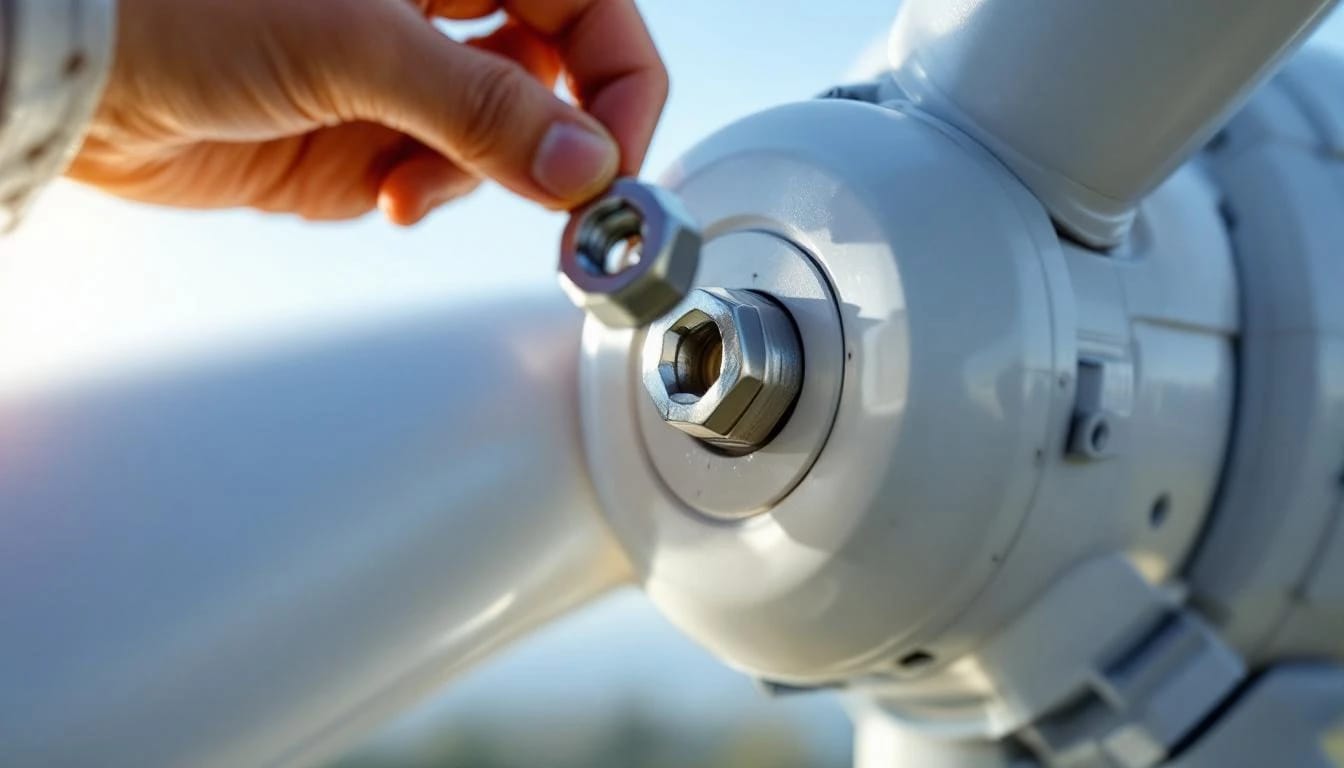
The Skystream 3.7 is not available new in 2026. Southwest Windpower discontinued the model in 2013 before the company ceased operations. Buyers encounter used units priced between $1,800 and $4,500 on auction sites and turbine resale boards, but replacement parts are scarce and warranty support no longer exists. For anyone researching small wind for a residential site, understanding why this once-popular 1.9 kW turbine disappeared—and what replaced it—prevents costly mistakes and wasted research hours.
Why the Skystream 3.7 disappeared
Southwest Windpower launched the Skystream 3.7 in 2006 as the first grid-tied residential wind turbine that shipped as a single integrated unit. The design eliminated separate inverters and control boxes, mounting everything inside the nacelle. Early adopters paid $8,000 to $12,000 installed, drawn by the promise of plug-and-play wind power and a Small Wind Certification Council certification.
By 2010, field reports documented chronic bearing failures, blade delamination, and inverter board malfunctions. Southwest Windpower issued design revisions, but warranty claims outpaced revenue. The company filed for bankruptcy in 2013. Xzeres Wind Corporation acquired the assets in 2014 and attempted to relaunch a redesigned model—the Skystream 600—but that effort stalled by 2016 when Xzeres itself faced financial difficulties.
No manufacturer currently holds licensing rights to produce Skystream-branded turbines. The original engineering files and tooling remain inaccessible to the market. This makes the Skystream 3.7 a dead-end purchase for any homeowner expecting factory support, firmware updates, or reliable parts channels.
What happens when a Skystream 3.7 needs repair
Owners of functioning Skystream units face three obstacles: finding mechanical parts, sourcing inverter boards, and hiring technicians familiar with proprietary systems that predate current grid-tie standards.
Mechanical components—blade sets, yaw bearings, slip rings—occasionally surface through turbine salvage dealers and online resale groups. Expect to pay 60 to 80 percent of original part cost for used components with unknown service hours. No aftermarket manufacturer produces certified replacement blades for the Skystream hub configuration.
Inverter boards present a harder problem. The Skystream 3.7 used a custom power-conditioning board that interfaced directly with utility AC according to 2006-era IEEE 1547 requirements. Modern grid-tie inverters follow updated anti-islanding and voltage-ride-through protocols mandated by NEC Article 705 revisions. Retrofitting a standalone inverter requires rewiring the turbine's three-phase output and adding external disconnect hardware, which typically costs $1,200 to $2,000 in parts and labor.
Technician availability has shrunk. Most installers who worked on Skystream units between 2006 and 2013 have moved to solar or exited the residential wind sector entirely. Tower climbing and electrical troubleshooting for a 45-foot monopole installation requires both NEC Article 705 knowledge and mechanical experience with small wind systems. Hourly rates for this specialized work run $125 to $175, and diagnostic visits often reveal multiple failing subsystems.
Parts suppliers and their limitations
Three categories of sellers offer Skystream 3.7 parts in 2026: turbine salvage operations, general small-wind parts distributors, and peer-to-peer resale groups.
Salvage operations purchase decommissioned Skystream units, disassemble them, and list components individually. Inventory is inconsistent—a supplier may have six tail fins one month and zero the next. Parts carry no warranty, and sellers typically prohibit returns. Prices reflect scarcity: a used yaw bearing that originally cost Southwest Windpower $85 to manufacture sells for $200 to $350.
General distributors that stock parts for Bergey, Primus, and other active manufacturers occasionally acquire Skystream inventory through estate sales or installer liquidations. These suppliers focus on cross-compatible items—tower hardware, guy-wire components, disconnect switches—rather than turbine-specific parts. Expect long lead times and frequent backorders.
Peer-to-peer groups on specialized forums and social platforms connect buyers and sellers directly. This channel works best for low-value items like mounting bolts and cable glands. Higher-value parts—blade sets, nacelle assemblies—require caution. Verify the seller's reputation through post history and request photos showing serial numbers and date codes.
Evaluating a used Skystream 3.7 purchase
A used Skystream 3.7 might make sense in narrow scenarios: the buyer already owns a compatible tower, possesses mechanical aptitude for self-service repairs, and can acquire the unit for under $2,000. Even then, the investment carries risk.
Inspect service records if available. Units installed before 2009 used the original bearing design that failed frequently. Southwest Windpower issued a retrofit kit in 2010; confirm this upgrade was completed. Check the inverter board date code (printed on the component inside the nacelle). Boards manufactured after March 2011 incorporated improved capacitor specs.
Test the yaw mechanism before purchase. Rotate the turbine by hand through 360 degrees. Grinding, clicking, or uneven resistance indicates bearing wear. Freewheeling motion suggests the yaw brake has failed. Either condition requires immediate repair before the turbine can safely operate.
Open the nacelle and photograph the inverter board for a qualified electrician to review. Look for discolored components, bulging capacitors, or corrosion near wire terminals. Inverter replacement or repair will cost $800 to $1,500, which should reduce the purchase price accordingly.
Request the original grid-interconnection agreement from the local utility. Some utilities grandfathered Skystream installations under 2006-era rules. Others require updated anti-islanding relays and rapid-shutdown equipment to meet current NEC 705.12 standards. Compliance upgrades add $600 to $1,800 to the total project cost.
Current alternatives at the 1.9 kW range
Manufacturers active in 2026 offer turbines that match or exceed the Skystream 3.7's rated capacity with modern grid-tie electronics and active warranty support.
Bergey Excel 1 produces 1 kW rated power with a 2.5-meter rotor. The design uses a proven downwind configuration and separate Bergey GridTek inverter that meets current IEEE 1547-2018 standards. Installed cost runs $18,000 to $24,000 including a 24-foot tilt-up tower. Bergey Windpower has operated since 1977 and maintains parts inventory for models dating to the 1980s.
Primus AIR 40 generates 1.8 kW in a 1.8-meter diameter package. The turbine ships with a Huaxia grid-tie inverter or can pair with third-party units. Primus Wind turbines carry a five-year limited warranty. Installed cost averages $14,000 to $19,000 on a guyed lattice tower. The AIR 40's modular design allows blade and bearing replacement without removing the entire nacelle.
SD6 from SD Wind Energy offers 6 kW rated output if site wind resources justify the larger investment. The 5.5-meter rotor starts generating at 3 m/s wind speed. Installed cost ranges from $38,000 to $52,000 depending on tower height and foundation work. SD Wind Energy provides remote monitoring hardware and a ten-year drivetrain warranty.
For homeowners comparing these options to used Skystream units, the key difference is total lifecycle cost. A $3,000 used Skystream 3.7 plus $4,500 in repairs, parts hunting, and grid-compliance upgrades reaches $7,500—still less than a new turbine—but with no warranty and limited future parts access. A new Primus AIR 40 costs three times as much upfront but includes factory support, certified parts channels, and eligibility for the federal 30% Residential Clean Energy Credit under IRC §25D, which reduces net cost by $4,200 to $5,700.
Federal incentives and local permitting in 2026
The Residential Clean Energy Credit remains available through December 31, 2034. Qualified small wind turbines must meet IEC 61400-2 certification or equivalent performance standards. The credit covers turbines, towers, inverters, and installation labor. Homeowners claim the credit on IRS Form 5695 and carry forward unused amounts if tax liability is insufficient in the installation year.
State-level incentives vary. The Database of State Incentives for Renewables & Efficiency (DSIRE) tracks programs by ZIP code. California offers property-tax exemptions for renewable energy systems. Montana and Alaska provide additional state tax credits. Most programs require grid interconnection approval before disbursing funds.
Permitting requirements start with local zoning. Typical setback rules require tower height plus 10 feet of clearance from property lines. Some jurisdictions limit turbine installations to agriculturally zoned parcels or properties exceeding five acres. Homeowners associations frequently prohibit wind turbines through deed restrictions.
FAA Part 77 notification applies to structures exceeding 200 feet AGL or those located near airports. Most residential wind turbines on 80-foot towers fall below this threshold unless the property sits within airport approach zones. Filing takes 45 days and costs nothing, but delays project timelines if required.
NEC Article 705 governs grid interconnection. Licensed electricians must design and install the system. Required components include lockable AC disconnect visible from the utility meter, equipment-grounding conductor per NEC 250.4, and overcurrent protection sized to turbine maximum output. Some utilities mandate utility-grade disconnect switches that cost $400 to $800 beyond standard residential hardware.
Calculating whether any small wind turbine makes financial sense
Small wind pencils out when three conditions align: average wind speed exceeds 4.5 m/s (10 mph), retail electricity rates exceed $0.14 per kWh, and the property allows tower heights above 60 feet.
Measure wind speed at hub height using a data logger for 12 consecutive months. Towers shorter than 60 feet encounter turbulence from structures and vegetation that reduces output by 30 to 50 percent. Online wind maps and airport data provide rough estimates, but on-site measurement determines actual generation potential.
Calculate system cost including tower, foundation, turbine, inverter, electrical work, and permit fees. Divide by projected annual kWh production (use manufacturer curves at measured wind speed) to find levelized cost per kWh. Compare this to grid electricity cost. If levelized cost exceeds $0.30 per kWh, solar photovoltaic delivers better financial returns in most U.S. regions.
Factor in maintenance. Bearings need regreasing every 18 to 24 months. Blade inspection and bolt torque checks occur annually. Inverter replacement happens at year 10 to 15. Total maintenance cost over 20 years adds $4,000 to $7,000 for a 2 kW class turbine.
The federal 30% tax credit improves economics but rarely makes an unviable site viable. A $20,000 system that generates $300 worth of electricity annually has a 67-year simple payback even with the $6,000 credit. The same site with 6 m/s average wind might generate $800 annually and pay back in 18 years after the credit.
Why the residential wind market remains difficult
Small wind turbine manufacturers face structural challenges that explain why so few companies survive long-term. Production volumes stay low—Bergey ships fewer than 200 Excel units annually. Low volume prevents economies of scale in component sourcing and manufacturing.
Warranty costs are unpredictable. A turbine might run flawlessly for 15 years or experience bearing failure in year two. Manufacturers must price units to cover the statistical likelihood of failures across the entire fleet, which inflates upfront cost.
Customer acquisition is expensive. Homeowners require extensive education about wind resource assessment, permitting, and realistic generation expectations. Contrast this with solar, where installers quote projects using satellite imagery and well-established production models.
Installation requires specialized skills. Solar installers work on static rooftops with standard electrical connections. Wind installers climb towers, tension guy wires, handle complex AC/DC systems, and coordinate crane rentals. The smaller labor pool drives up per-unit installation cost.
These factors combine to keep residential wind a niche product. For every grid-tied solar installation in the United States, fewer than one in 500 small wind turbines get installed. Market concentration follows: the top three manufacturers—Bergey, Primus, Southwest Windpower's successors—control 70 percent of residential sales. When one exits, as Southwest Windpower did, no replacement supplier steps in to fill the gap.
Can I retrofit a modern inverter to a Skystream 3.7?
Yes, but the modification requires rewiring the turbine's three-phase output to interface with a standalone grid-tie inverter. Expect $1,200 to $2,000 in parts and labor. The inverter must meet NEC 705.12(D) requirements for utility-interactive systems and include rapid shutdown per NEC 690.12. Most installers recommend Aurora Power-One or SMA Windy Boy models designed for three-phase wind inputs, though these have been discontinued and must be sourced used.
What is the typical lifespan of a Skystream 3.7?
Field data from 2006-2013 installations shows a median bearing replacement at year six and inverter failure between years eight and twelve. Units that received the 2010 bearing retrofit and operated in Class 2 wind environments (below 8.5 m/s annual average) have reached 15 years with proper maintenance. Turbines in harsh coastal or mountain sites typically require major overhauls by year ten. No Skystream 3.7 installation has reached 20 years of continuous operation without significant component replacement.
Are Skystream 3.7 parts compatible with other turbines?
No. The nacelle, rotor hub, and inverter use proprietary interfaces. Tower mounting hardware is standard 2-inch pipe threading and works with other monopole designs. Guy-wire components, anchors, and electrical disconnects are generic items available from wind and telecom suppliers. The blade profile and attachment pattern are unique to Skystream and do not interchange with Bergey, Primus, or other manufacturers.
Where can I sell a working Skystream 3.7?
Online turbine resale boards, regional renewable energy forums, and general auction sites are the primary channels. Working units with recent maintenance records sell for $1,800 to $4,500 depending on condition and included tower hardware. Buyers concentrate in states with high electricity rates and favorable zoning—Alaska, Hawaii, rural areas of the Northeast and upper Midwest. Expect 90 to 180 days from listing to closing. Be prepared to assist with disassembly and transport logistics.
Is off-grid use a better application for a used Skystream 3.7?
Possibly. Off-grid systems eliminate grid-interconnection compliance issues and utility approval delays. However, the Skystream 3.7 requires modification because its integrated inverter produces grid-synchronized AC. Converting to battery-based off-grid operation requires a separate charge controller ($800-$1,400) and rewiring to bypass the internal inverter. At that point, buying a DC-output turbine designed for battery charging—such as the Primus AIR X or Rutland 914i—makes more economic sense than retrofitting a grid-tie unit.
Bottom line
The Skystream 3.7 represents a closed chapter in residential wind development. Owners of functioning units should budget for parts scarcity and plan system retirement within five years. Prospective buyers gain better long-term value from current-production models like the Bergey Excel 1 or Primus AIR 40, which combine factory support with eligibility for federal tax incentives. Before committing to any small wind project, complete a 12-month wind resource assessment and compare the levelized cost to rooftop solar alternatives. Consult a licensed electrician familiar with NEC Article 705 requirements and verify local zoning allows the necessary tower height.
Share this article
windturbinehome.com/s/bebae5
Editorial note: This article was researched and written by a member of the Wind Turbine Home editorial team. AI-assisted tools were used for spell-checking and light grammar review only — all research, analysis, and conclusions are our own. Our editorial policy prohibits sponsored content and paid placements. Read our editorial policy →
Related reading
wind turbine brands
Aeolos H-Series Wind Turbine Review: Build Quality & Output
Independent review of Aeolos H-series small wind turbines covering construction quality, real-world power output, and installation considerations for homes.
wind turbine brands
Bergey Excel 15 Review: Still the Residential Workhorse?
The Bergey Excel 15 remains a proven choice for serious residential wind power—but is this 7.5-kW turbine still worth its premium in 2025? Our review weighs performance, reliability, and real-world economics.

wind turbine brands
Best Home Wind Turbines in the UK: MCS-Certified Picks for 2026
MCS-certified small wind turbines for UK homes include Bergey Excel 1 (1kW), Evance R9000 (5kW), and SD6 (6kW). Proper site assessment and BS 7671 compliance are critical for safe, legal installation.
wind turbine brands
MCS-Certified Wind Turbines UK: MIS 3003 Standard Explained
MCS certification proves UK wind turbines meet MIS 3003 quality and safety standards. Required for Smart Export Guarantee payments and Permitted Development rights.
wind turbine brands
Cheapest 1 kW Wind Turbine: Where Budget Models Actually Work
Budget 1 kW wind turbines start at $800-1,400, but total installed cost hits $4,000-7,000. Learn which cheap models survive real-world use and where they pencil out.

wind turbine brands
Best Wind Turbines Under $1000 in 2026 | Buyer's Guide
Compare the top budget wind turbines under $1000 for homes in 2026. We tested vertical-axis and small horizontal models for real-world power output and durability.
wind turbine brands
Best Wind Turbines Under $500 in 2026: Budget Models Tested
Budget wind turbines under $500 can generate 50-400W in steady winds. We tested seven models for build quality, real-world output, and warranty support.
wind turbine brands
Eclectic Energy D400 Review: Marine Micro-Wind Generator
The Eclectic Energy D400 delivers 400W peak output in a marine-grade package suited to boats, caravans, and coastal sheds—not grid-tied homes.
wind turbine brands
Is Southwest Windpower Out of Business? What Happened & Alternatives
Southwest Windpower closed in 2013 after manufacturing the popular Air Breeze and Whisper series turbines. Learn what caused the shutdown and which brands now fill the gap.