Wind Turbine for a Hunting Cabin: Low-Maintenance Picks for Seasonal Use
Discover the best low-maintenance wind turbines for seasonal hunting cabins. Compare vertical-axis and small horizontal models built for remote, unattended operation.
Share this article
windturbinehome.com/s/fde55b
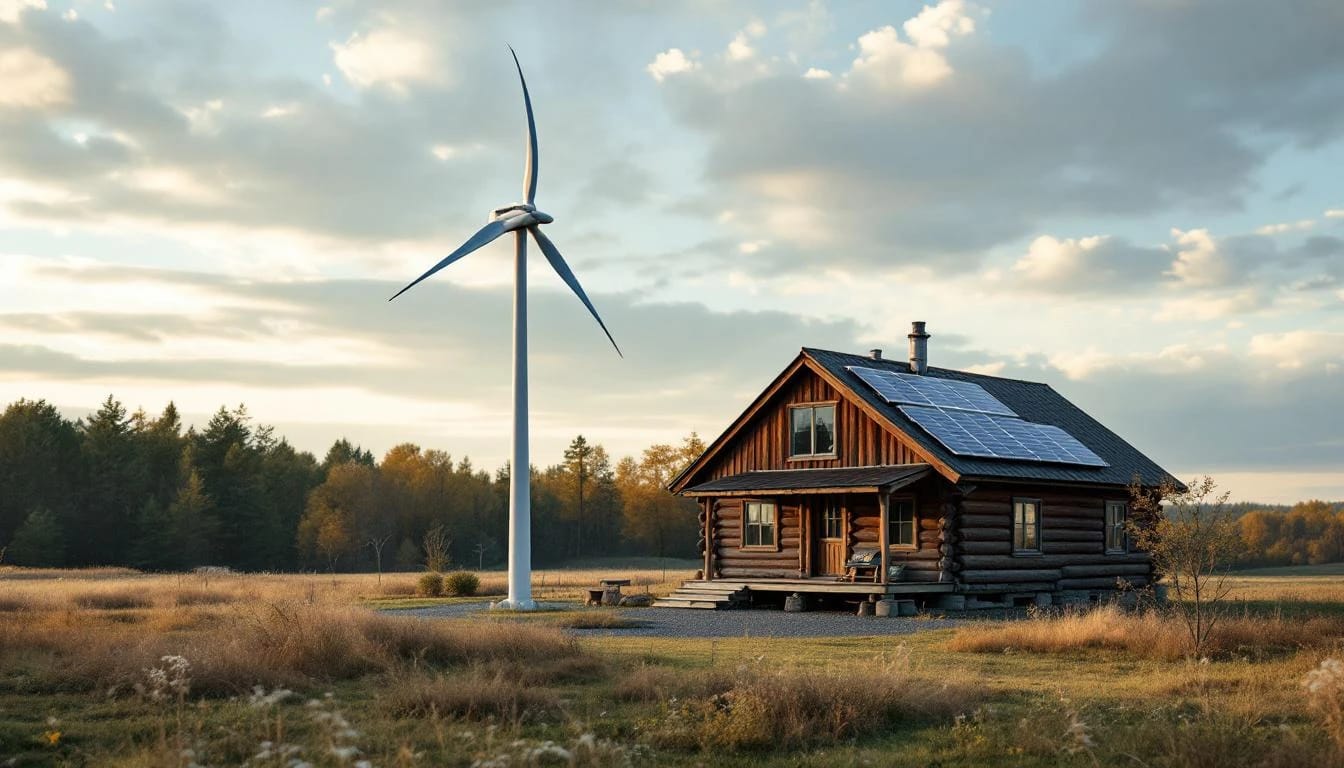
A hunting cabin used ten to thirty days per year needs a wind turbine that survives long stretches of neglect, extreme temperature swings, and wildlife encounters—yet still delivers power when the season arrives. The best choices for seasonal cabins are vertical-axis turbines rated 400–1,000 W or marine-grade small horizontal-axis units rated 600–1,500 W, paired with a battery bank sized for seven to fourteen days of autonomy. Vertical models from Pikasola and horizontal designs from Primus Wind Power dominate this niche because they tolerate ice accumulation, require minimal annual service, and restart automatically after winter shutdowns.
Why seasonal cabins demand a different turbine profile
Most residential wind turbines assume year-round attention: quarterly blade inspections, monthly battery equalization cycles, and immediate response to controller alarms. A hunting cabin sits empty from January through August, accumulates snow and ice on the rotor, and hosts rodents in the generator housing. The turbine must survive nine months of benign neglect, then provide lights, phone charging, and 12V appliance power within minutes of the owner's arrival.
Three design traits separate seasonal-capable turbines from backyard hobby machines. First, sealed permanent-magnet generators eliminate the brush-wear failure mode that kills DC-excited alternators during freeze–thaw cycles. Second, over-sized bearings—typically rated for 100,000 hours instead of the residential standard 50,000—handle start–stop fatigue when the cabin is vacant. Third, stainless-steel fasteners and UV-resistant blade resin prevent the fastener-thread corrosion and laminate delamination that destroy seasonal installations within five years.
Vertical-axis turbines: the set-and-forget option
Vertical-axis wind turbines (VAWTs) mount the generator at ground level and spin on a vertical shaft. Blades rotate around a central axis like an eggbeater, not a propeller. That configuration yields two advantages for remote cabins: all serviceable components sit within arm's reach, and the rotor has no yaw mechanism to freeze during ice storms.
The Pikasola 600W vertical-axis model weighs 48 pounds, mounts on a 3-inch Schedule 40 steel pole up to twenty feet tall, and includes a three-phase AC permanent-magnet generator wired to a ground-level rectifier. Manufacturer-specified cut-in wind speed is 5.6 mph, rated output occurs at 24 mph, and survival wind speed is 110 mph. The unit ships with a hybrid charge controller that accepts both turbine AC input and up to 800W of solar PV DC input, feeding a 24V or 48V battery bank. Street price runs $650–$750 before pole and batteries.
Real-world output in a Class 2 wind site (annual average 9–10 mph at thirty-three feet) hovers around 20–30 kWh per month when unattended, enough to maintain float voltage on a 400 Ah battery bank and offset parasitic loads from propane-detector circuits and security cameras. When the cabin is occupied, the same site delivers 1.5–2 kWh per day in moderate wind, sufficient for LED lighting, 12V water pump cycling, and phone charging without generator runtime.
Durability over five seasons proves acceptable but not exceptional. Blade leading edges show UV chalking after three years in high-altitude sun; owner reports note bearing noise developing after four years of Minnesota winter service. Critical: vertical turbines perform poorly under rime-ice accumulation because the blades cannot shed ice through centrifugal force. Cabins in the northern Rockies, northern Maine, and the Upper Peninsula of Michigan see better results from horizontal machines.
Horizontal-axis turbines: proven marine designs
Horizontal-axis wind turbines (HAWTs) place the generator behind a propeller-style rotor on top of a tower or pole. Marine-grade models—originally designed for sailboats making month-long offshore passages—translate directly to seasonal cabin duty because they tolerate salt spray, constant vibration, and long unattended runs.
The Primus Wind Power AIR X Marine, a staple on bluewater cruising boats since 2002, dominates the cabin retrofit market. The 46-inch rotor sweeps 11.6 square feet, the unit weighs 13 pounds, and the brushless permanent-magnet generator delivers 12V or 24V output. Cut-in speed is 7 mph, rated power (400W) occurs at 28 mph, and the internal regulator shunts excess energy to a dump load above 14.2V or 28.4V. The turbine includes a manual furling system: pull a control line to stop the rotor, secure the line, and the blades feather parallel to the wind. Retail price hovers around $950 plus mounting hardware.
Real-world advantages include legendary reliability—ten-year service lives are common, fifteen-year examples exist—and simple troubleshooting. The AIR X produces an audible hum at rated power; silence during 20 mph winds signals a failed rectifier or broken magnet. Blade balance remains stable across temperature extremes; the carbon-fiber-reinforced polymer blades do not warp in summer heat or become brittle in subzero cold.
Disadvantages center on tower requirements and noise. A twenty-foot tower barely clears surrounding pine trees; optimal performance requires a thirty-foot guyed lattice tower or tilt-up pipe mast, adding $800–$1,400 to system cost. The AIR X emits 45–48 dB at ten feet during 15 mph winds—tolerable 100 feet from the cabin, intrusive at fifty feet. Hunters who value pre-dawn silence before heading to the stand often shut down the turbine manually during the rut.
Aeolos-H 1kW: the step-up choice
Cabin owners with a dedicated equipment shed or barn two hundred feet from the sleeping quarters sometimes install the Aeolos-H 1kW horizontal turbine. The 8.2-foot rotor, three-blade upwind design, and electromagnetic brake create a utility-scale aesthetic in miniature. Rated power (1,000W) arrives at 25 mph; survival wind speed reaches 134 mph. The unit ships with a grid-tie inverter or off-grid charge controller and costs $1,850–$2,100 depending on voltage configuration.
Performance in Class 3 wind sites (annual average 11–13 mph at thirty-three feet) reaches 80–110 kWh per month unattended, sufficient to run a propane-fridge control board, maintain well-pump pressure via a small inverter and pressure tank, and keep a battery bank topped off for instant cabin power. The larger rotor captures more energy at the 8–12 mph wind speeds common in forested valleys, and the electromagnetic brake stops the rotor within three seconds during surprise storms.
Maintenance demands exceed the AIR X. Aeolos specifies annual gearbox oil changes (80W-90 gear oil, 6 oz), slip-ring brush inspection every two years, and yaw-bearing grease every 500 operating hours. A hunting cabin might accumulate 500 hours over two or three seasons, deferring the grease interval to year three—but the annual oil change remains non-negotiable. Skipping the service schedule invites gearbox failure, a $450 repair requiring turbine removal and shipment to a service center.
Comparing key specs for seasonal duty
| Model | Rotor Diameter | Rated Power | Cut-In Speed | Survival Wind | Weight | Approx. Price |
|---|---|---|---|---|---|---|
| Pikasola 600W VAWT | 43 in (H) | 600W @ 24 mph | 5.6 mph | 110 mph | 48 lb | $650–$750 |
| Primus AIR X Marine | 46 in | 400W @ 28 mph | 7 mph | 110 mph | 13 lb | $950 |
| Aeolos-H 1kW | 8.2 ft | 1,000W @ 25 mph | 6.7 mph | 134 mph | 110 lb | $1,850–$2,100 |
| Bergey Excel 1 | 8.5 ft | 1,000W @ 24 mph | 7.5 mph | 120 mph | 75 lb | $2,400–$2,700 |
The Bergey Excel 1 appears in the table for reference—it represents the upper boundary of DIY-serviceable turbines. Above 1 kW, manufacturer-specified maintenance intervals tighten, warranty terms require certified installers, and tower foundations demand engineered concrete piers. Seasonal cabins rarely justify that investment unless the structure also serves as a year-round family retreat or the owner operates a commercial hunting outfitter with continuous guest occupancy.
Battery-bank sizing for seven to fourteen days
A wind turbine without a battery bank is a stranded asset during calm periods. Seasonal cabins need batteries that survive prolonged float voltage, handle surge loads from well pumps and microwave ovens, and tolerate temperature extremes. AGM (absorbed glass mat) batteries meet those requirements; lithium iron phosphate (LiFePO₄) batteries offer longer cycle life but cost three times as much and require heated enclosures below 32°F.
A minimal system for LED lighting, phone charging, and 12V DC appliances starts at 400 Ah at 24V—roughly 9.6 kWh of usable capacity at 50% depth of discharge. Four 6V AGM golf-cart batteries wired in series-parallel deliver that capacity and cost $900–$1,100. A seven-day autonomy target assumes the turbine and a 300W solar array each contribute zero during a midwinter high-pressure system, and cabin loads average 60W continuous (1.4 kWh/day). Math: 1.4 kWh/day × 7 days = 9.8 kWh, matching the 400 Ah × 24V × 0.5 DOD = 9.6 kWh available.
Fourteen-day autonomy doubles the battery bank to 800 Ah, raises the cost to $1,800–$2,200, and requires a larger equipment enclosure. Hunters who visit the cabin twice per season—opening week in October and late November for whitetail rut—often choose the fourteen-day design because it eliminates the need to run a backup generator if the wind dies during a three-day sit. Those who visit monthly settle for seven-day autonomy and accept occasional generator runtime.
AGM batteries tolerate freezing when fully charged (electrolyte-specific gravity prevents ice formation above 12.6V per cell), but they lose 30–40% of rated capacity at 0°F and 50–60% at –20°F. Size the bank for worst-case temperature; a 400 Ah bank at 70°F effectively becomes a 160–240 Ah bank at –20°F. Insulated battery boxes with low-wattage heating pads (40W, thermostatically controlled to activate below 20°F) mitigate that loss and extend battery life by two to three years.
Hybrid solar-wind: the reliability multiplier
Wind and solar generation patterns anti-correlate across seasons. Summer delivers fourteen-hour sun days and calm mornings; winter brings persistent northwest winds and eight-hour days. A hybrid system smooths those extremes. The WINDExchange Small Wind Guidebook, published by the U.S. Department of Energy, confirms that hybrid configurations reduce battery-bank cycling stress and extend autonomy: "Wind energy systems can be one of the most cost-effective home-based renewable energy systems... wind energy is local energy" and pairs naturally with solar PV in remote applications.
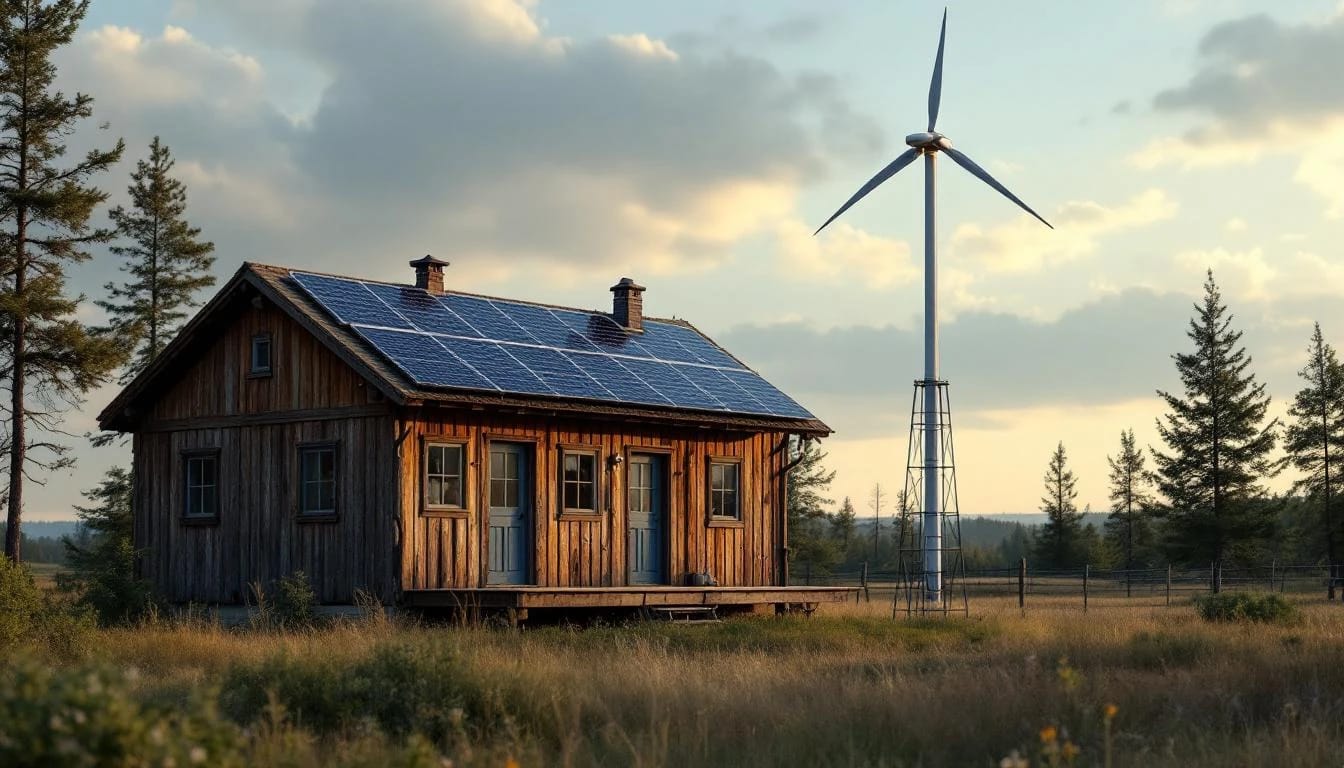
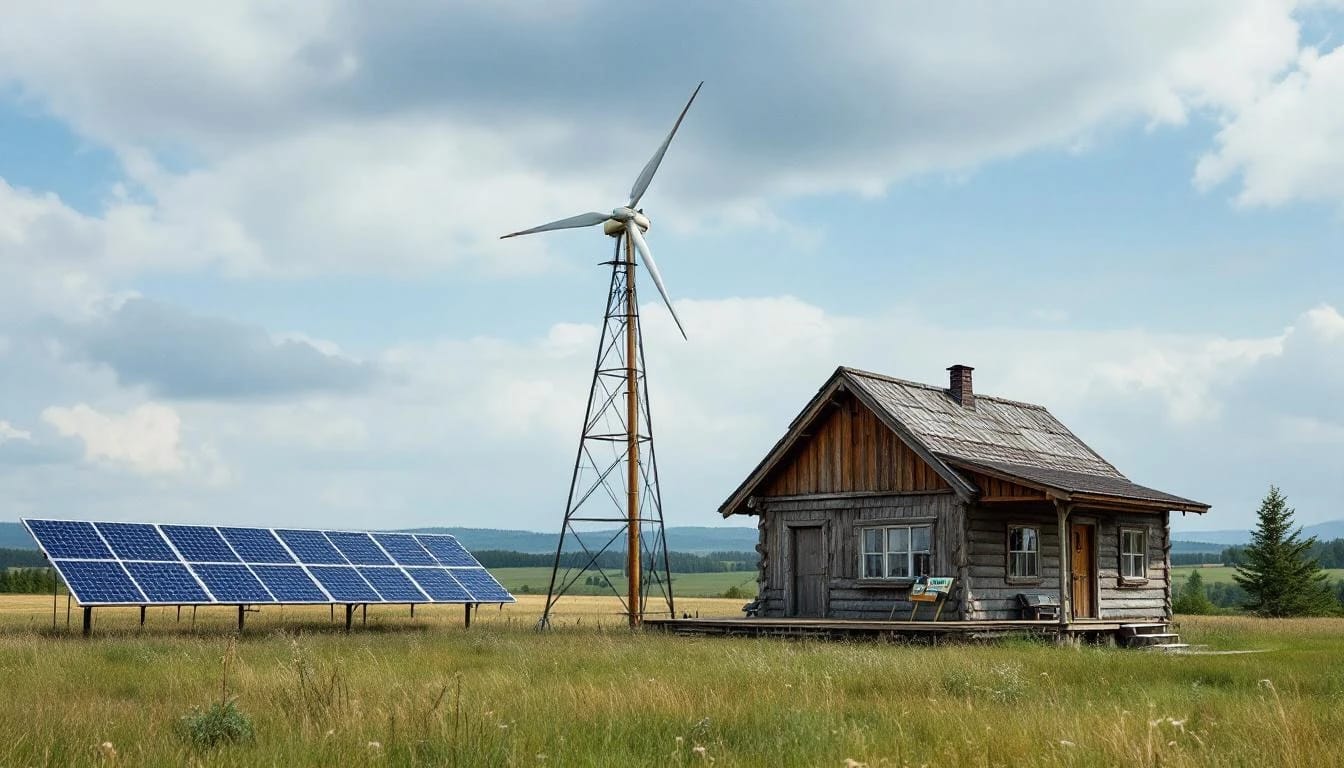
A proven hybrid recipe for seasonal cabins: Primus AIR X Marine (400W wind) plus two 200W solar panels wired to a Morningstar TriStar MPPT 45 charge controller. Total system cost runs $2,400–$2,800 before batteries, tower, and installation labor. The solar panels deliver 25–35 kWh per month May through August when the cabin is vacant; the turbine contributes 20–30 kWh per month October through March when hunting season overlaps with peak wind months. Combined output keeps a 400 Ah battery bank near float voltage year-round, even after two weeks of continuous overcast skies or calm conditions.
For cabins in alpine or prairie environments with Class 3+ wind, swapping the AIR X for an Aeolos-H 1kW and doubling the solar array to 800W creates a net-zero seasonal system. Annual production reaches 1,800–2,400 kWh, exceeding the 600–900 kWh typical consumption of a cabin occupied sixty days per year. Surplus energy can power electric vehicle charging (owners who tow trailers increasingly arrive in electric trucks), whole-cabin heat pumps (mini-splits rated to –15°F), or resistance heaters that pre-warm the cabin via cellular-modem control before arrival.
Learn more about optimizing hybrid systems in our guide to [hybrid solar-wind battery sizing] and [charge controllers for off-grid cabins].
Installation considerations and NEC compliance
Small wind turbines fall under NEC Article 694 (Small Wind Electric Systems) and Article 705 (Interconnected Electric Power Production Sources) when tied to a backup generator or grid service. Off-grid battery-based systems must comply with Article 690 (Solar Photovoltaic Systems) for the PV portion and Article 694 for the wind portion. Key requirements include:
- Grounding electrode system bonded to the turbine tower and equipment ground (Article 694.40)
- Overcurrent protection on both the turbine output and battery-to-inverter conductors (Article 694.10)
- Disconnecting means within sight of the turbine and at the charge controller (Article 694.22)
- Wire sizing per voltage drop and ampacity tables (Chapter 3, adjusted for temperature)
DIY-savvy cabin owners often self-install turbines under 1 kW on private land, but NEC compliance remains mandatory and the authority having jurisdiction (county building inspector or state electrical board) can require post-installation inspection. Non-compliant installations void homeowner insurance, create liability during property sales, and eliminate eligibility for the federal 30% Residential Clean Energy Credit (IRC §25D). Hiring a licensed electrician for the final hookup—generator interlock, breaker panel labeling, grounding verification—costs $400–$700 and preserves all legal and financial protections.
Tower height regulations vary by county. Many rural jurisdictions allow structures under thirty-five feet without a permit if the setback exceeds tower height plus ten feet. FAA Part 77 notification is mandatory for any structure exceeding 200 feet above ground level or within five nautical miles of an airport; hunting-cabin turbines rarely approach that threshold. Check county zoning ordinances before purchasing equipment; some counties restrict tower height to twice the principal structure height, capping a twenty-foot cabin at a forty-foot maximum tower.
Maintenance schedules for hands-off reliability
Seasonal cabins demand maintenance schedules compressed into semi-annual service windows. Perform these tasks in late September before hunting season and again in early April after spring thaw:
Primus AIR X inspection (15 minutes):
- Check blade leading-edge erosion; replace blades if damage exceeds 10% of chord length
- Verify all four turbine mounting bolts torqued to 15 ft-lb
- Inspect stop-switch control line for UV damage; replace if frayed
- Measure open-circuit voltage during 10+ mph wind; should exceed 14V on 12V models
- Listen for bearing noise; silent operation indicates healthy bearings
Aeolos-H 1kW inspection (45 minutes):
- Change gearbox oil (80W-90, 6 oz via drain plug)
- Grease yaw bearing (three pumps lithium grease)
- Inspect slip-ring brushes for wear (replace below 1/4-inch length)
- Check blade attachment bolts (torque to 22 ft-lb)
- Test electromagnetic brake by triggering remote stop; rotor should halt within five seconds
Battery bank (20 minutes):
- Measure individual cell voltages; replace any battery reading 0.5V below bank average
- Clean terminal corrosion with baking-soda solution
- Check electrolyte level (flooded lead-acid only); add distilled water to 1/4 inch below fill port
- Verify battery-box heater activates below 20°F
Skipping two consecutive service intervals accelerates wear by a factor of three. A Primus AIR X that survives ten years under bi-annual service fails at four years when neglected.
Tax credits and state incentives for off-grid systems
The federal Residential Clean Energy Credit (IRC §25D) offers a 30% tax credit on small wind turbines through December 31, 2032. Eligible expenses include turbine, tower, wiring, charge controller, inverter, and installation labor. The credit applies to "dwelling units," defined as structures used for residential purposes; hunting cabins qualify if they include sleeping quarters and cooking facilities, even if occupied only seasonally. File IRS Form 5695 with the annual tax return; claim the credit in the year the system is placed in service.
Maximum credit per project: no statutory cap, but the credit cannot exceed total tax liability for that year. Unused credits roll forward to future tax years. A $4,000 installed system (turbine, tower, hybrid controller, batteries) generates a $1,200 credit. Combined with state incentives, net system cost drops significantly.
State-level programs vary. The Database of State Incentives for Renewables & Efficiency (DSIRE) lists active programs. Montana offers a $500 Renewable Energy Systems Exemption for off-grid installations; Wisconsin provides property-tax exemptions for wind systems up to 20 kW; Colorado grants sales-tax exemptions on renewable-energy equipment. Most programs exclude grid-tied systems that feed power back to the utility, focusing instead on battery-based off-grid designs—precisely the configuration suited to seasonal cabins.
Consult a tax professional before purchasing equipment. Documentation requirements include itemized receipts, manufacturer certification that the equipment meets fire and electrical codes, and photographs proving the turbine is installed at the claimed address. Missing documentation disqualifies the credit during IRS audits.
Noise, wildlife, and neighbor relations
A wind turbine 200 feet from a seasonal cabin creates minimal disturbance to the owner; the same turbine 50 feet from a neighbor's year-round home sparks complaints and potential legal action. Acoustic output from small turbines ranges from 35 dB (Pikasola VAWT at 10 mph) to 52 dB (Aeolos-H 1kW at 20 mph) measured at thirty feet. For reference, a refrigerator compressor produces 40 dB, normal conversation measures 60 dB.
Sound propagation depends on topography. Turbines installed on ridge tops project noise downslope; valley installations benefit from terrain shielding. Leafless deciduous forests in November amplify sound; summer foliage attenuates it. Set the turbine at least 300 feet from the nearest occupied structure or 200 feet if a ridgeline or dense conifer stand intervenes. In flat prairie landscapes with no sound barriers, increase setback to 500 feet.
Wildlife impacts remain minimal for turbines under 10-foot rotor diameter. Collision risk to birds peaks during spring and fall migration, but seasonal cabins often sit away from major flyways. Bats face higher risk because they hunt insects attracted to turbine nacelles; mounting the turbine above the forest-canopy layer (forty to sixty feet) reduces bat activity near the rotor. The U.S. Fish and Wildlife Service Land-Based Wind Energy Guidelines recommend pre-installation habitat surveys for sites within five miles of known bat hibernacula or bald-eagle nests; voluntary compliance improves landowner standing with state wildlife agencies.
Neighbor notification before installation avoids conflict. Walk the property line, identify sight lines to adjacent homes, and share the turbine spec sheet with noise data. Offering to shut down the turbine during neighbors' holiday gatherings or family events builds goodwill. If a formal complaint arises post-installation, most disputes resolve through adjusting tower height (reducing rotor diameter view), installing sound-dampening foam in the nacelle, or programming the controller to shut down during low-wind hours when blade noise is most audible.
What wind speed justifies a turbine at a seasonal cabin? A site must average 9 mph or greater at the turbine hub height (typically twenty to thirty feet) to produce meaningful energy. Use an anemometer mounted at the planned hub height for sixty to ninety days before committing to a purchase. Many county extension offices and state energy offices loan anemometers free or for a $50 deposit. If local wind averages below 8 mph, invest the turbine budget in additional solar capacity instead.
Can I install a turbine without a battery bank and run appliances directly? No. Wind output fluctuates second-by-second as gusts and lulls pass the rotor. Appliances require stable voltage. All small wind systems include a battery bank (off-grid) or a grid-tie inverter (grid-connected) to buffer that variability. A hunting cabin's remote location and seasonal use make batteries mandatory. Expect to budget $900–$2,200 for the battery bank depending on autonomy requirements.
How long do turbine blades last in extreme cold? Manufacturer-specified blade life for fiberglass-composite or carbon-fiber blades runs ten to fifteen years in temperate climates. Extreme-cold environments (annual minimums below –20°F) reduce blade life to seven to ten years because freeze–thaw cycling cracks the gelcoat and allows moisture intrusion into the laminate. Inspect blades annually for surface cracks; repair small defects with marine-grade epoxy resin before they propagate. Replace blades when leading-edge damage exceeds 10% of chord length or when you observe visible delamination.
What size generator do I need as backup for calm weeks? A 2,000W inverter generator (Honda EU2200i, Yamaha EF2200iS) running four hours per day delivers 6–8 kWh, sufficient to recharge a depleted 400 Ah battery bank over two to three days while also powering cabin loads. Choose an inverter generator instead of a contractor-grade open-frame unit; inverter models deliver clean sine-wave power compatible with modern charge controllers and inverters. Budget $1,000–$1,200 for the generator and store it with fuel stabilizer in the fuel tank during off-season.
Do I need to disconnect the turbine during lightning season? Lightning strike probability increases with tower height but remains low for towers under forty feet in non-mountainous terrain. Install a secondary surge arrester (Type 2 SPD rated 20 kA per mode) between the charge controller and battery bank. Bond the turbine tower to a ground rod with #6 AWG bare copper wire, and run that ground wire to the cabin's main service panel grounding electrode. During severe thunderstorms, manually stop the rotor and disconnect the turbine at the controller input terminals if you are present; if absent, the SPD and grounding system provide adequate protection for unattended operation. Replace the SPD every five years or after any nearby lightning strike.
Bottom line
A Primus AIR X Marine paired with 400W of solar and a 400 Ah AGM battery bank delivers turn-key power for seasonal hunting cabins in wind sites averaging 9 mph or better. Expect to invest $3,200–$4,000 for the complete system before federal and state incentives cut net cost by 30–40%. Service the turbine twice per year, insulate the battery enclosure, and the system will outlast a decade of October deer hunts and March turkey pursuits. Calculate your specific loads and wind resource, then spec the equipment—or [contact a NABCEP-certified off-grid installer] for a site assessment and detailed proposal.
Share this article
windturbinehome.com/s/fde55b
Editorial note: This article was researched and written by a member of the Wind Turbine Home editorial team. AI-assisted tools were used for spell-checking and light grammar review only — all research, analysis, and conclusions are our own. Our editorial policy prohibits sponsored content and paid placements. Read our editorial policy →
Related reading
hybrid solar wind
Hybrid Charge Controllers for Solar + Wind: What to Look For
Hybrid charge controllers merge solar and wind inputs into one battery bank. Look for MPPT solar tracking, turbine dump-load capability, voltage compatibility, and IP-rated enclosures rated for your climate.
hybrid solar wind
Sizing a Residential Solar + Wind Hybrid System: Complete Guide
Learn how to properly size a solar-wind hybrid system for your home. Calculate loads, balance generation sources, and optimize battery storage for year-round reliability.

hybrid solar wind
Wind Turbine for a Prepper Home: Long-Haul Off-Grid Resilience
Small wind turbines deliver genuine off-grid power when paired with solar and battery storage. The right setup keeps critical loads running through grid failures.
hybrid solar wind
Wind Turbine for an Off-Grid Cabin: Full System Design Guide
Design a reliable off-grid wind system for your cabin with the right turbine, battery bank, charge controller, and inverter. Complete wiring, sizing, and NEC compliance guide.
hybrid solar wind
Can You Use Wind and Solar Together? Hybrid System Guide 2026
Yes, wind and solar work together in hybrid systems. Combining turbines with photovoltaic arrays delivers 24/7 renewable generation and smoother grid-tie performance.
hybrid solar wind
Best Off-Grid Wind Turbine Kits With Battery and Inverter
Complete off-grid wind turbine kits pair a HAWT or VAWT with battery storage and sine-wave inverter for standalone power. Top systems from Pikasola, Nature Power, and Missouri Wind supply 400W-3kW continuous output.