Wind Turbine for a Prepper Home: Long-Haul Off-Grid Resilience
Small wind turbines deliver genuine off-grid power when paired with solar and battery storage. The right setup keeps critical loads running through grid failures.
Share this article
windturbinehome.com/s/68d20e

A prepper home demands power independence that survives extended grid outages, solar-poor winter weeks, and supply-chain breakdowns. Small wind turbines fill the gap that solar panels cannot: they generate electricity at night, through storms, and during the low-angle sun of December and January. When paired with battery storage and a well-designed hybrid system, a residential turbine rated between 1 kW and 10 kW can cover baseload essentials—refrigeration, water pumping, communications—without reliance on finite diesel stocks or propane deliveries. The Wind Energy Technologies Office confirms that small wind systems remain viable for rural homeowners with adequate wind resources and tower clearance, particularly when grid extension costs are prohibitive or reliability is poor.
Why Wind Belongs in a Prepper Energy Plan
Solar dominates the residential renewable conversation, yet it offers zero output for sixteen hours a day in mid-latitude winters. A turbine rated at 5 kW in a site averaging 11 mph (Class 2 wind) can produce 6,000–8,000 kWh annually—roughly half the consumption of a typical all-electric U.S. home. More important, it generates during evening peak demand and through multi-day weather events when cloud cover cripples photovoltaic arrays.
Preppers prioritize resilience over return on investment. Grid-tie net metering pays back slowly; off-grid or grid-backup configurations pay insurance dividends the first time a transformer fire or ice storm blacks out the neighborhood for a week. Wind turbines operate in temperatures that shut down some inverters, and mechanical systems are repairable with hand tools and generic bearings—a critical advantage when supply chains fracture.
The Department of Energy's Small Wind Guidebook emphasizes that approximately 19.3% of the U.S. population lives in rural areas with land parcels large enough to accommodate wind systems. Preppers often cluster in these zones, where zoning permits taller towers and neighbors tolerate the visual and acoustic footprint of a 60–120 ft monopole.
![INLINE: Small wind turbine on tubular tower with battery bank in foreground, rural property with outbuildings]
Turbine Types: Horizontal Axis vs. Vertical Axis
Horizontal-axis wind turbines (HAWTs) mount a propeller-style rotor on a boom that yaws into the wind. Bergey Excel 10 (10 kW), Primus Air 40 (2.5 kW), and Skystream 3.7 (discontinued but widely resold) exemplify the category. HAWTs deliver higher capacity factors—15–25% in Class 2 sites—and dominate commercial small-wind installations. They require unobstructed wind flow; trees, barns, and ridgelines create turbulence that cuts output and accelerates bearing wear.
Vertical-axis wind turbines (VAWTs) such as the Aeolos-V 3 kW or various Pikasola helix models accept wind from any direction and tolerate turbulent low-level flow. Marketing claims about "rooftop suitability" overstate real-world performance; VAWTs still need height to access clean laminar wind. Capacity factors often sit below 10% in marginal sites. For preppers, VAWTs offer simpler mechanical layouts—generator and controls mount at ground level—which speeds field repairs when replacement parts are scarce.
Neither type is inherently "better." HAWTs win on energy density and total annual yield. VAWTs win on maintainability and tolerance of poor siting. A prepper balancing kWh production against long-term serviceability may favor a 5 kW HAWT over a 3 kW VAWT, then stock spare yaw bearings and blade-pitch springs.
Sizing for Critical Loads vs. Whole-Home Demand
The average U.S. home consumes 10,500 kWh per year (EIA data). A prepper home should separate essential loads—well pump, freezer, communications, lighting, HVAC fan—from discretionary loads like electric dryers and hot tubs. Essential loads for a family of four typically total 4,000–6,000 kWh annually, or 11–16 kWh per day.
A 3 kW turbine in a 12 mph average wind site (Class 3) produces approximately 400–500 kWh per month, covering one-third of essential load. A 10 kW Bergey Excel in the same conditions yields 1,200–1,500 kWh monthly, approaching full self-sufficiency when coupled with 10–15 kW of solar and 48 kWh of lithium-iron-phosphate (LiFePO₄) battery storage.
Battery capacity dictates how many no-wind, no-sun days the system survives. Three days of autonomy for a 16 kWh daily load requires 48 kWh usable storage. Lead-acid banks deliver that at lower upfront cost but die after 500–800 deep cycles; LiFePO₄ banks last 3,000–5,000 cycles, justifying the premium in a long-haul scenario where replacements are uncertain.
| System Scale | Turbine | Solar | Battery | Autonomy | Est. Cost |
|---|---|---|---|---|---|
| Essential loads only | 3 kW HAWT | 6 kW | 48 kWh | 3 days | $35,000–$45,000 |
| Partial whole-home | 5 kW HAWT | 10 kW | 60 kWh | 3 days | $55,000–$70,000 |
| Full off-grid | 10 kW Bergey Excel | 15 kW | 80 kWh | 4 days | $90,000–$120,000 |
Costs include turbine, tower, inverter, charge controllers, wiring, and professional installation. DIY tower erection and electrical work (where legal under NEC Article 705) can trim 20–30% if the homeowner holds electrical competency.
Tower Height and Wind Resource Assessment
The Department of Energy Small Wind Guidebook confirms that small wind systems require adequate tower height—typically 80–120 ft for HAWTs—to clear ground turbulence. Every 10 ft of additional height increases annual energy output by approximately 10–15% in rolling terrain. The 30 ft "rooftop" turbines advertised on e-commerce platforms capture only 20–40% of nameplate capacity because wind speed near structures drops due to friction and eddy currents.
Rural prepper sites often lack mature tree cover after clearing for pasture or fields, making tall towers feasible. A guyed lattice tower costs $3,000–$5,000 for 100 ft; a tilt-up monopole runs $8,000–$12,000 but allows one-person lowering for blade inspection and generator service—critical when you cannot count on a crane rental.
Wind resource assessment starts with the U.S. Wind Resource Maps and county-level data from NREL. Class 2 (8.5–9.8 mph annual average) is the practical floor for economic small wind; Class 3 (10.1–11.5 mph) and above justify investment. On-site measurement with a 30–40 ft anemometer over twelve months removes guesswork, but preppers operating on urgency may proceed with regional data and accept lower-than-modeled performance.
FAA Part 77 requires notification for structures exceeding 200 ft above ground level in uncontrolled airspace, or any height within airport approach zones. Most 80–120 ft small-wind towers do not trigger federal review, but county zoning may cap height or impose setback rules—1.5× tower height from property lines is common. Prepper properties in unincorporated areas or agricultural zones face fewer restrictions.
Hybrid Solar-Wind Architecture
Wind and solar exhibit natural complementarity. Summer afternoons deliver peak photovoltaic output but often light, variable wind. Winter storms bring sustained 15–25 mph wind while snow covers panels. Overnight generation from the turbine recharges batteries depleted by evening loads, reducing the depth of discharge and extending battery cycle life.
A robust hybrid solar-wind system routes both sources through dedicated MPPT charge controllers into a common DC bus—typically 48 V for systems under 10 kW. The battery bank buffers intermittency; a multimode inverter (e.g., Victron Quattro, Schneider Conext XW+) converts DC to 120/240 VAC for household circuits. Grid-tied configurations feed excess generation into the utility under net metering agreements (where available), but preppers prioritize off-grid or grid-backup modes that island the home during outages.
String inverters designed for solar often lack the input flexibility to accept wind turbine waveforms, which vary in frequency and voltage as rotor speed changes. Dedicated small-wind inverters or hybrid charge controllers (such as those from Xantrex or Midnite Solar) properly manage turbine output and dump excess energy into resistive loads (water heaters, space heaters) when batteries reach full charge.
NEC Compliance and Electrical Integration
National Electrical Code Article 705 governs interconnected power sources. Key requirements include:
- Overcurrent protection on all DC and AC conductors, sized per Section 705.30.
- Disconnecting means within sight of the turbine for maintenance lockout.
- Grounding electrode system per Article 250, bonding tower, turbine frame, and inverter chassis.
- Rapid shutdown provisions for firefighters, per Section 690.12 (solar-specific but increasingly applied to hybrid systems).
Small wind turbines generate high-voltage DC (rectified three-phase AC from permanent-magnet alternators). A 5 kW turbine may produce 200–350 VDC at full output, requiring #10 AWG or heavier copper with UV-rated insulation for tower runs. Conduit protects against abrasion and wildlife damage. Preppers who self-install must secure electrical permits and schedule inspections; unpermitted work voids insurance and complicates property resale.
Licensed electricians familiar with renewable integration are scarce in some rural counties. The Interstate Renewable Energy Council (IREC) maintains a directory of credentialed installers. Expect $3,000–$6,000 labor for a turnkey turbine-to-breaker-box hookup, including trenching, conduit, and panel upgrades.
Federal Tax Credits and State Incentives
The federal Residential Clean Energy Credit under IRC §25D allows a 30% tax credit (through 2032, then stepping down) on solar, wind, battery storage, and installation costs for primary or secondary residences. A $60,000 hybrid system generates an $18,000 credit claimed on IRS Form 5695. The credit is nonrefundable but carries forward if it exceeds tax liability in the installation year.
State incentives vary widely. The DSIRE database catalogs rebates, property-tax exemptions, and sales-tax waivers. States with strong programs—California, Oregon, Montana—may add another 10–25% in combined incentives. Many programs cap wind at 10 kW or exclude systems above residential scale, so verify eligibility before purchase.
Off-grid systems qualify for the federal credit as long as at least half the energy serves a dwelling. A prepper installing wind to power a workshop or greenhouse should ensure the system also serves the main residence or apportion costs accordingly.
Maintenance, Spares, and Field Repairability
Small wind turbines endure harsher duty cycles than solar panels. Bearings, yaw rings, and blade-pitch mechanisms wear; lightning strikes and ice loading cause sudden failures. Annual maintenance includes:
- Visual inspection of blades for cracks, chips, and leading-edge erosion.
- Bolt torque check on tower flanges, guy anchors, and nacelle mounts.
- Greasing of yaw bearings and slip-ring assemblies (HAWTs).
- Controller diagnostics to verify voltage regulation and dump-load operation.
Manufacturer warranties typically cover three to five years on the generator, ten years on blades. Aftermarket parts availability distinguishes proven platforms (Bergey Excel, Primus Air) from obscure imports. Preppers should stock:
- Spare yaw or main-shaft bearings (model-specific).
- Replacement slip rings or brushes.
- Capacitors and diodes for the controller.
- Fiberglass repair resin and cloth for blade damage.
- At least 200 ft of spare guy cable and turnbuckles.
A well-designed HAWT can run 20+ years with bearing replacements every 5–7 years. VAWTs suffer higher vibration; expect more frequent generator and bearing service. Budget 1–2% of system cost annually for parts and periodic professional inspection.
Real-World Performance: Capacity Factor and Weather Dependence
Nameplate ratings assume ideal wind speed (often 28–30 mph for small turbines). Actual capacity factor—annual kWh divided by (nameplate kW × 8,760 hours)—ranges from 8% in marginal Class 1 sites to 30% in exceptional Class 4+ ridge-top locations. A 5 kW turbine in Class 2 wind (9 mph average) typically achieves 12–18% capacity factor, yielding 5,000–7,500 kWh per year.
Winter storms deliver the highest monthly output—December and January often double summer months—but also impose the greatest mechanical stress. Ice accumulation on blades reduces efficiency and can trigger automatic shutdown to prevent imbalance. Some models (Bergey Excel 10) include ice-detection algorithms; others require manual lockout during freezing rain.
Drought years with persistent high pressure reduce wind speeds by 10–20%, cutting annual generation accordingly. Preppers should model energy budgets at 70–80% of long-term averages to maintain adequate battery autonomy during poor-wind spells.
Comparing Brands: Bergey, Primus, Aeolos
Bergey Windpower (Oklahoma, USA) manufactures the Excel 10 and Excel 6, both HAWTs with decades of field history. The Excel 10 costs $35,000–$42,000 before tower and installation; robust permanent-magnet alternator and proven track record justify the premium. Replacement parts remain available, and Bergey's engineering support is responsive.
Primus Windpower (Colorado, USA) offers the Air 40 (400 W) and Air Breeze (200 W) for marine and RV use, plus the larger Air X and Air 30 for off-grid cabins. Not designed for grid-tie or whole-home load, but useful for charging battery banks in low-wind sites. Pricing: $600–$1,200 per unit.
Aeolos Wind Energy (China, U.S. distribution) sells 1–10 kW HAWTs and VAWTs at 30–50% below Bergey pricing. Quality control is inconsistent; some units perform well, others fail within two years. Spare-parts logistics can stall repairs for months. Suitable for budget-conscious preppers willing to reverse-engineer components and fabricate replacements.
Pikasola markets VAWTs in the 600 W–5 kW range via online retailers. Output claims often exceed real-world results by 40–60%. Acceptable for experimental or supplemental installations, not for primary power.
Off-Grid vs. Grid-Backup Strategies
Off-grid systems eliminate utility connection entirely. All generation flows to batteries; the inverter synthesizes grid-quality AC. Sizing requires conservative load estimates and oversized storage to survive calm, cloudy weeks. Backup generators (propane or diesel) cover prolonged renewable shortfalls but reintroduce fuel dependency—anathema to strict preppers yet pragmatic for families unwilling to ration electricity.
Grid-backup (islanding) systems connect to the utility but automatically disconnect and self-supply during outages. The Schneider Conext XW+ and similar multimode inverters detect loss of grid voltage and switch to battery-inverter mode within milliseconds. This topology allows net metering during normal times (offsetting bills) while preserving emergency autonomy.
Grid-interactive systems comply with IEEE 1547 anti-islanding standards, which prevent backfeeding linemen working to restore power. Some utilities require external transfer switches or demand rapid-shutdown devices; others impose monthly standby charges ($10–$30) for grid-backup accounts. Review interconnection agreements carefully.
Preppers who distrust utility cooperation or anticipate grid collapse favor full off-grid builds despite higher upfront cost. Those hedging against temporary disruptions (hurricanes, wildfires causing multi-day outages) benefit from grid-backup designs that monetize excess generation during peacetime.
Noise, Zoning, and Neighbor Relations
Small wind turbines emit 35–55 dB(A) at 100 ft distance—comparable to moderate rainfall or refrigerator hum. Noise increases with wind speed and rotor RPM. HAWTs generate broadband "whoosh" from blade passage; VAWTs produce higher-frequency hum from rapid tip rotation. Siting turbines 300+ ft from occupied structures mitigates annoyance.
County zoning ordinances may impose setback multiples (e.g., 1.5× total height from property lines), height caps (often 35–120 ft), or decibel limits at the property boundary (typically 45–50 dB(A) at night). Agricultural and rural-residential zones grant more latitude than suburban parcels. Before purchase, obtain a zoning letter or conditional-use permit to confirm tower height and setback compliance.
Neighbor opposition kills many small-wind projects. Proactive communication—explaining energy independence goals, offering to share generation data, discussing noise concerns—defuses conflict. Visual screening with tree lines (placed downwind to avoid turbulence) and painting towers sky-blue or gray reduces aesthetic impact.
Prepper homesteads in remote areas face fewer social constraints but should still respect property lines and avoid creating nuisance claims that invite legal battles during supply-chain crises, when allies matter.
Long-Term Resilience: Durability and Parts Obsolescence
Electronics fail before mechanical components. Charge controllers, inverters, and battery management systems rely on specialized semiconductors with 10–15 year lifespans. Preppers should:
- Archive schematics and firmware for all control electronics.
- Stock spare inverters or modular boards (capacitors, MOSFETs, gate drivers).
- Choose open-architecture systems (Victron's VE.Bus protocol, Midnite Solar's open-source designs) over proprietary black boxes.
Turbine blades last 15–25 years if protected from UV degradation (gelcoat reapplication every 5–7 years). Bearings wear faster in dusty, high-vibration environments; sealed cartridge bearings ($50–$200 each) are user-replaceable with basic tools.
Generator rewinds cost $1,000–$3,000 but extend turbine life another 10–20 years. Permanent-magnet alternators rarely fail outright; more often, insulation degrades or magnets demagnetize from prolonged overheating. Keeping controllers properly tuned to prevent overspeed protects the generator.
Planning for parts obsolescence means buying extra controllers and inverters at system inception, storing them in Faraday-protected containers (EMP hardening remains debated but costs little), and maintaining relationships with rebuild shops that service legacy renewable hardware.
How much wind do I need for a small turbine to be worthwhile?
The Department of Energy guideline suggests annual average wind speeds of at least 9 mph (Class 2) at hub height for economic viability. Below that threshold, solar and battery storage deliver better return per dollar. Use the National Renewable Energy Laboratory's Wind Resource Maps to check your area, then validate with on-site measurement if marginal.
Can I install a turbine on my roof?
Mounting turbines on residential roofs causes excessive vibration, transmits noise directly into living spaces, and limits height to 15–30 ft above the ridgeline—far below the 80–100 ft needed for productive wind. Rooftop installations typically achieve 15–30% of nameplate capacity and void most manufacturer warranties. Tower-mounted ground installations are the only practical approach for homes.
Will a wind turbine work when the grid is down?
If designed as an off-grid or grid-backup system with battery storage, yes. Grid-tied turbines that lack energy storage or islanding inverters automatically shut down during outages to comply with IEEE 1547 anti-islanding rules, protecting utility workers. Preppers must specify islanding-capable multimode inverters (Schneider Conext XW+, Victron Quattro, Outback Radian) to maintain power during blackouts.
How long do small wind turbines last?
Mechanical lifespan reaches 20–30 years with proper maintenance—bearing replacements, blade refurbishment, and generator rewinds. Electronics (charge controllers, inverters) need replacement every 10–15 years. Turbines from established manufacturers (Bergey, Southwest Windpower legacy models) have demonstrated multi-decade field life; budget imports often fail within 3–7 years due to inferior bearings and corrosion.
Do I still need solar panels if I install a wind turbine?
Yes. Wind and solar exhibit complementary generation profiles—wind peaks overnight and in winter; solar peaks midday and summer. Hybrid systems smooth total output, reduce battery cycling, and provide redundancy if one source fails or underperforms. A balanced 60% solar / 40% wind capacity split (by annual kWh) optimizes reliability and minimizes storage requirements for off-grid homes.
Bottom Line
A well-sited small wind turbine transforms a prepper home from diesel-dependent to genuinely autonomous, generating power through the sunless hours and winter storms that cripple solar. The Bergey Excel 10 or a quality 5 kW HAWT on a 100 ft tower, paired with 10–15 kW of solar and 48–80 kWh of LiFePO₄ storage, covers essential loads for a family of four through multi-week grid failures. Upfront cost runs $55,000–$90,000 after federal tax credits, but operational independence and eliminated electricity bills justify the investment for those prioritizing resilience over quick payback. Verify local wind resources, secure permits for tower height, and choose serviceable components with long parts availability. Start by assessing your site's wind class and mapping your critical electrical loads to right-size the system.
Share this article
windturbinehome.com/s/68d20e
Editorial note: This article was researched and written by a member of the Wind Turbine Home editorial team. AI-assisted tools were used for spell-checking and light grammar review only — all research, analysis, and conclusions are our own. Our editorial policy prohibits sponsored content and paid placements. Read our editorial policy →
Related reading
hybrid solar wind
Hybrid Charge Controllers for Solar + Wind: What to Look For
Hybrid charge controllers merge solar and wind inputs into one battery bank. Look for MPPT solar tracking, turbine dump-load capability, voltage compatibility, and IP-rated enclosures rated for your climate.
hybrid solar wind
Sizing a Residential Solar + Wind Hybrid System: Complete Guide
Learn how to properly size a solar-wind hybrid system for your home. Calculate loads, balance generation sources, and optimize battery storage for year-round reliability.
hybrid solar wind
Wind Turbine for a Hunting Cabin: Low-Maintenance Picks for Seasonal Use
Discover the best low-maintenance wind turbines for seasonal hunting cabins. Compare vertical-axis and small horizontal models built for remote, unattended operation.
hybrid solar wind
Wind Turbine for an Off-Grid Cabin: Full System Design Guide
Design a reliable off-grid wind system for your cabin with the right turbine, battery bank, charge controller, and inverter. Complete wiring, sizing, and NEC compliance guide.
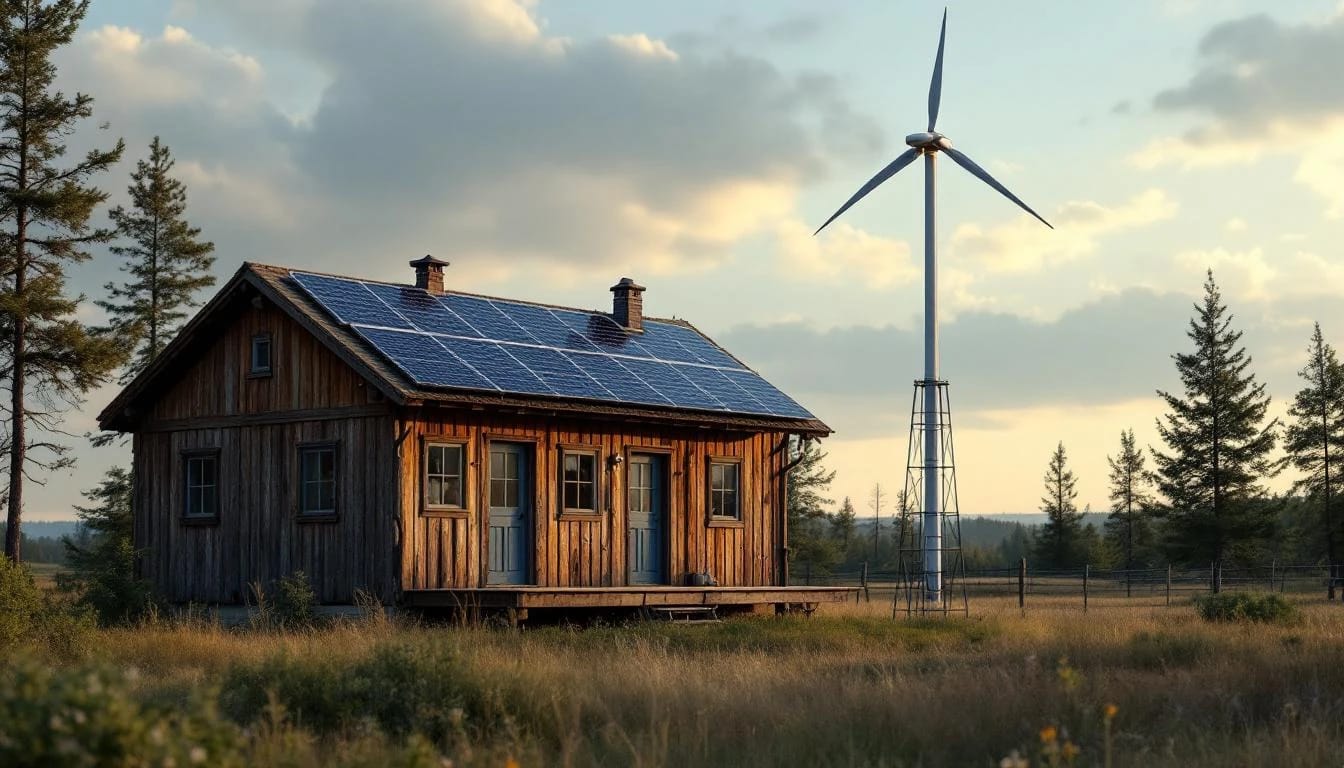
hybrid solar wind
Can You Use Wind and Solar Together? Hybrid System Guide 2026
Yes, wind and solar work together in hybrid systems. Combining turbines with photovoltaic arrays delivers 24/7 renewable generation and smoother grid-tie performance.
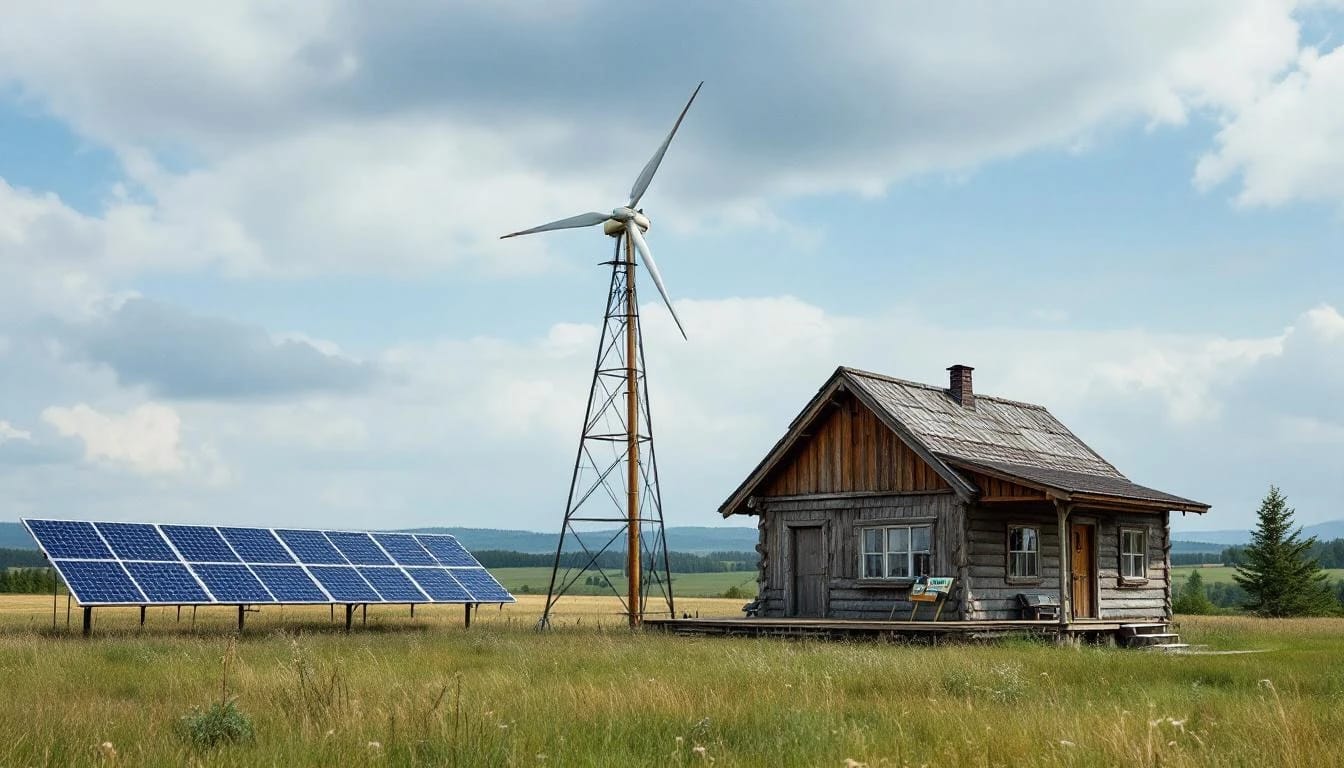
hybrid solar wind
Best Off-Grid Wind Turbine Kits With Battery and Inverter
Complete off-grid wind turbine kits pair a HAWT or VAWT with battery storage and sine-wave inverter for standalone power. Top systems from Pikasola, Nature Power, and Missouri Wind supply 400W-3kW continuous output.