Home Wind Turbine: A Comprehensive US Buyer's Guide 2024
Explore the realities of owning a home wind turbine in the US, covering costs, energy output, installation requirements, and available federal and state incentives for homeowners considering small-scale wind power.
Share this article
windturbinehome.com/s/6c45d6
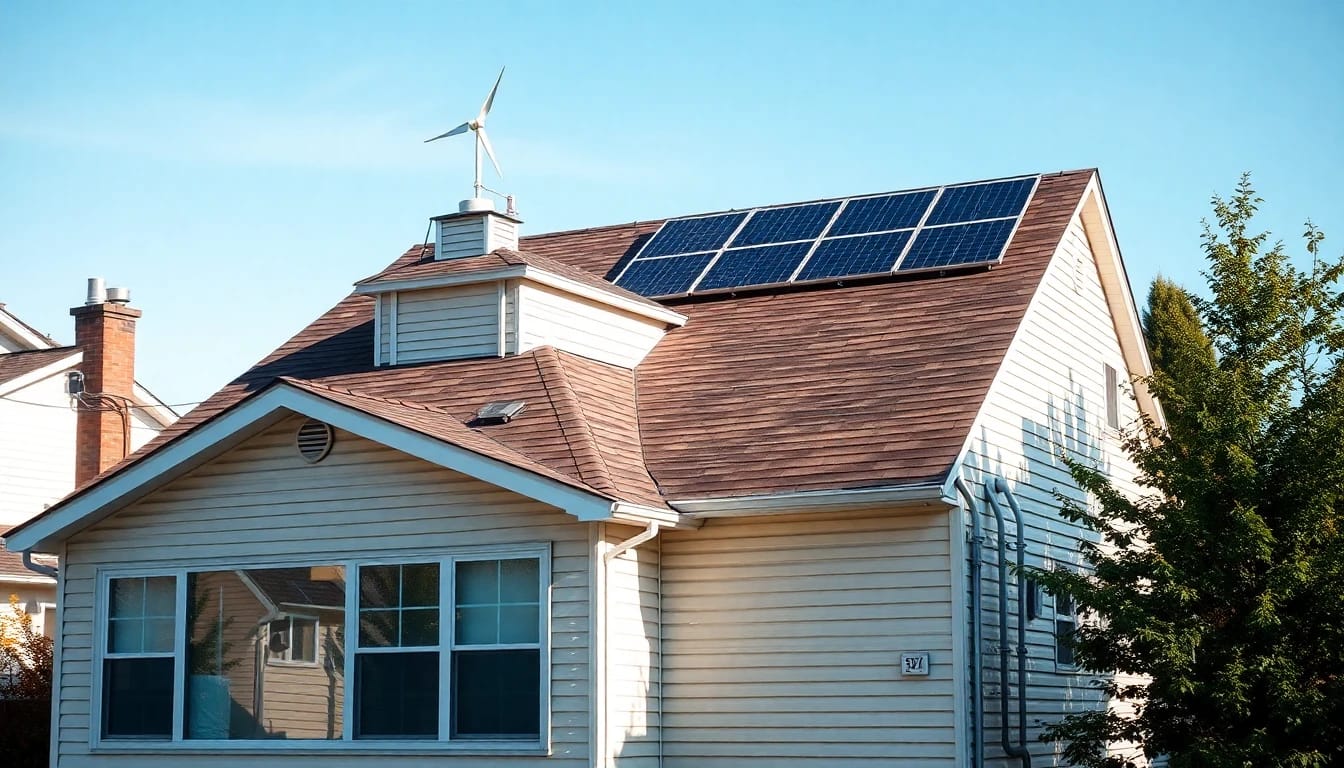
A home wind turbine is a device designed to convert the kinetic energy of wind into usable electricity for residential properties, small businesses, or agricultural operations. For homeowners in the United States, installing a small wind turbine can either supplement grid power, reducing utility bills, or provide complete energy independence in off-grid scenarios. Feasibility and return on investment, however, depend heavily on a property's consistent wind resource, adherence to local zoning regulations, and managing the significant upfront investment for equipment and professional installation.
Understanding the Home Wind Turbine Concept for US Properties
At its core, a home wind turbine functions on a simple principle: wind turns rotor blades, which in turn spin a shaft connected to a generator, producing electricity. This seemingly straightforward process involves complex engineering to ensure effective operation, a long lifespan, and secure installation. Small wind turbines for residential use typically range from 400 watts to 100 kilowatts, though most homeowners consider systems in the 1 to 10 kW range, capable of offsetting a significant portion of a typical household's electricity consumption. The output of any home wind turbine is highly dependent on the speed and consistency of the wind at its specific location.
The energy generated by a wind turbine can be directed in several ways. In a grid-tied system, the electricity flows into the home's electrical panel, offsetting power drawn from the utility grid. Any excess power can often be sold back to the utility through net metering agreements, depending on state and local regulations. For off-grid installations, the electricity is stored in a battery bank for later use, ensuring a continuous power supply even when the wind isn't blowing. A hybrid system combines both approaches, offering a balance of grid reliability and energy storage. Homeowners must understand that while the concept is appealing, the practical application demands careful consideration of both the turbine's technical specifications and the site's environmental conditions.
Types of Small Wind Turbines Suitable for Homes
When considering a home wind turbine, buyers encounter two primary designs: Horizontal Axis Wind Turbines (HAWTs) and Vertical Axis Wind Turbines (VAWTs). Each type presents distinct advantages and disadvantages that influence suitability for a specific residential application.
Horizontal Axis Wind Turbines, with their familiar propeller-like blades, are the most common and generally the most efficient design for small-scale power generation. They need to be oriented into the wind, which is often managed by a tail fin or an active yaw control system. HAWTs typically require taller towers to access cleaner, less turbulent wind, maximizing their energy capture. Examples like those from Bergey Windpower or Primus Wind Power demonstrate the efficacy of this design in suitable locations. However, their reliance on a specific wind direction means they are less suited for highly turbulent environments, such as those found close to buildings.
Vertical Axis Wind Turbines, on the other hand, feature blades that rotate around a vertical shaft. Their main advantage is that they are omnidirectional, meaning they don't need to yaw to face the wind, making them potentially more tolerant of turbulent wind conditions. VAWTs also typically operate at lower rotational speeds, often resulting in less noise. While designs like the Darrieus or Savonius rotor are visually distinct and can be aesthetically pleasing, VAWTs generally exhibit lower efficiency compared to HAWTs for the same rotor swept area. This often translates to a lower power output for a given size, making them a niche choice, sometimes considered for urban or suburban settings with less consistent high winds, though even then, their efficacy is often debated.
The distinction between rooftop-mounted and tower-mounted systems is critical. While some manufacturers market small VAWTs for rooftop installation, this approach is rarely advisable. Rooftop turbines contend with highly turbulent wind caused by the building itself, severely limiting output and often transmitting noise and vibration directly into the structure. The weight and structural integrity requirements also pose significant challenges. For any substantial energy generation from a home wind turbine, a sturdy, appropriately-sized tower, positioned to clear obstructions, is almost always the superior and more realistic option.
Critical Factors for Siting a Home Wind Turbine in the United States
Determining the right location for a home wind turbine is crucial to its success and often proves to be the biggest hurdle for prospective owners. Without an adequate, consistent wind resource, even the most advanced turbine will underperform, turning an investment into a costly ornament.
Wind Resource Assessment: This is the single most critical step. A property needs an average wind speed of at least 10-12 mph (4.5-5.4 m/s) to make a small wind turbine financially viable. Wind maps, often available from state energy offices or the National Renewable Energy Laboratory (NREL), provide a starting point. However, localized measurements using an anemometer at the proposed tower height for at least a year offer the most accurate data. Many online wind resource tools can provide estimates, but they are no substitute for on-site verification.
Turbulence and Obstacles: Wind flow near the ground, buildings, trees, and other obstructions is highly turbulent and dramatically reduces a turbine's efficiency and lifespan. The general rule of thumb is that the bottom of the turbine blades should be at least 30 feet higher than any obstruction within a 500-foot radius. This often necessitates a tall tower, which contributes significantly to overall project cost and can face increased scrutiny from local authorities.
Zoning and Permitting: Before any physical work begins, homeowners must understand and comply with local zoning ordinances and permitting requirements. These vary wildly by jurisdiction (the local Authority Having Jurisdiction, or AHJ) and can include restrictions on tower height, setback distances from property lines, noise levels, and aesthetic considerations. Some communities are more renewable-energy-friendly than others. Additionally, for any structure exceeding 200 feet Above Ground Level (AGL), or if it's located near an airport, notification to the Federal Aviation Administration (FAA) per Part 77 §77.13 is required. This ensures the turbine does not interfere with air navigation. Failure to comply can lead to significant fines and forced removal.
Noise Considerations: While modern small wind turbines are quieter than older models, they are not silent. The swishing sound of blades and mechanical noise from the generator can be a concern for neighbors, particularly in densely populated areas. Siting the turbine as far as possible from residential structures, both on one's own property and neighboring parcels, helps mitigate potential noise complaints.
Key Components of a Residential Wind Energy System
A complete home wind turbine system involves more than just the turbine itself. Several interconnected components work together to capture wind energy, convert it into electricity, and then deliver it to a home.
1. Turbine Head: This is the visible part of the system, comprising the blades, rotor, and generator. The blades capture the wind's kinetic energy, which spins the rotor. The rotor is connected to a shaft that drives an electric generator, producing either AC or DC power, depending on the design.
2. Tower: The tower supports the turbine head, elevating it to where wind speeds are higher and less turbulent. There are several types: * Guyed Towers: Supported by tensioned cables, these are generally the least expensive but require a larger footprint for the guy wires. They are often tilt-up designs, making maintenance easier. * Freestanding (Self-Supporting) Towers: These are stronger, require a smaller base footprint, and don't need guy wires, but they are significantly more expensive and complex to install. * Monopole Towers: A common type of freestanding tower, offering a clean aesthetic. The height of the tower is crucial, often representing the largest cost component after the turbine itself. Taller towers mean more consistent wind and thus more energy production.
3. Charge Controller (for Battery Systems): For off-grid or hybrid systems, a charge controller regulates the flow of electricity from the turbine to the battery bank, preventing overcharging and optimizing battery lifespan.
4. Inverter: This device converts the DC electricity produced by the turbine (or stored in batteries) into AC electricity, which is the standard for household appliances and for interconnection with the utility grid. For grid-tied systems, a grid-tie inverter ensures the power matches the grid's voltage and frequency.
5. Battery Bank (for Off-Grid or Hybrid Systems): Batteries store excess electricity generated by the turbine, providing power during periods of low wind or high demand. The size of the battery bank determines how long the home can run without wind or grid input. [Understanding Battery Storage for Home Wind Systems] explores the considerations for sizing these components.
6. Grid Interconnection Equipment (for Grid-Tied Systems): This includes disconnect switches, metering equipment, and safety devices required by utility companies and electrical codes (such as NEC Article 705) to ensure safe and compliant operation when connected to the public electricity grid.
Power Output and Sizing Your Home Wind Turbine
Understanding the power output of a home wind turbine goes beyond simply looking at its rated capacity. A turbine's nameplate rating, for instance, a 5 kW unit, represents its maximum output under ideal, usually high-wind, conditions, not its average daily production. For homeowners evaluating a home wind turbine, the more practical figure is its annual energy production (AEP), measured in kilowatt-hours (kWh) per year.
Share this article
windturbinehome.com/s/6c45d6
Editorial note: This article was researched and written by a member of the Wind Turbine Home editorial team. AI-assisted tools were used for spell-checking and light grammar review only — all research, analysis, and conclusions are our own. Our editorial policy prohibits sponsored content and paid placements. Read our editorial policy →
Related reading
residential wind power
Home Wind Turbine Systems: A Complete 2024 Buyer's Guide
Explore the realities of a home wind turbine system for residential power, covering installation, costs, grid-tie considerations, and US federal incentives.
residential wind power
First-Year Mistakes New Home Wind Turbine Owners Regret Most
New home wind turbine owners make costly first-year errors—from poor site assessment to skipping permits. Learn the eleven most common mistakes and how to avoid them.
residential wind power
Grid-Tied vs Battery-Backed Wind Turbine Systems for Homes
Grid-tied systems feed excess wind power directly to the utility for credits, while battery-backed configurations store energy for outages and off-grid use.
residential wind power
How to Right-Size a Wind Turbine for Your House in 2026
Match your home wind turbine to your actual energy use and site conditions. Learn the sizing formula, power curves, and common mistakes to avoid before you buy.
residential wind power
Best Wind Turbines for Australian Homes: STCs & 2026 Picks
Small wind turbines can earn STCs under the SRES, but few models sold in Australia meet AS 4509.1. Compare Bergey, Primus and proven vertical-axis picks.
residential wind power
Best Wind Turbines Under $5000 for Home Use (2026 Guide)
Compare the top small wind turbines under $5000 for residential use in 2026. Real performance data, installation costs, and ROI analysis for US homeowners.
residential wind power
Best Wind Turbines for Iowa Homes: Bergey vs Primus (2026)
Iowa averages 5.5-7.5 m/s wind at 30m, enough for a home turbine. Compare the Bergey Excel 10, Primus AIR 40 and VAWT options for grid-tied or off-grid use.
residential wind power
Best Wind Turbines for Texas Homes: 1-10 kW Picks (2026)
Compare 1-10 kW small wind turbines for Texas homes, including which models suit your local wind zone, what they cost, and which incentives you can claim.
residential wind power
Wind Turbine for Power Outage Backup: Realistic Resilience Design
Small wind turbines can provide backup power during outages, but the system requires battery storage, proper NEC-compliant installation, and realistic expectations about spinning up from zero wind.