Best Wind Turbines for Texas Homes: 1-10 kW Picks (2026)
Compare 1-10 kW small wind turbines for Texas homes, including which models suit your local wind zone, what they cost, and which incentives you can claim.
Share this article
windturbinehome.com/s/a4b945
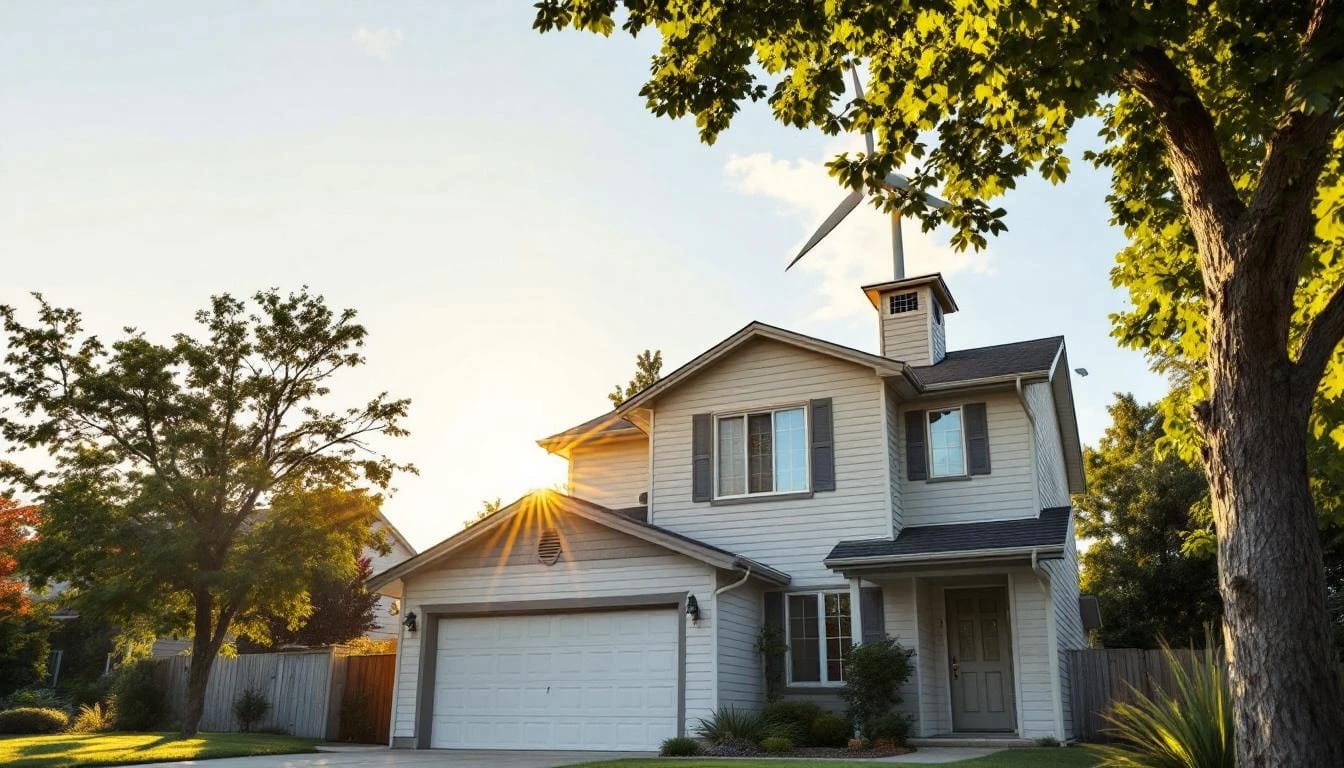
Texas offers some of the strongest and most consistent wind resources in the continental United States, making residential wind turbines a practical investment for rural and suburban homeowners. Small horizontal-axis turbines rated between 1 and 10 kilowatts perform best in open terrain with average annual wind speeds above 4 meters per second (8.9 mph), a threshold many Texas locations exceed. Homeowners in the Panhandle, West Texas, and portions of the Hill Country can offset 30–80% of household electricity consumption when systems are properly sited and installed by licensed professionals under NEC Article 705 interconnection standards.
Texas wind resource zones and residential suitability
The U.S. Department of Energy's WINDExchange database provides 30-meter residential wind speed maps that estimate average annual wind speeds at the typical hub height for small turbines. These maps, produced using weather station data and computer modeling, reveal that Texas contains multiple Class 3 and Class 4 wind zones—areas where average wind speeds exceed 5.1 m/s (11.4 mph) at 30 meters.
The Texas Panhandle counties (Potter, Randall, Carson, Armstrong) consistently show wind speeds between 6.5 and 7.5 m/s at residential turbine heights. West Texas locations including Midland, Ector, and Pecos counties register 5.8–6.8 m/s averages. Coastal regions from Corpus Christi to Galveston benefit from Gulf breezes that sustain 5.0–6.2 m/s speeds, though salt-spray corrosion requires turbines with marine-grade coatings.
Central Texas hill country (Gillespie, Blanco, Kendall counties) shows more variable wind resources. Ridgetop installations often capture 5.5–6.5 m/s averages, while valley properties drop to 3.5–4.5 m/s—marginal for most residential systems. East Texas forests and urban Dallas-Fort Worth areas register the lowest state averages (3.0–4.2 m/s), making wind turbines economically unviable without exceptional micro-siting on cleared hilltops or agricultural land.
Local zoning ordinances trump federal wind maps. Many Texas municipalities restrict turbine height to 35–50 feet in residential zones, forcing homeowners to accept lower hub heights and reduced energy capture. Unincorporated rural properties generally permit taller installations, though FAA Part 77 requires notification for any structure exceeding 200 feet above ground level.
![INLINE: Texas wind resource map showing average wind speeds at 30 meters above ground, with Panhandle and West Texas regions displaying highest annual averages]
Top-performing horizontal-axis turbines for Texas installations
Bergey Excel 10 remains the benchmark for residential wind in high-wind Texas locations. This 10-kilowatt turbine features a 23-foot rotor diameter, requires 100-foot tower heights for optimal performance, and carries a 25-year manufacturer warranty on the alternator. Bergey reports 1,200–1,800 kWh monthly production in 6.5+ m/s wind regimes—enough to cover most or all consumption for energy-efficient Texas homes. The unit ships with grid-tie inverters meeting NEC 705.12 requirements and includes built-in overspeed protection rated to 120 mph sustained winds.
Installed cost ranges from $55,000 to $72,000 including tower, foundation, electrical work, and permitting. The 30% federal Residential Clean Energy Credit (IRC §25D, claimed via IRS Form 5695) reduces net investment to $38,500–$50,400. Texas offers no statewide wind rebates, but oncor Electric Delivery and CPS Energy provide distributed generation interconnection credits in their service territories.
Primus Air 40 targets budget-conscious homeowners in moderate wind zones. This 1.8-kilowatt turbine operates on 30- to 50-foot towers, making it compatible with most residential zoning restrictions. The 13-foot diameter rotor starts generating at 2.5 m/s wind speeds and reaches rated output at 12.5 m/s. Monthly production averages 200–350 kWh in 5.0–6.0 m/s locations—sufficient to offset major appliance loads (HVAC, water heater, refrigeration) but not full household consumption.
Turnkey installation costs $12,000–$18,000. After the 30% federal credit, homeowners pay $8,400–$12,600. The Primus Air 40 carries a 5-year manufacturer warranty and ships with a grid-tie inverter certified to UL 1741 standards. Bergey's Oklahoma factory services both the Excel 10 and licensed Primus products through a network of Texas installers.
Aeolos-H 3kW fills the mid-range performance gap. This 3-kilowatt Chinese-manufactured turbine ships with a 10.5-foot rotor, passive yaw mechanism, and electromagnetic brake. The company specifies 300–550 kWh monthly production in 6.0+ m/s winds when installed on 60-foot towers. U.S. dealers handle customs clearance, tower fabrication, and electrical integration, with total installed cost between $22,000 and $30,000 ($15,400–$21,000 post-credit).
Field reports from Texas installations show mixed long-term reliability. The Aeolos-H performs well in consistent wind regimes but requires more frequent bearing and slip-ring maintenance than domestic Bergey units. The 3-year parts warranty excludes labor, adding $800–$1,500 to annual maintenance budgets after the warranty period expires.
Vertical-axis turbine limitations in Texas applications
Vertical-axis wind turbines (VAWTs) appear attractive for residential properties because they operate quietly, accept wind from any direction without yaw mechanisms, and mount at lower heights. Manufacturers including Pikasola and various Alibaba vendors market 1–5 kW Darrieus and Savonius designs for $3,000–$8,000 plus installation.
Real-world Texas installations reveal significant performance shortfalls. VAWTs extract 30–50% less energy than equivalent-rated horizontal-axis turbines in the same wind regime due to lower tip-speed ratios and higher parasitic drag. The Pikasola 3kW VAWT produces 80–120 kWh monthly in 5.5 m/s winds—roughly one-third the output of a Primus Air 40 despite higher nameplate capacity.
Darrieus "eggbeater" VAWTs require grid power or battery banks to initiate rotation in light winds, adding parasitic consumption that erodes net generation. Savonius drag-type VAWTs self-start reliably but operate at such low rotational speeds that alternator efficiency drops below 40% under partial load. Both designs experience fatigue failures in the cyclic stress environment created by blade rotation, leading to cracked welds and failed bearings within 3–5 years.
One legitimate VAWT application exists for Texas homeowners: hybrid solar-wind systems in suburban lots where zoning prohibits horizontal-axis installations. A 1 kW VAWT mounted on a garage roof alongside 4–6 kW of solar panels can contribute 50–100 kWh monthly during winter months when solar production drops. This marginal output rarely justifies the $6,000–$9,000 incremental cost, but homeowners pursuing net-zero goals sometimes accept the premium.
Tower selection and foundation requirements for Texas soil conditions
Texas geology varies dramatically between regions, creating location-specific foundation challenges. The Blackland Prairie's expansive clay soils (covering central Texas from Dallas to San Antonio) require engineered pier-and-grade-beam foundations to prevent seasonal heave from destroying tower integrity. Expect $8,000–$14,000 for professionally engineered foundations in clay zones.
West Texas caliche hardpan simplifies excavation but demands rock-breaking equipment for pier depths below 6 feet. Sandy coastal soils require oversized pier diameters (30+ inches) or helical anchors to achieve pullout resistance for guy-wired towers. The Panhandle's stable loam accepts standard pier foundations at lower cost ($4,500–$7,500 for tilt-up towers, $9,000–$12,000 for freestanding monopoles).
Three tower configurations dominate Texas residential wind installations:
Tilt-up guyed towers (60–120 feet) offer the best cost-to-height ratio and simplified maintenance. Four guy-wire anchor points require 1.5× tower height in radial clearance—a 100-foot tower needs 150-foot radius clear space. This works well for rural acreage but eliminates most suburban properties. Installation cost: $180–$280 per vertical foot including foundation and guy anchors.
Freestanding lattice towers eliminate guy wires at the expense of heavier structural steel. They fit on smaller properties but require engineered foundations capable of resisting full-height bending moments. Installation cost: $320–$450 per vertical foot. Heights above 80 feet become cost-prohibitive for residential applications.
Monopole towers provide the cleanest aesthetic but carry the highest material and installation costs ($400–$600 per vertical foot). Utilities and commercial installations use monopoles for 100+ foot heights; residential budgets rarely justify them unless homeowner associations mandate specific appearances.
All tower installations require stamped engineering drawings and building permits. Licensed Texas electrical contractors must complete grid interconnection under NEC Article 705.12 (supply-side connections) or 705.13 (load-side connections) standards. Failure to obtain permits and professional installation voids manufacturer warranties and creates liability exposure if equipment fails or causes grid faults.
Performance comparison: Leading models in Texas wind conditions
| Model | Rated Output | Rotor Diameter | Cut-in Speed | Rated Speed | Monthly kWh (6.0 m/s) | Installed Cost | Post-Credit Cost | Warranty |
|---|---|---|---|---|---|---|---|---|
| Bergey Excel 10 | 10 kW | 23 ft | 2.5 m/s | 13 m/s | 1,400–1,700 | $63,000 | $44,100 | 25 years |
| Aeolos-H 3kW | 3 kW | 10.5 ft | 3.0 m/s | 12 m/s | 400–550 | $26,000 | $18,200 | 3 years |
| Primus Air 40 | 1.8 kW | 13 ft | 2.5 m/s | 12.5 m/s | 280–350 | $15,000 | $10,500 | 5 years |
| Pikasola 3kW VAWT | 3 kW | 6.6 ft height | 2.0 m/s | 11 m/s | 90–130 | $9,500 | $6,650 | 2 years |
Monthly production estimates assume 6.0 m/s average wind speed at hub height, 95% inverter efficiency, and 15% combined losses from turbulence, icing, and maintenance downtime. Actual production varies ±30% based on micro-siting, tower height, and seasonal wind patterns. The Texas wind resource delivers stronger average speeds from November through April, with summer months dropping 15–25% below annual averages in most regions.
Bergey's 25-year warranty covers the alternator and blade assembly but excludes tower structural components, inverters (5-year separate coverage), and weather-related damage. Annual maintenance costs run $400–$800 for professional inspection and bearing service. Aeolos and Primus warranties cover defective parts only; labor and shipping are owner responsibilities. Budget $600–$1,200 annually for post-warranty maintenance on Chinese-manufactured units.
Grid interconnection process and utility requirements
Texas operates under ERCOT (Electric Reliability Council of Texas) in most of the state, with portions of the Panhandle and far East Texas connecting to the Southwest Power Pool and Eastern Interconnection. Regardless of grid operator, NEC Article 705 governs the physical interconnection hardware and safety requirements.
Homeowners pursuing grid-tied wind systems must complete utility interconnection applications before installing equipment. Most Texas utilities follow standardized distributed generation procedures:
- Submit interconnection application with turbine specifications (nameplate capacity, inverter model, single-line electrical diagram)
- Pay application fee ($100–$400 depending on utility)
- Wait for utility engineering review (2–8 weeks)
- Install approved equipment following NEC standards
- Schedule utility inspection and witness testing
- Receive permission to operate (PTO) before energizing system
Grid-tied inverters must carry UL 1741 SA certification (smart inverter functions required by IEEE 1547-2018 standards). This ensures the turbine disconnects from the grid during utility outages, preventing backfeed that endangers line workers. Stand-alone inverters designed for off-grid battery systems do not meet grid interconnection requirements and will fail utility inspection.
Net metering availability varies by Texas utility. Investor-owned utilities (Oncor, CenterPoint, AEP Texas) offer net metering under PUCT Substantive Rule 25.242, crediting excess generation at retail rates. Municipal utilities (CPS Energy, Austin Energy) and cooperatives (Pedernales Electric, United Cooperative Services) set their own policies—some offer retail rate credits, others pay wholesale avoided-cost rates of $0.02–$0.04 per kWh for excess generation.
Homeowners in deregulated retail electric markets (covering 80% of Texas population) choose electricity providers independently of transmission utilities. The transmission utility (Oncor, CenterPoint) handles interconnection applications and maintains the meter, while the retail provider appears on monthly bills. Confirm your retail provider supports distributed generation before investing in wind equipment; a few low-cost providers explicitly prohibit customer-owned generation in service contracts.
Federal tax credits and Texas-specific incentives
The Residential Clean Energy Credit (IRC §25D) provides a 30% federal income tax credit for small wind installations through December 31, 2032. The credit drops to 26% in 2033 and 22% in 2034 before expiring. Qualified expenses include turbine equipment, towers, foundations, inverters, electrical interconnection hardware, and installation labor. The credit has no dollar cap and can offset alternative minimum tax (AMT) liability.
Homeowners claim the credit using IRS Form 5695, attached to Form 1040. The credit is non-refundable but carries forward indefinitely—taxpayers with insufficient current-year liability can apply unused credit to future tax years. The installation must occur at a primary or secondary residence in the United States; rental properties and pure investment properties do not qualify.
Texas offers no statewide wind energy rebates or incentives, but property tax exemptions apply in some cases. Wind turbines installed on agricultural properties may qualify for greenbelt appraisal (Texas Tax Code Chapter 23, Subchapter D), reducing property tax burden by appraising land at agricultural productivity value rather than market value. Consult county appraisal districts for eligibility requirements, which typically mandate 5–10 acres under agricultural use for the preceding 5 years.
The Database of State Incentives for Renewables & Efficiency (DSIRE) tracks local utility programs. Current Texas offerings include:
- CPS Energy (San Antonio): Distributed generation interconnection with retail rate net metering
- Oncor Electric Delivery: Renewable generation buyback at avoided-cost wholesale rates
- United Cooperative Services: Renewable energy grants (funding varies annually, not currently active for 2025)
Municipal financing programs like Property Assessed Clean Energy (PACE) have not been widely adopted in Texas. A few cities including Houston and Austin piloted PACE programs, but state-level enabling legislation expired and was not renewed. Homeowners must finance wind installations through conventional home equity loans, personal loans, or cash purchases.
Comparing wind to solar economics in Texas residential applications
Texas receives 180–230 sunny days annually across most regions, making rooftop solar the dominant residential renewable choice. Installed solar system costs dropped to $2.50–$3.20 per watt in 2025, allowing homeowners to install 8 kW systems for $20,000–$25,600 ($14,000–$17,920 after federal credit). These systems generate 950–1,300 kWh monthly in most Texas locations.
Residential wind turbines cost $1,800–$6,300 per installed kilowatt—double to triple the per-watt cost of solar. A 3 kW wind turbine ($26,000 installed, $18,200 post-credit) produces 400–550 kWh monthly in good wind sites—roughly half the output of a similarly priced 8 kW solar array.
Wind makes economic sense in three scenarios:
High-wind rural properties with limited solar access: Northern-facing roof slopes, heavy tree shading, or metal roofs unsuitable for penetrations make solar impractical, while open terrain provides excellent wind resources.
Winter peaking households: Texas wind resources strengthen in winter when solar production drops 30–40%. Homeowners heating with resistance electric or operating shops, barns, and greenhouses through cold months benefit from wind's seasonal profile.
Aesthetic or philosophical preference: Some homeowners prioritize visible sustainability or prefer diversified renewable generation despite higher costs.
The ideal Texas renewable energy system combines 6–10 kW of rooftop solar with a 1–3 kW wind turbine on properties with good wind resources. This hybrid approach captures summer solar peaks and winter wind peaks, smoothing seasonal generation swings. Total installed cost runs $35,000–$55,000 ($24,500–$38,500 post-credit), with combined monthly generation of 1,200–2,000 kWh in good sites.
Permitting, zoning, and HOA considerations in Texas
Texas operates under a permissive regulatory environment for rural property owners but restricts residential wind installations through municipal zoning and deed restrictions in suburban areas. The state legislature specifically prohibits homeowner associations from banning solar panels (Texas Property Code §202.010), but wind turbines receive no such protection.
Municipal zoning typically restricts turbine height to 35–50 feet in residential zones and imposes setback requirements of 1.5–2.0 times the total structure height from property lines. A 50-foot tower requires 75–100 feet of setback, consuming most suburban lot dimensions before accounting for guy-wire anchor points. Many cities classify wind turbines as "accessory structures" subject to the same setbacks as detached garages and sheds, while others treat them as "utility installations" requiring conditional use permits with public hearings.
Major Texas cities enforce these restrictions:
- Houston: 50-foot height limit in residential zones; setback equals total height; conditional use permit required for exceeding height limits
- Dallas: 35-foot height limit; setback 1.5× total height; no exceptions in single-family residential zones
- Austin: 45-foot height limit; setback equals total height plus 10 feet; noise study required
- San Antonio: 40-foot height limit in residential zones; 2.0× setback; conditional use permit available
Unincorporated county areas generally lack specific wind turbine regulations, defaulting to general height and setback rules for accessory structures. Property owners should obtain written confirmation from county planning departments before purchasing equipment.
HOA deed restrictions frequently prohibit wind turbines as "visual nuisances" without legislative override like solar installations enjoy. Review CC&Rs (covenants, conditions, and restrictions) before investing. Some HOAs grant variances for low-profile installations or allow turbines on agricultural properties within subdivision boundaries.
FAA notification (not approval) is required for any structure exceeding 200 feet above ground level or within 20,000 feet of a public-use airport. File FAA Form 7460-1 at least 45 days before construction. Most residential turbines on 50–120 foot towers do not trigger notification requirements unless located near airports.
Licensed electricians holding Texas Department of Licensing and Regulation (TDLR) electrical contractor licenses must perform all grid interconnections. The contractor pulls electrical permits, completes work under NEC Article 705 standards, and coordinates utility inspections. Homeowner-installed electrical work voids utility interconnection agreements and insurance coverage.
Maintenance requirements and long-term operating costs
Small wind turbines demand more maintenance than rooftop solar systems due to moving parts, bearings, and exposure to mechanical stress. Annual professional maintenance costs $400–$1,200 depending on tower height and turbine complexity.
Routine annual maintenance includes:
- Visual inspection of tower structure, guy wires, and anchor points
- Turbine slip-ring cleaning and corrosion treatment
- Bearing lubrication or replacement
- Blade inspection for cracks, erosion, or delamination
- Inverter filter cleaning and electrical connection torque verification
- Anemometer calibration check (if equipped)
- Guy-wire tension measurement and adjustment
Bergey recommends professional service every 12–18 months. Primus and Aeolos specify 12-month intervals. DIY-capable homeowners can perform some tasks (visual inspections, guy-wire tensioning) but should hire professionals for tower climbing, electrical work, and bearing service.
Major maintenance events occur every 5–10 years:
- Bearing cartridge replacement ($800–$2,000 parts and labor)
- Blade set replacement due to erosion or lightning damage ($1,500–$4,500)
- Slip-ring assembly replacement ($400–$1,200)
- Tower repaint and corrosion mitigation ($1,200–$3,000)
- Inverter replacement at end of service life ($2,000–$4,000)
Budget $200–$400 annually for routine maintenance plus $1,500–$2,500 set aside for major repairs averaged over turbine lifetime. A Bergey Excel 10 might consume $35,000–$50,000 in maintenance costs over a 30-year operating life—roughly 70% of the initial equipment investment.
Lightning damage poses the greatest operational risk for Texas turbines. Proper grounding per NEC Article 250 reduces but does not eliminate strike damage. Comprehensive homeowner insurance policies should specifically cover wind turbine assets; some insurers exclude "power generation equipment" from standard dwelling coverage. Expect $300–$600 annual premium increase for coverage of a $40,000–$60,000 wind installation.
What wind speed do I need for a residential turbine in Texas?
The WINDExchange 30-meter residential wind maps indicate sites need average annual wind speeds of at least 4.5 meters per second (10 mph) for economic viability, with 5.5+ m/s (12.3 mph) preferred for strong returns. Most Texas Panhandle, West Texas, and coastal locations exceed this threshold. Request a professional wind resource assessment before purchasing equipment; month-long data logging at the proposed hub height costs $800–$1,500 and eliminates guesswork about site suitability.
Can I install a wind turbine myself to save money?
Homeowner installation of the tower foundation and turbine assembly is legal on private property, but grid interconnection requires a licensed Texas electrical contractor holding TDLR certification. Most utilities will not issue permission to operate without contractor-stamped electrical permits. Tower erection requires specialized equipment (gin poles, cranes) and creates serious injury risk; professional installation costs $4,000–$8,000 but includes liability insurance. DIY installation voids manufacturer warranties on Bergey, Primus, and Aeolos products.
Do residential wind turbines work during Texas winter storms?
Modern small wind turbines include automatic shutdown systems that activate when wind speeds exceed safe operating limits—typically 50–60 mph for 1–3 kW models, 70–90 mph for 5–10 kW units. During February 2021's winter storm Uri, most residential turbines shut down during peak wind events but resumed generation as conditions moderated. Turbines cannot provide backup power during grid outages unless paired with battery storage systems; standard grid-tied inverters disconnect when utility power fails to protect line workers.
What's better for Texas homes: wind, solar, or both?
Solar delivers lower installed cost per kilowatt-hour and requires minimal maintenance, making it the first choice for most Texas homeowners. Wind makes sense as a supplement in high-wind rural locations where properties have clear solar access and excellent wind resources. The optimal configuration combines 6–10 kW of solar (covering summer peaks) with 1–3 kW of wind (boosting winter production) for net-zero energy goals. Suburban properties with HOA restrictions or limited wind resources should install solar-only systems.
How long does it take a wind turbine to pay for itself in Texas?
Simple payback periods range from 12 to 25+ years depending on wind resources, installed cost, electricity rates, and net metering availability. A Primus Air 40 producing 300 kWh monthly at $0.12/kWh retail rates saves $36 monthly ($432 annually). After the 30% federal credit, a $15,000 installation costs $10,500 net, yielding 24-year simple payback before maintenance costs. Stronger wind sites, higher retail rates, and favorable net metering shorten payback to 12–18 years. Many homeowners prioritize energy independence over strict financial returns, accepting longer payback in exchange for visible sustainability and reduced grid dependence.
Bottom line
Texas homeowners in high-wind rural locations can generate meaningful electricity with properly sized horizontal-axis turbines from Bergey or Primus installed on 80–120 foot towers. Expect installed costs of $15,000–$65,000 ($10,500–$45,500 after federal credit) depending on turbine capacity, with annual production ranging from 3,000 to 18,000 kWh in good sites. Request a professional wind resource assessment before purchasing equipment, verify local zoning permits tall towers, and hire licensed contractors for electrical interconnection.
Suburban homeowners face tighter height restrictions and deed covenants that often make wind turbines impractical compared to rooftop solar. Invest in wind only after confirming adequate wind resources (5.5+ m/s at hub height), obtaining zoning approval, and securing utility interconnection agreements. For site-specific guidance, contact licensed Texas wind installers who can evaluate your property and provide realistic production estimates.
Share this article
windturbinehome.com/s/a4b945
Editorial note: This article was researched and written by a member of the Wind Turbine Home editorial team. AI-assisted tools were used for spell-checking and light grammar review only — all research, analysis, and conclusions are our own. Our editorial policy prohibits sponsored content and paid placements. Read our editorial policy →
Related reading
residential wind power
Home Wind Turbine: A Comprehensive US Buyer's Guide 2024
Explore the realities of owning a home wind turbine in the US, covering costs, energy output, installation requirements, and available federal and state incentives for homeowners considering small-scale wind power.
residential wind power
Home Wind Turbine Systems: A Complete 2024 Buyer's Guide
Explore the realities of a home wind turbine system for residential power, covering installation, costs, grid-tie considerations, and US federal incentives.

residential wind power
First-Year Mistakes New Home Wind Turbine Owners Regret Most
New home wind turbine owners make costly first-year errors—from poor site assessment to skipping permits. Learn the eleven most common mistakes and how to avoid them.

residential wind power
Grid-Tied vs Battery-Backed Wind Turbine Systems for Homes
Grid-tied systems feed excess wind power directly to the utility for credits, while battery-backed configurations store energy for outages and off-grid use.
residential wind power
How to Right-Size a Wind Turbine for Your House in 2026
Match your home wind turbine to your actual energy use and site conditions. Learn the sizing formula, power curves, and common mistakes to avoid before you buy.
residential wind power
Best Wind Turbines for Australian Homes: STCs & 2026 Picks
Small wind turbines can earn STCs under the SRES, but few models sold in Australia meet AS 4509.1. Compare Bergey, Primus and proven vertical-axis picks.

residential wind power
Best Wind Turbines Under $5000 for Home Use (2026 Guide)
Compare the top small wind turbines under $5000 for residential use in 2026. Real performance data, installation costs, and ROI analysis for US homeowners.
residential wind power
Best Wind Turbines for Iowa Homes: Bergey vs Primus (2026)
Iowa averages 5.5-7.5 m/s wind at 30m, enough for a home turbine. Compare the Bergey Excel 10, Primus AIR 40 and VAWT options for grid-tied or off-grid use.
residential wind power
Wind Turbine for Power Outage Backup: Realistic Resilience Design
Small wind turbines can provide backup power during outages, but the system requires battery storage, proper NEC-compliant installation, and realistic expectations about spinning up from zero wind.