Best Wind Turbines Under $5000 for Home Use (2026 Guide)
Compare the top small wind turbines under $5000 for residential use in 2026. Real performance data, installation costs, and ROI analysis for US homeowners.
Share this article
windturbinehome.com/s/4ca7fc
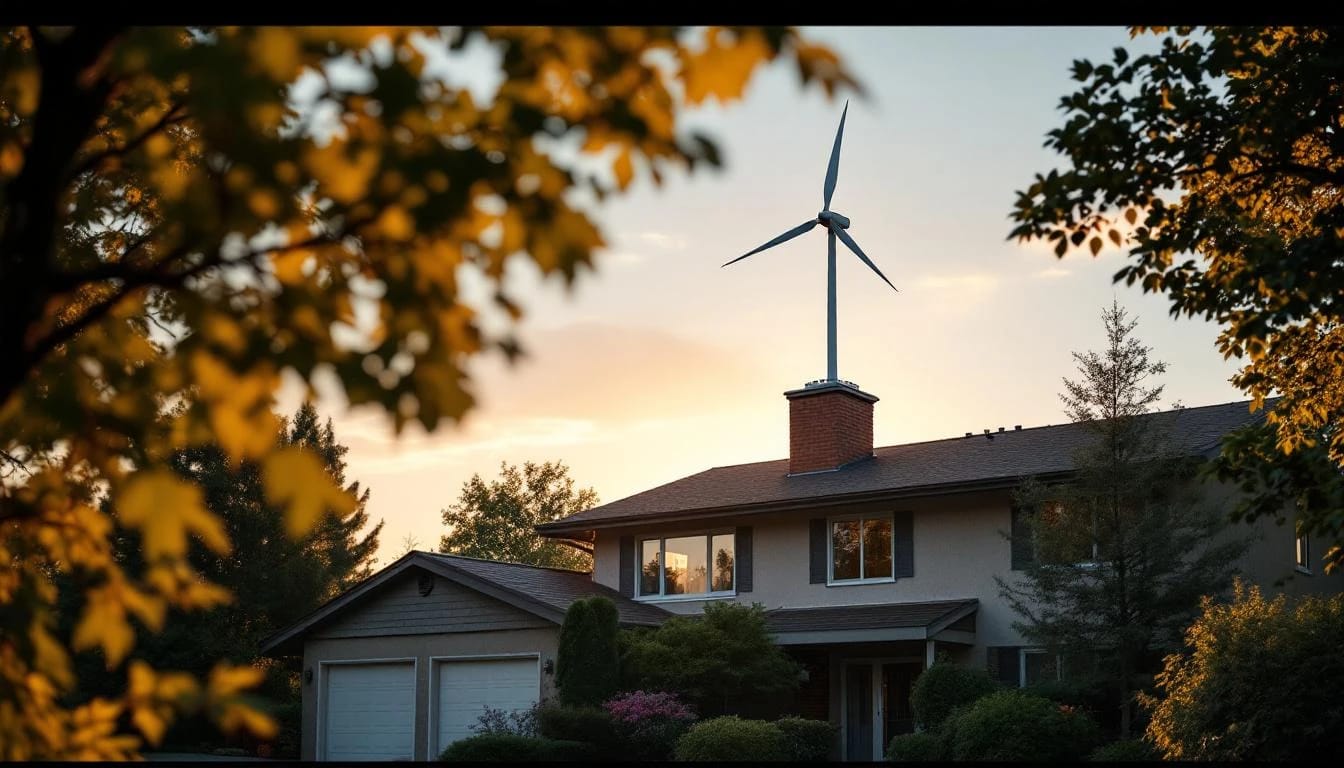
Homeowners shopping for wind turbines under $5000 face a crowded market where manufacturer claims rarely match real-world output. At this price point, expect 400W to 2kW rated capacity, annual production between 200-1,200 kWh in moderate wind sites (Class 3), and a realistic payback period of 15-25 years before incentives. The most cost-effective units balance swept area, generator efficiency, and tower height, with horizontal-axis models outperforming vertical designs by 30-50% in identical conditions.
What you actually get for under $5000
A $5,000 budget covers the turbine itself plus minimal mounting hardware. Tower systems, electrical components, and professional installation add $2,000-$8,000 depending on site complexity and local permitting. The turbine purchase typically breaks down to 40-60% of total project cost.
Rated capacity means peak output under manufacturer-specified wind speed—usually 11-13 m/s (25-29 mph), conditions most sites see less than 5% of the year. A 1kW turbine in an average suburban location (annual wind speed 4.5 m/s) produces 150-300 kWh yearly, worth $18-$36 at national average electricity rates. The same turbine on an exposed rural hilltop (6.5 m/s average) generates 600-800 kWh, worth $72-$96 annually.
Wind power scales with the cube of velocity. Doubling wind speed increases output eightfold. This exponential relationship makes site assessment more important than turbine selection. A $2,500 turbine in a Class 4 wind site outproduces a $4,800 unit in a Class 2 location.
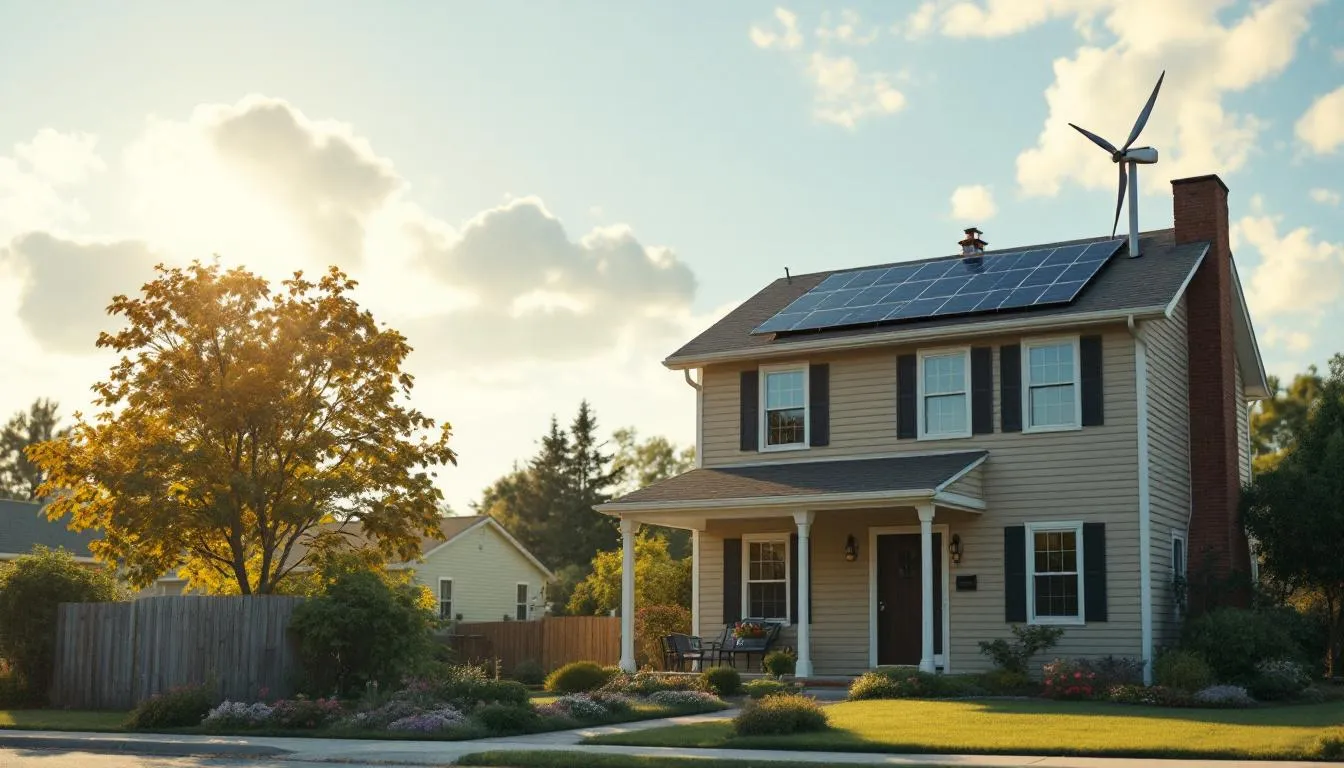
![INLINE: Small horizontal-axis wind turbine mounted on residential monopole tower against clear sky]
Top horizontal-axis turbines in the $3000-$5000 range
Horizontal-axis wind turbines (HAWTs) dominate the residential market because their upwind rotor design captures 35-45% of available wind energy compared to 10-25% for vertical-axis models. The spinning blades create a safety zone requiring setback from property lines and structures.
Primus Wind Power Air X Marine ($1,050-$1,350) generates 400W rated, weighs 13 pounds, and ships as the most compact option for remote power systems. Originally designed for boats, it handles turbulent wind poorly and vibrates above 8 m/s. Annual output in moderate land sites: 120-180 kWh. The Air X suits off-grid battery charging, not grid-tie systems.
Pikasola Wind Turbine 800W ($1,480-$1,680) represents Chinese manufacturing at volume scale. The 1.9-meter blade diameter fits residential lots without triggering height restrictions in most jurisdictions. Build quality varies between production runs—blades crack prematurely in cold climates, and the charge controller fails at 18-24 months in field reports. Expect 200-350 kWh yearly in Class 3 wind.
Missouri Wind and Solar Raptor G5 1600W ($2,850-$3,200) uses a 7-foot diameter rotor and permanent magnet alternator producing wild AC that requires rectification and grid-tie inverter matching. The company provides technical support for DIY installations. Generator bearings need replacement every 4-6 years. Output potential: 400-700 kWh annually in good sites, though the turbine's 3.5 m/s cut-in speed means frequent stalling in light wind.
Bergey Excel 1 ($3,800-$4,400 turbine only) stands as the only US-manufactured option under $5000. Bergey warranties 5 years parts, unusual in this price bracket. The 2.5-meter diameter rotor starts generating at 2.5 m/s and reaches 1kW at 12.5 m/s. Proven reliability across 35 years of production. Third-party testing confirms 600-900 kWh yearly in 5.5 m/s average wind. Total installed cost runs $12,000-$16,000 with tower and electrical, pushing past the budget for most buyers.
Automaxx Windmill 1500W ($2,100-$2,400) ships with a hybrid charge controller and dump load for off-grid systems. The 6-blade design reduces tip speed for quieter operation but sacrifices efficiency—actual output runs 60-70% of equivalent 3-blade models. Acceptable choice for cabin power where utility connection costs more than the turbine. Annual production: 280-480 kWh.
Vertical-axis alternatives and their trade-offs
Vertical-axis wind turbines (VAWTs) accept wind from any direction without yaw mechanisms and operate in turbulent flow that stalls horizontal designs. Marketing emphasizes "works in low wind" and "safe around people," but physics limits their efficiency.
Aeolos-V 500W ($1,680-$1,850) uses three curved Savonius blades spinning around a vertical shaft. The 1.5-meter height and 1.1-meter diameter fit tight urban lots. Measured output rarely exceeds 150 kWh yearly because the design captures 15-20% of wind energy versus 35-40% for HAWTs. Bearing failure occurs at 3-5 years in continuous operation. Aeolos provides replacement parts and English-language support, unusual for Chinese VAWT manufacturers.
Pikasola VAWT 600W ($980-$1,150) represents the budget floor for residential wind. The straight-bladed Darrieus design looks modern but generates substantial vibration above 6 m/s. Plan for 80-140 kWh annually. The included charge controller handles 24V battery systems only—grid connection requires additional inverter purchase ($400-$800). Mount on reinforced structure capable of lateral force loads; the manufacturer's thin pole bends under continuous operation.
Dyna-Living Helix VAWT 400W ($750-$920) features twisted blades that reduce torque ripple and noise. Real-world output: 60-100 kWh yearly in typical suburban locations. The turbine requires 4 m/s to begin spinning, higher than most HAWT cut-in speeds. Three-year observed failure rate sits above 40% based on aggregated customer reports. Acceptable as educational demonstration, not primary power source.
Vertical turbines under $5000 produce 50-70% less electricity than horizontal models of equivalent cost. The omnidirectional advantage matters in cities where buildings create swirling wind, but residential rooftop mounting violates NEC Article 705 interconnection requirements in most jurisdictions due to structural and vibration concerns.
Real installation costs beyond the turbine price
The turbine represents 30-50% of total project expense. Monopole towers add $1,500-$4,000 depending on height; guy-wire systems cost $800-$2,200 but require 1.5× turbine height as anchor radius. Most jurisdictions require setback equal to tower height plus 10 feet from property lines.
Professional installation runs $1,200-$3,500 for foundation pouring, tower raising, and electrical connection. The alternative—DIY installation—demands concrete work, electrical skills at NEC Article 705 compliance level, and comfort with heights. Insurance excludes coverage for self-installed towers in many policies.
Grid-tie inverters meeting IEEE 1547 anti-islanding requirements cost $400-$1,200 for sub-2kW systems. The inverter converts turbine output to grid-synchronized AC and disconnects during utility outages. Utility interconnection applications take 6-16 weeks for approval and often require engineering stamps ($350-$600) and building permits ($150-$400).
Battery systems for off-grid designs add $2,000-$5,000 for adequate capacity. A 400W turbine needs 400-800 Ah at 24V to buffer daily wind variation. Deep-cycle AGM or lithium batteries last 4-8 years before replacement.
FAA Part 77 notification applies to structures exceeding 200 feet above ground level or located near airports. Most residential turbines on 30-50 foot towers avoid this threshold, but check the FAA's online filing tool before purchasing. Local zoning often caps accessory structure height at 35 feet, forcing turbine selection based on tower restrictions rather than wind resource quality.
Performance expectations by wind class
Wind resource maps classify average wind speed into seven classes. Class 1 (<4.4 m/s at 10m height) generates insufficient power for economic operation. Class 2 (4.4-5.1 m/s) produces minimal output. Class 3 (5.1-5.6 m/s) represents the threshold for viable residential installations.
| Wind Class | Avg Speed (m/s) | 400W Turbine Output | 1kW Turbine Output | Electricity Value ($/yr) |
|---|---|---|---|---|
| Class 2 | 4.7 | 60-100 kWh | 150-250 kWh | $7-$30 |
| Class 3 | 5.4 | 140-200 kWh | 350-500 kWh | $17-$60 |
| Class 4 | 6.0 | 240-350 kWh | 600-850 kWh | $29-$102 |
| Class 5 | 6.7 | 380-520 kWh | 950-1,300 kWh | $46-$156 |
Values assume $0.12/kWh electricity rate and manufacturer-specified turbine efficiency. Real output varies with tower height, surrounding obstacles, and turbine condition.
Residential lots in valleys, behind tree lines, or within 500 feet of multi-story buildings rarely exceed Class 2 conditions at feasible tower heights. Exposed hilltops, coastal areas, and Great Plains locations reach Class 3-4. The top 5% of residential sites achieve Class 5.
Height matters exponentially. A 30-foot tower in Class 2 wind sees 25-35% less wind speed than the same turbine at 60 feet. Doubling tower height increases costs 40-60% but improves output 50-80% through access to faster, laminar wind above ground turbulence.
Grid-tie versus off-grid system economics
Grid-tied systems feed excess generation to the utility through net metering agreements. The homeowner uses turbine power first, then draws grid electricity when wind drops. Annual savings equal turbine production multiplied by retail electricity rate minus monthly grid connection fees. Net metering availability varies by state through DSIRE database listings—some utilities credit wholesale rate ($0.03-$0.05/kWh) while others match retail ($0.10-$0.35/kWh).
Off-grid configurations charge battery banks for later use. Round-trip efficiency losses (20-30% in charge/discharge cycling) reduce effective power. Battery replacement every 5-8 years adds recurring costs equivalent to $0.08-$0.15/kWh stored. Off-grid makes economic sense only where utility connection costs exceed $15,000 or monthly access fees run above $40.
The federal Residential Clean Energy Credit (IRC §25D) provides 30% tax credit on equipment and installation through 2032, stepping down to 26% in 2033. State incentives vary—California's SGIP offers $0.50-$1.00/watt for wind plus battery, effectively paying for the turbine. Most states provide property tax exemptions preventing increased assessment from renewable installations. Check DSIRE for current state and utility programs.
Permitting adds $150-$800 depending on jurisdiction. Rural counties with existing agricultural exemptions process faster. Urban areas require structural engineering stamps, environmental review, and neighbor notification. Budget 3-6 months for approval.
What the warranty actually covers
Five-year warranties represent the industry standard, though "warranty" means different things across manufacturers. Full-replacement coverage includes shipping both directions and labor—rare below $4,000. Most warranties cover parts only, leaving diagnosis, removal, shipping, and reinstallation to the owner.
Common exclusions: lightning damage, ice loading, improper installation, operation beyond rated wind speed, and consequential damages. Extended warranties ($200-$400) add minimal value given typical failure patterns—components fail after the coverage period or the manufacturer exits the market.
Bergey and Primus maintain 30+ year business histories and stock parts for obsolete models. Chinese manufacturers operate through US distributors who close and rebrand every 3-5 years, leaving orphaned turbines without parts sources. Factor this into the effective purchase price.
Blade erosion begins immediately in abrasive environments (coastal salt, agricultural dust). Annual output drops 2-4% yearly without maintenance. Budget $150-$300 every 3-4 years for bearing service and blade inspection. Tower fasteners require annual torque checking after the first year of settling.
Better alternatives to consider
Solar panels under $5,000 generate 2,500-4,000 kWh annually in moderate climates—4-8× the output of comparable wind turbines. Installation costs run 30-40% less due to standardized mounting and electrical connections. Permitting processes move faster. Wind makes sense only where solar production drops significantly (Pacific Northwest winters, heavily shaded lots) or where local incentives favor wind specifically.
Hybrid systems combining wind and solar provide more consistent year-round production. A $3,000 turbine plus $2,000 in panels produces more total energy than either system alone at $5,000, though complexity increases failure points. The combination works best for off-grid applications where battery charging benefits from diverse generation timing.
Energy efficiency upgrades deliver better returns than generation. $5,000 spent on air sealing, insulation, and heat pump upgrades typically saves 2,000-3,000 kWh annually with 4-8 year payback and immediate comfort improvements. Add generation after reducing base load.
Matching turbine to site conditions
Start with a proper wind resource assessment. Data loggers recording at proposed tower height for 6-12 months cost $200-$500 but prevent expensive mistakes. Airport weather stations and utility resource maps provide rough estimates but miss local terrain effects.
Calculate available swept area within height restrictions. A 400W turbine with 1.2-meter rotor diameter needs 1.13 square meters. A 1kW unit with 2.5-meter diameter requires 4.9 square meters. Larger rotors capture more energy but increase structural loads and setback requirements.
Match turbine voltage to battery bank voltage (12V/24V/48V) for off-grid systems. Mismatched voltages require charge controllers with conversion capability, adding $150-$400 and reducing efficiency 10-15%. Grid-tie systems use wild AC rectified to DC then inverted to synchronized AC, making turbine voltage less critical.
Consider noise regulations. Most turbines generate 35-50 dB at rated speed measured at 50 feet, equivalent to moderate rainfall. Blade tip speed drives noise—vertical turbines run quieter but produce less power. Some homeowner associations prohibit wind turbines regardless of size or noise level.
Installation mistakes that kill performance
Insufficient tower height ranks as the most common error. Every foot below optimal height costs 1-2% output. Trees, buildings, and terrain features create turbulent wind extending 200-300 feet downwind and 20× the obstacle height upward. Mount at least 30 feet above obstacles within 300 feet.
Undersized wire gauge creates voltage drop exceeding 3%, wasting power as heat and potentially violating NEC Article 705 requirements. Calculate voltage drop with turbine nameplate current and distance to inverter/battery. Use one wire gauge larger than minimum code requirement for efficiency.
Turbine orientation matters for HAWTs with tail vanes. Clear downwind space prevents tail wrapping around the tower. Vertical turbines need rotational clearance—spinning blades must stay 3 feet from any structure.
Foundation depth below frost line prevents seasonal heaving that bends towers and misaligns turbines. Shallow foundations in freeze-thaw climates fail within 2-4 years. Follow manufacturer foundation specifications exactly; undersizing by 20% reduces system lifespan 40-60%.
Monitoring and maintenance requirements
Production monitoring catches problems early. Grid-tie inverters typically include data logging showing daily generation. Off-grid systems need separate monitoring of battery state-of-charge and turbine output. Monitoring equipment adds $100-$400 but pays for itself by identifying failures before complete system damage.
Inspect tower base bolts and guy wire tension quarterly during the first year, then annually. Loose connections allow vibration that fatigues metal. Check electrical connections for corrosion, especially in coastal installations.
Turbines require shutdown during severe weather exceeding rated wind speed. Most units include automatic braking, but verify functionality before storm season. Manual shutdown procedures involve tilting the tower or deploying brake mechanisms—practice before emergency conditions.
Clean blades annually in dusty or coastal environments. Erosion and buildup reduce efficiency 8-15% over three years. Use mild soap and soft cloth; aggressive cleaning damages protective coatings.
Plan for eventual decommissioning. Turbines reach end-of-life at 15-25 years depending on environmental exposure. Tower removal costs $600-$1,500. Some jurisdictions require removal bonds ($500-$2,000) held until decommissioning. Non-functioning turbines become liability, reducing property value and attracting code enforcement attention.
Making the financial case work
Calculate avoided electricity cost, not turbine output. A system generating 500 kWh yearly saves $60 at $0.12/kWh or $150 at $0.30/kWh. High electricity rates improve economics dramatically—installations in Hawaii, Alaska, and remote areas reach payback in 8-12 years while mainland locations require 20-30 years.
Apply the 30% federal tax credit to total project cost including professional installation. A $4,500 turbine plus $6,500 installation totals $11,000. The credit reduces net cost to $7,700. Track state incentives through DSIRE—some programs stack with federal credits.
Finance options rarely cover small wind. Home equity loans at 6-8% interest add $900-$1,100 annually to a $10,000 project, eliminating savings for the first 10-15 years. Cash purchases make more sense for this asset class.
Property value impact varies by location. Rural properties with agricultural character see neutral-to-positive appraisal adjustments. Suburban lots experience 2-5% value reduction when turbines exceed roof height. Urban properties face potential 5-10% reduction due to aesthetic concerns and perceived noise.
Compare this investment to alternatives: $10,000 invested in an S&P 500 index fund historically returns 7-10% annually ($700-$1,000), outperforming most residential wind installations. The case for wind requires non-financial motivations—energy independence, environmental values, or specific site conditions where wind dramatically outperforms alternatives.
How much electricity does a $5000 wind turbine actually produce?
Most turbines under $5000 generate 200-800 kWh annually depending on site wind speed and tower height, worth $24-$96 at average electricity rates. Manufacturer ratings show peak output under ideal conditions occurring less than 5% of the time. Real production in typical suburban sites runs 60-75% lower than marketing materials suggest. Exposed rural locations with annual wind speeds above 5.5 m/s reach the high end of this range. Verify output claims through independent testing data rather than manufacturer specifications.
Can I install a small wind turbine myself?
Installation demands concrete work, tower raising equipment, electrical skills at NEC Article 705 compliance level, and comfort working at height. Most jurisdictions require licensed electrician connection for grid-tied systems even if the owner installs the tower. DIY reduces costs $1,200-$3,500 but voids manufacturer warranties and creates liability if the tower fails or electrical work causes problems. Homeowner insurance policies often exclude coverage for self-installed renewable energy systems. Assess skills honestly—improper installation risks property damage, personal injury, and code violations requiring expensive correction.
Do wind turbines work in low wind areas?
Turbines function but produce minimal power below Class 3 wind resources (5.1 m/s annual average). A 1kW turbine in 4.5 m/s wind generates 150-250 kWh yearly, worth $18-$30. Power output scales with wind speed cubed, so small increases in average wind create large production gains. Sites with average wind below 4.5 m/s should consider solar panels instead—they provide better return in low-wind locations. Increasing tower height by 20-30 feet often moves a marginal site into viable territory by accessing faster wind above ground obstacles.
How long do small wind turbines last?
Expect 15-25 year lifespan depending on build quality, maintenance, and environmental exposure. Bergey and Primus units with documented maintenance reach 25-30 years. Budget Chinese models fail mechanically at 5-12 years, though component replacement can extend life. Bearings typically need replacement at 5-8 year intervals. Blades erode and crack from UV exposure and debris impacts over 10-15 years. The generator and charge controller electronics last 8-15 years. Annual maintenance and timely repairs extend functional life, while neglected turbines experience catastrophic failure around year 7-10. Coastal installations face accelerated corrosion reducing all these timelines 20-30%.
Are vertical or horizontal turbines better for homes?
Horizontal-axis turbines produce 30-50% more electricity per dollar spent due to superior aerodynamic efficiency. They dominate residential installations where performance matters. Vertical-axis models suit tight urban lots with turbulent wind patterns or locations where aesthetics and omnidirectional operation justify the efficiency penalty. The "works in low wind" marketing for VAWTs misleads—they still need adequate wind speed, just from varying directions. Choose horizontal designs unless space constraints or zoning restrictions force vertical configuration. No vertical turbine under $5000 delivers competitive cost-per-kWh compared to horizontal alternatives in moderate-to-good wind sites.
Bottom line
The best wind turbine under $5000 depends entirely on site wind class and total project budget. Buyers with Class 3+ wind and $10,000-$12,000 total available should choose the Bergey Excel 1 for proven reliability and US support. Budget-constrained buyers in good wind sites get acceptable value from the Missouri Wind and Solar Raptor G5 despite higher maintenance needs. Most suburban and urban locations lack sufficient wind for economic operation at any price point—solar panels deliver better returns in moderate wind conditions. The federal 30% tax credit through 2032 represents the best opportunity to offset costs before the incentive steps down. Calculate payback honestly including maintenance and replacement costs before committing to small wind power.
Run a proper wind assessment before purchasing any turbine. Twelve months of on-site data collection prevents expensive mistakes and identifies whether wind or solar installation makes more sense for the specific property. NEC Article 705 interconnection work requires a licensed professional regardless of DIY installation of the turbine itself.
Share this article
windturbinehome.com/s/4ca7fc
Editorial note: This article was researched and written by a member of the Wind Turbine Home editorial team. AI-assisted tools were used for spell-checking and light grammar review only — all research, analysis, and conclusions are our own. Our editorial policy prohibits sponsored content and paid placements. Read our editorial policy →
Related reading
residential wind power
Home Wind Turbine: A Comprehensive US Buyer's Guide 2024
Explore the realities of owning a home wind turbine in the US, covering costs, energy output, installation requirements, and available federal and state incentives for homeowners considering small-scale wind power.
residential wind power
Home Wind Turbine Systems: A Complete 2024 Buyer's Guide
Explore the realities of a home wind turbine system for residential power, covering installation, costs, grid-tie considerations, and US federal incentives.
residential wind power
First-Year Mistakes New Home Wind Turbine Owners Regret Most
New home wind turbine owners make costly first-year errors—from poor site assessment to skipping permits. Learn the eleven most common mistakes and how to avoid them.
residential wind power
Grid-Tied vs Battery-Backed Wind Turbine Systems for Homes
Grid-tied systems feed excess wind power directly to the utility for credits, while battery-backed configurations store energy for outages and off-grid use.
residential wind power
How to Right-Size a Wind Turbine for Your House in 2026
Match your home wind turbine to your actual energy use and site conditions. Learn the sizing formula, power curves, and common mistakes to avoid before you buy.
residential wind power
Best Wind Turbines for Australian Homes: STCs & 2026 Picks
Small wind turbines can earn STCs under the SRES, but few models sold in Australia meet AS 4509.1. Compare Bergey, Primus and proven vertical-axis picks.
residential wind power
Best Wind Turbines for Iowa Homes: Bergey vs Primus (2026)
Iowa averages 5.5-7.5 m/s wind at 30m, enough for a home turbine. Compare the Bergey Excel 10, Primus AIR 40 and VAWT options for grid-tied or off-grid use.
residential wind power
Best Wind Turbines for Texas Homes: 1-10 kW Picks (2026)
Compare 1-10 kW small wind turbines for Texas homes, including which models suit your local wind zone, what they cost, and which incentives you can claim.
residential wind power
Wind Turbine for Power Outage Backup: Realistic Resilience Design
Small wind turbines can provide backup power during outages, but the system requires battery storage, proper NEC-compliant installation, and realistic expectations about spinning up from zero wind.