How to Right-Size a Wind Turbine for Your House in 2026
Match your home wind turbine to your actual energy use and site conditions. Learn the sizing formula, power curves, and common mistakes to avoid before you buy.
Share this article
windturbinehome.com/s/0cbc83
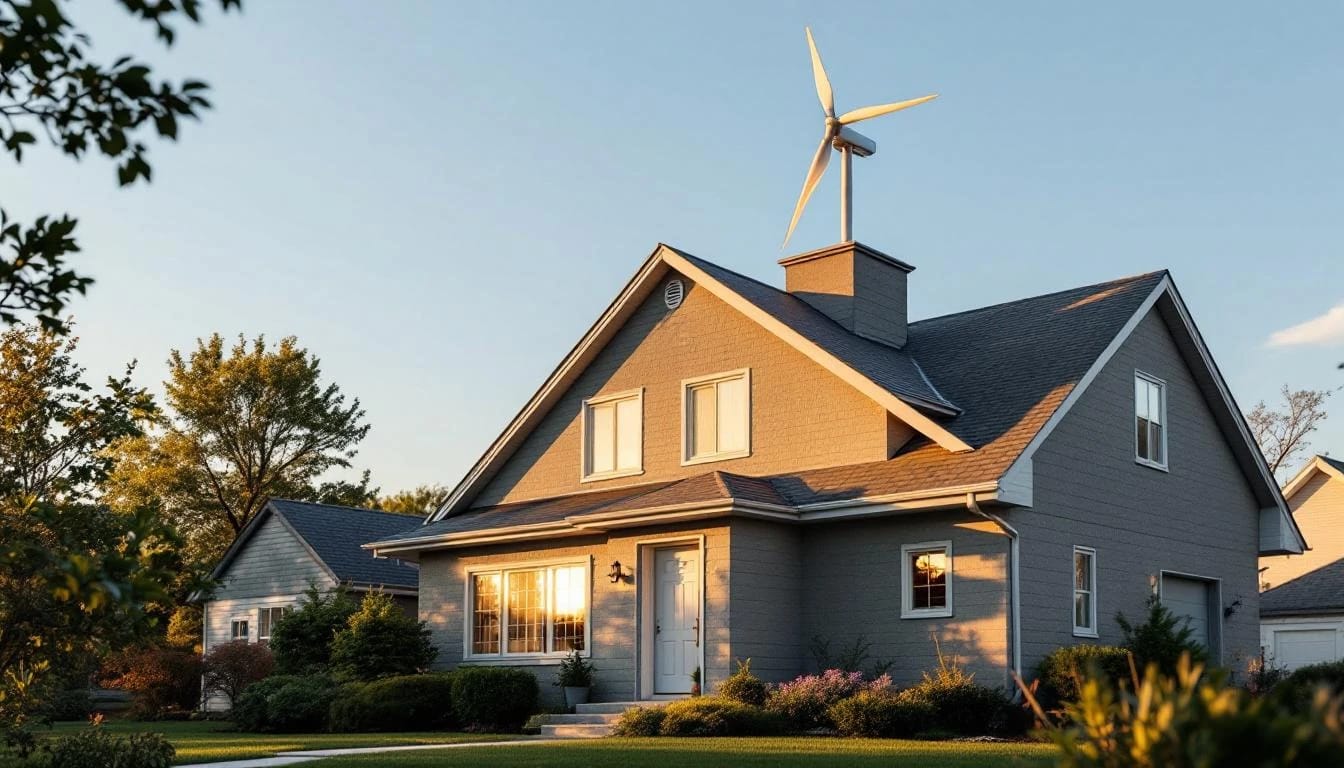
Right-sizing a residential wind turbine starts with your annual kilowatt-hour consumption, not the marketing claims on a sales page. The Department of Energy's Small Wind Guidebook recommends reducing energy waste first—insulation, efficient appliances, LED lighting—before calculating turbine capacity. A 2.5 kW turbine in a 12 mph average wind site typically generates 300-400 kWh per month, enough to offset 30-50% of a modest household load. Oversizing wastes capital; undersizing leaves you grid-dependent. The sweet spot sits at the intersection of your 12-month utility history, measured wind speed at hub height, and local zoning limits on tower height.
Start with a 12-Month Energy Audit
Pull every electric bill from the past year. Add the kilowatt-hours. The average U.S. home consumes 10,500 kWh annually, but regional variation is enormous—7,200 kWh in temperate climates with gas heat, 14,000+ kWh in all-electric homes with air conditioning. That total becomes your baseline.
Subtract phantom loads and wasteful patterns before you size hardware. Replace incandescent bulbs, upgrade to ENERGY STAR-rated refrigerators and heat pumps, add insulation to attics and crawl spaces. Every 1,000 kWh you eliminate trims $800-1,200 from the turbine investment. The Department of Energy's whole-building approach treats the house as an interconnected energy system—windows, HVAC ductwork, appliance age, even thermostat habits all influence final demand.
Document monthly peaks and troughs. August air-conditioning spikes and January heating loads reveal whether you need battery storage to shift wind production or whether net metering alone will balance seasonal swings.
Calculate Required Turbine Capacity
Wind turbines are rated in kilowatts at a specific wind speed, usually 11 or 12 meters per second (24-27 mph). That number rarely matches real output. A 5 kW turbine delivers 5 kW only when the wind blows at rated speed; at 9 mph it might produce 600 watts, and at 5 mph nearly zero.
Simplified sizing formula:
Annual kWh demand ÷ (turbine capacity factor × 8,760 hours) = minimum rated kW
Capacity factor is the percentage of time the turbine runs at nameplate capacity, adjusted for your site's wind speed distribution. For residential sites:
| Average wind speed (hub height) | Typical capacity factor |
|---|---|
| 10 mph | 8-12% |
| 12 mph | 15-20% |
| 14 mph | 22-28% |
| 16+ mph | 30-35% |
Example: 9,000 kWh annual use, 12 mph site (18% capacity factor).
9,000 ÷ (0.18 × 8,760) = 5.7 kW minimum rated capacity.
In practice, round up to the next commercial size—a Bergey Excel 10 or Primus AIR 30—to buffer for turbine downtime, ice storms, and grid interconnection losses.
Understand Power Curves and Cut-In Speed
Manufacturer power curves plot output against wind speed. Every turbine has a cut-in speed (the minimum wind to start spinning, typically 6-8 mph), a rated speed (where it hits nameplate capacity), and a cut-out speed (automatic shutdown in high winds, 45-55 mph for safety).
A Primus AIR 40 cuts in at 8 mph, reaches 10 kW at 28 mph, and cuts out at 45 mph. Below 8 mph, it produces nothing. Between 8 and 14 mph—the range where most U.S. residential sites spend 60% of the year—output ramps from 100 watts to 2,800 watts. The power curve reveals whether the turbine matches your site. Windy plains suit high-rated models; moderate-wind suburbs need turbines optimized for 9-14 mph performance.
Download the power curve PDF from the manufacturer. Cross-reference it with your site's wind speed histogram (a month-by-month breakdown of hours spent at each speed). Tools like the NREL Wind Prospector provide estimates at 30, 50, and 80 meters; scale these to your planned hub height using the wind shear formula.
Match Tower Height to Site Obstacles
Tower height determines effective wind speed. Ground friction, trees, and buildings create turbulence that robs energy. The rule: mount the turbine 30 feet above any obstacle within 300 feet horizontally.
A two-story house (25 feet) in open farmland requires a 55-foot tower minimum. Suburban lots with mature oaks need 70-90 feet to escape the canopy wake. Under-towering is the single most common sizing mistake—it cuts production by 40-60% and accelerates bearing wear from turbulent wind.
Taller towers cost more but harvest exponentially better wind. Wind speed increases logarithmically with height; raising a turbine from 40 to 60 feet in a 10 mph surface wind zone often lifts hub-height speed to 12 mph, tripling annual output. Budget $3,000-6,000 per installed meter for guyed lattice towers, $5,000-9,000 per meter for monopoles.
Check FAA Part 77 if your tower approaches 200 feet near airports. Most residential systems stay below 120 feet and face only local zoning, which may cap height at 35-65 feet in suburban districts. Verify before ordering hardware.
Account for Grid Interconnection and NEC Article 705
Grid-tied systems feed excess power to the utility and draw from the grid when the wind dies. Net metering credits surplus generation against nighttime or calm-day consumption. NEC Article 705 governs interconnection, requiring a dedicated disconnect, anti-islanding protection, and utility-grade inverter compliance (UL 1741 SA for smart inverter functions).
A licensed electrician must size conductors, install grounding electrode systems per NEC 250, and pull permits. Budget $1,500-3,500 for electrical integration on a straightforward grid-tie; $4,000-7,000 if service panel upgrades are needed.
Not all utilities welcome small wind. Some cap interconnection at 25 kW; others impose standby charges or unfavorable buyback rates. Contact the utility's interconnection department before finalizing turbine size. A 10 kW turbine that exports 6,000 kWh annually at $0.03/kWh wholesale (while you pay $0.14/kWh retail) delivers marginal value compared to a smaller 5 kW model that zero-balances your bill without surplus.
The Database of State Incentives for Renewables & Efficiency (DSIRE) lists state-by-state net metering rules, feed-in tariffs, and property tax exemptions. Some states credit wind at full retail; others net monthly, forfeiting excess. Understand your utility's policy before writing the check.
Off-Grid Systems Require Battery Banks and Oversizing
Off-grid households size turbines 50-100% larger than grid-tied equivalents because batteries absorb only 85-90% of generated power (charge efficiency loss), and wind lulls force multi-day reliance on stored energy. A 6 kW grid-tie load becomes an 8-10 kW off-grid turbine plus 20-40 kWh of lithium-ion or lead-acid storage.
Battery banks add $8,000-18,000 to upfront cost and require replacement every 7-15 years. Hybrid systems pairing a small turbine with rooftop solar panels smooth seasonal gaps—wind peaks in winter and spring, solar in summer—but complexity jumps. Off-grid makes economic sense only where utility extension exceeds $25,000 per mile.
Factor in Soft Costs and Incentives
Turbine hardware is 40-50% of total project cost. The remainder:
| Cost category | Typical range |
|---|---|
| Tower and foundation | $5,000-$15,000 |
| Electrical/inverter/disconnect | $2,500-$8,000 |
| Permits and engineering | $800-$2,500 |
| Installation labor | $3,000-$10,000 |
| Shipping and crane rental | $1,200-$4,000 |
A complete 10 kW system runs $45,000-$70,000 turnkey. The federal Residential Clean Energy Credit (IRC §25D) provides a 30% tax credit (through 2032, stepping down thereafter). File IRS Form 5695 with your return. A $55,000 project yields a $16,500 credit, reducing net cost to $38,500.
State and utility rebates vary. Check DSIRE for production-based incentives ($/kWh over 10-20 years) and upfront grants. Property tax exemptions prevent turbine value from raising assessments in states like Iowa, Montana, and Oregon.
Common Sizing Mistakes
Believing the sales brochure. A "10 kW" turbine does not produce 10 kW around the clock. Annualize the estimate using your site's capacity factor, not the manufacturer's best-case scenario.
Ignoring zoning before purchase. A 70-foot tower is useless if local code caps structures at 40 feet. Petition for a variance or choose a shorter tower with a smaller turbine, accepting lower production.
Skipping the anemometer. One year of logged wind data beats a dozen online estimates. Rent or buy a NRG 40C logger with 40-meter tower kit ($1,800-3,000). Mount it at planned hub height for 12 months. Avoid shortcuts.
Undersizing the inverter. Match inverter capacity to turbine peak output, not rated capacity. A turbine that briefly hits 12 kW in gusts needs a 12 kW inverter with surge headroom, not an 8 kW inverter that clips power and generates heat.
What size turbine does the average home need?
A 5-10 kW turbine covers 50-100% of a typical U.S. home's 10,500 kWh annual consumption in a 12+ mph average wind site. Exact sizing depends on whether you aim for partial offset with net metering or full independence with batteries. Start with your utility bills, not a one-size-fits-all recommendation.
Can I oversize a wind turbine?
Yes, but returns diminish. A 20 kW turbine on a 9,000 kWh annual load exports surplus power, earning wholesale rates (often $0.02-0.04/kWh) while your equipment depreciates. Oversize by 10-20% for headroom; beyond that, capital sits idle. Off-grid systems benefit from larger turbines to charge batteries quickly during wind events.
How do I measure wind speed at hub height?
Install a data logger with cup anemometer at the exact height and location you plan for the turbine. The National Renewable Energy Laboratory Wind Prospector and similar maps provide estimates, but site-specific topography—ridges, valleys, tree lines—creates microclimates that shift speeds 2-4 mph. One year of on-site data eliminates guesswork and prevents expensive mistakes.
What's the smallest useful residential wind turbine?
A 400-watt vertical-axis turbine may trickle-charge batteries for a cabin, but most grid-tied applications start at 1-1.5 kW (Primus AIR Breeze, Southwest Windpower Skystream). Below 1 kW, payback stretches past 20 years in moderate wind. If your site averages below 10 mph at hub height, rooftop solar typically delivers better return on investment.
Does a bigger rotor mean more power?
Rotor diameter governs swept area, which captures wind energy. Power scales with the square of diameter: doubling diameter quadruples output. A 10-foot rotor sweeps 78.5 square feet; a 20-foot rotor sweeps 314 square feet, harvesting four times the energy at the same wind speed. That's why small turbines need tall towers more than large turbines—they compensate with height what they lack in blade length.
Bottom Line
Right-sizing a home wind turbine demands honest assessment of your energy habits, measured wind speed at realistic tower height, and clarity on whether you want grid backup or off-grid autonomy. Undersizing leaves you dependent on the utility; oversizing wastes capital on power you can't use or sell profitably. Start with a 12-month energy audit, run the capacity-factor formula, then download manufacturer power curves and match them to your site's wind histogram. Consult a NABCEP-certified installer, verify local zoning and utility interconnection rules, and budget for the 30% federal tax credit when calculating payback. Done correctly, the turbine you install will quietly offset decades of electricity bills without sitting idle or burning out prematurely.
Share this article
windturbinehome.com/s/0cbc83
Editorial note: This article was researched and written by a member of the Wind Turbine Home editorial team. AI-assisted tools were used for spell-checking and light grammar review only — all research, analysis, and conclusions are our own. Our editorial policy prohibits sponsored content and paid placements. Read our editorial policy →
Related reading
residential wind power
Home Wind Turbine: A Comprehensive US Buyer's Guide 2024
Explore the realities of owning a home wind turbine in the US, covering costs, energy output, installation requirements, and available federal and state incentives for homeowners considering small-scale wind power.
residential wind power
Home Wind Turbine Systems: A Complete 2024 Buyer's Guide
Explore the realities of a home wind turbine system for residential power, covering installation, costs, grid-tie considerations, and US federal incentives.
residential wind power
First-Year Mistakes New Home Wind Turbine Owners Regret Most
New home wind turbine owners make costly first-year errors—from poor site assessment to skipping permits. Learn the eleven most common mistakes and how to avoid them.
residential wind power
Grid-Tied vs Battery-Backed Wind Turbine Systems for Homes
Grid-tied systems feed excess wind power directly to the utility for credits, while battery-backed configurations store energy for outages and off-grid use.
residential wind power
Best Wind Turbines for Australian Homes: STCs & 2026 Picks
Small wind turbines can earn STCs under the SRES, but few models sold in Australia meet AS 4509.1. Compare Bergey, Primus and proven vertical-axis picks.
residential wind power
Best Wind Turbines Under $5000 for Home Use (2026 Guide)
Compare the top small wind turbines under $5000 for residential use in 2026. Real performance data, installation costs, and ROI analysis for US homeowners.
residential wind power
Best Wind Turbines for Iowa Homes: Bergey vs Primus (2026)
Iowa averages 5.5-7.5 m/s wind at 30m, enough for a home turbine. Compare the Bergey Excel 10, Primus AIR 40 and VAWT options for grid-tied or off-grid use.
residential wind power
Best Wind Turbines for Texas Homes: 1-10 kW Picks (2026)
Compare 1-10 kW small wind turbines for Texas homes, including which models suit your local wind zone, what they cost, and which incentives you can claim.
residential wind power
Wind Turbine for Power Outage Backup: Realistic Resilience Design
Small wind turbines can provide backup power during outages, but the system requires battery storage, proper NEC-compliant installation, and realistic expectations about spinning up from zero wind.