Can a Home Wind Turbine Charge an Electric Car? System Sizing
A 10 kW residential wind turbine can charge an electric vehicle, producing 1,200-2,000 kWh monthly in Class 3+ winds—enough for 300-600 miles of EV driving when grid-tied with net metering.
Share this article
windturbinehome.com/s/acb5f7
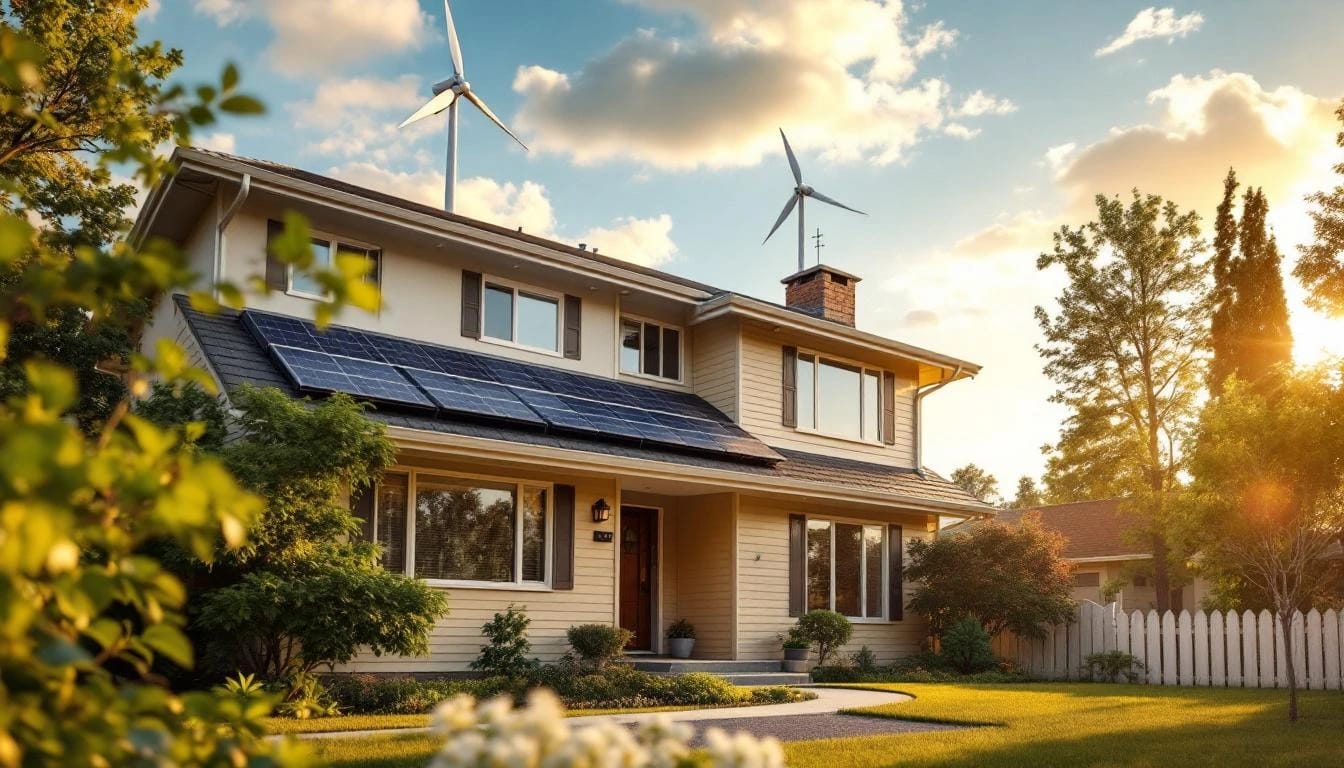
A home wind turbine absolutely can charge an electric car, provided the system is sized correctly for both the site's wind resource and the vehicle's consumption patterns. A typical EV needs 3,000-4,500 kWh annually for 10,000-15,000 miles of driving. In a Class 3 wind site (annual average 9-11 mph), a grid-tied 10 kW turbine produces 15,000-20,000 kWh per year—covering the EV plus a portion of household baseload. Off-grid applications require battery storage with 40-80 kWh capacity and careful load management. The critical variables are wind speed consistency, tower height, turbine rated capacity, and whether net metering allows surplus generation to offset low-wind periods.
Understanding electric vehicle charging loads
The first step in sizing a wind system for EV charging is quantifying the vehicle's actual electricity demand. Most EVs consume 250-400 Wh per mile (0.25-0.4 kWh/mi), depending on model efficiency, driving style, and terrain. A Tesla Model 3 Standard Range averages 0.26 kWh/mi; a Ford F-150 Lightning approaches 0.50 kWh/mi when towing or in cold weather.
For a driver covering 12,000 miles annually at 0.33 kWh/mi, the EV requires approximately 3,960 kWh per year—roughly 330 kWh monthly or 11 kWh daily. Level 2 home charging (240V, 30-50A circuits per NEC Article 625) typically delivers 7.2-11.5 kW, refilling a depleted 60 kWh battery in 5-8 hours. The wind turbine must either produce that energy directly during the charging window or feed excess generation to the grid under net metering, banking credits for nighttime or low-wind charging.
Daily consumption patterns matter. If the EV charges overnight when most small turbines see peak output (nocturnal boundary-layer winds often strengthen after sunset), a 5 kW turbine producing 15-20 kWh on a windy night can fully replenish the day's driving. Conversely, calm nights require either stored wind energy from daytime generation or grid imports offset by surplus production during other periods.
Sizing the turbine: capacity factor drives real output
Nameplate capacity (kW rating) tells only part of the story. A 10 kW turbine does not produce 10 kW continuously; actual annual output depends on the capacity factor—the ratio of energy produced to theoretical maximum. For residential wind systems, capacity factors range from 10% in marginal Class 2 sites to 35% in excellent Class 4+ locations with proper tower height.
Capacity factor examples by wind class:
| Wind Class | Annual Avg Speed | 10 kW Turbine Annual Output | Monthly Average | Capacity Factor |
|---|---|---|---|---|
| Class 2 | 8.0-8.8 mph | 8,800-13,000 kWh | 730-1,080 kWh | 10-15% |
| Class 3 | 8.8-10.1 mph | 15,000-20,000 kWh | 1,250-1,670 kWh | 17-23% |
| Class 4 | 10.1-11.5 mph | 21,000-27,000 kWh | 1,750-2,250 kWh | 24-31% |
A household using 900 kWh/month baseline plus an EV requiring 330 kWh/month needs 1,230 kWh monthly total. A 10 kW turbine in a Class 3 site (1,250-1,670 kWh/month) covers that demand with margin. In Class 2 wind, the same turbine falls short unless household efficiency measures reduce baseload.
The Bergey Excel 10 and XZERES Skystream 442SR are proven 10 kW grid-tied models. The Bergey unit, at a 10-meter rotor diameter on a 24-meter (80 ft) tower, consistently achieves 18,000-22,000 kWh annually in Class 3 Great Plains installations. Smaller turbines like the 2.5 kW Primus Air 40 suit lighter EV use (5,000-8,000 miles/year) or serve as a supplemental charging source rather than primary supply.
Grid-tied systems with net metering: the practical path
Most successful residential wind-to-EV installations use grid interconnection under net metering policies rather than attempting full off-grid autonomy. Net metering (covered by state-specific rules documented in the DSIRE database) allows the turbine to export surplus generation during high-wind periods, earning kWh credits that offset imports when wind is calm or demand spikes.
This arrangement eliminates the need for expensive battery storage while maximizing capacity factor utilization. A turbine producing 60 kWh on a windy day might send 45 kWh to the grid (household used 15 kWh that day). Three days later, during a calm spell, the home and EV import 45 kWh, drawing down banked credits to net-zero monthly consumption.
NEC Article 705 governs interconnection requirements. The turbine's inverter must include anti-islanding protection (automatic shutdown if grid voltage fails), and the combined capacity of all distributed generation sources cannot exceed 120% of the service panel's main breaker rating without utility approval. For a 200A main panel (48 kW at 240V), the maximum backfeed breaker for the wind inverter is typically 40-50A (9.6-12 kW), accommodating a 10 kW turbine with headroom.
Utility interconnection agreements vary by provider. Some impose standby charges or demand fees for grid-connected generation; others offer time-of-use rates that credit exported wind energy at higher daytime prices. The WINDExchange Small Wind Guidebook recommends requesting an interconnection application early in the planning process to identify utility-specific requirements and timeline expectations (often 60-120 days for approval).
Off-grid wind-to-EV charging: battery storage essentials
Off-grid wind systems powering an EV require substantial battery capacity to buffer the mismatch between generation (intermittent, wind-dependent) and load (predictable, nightly EV charging). A realistic off-grid configuration for year-round EV use includes:
- Turbine capacity: 5-10 kW (oversized for average load to compensate for calm periods)
- Battery bank: 40-80 kWh usable capacity (lithium iron phosphate preferred for depth-of-discharge tolerance)
- Charge controller: 8-12 kW MPPT wind controller compatible with battery chemistry
- Inverter: 8-10 kW pure sine wave with EV charger integration
The battery bank must store enough energy to cover 3-5 days of typical EV and household consumption (approximately 50-70 kWh total) during extended calm periods. Lithium iron phosphate (LiFePO₄) batteries from manufacturers like Simpliphi or Fortress Power tolerate 80% depth-of-discharge and 5,000+ cycles, whereas flooded lead-acid banks degrade rapidly when regularly discharged below 50%.
Off-grid systems face a hard sizing constraint: the turbine must generate enough surplus during windy periods to replenish batteries faster than loads deplete them. In a Class 3 site, a 10 kW turbine might produce 35-50 kWh on a good day. After covering 15 kWh household baseload and 11 kWh EV charging, 9-24 kWh remains for battery recharge. Three consecutive calm days could drain the battery bank by 78 kWh (26 kWh/day × 3), requiring three strong-wind days to recover.
Load management becomes critical. Prioritizing EV charging during peak wind generation (often late night/early morning) using programmable timers or smart EV charging systems like ChargePoint Home Flex maximizes direct wind-to-vehicle energy transfer, reducing battery cycling and extending system lifespan.
Real-world wind turbine performance for EV charging
Field data from monitored residential wind installations provides grounded expectations. A 2019 NREL case study of a 10 kW Bergey Excel in rural Kansas (Class 4 wind resource, 24-meter tower) documented 21,400 kWh annual production. The homeowner's Tesla Model 3 consumed 3,200 kWh annually (12,000 miles at 0.267 kWh/mi), representing 15% of turbine output. Grid-tied net metering allowed the household to achieve 97% renewable coverage, importing only during rare multi-day calm periods in summer.
Conversely, a poorly sited installation illustrates the downside of inadequate wind assessment. A 5 kW Endurance S-343 on a 60-foot tower in suburban Michigan (Class 2, significant tree obstruction within 300 feet) produced only 5,600 kWh annually—barely covering the EV's 3,600 kWh consumption and falling far short of household needs. The capacity factor of 13% reflected compromised wind flow from low tower height and upwind obstacles.
These examples underscore two cardinal rules: tower height matters more than turbine size, and professional wind resource assessment is non-negotiable. The Department of Energy's WINDExchange offers state-by-state wind maps and measurement loan programs to help prospective owners evaluate sites before committing to equipment purchases.
Cost analysis and federal incentives
System costs for a grid-tied 10 kW wind turbine installation, including tower, electrical integration, and interconnection, typically range from $45,000 to $70,000 before incentives. The federal Residential Clean Energy Credit (IRC §25D, claimed via IRS Form 5695) provides a 30% tax credit through 2032, stepping down to 26% in 2033 and 22% in 2034. For a $60,000 system, the credit reduces net cost to $42,000.
Payback periods depend on local electricity rates, wind resource quality, and net metering policy. At $0.14/kWh retail rates with full net metering, a 10 kW turbine producing 20,000 kWh annually saves $2,800/year. After the 30% federal credit, the $42,000 net investment achieves payback in 15 years—shorter if electricity rates escalate faster than inflation.
Off-grid systems cost significantly more due to battery storage, charge controllers, and oversized turbine capacity. A complete 10 kW off-grid wind-to-EV system with 60 kWh battery bank approaches $80,000-$110,000 before incentives. The economics work only in locations where grid extension exceeds $30,000 or where energy independence justifies the premium.
State and local incentives vary widely. DSIRE documents property tax exemptions, sales tax waivers, and state-specific rebates. Montana, for example, exempts wind systems from property tax increases under §15-6-224 MCA; Oklahoma offers a zero-percent sales tax on renewable energy equipment. Some rural electric cooperatives provide additional rebates—Worth County REC in Iowa has paid $1,000/kW for member-owned wind installations.
Zoning, permitting, and FAA considerations
Before purchasing equipment, verify local zoning allows wind turbines at the required tower height. Most jurisdictions regulate turbines through height restrictions (often 35-65 feet without variance), setback requirements (typically 1.1-1.5× tower height from property lines), and noise ordinances (usually 50-55 dBA at nearest occupied structure). The American Wind Energy Association's siting handbook outlines common regulatory frameworks.
FAA Part 77 requires notification for any structure exceeding 200 feet AGL or penetrating imaginary surfaces around airports. Most residential turbines on 80-100 foot towers fall well below this threshold, but properties within 20,000 feet of public airports or 10,000 feet of private airstrips may face height restrictions. File FAA Form 7460-1 for determinations—processing takes 30-45 days.
Building permits are required in nearly all jurisdictions. Engineered foundation drawings, electrical one-line diagrams per NEC standards, and structural calculations stamped by a licensed professional engineer are standard submittal requirements. Budget $2,000-$4,000 for permitting and engineering documentation. Some counties require decommissioning bonds ($5,000-$15,000) to ensure removal if the turbine is abandoned.
Maintenance requirements and system longevity
Small wind turbines require periodic maintenance to sustain nameplate performance over 20-25 year design lifespans. Annual inspections should verify:
- Guy wire tension (for guyed towers—re-tension at 10-20% loss)
- Blade leading-edge condition (tape erosion damage immediately)
- Generator bearing noise (unusual sounds indicate imminent failure)
- Inverter error logs (check for grid voltage or frequency faults)
- Tower bolt torque (re-torque annually, especially guy anchor bolts)
Major maintenance occurs at 5-7 year intervals: yaw bearing replacement, brake pad renewal, and generator brush inspection (for brush-type generators). Budget $800-$1,500 for routine annual service if self-performed, or $2,000-$3,500 for professional tower climb and inspection. Blade replacement due to lightning strike or storm damage costs $3,000-$6,000 per set for 10 kW turbines.
Manufacturers like Bergey offer 5-year warranties on electronics and 3 years on mechanical components. Extended warranties add 15-20% to upfront cost but provide valuable protection in the first decade when infant mortality failures cluster. Turbine availability (percentage of time operational) for well-maintained systems exceeds 95%; poor maintenance or chronic bearing neglect can drop availability below 70%, undermining the economic case.
EV chargers require minimal maintenance—check physical connections and GFCI operation quarterly. Grid-tied inverters are solid-state with no moving parts; failures typically occur in the first year (warranty-covered) or after 12-15 years when capacitors degrade. Budget $2,000-$3,000 for inverter replacement at year 15 in lifecycle cost calculations.
Comparing wind to solar for EV charging
Many homeowners evaluate both wind and solar for EV charging. Each technology has distinct siting advantages:
| Factor | Small Wind | Rooftop Solar |
|---|---|---|
| Space requirement | 1+ acre, tall tower | 300-400 sq ft roof/8 kW |
| Generation pattern | Night/winter-biased | Day/summer-biased |
| Capacity factor (typical) | 15-25% | 14-19% (fixed tilt) |
| kWh/kW installed | 1,500-2,500 | 1,200-1,700 |
| Maintenance | Moderate (annual climb) | Low (panel cleaning) |
| Installed cost/kW | $4,500-$7,000 | $2,500-$3,500 |
Wind complements solar in mixed renewable systems. Winter EV charging in northern climates stresses solar arrays when sun angles are low and snow covers panels, but wind resources often peak during cold-season storm systems. A hybrid 5 kW wind + 8 kW solar system provides more consistent year-round generation than either technology alone, though interconnection and control complexity increase.
For properties with excellent wind and limited south-facing roof area, wind is the clear choice. Conversely, suburban lots with Class 2 wind and 40 feet of height restriction favor solar despite lower capacity factors. The NREL System Advisor Model allows side-by-side economic comparison using site-specific inputs.
Can I charge my EV directly from a wind turbine without a battery?
Yes, in grid-tied systems using net metering. The turbine feeds generation to the electrical panel, offsetting the EV charger's draw. When wind production exceeds household load, surplus electricity exports to the grid, banking credits for later use. Direct DC coupling (turbine to EV) without inverters or batteries is technically feasible but rare—incompatible voltages, lack of charge management, and safety concerns make it impractical for consumer applications. Stick with grid-tied or battery-buffered systems using standard Level 2 charging equipment.
How tall does the tower need to be for reliable EV charging?
Tower height directly impacts capacity factor. Wind speed increases logarithmically with height above ground obstructions. A 10 kW turbine on a 60-foot tower in moderate wind might produce 12,000 kWh annually; the same turbine at 100 feet produces 18,000 kWh. For EV charging sufficiency, target 80-100 feet (24-30 meters) in open terrain, or 100-120 feet (30-37 meters) in areas with trees or buildings upwind. Tilt-up towers simplify maintenance but require guy wire clearance equal to tower height plus 20% in all directions—approximately 1.5 acres minimum.
What happens during extended calm periods?
Grid-tied systems import electricity from the utility, offsetting those purchases with banked net metering credits from prior high-wind generation. Monthly or annual reconciliation keeps costs near-zero if the turbine is sized correctly. Off-grid systems rely on battery reserves—3-5 days of storage handles typical calm spells. Extended windless periods (7-10 days) may require generator backup or curtailing the EV charging load. Historical wind data analysis during system design identifies the longest calm periods in the past 10-20 years, guiding battery capacity decisions.
Do I need special electrical work to connect a wind turbine to an EV charger?
Not directly. The turbine connects to the main electrical panel via a dedicated backfeed breaker, sized per NEC 705.12(B) such that total source breaker ratings don't exceed 120% of busbar rating. The EV charger connects separately to a 240V circuit per NEC Article 625, typically a 40-50A breaker for 7.2-9.6 kW charging. Both circuits share the 200A main service; the turbine offsets the charger's load when generating. All interconnection work must be performed by a licensed electrician familiar with distributed generation requirements. Expect $3,000-$6,000 for trenching, conduit, panel upgrades, and meter base replacement if net metering requires bidirectional metering.
Are vertical-axis wind turbines better for EV charging?
Vertical-axis wind turbines (VAWTs) like the Aeolos-V 5kW offer lower noise and omnidirectional wind capture without yaw mechanisms. However, swept-area efficiency lags horizontal-axis turbines (HAWTs) by 15-30%, reducing annual energy production for the same rotor size. A 5 kW VAWT might produce 8,000-11,000 kWh annually where a 5 kW HAWT achieves 10,000-14,000 kWh. For EV charging applications requiring maximum kWh output, HAWTs remain the default choice. Consider VAWTs only if aesthetic concerns, noise restrictions (VAWTs run 3-5 dBA quieter), or extreme turbulence conditions favor their design characteristics.
Bottom line
A properly sized home wind turbine can fully power electric vehicle charging while covering substantial household loads, provided the site has Class 3+ wind resources and permits tower heights of 80-100 feet. Grid-tied systems with net metering offer the most cost-effective path at $42,000-$50,000 net cost after federal incentives; off-grid configurations require significant battery investment justified only where grid extension is prohibitively expensive. Start with professional wind resource assessment using anemometer data or regional wind maps, verify zoning allows the necessary tower height, and request utility interconnection applications before purchasing equipment. Consult a licensed electrician familiar with NEC Articles 625 and 705 for all electrical integration work.
Share this article
windturbinehome.com/s/acb5f7
Editorial note: This article was researched and written by a member of the Wind Turbine Home editorial team. AI-assisted tools were used for spell-checking and light grammar review only — all research, analysis, and conclusions are our own. Our editorial policy prohibits sponsored content and paid placements. Read our editorial policy →
Related reading
residential wind power
Home Wind Turbine: A Comprehensive US Buyer's Guide 2024
Explore the realities of owning a home wind turbine in the US, covering costs, energy output, installation requirements, and available federal and state incentives for homeowners considering small-scale wind power.
residential wind power
Home Wind Turbine Systems: A Complete 2024 Buyer's Guide
Explore the realities of a home wind turbine system for residential power, covering installation, costs, grid-tie considerations, and US federal incentives.
residential wind power
First-Year Mistakes New Home Wind Turbine Owners Regret Most
New home wind turbine owners make costly first-year errors—from poor site assessment to skipping permits. Learn the eleven most common mistakes and how to avoid them.

residential wind power
Grid-Tied vs Battery-Backed Wind Turbine Systems for Homes
Grid-tied systems feed excess wind power directly to the utility for credits, while battery-backed configurations store energy for outages and off-grid use.
residential wind power
How to Right-Size a Wind Turbine for Your House in 2026
Match your home wind turbine to your actual energy use and site conditions. Learn the sizing formula, power curves, and common mistakes to avoid before you buy.
residential wind power
Best Wind Turbines for Australian Homes: STCs & 2026 Picks
Small wind turbines can earn STCs under the SRES, but few models sold in Australia meet AS 4509.1. Compare Bergey, Primus and proven vertical-axis picks.
residential wind power
Best Wind Turbines Under $5000 for Home Use (2026 Guide)
Compare the top small wind turbines under $5000 for residential use in 2026. Real performance data, installation costs, and ROI analysis for US homeowners.
residential wind power
Best Wind Turbines for Iowa Homes: Bergey vs Primus (2026)
Iowa averages 5.5-7.5 m/s wind at 30m, enough for a home turbine. Compare the Bergey Excel 10, Primus AIR 40 and VAWT options for grid-tied or off-grid use.
residential wind power
Best Wind Turbines for Texas Homes: 1-10 kW Picks (2026)
Compare 1-10 kW small wind turbines for Texas homes, including which models suit your local wind zone, what they cost, and which incentives you can claim.