Best Wind Turbines for Australian Homes: STCs & 2026 Picks
Small wind turbines can earn STCs under the SRES, but few models sold in Australia meet AS 4509.1. Compare Bergey, Primus and proven vertical-axis picks.
Share this article
windturbinehome.com/s/85685c
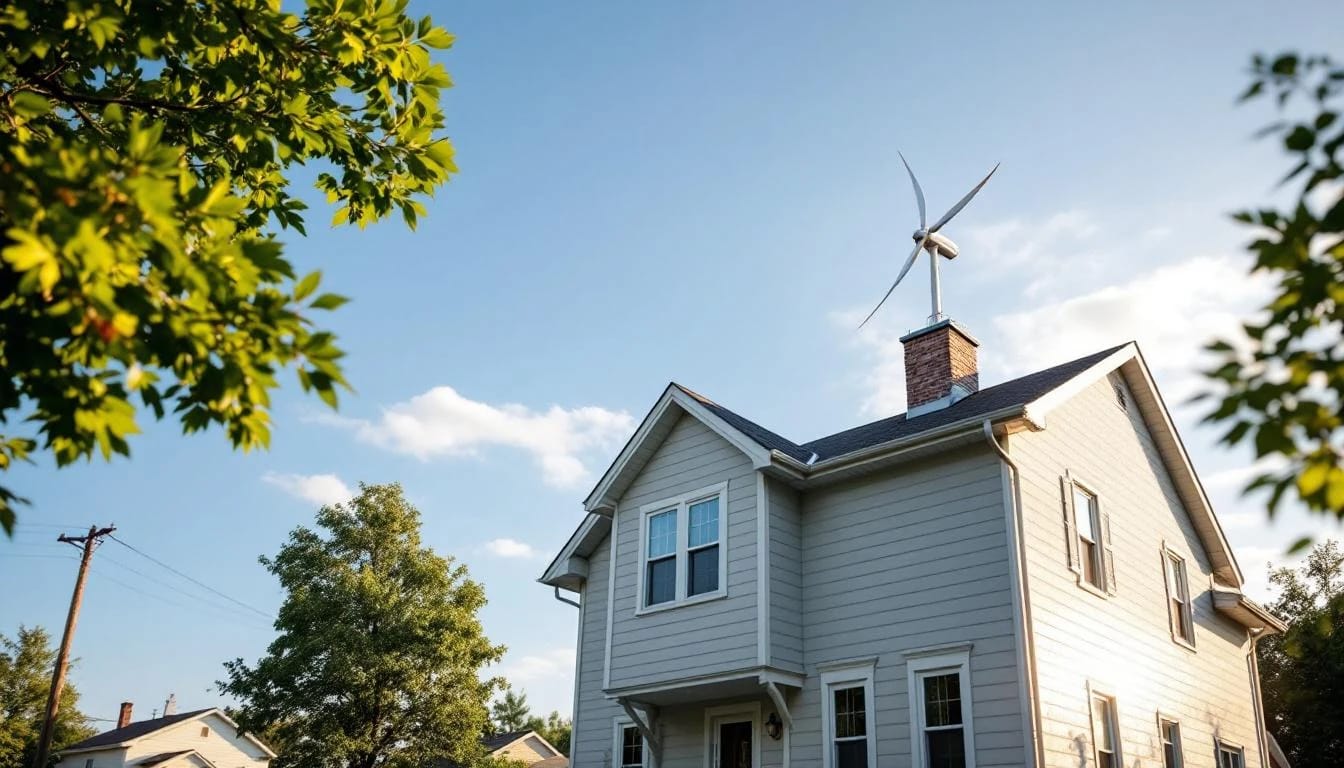
Small wind turbines installed on Australian properties may qualify for Small-scale Technology Certificates (STCs) through the Clean Energy Regulator's Small-scale Renewable Energy Scheme (SRES), but the turbine must meet AS 4509.1 certification and be installed by a licensed electrician compliant with AS/NZS 3000. Most homeowners find that AS 4509.1-certified turbines are scarce, STCs typically cover $A500–$A1,200 of the purchase cost, and ongoing grid connection approvals through the local distribution network service provider (DNSP) add weeks to project timelines. Nevertheless, favourable wind sites in regional New South Wales, South Australia, and elevated Queensland properties can deliver meaningful electricity bill reductions when paired with solar and battery storage.
Understanding the Small-scale Renewable Energy Scheme for wind turbines
The SRES issues small-scale technology certificates for eligible renewable energy systems, including small wind turbines with a swept rotor area not exceeding 200 square metres. Each STC represents one megawatt-hour of deemed electricity generation over the system's deeming period—typically the number of years until 2030. Householders create STCs at the time of installation, then sell them to electricity retailers or aggregators to offset the upfront cost. The Clean Energy Regulator administers the REC Registry, where STCs are registered and traded; certificate prices fluctuate with supply and demand, typically ranging from $A35 to $A40 per STC.
To claim STCs for a wind turbine, the installation must satisfy three conditions: the turbine must appear on the Clean Energy Regulator's list of eligible small generation units, it must be installed according to manufacturer instructions and AS/NZS 3000, and installation must be completed by a licensed electrical worker. Unlike rooftop solar panels—which dominate SRES uptake—small wind turbines face a fourth practical hurdle: AS 4509.1 certification is expensive for manufacturers, so many popular international models remain ineligible.
Australian Standard AS 4509.1 and why it matters
AS 4509.1:2009 (Stand-alone power systems—Safety requirements) sets electrical safety, structural loading, and acoustic emission limits for small wind turbines sold or installed in Australia. The standard references IEC 61400-2 for design loads and testing but adds site-specific requirements for cyclone zones, bushfire-prone areas, and corrosion exposure. Turbines certified to AS 4509.1 carry a compliance plate showing model number, rated power, cut-in and rated wind speeds, and maximum design wind speed; this plate is mandatory for DNSP grid-connection approval and for STC eligibility.
Many horizontal-axis turbines sold online lack AS 4509.1 certification, which excludes them from STCs and from legal grid connection in most Australian states. Vertical-axis turbines rarely pursue certification owing to testing costs that exceed projected Australian sales volume. The result: homeowners choosing an uncertified turbine forfeit STCs, face insurance and warranty complications, and may be denied grid export by the DNSP. Always verify certification before purchase—manufacturer claims of "IEC 61400-2 tested" do not substitute for AS 4509.1 compliance.
![INLINE: Close-up of an AS 4509.1 compliance plate on a small wind turbine showing model number, rated capacity, and certification date]
Electrical installation requirements under AS/NZS 3000
AS/NZS 3000:2018 (Wiring Rules) governs all fixed electrical installations in Australia and New Zealand. Section 5.5 covers renewable energy installations, requiring adequate overcurrent protection, appropriate conductor sizing for voltage drop, and earthing arrangements that prevent lightning-induced surges reaching household circuits. Small wind turbines must connect through a dedicated circuit breaker in the main switchboard, and the inverter or charge controller must meet AS/NZS 4777.2 grid-connection standards if feeding power back to the grid.
Licensed electrical contractors are solely responsible for AS/NZS 3000 compliance; do-it-yourself turbine installations by homeowners without an electrical licence are illegal and void all STCs, warranties, and home insurance coverage. Licensed installers will size cabling to accommodate the turbine's maximum output current plus a 25 per cent safety margin, install a Manual Disconnect Device (MDD) near the inverter, and co-ordinate earthing with the existing solar array if present. Installation labour typically costs $A800–$A1,800 depending on tower height and distance to the switchboard.
DNSP grid-connection approval and export limits
Before connecting a wind turbine to the household switchboard, the installer must lodge an embedded generation application with the local distribution network service provider—Ausgrid, Endeavour, Essential Energy, Energex, Ergon, SA Power Networks, or others. The DNSP assesses whether the local transformer can handle additional export capacity, reviews single-line diagrams, and issues a connection agreement that specifies export limits, often capping total renewable export (solar plus wind) at 5 kW for single-phase connections or 15 kW for three-phase.
Processing times vary from two weeks in metropolitan areas to eight weeks in remote grids. Some DNSPs impose "zero export" conditions on wind turbines if the transformer is already saturated with solar feed-in; in such cases, the turbine can charge batteries and offset household load but cannot export surplus power. Always confirm DNSP approval before purchasing a turbine—retrofitting export limitation devices after installation adds $A600–$A1,000 to project costs. Export tariffs for wind-generated electricity mirror solar feed-in tariffs, currently $A0.05–$A0.10 per kilowatt-hour depending on retailer and state.
Top horizontal-axis wind turbines available in Australia
Bergey Excel 10 (10 kW)
The Bergey Excel 10 is a robust three-blade horizontal-axis turbine manufactured in Oklahoma and distributed in Australia by specialist renewable-energy dealers. Rated at 10 kW at 13 metres per second wind speed, it features a patented AutoFurling system that passively feathers the rotor in winds exceeding 16 m/s, protecting gearbox and bearings from overspeed damage. The rotor diameter is 7 metres, necessitating a guyed tilt-up tower of 18–30 metres for optimal performance; foundations require engineered drawings stamped by a structural engineer and local council approval.
Bergey turbines carry a 25-year warranty on structural components and a five-year warranty on the alternator. The Excel 10 holds IEC 61400-2 certification; Australian AS 4509.1 certification is available on request through the local distributor, qualifying the unit for STCs. Installed cost, including tower, inverter, electrical, and council fees, ranges from $A55,000 to $A75,000 depending on site access and soil conditions. Annual generation at a site with 6 m/s average wind speed is approximately 15,000–18,000 kWh, yielding a payback period of 12–15 years at current electricity prices.
Primus Air 40 (2.5 kW)
Primus Wind Power, now part of the Southwest Windpower product line, manufactures the Air 40 turbine in Colorado. Rated at 2.5 kW in 16 m/s wind, the Air 40 employs a three-blade carbon-fibre rotor 1.8 metres in diameter, making it suitable for pole or building mounts in suburban settings. The turbine is designed for off-grid battery charging at 48 volts DC, though a grid-tie inverter can be added for grid connection. Cut-in wind speed is 3.5 m/s; noise emission at 10 metres is 40 decibels, comparable to a refrigerator.
Australian distributors offer the Air 40 with AS 4509.1 certification on a case-by-case basis; confirm certification before ordering to preserve STC eligibility. Installed cost for a pole-mounted system with 9-metre monopole, controller, and basic electrical is $A8,500–$A12,000. Annual output at a 5 m/s average site is 2,000–3,000 kWh. The Air 40 is popular for remote telecom repeaters and farm monitoring stations; homeowners with low wind resources often find better return on investment from additional solar panels.
Aeolos-H 5 kW (horizontal-axis)
Aeolos Wind Energy Ltd manufactures the Aeolos-H 5 kW in China and exports to Australia through Brisbane-based dealers. The turbine features a 5.6-metre rotor diameter, electromagnetic braking, and a direct-drive permanent-magnet generator eliminating the gearbox. Rated power is 5 kW at 11 m/s; cut-in speed is 2.5 m/s. The turbine ships with a 12-metre free-standing or guyed tower; Australian retailers typically recommend guyed towers to meet AS 1170.2 wind-loading standards for cyclone regions.
Aeolos turbines do not currently hold AS 4509.1 certification, which excludes them from STC eligibility and complicates DNSP approvals. Some installers have secured one-off engineering assessments from third-party certifiers, but this adds $A3,000–$A5,000 to project cost and is not guaranteed. Retail price for the turbine and tower is $A18,000–$A22,000; add $A4,000–$A6,000 for installation. Without STCs, the Aeolos-H 5 kW is best suited to off-grid properties where grid-connection hurdles do not apply.
Vertical-axis wind turbines: practical considerations for Australian homes
Vertical-axis wind turbines (VAWTs)—such as Savonius and Darrieus designs—accept wind from any direction without yaw mechanisms, making them attractive for turbulent suburban environments where prevailing winds shift frequently. Common models include the Pikasola 600 W and various Chinese-made helical VAWTs rated between 300 W and 2 kW. These turbines mount on shorter poles or roof brackets, reducing visual impact and council objections.
However, VAWTs suffer from lower efficiency than horizontal-axis turbines at the same wind speed, and none currently hold AS 4509.1 certification in Australia. Absence of certification means no STCs, no DNSP approval for grid export, and potential insurance exclusions if roof-mounted. Noise from VAWT blade flutter often exceeds manufacturer specifications, triggering neighbour complaints in suburban precincts. Vibration transmission through roof mounts can damage flashing and loosen fixings over time, and most building insurance policies exclude damage caused by unauthorised structural modifications.
For these reasons, vertical-axis turbines are recommended only for off-grid sheds, caravans, or hobby installations where performance expectations are modest and grid connection is not required. Homeowners seeking STC-eligible grid-tied wind generation should prioritise certified horizontal-axis turbines despite their higher cost.
Calculating STC value for a small wind turbine
The Clean Energy Regulator determines the number of STCs a turbine can create using the formula:
STCs = (Rated capacity in kW × annual generation factor × deeming period) ÷ 1 MWh
The deeming period is the number of complete years from installation until 31 December 2030. For a turbine installed in 2025, the deeming period is five years. The annual generation factor for small wind turbines is specified in the regulator's SGU list and typically ranges from 1,500 to 2,500 MWh per kW per year, depending on turbine model and installation zone.
Example: A Bergey Excel 10 (10 kW) installed in Zone 3 (moderate wind) in July 2025 with a generation factor of 1,800 hours attracts:
10 kW × 1.8 MWh/kW/year × 5 years = 90 STCs
At $A38 per STC, the homeowner receives $A3,420, reducing the net capital cost. Compare this to a 10 kW rooftop solar array, which might generate 150–180 STCs depending on postcode, worth $A5,700–$A6,840. Wind's lower STC yield reflects lower capacity factor and higher uncertainty in generation forecasts.
STCs are created in the REC Registry after the electrical inspector signs off on the installation and the installer uploads compliance documentation, including AS 4509.1 certification, electrical certificate of compliance (CCEW in Queensland, EWIS in Victoria, etc.), and photos of the installed turbine and compliance plate. Processing takes one to three weeks; the homeowner or installer then sells the STCs through a broker or aggregator, receiving payment within five business days.
Comparing wind turbines and solar panels: which suits Australian homes?
| Criterion | Small Wind Turbine | Rooftop Solar Panels |
|---|---|---|
| Upfront cost | $A8,000–$A75,000 depending on capacity | $A3,500–$A12,000 for 6.6–10 kW system |
| STCs available | Yes, if AS 4509.1 certified | Yes, for all CEC-approved modules |
| Average STC value | $A500–$A3,500 depending on size and zone | $A3,000–$A7,000 depending on size and postcode |
| Installation complexity | High—tower, foundations, engineering, council approval | Moderate—roof penetrations, electrical, DNSP approval |
| Maintenance | Annual inspection, bearing greasing, brake checks | Panel cleaning, occasional inverter replacement |
| Lifespan | 20–25 years for quality models | 25–30 years for panels, 10–15 for inverters |
| Noise | 35–55 dB depending on model and wind speed | Silent |
| Planning approval | Often required—height, setback, visual impact | Usually exempt if under 1 metre above roof peak |
| Generation predictability | Highly variable—wind resource fluctuates daily/seasonally | Predictable—correlates with sunshine hours |
| Optimal location | Rural, elevated, coastal sites with 5+ m/s average wind | Any home with north-facing roof and minimal shading |
Most Australian homeowners achieve faster payback with solar panels, but properties with excellent wind resources and limited roof space—or shading from neighbouring trees—benefit from adding a small wind turbine to a solar-plus-battery system. Hybrid systems smooth generation variability: solar generates during the day, wind contributes overnight and during cloudy, windy weather, and the battery stores surplus from both sources. The three-way combination maximises self-consumption and minimises grid reliance, though capital costs exceed $A30,000 for a properly engineered installation.
Council approval and planning regulations for residential wind turbines
Local councils regulate wind turbine installations through development consent processes, assessing visual impact, noise emissions, shadow flicker, and structural safety. Planning requirements vary by state and council; general patterns include:
New South Wales: Turbines exceeding 10 metres height require development approval. Council planners evaluate setback from boundaries (typically 1.5 times tower height), noise impact on neighbours, and aviation safety if within 15 kilometres of an airport. Complying development pathways exist for turbines under 5 metres on rural-zoned land.
Victoria: Planning permits are required for turbines over 15 metres or within 300 metres of a dwelling not on the same title. Councils often request acoustic reports demonstrating compliance with Environment Protection Authority noise limits (40 dB(A) during the day, 30 dB(A) at night at the nearest habitable room).
Queensland: Accepted development provisions apply to turbines under 10 metres on properties exceeding 2,000 square metres, provided setbacks of three times tower height from all boundaries. Higher turbines trigger code-assessable or impact-assessable pathways, requiring neighbour notification and potential appeals.
South Australia: Turbines classified as "renewable energy facilities" under the Planning, Development and Infrastructure Act; installations on rural and rural-living zones face simpler approval than urban sites. Metropolitan councils frequently impose aesthetic conditions, requiring non-reflective finishes and specific colour schemes.
Western Australia: Local government approval is mandatory; guidance varies widely between the City of Perth (restrictive) and regional shires (supportive). Height limits often cap turbines at 12 metres in residential zones.
Engage a planning consultant early if the proposed turbine height exceeds 10 metres or sits within 50 metres of a boundary. Approval timelines stretch from six weeks for straightforward rural sites to six months for contested urban applications. Neighbours' objections citing visual impact or noise can trigger mediation or tribunal hearings; mounting evidence—such as acoustic modelling and photomontages—strengthens the application.
Real-world performance expectations in Australian wind regimes
Australia's wind resources vary dramatically by topography and latitude. Coastal headlands, elevated ridges, and treeless plains deliver average wind speeds of 6–8 metres per second at 10-metre height, suitable for small wind generation. Suburban backyards, sheltered valleys, and heavily treed areas often record averages below 4 m/s, yielding negligible turbine output and rendering the investment uneconomic.
Before purchasing a turbine, conduct a wind assessment using one of three methods:
- Bureau of Meteorology data: Review mean wind speeds for the nearest BoM station. Add 10–20 per cent for open rural sites; subtract 20–30 per cent for suburban settings with buildings and trees.
- On-site anemometer: Install a data-logging anemometer on a mast at proposed hub height for at least three months. Analyse diurnal and seasonal patterns. Services such as Wind Prospect Australia offer short-term monitoring from $A1,500.
- Desktop wind mapping: The Australian Renewable Energy Mapping Infrastructure (AREMI) provides modelled wind speeds at 10-metre, 50-metre, and 100-metre heights. Data resolution is 250 metres, sufficient for initial feasibility but not for final investment decisions.
A site with 5 m/s average wind speed at hub height will produce approximately 1,500–2,000 kWh annually per kilowatt of rated turbine capacity. A 5 kW turbine thus generates 7,500–10,000 kWh per year, covering 50–70 per cent of a typical household's 14,000 kWh annual consumption. Sites with 6 m/s average boost output by 50–80 per cent owing to the cubic relationship between wind speed and power.
Seasonal patterns matter: southern Australian sites experience stronger winter westerlies, complementing reduced solar output; northern Queensland sees light winter winds, making wind turbines less attractive than solar. Always model combined solar and wind generation across all twelve months before committing to a hybrid system.
Maintenance, warranties, and long-term reliability
Small wind turbines require more maintenance than solar panels. Annual tasks include:
- Inspecting guy wires for tension and corrosion (guyed towers)
- Greasing yaw bearings and blade-pitch bearings
- Checking brake-pad wear and adjusting brake calipers
- Tightening all bolts to manufacturer torque specifications
- Inspecting blades for cracks, erosion, and lightning damage
- Testing the manual shutdown switch and furling mechanism
Most manufacturers recommend professional servicing every two years; budget $A600–$A1,200 per service visit depending on tower height and access. Turbines in coastal environments demand more frequent inspections owing to salt corrosion. Bergey offers a 25-year warranty on airframe and rotor, but bearings and controllers are warranted for five years; Primus provides a five-year limited warranty; Chinese brands typically warrant two years.
Common failure modes include:
- Controller overheating in sustained high winds, requiring replacement ($A800–$A1,500)
- Blade cracking from fatigue or bird strike, necessitating rotor replacement ($A2,500–$A5,000 for a Bergey Excel 10)
- Yaw-bearing seize from inadequate lubrication, causing off-axis loading and increased noise
- Guy-wire anchor failure in soft soils during storms, leading to tower collapse
Homeowners insurance usually covers wind damage and lightning strikes, but excludes damage from deferred maintenance or unauthorised modifications. Confirm that your policy includes wind turbines as declared "fixtures"; some insurers apply sub-limits of $A10,000 for renewable-energy equipment.
Financial incentives beyond STCs: feed-in tariffs and depreciation
STCs provide a one-off capital reduction, but ongoing financial returns depend on electricity-bill savings and feed-in tariff earnings. Most Australian retailers offer the same feed-in tariff for wind-generated exports as for solar exports—currently $A0.05–$A0.10 per kilowatt-hour. Premium "time-of-use" tariffs pay higher rates for evening exports (when wind generation often peaks), reaching $A0.15–$A0.20 per kWh between 4 pm and 9 pm. Compare retailer export tariffs before signing a grid-connection agreement; switching retailers after installation is straightforward.
Businesses and primary producers can claim accelerated depreciation on small wind turbines under the Australian Taxation Office's Simplified Depreciation Rules. Assets costing up to $A150,000 (as of 2025) can be immediately deducted in the year of installation if the business has an aggregated turnover below $A10 million. This effectively reduces the net cost by the business's marginal tax rate—30 per cent for most companies. Consult an accountant to confirm eligibility and maximise deductions.
Neither the Australian Government nor state governments currently offer dedicated grants or rebates for small residential wind turbines. Previous programs—such as the Queensland Renewable Energy Feed-in Tariff (closed 2012)—provided 44 cents per kWh for wind exports, but these have been phased out. Focus financial planning on STCs, self-consumption savings, and feed-in earnings rather than anticipating additional incentives.
Batteries and hybrid systems: pairing wind with solar and storage
Hybrid systems combining solar panels, a wind turbine, and battery storage deliver the highest energy independence. Wind generation overnight and during overcast days charges the battery when solar cannot, and the battery buffers both sources' variability to provide stable household supply. Typical hybrid configurations for an Australian home include:
- 6.6 kW solar array (north-facing) generating 9,000–11,000 kWh annually
- 3–5 kW wind turbine (appropriately sited) generating 4,000–7,000 kWh annually
- 10–15 kWh lithium battery storing surplus from both sources
Total installed cost: $A35,000–$A60,000 depending on turbine selection, tower height, and battery brand. Such a system can achieve 80–90 per cent self-sufficiency, reducing grid imports to 1,500–3,000 kWh per year. At $A0.30 per kWh grid tariff, annual bill savings approach $A3,500–$A4,000, yielding a payback period of 10–15 years.
Inverter selection is critical: hybrid inverters from manufacturers such as SolarEdge, Fronius, and SMA support multiple DC inputs (solar, wind, battery) and manage charging priorities. Ensure the inverter is certified to AS/NZS 4777.2 for grid connection and supports wind-turbine MPPT (maximum power point tracking) algorithms distinct from solar MPPT. Some inverters misinterpret turbine voltage curves, causing frequent disconnections; specify a wind-compatible model during design.
Off-grid hybrid systems eliminate DNSP approval delays but require oversized generation and storage to cover multi-day calm, cloudy spells. A conservative design for an off-grid home in regional New South Wales might specify 10 kW solar, 8 kW wind, and 30 kWh battery storage, costing $A70,000–$A90,000. Factor in backup generator fuel costs and maintenance when calculating total cost of ownership.
What size wind turbine do I need for an average Australian home?
An average Australian household consumes 14,000–18,000 kWh annually. A 5 kW wind turbine in a 5 m/s average wind site generates approximately 7,500–10,000 kWh per year, covering 50–70 per cent of household demand. Homes with high consumption or poor wind resources should consider a 10 kW turbine or prioritise solar-plus-battery systems. Always model your specific load profile and wind resource before selecting capacity; oversizing a turbine on a low-wind site wastes capital and increases maintenance costs.
Can I install a wind turbine myself to save money?
No. AS/NZS 3000 requires that all grid-connected electrical work be performed by a licensed electrician. Self-installation by an unlicensed person voids STC eligibility, breaches state electrical-safety regulations, and invalidates home insurance. Turbine tower erection also demands rigging skills and engineering supervision, particularly for guyed towers under AS 1170.2 wind-loading standards. Budget $A800–$A2,500 for professional electrical installation; attempting DIY shortcuts exposes you to prosecution, fines, and liability for fires or electrocution injuries.
Do I still get STCs if my turbine is for off-grid use?
Yes, provided the turbine is AS 4509.1 certified and installed by a licensed electrician. STCs under the Small-scale Renewable Energy Scheme are issued for the installation of eligible renewable energy systems regardless of grid-connection status. Off-grid systems feeding a battery bank qualify equally with grid-tied systems. However, the Clean Energy Regulator requires the installer to lodge documentation proving compliance with installation standards, so engage a licensed installer even for off-grid projects. The STC value remains the same; you simply omit the DNSP application.
How loud are small wind turbines, and will they bother neighbours?
Noise levels vary by model, wind speed, and distance. A Bergey Excel 10 produces approximately 52 decibels at 10 metres in 11 m/s wind, similar to a running air conditioner. Smaller turbines such as the Primus Air 40 emit around 40 decibels, comparable to a refrigerator. Blade-tip speed drives noise—slower-turning rotors with larger diameters are quieter than fast, small rotors. Setback distances of 100–150 metres to the nearest neighbour typically ensure compliance with EPA noise limits. Poorly balanced blades or worn bearings amplify noise; annual maintenance keeps sound levels within design specifications. Always inform neighbours of your plans and offer noise monitoring before installation.
What happens to my wind turbine during cyclones or severe storms?
Certified turbines meeting AS 4509.1 are designed to survive winds up to 60 m/s (cyclone Category 3) when properly shutdown and furled. Most models incorporate automatic braking or passive furling that reduces rotor speed and blade exposure as wind velocity exceeds rated levels. Before a severe-weather warning, manually activate the shutdown switch if accessible; this locks the rotor and minimises stress on the tower and yaw bearing. Towers must be engineered to AS 1170.2 for site-specific wind loads, including cyclone regions. If the turbine is not certified for your region's maximum design wind speed, either upgrade the tower or permanently shutdown the turbine during warnings. Insurance covers storm damage only when the turbine is installed to standard and appropriately maintained.
Bottom line
Small wind turbines for Australian homes can generate meaningful electricity and attract Small-scale Technology Certificates, but success depends on rigorous site assessment, selection of AS 4509.1-certified models, and compliance with AS/NZS 3000 electrical standards. Homeowners with 5 m/s average wind speeds at hub height, clear setbacks from neighbours, and willingness to navigate DNSP approvals will find turbines a valuable complement to solar and battery systems. Start by confirming your site's wind resource using BoM data or a three-month anemometer study, then request quotes from licensed installers for certified Bergey or Primus turbines—not uncertified imports—and model the full life-cycle cost including STCs, maintenance, and feed-in earnings before committing.
Share this article
windturbinehome.com/s/85685c
Editorial note: This article was researched and written by a member of the Wind Turbine Home editorial team. AI-assisted tools were used for spell-checking and light grammar review only — all research, analysis, and conclusions are our own. Our editorial policy prohibits sponsored content and paid placements. Read our editorial policy →
Related reading
residential wind power
Home Wind Turbine: A Comprehensive US Buyer's Guide 2024
Explore the realities of owning a home wind turbine in the US, covering costs, energy output, installation requirements, and available federal and state incentives for homeowners considering small-scale wind power.
residential wind power
Home Wind Turbine Systems: A Complete 2024 Buyer's Guide
Explore the realities of a home wind turbine system for residential power, covering installation, costs, grid-tie considerations, and US federal incentives.
residential wind power
First-Year Mistakes New Home Wind Turbine Owners Regret Most
New home wind turbine owners make costly first-year errors—from poor site assessment to skipping permits. Learn the eleven most common mistakes and how to avoid them.
residential wind power
Grid-Tied vs Battery-Backed Wind Turbine Systems for Homes
Grid-tied systems feed excess wind power directly to the utility for credits, while battery-backed configurations store energy for outages and off-grid use.
residential wind power
How to Right-Size a Wind Turbine for Your House in 2026
Match your home wind turbine to your actual energy use and site conditions. Learn the sizing formula, power curves, and common mistakes to avoid before you buy.
residential wind power
Best Wind Turbines Under $5000 for Home Use (2026 Guide)
Compare the top small wind turbines under $5000 for residential use in 2026. Real performance data, installation costs, and ROI analysis for US homeowners.
residential wind power
Best Wind Turbines for Iowa Homes: Bergey vs Primus (2026)
Iowa averages 5.5-7.5 m/s wind at 30m, enough for a home turbine. Compare the Bergey Excel 10, Primus AIR 40 and VAWT options for grid-tied or off-grid use.
residential wind power
Best Wind Turbines for Texas Homes: 1-10 kW Picks (2026)
Compare 1-10 kW small wind turbines for Texas homes, including which models suit your local wind zone, what they cost, and which incentives you can claim.
residential wind power
Wind Turbine for Power Outage Backup: Realistic Resilience Design
Small wind turbines can provide backup power during outages, but the system requires battery storage, proper NEC-compliant installation, and realistic expectations about spinning up from zero wind.