Best Wind Turbine for a Tiny House: Sizing, Mounting & Budget
Choosing the right wind turbine for a tiny house means balancing compact roof mounting or pole systems with 400-1000W output. Learn sizing math, real costs, and why vertical-axis models often win.
Share this article
windturbinehome.com/s/fb5f38
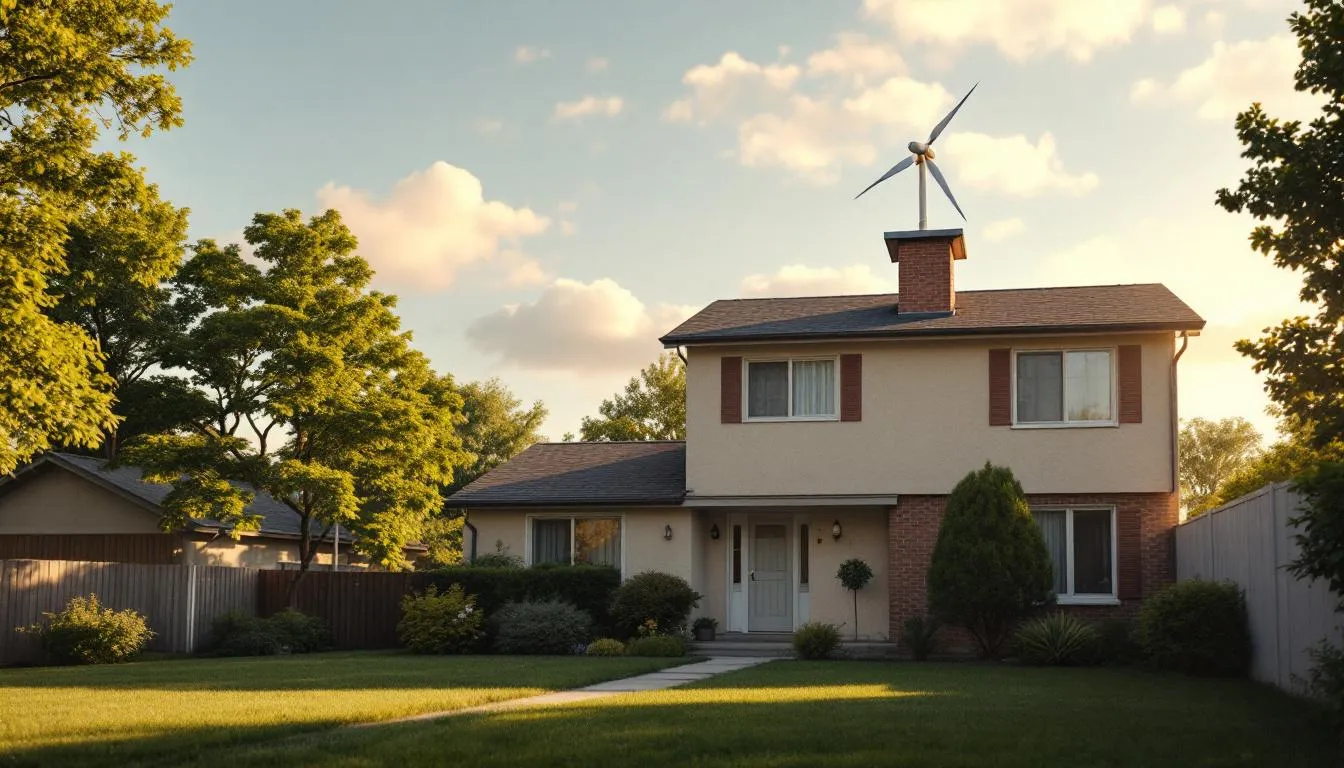
A properly sized wind turbine can offset 30–70% of a typical tiny house's electricity demand—provided site wind speed exceeds 10 mph average and mounting addresses both structural load and noise. Most successful installations pair a 400-1,000W vertical-axis turbine on a tilt-up pole with battery storage, avoiding the roof-mount vibration issues that plague fixed tiny homes. Budget $2,800–6,500 for turbine, inverter, pole, and professional installation that meets NEC Article 705 interconnection rules and local zoning height limits.
Why tiny houses change the wind turbine calculus
Tiny houses—whether THOW (trailer-based) or foundation models under 400 sq ft—consume 300–900 kWh monthly, roughly one-quarter the US household average. That smaller appetite makes wind economically viable where grid-tied solar alone might leave batteries undercharged during winter cloud cover or tree shade.
The structural constraint matters more. A road-legal THOW roof can't support the point load of a 5 ft diameter turbine plus 15–30 mph dynamic thrust without engineering a reinforced truss at build time. Foundation tiny houses have more freedom but still face vibration transfer through lightweight framing. Pole mounting 15–30 ft from the structure solves both problems and captures cleaner laminar flow above roof turbulence.
Zoning adds the final wrinkle. Many jurisdictions cap accessory structures at 35 ft without variance; FAA Part 77 notification (not approval) applies above 200 ft near airports. Practical tiny-house wind installations stay at 20–30 ft hub height, trading some wind resource for permit simplicity.
Sizing: match turbine output to realistic load and wind
Start with average wind speed, not peak gust. The National Renewable Energy Laboratory's wind resource map shows annual average at 30 m height. Tiny house pole mounts sit at 6–9 m (20–30 ft); apply a 0.85 correction factor for surface friction unless you're on a coastal bluff or prairie ridgeline.
Power scales with the cube of wind speed. A turbine rated 1,000W at 28 mph delivers roughly 350W at 18 mph and 125W at 12 mph. If your site averages 11 mph, a "1,000W" turbine produces 1,200–1,800 kWh annually—useful for offsetting 40–60% of a 300 kWh/month tiny house, not full coverage.
Calculate daily watt-hours:
- LED lights (30W × 5 hrs): 150 Wh
- Mini-split heat pump (avg 300W × 8 hrs): 2,400 Wh
- Refrigerator (80W × 24 hrs): 1,920 Wh
- Laptop + phone (50W × 6 hrs): 300 Wh
- Daily total: ~4,800 Wh (144 kWh/month)
A 400W turbine at a 12 mph site yields roughly 800 kWh/year (2.2 kWh/day average), meeting 55% of that load when paired with solar and battery. A 1,000W unit at the same site pushes 2,000 kWh/year (5.5 kWh/day), covering most consumption outside deep winter heating.
The sweet spot for tiny houses sits at 400–600W rated capacity because larger swept areas (5–8 ft diameter) collide with permit hassles and overproduce in shoulder seasons when battery banks max out.
Vertical-axis vs. horizontal-axis for confined spaces
Vertical-axis wind turbines (VAWTs)—Savonius or Darrieus designs—accept wind from any direction without a tail vane, produce less audible blade swish, and mount lower profile. The Pikasola 600W vertical model (helical Savonius) and generic 400W "lantern" VAWTs dominate the tiny-house segment because rotor tips stay within a 4 ft diameter cylinder, easier to integrate near living space.
Horizontal-axis turbines (HAWTs) deliver 15–25% better efficiency in steady wind but require 8–12 ft tip clearance radius and generate 45–55 dB tonal noise at 25 mph. For stationary tiny houses on private land with setback room, a Primus Air 40 (400W) or Bergey Excel 1 (1,000W) mounted 50+ ft away maintains peace. For THOWs in RV parks or tight urban ADU lots, the VAWT's omnidirectional acceptance and compact form win despite lower kWh/$ ratio.
Mounting systems: tilt-up pole vs. roof vs. ground tripod
Tilt-up pole (recommended): A 4-inch schedule-40 steel pole with gin-pole hinge and winch lets one person lower the turbine for maintenance without a crane. Mount height 20–25 ft balances wind access and mechanical simplicity. Expect $600–1,200 for pole, concrete base (4 ft × 4 ft × 4 ft), guy wires, and hardware. This setup isolates vibration, eases inspection, and survives THOW relocation by unbolting the base flange.
Roof mount: Only viable if the tiny house was engineered for it during framing—typically a steel moment frame or laminated ridge beam anchored to trailer chassis. Even then, limit to sub-300W VAWTs and install vibration-damping bushings. The Aeolos-V 300W vertical mounts on a 6 ft mast bolted through roof deck into doubled rafters, but the 3–5 Hz structure-borne hum can resonate through metal roofing. Not recommended for THOW due to road shock fatigue on fasteners.
Ground tripod: Portable A-frame tripods (8–12 ft) suit temporary setups or renters who can't pour footings. Load capacity caps at 200–300W turbines. The trade-off: low mounting height (10–15 ft) puts the rotor in high-turbulence air near ground clutter, cutting output 30–40% versus a 25 ft pole.
Budget breakdown: total installed cost
| Component | Budget Option | Mid-Range | Premium |
|---|---|---|---|
| Turbine | $450 (400W VAWT, generic import) | $1,200 (Pikasola 600W, 2-yr warranty) | $2,800 (Primus Air 40 or Bergey Excel 1) |
| Charge controller | $180 (PWM, 30A) | $320 (MPPT, 40A dump load) | $650 (Midnite Classic MPPT) |
| Inverter/charger | Existing solar inv. | $800 (Victron MultiPlus 12/3000) | $1,600 (Outback Radian hybrid) |
| Pole + mounting | $400 (ground tripod kit) | $900 (20 ft tilt pole, DIY concrete) | $1,800 (engineered 30 ft pole, pro install) |
| Wire + breakers | $120 (50 ft #10 AWG burial, fuses) | $250 (100 ft #8 AWG, DC disconnect, grounding rod) | $450 (conduit run, combiner box, surge arrestor) |
| Labor (electrical) | DIY | $600 (licensed electrician, 4–6 hrs) | $1,200 (engineer stamp + electrician) |
| Total | $1,150 | $4,070 | $8,500 |
The budget path assumes you already own a battery bank and hybrid inverter from a solar setup; the wind turbine adds incremental charging. The mid-range represents a realistic turnkey system for someone buying wind and storage together. Premium costs reflect Bergey-class reliability, engineered pole certification for permitting, and NEC Article 705.12(D) compliant utility interconnection if net metering.
Electrical integration: DC coupling to battery vs. grid-tie
Most tiny houses run DC-coupled systems: turbine → charge controller → 12V or 24V battery bank → inverter → 120V AC loads. This avoids double-conversion losses and keeps essentials running during grid outages (or off-grid entirely). The charge controller must handle turbine dump load—resistive heating elements that bleed excess power when batteries reach absorption voltage, preventing turbine overspeed.
Grid-tie without battery (rare for tiny houses but legal) uses a dedicated wind inverter (e.g., Ginlong Solis or SMA Windy Boy, now discontinued). The turbine feeds AC directly to the service panel under NEC 705.12(A) supply-side connection or 705.12(D)(2) 120% busbar rule. Unless the tiny house stays plugged into a metered pedestal year-round, this setup wastes the wind's backup-power advantage.
Grounding is non-negotiable: NEC 690 and 705 require turbine frame, pole, and DC conductors bonded to the same grounding electrode system as the service panel. Lightning strikes favor tall poles; install a secondary AC surge arrestor (Type 2) at the panel and consider a DC surge device if the pole exceeds 25 ft.
Professional electrical sign-off costs $400–800 but legitimizes insurance claims and resale value. DIY wiring without permit risks policy voidance if a fire investigator finds non-compliant work.
Permit and incentive landscape in the USA
Federal: The Residential Clean Energy Credit (IRC §25D, 30% through 2032) covers wind turbines under 100 kW for "dwelling units," which IRS interprets to include tiny houses if they are the taxpayer's primary or secondary residence. File Form 5695 with equipment receipts. The credit applies to turbine, controller, battery (if 3 kWh+ capacity), and installation labor. It does not cover wire, poles, or non-energy infrastructure.
State/local: Check DSIRE for rebates. Some rural electric co-ops offer $500–1,500 wind incentives; programs exist in Iowa, Minnesota, Montana, and parts of California. Net metering rules vary wildly—many utilities cap systems at 25 kW but some exclude wind or require expensive islanding relays.
Zoning/building: Setback rules often mandate 1.5× tower height from property line. Noise ordinances may limit turbine dB at the line (typically 50–60 dB daytime). THOW owners skip building permits if the turbine sits on a separate foundation (classified as "accessory structure"), but code enforcement can still enforce height limits. Foundation tiny houses follow standard residential permit flow; expect a $150–400 permit fee and plan-check delay.
Real-world performance expectations
A 600W vertical-axis turbine at a 12 mph average site produces 1,500–2,000 kWh/year, worth $180–240 at $0.12/kWh retail. Add the 30% tax credit ($360–480 on a $1,200 turbine + $600 install), and simple payback extends 6–9 years—longer than solar but faster than generator fuel costs for off-grid builds.
Wind complements solar seasonally: winter storms deliver peak wind when solar drops 40–60%. The combination shrinks battery bank requirements (and cost) by 20–30% versus solar-only systems targeting 3-day autonomy.
Maintenance runs $50–150/year: annual bolt torque check, bearing grease (if not sealed), blade inspection. Turbines with external brushes (cheap HAWTs) need brush replacement every 3–5 years ($40). Quality VAWTs and brushless HAWTs run 15–25 years before bearing or magnet degradation forces retirement.
Top models for tiny house applications
Pikasola 600W Vertical (Helical Savonius): $1,100–1,300. Low start-up speed (6 mph), 55 dB at rated wind, all-axis acceptance. Popular with THOW builders for its compact 4.5 ft height and bolt-on pole mount. Two-year warranty. Produces 1,400–1,800 kWh/year at 11–12 mph sites.
Primus Air 40 (400W HAWT): $2,400–2,800. Danish-made, marine-grade sealed bearings, certified to IEC 61400-2 small wind standard. Quieter blade profile (48 dB at 25 mph). Requires 20 ft minimum pole height and 40 ft setback for noise. Delivers 900–1,200 kWh/year at 10–11 mph, 1,500–2,000 kWh at 13 mph.
Bergey Excel 1 (1,000W HAWT): $2,600–3,200 (refurbished units available). US-manufactured since 1977, extensive track record. Autofurl overspeed protection, 5-year warranty. Overkill for most tiny houses unless heating with resistance or running power tools. Best reserved for 14+ mph sites or future expansion plans.
Aeolos-V 300W (Vertical Darrieus): $650–850. Budget entry point for experimental setups or urban ADU sites with zoning constraints. Noisy bearings after Year 2, limited parts support. Suitable for learning system integration before upgrading.
Common mistakes that kill tiny-house wind projects
Underestimating noise: Even "quiet" turbines generate broadband whoosh audible 60–80 ft away at 20 mph wind. Neighbors 100 ft distant may hear it through open windows. Mount minimum 50 ft from occupied structures; 75+ ft eliminates complaints.
Skipping vibration isolation: Direct roof mount without spring washers or neoprene pads transmits 3–6 Hz resonance through metal roofing, audible as rhythmic drumming inside. Pole mounting is worth the extra cost.
Ignoring local wind resource: A turbine at an 8 mph average site produces 20–30% of rated annual kWh. Measure wind for 60 days with a portable anemometer ($150) before buying. If average stays below 9.5 mph at planned hub height, solar + propane generator beats wind economics.
Oversizing the turbine: A 2,000W turbine on a 400 kWh/month tiny house dumps 60% of its output to heat when batteries reach float voltage unless you add phantom loads (water heating, dehumidifier). Size for winter consumption peak, not summer minimum.
DIY electrical without code knowledge: NEC Article 705.12(D)(2) limits the sum of all power sources on a busbar to 120% of the busbar rating. Adding wind to an existing solar breaker can oversubscribe the panel unless you calculate correctly. Hire a licensed electrician for the final connection.
Pairing wind with solar and storage
Hybrid systems shine in tiny houses because both sources rarely peak simultaneously. A 600W turbine + 800W solar array + 5 kWh lithium battery covers 80–95% of a 300 kWh/month load across seasonal swings, leaving a small propane generator for rare week-long clouds-plus-calm.
Charge controller compatibility matters: some MPPT solar controllers accept wind input on a second port (Morningstar TriStar), but most require separate controllers tied to a common battery bus. Ensure the wind controller's dump-load resistor matches turbine wattage (600W turbine needs 600W+ dump resistor, typically 24 V / 15 Ω for a 24 V system).
Battery chemistry affects cycling durability. Wind's intermittent high-current pulses stress flooded lead-acid; lithium iron phosphate (LiFePO₄) handles 1C charge rates without damage. Budget $1,200–2,000 for a 5 kWh LiFePO₄ bank versus $600–900 for equivalent lead-acid capacity, but lithium lasts 4,000+ cycles versus 800–1,200 for lead, flipping lifetime economics.
Can I mount a wind turbine on a moving tiny house trailer?
Road vibration and dynamic loading make THOW roof mounting impractical for anything above 100W novelty turbines. If you relocate frequently, use a removable tilt-up pole with a trailer-hitch base plate or park-model tripod that dismantles in 30 minutes. Some THOW owners carry a turbine as cargo and deploy it only at long-term sites (2+ months).
Do I need a building permit for a 25 ft pole turbine?
Most jurisdictions classify turbines under 35 ft as accessory structures exempt from building permits, but require electrical permits for any connection to a dwelling. Coastal high-wind zones and seismic regions (California, Pacific Northwest) may demand engineer-stamped pole calculations. Call the county building department before ordering; a $200 permit beats a $2,000 removal order.
How loud is a 600W turbine at 15 mph?
Expect 48–55 dB at the pole base (normal conversation level), dropping to 38–42 dB at 50 ft (library quiet). Vertical-axis models produce less tonal "swish" than horizontal propellers. Wind noise itself (trees, building eaves) often masks turbine sound above 18 mph. Test your tolerance by visiting an operating installation or watching manufacturer video demos with volume calibrated.
Will my homeowner's insurance cover a wind turbine?
Standard HO-3 policies cover detached structures up to 10% of Coverage A (dwelling limit), which includes turbines, but exclude "earth movement" (pole tip-over from soil erosion). Request a scheduled personal property endorsement ($30–60/year) to cover the turbine at replacement cost and confirm coverage includes wind damage to the turbine itself. Some insurers (USAA, State Farm) require professional installation receipts. Notify your agent before installation to avoid claim denial.
Can I grid-tie a tiny house wind turbine for net metering?
Technically yes under NEC Article 705, but utilities often resist net metering for structures under 400 sq ft or mobile homes, citing "primary residence" ambiguity. Some states (California, Oregon, Colorado) have explicit net-metering rights for ADUs that extend to foundation tiny houses. THOW owners on RV pedestals face stricter rules; the park owner may prohibit backfeed. Confirm with your utility's interconnection department in writing before purchasing a grid-tie inverter.
Bottom line
The best wind turbine for a tiny house balances compact form, noise tolerance, and realistic output: a 400–600W vertical-axis model on a 20–25 ft tilt-up pole delivers 1,500–2,000 kWh/year at 11–12 mph sites, offsetting 40–70% of typical consumption when paired with solar and battery storage. Budget $2,800–4,500 installed for mid-range reliability, claim the 30% federal tax credit, and expect 8–12 year payback—shorter if you avoid monthly service fees by going off-grid. Measure your site wind for 60 days, hire a licensed electrician for NEC-compliant wiring, and mount far enough from living space to preserve peace. For detailed load calculations and battery sizing, see our off-grid power system design guide and vertical-axis turbine deep dive.
Share this article
windturbinehome.com/s/fb5f38
Editorial note: This article was researched and written by a member of the Wind Turbine Home editorial team. AI-assisted tools were used for spell-checking and light grammar review only — all research, analysis, and conclusions are our own. Our editorial policy prohibits sponsored content and paid placements. Read our editorial policy →
Related reading
residential wind power
Home Wind Turbine: A Comprehensive US Buyer's Guide 2024
Explore the realities of owning a home wind turbine in the US, covering costs, energy output, installation requirements, and available federal and state incentives for homeowners considering small-scale wind power.
residential wind power
Home Wind Turbine Systems: A Complete 2024 Buyer's Guide
Explore the realities of a home wind turbine system for residential power, covering installation, costs, grid-tie considerations, and US federal incentives.
residential wind power
First-Year Mistakes New Home Wind Turbine Owners Regret Most
New home wind turbine owners make costly first-year errors—from poor site assessment to skipping permits. Learn the eleven most common mistakes and how to avoid them.

residential wind power
Grid-Tied vs Battery-Backed Wind Turbine Systems for Homes
Grid-tied systems feed excess wind power directly to the utility for credits, while battery-backed configurations store energy for outages and off-grid use.
residential wind power
How to Right-Size a Wind Turbine for Your House in 2026
Match your home wind turbine to your actual energy use and site conditions. Learn the sizing formula, power curves, and common mistakes to avoid before you buy.
residential wind power
Best Wind Turbines for Australian Homes: STCs & 2026 Picks
Small wind turbines can earn STCs under the SRES, but few models sold in Australia meet AS 4509.1. Compare Bergey, Primus and proven vertical-axis picks.
residential wind power
Best Wind Turbines Under $5000 for Home Use (2026 Guide)
Compare the top small wind turbines under $5000 for residential use in 2026. Real performance data, installation costs, and ROI analysis for US homeowners.
residential wind power
Best Wind Turbines for Iowa Homes: Bergey vs Primus (2026)
Iowa averages 5.5-7.5 m/s wind at 30m, enough for a home turbine. Compare the Bergey Excel 10, Primus AIR 40 and VAWT options for grid-tied or off-grid use.
residential wind power
Best Wind Turbines for Texas Homes: 1-10 kW Picks (2026)
Compare 1-10 kW small wind turbines for Texas homes, including which models suit your local wind zone, what they cost, and which incentives you can claim.