Wind Turbine for Power Outage Backup: Realistic Resilience Design
Small wind turbines can provide backup power during outages, but the system requires battery storage, proper NEC-compliant installation, and realistic expectations about spinning up from zero wind.
Share this article
windturbinehome.com/s/2ae36b
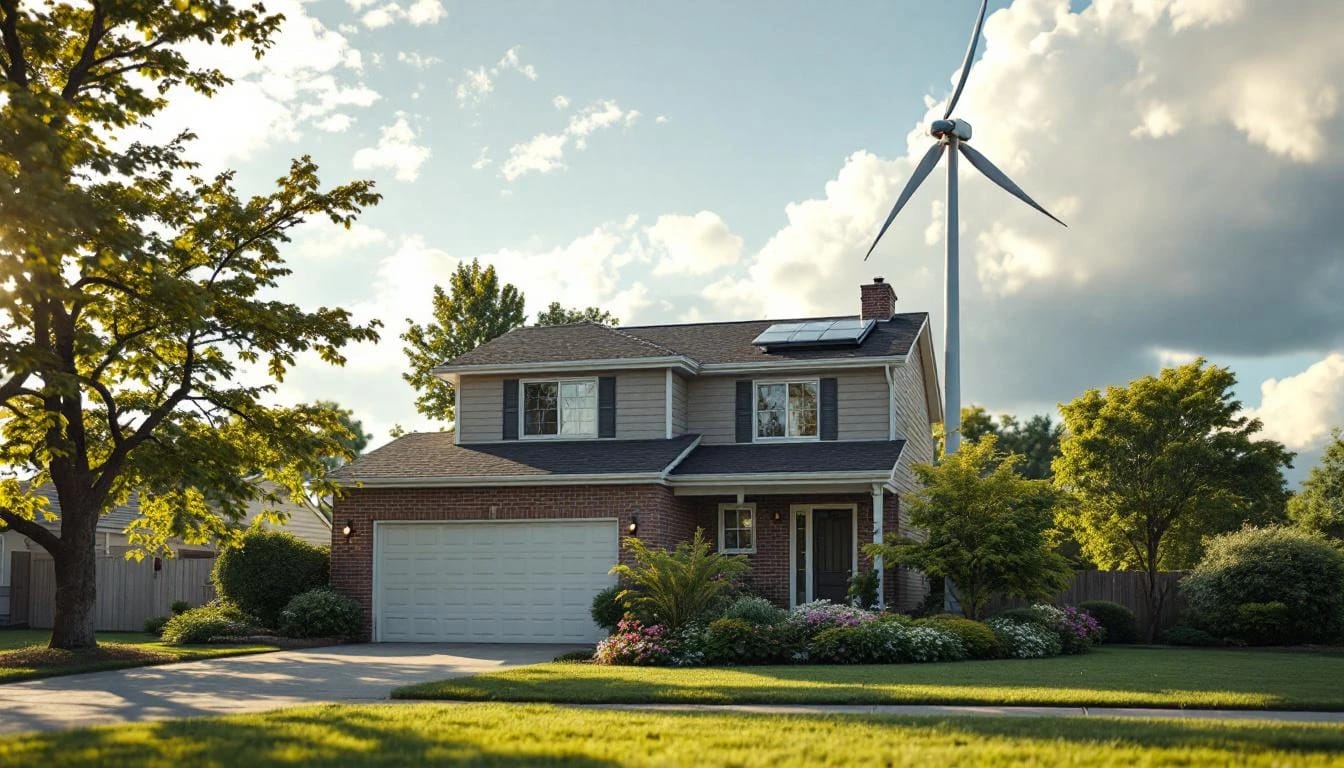
A small wind turbine can serve as backup power during grid outages, but only when paired with battery storage and an automatic transfer switch. Unlike standby generators that start on command, wind turbines produce power only when wind blows—typically 9–25 mph for most residential models. A properly designed hybrid system combines a 1–10 kW turbine with 10–30 kWh of lithium battery capacity, an inverter/charger, and often a secondary generator for extended calm periods. This approach yields partial-to-complete load coverage depending on wind resource and household demand, but installation requires NEC Article 705 compliance and a licensed electrician.
Why wind differs from generator backup
Standby generators burn propane or natural gas on demand, delivering rated power within seconds of an outage. Wind turbines harvest intermittent kinetic energy: cut-in speed (the minimum wind to start producing) ranges from 6–9 mph, and rated power arrives at 22–31 mph. If the outage coincides with calm conditions, the turbine contributes nothing until wind resumes. The U.S. Department of Energy Small Wind Guidebook emphasizes that "wind turbines convert the kinetic energy in wind into mechanical power that runs a generator to produce electricity," making them "versatile modular sources" but not dispatchable on-grid replacements.
Battery storage bridges the gap. During normal operation, surplus turbine output charges a bank; when the grid drops, the inverter/charger switches to island mode and draws from stored energy. A 400 Ah 48 V lithium bank (≈19 kWh usable) can run lights, refrigerator, well pump, and communication devices for 8–16 hours at moderate consumption (1–2 kW average). If wind picks up during that window, the turbine recharges the bank while serving real-time loads.
Core components of a wind-backup system
Turbine. Choose a model certified to AWEA 9.1 (now part of IEC 61400-2 small-wind standard). Bergey Excel 10 (10 kW rated, 24 mph), Primus Air 40 (2.5 kW rated, 28 mph), and Aeolos-V 3 kW vertical-axis models are common in residential backup applications. Horizontal-axis machines deliver higher energy density; vertical-axis units (Savonius or Darrieus variants) tolerate turbulent rooftop wind but produce 20–40 % less annual kWh per swept area.
Battery bank. Lithium iron phosphate (LiFePO₄) cells offer 4,000–6,000 cycles at 80 % depth of discharge, outperforming flooded lead-acid (1,200 cycles) and AGM (800 cycles). Simpliphi PHI 3.5 kWh modules and Discover AES 7.4 kWh batteries stack to desired capacity. Size the bank for your critical-load profile: lighting and electronics (0.5 kW), refrigerator (0.2 kW continuous, 0.8 kW surge), well pump (0.75 kW running, 2.2 kW start), sump pump (0.5 kW), and gas furnace blower (0.6 kW) sum to roughly 2.8 kW continuous with 3 kW peak. Multiply average load by desired autonomy (hours) to find minimum usable capacity; double that figure for 50 % DoD cycling, which extends cell life.
Inverter/charger. The brain of the system converts DC battery voltage to 120/240 V AC, manages charging from turbine and optional solar array, and executes transfer switching. Outback Radian GS8048A (8 kW continuous, 12 kW surge) and Victron Quattro 48/10000 are field-proven units. Look for UL 1741-SA certification (anti-islanding protection when grid-tied) and integrated MPPT charge controllers if you plan hybrid wind-solar input.
Dump load. When batteries reach 100 % state of charge and household demand is low, excess turbine power must go somewhere or the turbine overspeeds and trips its brake. A 3–5 kW resistive heater—immersed in a water tank or ducted into living space—dissipates surplus energy. Xantrex and Midnite Solar make automatic diversion controllers that modulate PWM duty cycle to match available power.
Transfer switch. Manual or automatic transfer switches isolate backed-up circuits from the grid during an outage, preventing back-feed that endangers utility workers. NEC Article 702 mandates transfer equipment; automatic versions (Generac, Eaton) sense voltage loss and switch in under 100 milliseconds. Critical-loads subpanel separates essential circuits (well, fridge, furnace blower, one lighting circuit) from discretionary loads (electric dryer, air conditioning, resistance water heater).
Designing for realistic autonomy
Start by auditing consumption. A Kill-A-Watt meter (≈$25) plugs between appliance and outlet to log watt-hours over days. Sum refrigerator (1.5 kWh/day), LED lighting (0.8 kWh/day), well pump (0.6 kWh/day for two adults), TV and router (0.5 kWh/day), and gas-furnace blower (winter: 2 kWh/day intermittent). Total critical load: ≈5.4 kWh/day. Add 20 % for inverter losses, yielding 6.5 kWh/day target.
Now assess wind resource. NREL's Wind Prospector provides 30-meter and 80-meter annual average wind speeds at 200-meter grid resolution. Sites below 10 mph annual average struggle to pencil out; 12–14 mph is workable; 16+ mph is excellent. Remember that average hides variability: a 12 mph annual mean might include week-long lulls in summer when high-pressure systems stall.
The Department of Energy guidebook cautions that "small wind electric systems can contribute…to lower your electricity bill slightly or up to 100 %, help you avoid the high costs of extending utility power lines to remote locations, and sometimes can provide DC or off-grid power," but success hinges on matching turbine swept area and tower height to local wind regime. A Bergey Excel 10 at an 18 mph site might generate 1,500 kWh/month (50 kWh/day), far exceeding backup needs and enabling year-round grid export. The same turbine at a 10 mph site yields 300 kWh/month (10 kWh/day)—enough to recharge batteries during moderate outages but insufficient for multi-day autonomy in winter.
| Component | Specification | Typical cost (USD) | Notes |
|---|---|---|---|
| Turbine (3–5 kW) | Bergey Excel 1, Primus Air 40 | $9,000–$15,000 | Includes controller, not tower |
| Tower (80 ft tilt-up) | Guyed lattice or monopole | $6,000–$10,000 | Foundation, guys, anchors, labor |
| Battery bank (20 kWh usable) | LiFePO₄ 48 V, 400 Ah | $8,000–$12,000 | Simpliphi, Discover, BYD |
| Inverter/charger (8 kW) | Outback Radian, Victron Quattro | $3,500–$5,000 | UL 1741-SA, MPPT input |
| Transfer switch + panel | Automatic, 8-circuit subpanel | $1,200–$2,000 | NEC 702 compliant |
| Dump load + controller | 3 kW resistive heater, diversion | $400–$700 | Prevents turbine overspeed |
| Installation (electrical) | Licensed electrician, 2–4 days | $3,000–$6,000 | Varies by complexity |
| Total system | $31,100–$50,700 | Before incentives |
Federal 30 % Residential Clean Energy Credit (IRC §25D, file IRS Form 5695) applies to turbine, tower, installation labor, and battery if charged ≥75 % by qualified renewable sources. A $40,000 system yields $12,000 credit, reducing net cost to $28,000. State incentives vary: California SGIP offers per-kWh storage rebates; New York NYSERDA has wind-buydown programs. Check DSIRE for current programs.
Hybrid wind-solar-generator configurations
Pure wind backup falters during prolonged calm. Adding 2–4 kW of solar panels spreads generation across weather patterns: summer offers strong sun but weak wind; winter reverses the trend in many regions. A 3 kW turbine plus 3 kW solar array with 20 kWh battery covers most outage scenarios.
For ultimate resilience, include a propane standby generator. Generac 7043 (22 kW, $4,500 + install) automatically starts if battery state-of-charge drops below 30 % after two days without wind or sun. This three-legged design—wind, solar, fossil backup—delivers 99+ % uptime at the cost of complexity and maintenance.
Installation and code compliance
NEC Article 705 governs interconnected power sources. Key requirements:
- Grounding and bonding (705.50): Turbine tower and battery enclosure require equipment grounding conductors sized per Table 250.122.
- Disconnect means (705.22): Turbine disconnect, battery disconnect, and inverter AC disconnect must be grouped and labeled.
- OCPD coordination (705.16, 705.30): Overcurrent protection for DC turbine-to-battery and AC inverter-to-panel circuits.
- Anti-islanding (UL 1741-SA): Inverter must detect grid loss and cease energizing utility lines within 2 seconds.
Local permitting adds layers. Most jurisdictions require electrical, building (tower foundation), and zoning permits. FAA Form 7460-1 notification is mandatory for structures exceeding 200 feet AGL or within glide slopes; residential wind towers rarely trigger review, but verify. Homeowners associations may restrict tower height or aesthetic impact; review covenants before purchasing equipment.
Hire a NABCEP-certified installer or licensed electrician with wind-system experience. DIY installation voids turbine warranties and invites code-violation red-tags during inspection.
Real-world backup performance
Scenario 1: Three-day winter outage, moderate wind. Home draws 6 kWh/day critical load. Bergey Excel 1 (1 kW rated, 7 mph cut-in) produces 8 kWh on day one (15 mph average), 12 kWh day two (18 mph), 5 kWh day three (12 mph). Battery bank starts at 90 % (17 kWh usable); turbine generation exceeds consumption, leaving battery at 100 % by end of outage. Result: full autonomy, zero fossil fuel.
Scenario 2: Week-long summer outage, calm. Same 6 kWh/day load. Wind averages 5 mph (below cut-in) for first four days. Battery depletes 24 kWh (6 kWh × 4 days) from initial 18 kWh, requiring propane generator start on day five. Generator runs six hours/day at 2 kW to cover load and trickle-charge battery. Days six and seven see 9 mph wind; turbine produces 3 kWh/day, offsetting half the load. Result: partial autonomy, 12 hours generator runtime over seven days (≈3 gallons propane).
Scenario 3: Hurricane outage, high wind. 40–50 mph sustained winds trigger turbine furling or brake mechanisms above survival speed (typically 55–65 mph). Turbine produces zero output while protecting itself. Battery-only operation sustains critical loads for 36 hours, then propane generator carries remaining five days. Result: turbine contributes nothing during extreme event; backup relies on battery and fossil fuel.
These examples illustrate the probabilistic nature of wind backup. Sites with consistent 12+ mph winds see turbines shoulder 60–90 % of outage load; gusty or calm locations lean heavily on batteries and generators.
Maintenance and longevity
Small wind turbines require annual inspections:
- Guy-wire tension: Retighten turnbuckles to manufacturer spec (typically 10 % of breaking strength).
- Bearing lubrication: Yaw and blade bearings need grease every 12–18 months.
- Brake pads: Check wear; replace at 50 % thickness.
- Vibration check: Loose bolts induce resonance; torque tower and nacelle fasteners.
Battery maintenance depends on chemistry. Lithium cells self-balance via BMS; check terminal torque and clean corrosion annually. Flooded lead-acid demands quarterly water top-offs and equalization charges.
Inverter firmware updates address grid-code changes (California Rule 21 revisions, Hawaii Rule 14H). Manufacturers push updates via Ethernet or USB; apply within 90 days of release.
Turbine lifespan: 15–25 years for rotor and generator; tower lasts 30+ years with proper galvanizing. Battery replacement at years 10–15 (lithium) or 5–7 (lead-acid) represents the largest lifecycle cost.
Common pitfalls
Undersized battery bank. Skimping on storage forces generator starts during short lulls. Budget 1.5–2 days of autonomy at minimum; two-to-three days provides comfort margin.
Inadequate tower height. Turbine performance scales with wind speed cubed (doubling speed yields eight times power). A 60-foot tower in cluttered terrain (trees, buildings) captures 30–50 % less energy than an 80-foot tower in open ground. The DOE guidebook stresses that tower height directly impacts cost-effectiveness; under-towering is the most common efficiency killer.
Ignoring setback ordinances. Many counties mandate tower height plus 10 % setback from property lines. An 80-foot tower needs ≈90 feet; verify compliance before pouring foundation.
Mismatched turbine voltage. Running a 48 V turbine into a 24 V battery bank via buck converter wastes 8–12 % in conversion losses. Match nominal voltages or accept the efficiency hit.
No load diversity. Backing up air conditioning, electric water heater, and electric range pushes critical-load panel to 15–20 kW, requiring oversized inverter and 40+ kWh battery. Prioritize gas appliances for high-thermal loads.
Is wind backup right for you?
Wind excels in rural settings with strong, consistent wind (12+ mph annual average), ample acreage (1+ acre for setbacks), and moderate backup needs (5–15 kWh/day). Urban and suburban sites face zoning hurdles, turbulent wind, and neighbor objections. Vertical-axis turbines tolerate rooftop turbulence better than horizontal-axis machines but produce less energy per dollar.
Compare lifecycle costs. A 7 kW propane standby generator ($6,000 installed) plus 500-gallon tank ($1,200) costs $7,200 up front and ≈$150/year maintenance. Fuel for three five-day outages per year (15 days, 120 kWh/day, 60 kWh from generator) burns ≈180 gallons propane at $2.80/gallon = $504 annually. Twenty-year fuel total: $10,080.
Wind-battery system: $35,000 net after tax credit, minimal fuel, $300/year maintenance, $10,000 battery replacement at year twelve = $45,300 over twenty years. Break-even occurs if annual outages exceed 25 days or if grid power is unavailable (off-grid cabin). Hybrid wind-solar-generator splits the difference: higher capital cost, lowest operating cost, maximum resilience.
Environmental benefits tip the scale for some buyers. Wind backup eliminates standby-generator emissions (≈5 tons CO₂ over generator lifespan) and reduces reliance on fossil logistics during emergencies. For others, the predictability of a generator outweighs renewable variability.
Can a wind turbine run my house during an outage without batteries?
No. When the grid drops, NEC-compliant inverters must cease energizing utility lines (anti-islanding). Without battery storage to form a microgrid, the turbine has nowhere to send power. Even DC turbines feeding DC loads directly require a charge controller and battery buffer to smooth variable wind output.
How long does a wind turbine take to recharge batteries after an outage?
Recharge time depends on turbine size, wind speed, and battery state of charge. A 3 kW turbine in 15 mph wind produces ≈1.2 kW average (accounting for blade efficiency and altitude derating). Replenishing 10 kWh to a depleted bank takes ≈8–10 hours of steady wind, assuming 20 % losses to charging inefficiency. Calm periods extend recharge to days; strong wind cuts it to hours.
Do I need a permit to install a wind turbine for backup power?
Yes. Electrical permits verify NEC compliance; building permits cover tower foundation and structural loads; zoning approvals confirm setback and height limits. Some jurisdictions bundle these into a single "renewable energy system" permit. Unpermitted installations risk fines, forced removal, and insurance claim denial if the tower fails.
Will my homeowners insurance cover a wind turbine?
Standard policies exclude towers taller than 30 feet or require a rider. Insurers ask for engineer-stamped foundation drawings, turbine model certification (AWEA 9.1), and annual inspection reports. Expect $300–$800/year premium increase for a guyed tower on rural property. Umbrella liability policies ($1–2 million) protect against third-party claims if the turbine sheds a blade or tower collapses.
Can I add wind to an existing solar-plus-battery system?
Yes, if the inverter/charger has unused MPPT input capacity and the battery bank voltage matches turbine output. Retrofit typically requires a second charge controller dedicated to the wind turbine, a dump load to prevent overcharging, and updated transfer-switch programming to prioritize renewables over generator. Consult the inverter manufacturer's hybrid-input documentation before purchasing the turbine.
Bottom line
Wind turbines paired with battery storage deliver real backup power in areas with dependable wind resources, but they function as energy harvesters, not on-demand generators. Success demands realistic autonomy planning, proper component sizing, NEC-compliant installation by licensed professionals, and often a hybrid approach that blends solar and fossil backup. Budget $30,000–$50,000 for a complete system before federal tax credits, then verify local wind averages exceed 11 mph and zoning permits towers. The reward is fossil-free resilience that pays dividends over decades—provided wind cooperates when the grid does not.
For further planning, explore small wind turbine sizing calculators, battery bank configuration guides, and hybrid renewable system design. Contact a NABCEP-certified installer for a site assessment and energy audit before committing capital.
Share this article
windturbinehome.com/s/2ae36b
Editorial note: This article was researched and written by a member of the Wind Turbine Home editorial team. AI-assisted tools were used for spell-checking and light grammar review only — all research, analysis, and conclusions are our own. Our editorial policy prohibits sponsored content and paid placements. Read our editorial policy →
Related reading
residential wind power
Home Wind Turbine: A Comprehensive US Buyer's Guide 2024
Explore the realities of owning a home wind turbine in the US, covering costs, energy output, installation requirements, and available federal and state incentives for homeowners considering small-scale wind power.
residential wind power
Home Wind Turbine Systems: A Complete 2024 Buyer's Guide
Explore the realities of a home wind turbine system for residential power, covering installation, costs, grid-tie considerations, and US federal incentives.

residential wind power
First-Year Mistakes New Home Wind Turbine Owners Regret Most
New home wind turbine owners make costly first-year errors—from poor site assessment to skipping permits. Learn the eleven most common mistakes and how to avoid them.

residential wind power
Grid-Tied vs Battery-Backed Wind Turbine Systems for Homes
Grid-tied systems feed excess wind power directly to the utility for credits, while battery-backed configurations store energy for outages and off-grid use.

residential wind power
How to Right-Size a Wind Turbine for Your House in 2026
Match your home wind turbine to your actual energy use and site conditions. Learn the sizing formula, power curves, and common mistakes to avoid before you buy.

residential wind power
Best Wind Turbines for Australian Homes: STCs & 2026 Picks
Small wind turbines can earn STCs under the SRES, but few models sold in Australia meet AS 4509.1. Compare Bergey, Primus and proven vertical-axis picks.

residential wind power
Best Wind Turbines Under $5000 for Home Use (2026 Guide)
Compare the top small wind turbines under $5000 for residential use in 2026. Real performance data, installation costs, and ROI analysis for US homeowners.
residential wind power
Best Wind Turbines for Iowa Homes: Bergey vs Primus (2026)
Iowa averages 5.5-7.5 m/s wind at 30m, enough for a home turbine. Compare the Bergey Excel 10, Primus AIR 40 and VAWT options for grid-tied or off-grid use.

residential wind power
Best Wind Turbines for Texas Homes: 1-10 kW Picks (2026)
Compare 1-10 kW small wind turbines for Texas homes, including which models suit your local wind zone, what they cost, and which incentives you can claim.