Best Batteries for Small Wind Systems in 2026 | Expert Guide
Lithium iron phosphate batteries dominate 2026 wind storage. Compare cycle life, depth-of-discharge, and cold-weather performance for systems 400W-10kW.
Share this article
windturbinehome.com/s/7c95ed
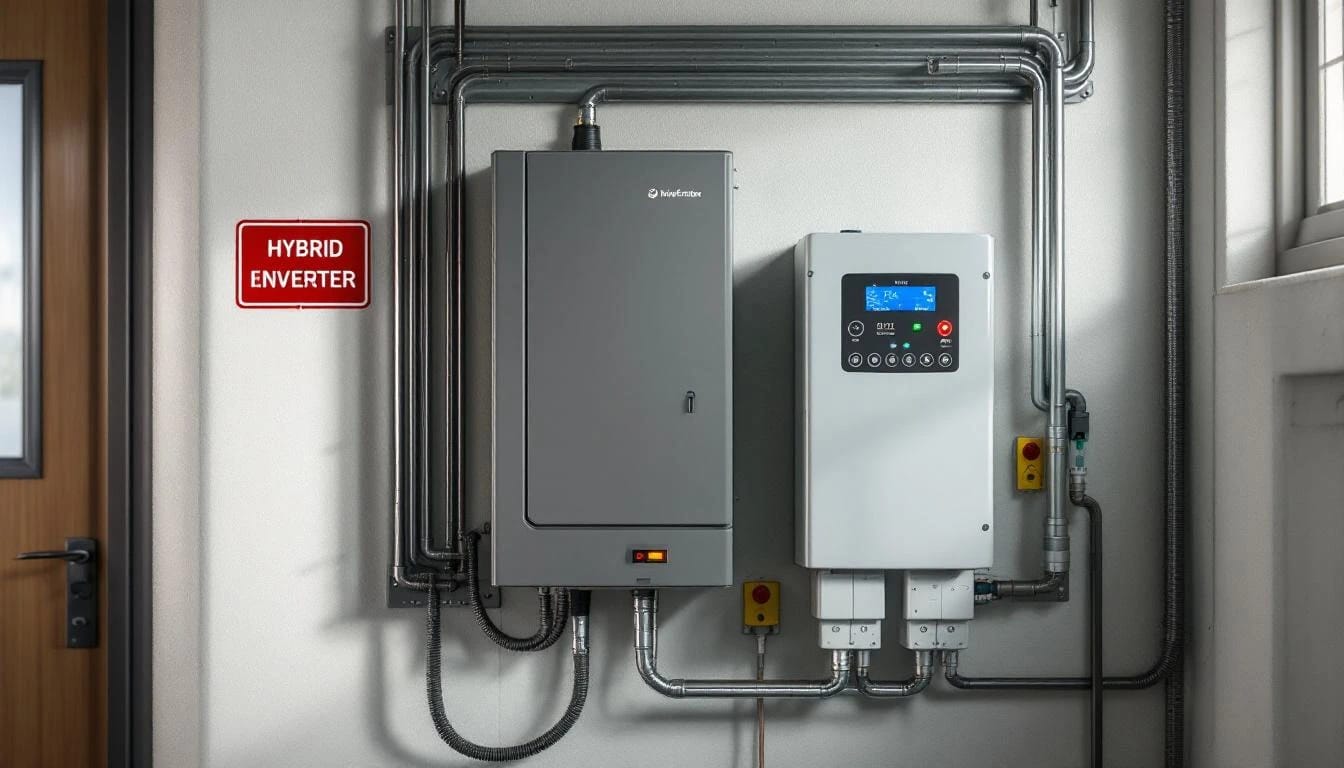
Lithium iron phosphate (LiFePO₄) batteries remain the strongest choice for residential wind turbines in 2026, offering 4,000–7,000 cycle life at 80% depth-of-discharge, superior cold-weather tolerance down to -4°F operational threshold, and self-contained battery management systems that eliminate the monitoring burden of flooded lead-acid. For a typical 1–3 kW vertical-axis or small horizontal-axis turbine paired with an off-grid inverter, a 10–15 kWh LiFePO₄ bank delivers three to five days of autonomy without generator backup, while grid-tied systems benefit from smaller 5–8 kWh capacity to capture overnight wind and time-shift energy to peak-rate hours. Installation requires compliance with NEC Article 705 interconnection rules and a licensed electrician familiar with DC-coupled wind configurations.
Why battery chemistry matters for wind turbines
Wind generation differs from solar in two critical ways: output arrives at any hour, often peaking at night, and voltage can swing wildly during gusts. Battery chemistry must accommodate irregular charge cycles, survive prolonged partial-state operation when wind is intermittent, and tolerate the voltage spikes that accompany sudden turbine braking.
Lithium iron phosphate excels in each dimension. The flat discharge curve holds terminal voltage near nominal until the final 10% state-of-charge, ensuring inverters see stable DC bus voltage even as the battery drains. Calendar life extends beyond twelve years in moderate climates, far outpacing the five-to-seven-year envelope of absorbed glass mat (AGM) lead-acid. Most importantly, LiFePO₄ tolerates partial-state cycling without the sulfation damage that cripples flooded and sealed lead-acid banks left below 50% charge for days at a time—a common scenario during calm-weather stretches in late summer.
Lithium nickel manganese cobalt oxide (NMC) offers higher energy density, which matters in mobile applications, but the thermal instability and shorter cycle count (2,000–3,000 at 80% depth) make it a poor fit for stationary wind storage. Sodium-ion batteries entered pilot production in 2025 and show promise for sub-freezing climates, yet limited availability and the absence of field data under wind-specific load profiles keep them off the shortlist for homeowners in 2026.
Sizing capacity for off-grid versus grid-tied systems
Off-grid turbines require enough storage to bridge the longest expected calm period minus any generator runtime the homeowner will tolerate. A three-day autonomy target in a household consuming 25 kWh daily translates to 75 kWh usable capacity; applying an 80% depth-of-discharge safety margin for lithium banks yields 94 kWh nameplate—typically supplied by 2× 48 kWh server-rack-style cabinets or 4× 24 kWh wall-mount units.
Grid-tied systems face a different calculus. The goal shifts from uninterrupted supply to maximizing self-consumption and avoiding grid exports during negative-pricing windows that now occur in CAISO and ERCOT territories when midday solar floods the market. A 5 kWh battery paired with a 2 kW turbine can absorb a full night of 15 mph average wind, then discharge during the 4–9 PM peak-rate window. Larger banks make sense only where time-of-use spreads exceed $0.15/kWh or when local net-metering rules cap monthly credits, forcing homeowners to store rather than export.
Hybrid solar-wind sites fall between these poles. Wind fills the battery overnight; solar tops it off on calm sunny afternoons. Total capacity should cover evening and morning shoulders (6–10 PM, 6–9 AM) without grid draw, typically 12–18 kWh for a household using 30 kWh daily.
Top lithium iron phosphate batteries for wind applications
SimpliPhi PHI 3.5 kWh
SimpliPhi's PHI series uses cobalt-free lithium ferrous phosphate cells rated for 10,000 cycles at 100% depth-of-discharge. The modular 3.5 kWh blocks stack to 56 kWh in a single 48V string, and the built-in management system communicates charge state and fault codes over Modbus RTU to most off-grid inverters. Operating range spans -4°F to 140°F without derating, a critical feature for unheated equipment rooms in Montana or Maine. Warranty covers ten years or 10,000 cycles, whichever arrives first.
Pricing runs approximately $1,350 per 3.5 kWh module before installation, putting a 14 kWh four-module bank near $5,400. Compatibility is manufacturer-confirmed with Outback, Schneider Conext, and Victron Quattro inverters—all common in small wind setups.
Battle Born 12V 100Ah (1.28 kWh)
Battle Born's 12V 100Ah unit remains the default choice for budget-conscious builders assembling series-parallel banks. Each cell delivers 1.28 kWh usable, weighs 31 pounds, and includes an internal management board that balances cells and disconnects on over-temperature. Four units in series yield 51.2V nominal, matching 48V system architecture; parallel strings scale capacity in 5.12 kWh increments.
The drawback is manual balancing. When paralleling multiple four-battery strings, the builder must periodically isolate each string and verify voltage within 0.1V to prevent one string from shouldering disproportionate current. This maintenance burden disappears with higher-voltage rack systems but matters when retrofitting an existing lead-acid footprint. Price hovers around $925 per unit, so a 10.24 kWh eight-battery bank costs $7,400 before wire, fusing, and labor.
Rolls-Surrette S-550 flooded lead-acid (6V 428Ah)
Flooded lead-acid still claims a niche in cold climates where heating a battery room is impractical and the homeowner accepts the three-to-five-year replacement cycle. The Rolls S-550 six-volt cell pairs in series to form 12V or 24V banks, offers 428 amp-hours at the 20-hour rate, and survives temperatures to -40°F if electrolyte-specific gravity remains above 1.265. Cycle life reaches 1,500 at 50% depth-of-discharge when watered monthly and equalized quarterly.
Upfront cost is $480 per cell, so a 24V 856Ah bank (eight cells, roughly 20.5 kWh at 50% depth) runs $3,840. Total cost-of-ownership converges with lithium after year seven when the second lead-acid replacement occurs. Monthly watering and the hydrogen off-gassing requirement (vented enclosure per NEC 480.9) make this option suitable only for detached outbuildings or garages with exhaust fans.
Depth-of-discharge and cycle-life trade-offs
Manufacturers rate cycle life at a reference depth-of-discharge, commonly 80% for lithium and 50% for lead-acid. Deviating from that setpoint changes longevity in nonlinear fashion. A LiFePO₄ cell rated 5,000 cycles at 80% depth may deliver 8,000 cycles at 60% depth or 3,000 cycles at 100% depth. Lead-acid degrades more sharply: cycling a flooded bank to 70% depth halves cycle count versus the 50% reference.
Wind systems experience shallow cycling during moderate breeze and deep cycling during multi-day gales. This mixed profile makes average depth-of-discharge difficult to predict, but field studies suggest residential wind installations cycle 15–25% of capacity daily during shoulder seasons and 40–60% during winter storm sequences. Programming the inverter's low-voltage disconnect to 40% state-of-charge (60% depth) extends lithium bank life by 30–50% versus an 80% depth setpoint, at the cost of underutilizing nameplate capacity.
The economic pivot point depends on replacement cost and incentive timing. A homeowner claiming the 30% federal Residential Clean Energy Credit (IRC §25D) in 2026 sees effective battery cost drop by nearly a third, shortening lithium payback and making conservative depth-of-discharge programming less attractive. Conversely, someone installing off-cycle in 2027—after the credit steps down or sunsets—should size for 60% depth cycling to defer the replacement event as far as possible.
Cold-weather performance and heating strategies
Lithium cells lose charge acceptance below 32°F and risk lithium-plating damage if charged below 14°F. Most battery management systems disable charging when internal temperature drops below manufacturer-specified thresholds, leaving the turbine to dump power through a diversion load or brake resistor. This protective measure prevents damage but wastes generation during winter's highest-output months.
Three mitigation strategies exist. Self-heating batteries—such as the Dakota Lithium 12V 100Ah with internal heater—draw 50–100 watts to warm cells to 41°F before accepting charge, recapturing perhaps 80% of otherwise-lost energy at the cost of parasitic load. Insulated battery enclosures with thermostatically controlled strip heaters maintain ambient temperature above freezing, consuming 200–400 watts in a 4×4-foot insulated box at 10°F outdoor temperature. Finally, locating batteries in conditioned space (basement mechanical room, insulated garage) eliminates heating energy entirely but requires longer DC cable runs and corresponding voltage drop.
Lead-acid suffers less in cold. Flooded cells retain 70% capacity at 0°F and accept charge without restriction, though frozen electrolyte (below -60°F at full charge, higher at partial charge) cracks cases and ends battery life instantly. The trade-off is capacity loss: a 400Ah flooded bank delivers only 280Ah at 0°F, forcing oversizing by 40% to maintain the same usable capacity as a heated lithium installation.
Inverter compatibility and communication protocols
Modern off-grid inverters expect voltage and current telemetry from the battery bank to optimize charge algorithms and prevent over-discharge. CAN bus and Modbus RTU dominate communication protocols in 2026. High-end lithium batteries transmit state-of-charge, cell voltages, temperature, and fault flags over these links; the inverter adjusts absorption voltage, float voltage, and low-voltage disconnect accordingly.
Outback Radian and FlexPower inverters use a proprietary protocol for Outback-branded batteries but accept Modbus RTU from third-party banks. Schneider Conext XW+ and Victron Quattro support CAN bus natively, with published device profiles for SimpliPhi, Battle Born, and Discover Battery. Sol-Ark 12K and 15K models default to lead-acid charge profiles but include user-programmable lithium templates.
Builders mixing battery brands—paralleling SimpliPhi racks with Battle Born blocks, for example—lose communication capability unless both share identical voltage setpoints and the inverter reverts to voltage-sensing mode. This fallback works but sacrifices 5–10% usable capacity because the inverter applies conservative thresholds to avoid damaging the least-robust cell.
Federal and state incentives for wind battery storage
The federal Residential Clean Energy Credit (IRC §25D) provides a 30% tax credit on equipment and installation costs for battery storage paired with a qualifying renewable energy system, including small wind turbines. The battery must be rated at least 3 kWh and installed at the taxpayer's primary or secondary residence. Homeowners claim the credit via IRS Form 5695 when filing annual returns; the credit carries forward if it exceeds tax liability in the installation year.
Standalone batteries—those charged exclusively from the grid—do not qualify. The IRS requires that the storage system be "installed in connection with" the wind turbine, but regulations do not specify a minimum percentage of wind-sourced charging. Field interpretations vary; conservative accountants recommend sizing the turbine to supply at least 75% of the battery's annual throughput to withstand audit scrutiny.
State incentives layer atop the federal credit in select jurisdictions. New York's NY-Sun Energy Storage Incentive offered $350/kWh for residential lithium systems paired with wind through early 2025 but closed to new applications. California's SGIP program traditionally excluded wind from eligibility, covering solar-plus-storage only. Maine's Distributed Solar & Wind Energy Rebate Program (administered through Efficiency Maine) provides up to $3,000 for battery installations when paired with a sub-10 kW wind turbine, though funding exhausts quickly each fiscal year. Homeowners should consult the DSIRE database and their state energy office for current program status before committing to purchase.
Practical installation considerations
Battery banks belong in dry, ventilated spaces where temperature swings remain moderate. Flooded lead-acid requires a vented enclosure per NEC 480.9(A) due to hydrogen evolution during charging; a 4-inch PVC vent terminating outdoors above snow line suffices for banks below 1,000Ah. Lithium systems tolerate unvented spaces but benefit from airflow to dissipate the 2–5% conversion loss (heat) during charge-discharge cycles.
DC cable sizing follows NEC Article 690 and 705 voltage-drop guidelines. A 48V 100A charge current from turbine to battery over 25 feet of run demands 2/0 AWG copper to limit drop below 2%. Undersized wire not only wastes power but also causes voltage sag that tricks the charge controller into prematurely terminating bulk charge, leaving the battery chronically undercharged. Installers should pull conduit oversized by one trade size to simplify future upgrades—3-inch conduit for 2/0 cable, for instance—because adding parallel turbines or expanding battery capacity often requires heavier wire.
Fusing and disconnect switches belong at both battery terminals and inverter input per NEC 705.12(D). A 200A Class T fuse on the positive battery terminal protects against internal cell shorts; a 200A DC-rated circuit breaker at the inverter allows safe servicing. Some inspectors interpret NEC 690.12 rapid-shutdown requirements—originally written for rooftop solar—as applying to tower-mounted wind turbines, mandating conductor-level shutdown within the building envelope. This interpretation remains contentious, but installers in strict-enforcement jurisdictions should budget for compliant disconnect hardware or site the battery bank in a detached structure.
Warranty, replacement, and end-of-life planning
Lithium iron phosphate warranties typically cover ten years or a defined throughput (10,000 cycles, 36 MWh, etc.). Read the fine print: some manufacturers void coverage if the battery operates outside 41–95°F for more than 5% of service hours, or if the system owner parallels cells from different production lots. Warranty claims require data logs proving the failure occurred within specified use parameters, so enabling the battery management system's SD-card logging or cloud telemetry is essential.
Lead-acid warranties run three to five years pro-rated, with full replacement only in the first year. After eighteen months, a failed bank might return 40% of purchase price as a credit toward new cells. Because lead-acid degradation accelerates after the midpoint of rated cycle life, most owners experience failure in years four through six—well past the warranty window.
End-of-life recycling differs by chemistry. Lead-acid enjoys a 99% recycling rate in the United States; retailers accept old batteries for $10–15 core credit, and smelters recover lead, polypropylene cases, and sulfuric acid. Lithium recycling infrastructure is nascent but growing. Call2Recycle and Li-Cycle operate drop-off programs in major metros, recovering cobalt, nickel, and lithium salts at rates approaching 90%. Expect $0.50–1.00 per pound disposal fees for lithium banks in rural areas lacking nearby recycling partners.
| Battery model | Chemistry | Voltage | Usable capacity | Cycle life (80% DoD) | Operating temp | Approx. price/kWh |
|---|---|---|---|---|---|---|
| SimpliPhi PHI 3.5 | LiFePO₄ | 48V | 3.5 kWh | 10,000 | -4°F to 140°F | $386 |
| Battle Born 12V 100Ah | LiFePO₄ | 12V | 1.28 kWh | 3,000–5,000 | -4°F to 135°F | $723 |
| Rolls-Surrette S-550 | Flooded Pb-A | 6V | 2.57 kWh (50% DoD) | 1,500 (50% DoD) | -40°F to 120°F | $187 |
| Discover AES 7.4 kWh | LiFePO₄ | 48V | 7.4 kWh | 6,000 | -4°F to 131°F | $405 |
| Crown CR-430 | Flooded Pb-A | 6V | 2.58 kWh (50% DoD) | 1,750 (50% DoD) | -40°F to 120°F | $194 |
Can I mix old and new lithium batteries in the same bank?
Mixing batteries of different ages degrades performance and can void warranties. Cells with mismatched internal resistance force the newer, lower-resistance cells to shoulder more current, accelerating wear. When expanding capacity, add a separate bank on a dedicated charge controller or replace the entire existing bank if the age gap exceeds eighteen months.
How do I calculate battery backup time for my home?
Divide usable battery capacity (in kWh) by average household load (in kW). A 15 kWh LiFePO₄ bank powering a 2.5 kW continuous load provides six hours of runtime. Real-world duration shortens by 10–20% due to inverter conversion loss and the voltage drop as the battery nears empty. Track a week of smart-meter data to find average nighttime consumption, then multiply by the desired autonomy period (typically 1–3 days) to size the bank.
Do wind turbines damage batteries with voltage spikes?
Quality charge controllers regulate turbine output and clamp voltage surges below battery-safe thresholds. A controller rated for the turbine's peak output—typically 1.5× nameplate capacity to handle short-duration gusts—will protect the battery. Controllers lacking over-voltage protection or undersized for turbine output can deliver 60–80V spikes that trip battery management systems and, in severe cases, vent lithium cells. Always match controller surge rating to turbine specifications.
Is lithium safe indoors near living spaces?
Lithium iron phosphate is thermally stable and does not off-gas during normal operation. Unlike lithium cobalt oxide (used in laptops and phones), LiFePO₄ does not support thermal runaway; cells may vent if punctured or overcharged beyond 4.2V per cell, releasing non-toxic vapor. Install a battery disconnect accessible from outside the room and a smoke detector per local fire code. NEC does not mandate special ventilation for lithium systems, though a return-air grill prevents heat buildup in small closets.
Should I buy batteries before or after the wind turbine installation?
Purchase batteries after confirming the turbine's actual output and charge-controller compatibility. Manufacturers sometimes update communication protocols or revise voltage setpoints between product generations, and discovering incompatibility after the battery ships creates costly return logistics. Order batteries four weeks before the planned installation date to allow lead time without risking turbine-battery mismatch.
Bottom line
Lithium iron phosphate batteries deliver the cycle life, cold tolerance, and maintenance-free operation residential wind systems demand in 2026. Size capacity for three-day autonomy in off-grid scenarios or 5–8 kWh in grid-tied time-shift applications, and program inverter setpoints for 60–80% depth-of-discharge to balance usable capacity against replacement cost. Claim the federal 30% Residential Clean Energy Credit via IRS Form 5695, and verify charge-controller communication compatibility before finalizing the battery purchase. Installation requires a licensed electrician familiar with NEC Article 705 interconnection and DC wiring methods.
For step-by-step sizing calculators and controller pairing guides, see our battery bank design worksheet and charge controller comparison table.
Share this article
windturbinehome.com/s/7c95ed
Editorial note: This article was researched and written by a member of the Wind Turbine Home editorial team. AI-assisted tools were used for spell-checking and light grammar review only — all research, analysis, and conclusions are our own. Our editorial policy prohibits sponsored content and paid placements. Read our editorial policy →
Related reading
battery storage inverters
DIY Wind Turbine Charge Controller: When to Build vs Buy
Building a wind turbine charge controller saves $150-400 but risks battery damage and code violations. Compare DIY circuit boards against commercial MPPT units.
battery storage inverters
Hybrid Inverter Selection for Small Wind + Battery Systems
Choose the right hybrid inverter for your wind turbine battery setup—DC-coupled models work best for systems under 5 kW, while AC-coupled units offer easier solar retrofits.
battery storage inverters
Lithium vs AGM Batteries for Wind Systems in Cold Weather
Cold weather cuts AGM capacity by 20-40% and lithium by 10-15%. Learn which chemistry survives winter turbine charging, how battery management systems respond, and what installers must change below 32°F.
battery storage inverters
12V vs 24V vs 48V Wind Turbine Systems: Which Voltage Is Right?
Choosing between 12V, 24V, and 48V wind turbine systems depends on power needs, wire costs, and battery architecture. Most residential setups favor 24V or 48V.
battery storage inverters
MPPT vs PWM Controller for Small Wind: Which to Buy and Why
MPPT controllers harvest 15-30% more energy than PWM in variable-wind conditions but cost 2-4× more. Choose MPPT for systems above 1 kW or battery banks over 400 Ah.
battery storage inverters
Best Battery Banks for Home Wind Turbines (LiFePO4, 2026)
Home wind turbines charge in irregular bursts, so battery chemistry matters as much as capacity. Here is why lithium iron phosphate leads on reliability.
battery storage inverters
Off-Grid Wind Turbine Battery Setup: Complete System Guide
Complete guide to off-grid wind turbine battery systems covering charge controllers, battery banks, inverters, and load management for residential installations.
battery storage inverters
Home Wind Turbine Kits With Battery and Inverter (2026)
See how all-in-one home wind turbine kits bundle the turbine, battery bank and inverter, how to size each part, and what the installation actually involves.