Home Wind Turbine Kits With Battery and Inverter (2026)
See how all-in-one home wind turbine kits bundle the turbine, battery bank and inverter, how to size each part, and what the installation actually involves.
Share this article
windturbinehome.com/s/b424fe
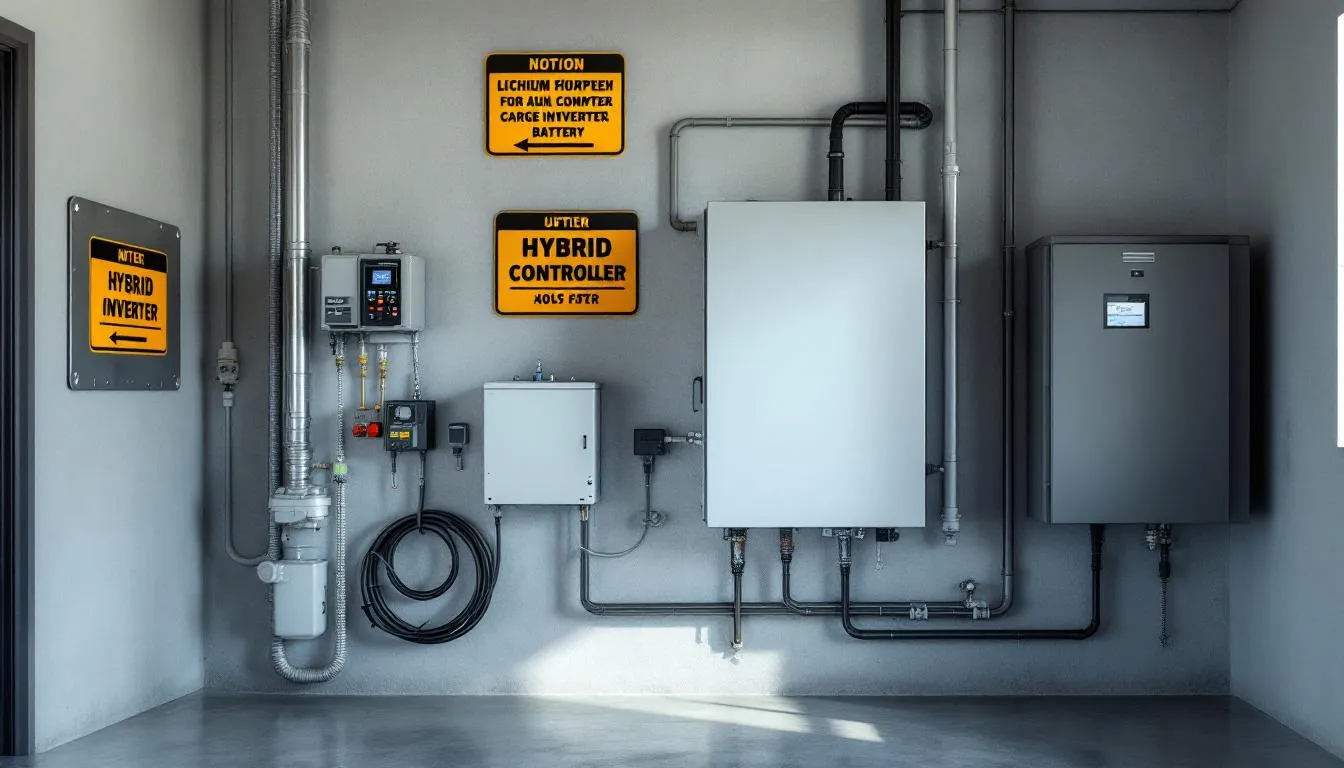
A complete home wind turbine kit with battery and inverter eliminates guesswork for off-grid and grid-tied installations by bundling the turbine, charge controller, battery bank, and inverter into one matched system. These packages simplify sizing calculations, reduce compatibility headaches, and often cost 15-30% less than purchasing components separately. The trade-off: less flexibility to upgrade individual parts, and manufacturers typically limit battery chemistry options to what integrates with their proprietary controllers.
What defines a complete wind turbine kit
A true complete kit includes the wind turbine (rotor, nacelle, tail or pitch control), tower hardware, charge controller, battery bank or battery-ready enclosure, and an inverter rated for the system's peak output. Kits marketed as "complete" sometimes exclude the tower, batteries, or installation hardware—reading the specification sheet prevents expensive surprises.
Battery capacity in these kits ranges from 2.4 kWh for small 400W vertical-axis systems to 20+ kWh for residential 10 kW horizontal-axis turbines. Inverter types split between modified sine wave (acceptable for resistive loads like heaters) and pure sine wave (required for electronics, variable-speed motors, and grid-tie applications). Only pure sine wave inverters meet NEC Article 705 requirements for utility interconnection in the United States.
Charge controllers in packaged kits use either PWM (pulse-width modulation) or MPPT (maximum power point tracking). MPPT controllers extract 20-35% more energy in variable wind conditions but add $300-$800 to kit cost. For turbines above 1 kW, the efficiency gain pays back within two years in most installations.
Vertical-axis turbine kits for residential lots
Vertical-axis wind turbines (VAWTs) suit urban and suburban properties with limited space, HOA restrictions, or multi-directional wind patterns. The Pikasola 600W kit includes a Darrieus-style VAWT, 600W MPPT controller, 1000W pure sine wave inverter, and mounting brackets for batteries (batteries sold separately). The turbine measures 39 inches tall by 23 inches diameter—small enough to mount on a reinforced shed roof or 15-foot pole.
![INLINE: Vertical-axis wind turbine mounted on residential rooftop with battery enclosure and inverter visible below]
The Windmax HY-600L package pairs a helical VAWT with a hybrid controller that accepts both wind and solar input. This kit ships with a 1500W pure sine wave inverter but no batteries; users add 12V deep-cycle batteries in series/parallel configuration to reach desired capacity. The turbine's helical blade design reduces vibration and noise to 45 dB at 12 m/s wind speed—quieter than most horizontal-axis models.
Aeolos-V 1kW offers the largest readily available VAWT kit, combining a 1000W vertical turbine, 1200W MPPT charge controller, 2000W inverter, and pre-wired battery tray for four 12V 200Ah batteries (user-supplied). Cut-in wind speed sits at 2.5 m/s with rated output at 10 m/s. The complete system weighs 485 pounds before batteries, requiring either a concrete pad foundation or engineered rooftop mount.
For true plug-and-play installation, the Auecoor 400W kit includes everything except the tower: turbine, 600W controller, 1000W inverter, and two 12V 100Ah lithium iron phosphate batteries. The lithium chemistry reduces weight by 60% compared to lead-acid equivalents and tolerates 3,000-5,000 charge cycles before capacity drops below 80%. Total kit cost runs $1,850-$2,100 depending on retailer.
Horizontal-axis turbine packages for higher output
Horizontal-axis wind turbines (HAWTs) dominate the 1 kW and above market segment where energy density per dollar matters more than aesthetic concerns. The Primus Air 40 package bundles a 40-watt micro-turbine with built-in charge controller, 300W inverter, and wiring for a single 12V battery. This micro-system targets RVs, boats, and remote sensors rather than whole-home power but demonstrates the all-in-one concept at small scale.
Bergey's GridTek package for the Excel 10 turbine represents the residential gold standard: 10 kW HAWT, synchronous inverter for grid-tie operation, integrated disconnect switches meeting NEC Article 705.12, and optional battery backup rated for 48V systems. The GridTek inverter converts three-phase wild AC from the turbine to grid-synchronized 240V split-phase. Battery integration requires the separate Bergey PowerHub, which adds 14.4 kWh lithium storage and automatic islanding during utility outages. Complete installed cost ranges from $65,000 to $85,000 depending on tower height and site preparation.
The SD6 from SD Wind Energy pairs a 6 kW downwind turbine with a Schneider Electric hybrid inverter rated for 6000W continuous, 9000W surge. The package includes an XW MPPT charge controller, system control panel, and battery compartment sized for eight 6V 415Ah flooded lead-acid batteries in series. Cut-in speed: 2.5 m/s. Rated output: 11 m/s. The turbine uses a passive yaw system and electromagnetic brake; no slip rings mean maintenance intervals stretch to 36 months for bearing grease.
Missouri Wind and Solar assembles custom kits around their Falcon 7 kW HAWT, offering customers choice of Outback, Magnum, or Schneider inverters with battery banks from 9.6 kWh to 38.4 kWh. The Falcon produces 48V DC, simplifying inverter selection and reducing conductor losses compared to 12V or 24V systems. Missouri Wind provides pre-crimped battery cables, MC4 connectors for optional solar integration, and a pre-wired combiner box—turn-key except for tower erection and final AC connections.
Battery sizing and chemistry considerations
Battery capacity determines how many hours the system powers loads when wind drops below cut-in speed. A 5 kW turbine producing 120 kWh per month in average wind needs 4.8 kWh of usable battery storage to bridge a typical 24-hour calm period while powering a 200W continuous base load. Add 50% margin for battery longevity, and the minimum specification becomes 7.2 kWh—six 12V 200Ah batteries in a 24V configuration or twelve in a 48V bank.
Flooded lead-acid batteries cost $140-$180 per kWh but require monthly watering, ventilated enclosures to exhaust hydrogen gas, and replacement every 4-7 years. AGM sealed lead-acid batteries eliminate watering and reduce outgassing but cost $240-$320 per kWh with similar lifespan. Lithium iron phosphate (LiFePO4) batteries start at $450-$650 per kWh, last 10-15 years, and tolerate 80% depth-of-discharge versus 50% for lead-acid, effectively doubling usable capacity per dollar over system lifetime.
| Battery Type | Cost per kWh | Cycle Life (80% DoD) | Maintenance | Ventilation Required |
|---|---|---|---|---|
| Flooded Lead-Acid | $140-$180 | 800-1,200 | Monthly water checks | Yes (hydrogen) |
| AGM Sealed Lead-Acid | $240-$320 | 600-1,000 | None | Minimal |
| Lithium Iron Phosphate | $450-$650 | 3,000-5,000 | None | No |
| Lithium NMC | $380-$520 | 2,000-3,000 | None | No |
Most wind turbine kits specify battery voltage (12V, 24V, or 48V) based on turbine output characteristics. Mixing battery voltages or adding more batteries than the charge controller supports voids warranties and risks equipment damage. The charge controller's maximum charge current sets an upper limit on battery bank size—a 60A controller paired with 48V batteries handles up to 2,880W of charging power, accommodating a 28.8 kWh bank charged at C/10 rate.
Temperature affects battery performance: lead-acid loses 35% capacity at 0°F, while lithium iron phosphate maintains 90% capacity to -4°F. Kits intended for cold climates need insulated, heated battery enclosures or lithium chemistry with internal heating. The additional enclosure cost adds $800-$1,500 to total system price.
Inverter selection for grid-tie versus off-grid
Grid-tie inverters synchronize output frequency and phase with utility power, allowing homeowners to offset consumption and sell excess generation through net metering where available. These inverters must include anti-islanding protection per NEC 705.40 and UL 1741 certification. Bergey GridTek, Schneider XW+, and SMA Windy Boy models meet US grid-tie requirements and handle the variable frequency wild AC produced by most small wind turbines.
Off-grid inverters prioritize battery charging and load management over utility synchronization. The Magnum Energy MS-PAE series offers pure sine wave output, 30-second surge capacity at 300% rated power, and generator auto-start when batteries drop below user-set voltage. These features matter for off-grid homesteads where the wind turbine supplements a backup generator. Modified sine wave inverters cost 40-60% less than pure sine wave models but damage electronics with sensitive power supplies, create audible hum in audio equipment, and reduce efficiency of induction motors by 15-20%.
Hybrid inverters combine grid-tie capability with battery backup, automatically islanding during utility outages while maintaining critical loads. The Schneider XW Pro costs $3,200-$4,100 depending on rated power (6.8 kW or 8.9 kW continuous) and includes a 48V DC input compatible with most residential wind turbines. During normal operation, excess wind generation charges batteries and exports to the grid; during outages, the inverter disconnects from utility feed and powers loads from batteries and real-time wind production.
Stacking multiple inverters in parallel increases capacity for larger homes—two 8 kW inverters provide 16 kW continuous power and 24 kW surge. This approach costs less than a single 16 kW inverter and adds redundancy. The Outback Radian series supports stacking up to three units, sharing load through a communication cable. Total system cost including turbine, batteries, and stacked inverters reaches $45,000-$70,000 for a 10 kW wind installation with 20 kWh storage.
Installation steps and electrical integration
Installation begins with tower foundation and erection per manufacturer specifications. Concrete pads for guyed towers require 3-5 cubic yards of 4,000 PSI concrete cured for seven days before tower installation. Freestanding monopole towers need engineered foundations calculated for local wind loads and soil bearing capacity—typically 5-8 cubic yards with rebar cage and anchor bolts. Tower height determines permit requirements: structures exceeding 200 feet above ground level require FAA Part 77 notification and possible lighting.
The turbine mounts to the tower top using flanged connections or slip-fit collars, depending on tower type. Electrical cable runs down the tower interior or external conduit to the ground-level equipment pad. Cable sizing follows NEC Article 310 and accounts for voltage drop—3% maximum from turbine to charge controller, 2% from controller to batteries, 2% from batteries to inverter. A 1 kW turbine on a 100-foot tower producing 48V requires 8 AWG copper for the turbine-to-controller run; undersizing to 10 AWG loses 8-12% of generated power to resistance.
The charge controller connects between turbine and batteries, with appropriately rated fuses or breakers on both sides per NEC 705.60. A dump load resistor (typically 300-1,000W depending on turbine size) connects to the charge controller's diversion output, burning excess energy when batteries reach full charge and preventing turbine overspeed. Without a dump load, most wind turbines enter uncontrolled furling or suffer blade damage during sustained high winds with full batteries.
Battery connections use heavy cable—2/0 AWG or larger for 48V banks above 10 kWh—and commercial battery terminals with anti-corrosion spray. Batteries connect in series to reach system voltage, then parallel strings increase capacity. A 48V, 19.2 kWh bank uses four 12V 200Ah batteries in series (48V), then four parallel strings (800Ah total). Each parallel connection point needs equal-length cables to balance current distribution.
The inverter connects to battery bank positive and negative buses, with a DC-rated breaker between batteries and inverter sized at 125% of inverter maximum current draw. Grid-tie inverters require AC interconnection through a dedicated breaker in the main service panel, sized per NEC 705.12(B)(2)(3) and local utility requirements. A manual disconnect switch between inverter and utility connection allows servicing without coordinating utility lockout.
Complete kit recommendations by use case
For off-grid cabins using under 3 kWh per day, the Windmax HY-600L kit with four 12V 100Ah AGM batteries and the included 1500W inverter provides adequate power when paired with 400-600W of solar panels for summer/winter balance. Total cost: $2,200-$2,800 including batteries and a 20-foot tilt-up tower. This system powers LED lighting, a 12V refrigerator, laptop charging, and small 120V appliances.
Suburban homeowners seeking utility bill reduction without full off-grid commitment should consider the Bergey Excel 1 package with GridTek inverter and optional 7.2 kWh battery backup. The 1 kW turbine produces 150-250 kWh monthly in 12 MPH average wind, offsetting 40-60% of typical household consumption. Net metering credits excess generation at retail rates in 38 states. Total installed cost: $18,000-$25,000, with 30% federal tax credit reducing net cost to $12,600-$17,500.
Rural properties with reliable 11+ MPH average wind benefit from the SD6 package with 24 kWh lithium battery storage. The 6 kW turbine produces 800-1,200 kWh monthly, covering an entire 3-bedroom home plus workshop or barn loads. Battery capacity allows 48 hours of autonomy at 500W continuous draw. Installed cost ranges from $42,000 to $58,000; the federal residential clean energy credit under IRC §25D reduces this to $29,400-$40,600.
Federal tax credits and state incentives
The federal Residential Clean Energy Credit (IRC §25D) provides 30% tax credit on complete system cost including equipment, labor, and permit fees for installations placed in service through 2032. The credit steps down to 26% in 2033 and 22% in 2034. Homeowners claim the credit on IRS Form 5695, with excess credit amounts carrying forward to future tax years.
State incentives vary significantly. California's SGIP (Self-Generation Incentive Program) offers $200 per kWh for battery storage paired with renewable generation, capped at $850,000 total program funding per applicant. New York's NY-Sun program provides $400-$1,000 per kW for wind systems under 25 kW. Massachusetts SMART program pays $0.40-$0.80 per kWh for wind generation over 10-20 year terms. The DSIRE database maintains current incentive details for all 50 states.
Property tax exemptions in 34 states exclude renewable energy system value from assessed property value, preventing tax increases despite added home value. Sales tax exemptions in 24 states eliminate 4-8% upfront cost. Some utility companies offer expedited interconnection and higher net metering rates for systems with battery backup that support grid stability.
Maintenance and monitoring for packaged systems
Wind turbine kits require annual inspections covering tower bolts (torque to specification), guy wire tension (re-tension after first year, then every 3-5 years), blade balance (check for erosion or damage), and bearing grease (refer to manufacturer schedule—typically 1-3 years). Battery terminals need quarterly cleaning and corrosion treatment; flooded lead-acid batteries need monthly specific gravity checks and distilled water top-off.
Monitoring systems track turbine RPM, output power, battery voltage, charge/discharge current, and inverter status. The Primus Aeolus software suite logs data at 1-minute intervals and alerts via email when parameters exceed thresholds. Bergey's WebLogger uploads to cloud storage, allowing remote troubleshooting. Generic Modbus-compatible monitoring equipment from vendors like Morningstar or Outback works with most charge controllers and inverters, displaying real-time data on smartphone apps.
Charge controllers fail more frequently than inverters or turbines—typical lifespan is 8-12 years. Keeping a spare controller ($300-$800 depending on rating) prevents extended downtime. Inverters last 12-18 years in temperature-controlled enclosures; outdoor installations reduce lifespan to 8-12 years due to thermal cycling. Turbine generator rewinds or replacement typically occur at 12-20 years depending on wind regime harshness.
Can I install a wind turbine kit myself or do I need a contractor?
Tower erection requires at least three people and equipment like a gin pole or crane for turbines above 1 kW. Most homeowners hire contractors for tower work but handle electrical connections themselves if comfortable with DC wiring and NEC requirements. Grid-tie interconnection requires inspection and utility approval regardless of who performs the work. Licensed electrician involvement ensures NEC Article 705 compliance and may be required by local building departments for permits.
How do I size the battery bank for several days of backup power?
Multiply daily consumption in watt-hours by desired days of autonomy, then divide by battery depth-of-discharge limit (0.5 for lead-acid, 0.8 for lithium). Example: 8 kWh daily usage, 3 days autonomy, lithium batteries: (8,000 × 3) ÷ 0.8 = 30,000 Wh or 30 kWh battery capacity. Add 20% margin for cold weather or aging, bringing total to 36 kWh. At system voltage of 48V, this requires 750 Ah capacity—four 12V 200Ah batteries in series, then three parallel strings.
What happens if wind speeds exceed the turbine's maximum rating?
Modern wind turbines use furling (horizontal-axis) or variable-pitch blades (some vertical-axis) to limit rotor speed in high winds. The charge controller diverts excess power to a dump load resistor when batteries reach full charge, preventing damage. Inverters typically shut down at wind speeds above 25-30 m/s (56-67 MPH) to protect electronics. Turbines rated for survival in 60 m/s winds (134 MPH) withstand hurricane-force conditions when properly installed, though output stops during extreme weather.
Do complete kits work with solar panels for a hybrid system?
Most modern charge controllers accept both wind and solar input with automatic source switching. Hybrid controllers like the Schneider MPPT 80 600 handle up to 600V solar array input and 150V wind turbine input simultaneously, combining power to charge a common battery bank. This combination smooths generation across seasonal and daily cycles—winter wind production balances summer solar output. Total renewable capacity should not exceed charge controller rating; a 4 kW controller supports combinations like 2.5 kW wind plus 1.5 kW solar.
How long until a wind turbine kit pays for itself?
Payback period depends on average wind speed, electricity rates, and available incentives. A $25,000 system (after federal tax credit) producing 4,000 kWh annually at $0.16/kWh saves $640 per year in electricity costs—39-year simple payback. Add $0.10/kWh net metering credits for another 4,000 kWh exported annually, and payback drops to 16 years. Sites with 13+ MPH average wind and $0.20+ electricity rates achieve 8-12 year payback. Battery storage extends payback by 2-4 years but provides backup power value difficult to quantify financially.
Bottom line
Complete wind turbine kits eliminate component compatibility problems and simplify purchasing, though they sacrifice upgrade flexibility and often cost 10-20% more than carefully selected individual parts. For first-time installers prioritizing simplicity over customization, an integrated package from Bergey, Primus, or established kit assemblers like Missouri Wind and Solar reduces risk and speeds installation. Compare at least three complete kits against a custom parts list before purchasing—the optimal choice depends on site wind resource, budget, and technical comfort level. Request references from recent customers and verify all components carry UL or equivalent safety certifications before committing to any package.
Share this article
windturbinehome.com/s/b424fe
Editorial note: This article was researched and written by a member of the Wind Turbine Home editorial team. AI-assisted tools were used for spell-checking and light grammar review only — all research, analysis, and conclusions are our own. Our editorial policy prohibits sponsored content and paid placements. Read our editorial policy →
Related reading
battery storage inverters
DIY Wind Turbine Charge Controller: When to Build vs Buy
Building a wind turbine charge controller saves $150-400 but risks battery damage and code violations. Compare DIY circuit boards against commercial MPPT units.
battery storage inverters
Hybrid Inverter Selection for Small Wind + Battery Systems
Choose the right hybrid inverter for your wind turbine battery setup—DC-coupled models work best for systems under 5 kW, while AC-coupled units offer easier solar retrofits.
battery storage inverters
Best Batteries for Small Wind Systems in 2026 | Expert Guide
Lithium iron phosphate batteries dominate 2026 wind storage. Compare cycle life, depth-of-discharge, and cold-weather performance for systems 400W-10kW.
battery storage inverters
Lithium vs AGM Batteries for Wind Systems in Cold Weather
Cold weather cuts AGM capacity by 20-40% and lithium by 10-15%. Learn which chemistry survives winter turbine charging, how battery management systems respond, and what installers must change below 32°F.
battery storage inverters
12V vs 24V vs 48V Wind Turbine Systems: Which Voltage Is Right?
Choosing between 12V, 24V, and 48V wind turbine systems depends on power needs, wire costs, and battery architecture. Most residential setups favor 24V or 48V.
battery storage inverters
MPPT vs PWM Controller for Small Wind: Which to Buy and Why
MPPT controllers harvest 15-30% more energy than PWM in variable-wind conditions but cost 2-4× more. Choose MPPT for systems above 1 kW or battery banks over 400 Ah.
battery storage inverters
Best Battery Banks for Home Wind Turbines (LiFePO4, 2026)
Home wind turbines charge in irregular bursts, so battery chemistry matters as much as capacity. Here is why lithium iron phosphate leads on reliability.
battery storage inverters
Off-Grid Wind Turbine Battery Setup: Complete System Guide
Complete guide to off-grid wind turbine battery systems covering charge controllers, battery banks, inverters, and load management for residential installations.