Best Small Wind Turbines 1kW-10kW for Homes (2026 Guide)
Compare the top small wind turbines from 1kW to 10kW for residential properties. Real-world output, installed costs, and manufacturer specs—updated 2025.
Share this article
windturbinehome.com/s/8577e6
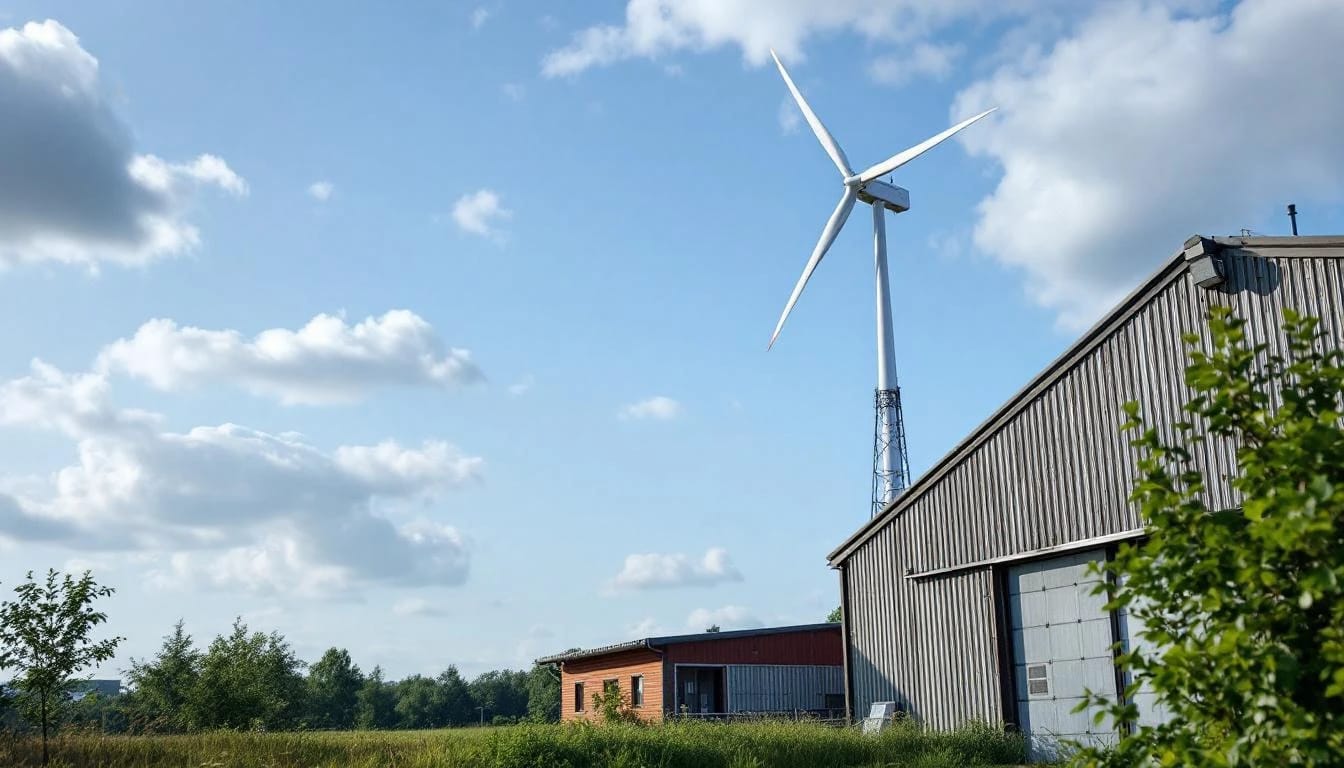
Property owners considering a 1kW to 10kW small wind turbine face dozens of models from manufacturers like Bergey, Primus, Aeolos, and Pikasola. The best choice depends on average wind speed, lot size, local zoning, and budget. Most homes with average wind speeds above 11 mph (5 m/s) see meaningful energy offset from turbines in the 2.5kW to 5kW range, while farms and rural properties with consistent 13+ mph winds can justify 10kW models. Expect installed costs of $8,000–$16,000 for a 2.5kW system and $30,000–$55,000 for a 10kW unit before incentives. Output depends heavily on tower height and exposure—a turbine mounted at 80 feet in clean wind produces two to three times the energy of the same model at 40 feet in turbulent airflow.
What defines the 1kW to 10kW small wind category
The National Renewable Energy Laboratory (NREL) classifies distributed wind systems as turbines installed at or near the point of use—behind the meter for homes, farms, schools, and small businesses. The 1kW to 10kW range suits individual properties, distinguishing them from micro turbines under 1kW (often roof-mounted) and medium turbines 11kW+ that serve commercial or community-scale loads.
Small wind turbines convert kinetic energy into electricity through horizontal-axis rotors (three-blade propeller style) or vertical-axis designs (Savonius, Darrieus, or hybrid). Horizontal-axis wind turbines (HAWTs) dominate the residential market because they capture more energy per swept area. Vertical-axis models offer simpler installation and quieter operation but typically produce 40–60% less energy at the same rated capacity.
Rated capacity—the nameplate "1kW" or "10kW"—describes maximum output at a specific wind speed, usually 25–30 mph. Real-world annual production depends on the site's wind resource and tower height. A 5kW turbine in a location with 12 mph average wind at hub height might generate 6,000–8,000 kWh per year, while the same turbine in a 9 mph site delivers 2,000–3,000 kWh.
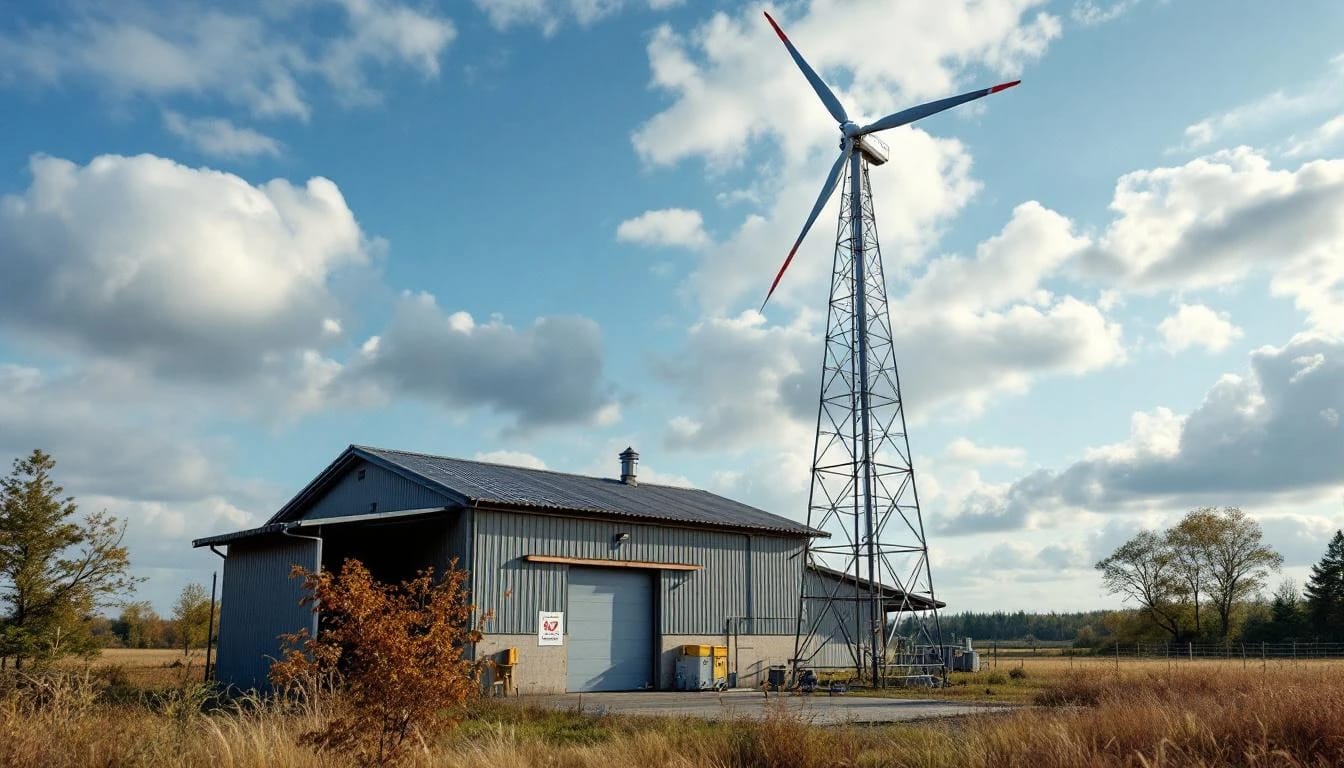
![INLINE: Bergey Excel 10 horizontal-axis wind turbine mounted on guyed lattice tower in rural farmland with clear sky]
Top horizontal-axis models: 1kW to 5kW
Bergey Windpower Excel 1
Bergey's Excel 1 offers 1kW rated capacity at 24.6 mph (11 m/s). The three-blade upwind rotor spans 8.2 feet (2.5 m). Bergey specifies 1,800 kWh annual production in a 12 mph (5.4 m/s) average wind site. The turbine weighs 60 lb and ships with a permanent-magnet alternator rated for grid-tied or battery-based systems.
Recommended tower height: 42–60 feet. Installed cost: $7,500–$12,000 including tower, inverter, and labor. The Excel 1 carries Small Wind Certification Council (SWCC) certification, confirming performance claims and safety standards. Bergey's ten-year limited warranty covers the generator and blades.
Primus Air 40
The Primus Air 40 delivers 2.5kW rated output at 28 mph. Rotor diameter measures 12.8 feet (3.9 m). Manufacturer data shows 3,600 kWh per year in a 12 mph site. The unit weighs 110 lb, uses a neodymium permanent-magnet generator, and includes built-in overspeed protection via blade furling.
Recommended tower: 50–80 feet monopole or guyed lattice. Installed cost: $10,000–$17,000. The Air 40 holds IEC 61400-2 certification. Primus offers a five-year warranty on electrical components and three years on the rotor assembly.
Bergey Excel 6
Bergey's Excel 6 produces 6kW at 26.8 mph with a 17-foot (5.1 m) rotor. Annual output reaches 10,000–12,000 kWh in sites averaging 13 mph. The turbine's AutoFurl blade pitch system protects against overspeed in gusts above 40 mph. Total weight: 255 lb.
Tower requirements: 80–120 feet for optimal performance. Installed cost: $22,000–$38,000. SWCC certified. Bergey provides a five-year limited warranty. The Excel 6 requires NEC Article 705 compliant disconnects and a dedicated circuit breaker sized to the inverter's maximum output.
High-output options: 7kW to 10kW
Bergey Excel 10
The Excel 10 remains the flagship residential turbine in North America. Rated 10kW at 31 mph, the rotor spans 23 feet (7 m). Bergey specifies 15,000–18,000 kWh annual production in a 13 mph average site—enough to cover a typical home's full consumption. The unit weighs 600 lb and mounts on guyed lattice or monopole towers 80–140 feet tall.
Installed cost: $35,000–$60,000, varying by tower type, soil conditions, and permitting. The Excel 10 is SWCC certified and qualifies for the federal 30% Residential Clean Energy Credit (IRC §25D) when used at a principal residence. Five-year warranty on the generator, blades, and frame.
A licensed electrician must install a disconnect switch visible from the turbine base, size conductors per NEC Table 310.16, and bond the tower to a grounding electrode system. Many jurisdictions require FAA Part 77 review for towers above 200 feet AGL or near airports.
Aeolos-H 10kW
Aeolos offers a 10kW horizontal-axis turbine with a 26-foot (8 m) rotor. The company's published data shows 14,000 kWh per year in 12 mph conditions. The turbine uses an electromagnetic yaw system and hydraulic blade pitch control. Weight: 650 lb.
Recommended tower: 100–120 feet. Installed cost: $28,000–$48,000. Aeolos turbines typically ship from China; lead time varies. The H 10kW lacks SWCC certification but meets CE and ISO 9001 standards. Warranty: two years on major components. Spare parts availability in the U.S. is less robust than Bergey's domestic supply chain.
Vertical-axis alternatives: quieter but less efficient
Vertical-axis wind turbines (VAWTs) mount the generator at ground level and accept wind from any direction without a yaw mechanism. Popular brands include Pikasola, Windmax, and Happybuy. A 3kW VAWT with a 5-foot rotor height typically produces 2,000–3,000 kWh per year in 12 mph wind—comparable to a 1.5kW HAWT.
Advantages: lower noise (35–45 dBA at 50 feet), simpler maintenance, and reduced bird strike risk. Disadvantages: lower efficiency, shorter lifespan (10–15 years versus 20+ for quality HAWTs), and limited certification. Few VAWTs carry SWCC or IEC validation.
Installed costs for a 3kW VAWT run $6,000–$11,000 on a 30–50 foot tower. VAWTs work well in urban or suburban lots with size restrictions but rarely offset more than 20–30% of household consumption. For properties with space for an 80-foot tower and average wind above 11 mph, a horizontal-axis turbine delivers better return on investment.
Installation cost breakdown and tower selection
Total installed cost includes the turbine, tower, inverter, electrical materials, permits, and labor. A typical 5kW system's budget:
| Component | Cost Range |
|---|---|
| Turbine (turbine head, blades, controller) | $6,000–$12,000 |
| Tower (guyed lattice or monopole, 80 ft) | $6,000–$14,000 |
| Inverter (grid-tied, battery-ready optional) | $1,500–$3,500 |
| Electrical (wire, conduit, disconnect, breaker) | $800–$2,000 |
| Foundation (concrete base, anchors) | $1,200–$3,000 |
| Crane rental (if needed for monopole) | $800–$2,500 |
| Labor (certified installer, 2–3 days) | $3,000–$6,000 |
| Permits & inspections | $400–$1,200 |
| Total | $19,700–$44,200 |
Guyed lattice towers cost less than tilt-up monopoles but require guy anchor footings and more land. A 100-foot guyed tower needs a radius of roughly 50 feet clear of obstructions. Monopole towers occupy a smaller footprint but demand heavier foundations and crane lifts.
Tower height matters more than turbine size. Raising a 5kW turbine from 60 feet to 100 feet can double annual production because wind speed increases with height and turbulence decreases. NREL's WindWatts tool (available through their Residential Energy Cost Estimator) models output at different tower heights for any U.S. location.
NEC Article 705.12 limits interconnection to 120% of the main service panel's busbar rating unless the panel is upgraded. A 10kW inverter outputting 42 amps at 240V may require a 200-amp service panel or a line-side tap ahead of the main breaker. Consult a licensed electrician before ordering equipment.
Federal and state incentives for small wind
The federal Residential Clean Energy Credit (IRC §25D) provides a 30% tax credit for small wind systems placed in service through 2032. The credit covers the turbine, tower, inverter, installation labor, and permitting—excluding any portion paid by utility rebates or state grants. Claim the credit on IRS Form 5695 when filing taxes for the installation year. The property must be a principal or secondary residence in the United States.
Example: A $40,000 installed 10kW system qualifies for a $12,000 federal credit, reducing net cost to $28,000. If the household's tax liability is less than $12,000 in the installation year, the unused credit carries forward to subsequent years.
State incentives vary. California's Self-Generation Incentive Program (SGIP) previously offered rebates for small wind but now focuses on energy storage. New York State includes small wind in NYSERDA's Clean Energy Fund. Check the Database of State Incentives for Renewables & Efficiency (DSIRE) for current programs. Many states offer property tax exemptions for renewable energy systems, preventing increases in assessed value from adding to annual tax bills.
Net metering policies allow turbine owners to send excess generation to the grid and receive credits. Forty states maintain some form of net metering, though rules differ. Some utilities impose standby charges or monthly minimums. Confirm net metering availability and compensation rate with the utility before installation. Interconnection agreements require liability insurance—typically $1–2 million coverage—and compliance with IEEE 1547 and UL 1741 inverter standards.
Site assessment: wind speed and zoning
Small wind turbines require average wind speeds of at least 10 mph (4.5 m/s) at hub height to produce meaningful energy. Sites with 12+ mph averages justify the investment. NREL's WindWatts portal provides modeled wind resource data at 10-meter and higher resolutions for any U.S. address.
On-site measurement improves accuracy. Anemometer data loggers ($300–$800) mounted on a 30-foot mast for 6–12 months capture seasonal variation and turbulence. Place the sensor upwind of trees and buildings. Wind shear—the increase in speed with height—follows a power law: speed increases roughly 10–20% per doubling of height in rural areas and less in forests or suburbs.
Zoning ordinances govern tower height, setbacks, and noise limits. Many jurisdictions require towers to sit back from property lines at least 1.1 times their height (110% setback). Noise limits range from 45 dBA at the property line (residential zones) to 55 dBA (agricultural). Quality small turbines produce 35–50 dBA at rated output, roughly equivalent to moderate rainfall.
FAA Part 77 review applies to structures exceeding 200 feet AGL or within certain distances of airports and heliports. Most residential small wind towers remain under 150 feet and avoid FAA filing. Contact the FAA online or through a professional installer to verify.
Homeowner association (HOA) covenants sometimes prohibit towers or restrict height. Some states—Arizona, California, Colorado—enacted solar/wind access laws limiting HOA restrictions, but enforcement varies. Obtain written HOA approval before purchasing equipment.
Expected energy production and payback periods
Annual energy production depends on site wind speed, tower height, and turbine efficiency. Use this table as a rough guide for a 5kW horizontal-axis turbine:
| Average Wind Speed (hub height) | Tower Height | Estimated Annual kWh |
|---|---|---|
| 10 mph (4.5 m/s) | 80 ft | 4,000–5,500 |
| 12 mph (5.4 m/s) | 80 ft | 7,000–9,000 |
| 12 mph (5.4 m/s) | 100 ft | 9,000–11,000 |
| 14 mph (6.3 m/s) | 100 ft | 12,000–14,500 |
At $0.14/kWh retail electricity, a 5kW system producing 9,000 kWh saves $1,260 per year. With a $25,000 installed cost minus $7,500 federal credit (net $17,500), simple payback spans roughly 14 years. Sites with higher wind speeds, taller towers, or elevated electricity rates shorten payback.
Factor in maintenance: $200–$500 annually for inspections, greasing, and controller firmware. Blade replacements or bearing service may add $1,500–$3,000 every 10–15 years. Quality turbines operate 20–25 years, so lifetime production can reach 180,000–250,000 kWh for a well-sited 5kW unit.
Wind turbines pair well with solar panel arrays because wind peaks in winter and spring while solar peaks in summer. A hybrid system smooths seasonal generation and increases self-consumption.
Maintenance requirements and long-term reliability
Small wind turbines demand more active maintenance than solar panels. Rotating machinery wears. Annual service includes:
- Visual inspection of blades for cracks, chips, or erosion
- Checking bolts and fasteners for looseness (vibration loosens hardware)
- Lubricating yaw bearings and pitch mechanisms
- Testing electrical connections for corrosion
- Verifying tower guy tension (guyed towers only)
- Reviewing inverter logs for fault codes or performance drops
Bergey and Primus turbines feature sealed bearings rated for 100,000+ hours (11+ years of continuous operation). Blade leading edges erode in dusty or coastal environments; apply protective tape every 3–5 years. Lightning strikes can damage controllers; install a surge arrestor at the base per NEC 705.32.
Turbine lifespans vary. Bergey Excel models regularly run 25+ years with proactive upkeep. Budget import brands—Windmax, Happybuy—may last 8–12 years before requiring major overhauls. Manufacturer support matters. Bergey maintains parts inventory and technical phone support. Aeolos and Pikasola rely on third-party U.S. distributors whose availability fluctuates.
Decommissioning a turbine requires tower removal, foundation excavation (if required by permit), and recycling fiberglass blades. Plan for $2,000–$5,000 end-of-life costs.
For more on upkeep, see our small wind turbine maintenance checklist.
Brand comparison: Bergey vs. Primus vs. Aeolos
| Brand | Origin | Certification | Warranty | U.S. Support | Price Tier |
|---|---|---|---|---|---|
| Bergey Windpower | Oklahoma, USA | SWCC, IEC | 5–10 years | Excellent | High |
| Primus Windpower | Colorado, USA | IEC 61400-2 | 3–5 years | Good | Mid-High |
| Aeolos Wind Energy | China | CE, ISO 9001 | 2 years | Limited | Low-Mid |
| Pikasola | China | None | 1 year | Minimal | Low |
Bergey commands premium pricing but delivers proven reliability and domestic parts supply. Primus balances cost and performance with solid IEC certification. Aeolos offers lower upfront cost at the expense of longer lead times and uncertain service. Pikasola and similar budget brands suit DIY installers willing to troubleshoot without factory support.
Check small wind turbine reviews for owner experiences and failure-mode data.
Permitting and interconnection process
Permit requirements vary by jurisdiction. Typical steps:
- Pre-application consultation: Meet with the zoning department to confirm allowed tower height, setback requirements, and noise ordinances.
- Building permit: Submit structural drawings of the tower foundation and tower manufacturer's engineering data. Pay permit fees ($200–$800).
- Electrical permit: Provide single-line diagrams showing the turbine, inverter, disconnect, and service panel. An electrical permit costs $100–$300.
- FAA review (if tower exceeds 200 feet AGL or is near an airport): File FAA Form 7460-1 at least 45 days before construction.
- Utility interconnection application: Submit manufacturer specs, inverter certifications (UL 1741), and proof of liability insurance. Interconnection fees range from $0 (small systems) to $500+.
- Inspections: Building and electrical inspections occur after installation. The utility conducts a final meter inspection before granting permission to operate.
Processing time: 4–12 weeks. Rural counties often fast-track small wind permits. Urban areas may require public hearings or neighbor notifications.
Hire an installer familiar with local codes. Many jurisdictions require a licensed electrician and a professional engineer's stamp on tower foundations exceeding certain heights.
For grid-tied systems, the inverter must meet IEEE 1547 anti-islanding requirements. When grid power fails, the inverter disconnects the turbine to protect line workers. Battery-based systems with energy storage continue operating during outages but require more complex wiring and permitting.
How much does a 5kW wind turbine cost installed?
Installed costs for a 5kW turbine range from $18,000 to $35,000, including the turbine, 80-foot tower, inverter, electrical work, and permits. After the 30% federal tax credit, net cost drops to $12,600–$24,500. Prices vary by tower type (guyed lattice costs less than monopole), site conditions, and regional labor rates.
What wind speed do I need for a home wind turbine?
Average wind speeds of 10 mph (4.5 m/s) or higher at hub height make small wind economically viable. Sites with 12+ mph average winds produce the best return. Measure wind speed with an anemometer for 6–12 months or use NREL's WindWatts modeling tool for initial assessment. Tower height significantly affects wind exposure—raising the turbine 20 feet can increase output 20–30%.
Are small wind turbines worth it in 2025?
Small wind turbines prove worthwhile in high-wind rural locations with average speeds above 12 mph, tall towers (80+ feet), and retail electricity rates above $0.12/kWh. Expect 12–18 year payback periods before incentives, dropping to 8–14 years after the federal credit. Urban or suburban sites with limited tower height and lower wind speeds rarely achieve positive returns. Solar panels deliver faster payback in most residential settings.
Do I need permission to install a wind turbine on my property?
Yes. Building and electrical permits are mandatory. Zoning approval confirms tower height and setback compliance. Grid-tied systems require utility interconnection agreements. Homeowner associations may impose additional restrictions. FAA notification applies to towers exceeding 200 feet AGL or near airports. Budget 2–3 months for permitting and 1–2 weeks for inspections. A licensed contractor handles most paperwork.
How long do residential wind turbines last?
Quality horizontal-axis turbines from Bergey or Primus operate 20–25 years with proper maintenance. Blades last 15–20 years before requiring replacement. Bearings and generators may need service at 10–15 years. Budget import turbines average 8–12 years before major repairs. Annual inspections, lubrication, and prompt repairs extend lifespan. Lightning protection and surge arrestors reduce electrical failures.
Bottom line
The best small wind turbine for a property depends on measured wind speed, available tower height, and local electricity costs. Bergey Excel models lead in reliability and certification. Primus offers strong performance at mid-range prices. Aeolos and budget brands suit DIY projects with lower upfront budgets. Prioritize tower height over turbine size—an 80-foot tower doubles or triples output compared to 40 feet. Use NREL's WindWatts tool to model site-specific production, confirm zoning allows the required tower height, and apply for the 30% federal tax credit to improve payback. For properties with consistent 12+ mph winds, a properly sited 5kW to 10kW turbine offsets 50–100% of annual consumption.
Contact a certified small wind installer for a free site assessment and quote.
Share this article
windturbinehome.com/s/8577e6
Editorial note: This article was researched and written by a member of the Wind Turbine Home editorial team. AI-assisted tools were used for spell-checking and light grammar review only — all research, analysis, and conclusions are our own. Our editorial policy prohibits sponsored content and paid placements. Read our editorial policy →
Related reading
small wind turbines
Furling vs Pitch Control on Small Wind Turbines: Rotor Protection Explained
Small wind turbines use furling or pitch control to protect rotors in high winds. Furling turns the turbine sideways; pitch feathers the blades. Compare costs, reliability, and best applications.
small wind turbines
Capacity Factor for Small Wind Turbines: Realistic Numbers by Site
Most residential wind turbines deliver 10–25% capacity factor in average sites, 25–35% in excellent wind. Learn what those numbers mean for your energy bills.
small wind turbines
Tip Speed Ratio for Residential Turbines: What to Spec
Tip speed ratio determines how efficiently your small wind turbine extracts energy. Learn optimal TSR ranges for HAWT vs VAWT, why it matters for residential installs, and how to match turbine specs to your site conditions.
small wind turbines
Betz Limit Explained: Why No Turbine Extracts More Than 59.3%
The Betz limit proves no wind turbine can convert more than 59.3% of wind's kinetic energy into electricity—a fundamental physics constraint that shapes every rooftop and backyard turbine design.
small wind turbines
IEC 61400-2 Standard Explained: Small Wind Turbine Safety Guide
IEC 61400-2 sets the global safety and performance rules for wind turbines under 200 kW. This guide explains certification requirements, structural tests, and what compliance means for U.S. homeowners.
small wind turbines
What a 5 kW Turbine Produces in Different Wind Classes
A 5 kW small wind turbine generates 6,000-15,000 kWh/year depending on wind class. Class 3 sites (13-15 mph average) deliver 9,000-11,000 kWh annually—enough for most homes.

small wind turbines
Permanent Magnet vs Induction Wind Generator: Which to Spec
Permanent magnet generators dominate residential wind turbines because they self-excite at low RPM and need no grid connection, while induction generators require grid tie and higher wind speeds.
small wind turbines
Best 3 kW Home Wind Turbines 2026: Cost and ROI Compared
Real prices, installation costs and payback for the Bergey Excel 1, Primus Air 40 and Aeolos-H 3kW, so US homeowners see which 3 kW turbine is worth it.
small wind turbines
5 kW Home Wind Turbine Systems: Brands, Output & Costs 2026
Five-kilowatt residential wind turbines cost $15,000–$40,000 installed. Compare Bergey Excel, Primus Air, and certified brands for output, tower height, and grid-tie options.