IEC 61400-2 Standard Explained: Small Wind Turbine Safety Guide
IEC 61400-2 sets the global safety and performance rules for wind turbines under 200 kW. This guide explains certification requirements, structural tests, and what compliance means for U.S. homeowners.
Share this article
windturbinehome.com/s/99f2bc
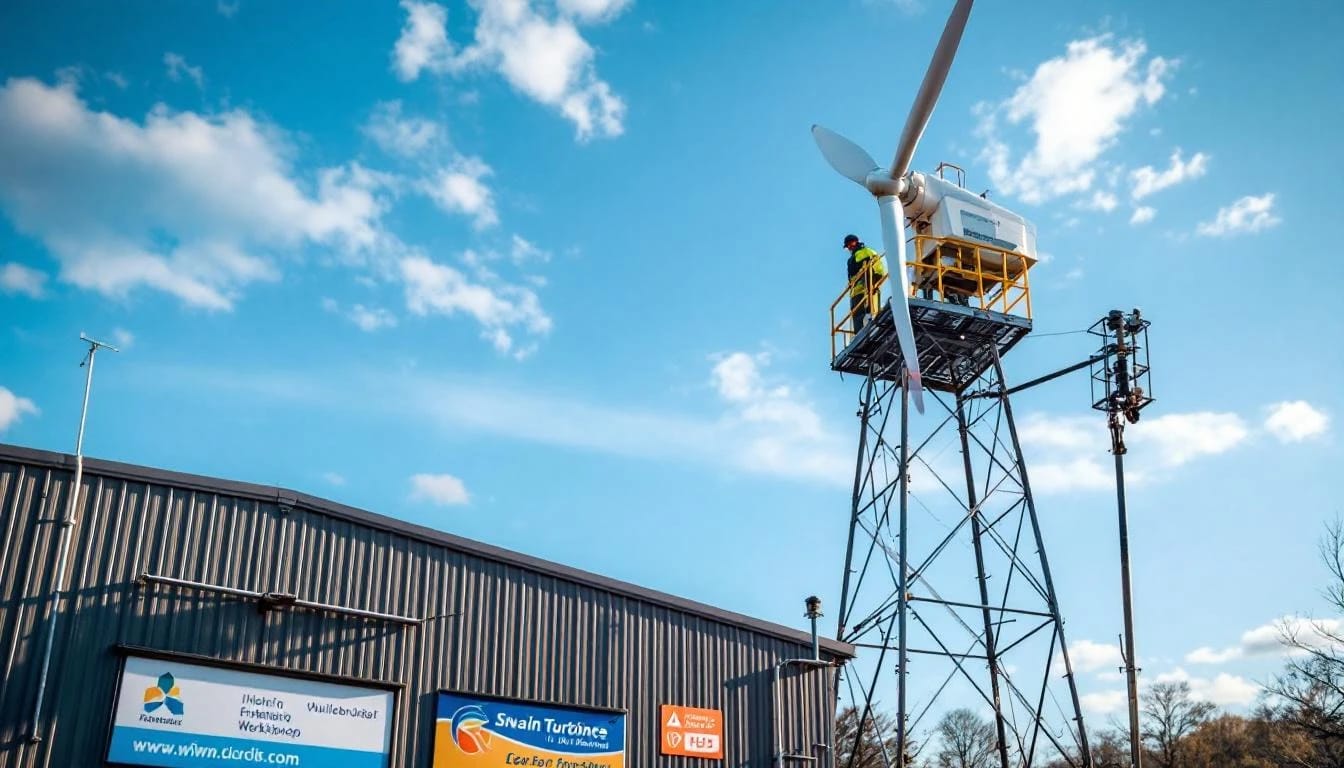
IEC 61400-2 is the international safety and design standard governing small wind turbines rated below 200 kW rotor-swept area, covering everything from blade stress tests to electrical protection. Published by the International Electrotechnical Commission, it ensures turbines survive extreme weather, stay bolted to the tower, and integrate safely with home electrical systems. For U.S. buyers, IEC 61400-2 compliance signals third-party verification that a turbine meets structural, electrical, and acoustic benchmarks—a critical filter when manufacturers make competing claims.
What IEC 61400-2 actually regulates
IEC 61400-2 splits into four domains: structural integrity, electrical safety, acoustic emissions, and performance characteristics. Structural rules govern blade fatigue, tower loading, and thrust forces during 50-year wind events. Electrical safety addresses grounding, inverter fault response, and islanding protection—the turbine's ability to disconnect when the grid goes down. Acoustic limits cap noise at 45 dBA measured at a specific distance (often 60 meters), though this benchmark sits below what many jurisdictions enforce. Performance clauses standardize power-curve testing so manufacturers cannot cherry-pick favorable wind speeds.
The standard applies to turbines with rotor-swept areas less than 200 m², which translates to roughly 50 kW for horizontal-axis machines and 20 kW for vertical-axis designs. Bergey Excel 10 (7-meter diameter, 10 kW rated) and Primus Air 40 (4.2-meter diameter, 1.5 kW rated) both fall within scope. Larger machines—Aeolos-H 50 kW with its 15-meter rotor—bump against the boundary and may require partial IEC 61400-1 testing for utility-scale turbines.
![INLINE: Small wind turbine with IEC certification label on nacelle housing during installation]
Structural load cases and survival wind speeds
IEC 61400-2 defines 15 load cases simulating normal operation, startup, shutdown, emergency stop, yaw errors, and grid faults. Each case calculates combined bending, torsion, and axial forces on blades, tower, and foundation. Survival wind speed—the velocity a stationary turbine must endure without structural failure—defaults to 59.5 m/s (133 mph) for a Class III turbine, the most common rating for residential sites. Class II turbines require 69.3 m/s (155 mph) survival, reserved for coastal or Great Plains installations.
Blade certification involves spin tests at 130% of maximum tip speed and edgewise fatigue cycles equivalent to 20 years of turbulence. Towers undergo static pull tests to verify buckling resistance, then cyclic fatigue tests replicating wind-gust loading. Guy-wire systems receive separate tension tests ensuring no single anchor failure triggers collapse. Pikasola turbines, for example, publish guy-wire pre-tension specs and tower-deflection curves directly traceable to IEC test protocols.
Lightning protection follows Annex G requirements: a continuous conductive path from blade tip through tower to earth ground, with impedance below 10 ohms at DC. Aluminum towers need bonded copper down-conductors; steel towers serve as the conductor if wall thickness exceeds 4.8 mm. A separate lightning rod atop the nacelle is not required if blade tips incorporate receptors, but many manufacturers install one to meet local code.
Electrical safety and grid integration
Section 8 of IEC 61400-2 mandates anti-islanding protection: the inverter must disconnect within 2 seconds if grid voltage or frequency drifts beyond IEEE 1547 thresholds (88–110% nominal voltage, 59.3–60.5 Hz for 60 Hz grids). This prevents energizing utility lines during outages—a fatal hazard for line workers. Turbines also require overvoltage protection, typically Type 2 surge arresters rated for 20 kA per NEC Article 705.
Grounding electrodes must achieve less than 25 ohms resistance, verified by fall-of-potential testing. Small turbines under 10 kW often share the building's grounding electrode system, but separate ufer ground or driven rods become necessary for taller towers (over 80 feet) to control lightning surge. The nacelle, tower, and inverter chassis all bond to this electrode. Double-insulated alternators (Primus WindPower's design choice) reduce ground-fault risk but do not eliminate the need for equipment grounding.
Direct-drive permanent-magnet generators produce wild AC—voltage and frequency swing with rotor speed—so rectification to DC and grid-tie inversion occur inside the nacelle or at the tower base. The rectifier must tolerate full stall current (three-phase short) without catching fire. IEC 61400-2 requires a 10-minute thermal test at 150% rated current. Budget turbines skip this test; certified units publish rectifier overload curves.
Acoustic emission testing and real-world limits
IEC 61400-2 measures sound pressure level at a reference distance (typically 60 meters) in 1 m/s wind-speed bins from cut-in to rated power. The test setup isolates turbine noise from background by subtracting ambient readings taken with the turbine parked. Reported sound power is A-weighted, peaking in the 500–2000 Hz range where blade-tip vortex shedding dominates. A certified Bergey Excel 10 produces 45 dBA at 60 meters in 11 m/s wind—about library-quiet.
Most U.S. jurisdictions ignore IEC acoustic data and write ordinances around property-line limits: 50 dBA daytime, 45 dBA nighttime in residential zones. A 10 kW turbine on a 100-foot tower typically needs 200 feet setback to meet 45 dBA, assuming no terrain amplification. Vertical-axis turbines run quieter at equivalent power—Aeolos-V 3 kW measures 38 dBA at 50 meters—but fewer municipalities understand VAWT noise signatures, leading to blanket bans.
Annex F of the standard covers blade-infrasound (below 20 Hz), though no enforceable limits exist. Research from the National Wind Coordinating Collaborative found infrasound from small turbines remains 10–15 dB below highway traffic at the same distance. Infrasound complaints correlate with visible blade flicker rather than measured sound pressure, a psychoacoustic effect not addressed in IEC 61400-2.
Power-curve verification and capacity factor claims
Manufacturers must test power output across 0.5 m/s wind bins from cut-in (often 2.5 m/s) to cutout (typically 18–25 m/s). IEC 61400-2 requires a minimum 180 hours of data at each bin, normalized to standard air density (1.225 kg/m³ at sea level, 15°C). The test site must have flat terrain within three rotor diameters and an anemometer mounted at hub height on a separate mast, offset by two rotor diameters to avoid wake interference.
Bergey publishes IEC-certified curves showing the Excel 10 hits 10 kW at 13 m/s (29 mph); most competing 10 kW turbines need 14–15 m/s because they undersize the rotor. Annual energy production (AEP) estimates multiply the power curve by a site's wind distribution—typically modeled as a Weibull function with shape factor 2.0. At an 11 mph average site, an Excel 10 delivers roughly 14,000 kWh/year (16% capacity factor). Manufacturers quoting 20–25% capacity factor assume Great Plains or coastal wind regimes (13+ mph average).
Blade-pitch or stall regulation keeps power output below the rated inverter capacity in high winds. Passive stall designs (most fixed-pitch turbines) rely on blade-section aerodynamics to shed lift above design angle of attack. Active pitch uses a servo to feather blades, adding cost but improving cutout wind speed to 25 m/s versus 18 m/s for stall machines. IEC 61400-2 does not favor one strategy; it tests both under identical load cases.
Certification bodies and what compliance costs
Third-party testing labs accredited to ISO 17025 conduct IEC 61400-2 certification. The Small Wind Certification Council (SWCC), managed by the American Wind Energy Association, operated the primary U.S. program until 2019 when funding lapsed. Now, Intertek and DNV GL North America test most turbines sold domestically, though they certify to European EN 61400-2—functionally identical.
Full certification runs $75,000–$150,000 for a new turbine model: $30,000 for structural analysis, $20,000 for blade fatigue, $15,000 for power-curve field testing, $10,000 for acoustic measurements, and miscellaneous electrical/documentation review. Small manufacturers (Pikasola, Aleko) skip certification and rely on in-house testing summaries. Buyers gamble on warranty enforcement when turbines lack third-party data.
IEC compliance unlocks federal incentives. IRS Form 5695 requires "qualified small wind energy property," which the agency interprets as IEC-certified or equivalent state-approved testing. The 30% Residential Clean Energy Credit (IRC §25D, extended through 2034) applies to turbine, tower, inverter, and installation labor. A $40,000 Bergey Excel 10 turnkey system returns $12,000 at tax time. Non-certified turbines risk IRS audit and credit disqualification.
State incentives vary. California's Self-Generation Incentive Program (SGIP) pays $0.50/watt for IEC-certified turbines paired with battery storage—$5,000 for a 10 kW system. New York's NY-Sun program excludes wind but NYSERDA offers rebates up to $10,000 for certified small wind through 2025. The Database of State Incentives for Renewables & Efficiency (DSIRE) tracks evolving programs; check your state before purchase.
Design-class selection for your site
IEC 61400-2 defines four wind classes: Class I (10 m/s average wind speed at hub height), Class II (8.5 m/s), Class III (7.5 m/s), and Class S (special, site-specific). Each class pairs average wind speed with turbulence intensity—higher turbulence requires stronger blade layup and tower design. Class III turbines handle turbulent residential sites (buildings, trees) but fail prematurely in smooth Great Plains wind (Class I territory).
Turbulence intensity (TI) measures wind-speed standard deviation divided by mean speed. Suburban lots average TI = 0.18; open farmland drops to 0.12. A Class III turbine designed for TI = 0.18 will experience 40% higher fatigue loading in open terrain than the standard anticipates, shortening blade life from 20 to 12 years. Conversely, installing a Class I turbine in suburban turbulence wastes structural capacity and money—blades cost 20% more for the upgrade.
Check your site's wind class using NREL's Wind Prospector or a 30-meter NRG Systems data logger installed for three months. If average wind speed exceeds the turbine's rated class by more than 0.5 m/s, choose the next class up. Bergey offers the Excel 10 in Class III only; if your site measures 8.2 m/s, you need a Class II machine (Primus Air 40 goes to Class II, but caps at 1.5 kW). Class mismatches void most warranties.
Tower height, foundation loads, and NEC Article 705
IEC 61400-2 calculates overturning moment at the tower base—the bending force trying to tip the turbine. A 10 kW turbine on a 120-foot guyed tower generates roughly 85,000 ft-lbs of moment in survival wind. The foundation must resist this with a safety factor of 1.5. For guyed towers, three or four anchors share the load; each concrete deadman weighs 3,000–5,000 lbs (2 cubic yards). Freestanding monopole towers need a 6-foot-diameter, 4-foot-deep reinforced-concrete pier—8 cubic yards, $3,500 poured.
Guy wires tension to 10–15% of breaking strength—1/4" galvanized aircraft cable (7,000 lb breaking) pulls 1,050 lb. This pre-tension prevents slack during wind gusts. IEC Annex D specifies inspection intervals: annual visual, five-year tension measurement, 10-year wire replacement. Corroded anchors or slack guys allow harmonic oscillation (galloping), destroying the tower in days.
NEC Article 705 governs interconnection of the turbine inverter to the main service panel. Turbine breaker size must not exceed 120% of the busbar rating: a 200-amp panel supports a 40-amp turbine breaker (10 kW at 240V draws 42 amps). Breaker placement matters—120% rule applies to the sum of all sources (solar + wind). A dedicated subpanel for renewables simplifies upgrades. All work requires a licensed electrician and utility interconnection approval; DIY grid-tie violates NEC 705.20 and voids insurance.
Yaw systems, furling, and overspeed protection
Horizontal-axis turbines rotate to face the wind (yaw). IEC 61400-2 load cases 4.1 and 4.2 test yaw-error scenarios: turbine stuck 90° to the wind at rated power. The nacelle must withstand asymmetric thrust without structural yield. Bergey uses a passive tail-vane system with slip clutch; above 30 mph, wind overcomes the clutch and the rotor turns 90° (furls) to shed load. Primus Air turbines use electronic yaw motors with encoder feedback, adding complexity but eliminating furl-related power loss.
Vertical-axis turbines skip yaw entirely—Savonius and Darrieus designs accept wind from any direction. This simplifies structure but complicates overspeed control. Most VAWTs use dynamic braking: the controller shorts the alternator windings, converting kinetic energy to heat. A 3 kW Aeolos-V can dissipate 5 kW thermally for 10 minutes before overheating. IEC 61400-2 requires brake redundancy—dynamic brake plus mechanical caliper on the low-speed shaft. Single-brake designs fail certification.
Furling reduces power output by 10–15% in winds above 25 mph compared to active pitch, but costs $8,000 less per turbine. Most residential buyers accept the trade-off; off-grid users in high-wind zones prefer pitch control to maximize winter charging. IEC testing validates both strategies against the same survival load—furled turbines still experience 70% of rated thrust, demanding robust tail hinges.
Maintenance schedules and service-life expectations
IEC 61400-2 assumes a 20-year design life, but certified turbines reach 25–30 years with proper maintenance. Annual tasks: grease yaw bearing (2 pumps per zerk), torque tower-bolt nuts to spec (re-check after first year), inspect guy wires for corrosion and tension, test anti-islanding relay function. Blade inspections occur every five years—look for leading-edge erosion, delamination, and lightning-strike pitting. Minor gelcoat damage repairs with marine epoxy; deep cracks require blade replacement ($2,500–$5,000 per blade).
Bearing replacement hits at 10–12 years for direct-drive generators, earlier for geared turbines. A Bergey Excel 10 main bearing costs $1,800 plus $3,500 for crane rental and nacelle removal—budget $6,000 total. Inverter capacitors degrade; expect replacement at 12–15 years ($2,000–$3,500). Guy wires last 15–20 years if galvanized; stainless-steel cable (30% premium upfront) eliminates mid-life replacement.
Manufacturers must supply a service manual per IEC 61400-2 Section 10, detailing torque specs, parts lists, and diagnostic procedures. Bergey and Primus publish full manuals; Chinese imports often provide single-page schematics. Ask for the manual before purchase—without it, independent technicians cannot service the turbine. Dealer networks matter: Bergey supports 40+ installers nationwide; Pikasola relies on email troubleshooting from Shenzhen.
Comparing IEC 61400-2 to other standards
North America historically used AWEA 9.1 (Small Wind Turbine Performance and Safety Standard), which ANSI approved in 2009. AWEA 9.1 mirrored IEC 61400-2 with minor deviations: survival wind speed used ASCE 7 wind maps instead of fixed classes, and acoustic tests occurred at property lines rather than reference distance. The Small Wind Certification Council harmonized both standards in 2012, declaring them interchangeable. AWEA 9.1 is now obsolete; all new certifications use IEC 61400-2:2013 edition.
The U.K.'s Microgeneration Certification Scheme (MCS) and Australia's AS 61400.2 directly adopt IEC 61400-2 with regional annexes for building codes and grid requirements. No major technical differences exist. Canadian CSA C61400-2 adds ice-loading tests for northern climates (freezing rain accumulation up to 2 inches on blades), but the structural framework matches IEC. Buyers in freeze-prone U.S. states (Minnesota, Montana) should verify turbine blades handle icing even though IEC 61400-2 does not mandate the test.
FAA Part 77 regulates turbine height near airports—structures above 200 feet require a Notice to Airmen filing. Small residential turbines (80–140 foot tower + 10–15 foot rotor) stay below thresholds, but hobbyist builds exceeding 200 feet face FAA review and potential denial. IEC 61400-2 does not address aviation safety; treat it as separate compliance.
What certification doesn't cover
IEC 61400-2 tests the turbine in isolation—it ignores site-specific foundation soil, guy-anchor geology, or nearby structures deflecting wind. A certified turbine can still fail if installed on expansive clay (soil swells, cracking the foundation) or in a wind shadow (power output falls 40% below the power curve). Hire a geotechnical engineer for soil testing ($1,500–$3,000) and a wind consultant to model terrain effects ($2,000–$5,000). Certification proves the hardware works; site assessment determines if it works there.
Warranty coverage varies despite certification. Bergey offers five years on Excel 10 components, lifetime on blades. Primus gives two years parts, one year labor. Chinese turbines list "three-year warranty" but exclude shipping costs to return failed parts—$800 to send a 120-pound nacelle to Guangzhou. Read warranty terms before purchase; certification only guarantees the turbine met test standards on the day it passed, not that the manufacturer will honor claims.
Blade erosion from rain and dust falls outside IEC scope. Leading edges lose efficiency after 5–10 years in high-wind or sandy environments. Appliqué leading-edge tape ($300 per blade) extends life by five years. Some manufacturers apply tape at the factory (Bergey does), others leave it to the owner. Check blade-maintenance guidelines in the service manual.
Does an uncertified turbine void my homeowner's insurance?
Most insurers require "code-compliant" installations. IEC 61400-2 is not a building code, but underwriters interpret NEC Article 705 compliance as mandatory. If an uncertified turbine lacks electrical testing documentation, the insurer may exclude wind-related claims (tower collapse, fire from inverter fault). Get written confirmation from your insurer before installing non-certified hardware. Some brokers add a rider for wind turbines ($150–$400 annually); certified turbines qualify for lower premiums.
How do I verify a turbine's IEC certification?
Request the certificate number and certifying body (Intertek, DNV GL). Search the body's online database—certificates list model, serial-number range, and test dates. Beware manufacturers claiming "IEC-compliant" or "tested to IEC standards"—only third-party certification counts. SWCC's archive (now hosted by Distributed Wind Energy Association) lists all U.S.-certified turbines through 2019; post-2019 models appear in European databases.
Can I certify a DIY turbine after I build it?
Field certification of one-off turbines costs the same as factory certification ($75,000+) because labs must still conduct full structural and electrical tests. Self-certification by an engineer's stamp satisfies some local building departments but disqualifies the system from federal tax credits. If your jurisdiction allows uncertified turbines and you skip the tax credit, stamped plans by a PE suffice for permits.
What happens if I exceed the turbine's design wind class?
Immediate failure is unlikely, but fatigue life shortens exponentially. A Class III turbine (7.5 m/s design) operated at 8.5 m/s (Class II conditions) accumulates damage 2.5 times faster than designed. Warranty voids if the manufacturer can prove wind-class mismatch (they request weather data after a claim). Blades crack, yaw bearings pit, and tower bolts loosen earlier than scheduled maintenance intervals.
Do vertical-axis turbines follow the same IEC 61400-2 rules?
Yes. Darrieus, Savonius, and H-rotor designs comply with the same structural, electrical, and acoustic clauses. VAWTs substitute lift-coefficient tables for airfoil data in Annex B. Few VAWT manufacturers pursue certification because testing requires custom fixtures (HAWTs use standard tower adapters). Aeolos certifies some VAWT models through DNV GL; most Chinese VAWTs remain uncertified.
Bottom line
IEC 61400-2 certification separates tested, insurable turbines from hopeful prototypes. For U.S. residential buyers, certified machines unlock the 30% federal tax credit, reduce insurance premiums, and ship with maintenance manuals local technicians can follow. The standard does not replace site assessment or licensed electrical work, but it confirms the turbine itself survives the physics and integrates safely with the grid. Budget an extra 15–20% over uncertified alternatives, then recover the difference through tax credits and longer service life.
Next step: Cross-reference your shortlist against certified turbine registries and request electrical schematics matching NEC Article 705 for permit approval.
Share this article
windturbinehome.com/s/99f2bc
Editorial note: This article was researched and written by a member of the Wind Turbine Home editorial team. AI-assisted tools were used for spell-checking and light grammar review only — all research, analysis, and conclusions are our own. Our editorial policy prohibits sponsored content and paid placements. Read our editorial policy →
Related reading
small wind turbines
Furling vs Pitch Control on Small Wind Turbines: Rotor Protection Explained
Small wind turbines use furling or pitch control to protect rotors in high winds. Furling turns the turbine sideways; pitch feathers the blades. Compare costs, reliability, and best applications.
small wind turbines
Capacity Factor for Small Wind Turbines: Realistic Numbers by Site
Most residential wind turbines deliver 10–25% capacity factor in average sites, 25–35% in excellent wind. Learn what those numbers mean for your energy bills.
small wind turbines
Tip Speed Ratio for Residential Turbines: What to Spec
Tip speed ratio determines how efficiently your small wind turbine extracts energy. Learn optimal TSR ranges for HAWT vs VAWT, why it matters for residential installs, and how to match turbine specs to your site conditions.
small wind turbines
Betz Limit Explained: Why No Turbine Extracts More Than 59.3%
The Betz limit proves no wind turbine can convert more than 59.3% of wind's kinetic energy into electricity—a fundamental physics constraint that shapes every rooftop and backyard turbine design.
small wind turbines
What a 5 kW Turbine Produces in Different Wind Classes
A 5 kW small wind turbine generates 6,000-15,000 kWh/year depending on wind class. Class 3 sites (13-15 mph average) deliver 9,000-11,000 kWh annually—enough for most homes.
small wind turbines
Best Small Wind Turbines 1kW-10kW for Homes (2026 Guide)
Compare the top small wind turbines from 1kW to 10kW for residential properties. Real-world output, installed costs, and manufacturer specs—updated 2025.
small wind turbines
Permanent Magnet vs Induction Wind Generator: Which to Spec
Permanent magnet generators dominate residential wind turbines because they self-excite at low RPM and need no grid connection, while induction generators require grid tie and higher wind speeds.
small wind turbines
Best 3 kW Home Wind Turbines 2026: Cost and ROI Compared
Real prices, installation costs and payback for the Bergey Excel 1, Primus Air 40 and Aeolos-H 3kW, so US homeowners see which 3 kW turbine is worth it.
small wind turbines
5 kW Home Wind Turbine Systems: Brands, Output & Costs 2026
Five-kilowatt residential wind turbines cost $15,000–$40,000 installed. Compare Bergey Excel, Primus Air, and certified brands for output, tower height, and grid-tie options.